



How corps system works in warfare: Experience of 3rd Army Corps
On June 4 last year, the Third Army Corps, commanded by Andrii Biletskyi, was the first among the corps of the Armed Forces of Ukraine to take over its area of responsibility and deploy into combat formations. This marked the beginning of a large-scale reform. Personnel trained, adopted experience, changed their approaches to work, and improved coordination between units. In less than a year, a single, well-coordinated military mechanism was formed.
This became one of the key factors in stabilizing the bridgehead: the pace of territorial losses was significantly reduced, from dozens of square kilometers to minimal levels. For example, in March of this year, the corps repelled the largest-scale breakthrough in the Lyman-Borova direction: the enemy attacked simultaneously in seven directions, but the offensive was stopped within four hours. The corps’ organic and attached brigades were involved in repelling the assault. The Third Army Corps believes that the main reason for the successful outcome was the system it had managed to build even before the assault began. As a result, all units operated as a single organism, with a high level of autonomy and initiative.
"A year ago, we received a sector that currently spans more than 150 kilometers. Back then, it was the largest, and today it remains the longest among the corps," says Danylo Novytskyi, deputy chief of staff of the Third Army Corps.
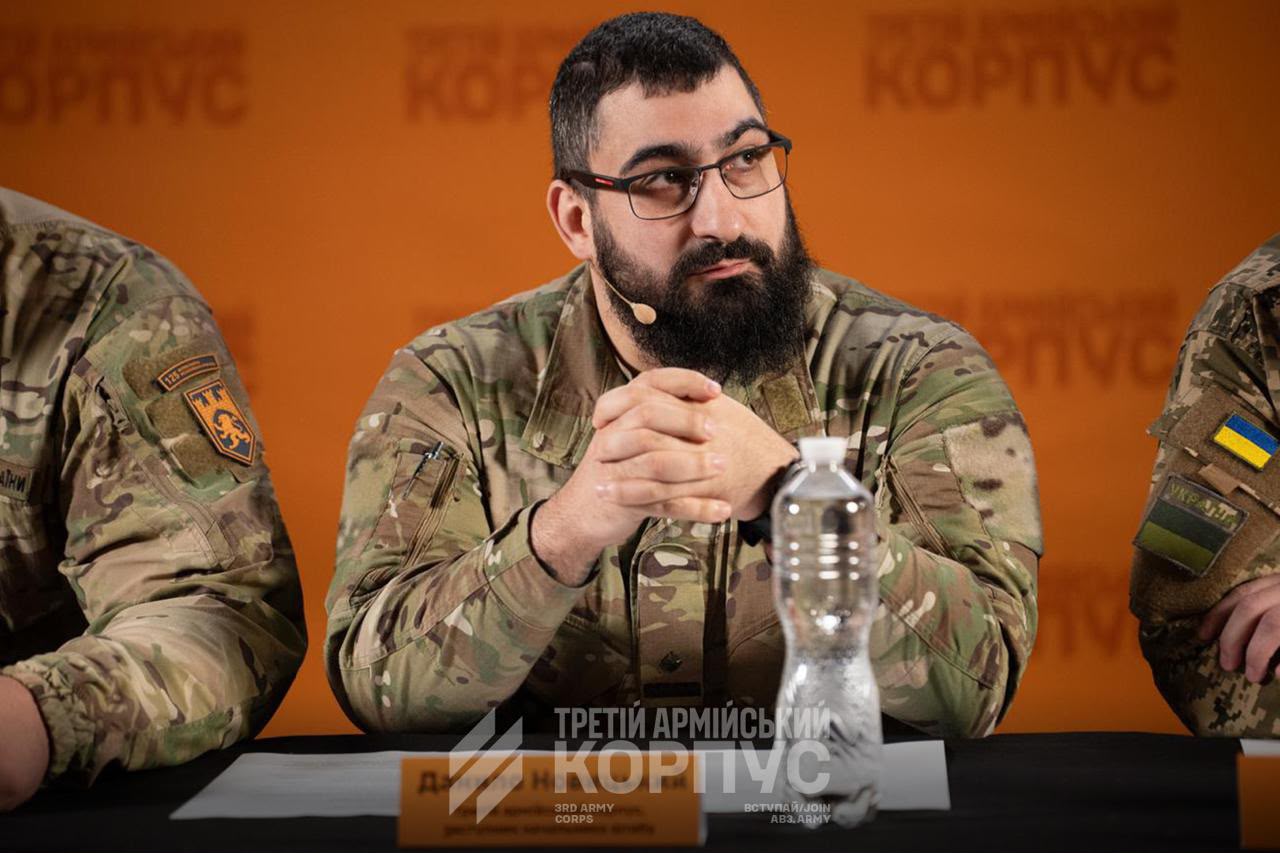
– We are the first corps that was able to lead into battle and deploy into combat formations its own fully fledged organic units. Over the course of a year, all the corps’ brigades were formed and brought into battle as corps-level units, which made it possible to create systems for combat support and their coverage in depth, both from the line of contact toward the enemy and across the entire depth of our logistics and area of interest in the rear areas. Our corps has under its command the 66th Brigade of the Ground Forces, units of the State Border Guard Service, the Territorial Defense Forces, and the National Guard. We also work constantly with the Special Operations Forces, the Security Service of Ukraine, and the Defense Intelligence of Ukraine. In less than a year, we were able to transform our own units and our sector of the front and stop the enemy’s offensive.
Opposite the Third Army Corps stand as many as three Russian armies: the 20th and 25th combined arms armies and the 1st Tank Army. In areas where, before our arrival, up to 70 kilometers could be lost in a month, not a single meter is now being surrendered. The tactical position is improving. We were able to stabilize the front and completely eliminate all infiltration areas in the corps’ sector, which at one point reached up to ten kilometers in depth. At present, all brigades are holding firm. We managed to create fire effects and fully take control of the occupiers’ logistics routes in the Luhansk region, thereby inflicting very serious damage on them already at the operational and strategic levels. We are developing. We have created a stable defense. As an assessment of its effect, we can cite the large-scale offensive that took place in March, when the joint efforts of all corps brigades destroyed more than 100 pieces of enemy equipment along with infantry. And this happened not at the front line, but still on the approaches.
What did we bring with us from the experience of the Third Assault Brigade? We built a unified command-and-control system based on the standards of leading NATO countries. But we did not blindly adopt their doctrines; instead, we adapted their systems to our modern front. For each task, we create a combat staff in which everyone has their own role. We were the first to introduce the position of Battle Captain in all units of the corps: this is an officer who directly manages the battle. We built a system around them, and it became fully operational. We also reduced the number of reports to avoid unnecessary duplicate information, which simplified the work of the headquarters. We managed to reach a point where staff officers work on combat operations rather than engage in a paperwork war.
We also continue to develop according to the principles of Mission Command. The commander defines the task and intent, while junior officers choose the method of execution themselves. Together, these principles reduce reaction time from days to hours. Trust and confidence in junior subordinate commanders are among the foundations of any success for any unit.
We pay great attention to combat training, both for infantrymen and relevant specialists. It is the closed cycle of our own basic general military training in our corps brigades and in the units subordinated to us that enables us to obtain specialists of the level we want, rather than choose from what is available.
In general, I will put it this way: we did not invent anything big and new that had never existed before. We simply made what already exists work. The next step will be something more advanced.
Censor.NET spoke with several commanders of units attached to the Third Army Corps, as well as one corps brigade, about their cooperation and coordination, successes at the front, and support.
ON JOINING THE THIRD ARMY CORPS
Commander of the 60th Separate Mechanised Brigade, Dmytro Rohoziuk:
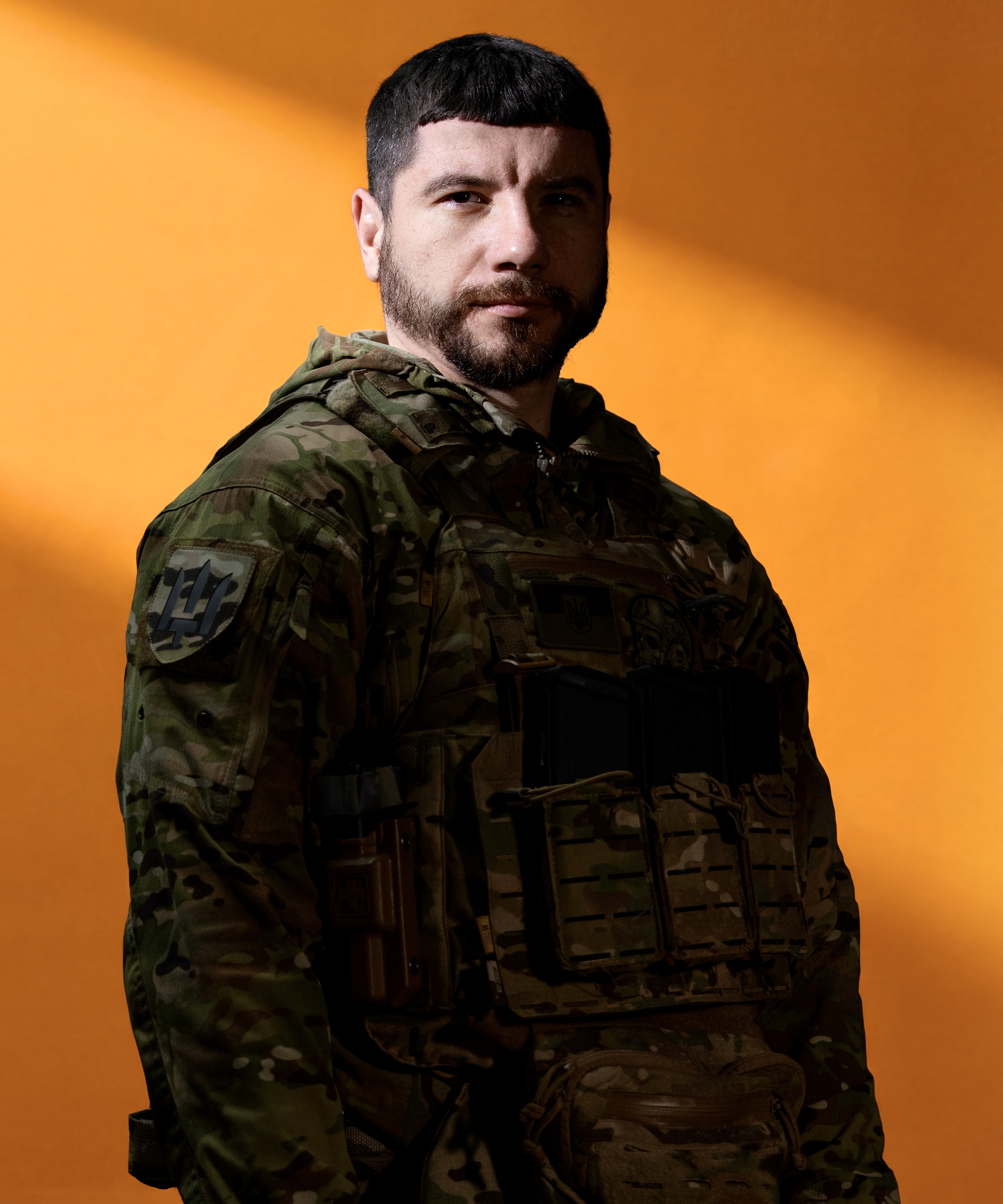
When the Third Army Corps was established, the 60th Separate Mechanized Brigade joined it at the same time as the 3rd Separate Assault Brigade, which was forming its command structure. The corps’ forces and assets also included the 63rd, 53rd, and 125th brigades, as well as a number of other units. How did the situation in the 60th Brigade change after it joined the corps? Two components should be highlighted here. First, it was the first of all to undergo a change in command. Frankly speaking, it was problematic. It was positioned on the enemy’s main effort axis and was not coping with its pressure at all. As a result, it was losing territory on a significant scale. In other words, in the 60th Separate Mechanized Brigade’s area of responsibility, the enemy was showing one of the best rates of success in this sector of the front. After it joined the corps, the pace of the enemy offensive was reduced through corps-level coordination and support from strike assets, along with a review of all fire engagement and brigade support plans, operational disposition, and combat formation. Even so, it remained at a fairly high level.
The second step was a change in the brigade’s leadership. It is no secret that the previous leadership was, to put it mildly, not exactly successful. Corruption schemes flourished there, the treatment of personnel was poor, and the brigade’s effectiveness was low. Therefore, the corps commander made a decision, petitioned the higher command, and completely changed the leadership of the 60th Separate Mechanized Brigade. After I took command of the brigade, the primary task was to completely change the way it conducts combat operations, especially when the enemy is advancing. Therefore, decisions were made to bring into the team specialists from the Third Army Corps and the 3rd Separate Assault Brigade, who now head key areas. The coordination between artillery and the unmanned component was completely revised, which significantly increased the effectiveness of strikes against the enemy. And this produced a reverse phase: we began to preserve our infantry. On the forward edge, our losses decreased threefold. At the same time, we increased enemy losses by more than five times in the sector for which the 60th Separate Mechanized Brigade is responsible, thanks to which the pace of the enemy’s advance over the course of a month dropped. And within two months, we completely stopped its advance in the brigade’s sector. But not at the cost of soldiers’ lives. We showed that there are entirely different approaches to leveling and stabilizing the front. In particular, this was done through a new approach to the unmanned systems battalion, which was also headed by specialists from the corps who grew within the Third Assault Brigade, and who revived from scratch the unmanned ground vehicles (UGVs) company, which is now among the top ten. And in terms of the number of missions carried out and the volume of cargo transported, we are among the top five in the Armed Forces of Ukraine. We have also dramatically increased the effectiveness of artillery, by roughly three times. All of this produced results. So people who had previously gone AWOL saw that the brigade was now working differently. With the change of leadership, the rebuilding of the NCO corps, and the proper attitude toward NCOs and personnel in general, everything began to change. And the guys talk to one another: both with those who remained in the brigade or transferred to another one, and with those who went AWOL. They exchanged information, and people began returning to us. New recruits also joined. The brigade is still growing and has become one of the best in this sector of the front. Every month, we show an increase in personnel and improved operational effectiveness. We are training new specialists and trying not to lose fighters. In other words, everything works together. There is no single piece of know-how that will turn the front around for you in one day. This is all a systemic approach professed by the Third Army Corps and one with which the 60th Brigade is now working successfully.
Andrii Hitt, chief of staff of the Third Border Guard Detachment:
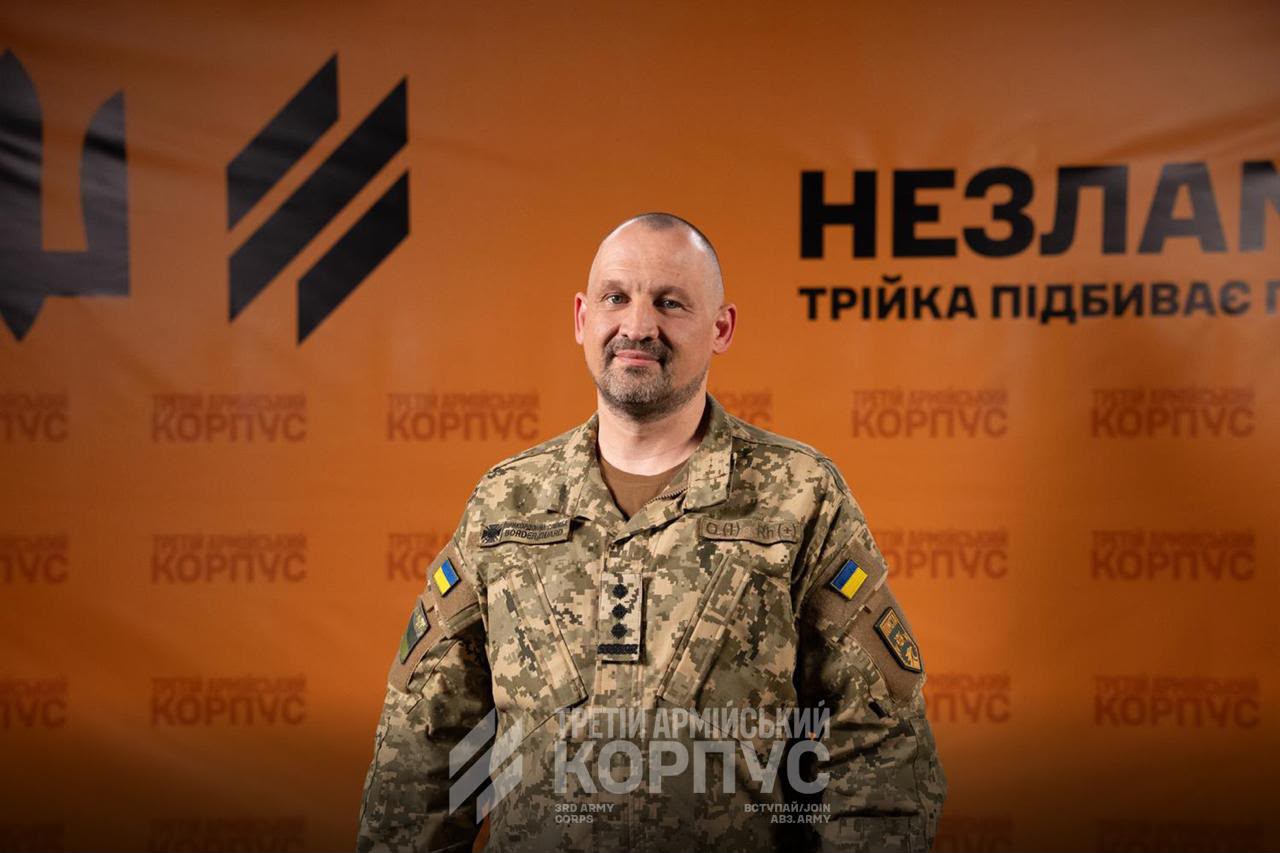
After joining the Third Army Corps, our detachment received its own defense sector for the first time in its history. Before that, we had been scattered among different brigades across a wide front, from Popasna to Izium. There were situations where one platoon was in one place, say, in Sviatohirsk, while another platoon, or half of it, was in Kreminna, and another part was in Terny or slightly higher up in the Lyman direction. There was this fragmentation into separate composite groups. This, of course, affected the morale of the servicemen, because their commanders were somewhere else, so there was not enough command support.
At that time, heavy fighting was underway for Sviatohirsk, Bohorodychne, and the Izium direction. There was also fighting on the right flank, further in the Lysychansk area. When I was appointed deputy head of the detachment, my unit had already come out of the fighting and had been stabilized in a calmer sector of the front. That was when we came up with the idea that everyone still needed to be brought together. And we played this "sliding puzzle" to pull people in. We succeeded. The unit went for recovery. And when other units from other border guard bodies arrived, we were already operating according to the principle of one unit "in one set of hands." When we reformed into a brigade-type detachment in 2023, we decided that we should ultimately become a detachment whose organic structure had already been brought in line with the similar structure of Armed Forces brigades, with its own artillery component and combat support units. Our first sector was something of a training exercise. At that time, we had been withdrawn to recovery areas. And when we began forming up, gathering people, training them, and sending them for training, we received the task of covering the Belarusian section of the border after Wagner entered Belarus. They wanted to scatter us among units again, which would have created a kind of "mixed bag" of heterogeneous forces and assets. But we stood our ground. Just imagine: there is a Territorial Defense battalion commander who, in addition to his own unit, has several different units subordinated to him. I asked: "If an enemy offensive begins, if the enemy takes certain actions, will he cope with command and control? Will he have communication and proper coordination? Will he hold back the offensive?" Of course not, because he is alone. We proposed that the issue of the combat formation and our place in it be put in order after all. In this way, we chose a defense and support sector for ourselves. But while forming up, we were also training to act as a single organism. When we began carrying out combat missions in early 2024, we sought autonomy. And last year, for the first time, there was a traineeship with the 93rd Brigade. Then came our introduction to the Third Army Corps, which was still in the process of formation. Our fighters from the "Silver Three," named after the Serebrianskyi Forest, were carrying out combat missions and came under the command of the Third Army Corps. During those first contacts, we again began developing the idea that we should enter their sector and become a small collective force there. Andrii Biletskyi supported this. Certain plans were already in place, but the situation was changing, and that sector of the front was transferred to the 11th Corps. There were probably reasons for that. So our issue was put on hold for a while. But we still crossed paths with the Third Army Corps and maintained contact. Ultimately, with their support and the efforts of our leadership, we managed to implement our plan.
It all began when this unit, the "Silver Three," was placed under the operational command of the Third Army Corps. Since they had suffered losses and needed recovery, they were placed under the corps’ operational command. And that was where we saw what it meant to be part of this structure. That is, when you are welcomed and told: "Guys, what do you need? How can we help? Training? Here are our training grounds, our instructors. UGVs and UAV specialists? Please! All our innovations are yours. We only need to increase the density of defense and help the 66th Brigade by reinforcing it, because they have also suffered losses. Give us 20 people." We selected them. Five days of training, then they went into positions and successfully completed the task. No one drove us forward, rushed us, or pushed us. And that made it possible to prepare properly. It also fired up morale in a major way, so our guys were ready to do a lot. They first entered the 66th Brigade. Then we managed to transfer another unit from the 11th Corps. And then, following them, we managed to bring ourselves over as well. Having gained certain knowledge and experience, we took over the defense sector and have been holding it ever since. We constantly feel the corps’ support. It is not a situation where someone comes to inspect you just to find shortcomings and accuse you of something. On the contrary, they help! This kind of honesty and openness is very powerful and significantly eases coordination, communication, mutual trust, and work.
Fedir Shapovalov, head of reconnaissance of the 120th Separate Territorial Defense Brigade:

Our brigade came under the command of the Third Army Corps on October 16 last year. We received an order from the Commander-in-Chief to take the city of Lyman under defense in order to stabilize the situation and improve the tactical position. The brigade command moved very quickly from the Kyiv region to the Kharkiv region. At that time, through joint actions with neighboring units, we managed to push the enemy much farther away from the city. I consider this move into Lyman and its subsequent holding along stable lines to be one of the most successful episodes. The enemy was located in a certain sector; we needed to destroy it and improve the tactical position, which is exactly what we did.
Another important point: we introduced Battle Captain. We had this system before, but it did not work the way it needed to. We did not have such a need, since the command was located in the Kyiv region. But here, the corps personnel showed that it is effective and delivers the necessary result. This officer not only manages the battle but is also responsible for coordination between units, which makes the work easier. So we did everything to make it work in our brigade as well. And that is exactly what happened.
Yehor Shcherbyna, head of unmanned systems of the 66th Separate Mechanized Brigade named after Prince M. the Brave:

At first, representatives of the Third Army Corps came to us and looked at how the work was organized at that moment in order to understand what our point A was, meaning our starting position. They studied our problem areas, as well as where certain things were set up better and where certain processes had been optimized. Based on this, they identified the problems that prevented us from developing quickly or slowed down processes and began addressing them in a targeted way. Among such areas, Battle Captain can be mentioned: this involved setting up the work of duty officers at the battalion level. There were also changes related to them in our unmanned component. Reconnaissance and strike crew duty officers were assigned at each battalion in order to optimize the work. The Battle Captain system was integrated at different levels, both at the battalion and brigade levels.
Next, we introduced a system for returning people from AWOL. Following the example of the Third Army Corps, we implemented this in our brigade, and today it has allowed us to return about 80 percent of the people who had left their unit without authorization.
After coming under the corps’ command, our supply of the unmanned component increased. I cannot say with absolute accuracy regarding artillery ammunition, but as far as I know, the number of shells also increased.
Corps commander Andrii Biletskyi gave our brigade commander the opportunity to train and adapt people in units for 7 to 14 days before they went to positions. This was one of the key points, because when we had just joined the corps, he covered certain directions with his reserve and gave us the opportunity to adapt newly arrived servicemen. At present, this system continues to work. In some cases, there is even more time for adaptation, depending on preparation for specialized operations.
Their NCO schools helped us organize the work, draw up training plans, and explain to our NCOs how they should organize the work, plan training, and what functions they have. In this way, we separated where their responsibility lies and where the responsibility of battalion commanders lies, so that there is a clear gradation of duties in the units and, accordingly, higher work efficiency.
We began receiving horizontal support specifically at the level of training. That is, it became much easier for the deputy head of the training department and the deputy brigade commander responsible for this area to resolve certain working issues related to the training process at the corps level. The people who hold the relevant positions there are open to cooperation, constantly ready to help and to resolve certain issues at their level in order to speed up the training process for our servicemen.
ON COORDINATION AT THE FRONT
Dmytro Rohoziuk, commander of the 60th Separate Mechanized Brigade:
One of the priorities and first tasks of the corps headquarters is coordination between units within their operational disposition. It seems to me that the Third Army Corps handles this at one of the highest levels in the country, if not the best overall. Coordination within the corps is constant. Communication with the corps commander, as well as between unit commanders, takes place almost every day. We also meet offline several times a week. At these meetings, we report on the situation and discuss problematic issues at the junctions, meaning we talk through and synchronize actions in order to ensure maximum security and effectiveness in our combat formations.
As for timely response to changes in the combat formation of adjacent units, this system is now fully automated in the Third Army Corps. The display of combat formations is available not only to the neighbor on the right or left, but also to the next unit beyond the immediate neighbor. I know the actual state of their positions. Through digitalization and the software used by the corps, we constantly see the intensity of combat operations among our colleagues nearby. We observe which areas are currently under fire and where there is strong enemy activity. We also see the actual presence of infantry at specific positions. The corps pays extraordinary attention to the position of the forward edge and the presence of servicemen there. Everything happens so quickly here that it is immediately displayed online on the maps of unit commanders, as well as the corps commander. Accordingly, when you see changes shown by the system, you can immediately call and ask what exactly is unfolding. All we need to do is monitor changes and dynamics, which is where process automation and digitalization help us, and respond in time. In other words, this significantly makes life easier for commanders at all levels.
Andrii Hitt, chief of staff of the Third Border Guard Detachment:
Before we joined the Third Army Corps, there were cases when adjacent units said they were nearby, but in fact, they were not there, or they did not respond. In the Siversk direction, our unit was holding a height. At that time, Soledar had fallen, and Wagner forces were advancing on us. This was a junction area between units. The fighting was very heavy. Wave after wave was coming at the guys, while the neighboring unit, which was on the right in an advantageous position, did nothing. When they were asked, "Guys, what about you? You have proper assets, you could have supported us by simply striking from the flank." They replied: "First, we do not want to reveal ourselves. Second, we are waiting until the border guards are forced down." Unfortunately, there were such cases. It is impossible to work normally, supply people, and maintain their morale in such conditions. Our officers were at the positions. But if there is no support either on the right or on the left, what are you supposed to do?! Rely only on yourself? That was a problem. We have been fighting for the fourth year now. We do not have large human resources. We must treat our personnel with care.
The commander’s task is to provide for the fighter, support the positions, and prevent the enemy from reaching the forward edge. In other words, to kill the enemy before he reaches our forward positions. This is a complex process: detecting the enemy on the approaches, tracking his movement, delivering timely fire engagement, destruction, and so on. Now, commanders at different levels are constantly doing this work, and it is producing results. The fighter clearly understands that everything is being done to keep him alive. Coordination plays a very major role in this regard. A serviceman must know what is happening to his right and left, and who is supporting him. He should not be lost somewhere in a tree line, realizing that there is no one in the neighboring one. In other words, there must be a sense of the shoulder of a fellow soldier somewhere nearby.
Fedir Shapovalov, head of reconnaissance of the 120th Separate Territorial Defense Brigade:
I would say that the corps system is proving its worth and delivering results. Today, the corps is holding its sector and has several brigades under its command. During the time I have been fighting, I have managed to serve in many structures, including the Donetsk Operational Tactical Group and the Soledar Operational Tactical Group. It is difficult when you arrive, and they do not even know where to send you. Here, everything is different: you know where your sector is, and the corps does not want to lose a single piece of land or a single fighter. There is no attitude of: a brigade arrived, was "chewed up," and then thrown away. No, it will remain here for a long period of time, so it must be preserved and kept combat-capable.
Coordination within the corps is much easier. It is no secret that at the front, there are cases when adjacent units misrepresent their actual tactical position. But it is different in the corps: the information is truthful. It does not happen that they say, "We are holding this area," while in fact they are not there. This aspect is controlled within the corps. It makes our work easier and allows us to build our defense. We understand how to position our assets and forces in order to plug gaps or overlap coverage with adjacent units. Each section can call a fellow soldier from one brigade or another, clarify issues of interest, or ask for support. For example, during preparations for a major enemy offensive, adjacent units turned to us for help from our FPV teams to deliver fire engagement. In the same way, we sometimes ask for help as well. They respond quickly and efficiently. There are shared chats where we communicate and resolve problems directly.
Yehor Shcherbyna, head of unmanned systems of the 66th Separate Mechanized Brigade named after Prince M. the Brave:
If we are talking about decision-making and the introduction of new corps standards that have taken place in our brigade, this issue can be divided into two components. The first is the unmanned component. The second is the infantry component itself, where decisions are made simultaneously at the horizontal and vertical levels. First, coordination takes place between battalions, and decisions are made at the battalion level, which speeds up the response, including the use of fire assets, both drones and artillery. At the same time, information about what is happening on the battlefield is passed on. Decisions on support for units operating in the sector of responsibility are also made at the brigade level.
As for the unmanned component specifically, support and coordination played an important role here. First of all, this involved the integration of new personnel management systems and the distribution of responsibilities. In other words, in our unmanned systems unit, we implemented a system with separate areas responsible for specific processes that can operate autonomously. Information from all these areas flows to the head of unmanned systems. In this way, we were able to build an effective management model and, as a result, develop a new methodology for the use of unmanned systems. This subsequently allowed us to ensure continuous control of our line of combat contact in front of the battalions to a depth of up to ten kilometers and continuous monitoring of the enemy to a depth of up to five kilometers, precisely thanks to the unmanned component and the assets available to the brigade.
I consider the March operation to be one of the most significant. A rapid response to the situation was extremely important at that time. That is, as soon as intelligence data showed that the enemy was preparing to assault our positions, the entire corps immediately combined its efforts at both the horizontal and vertical levels and quickly organized communication channels. This made it possible to ensure that in the directions where assault actions were taking place, or where enemy equipment or personnel were moving, there was an immediate response from both corps and brigade assets, with adjacent units also additionally involved. Everyone clearly understood their role: efforts were distributed across specific directions. In other words, not everyone was working on a single point; they were distributed and able to work systematically against different enemy targets. In this way, we concentrated our efforts not in one place, but in several at once, which made it possible to repel the assaults effectively and even prevent the enemy from reaching our infantry.
We work in close coordination with adjacent units. Everyone understands that we have one goal. Therefore, there is no point in hiding from one another who is located where. Each of us now understands our role as the neighbor on the left and on the right. In other words, if problems or situations arise somewhere that a particular unit cannot handle on its own, we immediately begin coordination and look for joint solutions that we can implement together. This may mean helping with assets in some places or temporarily covering something elsewhere so that our neighbor can recover and resolve the issue that has arisen directly in its sector of responsibility. What has this given us? First, adaptation to the situation and to the enemy. So we can reinforce one another without losing our own combat capability. Second, we immediately understand who is located where, and in this way, we can determine which forces need to be redistributed and which should remain in reserve to reinforce a particular direction. This made it possible to hold the defense firmly in our sectors of responsibility. The same applies to our adjacent units. In addition, this allows us to constantly monitor the current situation, including what is happening at the junctions between units.
ON SUPPORT
Dmytro Rohoziuk, commander of the 60th Separate Mechanized Brigade:
In general, when it comes to support, the corps leadership and unit commanders have set the right priorities. Mutual assistance also plays a very important role. Everyone understands that logistics is a very complex matter. And there is no point in hiding it: sometimes the enemy carries out successful strikes against it. Fortunately, there are no personnel losses, but property is lost as a result of fires, strikes, and so on.
I have encountered situations more than once where colleagues come to help even without a separate order from the corps. They are ready to transfer some of the assets they have in their warehouses to cover my urgent need after an enemy strike. This is real brotherhood between commanders. If one of us has lost a position located at a junction, and a neighboring unit has a group of servicemen nearby, we try to respond quickly in order not to let the enemy gain a foothold. They cover this section of the front while the other commander’s reserves are moving in. This kind of coordination, which has been built within the Third Army Corps, is bearing fruit. This proper human attitude exists at every level. It does not matter whether you are a commander or a soldier: trust, mutual respect, and a readiness to help one another and lend a shoulder have been built between everyone.
Andrii Hitt, chief of staff of the Third Border Guard Detachment:
The kill zone is now very large and saturated with strike assets, meaning FPVs, fiber-optic FPVs, our Vampires, and so on. That is why enemy radio traffic constantly includes: "There is Baba Yaga!" That is what they call our bomber drones. They do not have anything like that. They deliver provisions to positions using FPVs with a wider frame, which can carry more cargo than a regular one. We know this because we listen to their intercepts. But these are small parcels: water, some energy drinks, perhaps medicine, a battery, a radio set, and so on. They do not have the kind of logistical support that we do. We try to create conditions in which a fighter feels as comfortable as possible. Essentially, whatever he wants, he gets. If he wants varenyky, for example, then he gets them. We even had the story of the so-called "revenge for the chicken." Our guys delivered a parcel, and the enemy from a neighboring position came and took it. Then our guys went in, killed them, and brought the chicken back. There was a similar situation with cigarettes.
Fedir Shapovalov, head of reconnaissance of the 120th Separate Territorial Defense Brigade:
We try to provide our personnel with proper supplies. For example, we prepare food using our rear structures. We are now making meat similar to basturma, so that it is nutritious but does not weigh too much, making it easier to deliver to positions. We also try to send hot food. On holidays, we deliver something festive in order to improve conditions as much as possible and support the fighters. There were cases when cooks from the Kyiv region came to us. We held a kind of "burger day": we brought a large number of burgers to Lyman for our personnel.
As for Russian supplies, they depend on the location. Closer to the rear, supply is more or less normal. It is harder for those who are closer to the line of combat contact or directly on it. While we deliver what is needed to our positions using UGVs and large bomber drones, they use an FPV drone, which cannot carry much. They ask for the bare minimum: water, some bars, and so on. Mostly water. They complain that they go five days, or even two weeks, without eating anything. We captured one of them, and he said he had been eating sorrel. I asked him where he had found it. Somewhere in a field, he said.
Yehor Shcherbyna, head of unmanned systems of the 66th Separate Mechanized Brigade named after Prince M. the Brave:
I believe that today we are almost fully supplied. Of course, there are certain issues that, unfortunately, even the corps cannot influence. But overall, our support is sufficient to carry out the tasks assigned to us. We understand that the front is currently enormous. At the same time, there are certain critical needs that are of primary importance to us, and it is these needs that are fully covered. In other words, our critical needs must be covered 100 percent. If we are talking about units, this includes, in particular, drones and UGVs. From there, we are already building on this trend so that in certain areas we can even form a reserve. And this, of course, satisfies us. That is, if assets are available, we immediately try to build up our forces. At critical moments, we can deploy "resting shifts" for a short period of time. It is thanks to these assets that we can deal with certain situations faster. After that, we return people to proper rest again.
What kind of support does the enemy have? As far as I know, for the most part, it is sufficient. Judging by the fire impact they are capable of delivering every day, they do have supplies. At the same time, they have certain logistics problems. Thanks to the work of both corps-level assets and our units and adjacent units, we have managed to largely control their logistics routes in certain directions. I am not saying that we have managed to completely cut off their logistics, but we are already capable of controlling it. It is thanks to this, I believe, that we have managed to reduce their direct impact on our forward edge. But overall, their supply situation is not critical; it remains sufficient for them to continue resisting us.
Olha Moskaliuk, Censor.NET
Photos provided by the press service of the Third Army Corps


