



First victory in war. Twelve years ago, Azov, leading Ukrainian forces, liberated Mariupol
On June 13, 2014, Ukraine gained its first major victory in the war with Russia. Mariupol was liberated by forces from the newly formed "Azov" Battalion, two companies of the "Dnipro-1" Battalion, special forces from the Ministry of Internal Affairs, and the 79th Separate Airborne Brigade.
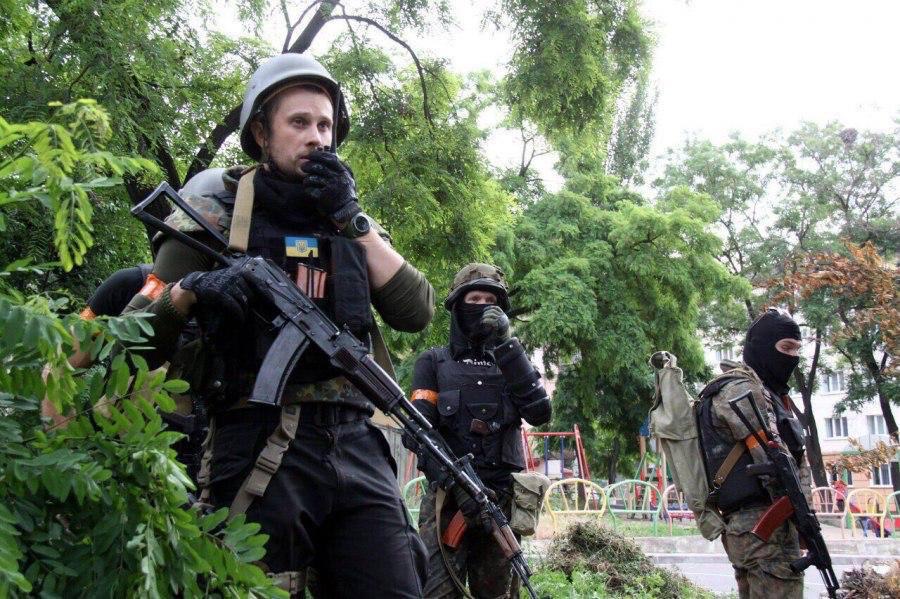
Andrii Biletskyi is leading the "Azov" battalion during the assault on militants in Mariupol. Photo: "Azov"
For the Kremlin, the city of half a million people held both symbolic and strategic significance. Control of Mariupol opened the way to creating a land corridor from Donbas to Crimea, providing access to Ukraine’s largest steelworks and the seaport on the Sea of Azov. Russian plans were aided by the collapse of local state institutions and a lack of political will to resist: the local militia signed "memoranda of neutrality" with the militants, and some military units abandoned their positions, leaving behind weapons and equipment.
It seemed that Mariupol was doomed to repeat the fate of Donetsk and Luhansk. However, a group of volunteers managed to turn the tide. It was their victory on 13 June 2014 that gave the city eight years of peaceful life under the Ukrainian flag.
How the volunteers managed to thwart Russia’s plan to create "Novorossiya", why Mariupol became a key target for the Kremlin, and under what conditions the city’s return might be possible — in the recollections and testimonies of those who lived through those events.
The key to "Novorossiya"
Following Viktor Yanukovych’s escape, Russia began implementing the so-called "Russian Spring" project in southern and eastern Ukraine. With the support of Russian special services and militants, local pro-Russian forces seized administrative buildings, organised mass unrest and attacked pro-Ukrainian activists. In Crimea, these processes culminated in the annexation of the peninsula; in Donbas, they led to the occupation of parts of the territory and the proclamation of the puppet entities "DPR" and "LPR".
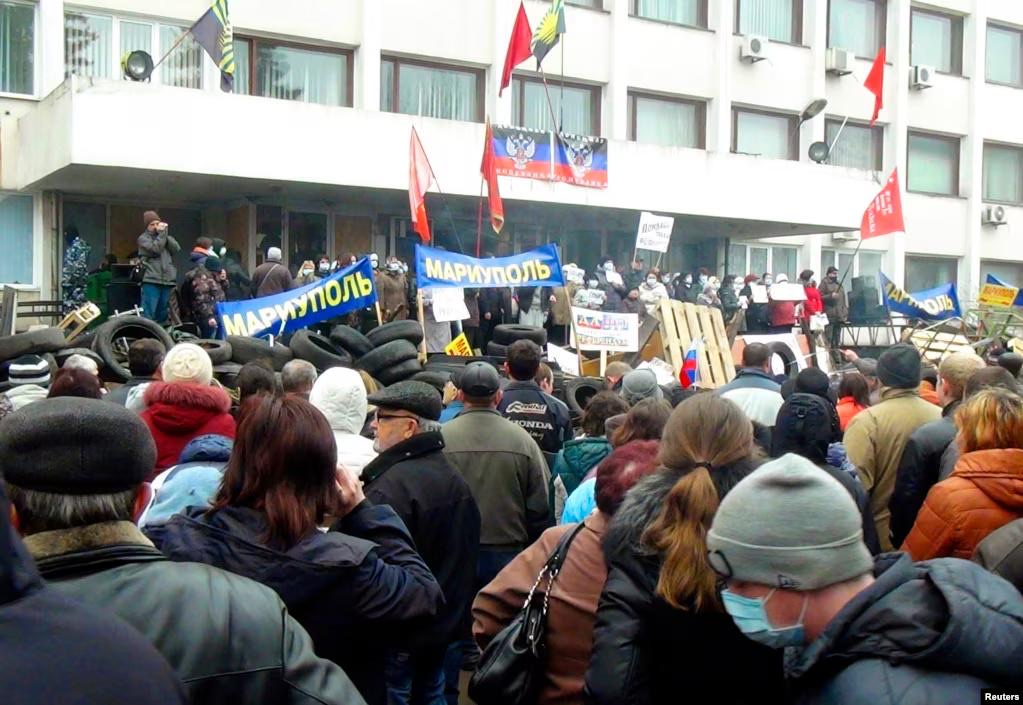
A pro-Russian rally and a "DPR" poster on the façade of the seized city council on 13 April. Photo: Reuters
According to the Kremlin’s plan, the Donetsk and Luhansk regions were to be just the beginning. The plan was to unite the entire Ukrainian south-east — from Kharkiv to Odesa — into a single "Novorossiya". Mariupol held a special place in this plan. Control of the city not only gave Russia access to strategic industrial assets and a seaport, but also opened a land corridor to occupied Crimea.
One of the first cities where the Russian plan met with organised resistance was Kharkiv. On 14 March 2014, pro-Russian militants led by Russian citizen Arsen Pavlov, nicknamed Motorola, attempted to storm the building of the ‘Patriot of Ukraine’ organisation on Rymarska Street. Its members repelled the attackers. Following this failure, some of the Russian "tourists" left the city, whilst others were later detained during the clearance of the seized Kharkiv Regional State Administration by special forces of the Ministry of Internal Affairs.
Following these events, the leader of "Patriot of Ukraine", Andriy Biletskyi, together with his comrades and Kharkiv ultras, continued the fight against the pro-Russian underground. Lacking sufficient weapons and resources, they organised a guerrilla movement, which the media dubbed the "Black Corps" or "little black men" — as a sort of response to the Russian "little green men" who had seized Crimea.
The search for weapons and opportunities to legalise this movement eventually led its members to the Azov region. Near Mariupol stood an internal troops base that had been abandoned by its personnel. For Biletskyi’s men, this was a chance to obtain legal weapons and move from spontaneous resistance to a systematic struggle.
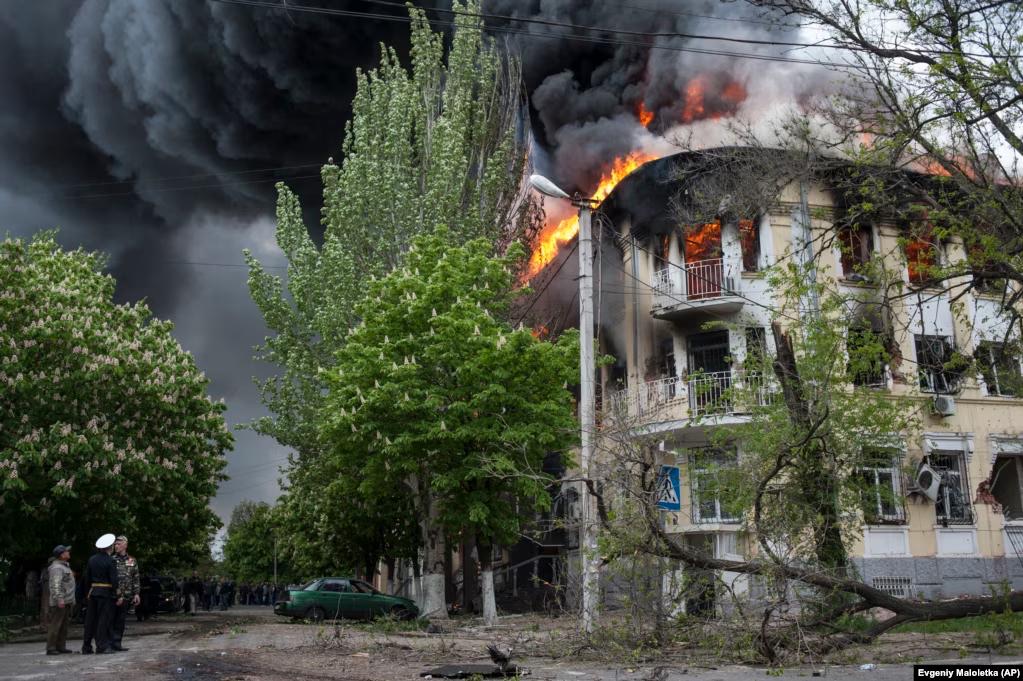
The Ministry of Internal Affairs building in Mariupol after the militant assault on 9 May. Photo: Yevgen Maloletka, AR.
Meanwhile, the Russian side had been systematically preparing Mariupol for an uprising since early 2014. According to eyewitness accounts, some local supporters of the ‘Anti-Maidan’ were transported to Russia’s Krasnodar Krai, where they underwent accelerated military training. Returning to Mariupol via Yeisk, they were already organised into platoons and companies. At the same time, criminals from Donetsk, Russian "Cossacks" and other "volunteers" from the Rostov region were being brought into the city by bus. Their activities were coordinated by staff officers of the Russian special services. One of the leaders of the pro-Russian forces in Mariupol was Russian citizen Andrey Borisov, nicknamed Chechen, who acted as the city’s so-called "people’s commandant".
By the summer of 2014, Mariupol had effectively become one of the main staging grounds for the Russian offensive in the south of Donbas. It was here that not only the city’s future but also the fate of the entire "Novorossiya" project was being decided.
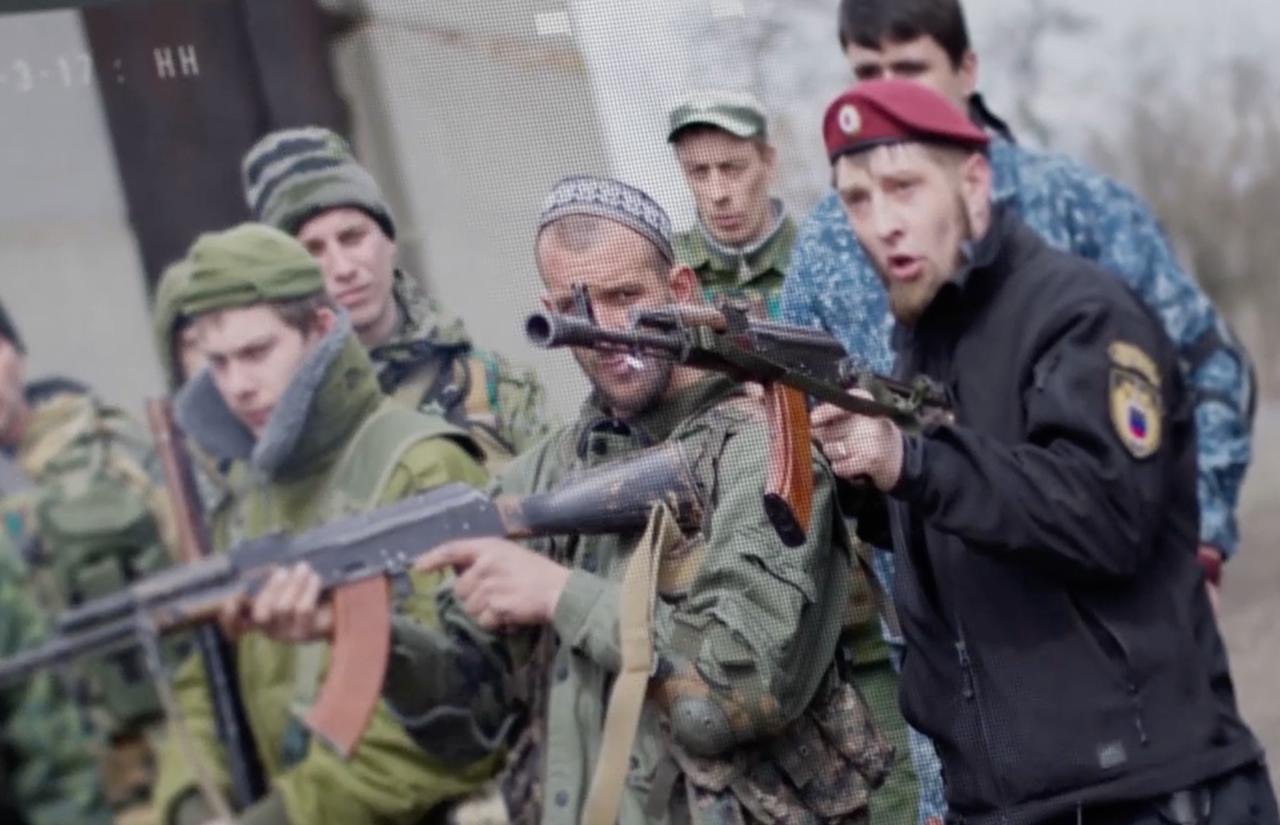
Chechen — in a black uniform. Screenshot from the film: Mariupol. Ukrainian Outpost.
Liberation. How the operation was planned and carried out
Having reached a base in the Berdiansk area abandoned by internal troops, Andrii Biletskyi and his "little black men" were integrated into the Ministry of Internal Affairs and, within a few days, saw their first combat action. In the Manhush area, the newly formed detachment broke out of an ambush, managing to capture the so-called "DPR Minister of Defence" Igor Kakidzyanov.
It was then, as participants in those events recall, that Biletskyi, together with the Azov fighters, began planning the operation to liberate Mariupol. The militants had set up a fortified position on Hretska Street. The volunteers had gathered all the intelligence on it — the number of people, what weapons they had, the location of the embrasures and even the rota schedule. "We had a local girl who wore a ‘St George’s ribbon’, brought them food, sang songs with them, and helped build barricades. Through her lapel microphone, we knew everything: she was on every barricade, on every floor, in every room," Biletskyi recalled.
The conditions for the upcoming combat operations were recreated at a training ground in Berdiansk: using whatever materials, they built ‘crossroads’ and ‘buildings’ and practised manoeuvres. Everything was ready, but the high command refused permission, believing that there were insufficient forces. "Ukrainian counter-intelligence officers told me: ‘There are 300 monks there. Greek is a decoy. This will be a New Year’s assault on Grozny, it will be a disaster." What Chechens? Where did this crazy information come from? Did a classmate serving in the FSB ring up another classmate serving in the SІU and ‘spill the beans’ to him?" Biletskyi later recounted.
Permission for the assault was finally "secured" the night before it began. "At [Mariupol] airport, we received our briefing, split into small groups and, in full combat gear, advanced directly into the centre of Mariupol towards the bank on Hretska Street and the university on Heorhiivska Street. We, armed only with assault rifles, advanced from the west, the National Guard held back the militants’ forces from the north, and ‘Azov’ was directly engaged in combat," said Volodymyr Bohonis, at the time the former deputy commander of ‘Dnipro-1’.
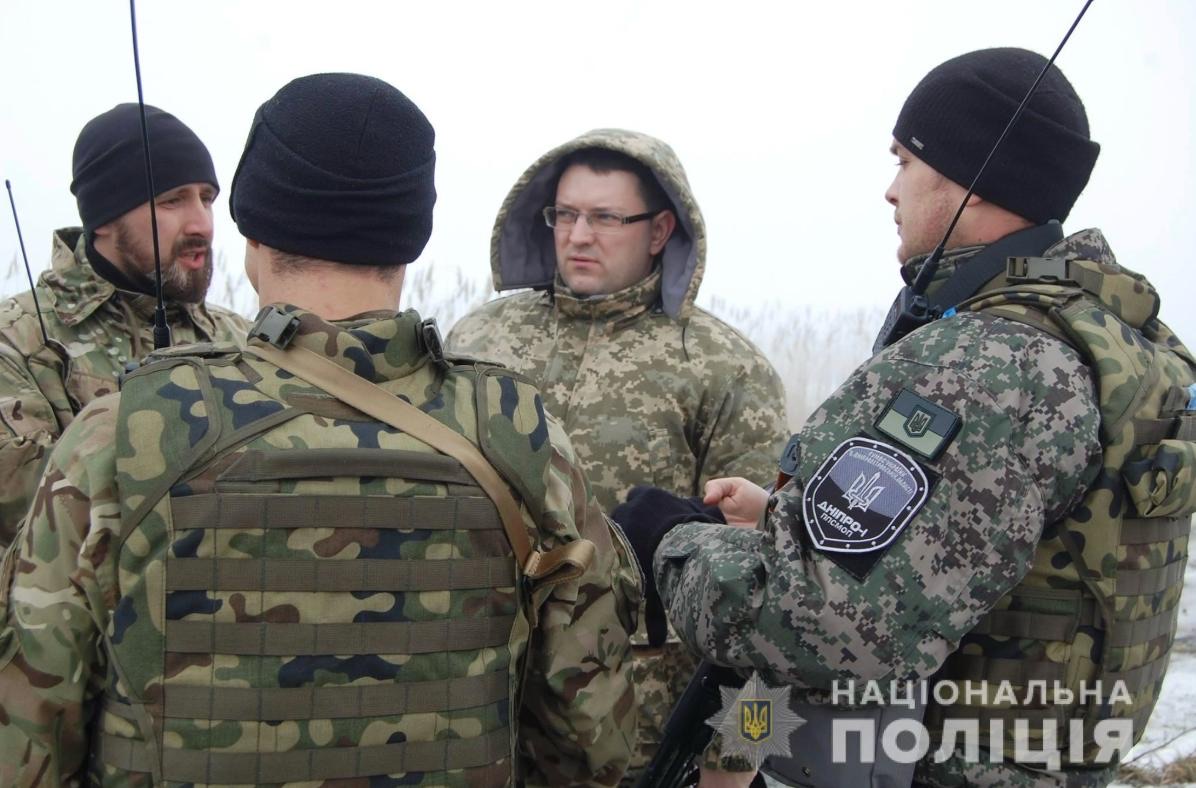
Volodymyr Bohonis, centre. Photo: National Police
There were 159 Azov fighters in the assault group. Only two of them had combat experience; for the rest, it was the first battle of their lives. Their light weaponry consisted of small arms, whilst their heavy weaponry included an anti-aircraft gun and an "Utyos" machine gun. Their vehicle was the legendary "Prianik" – a KAMAZ truck, hand-armoured with sheets of metal. The assault began at 3 a.m., and by 10 a.m. the Azov fighters were already clearing the buildings and basements of militants. The fortified position on Hretska Street was destroyed, five militants were killed, and 20 were taken prisoner. Azov’s casualties amounted to one seriously wounded.
"The assault took place on several fronts. We recaptured the BRDM that the militants had seized and, after several attempts, attacked their barricades. At first, they tried to resist, firing small arms. But when we started breaking into the ‘headquarters’ building, they simply fled, hiding in the residential area," recalled Maksym Zhorin, an Azov assault trooper at the time.
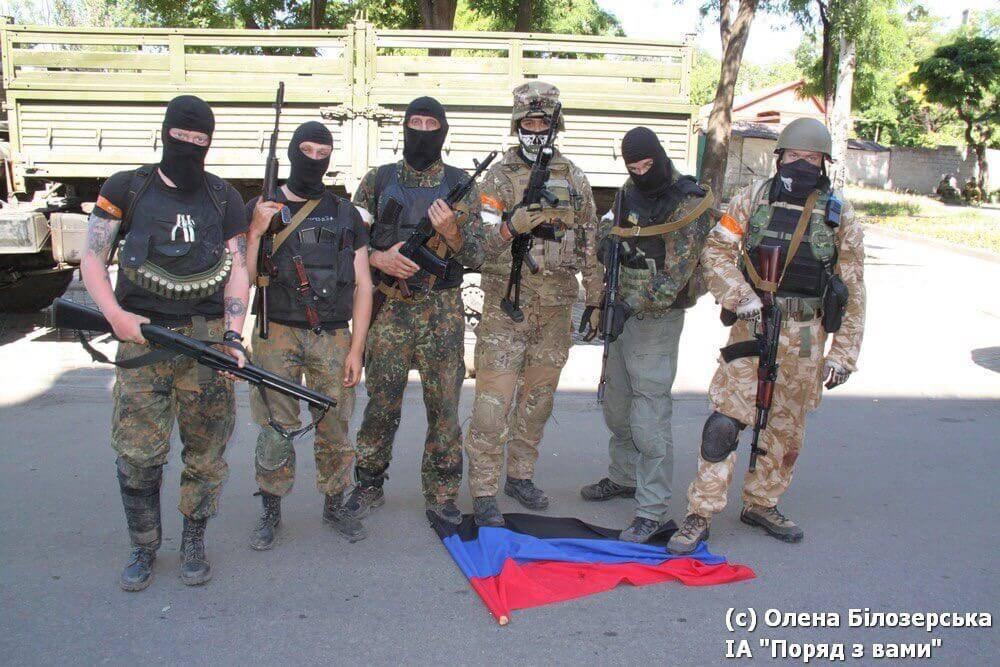
Azov fighters with a "DPR" flag on the ground. Photo: Olena Bilozerska
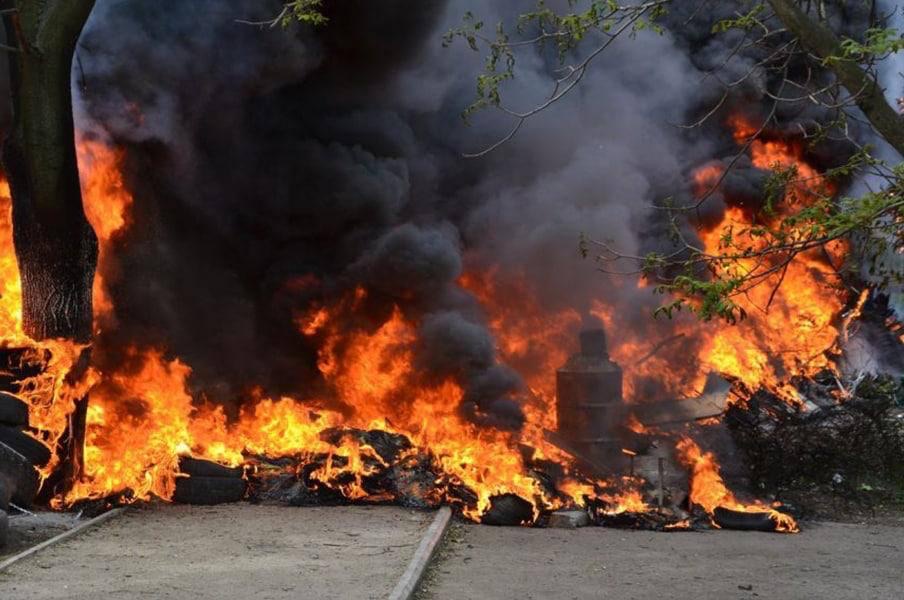
Militants’ barricades in flames. Photo: "Azov"

Azov’s "Prianik". Photo: Yevhen Maloletka, AR.
The so-called Chechen commander had fled Mariupol the day before. He had likely been warned of the assault. "We could have captured Chechen’s group, but it later formed a very serious sabotage unit. This man killed dozens and dozens of Ukrainian soldiers. We could have done it earlier. We could have done it more effectively. It could have been done if they hadn’t dithered, if the leadership, including the military, had any backbone," said Biletskyi.
Further defence. Fighting in Shyrokyne
Along with the Ukrainian flag, peaceful life returned to Mariupol. The city became the administrative and cultural centre of the Donbas. Industrial giants resumed operations, and hundreds of millions of dollars of investment were channelled into infrastructure modernisation. Mariupol entered the ranking of Ukraine’s safest cities. Liberated and modern, it stood in stark contrast to the decline brought about by the Russian occupation in the occupied part of Donetsk Oblast.
After the liberation, "Azov" did not leave the city: Mariupol and its surroundings became the unit’s permanent base. In the summer of 2014, volunteers, together with the city authorities and local residents, built fortifications. In early September, "Azov" took part in fighting in Shyrokyne, when, on the eve of the signing of the first Minsk agreements, the Russians attempted to push the line of contact closer to Mariupol.
On 24 January 2015, Russian forces committed the bloodiest crime against Ukraine at that time: they fired Grad rockets at residential buildings in the Skhіdnyi neighbourhood. Thirty-one civilians were killed and over 90 wounded, including children. To make Mariupol out of reach of Russian artillery, on 10 February 2015, "Azov" launched the Pavlopil-Shyrokyne offensive. The fighting was commanded by Biletskyi, who by that time had already been elected as a Member of the Ukrainian Parliament. Despite this status and previous successes, he once again had to persuade the generals to grant permission: the General Staff did not believe in the operation’s success. Eventually, the operation was authorised, but, judging by official comments, in the event of failure, the blame would have been laid at the feet of the volunteer battalions’ independent action. The offensive went down in history as one of the most successful: within a few days, the volunteers had partially occupied Shyrokyne and liberated Berdianske, Lebedynske, Kominternove and Pavlopil, pushing the front line 20 kilometres from Mariupol.
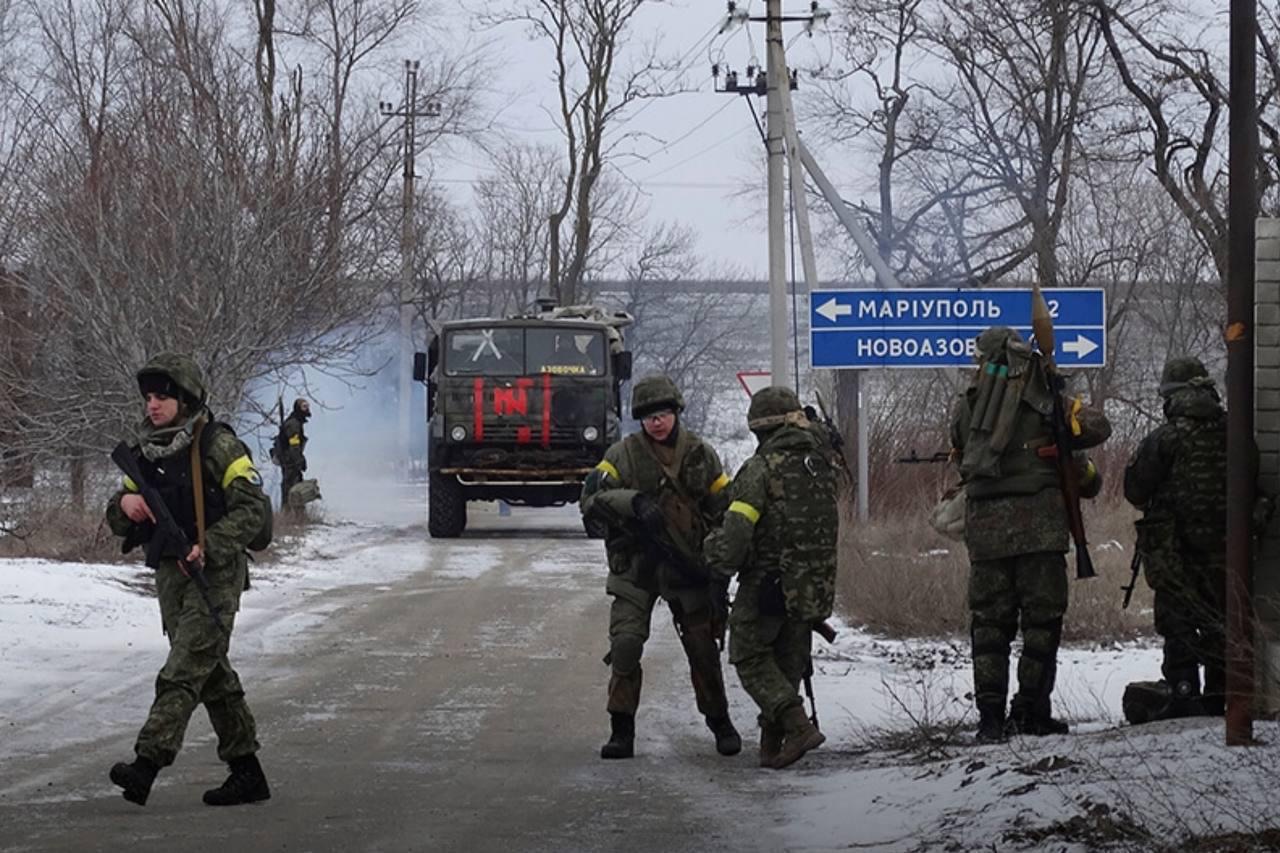
"Azov" during the Pavlopil-Shyrokyne operation. Photo: "Azov"
Further success was thwarted by yet another round of "minsk agreements", which Russia systematically violated until it unilaterally annulled them. This happened three days before the start of the full-scale invasion and the re-occupation of Mariupol.
The liberation of Mariupol in June 2014 was the first major battle initiated and carried out by Ukrainian volunteers. It was they who thwarted Russia’s plan to create "Novorossiya" and demonstrated that Ukraine was ready to resist. The volunteer movement saved the country for a second time on 24 February 2022. Thousands of people with no military experience joined the army, the Territorial Defence Forces and volunteer headquarters, and took responsibility for the defence of the state at a time when its very existence was under threat.
The people who were called "little black men" in the spring of 2014 went on to form "Azov", in 2022 — the Third Assault Brigade, and today they are fighting in the ranks of the Third Army Corps, "Azov", the Main Intelligence Directorate, the Security Service of Ukraine and other units of the Defence Forces. Over this time, they have become professional soldiers, but have not lost sight of what it all began with — a readiness to act not only in accordance with orders, but also with their conscience.
In June 2014, most of them went into their first battle in trainers and shorts. They were united not by a military past, but by a refusal to surrender their country. It was with such people that the defence of Mariupol began. Will it be free again? Biletskyi believes this is possible under two conditions — a strong Ukrainian army and an internal crisis in Russia: "There will certainly be a historic opportunity. To ensure we do not squander this moment, we must do our homework, have a modernised country and army. Then we will reclaim both Mariupol and Donetsk."
Serhii Bondarenko for Censor.NET


