



Army reform plan: why proposed changes do not solve army’s key problems
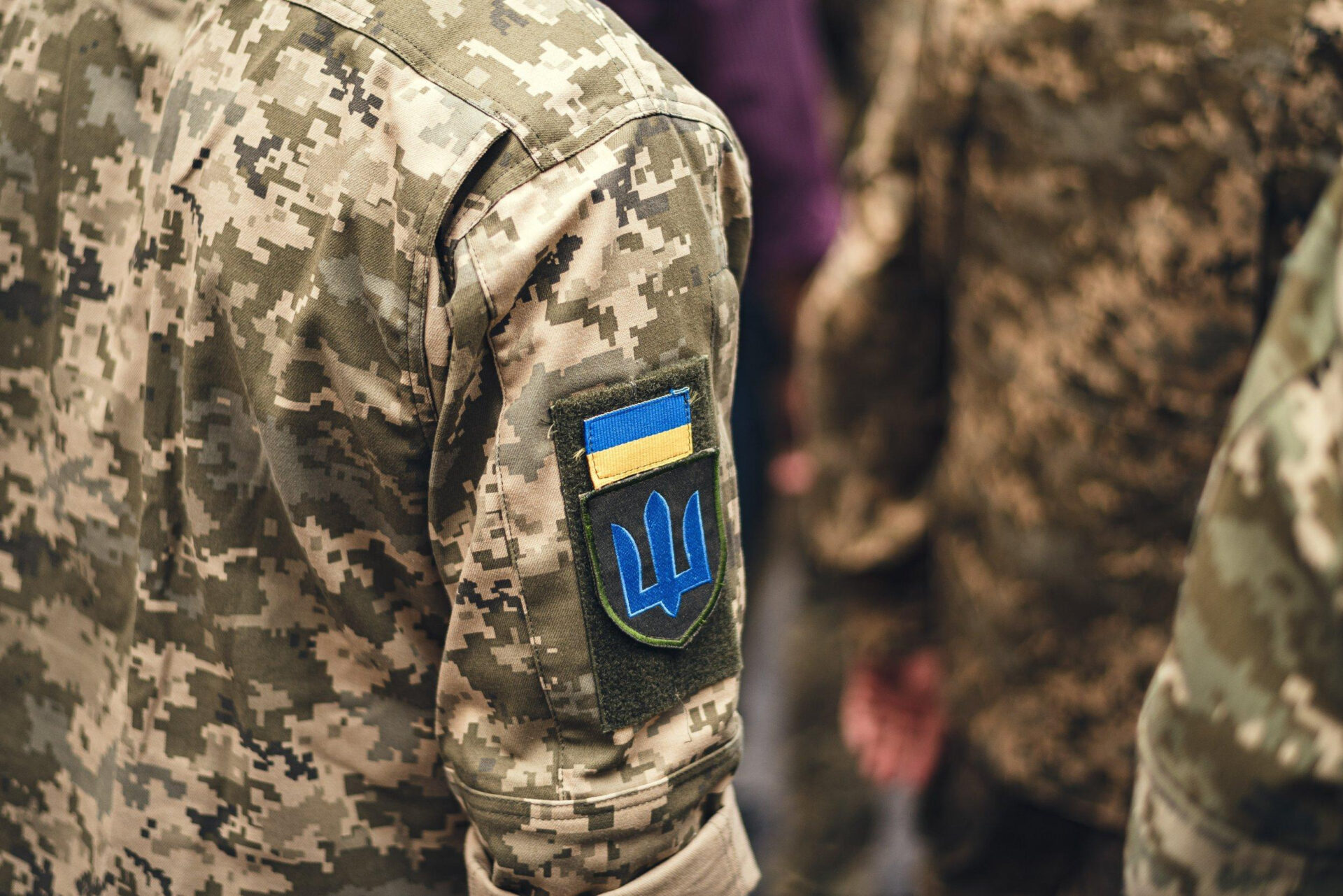
The proposed changes to the military service system have sparked a series of debates among service members. Increases in certain payments, new approaches to contracts and deferrals do not address the key issues of fairness, motivation, and certainty for those who have been serving since 2014 and 2022
1. Salaries
Instead of paying exorbitant combat allowances, it would be better to raise the basic salary for all military personnel not by a paltry 10,000 hryvnias, but in line with price indexation compared to 2022, at the very least. Set the basic salary at at least 50,000 hryvnias. Then absolutely all categories of military personnel would benefit from this.
Because an infantryman who is wounded or injured in combat (which happens frequently in infantry and assault units) and is transferred to the rear due to limited fitness, as well as his family, will be negatively affected by the sudden gap between a salary of 300,000 hryvnias and a salary of 30,000 hryvnias. This will provoke the familiar demoralisation of "in the rear, after everything I’ve been through – nobody needs me anymore". And given how some units sometimes "forget" to pay out allowances, it is unlikely that an infantryman or assault trooper will often see those 300,000.
Instead, his basic salary will remain at a paltry 30,000 hryvnias.
Conclusion: instead of luring people in with sky-high figures for bonuses, raise the basic salary for all military personnel. So that when you tell a foreigner that your basic salary, even after a pay rise, is only around $670, their jaw doesn’t drop at just how little the Ukrainian authorities value the military, thanks to whom they hold their positions. Colleagues from EU countries, who provide Ukraine with significant financial aid, are usually shocked.
2. Length of service
The reform plan effectively lacks any gradation of remuneration for length of service.
Forgive me, but this principle of ‘one day’s deferral for one day in combat’ sounds as demeaning as possible to the military’s actual experience.
Ensure that those who serve longer receive a higher salary and greater allowances, rather than simply a one-day deferral.
As things stand, if you’ve served in the army for five years, your salary increases by about a thousand hryvnias.
Introduce a pay rise of at least 2,000 hryvnias for each year of service in non-combat roles and 3,000 hryvnias for combat roles. This is the absolute minimum that would demonstrate at least some equivalent of a reward for service.
Let the combat allowance be smaller, but every soldier will feel that every year of their service is valued and brings at least a minimal increase in income.
This will be a far greater incentive to serve than those laughable six-month deferrals, during which no soldier will find either a decent job or stability.
3. Deferrals
A deferral of six months or a year is a mockery of those who have been serving since 2022 or earlier.
This group of soldiers should be placed in a separate category and granted a deferment based on their length of service.
If I have served a full six years in the army, my deferment should be no less than two or three years.
As for these six months or a year — please, leave them to those who were in the rear on civilian service until 2026.
There should be real financial rewards and real social guarantees for years of service.
4. Terms of service
Who exactly is considered to be among those who have "served the longest"? Is it those who served between 2014 and 2022, or those who have served since 2022?
What exactly will the procedure for this "discharge by the end of the year" be?
How will it relate to the three types of contracts?
Will it be the case that new contracts are introduced, everyone is asked to sign them, and then at the end of the year they are told: "You will leave once the contract you have just signed expires"?
The latter would look like very cynical populism.
It would therefore be good to communicate the procedure in more detail, as the plans and lives of many servicemen depend on it. Providing certainty at a time when there is almost none in the lives of the troops is the minimum from which respect begins. And this minimum has been neglected for years.
We, who served before 2022, deserve more in terms of service and deferrals than those mobilised after the start of the full-scale invasion.
Putting us on the same footing as new contract soldiers would further demoralise the ‘old guard’, on whom the army largely relies today.
5. Positions and actual duties
The reform draft includes a provision for high salaries for commanders. This is logical and correct — provided that a person holding the position of commander actually performs the duties of a commander.
I hope the Ministry of Defence is aware that an interesting situation has arisen in many units: positions exist separately, and their functions separately.
For example, a person holding the position of platoon or company commander — simply because they are an officer by rank and need an officer’s post — is in fact responsible for issuing equipment or handling paperwork. Meanwhile, combat operations are managed by a sergeant or even a private, because they have greater competence in this area.
Or a person holds a senior command position, but in reality all the command work is carried out by their deputy or another officer or sergeant in the unit.
This is a very common situation.
But under your proposal, it is precisely the person who formally holds the post who will receive the additional pay.
Consequently, such an increase can only make the situation worse, because the actual commander without the corresponding rank will sooner or later stop doing someone else’s work due to a sense of injustice.
Will the army reform attempt to resolve this type of problem, or at least anticipate it?
It is progressing at an incredible pace in the army of a war of attrition, and the gap between official posts and actual duties has in some cases become staggering compared to peacetime.
6. Were the military consulted?
I wonder whether the military were involved in the discussion of this reform at all.
Because from what I can see, a number of important issues for those who have served for a long time have not been taken into account at all.
These conditions are unlikely to encourage new recruits to join the infantry or assault units. Because everyone will realise: if they pay more, the risk of death will be higher, and the tasks more ambitious and dangerous.
An extra 10,000 hryvnias will not significantly improve the financial situation of the military.
There is little philosophy of reward and gratitude for years of service in this draft.
Certainty regarding the length of service is effectively only specified for new recruits. And those soldiers who have enabled the institutions to survive despite a full-scale invasion for the fifth or twelfth year running have once again been left in limbo.
Conclusion
The focus should be on increasing the basic salary, not on raising allowances.
A pay scale and deferral scheme should be introduced based on length of service.
Someone who has served for 12 years should receive a basic salary at least 12,000 hryvnias higher than a recruit. And they should be granted deferral for at least half of their length of service, rather than the same six months as a recruit who has just signed a contract.
Measures must be taken to bridge the gap between rank and the actual duties performed.
The terms of service and demobilisation for those who have served since 2014 and since 2022 must be clearly defined, and they must not be treated the same as new recruits in these matters.
Yaryna Chornohuz


