



New contracts, higher salaries and foreigners in AFU: pros and cons of military reform
Ukrainian President Volodymyr Zelenskyy and Defense Minister Mykhailo Fedorov have announced the first phase of a major military reform. It involves changes to the approaches to military recruitment, service, and social benefits for service members.
One of its key elements will be the introduction of a new system of contracts with clearly defined terms and conditions of service. The plan is to introduce three types of contract: infantry assault, combat and basic. Each of these will provide a guaranteed deferment of at least six months following the end of the contract.
A review of pay is also planned. Military personnel in rear-line posts will receive 30,000 hryvnias. Infantrymen will receive between 200,000 and 400,000 hryvnias, depending on the conditions under which they carry out their duties. These salaries are set to be the highest in the world. To ensure the fairness of combat pay and monitor the actual physical workload on the front line, a digital system called Mission Control is being introduced.
In addition, the authorities plan to strengthen the infantry through the large-scale recruitment of foreign nationals. To this end, Ukraine intends to open up the possibility of recruiting foreign citizens into combat units. The plan is for them to make up to half of the personnel in this branch of the armed forces.
Censor.NET spoke with MPs and military personnel about the changes proposed by the authorities and found out what the pros and cons of this reform are.
"FOREIGNERS CAN HELP. BUT WE MUST DEFEND OUR COUNTRY OURSELVES"
Roman Kostenko, MP for "Voice", Secretary of the Parliamentary Committee on National Security, Defence and Intelligence, and SSU Colonel, says that the Ministry of Defence presented all these proposals at the committee meeting, but not in detail:
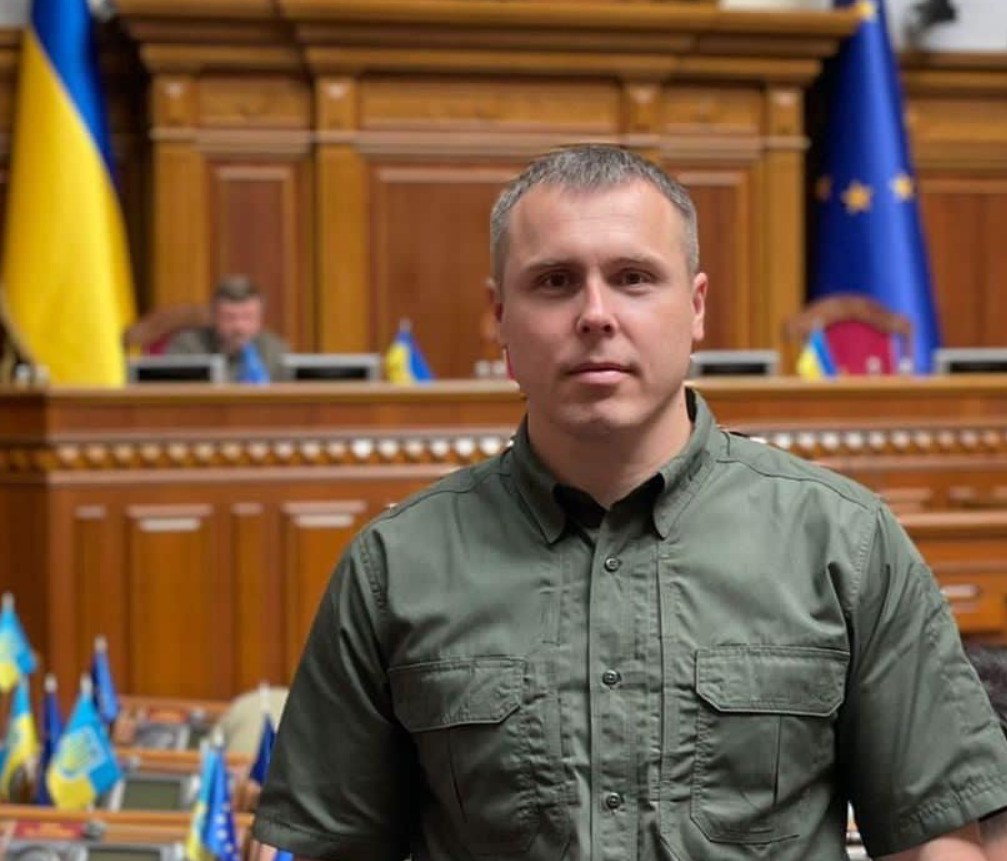
- Some issues were discussed in detail, whilst others were only outlined in general terms, stating that such a reform would take place. I would like to emphasise that this is not just about the changes proposed today. For example, regarding contracts, the Ministry of Defence began discussing this as far back as under Umerov, whom parliament tasked in 2023 with introducing clear terms of service, then under Shmyhal, and now Fedorov’s team is already trying to implement this. But what I am now seeing in the Ministry of Defence’s presentations does not look like what Fedorov’s predecessors proposed. In earlier versions of the changes, there was a proposal to increase salaries regardless of the place of service. The logic was as follows: if you sign a contract, you would, for example, receive one million hryvnias, paid out in instalments evenly throughout the contract period, with the exception of annual payments of 100,000–200,000 hryvnias depending on the length of the contract. In this case, it was planned that the financial allowance for contract soldiers would increase by at least 40,000 hryvnias.
This resolved the issue of both salary increases and length of service.
This team plans to take a different approach. As I saw from the presentations, they no longer offer those large signing bonuses for signing contracts. That is, they are proposing to pay between 27,000 and 33,000 hryvnias for signing the first contract, which is what currently exists, for those signing a contract for the first time. Therefore, as I understand it, the contracts are not so much about raising salaries as they are focused on terms of service. There are three types, each with a different duration. The first is the infantry assault contract. There is also a distinction here. For those who have served in the army and returned, it will be six months’ service. For example, for those who were wounded, discharged or had other circumstances. For those already serving who sign such a contract, it is ten months. And for those coming from civilian life, it is fourteen months.
The second is the basic contract, which is for 24 months. That is, for UAV operators, UGV specialists and other roles. The third, rear-line contract, has the same terms. Once these are completed, you receive a six-month deferment.
And if we take the infantry assault unit, there is a three-month deferral for every month of direct participation in combat operations. For example, if you’ve served for ten months, and of those, you’ve taken direct part in combat operations for four months – then you’re automatically granted a six-month deferment, plus a further three months for each of the four months spent in combat operations. That’s an extra twelve months on top. In total, you’ll have a year and a half’s deferment.
Will this encourage people to join the army? I think it might encourage them to sign rear and basic contracts. Perhaps they will sign or renew them. There are a lot of questions here. For example, there are currently assault troops. Can they choose not to sign an assault contract and switch to a rear-service one? There is no answer. I repeat, there are still quite a few questions, because we discussed certain issues, but at certain points the Ministry of Defence moved very quickly ahead and was already finalising the details on its own.
Let me give an example of my own view. I would say that, on the contrary, we now need to provide more funding to those who are already serving and have experience in the army. Because the situation is such that today you are serving and can receive 200–300 thousand hryvnias, but tomorrow, due to illness or after being transferred to the rear, you will receive 30 thousand. And that’s despite having spent, say, four years on the front line. When I drafted my bill on incentives for military service, it clearly stated: if you have spent a year on the front line and, in total, have six months’ participation in combat operations, your salary is multiplied by one and a half, and regardless of where you serve next, this multiplier remains. Because you are experienced. Why take on someone new when we already have people like that?! That’s what I consider a fair approach – that people who have served for a long time should be paid more.
And when they say that someone in the infantry will receive 300,000 hryvnias, we understand that this is another issue that needs to be sorted out. To what exact depth in the combat zone does this apply? Do we even have a clear definition of what ‘platoon depth’ means? This concept has become blurred. We need an explanation of how this will be calculated. Because there will be many questions when one person believes they were directly in the area where they should receive these funds, whilst someone else says that is not the case. And discrepancies may arise. Yes, salaries need to be increased. That is a fact. But is this the right mechanism to use? We need to analyse this more deeply.
Are the proposed figures for payments not a message: if you want a decent wage, join the infantry? This has been done to further motivate people to take up combat posts. Of course, the army is not just infantry units. And a pay of 30,000 for rear-line military personnel is low. That needs to be increased as well. But the current team at the Ministry sees it exactly that way. Although I think they will gradually come to understand how the army works, how a soldier fights on the battlefield, and whether money is really the motivation that will make a person go to the front line, where conditions are extremely difficult and the chances of survival are far from the highest.
Is money the only or the most important motivation? For me, definitely not. And judging by what I hear from the fighters, it isn’t for them either. However, the issue of families is of paramount importance to everyone, not just to the assault troops. But let’s see what the outcome is. They are trying to do something and are gaining experience.
As for recruiting foreigners into infantry units, if you look at it, the estimated number of those directly on the front line who can receive 400,000 hryvnias is plus or minus 30,000 people. Out of a million-strong army. And so they’ve calculated that they’ll find the funds for plus or minus 30,000 servicemen. And when we talk about 50 per cent foreigners at the front line, I think they’re counting on recruiting around 15–20,000 people. Is it possible to gradually bring that many people into Ukraine? If a suitable programme is created, yes. It’s simple maths. But I’m very sceptical that foreigners can effectively replace our military personnel. I fought alongside them myself and saw how they worked. Right at the start of the war, we had a unit of Belarusians in the toughest sectors. And then I heard them say: ‘We didn’t come here to do your job for you. This is your war! We came to help you defend your country. Understand the difference!’
So we must realise one thing: no one will defend our country for us. They can help, reinforce us, but they cannot replace us by 50, 40 or even 20 per cent on the battlefield. How does that work? We are Ukrainians, this is our land, and you go and fight and die for us. This approach is ineffective and unrealistic. They can leave at any moment and go about their own business. That is why this is yet another point that the Ministry’s team, currently dealing with matters of national defence, needs to understand. There are many nuances. Foreigners are fine. But only as reinforcements. We must remember precisely that. Once again: they can help. But we must defend our country ourselves.
"THE ARMY NEEDS AN INTERNAL AUDIT"
Oleksandr Fedienko, a Member of Parliament from the "Servant of the People" faction and a member of the Verkhovna Rada Committee on National Security, Defence and Intelligence, considers the length of service to be the most difficult part of this reform:

- Because, in my view, in order to allow for discharge, legislation must be passed to amend Article 26 of the Law of Ukraine ‘On Military Duty and Military Service’, which clearly sets out the exclusive list of grounds on which a person may be discharged. That is the first point. Secondly, amendments also need to be made to the legislation regarding financial provision. Because even if payments are made to military personnel, say, a minimum of 30,000 hryvnias, their base pay will still remain, as in the current legislation, at 20,000. So all social benefits will ultimately be calculated not on 30,000 or 300,000, but on 20,000. That is why these two legislative changes definitely need to be made. But these aspects do not prevent the reform from being launched. We need to separate this issue. In other words, we must launch the reform in parallel, and this can be done. The executive branch is doing this through experimental decrees. Both regarding financial support and terms of service. The problem is that there is no quick solution to implementing the reform from a legislative standpoint, but one must be found, and this must be done for the military personnel, because everyone has promised it — both the president and the minister.
Where will the funds for these payments come from? The minister said they would come from reallocating the money currently held by the Ministry of Defence, specifically those military bonds. The opposition says there is no such money, but offers no concrete solutions. Let’s wait and see by 1 July whether this money will materialise. I’ll say it again: the minister has promised it will. Excuse me, but when I worked in business and owned a sole trader business, I had a director, but I didn’t do the work for him. It’s the same here: the people elected us, and we elected the ministers. Let them do their jobs.
How, apart from financial support, can we encourage people to sign contracts? Through competent commanders. I visit the front line quite often – practically once a week. I talk a lot with the troops, especially the rank and file and non-commissioned officers. They all say the same thing: if the commander is incompetent, we’ll desert to AWOL. Commanders must look after their troops. That’s a huge motivator. Word of mouth among the military is very strong at the front – about competent and incompetent commanders. I always ask the lads three questions: how much money do you get, do MPs ever visit you, and how competent is your commander? They tell me how much they get and that MPs hardly ever come. At first, they say nothing about the commanders. But when you spend a day with them, they start opening up. And, indeed, I can already see a group of commanders who are genuinely competent and look after their soldiers. But there are those, excuse me, ‘sergeant majors’—even though they hold the relevant posts—who try to curry favour with the senior military leadership, whilst treating people as mere resources. That is bad.
I generally believe that the army needs to conduct an internal audit to understand how effective and necessary a particular troop strength is. To put it in plain language, we need to define, so to speak, the KPIs – the performance indicators for a particular unit. How combat-ready it is, how much it fights for the survival of its infantrymen, rather than simply ‘burning them out’. Because, in fact, these are precisely the units we should be modelling ourselves on, and which we need to scale up in the future. And here, first and foremost, we are talking about the effectiveness of the commander and all the unit’s structures, both in terms of supply and, of course, caring for the infantrymen. When commanders look after them, it motivates them.
"WITHOUT LAWS, FUNDS AND ACCOUNTABILITY, THIS REFORM WILL REMAIN AN INFORMATION CAMPAIGN"
Iryna Friz, a Member of Parliament from the "European Solidarity" faction and a member of the Committee on National Security and Defence, emphasises that this is not a reform, but so far merely a collection of public statements and experimental resolutions:
- The shift from coercion to motivation is the right direction. We have long insisted that the mobilisation system needs to be changed. But reform does not begin with social media posts, but with drafted bills, budgetary decisions and consultations with the relevant committee of the Verkhovna Rada. As things stand, the key elements are missing: legal guarantees for military personnel that are defined and enshrined in law, a clear contractual mechanism, financial coverage and accountability for non-compliance.
This decision is dictated by both the needs of the army and political factors. But the political factor here is obvious. Problems in the Territorial Recruitment Centres, violations of the rights of conscripts, corruption and public fatigue have become too toxic for the authorities. Russia is actively using these stories to discredit the Armed Forces of Ukraine and undermine trust in Ukraine. But the army’s needs are also real. A motivated serviceman is more effective than someone dragged into the system by force. The army needs reinforcements, rotations and proper rest for those holding the front line. The question is: is the government capable of achieving this not through PR, but through legislation and resources?
Is it fair to distribute pay in such a way that soldiers in the rear receive only 30,000? The priority must be clear: the highest pay should go to those fighting on the front line and risking their lives every day. Payments of 300–450 thousand for combat roles are fair, but a fair calculation mechanism and transparent oversight must be established. The state must demonstrate that it has the financial resources to ensure these payments are consistent and stable. I believe that the basic rate for all military personnel should be no less than 30,000 hryvnias. Additional remuneration should depend on the level of risk, participation in combat operations and the actual workload.
A fixed-term contract is the right tool. A person must know the duration of their service, what guarantees they have, when they will receive leave, and what will happen upon completion of the contract. But until there are changes to the laws, there are no guarantees. A government resolution or a Ministry order can be changed just as quickly as they are adopted.
A separate issue is the unfairness between those already serving and those who are only just signing new contracts. The state has no right to create a situation where serving military personnel find themselves in worse conditions than new contract soldiers.
Contracts may work. But only if this is not a publicity campaign, but a legally protected system.
There is a very high risk that this reform will not be fully implemented. Today, there is no comprehensive package of legislative changes. There are no amendments to the Law "On Mobilisation Preparation and Mobilisation" regarding deferment after the contract ends. There are no guarantees of discharge after a specified period of service. There is no funding allocated in the state budget. This is key. A soldier cannot sign a contract based solely on a presentation by the Ministry of Defence. He must see the law, the budget and the guarantees. The government’s ‘pilot projects’ cannot replace a full-scale mobilisation reform. All the more so on issues concerning military service, criminal liability, the AWOL, payments, discharge and deferrals.
The greatest risk lies in anything that requires funding and legislative changes. New, higher payments require amendments to the 2026 State Budget and a clear source of funding. A deferment following the end of a contract requires amendments to the Law "On Mobilisation Preparation and Mobilisation". The procedure for returning from the AWOL must be aligned with the laws on military service, the Criminal Code and the Code of Criminal Procedure.
Cabinet of Ministers Resolution No. 767 on the experimental procedure for voluntary return from the AWOL within 100 days is a telling example. Such issues cannot be regulated by a government resolution alone. This must be clearly synchronised with the laws; otherwise, the state creates legal uncertainty for military personnel, commanders and investigative bodies. Without laws, funding and accountability, this reform will remain nothing more than a publicity campaign. The current ruling team bears political responsibility for its implementation. President Zelenskyy is the Supreme Commander-in-Chief and is responsible for strategic decisions in the defence sector. Defence Minister Fedorov has become the public face of this reform and therefore also bears personal political responsibility for its outcome. But we are already familiar with this pattern: if it succeeds, Bankova Street will take the credit. If it fails, they will try to shift the blame onto the Verkhovna Rada, the Cabinet of Ministers, the military, or ‘poor communication’. It should not be like this. Mobilisation reform is a matter of the state’s survival, not political PR. There must be personal accountability, legislative certainty and guaranteed funding.
"THERE IS A HIGH RISK THAT THE REFORM WILL NOT ELIMINATE THE PROBLEM OF DEEP-ROOTED INJUSTICE"
Serviceman and former MP Ihor Lutsenko hopes that the proposals put forward are only part of the measures within the framework of army reform:
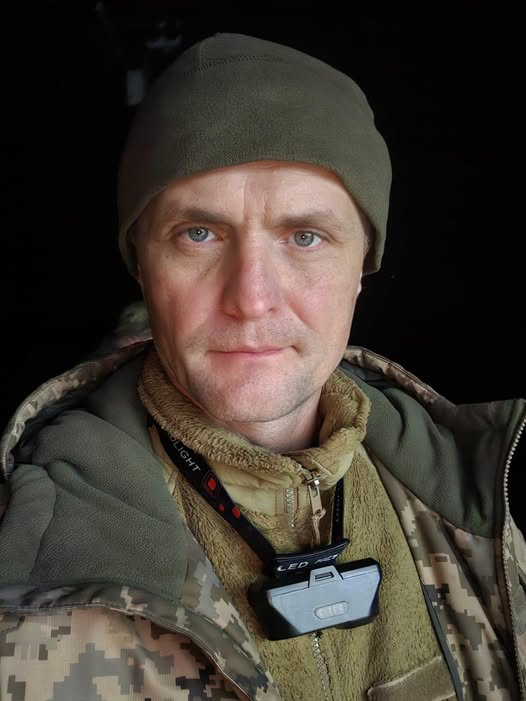
- Analysing what I hear and read, I conclude that this will not significantly affect either the strength of the army or, even less so, the fairness of service. But there is some movement, which is already a good thing. My optimistic hypothesis is that only part of those proposals has been presented, perhaps in order to gather feedback.
Of course, the planned measures are insufficient. The only effect there might be is an improvement in the lot of one small segment of the military, namely infantrymen and assault troops. But that is a drop in the ocean. I suspect that Fedorov’s team is slightly overestimating the importance of addressing the situation of the traditional infantryman. In other words, do they believe we need more infantry? There will always be a shortage of them. What needs to be changed here are entirely different things, not simply increasing the number of infantrymen. But the problem is that the infantry doesn’t carry the same weight now as it did, say, four years ago. These days, the ‘backbone’ of the army is the UAV pilots. How the army performs overall – whether it fights well or poorly – depends entirely on how they are treated within the army. So far, I haven’t heard any positive feedback from the ‘drone operators’ regarding this matter. At least from what I see around me and what is being posted on my social media. It is unlikely that this reform is aimed at UAV pilots. A pilot is a highly qualified specialist, and judging by what is being proposed, for them everything remains more or less the same as it was. Perhaps I am mistaken, but it seems to me that they will be unhappy when a fellow infantryman at the same post receives more, whilst they simply sit there and carry on as before.
To understand whether the state will be able to cover the financial payments it has planned, we still need to see changes to the budget and fiscal policy in general. We have now seen that they have voted to increase police salaries. But here, there are only presentations. So for the time being, nothing concrete can be said on this matter.
It is hard to say whether the new contract system will work in the form in which it is being proposed, because one variable remains unknown. Namely: if people do not sign these contracts, what then? Does that mean nothing will change for them at all? If this is the approach taken, things will not improve. And perhaps there will even be some resentment because no genuinely positive steps were taken, and changes that were unexpected were implemented under the guise of reform.
I think that under the current conditions, it is unlikely that military personnel will gain more opportunities to influence their own service status. What matters is not the letter of the contract itself, but the mechanisms that allow any written law to be effectively applied in the army. And these do not exist. Here, their own concepts and unwritten rules prevail. And all of Ukraine’s laws, the Constitution, and contracts are of profoundly secondary importance. In other words, the army is a territory where the law does not apply. Therefore, there is a significant risk that the current contracts being proposed, and this reform in general, will not resolve the problem of the profound injustice of everything that is happening to the military. And this is very important. So how are the merits of those who have been fighting for four or six years taken into account? Not at all, as yet. I hope this can still be rectified.
"THE FACTOR OF DRAFT DODGERS CAUGHT IN EUROPE AND THE U.S. IS NOT TAKEN INTO ACCOUNT"
Mykola Melnyk, a Ukrainian Armed Forces officer and veteran, outlined the pros and cons as he sees them in this reform:
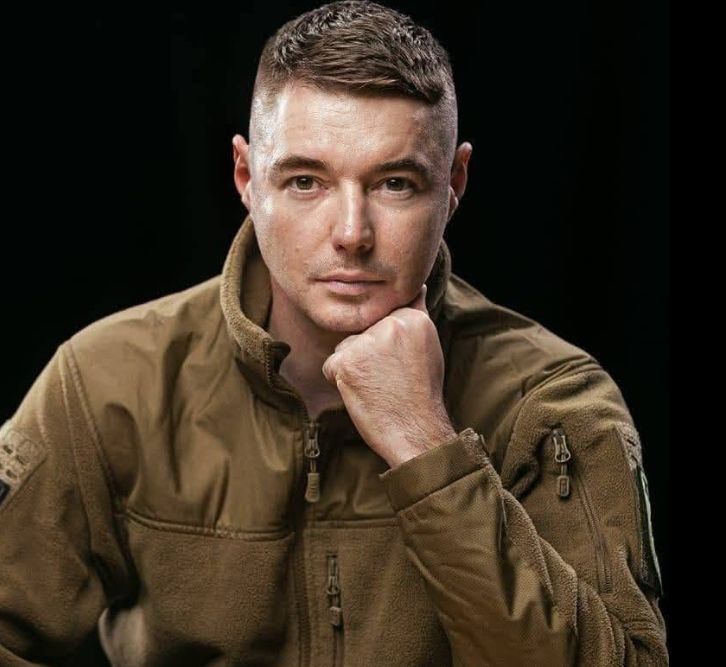
- According to Cabinet Resolution No. 768, the following contracts with terms of service are being introduced: infantry, privates and sergeants – 10 months for those currently serving;
infantry, privates and sergeants – 14 months for those not yet serving;
two years for all other categories; demobilised veterans – from 6 months. It’s a sound idea. On the downside, firstly, the factor of previous service isn’t taken into account; in other words, it doesn’t matter whether you’ve been fighting since 2014, 2022, or were conscripted in 2026. Secondly, there is no answer as to what happens after 10 months. Right now, everyone will go and sign a contract, with demobilisation in May 2027. Who will hold the front line when the ‘backbone’ of the army leaves? Or are we not planning to fight in the second half of 2027?
I would still opt for a differentiated approach. Those mobilised before 1 January 2024 serve 10 months; from January 2025, 16 months; and from January 2026, 22 months. This would ensure that factors of stability and fairness are taken into account.
Also, it doesn’t take into account the factor of draft dodgers who are caught in Europe and the U.S. and deported to Ukraine. So, a bloke was chilling out in the Miami area. He was driving while drunk. Got caught. Deported to Ukraine and voilà – the same conditions as for everyone else. It smacks of nonsense.
Regarding pay. The reality is this: those serving in the command posts get 270,000 hryvnias, those at control posts get 150,000, for a day of assault operations to retake lost positions – 20,000, and for a day of assault operations on enemy territory – 40,000. The maximum monthly amount is 460,000. On the positive side, however, is what has been talked about for so long: infantry pay has been almost tripled.
On the negative side, regarding the army and the mobilisation process, I see the following: firstly, money and fixed terms of service will in no way facilitate mobilisation; it will simply eliminate a couple of excuses. Secondly, without real consequences for desertion and AWOL, people will continue to serve only if they wish to. Thirdly, without proper propaganda and public condemnation of acts obstructing mobilisation, we will see more and more attacks on TCR and SS servicemen. Fourthly, there is no answer as to what to do with incompetent commanders (inadequate commanders – O.M.), from whom even the most peaceful soldier would flee. Fifth, a distorted system of awards, where honours are bestowed upon headquarters staff and favourites, does not foster morale. Sixth, as part of increasing financial rewards, it is important to tighten control over family-style battalions and brigades, where wives, mistresses, lovers, and drivers of commanders’ parents are constantly present on the front line.
At the same time, despite all the skepticism and the feeling that they’ll probably screw something up, I still see more pros than cons. They’ve done what they should have done back in autumn 2023.
Olha Moskaliuk, "Censor.NET"


