



EU Ambassador to Ukraine Katarina Mathernová: "It is very important that world sees that Ukraine has cards. Ukraine is not losing, as Russian narratives would have us believe"
Monday, June 15, was an eventful day for Ukraine, with a bittersweet aftertaste. It began with a massive nighttime attack by the Russian Federation—involving dozens of missiles and hundreds of drones—which damaged the cathedral at the Kyiv-Pechersk Lavra and left dozens dead and wounded.
And in the evening, some wonderful news arrived: all the countries of the European Union had reached an agreement on opening the first cluster of negotiations on Ukraine and Moldova’s accession to the bloc.
Immediately after receiving the long-awaited news from the European Commission’s press office, we contacted Katarina Maternová, the European Union’s Ambassador to Ukraine.
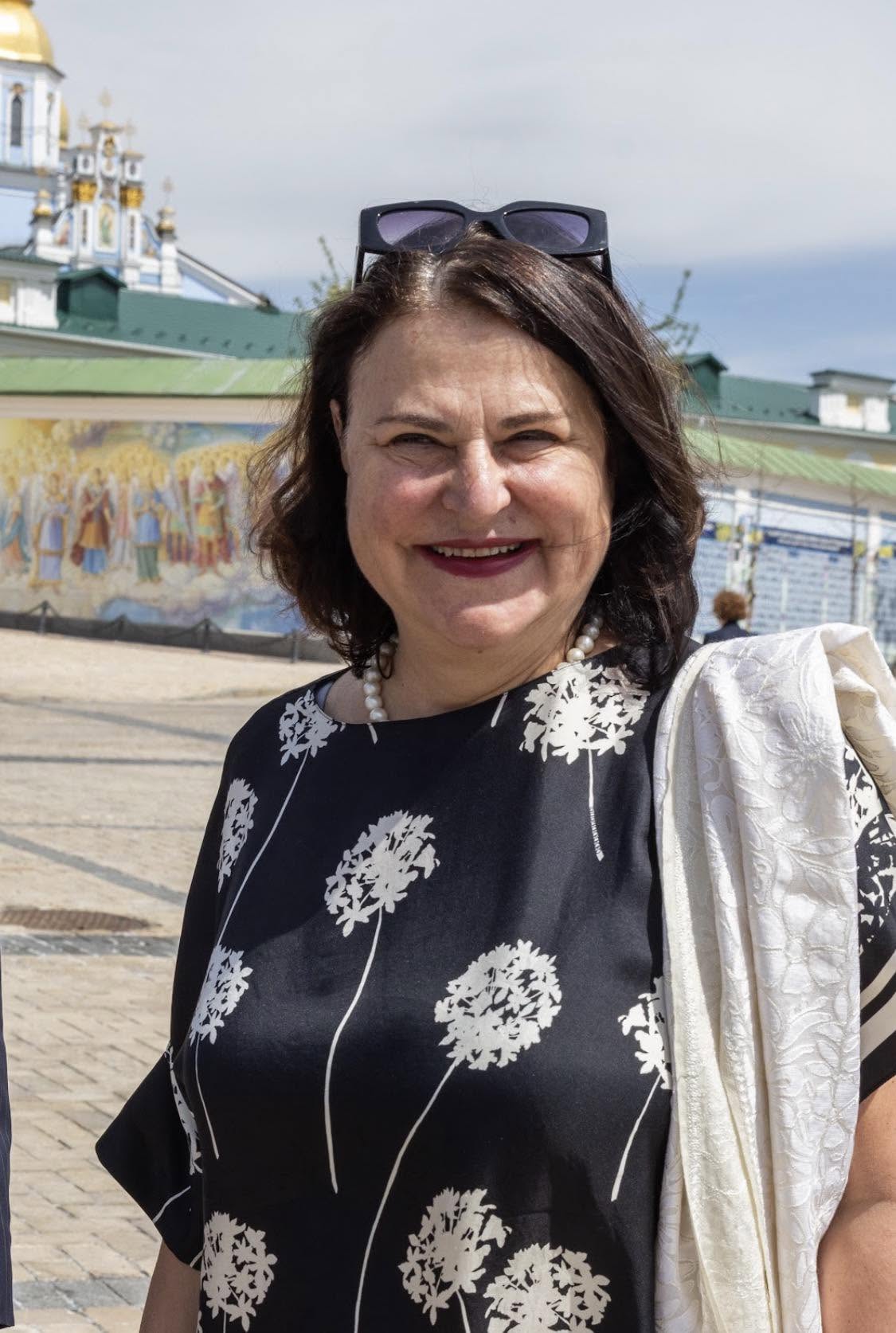
Photo: Katarina Mathernová’s Facebook page
– Hello, Madam Ambassador, this is a success for the whole of Ukraine, and your contribution to this success is significant. But please explain to our Ukrainian readers: what will this first negotiation cluster focus on ?
– Firstly, I would like to congratulate everyone in Ukraine who aspires to join the European Union. This is an extremely important and historic step, as we have been waiting for this for quite some time. Ukraine is ready for these official negotiations, and now they are actually taking place.
So I believe this is wonderful, wonderful news. The opening of the first cluster means that, technically, we have the official opening of accession negotiations. We are now effectively moving to the next level, and the first cluster concerns what we call the fundamental principles. Namely, the fundamental aspects of a functioning state, the rule of law, the fight against corruption, democratic principles and a functioning democracy, a market economy and functioning institutions.
So, this is a whole package of issues. In the case of Ukraine, particular attention is also being paid to the rights of national minorities.
– Yes, but apart from the settled issues concerning national minorities (which have long complicated relations between Ukraine and Hungary), we have other contentious issues . For example, due to disputes of a socio-historical nature, Ukrainian-Polish relations have become strained. Could this create additional problems within the first cluster?
– Look, when we launch the cluster, it won’t be finalised in a week or two. It will be a process during which many topics will be discussed – including, of course, relations with our neighbours.
It is clear that good neighbourly relations and good relations with EU countries influence the overall picture. But I do not think that this specific issue is necessarily part of the first cluster.
- To meet the terms of the agreements, Ukraine – and, above all, the Verkhovna Rada – has a lot of work to do. Have you spoken to Speaker Ruslan Stefanchuk and other officials regarding at least some assurance that all necessary steps will be taken?
- We are in constant dialogue with the Verkhovna Rada, Mr Stefanchuk, the leaders of the parliamentary groups, and the chairs and members of the committees. Commissioner Kos (Marta Kos, European Commissioner for Enlargement – ed.), who was in Kyiv last week, spent two hours in talks with the leadership of the Verkhovna Rada and the political factions on the need to mobilise efforts to pass legislation.
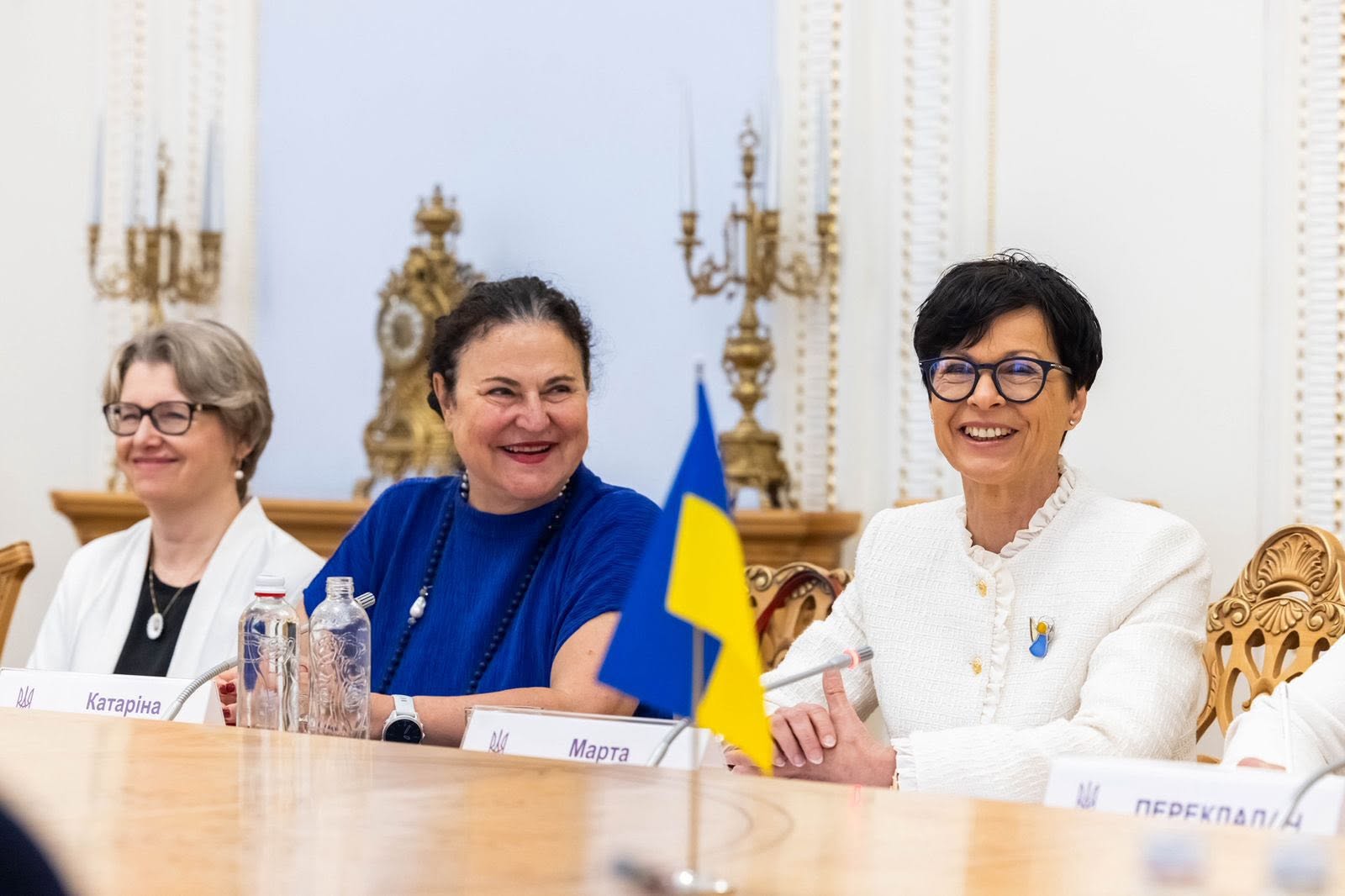
With European Commissioner Marta Kos. Photo: Katarina Mathernova’s Facebook page
I believe that last week was a very good example, demonstrating that the Rada can be mobilised. Several important laws were passed. The budget was approved, as was a Rada resolution highlighting the need to pay particular attention to legislation on European integration.
So I am fully confident that the Rada will be mobilised in this direction.
- During your informal discussions with your European colleagues in Brussels – did you hear any of them express doubts as to whether Ukraine would fulfil all the necessary conditions?
- I think everyone can see that Ukraine is ready.
The Commission stated that Ukraine was ready for negotiations over a year ago. To take this step, we needed to achieve the necessary unanimity and consensus amongst the Member States. I mean, adopting a very complex set of laws and regulations is no easy task.
As I always say, this will not be a linear process. But I think my colleagues are convinced that Ukraine is certainly capable of this.
— Madam Ambassador, we are speaking immediately after Russia’s large-scale night-time attack on Kyiv. We saw your emotional Facebook post about the fire at the Kyiv-Pechersk Lavra.
"Dormition Cathedral in Kyiv-Pechersk Lavra is ablaze!!!
Massive russian attack on Kyiv and other cities still going on as I write this.
The Cathedral is a UNESCO World Heritage Site and one of the holiest places in Eastern Christianity. It was built in 1053.
This war is not about land or territory. It is an attack on the very core of Ukrainian identity and civilisation. European civilisation.
The russians will stop at nothing. They must be stopped.
World, do not look away!"
Also the the legendary film studio named after Dovzhenko was hit. Whenever something like this happens, Ukrainians are outraged and say: ‘These are historic sites and landmarks that we consider sacred. Can the world – or, to be more precise, Europe – do anything about this? Or will it just express "deep concern" once again?’
This is a typical reaction, say, on social media. What would you say about this?
- Firstly, my deepest condolences go out to all the families of those who have lost their lives – whether in Kyiv or in Kharkiv, where the first defenders were killed during the twin attacks. And my heartfelt sympathy goes out to all those who are making their way to the Lavra, which they regard as a sacred place for themselves and their religious beliefs.
Let me put it this way: I cannot speak for the whole world – but what I can say is that the European Union is not simply standing by and commenting. The European Union has been committed to Ukraine from day one.
It is the European Union that is, in effect, keeping Ukraine afloat almost single-handedly. Public services are being provided, and the budget is being funded. Furthermore, thanks to a 90-billion-year loan, we are, for the first time in history, using the European Union’s budget for military expenditure – 60 billion of that amount.
So I am confident that the European Union is not merely commenting on and supporting the situation, but is also helping Ukraine and supporting it in very concrete ways.
Furthermore, the extension of sanctions against Russia, which was discussed today, and all the diplomatic support, all the humanitarian aid and so on – I believe this is a very concrete way of showing solidarity with your country.
- And my country is grateful to its European partners for this... Madam Ambassador, I would like to return to 25 May, when the Russian Ministry of Foreign Affairs (read: Putin) warned of forthcoming systematic attacks on Ukraine, Russian missiles and so on. The Russian Foreign Ministry also urged diplomatic missions, foreign organisations and foreign nationals to leave the Ukrainian capital.
What was the reaction of the embassies and various European non-governmental organisations? According to your information, did anyone leave, or were there significant doubts?
– No, I think you’ve seen our reaction in the fact that we remained in Kyiv. I also stated this publicly on my social media accounts, and a spokesperson in Brussels confirmed it. All embassies remained open, and diplomatic staff remained in the city. I believe that actions speak louder than words.
– Finnish President Stubb has refused to represent Europe at peace talks with Russia regarding the war in Ukraine. Who would you propose as a representative at these talks?
- I would not wish to speculate on this matter.
- Do you agree that now is precisely the right time to begin these talks, given that Ukraine has gained some momentum (Crimea, complex attacks on Russian military-industrial centres, etc.)?
- Firstly, it is very good that the world can see that Ukraine has cards, and that Ukraine is not losing as Russian narratives would have us believe. I consider this very important. As for whether this should be done now or later (starting negotiations — ed.), it is very difficult for me to say from my position.
- According to Bloomberg, European leaders plan to use the G7 summit to hold talks with US President Donald Trump in order to secure his support for a plan to resume negotiations between Ukraine and Russia with European involvement. Do you think there is any chance they will succeed in securing this support?
- I think the only thing that can be predicted is the unpredictability of what will happen. I mean, European leaders have tried several times. We’ll see how it goes this time. Again, from my position, it’s very difficult to guess what will be agreed at the G7 summit. We still have the evening debates and dinner, so we’ll find out then.
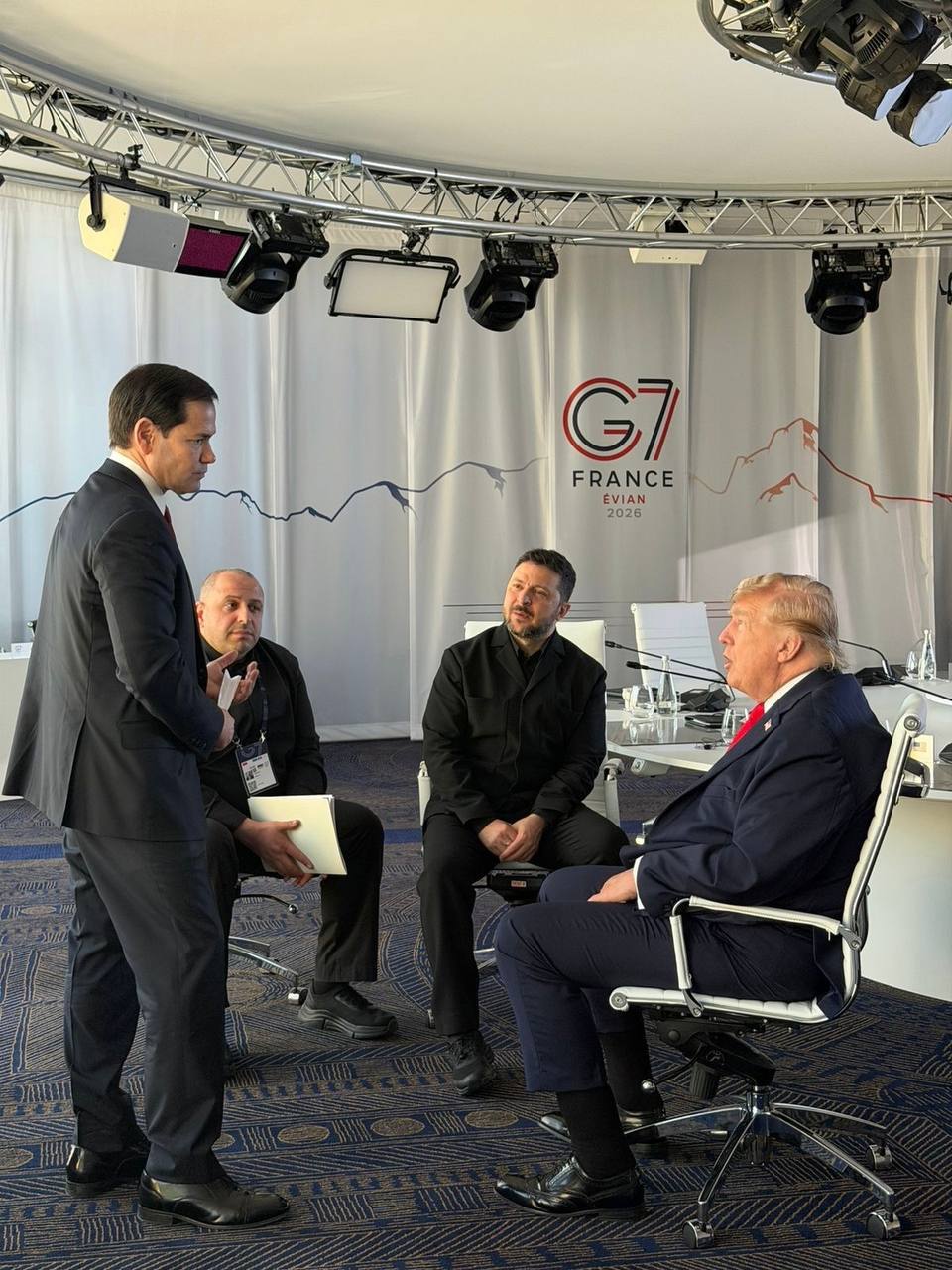
The very next day, the Presidents of Ukraine and the US met on the sidelines of the summit; the President posted a photo of the meeting
- After nights like this in Kyiv, do you receive concerned messages and phone calls from relatives, friends and colleagues abroad? Do they write to you: ‘Katarina, are you all right? I’m worried about you’?
- I receive lots of messages and expressions of concern, but the more such things happen in the world, the harder it is for Ukraine to make the front pages. And that’s one of the reasons why you, lads and lasses, need to do your job. We use social media to highlight the war crimes and atrocities that are taking place. This includes the destruction of Ukraine’s cultural heritage, which, in my opinion, is particularly despicable.

PHOTO: Katarina Mathernova’s Facebook
Yevhen Kuzmenko, "Censor.NET"


