



"Drones need to fight drones." BlueShadow CEO Charles Maher on swarms of maritime interceptors meant to close skies in South
Drone Industry
BlueShadow is building a layered maritime defense system: swarms of uncrewed surface vessels that will detect and intercept Shaheds far from the shore. The first vessel is expected to be launched as early as this summer, with the first combat deployment planned for spring 2027. The company’s founder and CEO, former U.S. Navy submarine commander Charles Maher, told BusinessCensor how much a single interception will cost, why the system contains no Chinese components, and when drones will begin fighting drones without human involvement.
Large-scale and "sophisticated" solutions for different targets: first Odesa, then Kyiv.
– Your system is designed to counter ‘Shaheds’ – slow, low-flying drones. But Odessa is also being attacked by missiles: ‘Kalibrs’, ‘Onyxes’ and X-22s. So, does that mean you’re neutralising one threat but leaving the coastline vulnerable to missile strikes?
– I think you’ve simply been given incomplete information. From the very beginning, our system has been designed to intercept all types of loitering munitions: ‘Shaheds’ with jet engines, high-altitude targets and so on. It is not designed to intercept ballistic or hypersonic missiles – that is clearly the domain of other, significantly more expensive systems. Our approach is to create a large-scale solution to defend against attacks by large numbers of low-cost strike drones, which allows us to use our ‘expensive and sophisticated’ air defence missiles to defend against high-quality missiles. And, to be frank, that is currently Odessa’s biggest problem.
When we speak publicly, we say "Shaheds" not because this is a limitation of the system, but because it is a word everyone recognizes. A military audience needs specifics, but the broader public does not know all the nuances of military requirements.
Let us start with the problem statement. Strikes hit Black Sea ports, cause power outages, and kill people, while losses to the economy exceed $150 billion through damage to trade and other channels. That is why protecting Ukraine’s coastal region is so important.
Why is this such a difficult task? Because of the limitations of existing detection systems, the difficulty of detecting anything over the sea, and Russia’s dominance in the air, at sea, and in the electromagnetic spectrum, it is very hard to see when Shaheds are coming in from the sea. Low altitudes are the preferred option here: flying low over the horizon hides a Shahed in sea clutter; waves reflect the signal, making detection extremely difficult. They also come in at high altitudes to create tactical confusion. Either way, they are very hard to detect until they are right up against the coast, and by then, coastal defense has very little time left. In effect, everything has to be shot down with the first shots; otherwise, the Shahed reaches its target. And even when it is intercepted, debris often continues flying and causes damage. That is the problem we are solving.
– I know this problem; I live in Kyiv, and the same tactic is used here: Shaheds come in low over the Kyiv Sea.
– Exactly. We are a startup, so we have to solve one problem and then move on. And the technology we develop will then be applicable to river areas, around Kherson, around Kyiv, and to land as well. Imagine the same solution on uncrewed ground platforms and then on mothership drones in the air. But first, it has to be perfected in one place.
"Moving the fight out to sea provides the best protection": Odesa’s defense will meet the enemy at sea
– What is the essence of the solution itself?
– Layered defense at sea. This is a fundamental military tactic: you create lines of defense that meet the enemy on the approaches to what you are protecting. Moving the fight out to sea provides the best protection for Odesa’s cities, infrastructure, and trade and enables several successive interceptions, reducing the attack to zero before anything can break through. Imagine a castle: outer walls, inner walls, and the keep where the king sits. The principle is the same.
We are implementing this through swarms of uncrewed surface vessels. Today’s model is this: one human controls one interceptor against one target. That is a major achievement, but it does not scale. Given the industrial-scale production of strike drones, what is needed is area defense capable of stopping massive waves of attacks — 24/7, 365 days a year. Drones need to fight drones. That is what we are building.
Operationally, these are squadrons of uncrewed vessels operating in designated zones under the coordination of mobile ground stations. The control system ensures coordinated operations at sea and integration with the national situational awareness network. The result is a layered defense that allows threats to be intercepted on the approach, moving the fight out to sea and creating a safe harbor along the coast.
"An endless game of cat and mouse": the enemy will always look for a way through the air defense
– The Russians are closely watching our innovations: they are putting jet engines on Shaheds and changing their attack patterns. Can they counter this tactic in some way?
– This is an endless game of cat and mouse. That is why we are building a platform. BlueShadowCore is our platform technology; BlueShadowEdge is our onboard autonomy technology. Whatever the threat and whatever the countermeasures, we can plug new technologies into this architecture.
We are building not a standalone product, but an adaptive platform. Its architecture makes it possible to integrate new technologies, sensors, and interception assets without rebuilding the system. This allows it to evolve along with constantly changing threats. The brain of the system is the software platform, which provides autonomy, coordination, and coherent operation of all its components.
Drone swarms could begin escorting Ukrainian grain carriers at sea
– In cases where mobile fire groups operate in isolation, one group may not know what another is doing. Could your swarm technology become a solution for them as well?
– I understand the urgency — people are suffering. Our approach is to build and prove this at sea, and then quickly adapt it for land and air. So in early 2027, we will be able to move into other domains.
I will tell you this: your question is exactly the same one the military asked me. I will only say that we do not seek to be a separate program sitting somewhere in a bunker — we seek to be embedded in the national command-and-control system, with information flowing both ways. That is what creates the possibility of large-scale coordination, which you asked about. We understand the demand. But first, the system has to be brought to implementation in the maritime domain. Step one: prove it. Step two: adapt it.
– The Odesa coast is a key part of the grain corridor that Russia constantly attacks. Will your system be able to protect vessels on this route?
– One hundred percent — that is exactly our goal. When we say we are protecting cities, ports, and the energy system, we are also protecting the economy, and by the economy, I mean precisely the grain and shipping corridor.
The initial deployment area is along the Odesa coast. But the shipping corridor runs all the way to Istanbul. So the options are either to deploy more squadrons and create a protected corridor along the entire coastline, or to operate as a convoy system — escorting vessels traveling in groups or individually. Convoys are less efficient, but the idea is the same: to allow vessels to pass safely not only past Odesa, but all the way to the Bosphorus.
Offensive missions and timeline: When will defensive drone swarms go on the offensive?
– Right now, this is a defensive technology. But Ukraine also uses maritime drones offensively. For example, it carries out strikes on coastal military infrastructure in Novorossiysk. Can your swarm operate in offensive missions?
– As a startup, we have one mission, and our resources are focused on it. But as for the offensive component: yes, we have spoken with the military about the prospects for using our system in offensive operations. But first, we need to see that it works.
We are moving very quickly. The schedule is as follows: the vessel will be built and launched for testing in July-August, testing will run from September to November, and certification by the Ministry of Defense is expected by November. After that, we will go to the European Defence Fund for donor funding over the winter, build the first squadron of twelve vessels, and carry out the first combat deployment of the swarm in spring 2027.
Who pays: the EU, investors, or Ukraine directly
– Your customer is not the open market but public procurement through European assistance mechanisms. This is a political cycle of grant approvals. What if the European Defence Fund is delayed or its terms change?
– When you speak to the press, everything gets simplified. Yes, that is our main path, but there are other sources of funding as well: private capital, European funding through NATO and the EU, grants and concessional loans, and our first commercial customer.
I would describe the scheme itself a little differently. In essence, we are selling to the European Union so that it can transfer the system to Ukraine. If that path does not work, we will be happy to sell directly to Ukraine if it wants to buy.
But the end market is not only Ukraine. Look at the Persian Gulf: Iran threatens Saudi Arabia and the Emirates — every oil terminal, desalination plant, and port there needs protection. Look at Europe: the "drone wall" is focused on the land border, but the maritime border is the longest and most permeable, and probably the most economically vulnerable. We are involved in the EU’s counter-drone program. And then there is Asia: we have already spoken with the Vietnamese military, and there is interest from Japan, Taiwan, the Philippines, and Indonesia. The Danish Trade Council — a unit of Denmark’s Ministry of Foreign Affairs — is already bringing our briefings to the militaries of partner countries.
How much it costs to shoot down a Shahed
– With traditional air defense, the cost of interception is easy to calculate: a Patriot missile costs about $5 million, while a Shahed costs $20,000. How much will it cost to intercept one drone with your system?
– Yes, that can be calculated. Our design approach is focused on keeping the overall cost per shot low. To do that, we move expensive technological components from the interceptor to the vessel. This allows the interceptors to remain cheap, while high-end components on the vessel are reused again and again, spreading their cost across many missions.
And I would add: even in today’s ground-based counter-drone defense, the drones themselves are cheap, but the infrastructure behind them – command posts, radars – all of that has to be taken into account. You cannot count only the bullet. You have to count the entire system: how much it costs to deploy this capability and make it effective.
Localization is a critical issue: "Most of our partners are Ukrainian"
– Many manufacturers in Ukraine assemble drones mostly from Chinese components. Your partners, as I understand it, are mostly from Europe and the United States? And are you working on localization in Ukraine?
– Let me correct you: most of our partners are Ukrainian. Most of the hardware will be manufactured here, in Ukraine. Only some software components and chips for BlueShadowEdge will be produced abroad.
It is true that Chinese components used to dominate. But Ukraine and its entire military technology community understand that localization is critically necessary. First, to prevent counterfeit parts — defective, unreliable, or even maliciously modified ones — from entering the system. Second, an external supplier such as China can simply cut off supplies and paralyze production. We know our supply chain; it is resilient — and there are no Chinese components in it.
The future of war: "every soldier still carries a knife"
– There is a lot of talk that our war is unique, with so many new technologies invented here. Is this a one-off situation, or are we seeing what all future wars will look like? After all, the tank was invented a hundred years ago — and saber fighting came to an end.
– The emergence of drones is a revolution in military affairs. Gunpowder, rifled barrels, the machine gun, the tank: every major step created a new era of warfare. But it does not erase everything that came before it — it adds another dimension of complexity.
Every war has its own character: it is shaped by the location, the political conflict at its core, the resources of the sides, and political will — how far we are prepared to take this war at all. Russia has nuclear weapons and could use them today — but it does not: they themselves have chosen the limits of escalation.
I would say that you are seeing escalation now precisely because Ukraine has become more effective — not only on the front line, but also in deep strikes that knock out Russian oil production and transport. This hits the critical heart of Russia’s ability to function as a state. And Putin, in my view, is a man who escalates instead of backing down: you have seen this in the extremely brutal strikes on Kyiv recently. The more successful Ukraine is, the more Russia will escalate — potentially up to opening other fronts in the Baltics or intensifying hybrid warfare in Europe’s seas.
So we have added another unique technology, but none of the old ones have disappeared. Every soldier still carries a knife – because it is the last means of defense when it comes to hand-to-hand combat.
Human on the loop: when AI will start deciding where to strike on its own
– Your product contains a lot of artificial intelligence, but decisions are still made by humans. Will we see a moment when the human is taken out of the loop, and all decisions are made by AI itself?
– Two things. First: ultimately, it is humans who create systems and set the requirements. Our system works on the human-on-the-loop principle. The system does its job, but when it is ready to employ an effector, it refers the decision to a human: here is the target, here are the indicators showing that it is indeed hostile, here is the plan, the probability of kill, and the type of interceptor — and the operator says "yes" or "no."
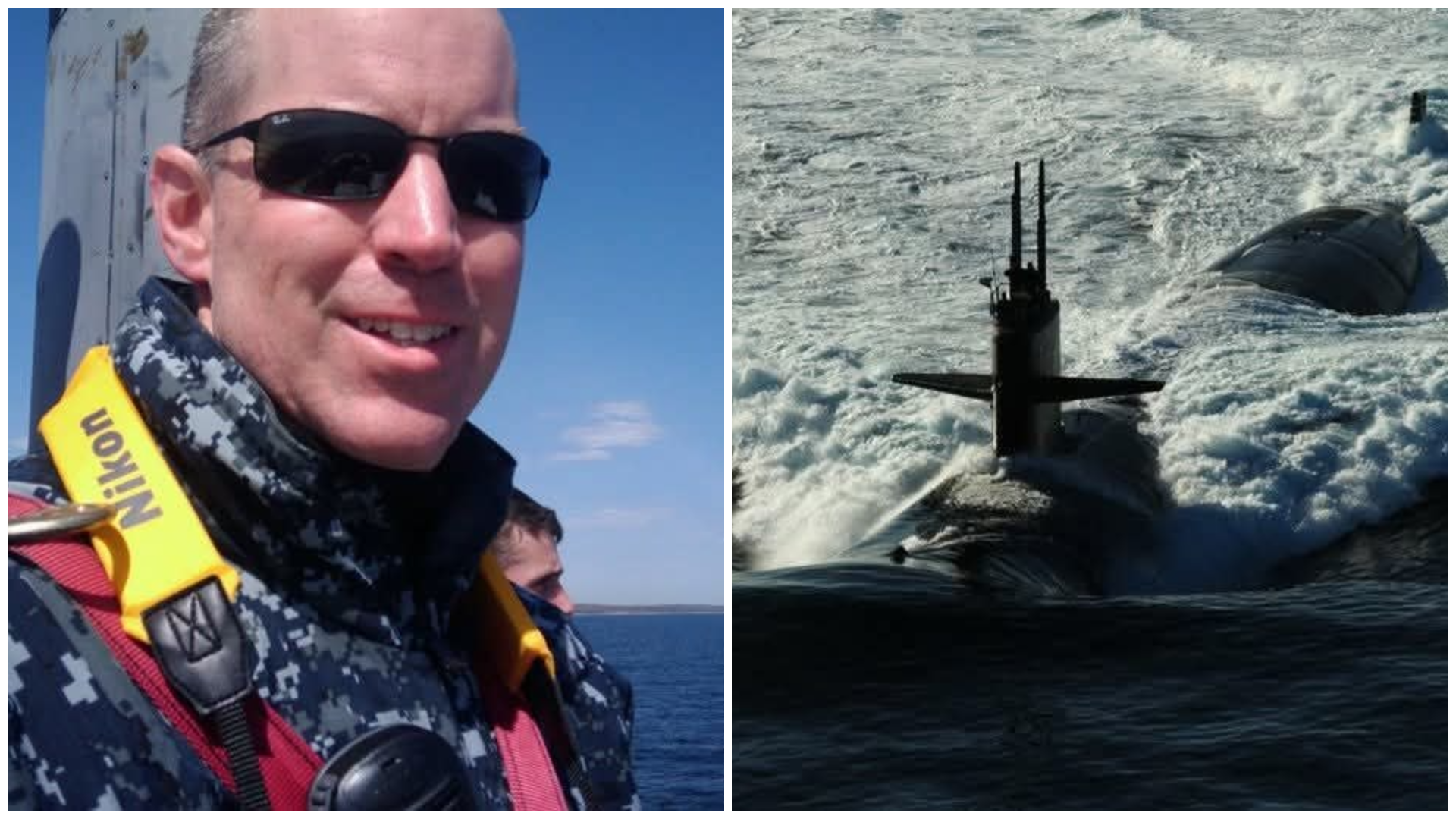
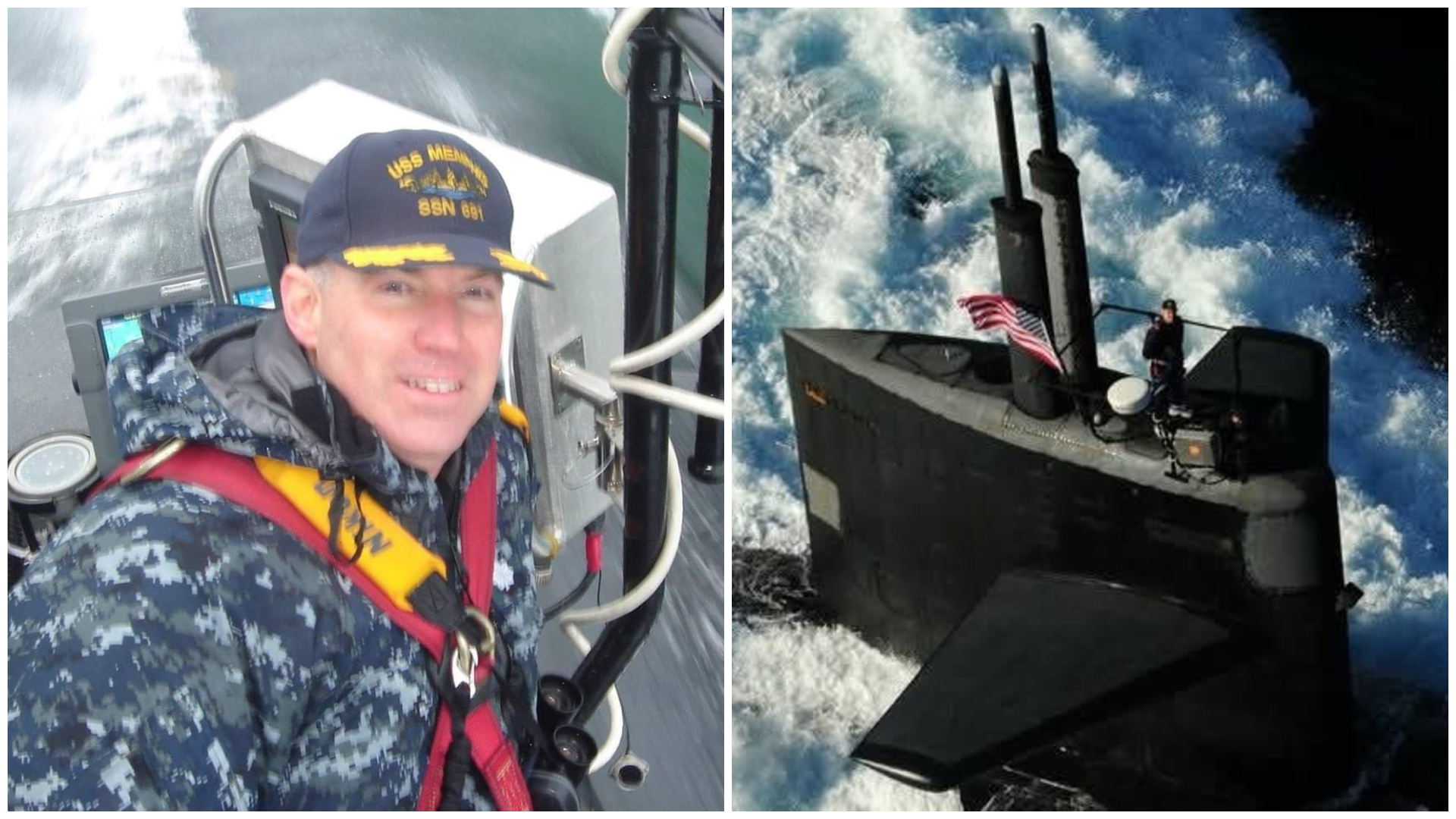
Second, I actually believe very strongly in artificial intelligence. I was a U.S. Navy submarine commander, and after retiring I went into pharmaceutical manufacturing — that is where I learned a great deal about quality systems and how automation improves the quality of the outcome. I think we will reach a point where machines, in many cases, will make better decisions — provided they have enough information and a good algorithm. Will it take time? Yes — it has to be developed, tested, and certified. But through design, oversight, and quality control, I think we will get to the point where we start trusting drones to fight drones without human supervision — for certain missions. Not for all of them, but for certain ones.
Feedback from the front line: storms, icing, and honest answers
– You are taking part in the third batch of the Defence Builder accelerator, one of whose key features is direct contact with units that use such systems. What has this communication given you?
– I cannot go into detail, but I am in contact with units from different branches of the armed forces. And first of all, all of them fully confirm that the problem has been formulated correctly: Shaheds are impossible to detect until they get very close, and the interception window is extremely narrow.
Second is learning from the operators who have been fighting this battle for three or four years. I am an experienced sailor myself, but the lessons they have already learned are invaluable: we are building them into the system at the design stage so that we do not have to learn them all over again. We are standing on the shoulders of their experience.
Third are the technical challenges. The Black Sea is difficult at any time of year, but storms in November and December are particularly harsh. We have to think about seakeeping, stability, and icing: even if the sea does not freeze, spray on the vessel can make it dangerously heavy or freeze its mechanisms. Will all problems be solved at the prototype stage? Probably not. But we will reduce risks step by step so that by the time of deployment, there is a solution for every known risk.
Overall, I would say this: Ukraine’s military and society are extremely open to cooperation and provide honest feedback. That allows us to move very quickly.


