



21-year-old FPV pilot with call sign Thirteen: "I was afraid I wouldn’t get chance to fight"
Volodymyr survived the Russian occupation, left home, and at age 19 signed a contract and joined the army. Today, he is an FPV drone pilot with the 1st RUBPAK USF of the 67th SMB’s. He chose the call sign "Thirteen" himself—not out of superstition, but as a challenge: to prove that what matters isn’t a number or a name, but what you do.
His war is not just about trenches and shelling. It is a hunt in the skies, a battle of technology, logistics under fire, and constant adaptation to the new realities of the front line.
He recently paid a brief visit to Kyiv – not to relax, but to tell people about his work at the ‘Kurazh’ charity festival. There, visitors could not only meet military personnel but also literally try their hand at operating a drone.
We were able to meet Volodymyr and talk about UAVs, life just a few kilometres from the enemy, adapting to constant danger, the future after his contract ends, and why real change in the army begins not only with reforms, but also with the people.
- You were only 19 when you signed your contract, and you weren’t subject to conscription. Why did you decide to join the army voluntarily anyway?
- I was brought up by the nationalist organisation ‘Prava Molod’, where I was taught that I should be wherever I could be most useful. It happened to be collaborating with the 67th Brigade. It’s all part of ‘Right Sector’ – a large, well-established organisation with many branches. I was in the youth wing. The other branch was the "Right Sector" Ukrainian Volunteer Corps. I’d always been impressed by it. I wanted to be part of that movement. That’s why I ended up there.
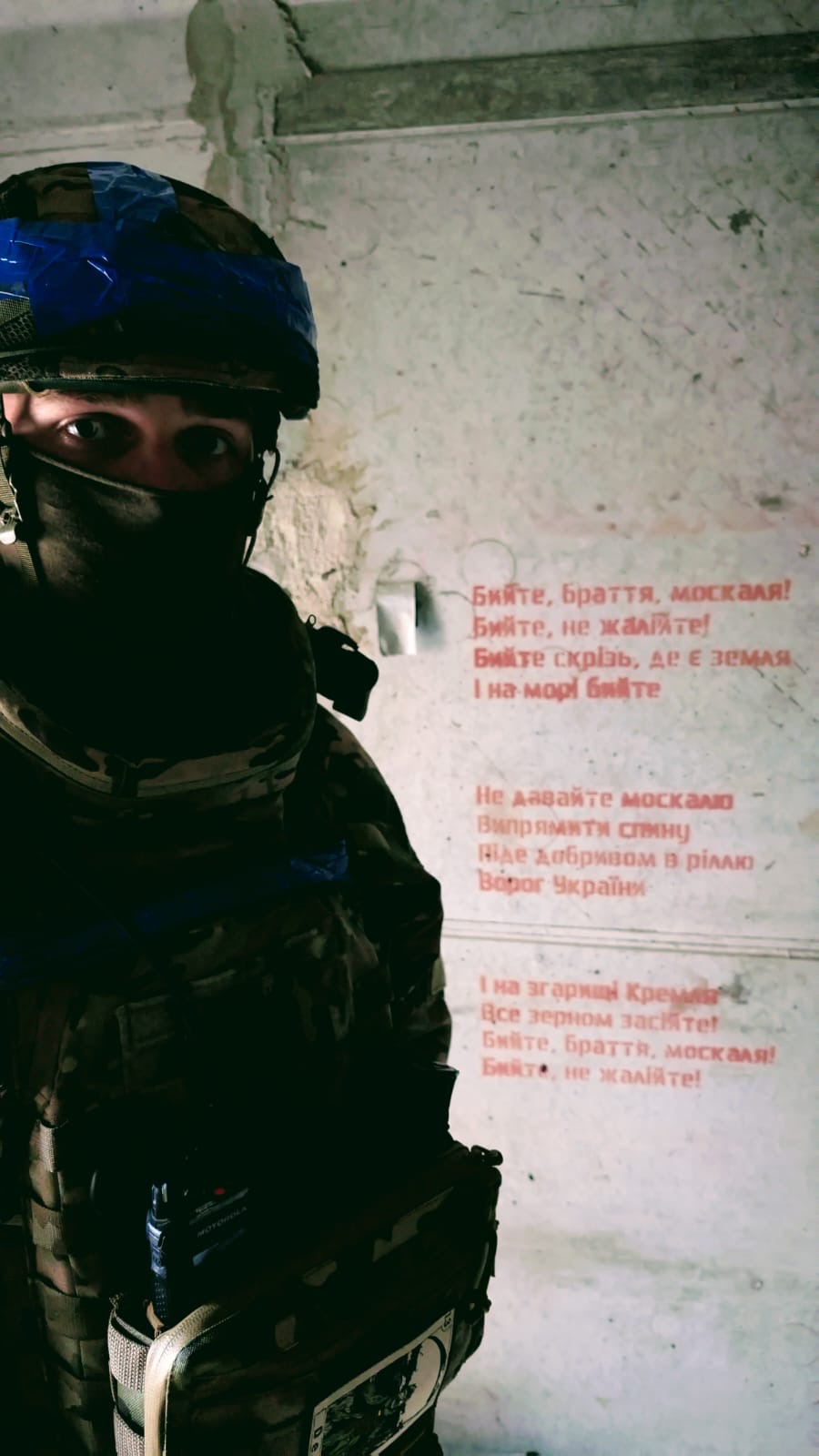
Why did I sign up? I’d simply got fed up with doing nothing. I was studying, just moping about in the hall of residence, and it was important to me to be of use. I was also worried I wouldn’t get a chance to fight. By that time, I was already taking courses on Mavic and FPV. So when I arrived at the recruitment centre, I already had my certificates. They snapped me up straight away. I was very lucky to be sent on a BGMT to the UK. After that, I underwent specialist training. Then I spent three or four months just learning how to operate FPV drones.
- Why did you choose the UAV field?
- It’s safer. Besides, I really enjoyed the technical side of things. This work is also very important. These days, you simply can’t manage on the front line without it.
- So you can now take a drone apart and put it back together, or turn two into one?
- Yes. Straight after my training, I came away with a solid foundation to build on.
- FPV and Mavic involve different ways of working…
- Exactly! But the Mavic is where you start. So you have to begin with it anyway. It’s simpler and does the job – in most cases, that’s reconnaissance. FPV is a bit more advanced.
What’s more, whilst the Mavic comes in a single standard configuration from the Chinese manufacturer, FPV is like a construction kit. And working with it is more dynamic than with the Mavic. You can run into all sorts of problems. You have to constantly adapt to it, because sometimes things just don’t work. I don’t just fly; I also provide all the technical support for my position and my work. It’s more complicated, but also more interesting.
The lads who fly the Mavic told me they’ve had assignments where they’d spend months tracking a single target. And that really kills any interest in the job. It would be more exciting if they were searching for something, constantly patrolling somewhere. But with FPV, I work on call. And that suits me. My dad used to say I have a knack for breaking things (smiles. – O.M.). Besides, I used to play a lot of computer games when I was at school. That helps with my work now, too.
- Do you only have FPVs here? Do you have bombers as well?
- We have bombers in our battalion, but in our company specifically, we only have FPV drones – radio-controlled and fibre-optic ones.
- What’s the situation with fibre-optic connections now? I remember when these drones first appeared; the Russians very quickly adopted this technology and started flying them 10–20 kilometres.
- We were in the Sumy region at precisely that time. We’d only just started to notice the emergence of these fibre-optic drones. It was tricky. But we also started to get to grips with it, and we managed quite well. We mainly flew over logistics routes where the ‘bukhankas’ travel, targeting artillery and quad bikes. We’ve now reached the point where we have drones on fibre-optic cables that act as ‘waiting drones’, taking out someone every day. We’ve also started using radio ‘waiting drones’ quite often, which we call ‘pochekuny’. This helps us out a lot. Because we’ve had to pull back a bit at the moment due to the logistical difficulties. The Katsaps are flying a lot, so it’s simply too dangerous for us to fly in. And by doing this, we save ourselves about five minutes’ flight time. So I fly out, deploy it. If there’s a target, I’ll react immediately and be firing within two or three minutes.
- So even five minutes make a big difference, don’t they?
- Of course! Because a Russian might pop out of some hideout, move around a bit, then dash into another one. But here, as soon as I spot him, it’ll take two or three minutes and I’ll be ready to engage.
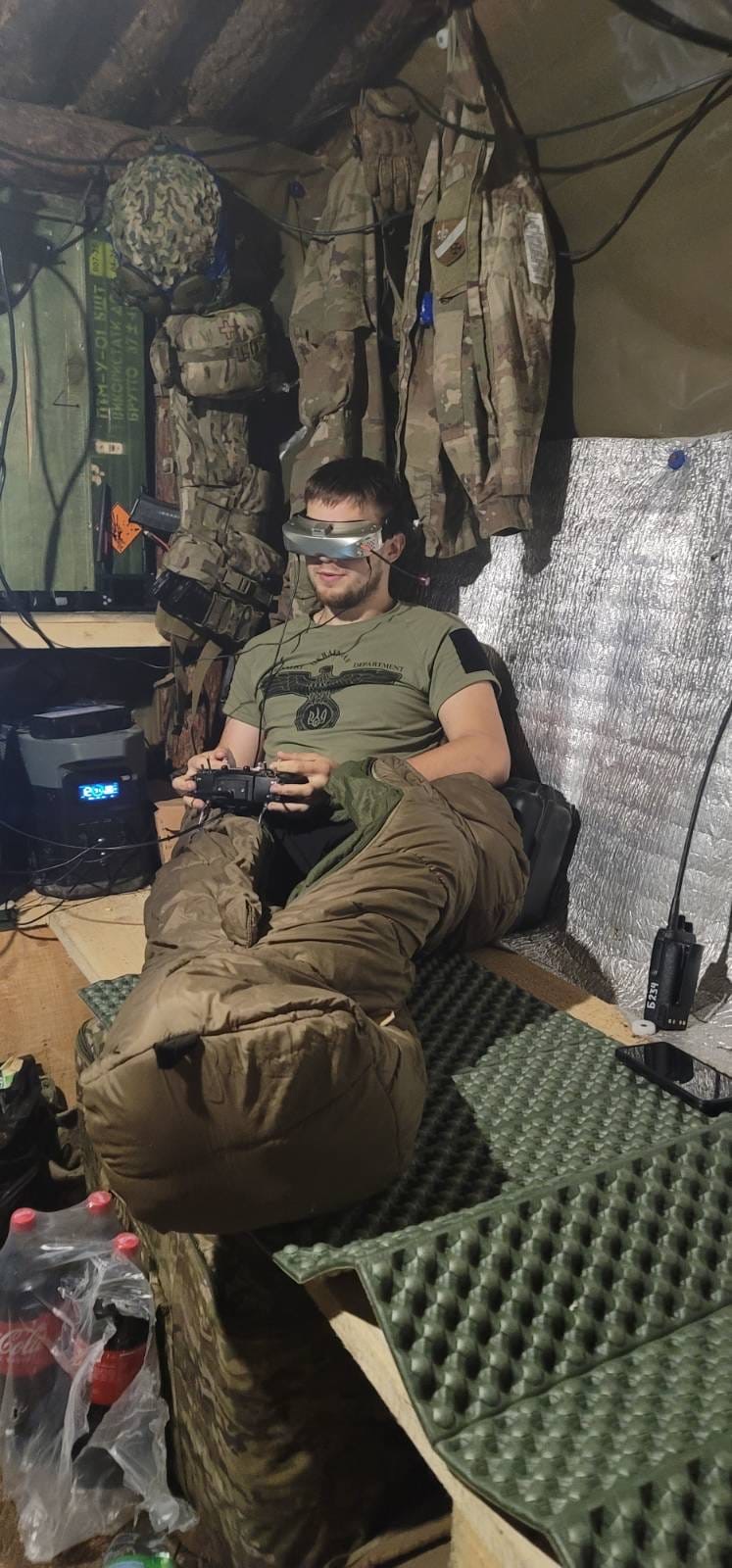
- About a year ago, the military told me that the Russians’ "wait-and-see" drones often didn’t work. How are things now?
- They’re there and they work, but the bigger problem is that the number of different enemy drones in the air has increased significantly. It’s not always possible to track them. It’s easier with fibre-optic cables – they’re slower and smoother.
During my last rotation, when I was on a combat mission where we were flying out and ‘taking them out’, some lads were heading our way. A Russian radio-controlled drone was sitting nearby, but it was already equipped with guidance systems (we have this technology too, but it’s not yet as widespread). It simply locked onto our vehicle, and our electronic countermeasures failed to engage.
- What happened?
- It hit the vehicle. It was lucky there was a cumulative charge in it. The vehicle burnt out, but everyone was unharmed.
At the time, there were 18 of us in a small dugout. We were all standing there, close together, waiting. The drone had done its job. I suppose the Katsaps must have told their side that there was some activity in our area, and loads of drones started flying around, looking for us. It’s terrifying.
- Do they often hit our vehicles like that?
- Not as often now. When we were near Pokrovske, it was tougher. And it only got worse as time went on. Now they’ve pulled back a bit, so it’s more or less normal.
- So you were in the Pokrovske area?
- Yes, in the Dnipropetrovsk region. At first I confused it with Pokrovsk. I arrived in the Donetsk region and asked: "Where’s everyone?!" (smiles. – O.M.). We were moving from the Sumy region at the time. And before that, I’d been travelling around the local authorities, asking for money for drones…
- And how did that go?
- It went very well. We raised 17 million in just a couple of weeks from the Chernihiv region alone. We simply adopted this strategy: it’s better to go there in person so that people can see us, have a chat and come to some sort of agreement that will make us memorable. We don’t ask for much. We ask to what extent the community is actually able to help. And even if it’s just 100–200 thousand, that’s already a bonus for us. Because then we can visit one more community, then another, and gradually raise the funds.
- So tell us more: how did you end up coming to the Donetsk region instead of the Dnipropetrovsk region?
- Well, I was given the task of looking for houses in the Pokrovske area. I arrived in the Donetsk region. I thought: something’s not quite right (laughs. – O.M.). I started phoning my people to ask, and they told me: it’s the neighbouring region. So I went to Pokrovske. We set up there and started working in the Ivanivka area. We were seconded at the time, as our team was undergoing restructuring. We worked there for a couple of months. We also managed to visit the area around Zelenyi Hai, then on to the Berezove and Pokrovske districts. There, the sort of work I’m used to had already begun. Sometimes we have specific targets, and other times we simply ask to go on a ‘safari’.
- How does that work?
- Thanks to our experience, we know where the Katsaps might be; we fly over there, time it right – during the ‘grey hour’ when vehicles might be out and about. So you fly about 15–20 kilometres away and try to find a target. Usually, in most cases, you find some sort of vehicle. It’s a real treat to find one. It’s just a Katsap on a motorbike or in a car. Because there’s no armoured vehicles around at the moment. We make their logistics much more difficult. Even if I miss or crash in the area, they’ll still be more afraid.
- And what do you target most often?
- For the most part, we target manpower.
- Are there still motorcyclists about?
- Yeah, those motorbike idiots.
- The lads also said they’d hit Russians riding horses.
- That happened in our sector in the Dnipropetrovsk region too. We saw the Russians in body armour and helmets riding horses. So we hit them with FPVs – they never made it. The horses threw them off and ran away.
Generally speaking, we’re responsible for most of the casualties inflicted on enemy personnel, and we do so quite quickly and successfully compared to other means, so we’re used for everything. We strike targets, we scan the roads for ambushes, and we make deliveries to the infantry, because the UGVs can’t always get through…
- Bombers are also used for resupply.
- We do that very rarely, and mostly at night. It’s a big machine, very visible, so it’s easy to give yourself away, as you can be tracked to see where it lands. With an FPV, I can just fly off in one direction and that’s it.
What’s more, a bomber can’t make as many flights as I can. I’ve brought along about a hundred drones for rotation, and they come with fully charged batteries straight away. If I need to deliver some water to the lads, we strap two bottles on with a cable tie – that’s it! We land it, they untie them, and I can still fly back.
- What do you deliver?
- Water, batteries, and so on. Sometimes the lads ask for something to be delivered urgently – medicines, for example. And that really helps out.
- Looking back over your entire time in service, these past two and a half years, which story stands out most in your memory?
- The Katsaps have this tactic where they can infiltrate in groups of one or two. There have been times when light vehicles would just drive straight at us head-on. I don’t know if it’s just sheer recklessness or what. Anyway, there was this one time when the Katsaps drove up to us in a ‘Zhiguli’. They were about 500 metres away from us. Our lads took out the car with a fibre-optic drones. It came to a halt, and the Russians dashed into a nearby copse. Because it was so close, the connection was better, so I managed to fly right in. They were sitting there, hiding their heads. So we ‘took them out’ one by one.
- Didn’t they put up a fight?
- No. They just hid and lay there quietly.
- And where was it generally the hardest for you?
- Every area was difficult in its own way. We were in the Sumy region this winter, when there was mud and slush everywhere. The first time we went in, it looked like this: we’d turn off the road onto some track, and you’d just drive on, and there’d be a field, and it was like a sea of mud. Sometimes our vehicles couldn’t make it out – they’d get stuck.
And when we were in the Ivanivka area, our position came under fire for the first time. It was a ‘Grad’ rocket system.
- Did everyone survive?
- Yes. But everything up top was completely wrecked. The equipment we had there just flew off. We were actually frying potatoes at the time. It’s a shame, because they ended up all over the place.
It was just that a ‘Rubicon’ had started operating in our direction, so things felt a bit unusual. Before, we’d been 5–6 kilometres from the front line, and we’d never had this sort of problem in the air – nothing that bothered us like that.
Now there’s all sorts of things flying about in the sky! Sometimes there were days when someone nearby got ‘caught’, and for a week we couldn’t even just go outside, because there was constantly something flying about. You go out and hear something buzzing. So it’s a bit trickier, but you adapt to everything. You know, when I first started going out on patrol, I was taught one rule: ‘Better to overreact than to underreact’. So you try to be more careful.
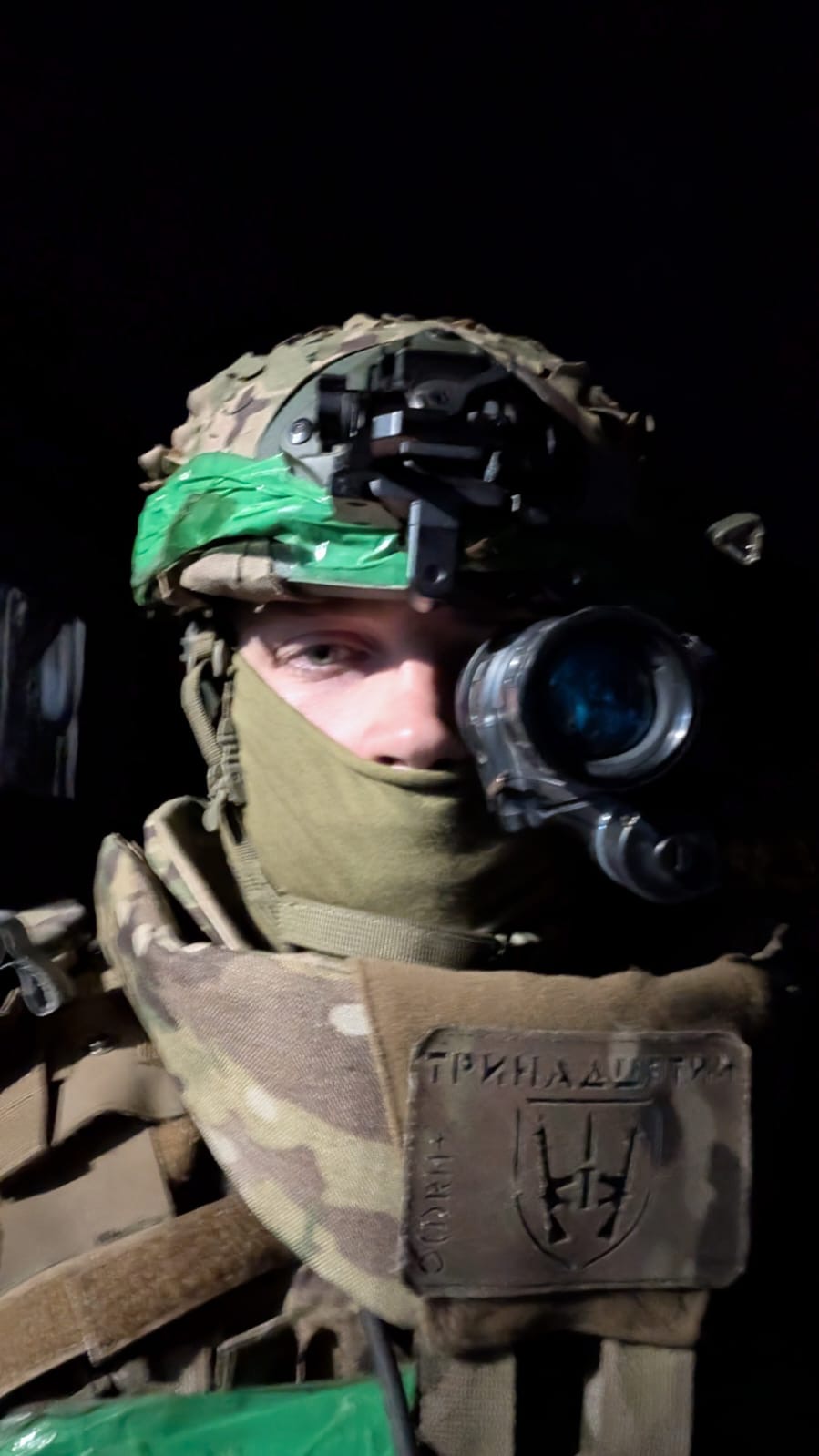
- But if you adapt and get used to it, doesn’t that dull your instinct for self-preservation?
- That’s true.
- It’s like the shelling of civilian cities…
- Like today? (We’re meeting on 15 June following a massive shelling of Kyiv. – O.M.).
- Yes. But on the front line, it’s even more dangerous.
- I think it’s safer where I work or where I’m staying than in Kyiv.
- How did you react last night when Kyiv was under fire?
- My girlfriend was scared, so I tried to reassure her. But I’m used to those kinds of sounds.
You know, last time I was working on deliveries. Because we have one position that the lads can only reach on foot. You have to understand that I’m not a ‘mavicist’. They just take a bit of kit with them, a couple of drones and their personal belongings. But I need loads of drones, batteries, initiation boards, and ammunition. Plus food and fuel. The van’s absolutely packed. You can’t carry it all on your back. And the UGVs don’t always make it all the way there. That’s why we set up a separate unit dedicated purely to deliveries. I managed to work there for a bit. So, what I’m getting at is that KABs might come flying in there. The Katsaps love to raze everything to the ground. So it’s very loud.
- You mentioned the Russian "Rubicon". What are they like in action?
- They’re the ones who destroyed our vehicle, as I told you. When they’re not around, you don’t even notice anything flying in the airspace. It’s only when they appear that the danger arises, so it’s best not to stick your neck out unnecessarily.
- The Russians are also relying on UAVs these days. They’re even training teenagers...
- I’ve heard that their pilots don’t stay in the job for very long because they can be transferred to assault units. I don’t know if they have enough experienced pilots. But Rubicon certainly does.
- Our government recently announced military reforms. Your contract expires in February. Will you be signing a new one?
- I doubt it. I don’t want to spend my whole youth at war. I’d like to live a bit more.
- Given your age, you’ll still have the chance to travel abroad. Are you thinking of taking advantage of that?
- I’ve thought about travelling around Europe. I’ve saved up a bit of money. I’d like to see the world and have a fresh start. After all, my nerves aren’t quite what they used to be.
- What about staying abroad?
- It’s hard to say.
- Zelenskyy allowed young men to leave the country a year ago. Given your age, you probably have friends or acquaintances who left back then?
- Yes.
- Do you keep in touch with them?
- No. For me, a person’s political views are important. If they’re completely neutral or support the Russians, what’s the point of talking to them?!
- Are there people like that amongst your acquaintances?
- Yes. Some who were politically neutral, who then simply chose whatever was more convenient for them. My story is different. Just as the full-scale war began, I was still studying. I left the occupied territory myself. It was important for me to continue my studies somehow. I didn’t want to waste a year or two just sitting around and waiting.
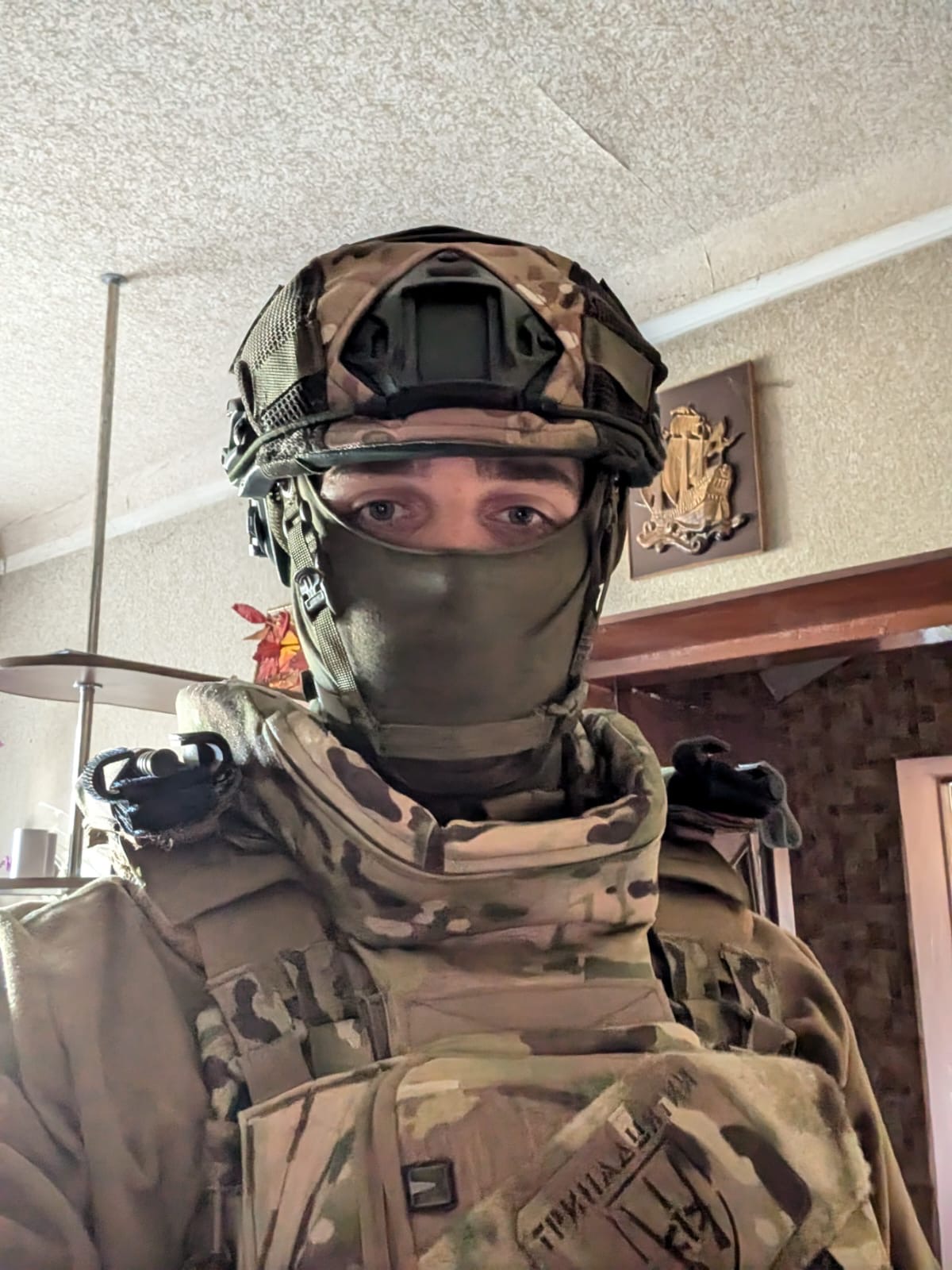
I also switched to speaking Ukrainian at that time. I’d tried to do so back in 2019, but it didn’t really work out because everyone around me spoke Russian.
- Speaking of which, the language is still a subject of debate. For the most part, those civilians who speak Russian justify themselves by saying that the military on the front line often use it. Is that true?
- No. Sometimes, if the Russians break through somewhere, you’re constantly on edge, ready to come out of the dugout and start shooting. So if I hear Russian under such circumstances, I’ll shoot first and ask questions later. When you speak Katsap language, you’re identifying yourself as a Katsap. It’s hard for me to see you as a Ukrainian. My reaction is accordingly.
Of course, we do have lads who speak Russian from time to time. There are far fewer of them than people make out. But they’re learning too.
- Have you ever encountered ageism in the army?
- When people first meet me, they find it hard to believe I’m 21. I’ve got a lot of experience. I’m a junior sergeant, a squad leader. And then they eventually find out how young I am. It’s more of a laugh than anything bad.
- What don’t you like about the army?
- I’ve actually been very lucky to be part of a four-man crew that’s grown into a large company. We decided to take responsibility and get others involved. Now my lads are platoon commanders. We’ve got such a large company. Everyone has the spirit of a volunteer. Everyone listens to one another, and that’s very important, as it helps with our work and communication. In fact, the army is an organisation where everything depends very much on the people. We need people who will replace ineffective systems with ones that work. The secret to success lies in renewal and growth.
Olha Moskaliuk, "Censor.NET"
Photos provided by Thirteenth


