



Call sign Frutti: Before I was taken prisoner, it was one kind of war, now it’s completely different one
He is originally from Horlivka in the Donetsk region, which the Russians occupied in the spring of 2014. It was from his hometown that he brought his call sign—Frutti—which he earned during airsoft games because of "Tutti Frutti" candies. Even as a teenager, he wanted to volunteer to go to the front, but at the time it seemed he was already too late—it looked like it was all about to end.
So he went to Kyiv to complete his studies. He worked on building sites and on night shifts at KFC to pay for his course at a construction college. After graduating, he joined ‘Azov’. Since then, his life has been a war.
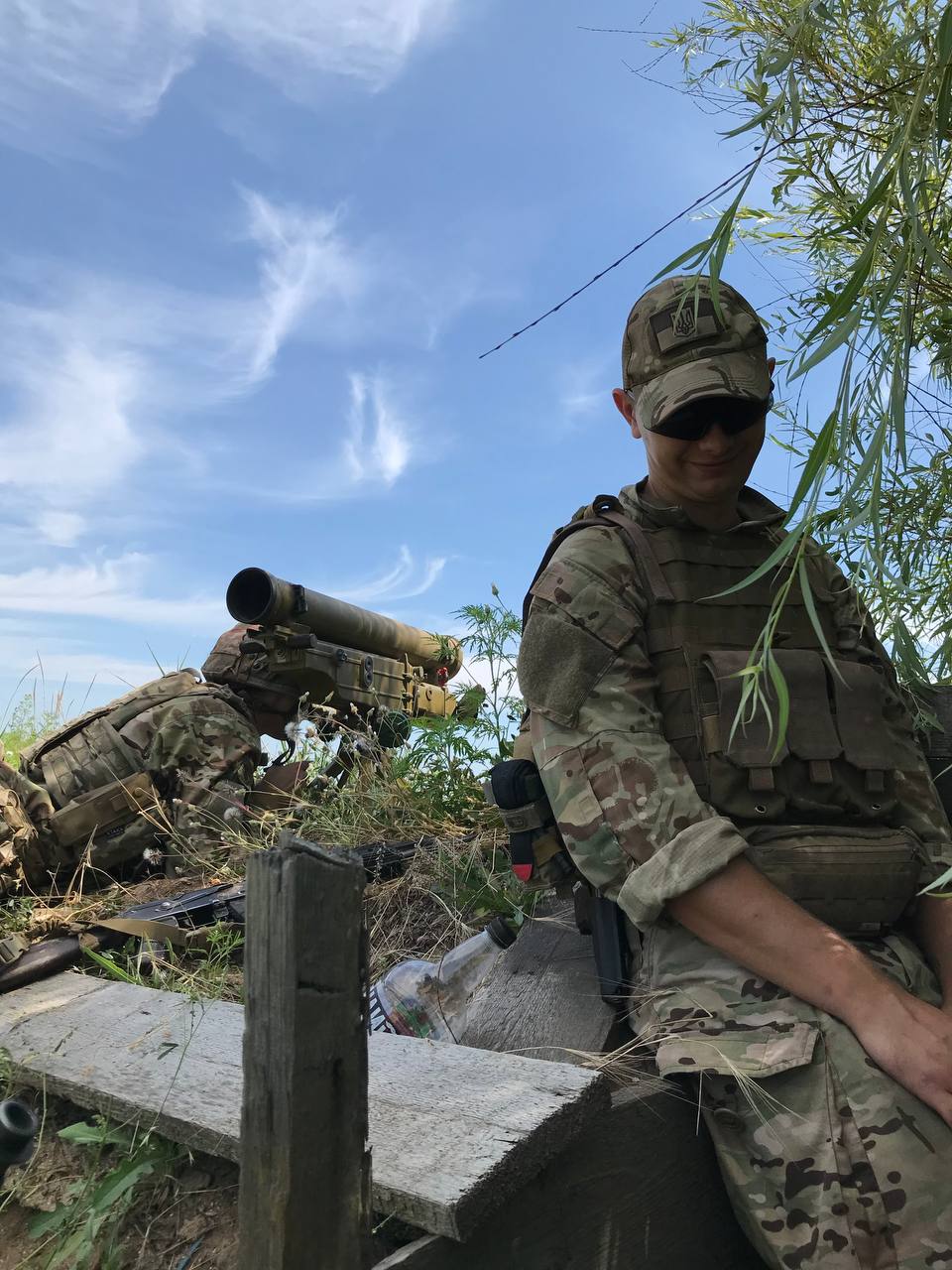
Over more than ten years of service, he has held several military roles: he has been an infantryman, a mortar operator, a top surveyor, a drone operator and a spotter, and is now an officer in the reconnaissance section of the 12th ‘Azov’ Brigade. He defended Mariupol in 2022 and survived Russian captivity, where, together with his comrades, he spent several hours every day studying English so as not to lose his discipline or sense of normal life. After his release, he returned to the army within just four months. But his military story began precisely with the occupation of his hometown.
- Tell us what 2014 was like for you, when the Russian-Ukrainian war began?
- That year, I was studying to be an architect at the Donetsk College of Construction and Architecture. I held pro-Ukrainian views, although none of my friends did. By the summer, I was desperate to join the ‘Donbas’ battalion. I had one acquaintance from airsoft. We weren’t close friends, but he was the only person I knew who held a pro-Ukrainian stance. By that point, he had already joined the ‘Right Sector’. I spoke to him about what to do, where to go, and the best way to proceed. He told me at the time that the ‘Right Sector’ had a rather illegal status – legally, one could end up in a tricky situation. There were a lot of problems in the Armed Forces of Ukraine back then. So that left ‘Donbas’ or ‘Azov’. For some reason, ‘Donbas’ had a more active media presence at the time. I tried to join them in August 2014. My parents and I had just moved to the village of Zaitseve, because our flat in Horlivka was near a checkpoint, and there was constant shelling there. It was very difficult. So we moved to the dacha – to my grandmother’s old house. I rang ‘Donbas’. A girl answered and said: ‘Take your mobile, your documents, your passport if you have one, and come to Kurakhove.’ OK. But at the same time, tanks and two BMPs from the Ukrainian Armed Forces drove through Zaitseve. They were actually entering Horlivka too – throughout the summer, the flag on the administrative buildings changed literally every day. It already seemed to me then that, in principle, I’d missed the war. Plus, my mum, of course, was pleading with me in tears: "Where? What war? Why?" We were effectively at the epicentre of events, and she, naturally, didn’t like any of it. But I was curious; I wanted to join the army.
And then a classmate of mine from Donetsk transferred to Kyiv. He said to me: "Come over here. It’ll all be over soon anyway. This is Kyiv; we’ll finish our studies, and everything will be fine." Somehow, taking all the factors into account, I thought: "I’m already too late for the war. By the time I get there, with all the studying I’ll have to do, I won’t make it in time. And anyway, I’ve only got a year left to finish my studies. And Mum’s crying. All right, I’ll go and study." And so, in September, I set off for Kyiv. But things didn’t turn out as I’d expected. It all got turned upside down. Then came Debaltseve. It all gnawed at me, but I didn’t want to drop out when I had so little left to do. So, after graduating from construction college in 2015, I made a conscious decision, right there in the hall of residence, with just the few belongings I had, to go and serve.
At first, relying on my old memories, I tried to join ‘Donbas’ again. But the door had, so to speak, closed – I was told I either needed to have completed compulsory military service or be 21 years old. I didn’t meet the age requirement, so they didn’t take me. I found Azov’s phone number online. I dialled it. They invited me for an interview. I spoke to a lad with the call sign Bober. He’d lost an arm in the war. He was quite sceptical of me, partly because I’m from Horlivka. He said I’d be back in a week to collect my documents because I wouldn’t make the cut. But I didn’t go back. I suppose it was partly because he’d told me that. That’s how I ended up at the boot camp. After that – on and on and on.

- I know you were on the Svitlodarsk arc. What did that period mean to you?
- We took up combat positions after our deployment at the end of January 2019. At that point, we were right in the Zaitseve area. And from my position, it was literally just four or five kilometres to that very dacha I’d already mentioned. It was familiar territory to me. I’d been there as a child, cycling round the area when I was just a twelve-year-old lad. So I felt quite at home there.
In fact, this wasn’t my first combat experience. Before that, we’d been deployed as part of the USKB – the sniper and counter-sniper unit. I was a mortar operator. We’d go out locally to provide cover for our sniper teams.
In Svitlodar, the key point was that we were finally able to operate fully as part of a fully-fledged ‘Azov’ unit. Before that, we’d been seconded to various units of the Armed Forces of Ukraine or the National Guard, which were already carrying out combat missions, for example, in Marinka. But here I already knew that the person to my left was an ‘Azov’ fighter, and it was much easier for me to work with him. Coordination between our units began to come together properly. Plus, we’d all undergone training at our own internal training grounds – both officers and infantry. In other words, we’d practised our coordination and teamwork at every level. Here, for the first time, we were able to fully test everything we had been honing at the training ground. To spot our mistakes or, conversely, build on what we’d been doing well.
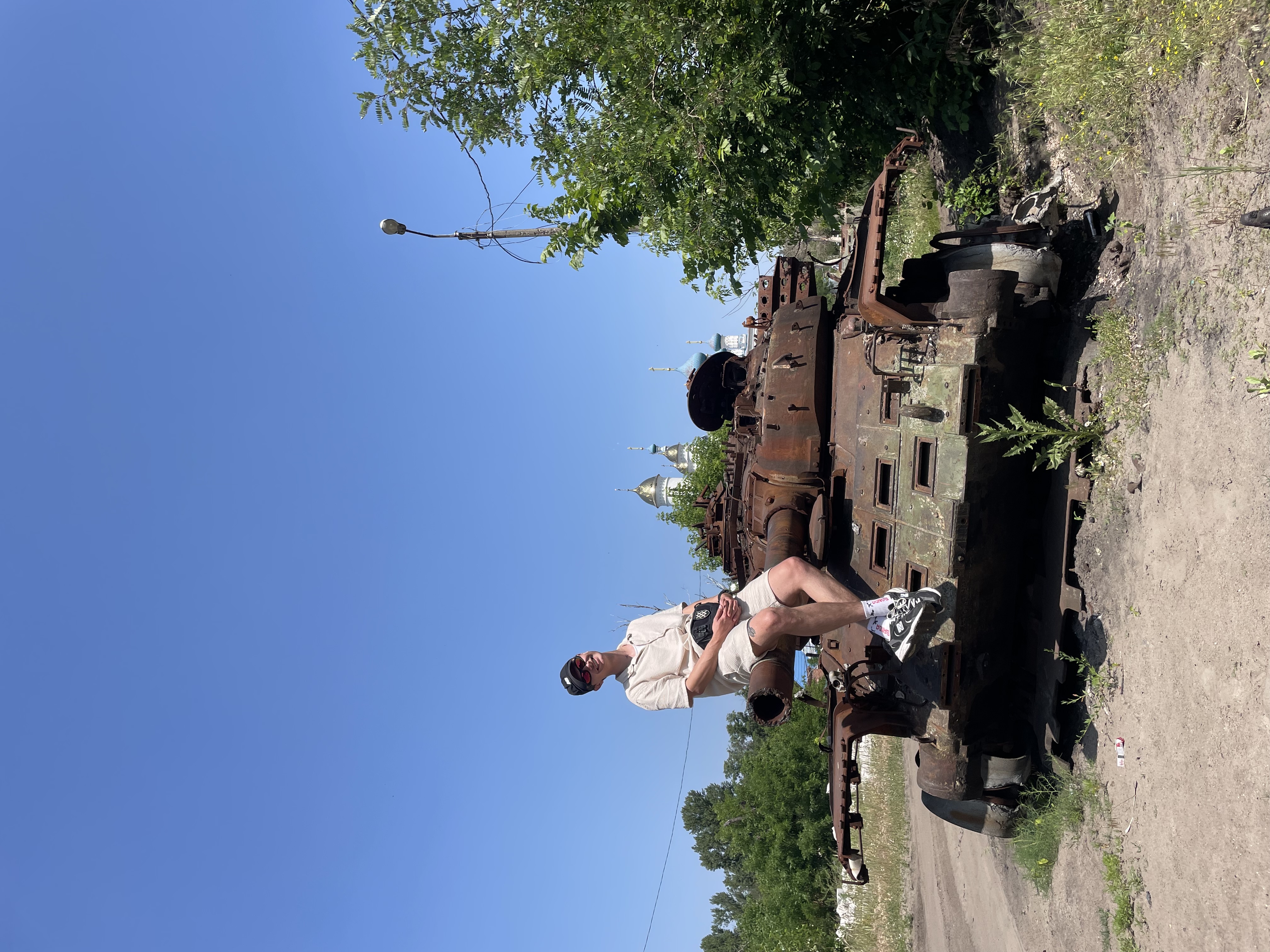
- You faced the full-scale invasion in Mariupol. What was that like?
- In December 2021, I was foolish enough to buy a flat in Mariupol. It turned out to be a bit of a mistake. So, essentially, I faced the full-scale invasion right in my own home. I was woken by a call from base: "That’s it, it’s started! Get ready – we’re off."
Generally speaking, we realised at the time that something like this could happen. But we didn’t know exactly when – whether it would be tomorrow, the day after, or in a week’s time. Even when you realise this, it’s still hard to believe that a full-scale invasion involving aircraft, ships and so on is about to begin right here in the heart of Europe. It’s a bit like being diagnosed with a terminal illness. For example, when a person finds out they have cancer, at first they think: ‘Maybe it’s some kind of mistake. I need to have more tests done and go to another hospital.’ But they’re just deceiving themselves, because the realisation is already there. It’s the same with the invasion.
Do you remember, the offensive was originally planned for 16 February? We were on internal training exercises at the time. We were just out in the smoking area with the lads that morning, discussing what was going on. We were at a base on the coast of the Sea of Azov, so we were asking each other: ‘Can you see the ships yet?’ And we were laughing. And literally a week later – here you go: take it – sign for it.
- What was 24 February like for you?
- On the evening of 23 February, we were gathering for a late-night briefing: we were preparing and drawing up plans regarding who would go where, how and by what means, should it start. Afterwards, my friend, some girls and I went for a coffee. We were in uniform; they were in civilian clothes. It was evening, and dark. We went into a café on Peremoha Square on the Left Bank. And whilst we were getting our coffee, we heard some young lads in civilian clothes discussing the war. The lads were giggling and laughing about how they’d be playing some sort of virtual Counter-Strike, whilst there’d be a war going on right outside the window. They didn’t take the situation seriously. We stood there, finishing our coffee, watching them and realising: you won’t be giggling later.
My friend and his girlfriend stayed at my place that evening. In the morning, his mum, who was in Kharkiv, rang him and told him how badly they were being pounded there. We all woke up. We knew what was coming. I’d just been called up from the base and told to come in. We’d already discussed with the girls that they’d need to leave Mariupol. My friend’s girlfriend explained: "It’s my job. How can I leave? Maybe later." By morning, that wasn’t really an option anymore. We told them to go. They picked up two more girls—the partners of our comrades—and set off towards Zaporizhzhia. As for us, we headed to the base. It’s a 15-minute drive from my house. Explosive devices were already going off around the city at that point. I remember that as we were driving past, I didn’t realise the first one was an explosive device. I thought it was an arrival. It was only later that it became clear what it was. Sabotage groups had done their job to exert psychological pressure on people. I wanted to get behind the base fence as soon as possible and properly collect my weapon. Because all I had was that wretched PM – a Makarov pistol – which I didn’t feel entirely comfortable with. And then the explosions started. It was unclear where the threat might come from. Besides, I wanted to be better prepared for it. By the time we got there, most of the lads were already at the base. They were getting ready. I also received instructions from the command on what to do and how. We wrapped ourselves in yellow tape. By the way, a couple of days earlier we’d gone to a hardware store. We’d cleared out all the headlamps there to keep in reserve, as well as some coloured tape. As we were gathering in the car park, a man walked past. He saw what we were doing and said: ‘Well, when the military are buying up coloured tape, it doesn’t bode well.’ And that’s exactly what happened.
So we wrapped ourselves in tape and began moving out to our pre-designated positions. We had to leave the base as quickly as possible. We realised that it would be a prime target for the enemy. We really didn’t want to be there. Although they didn’t shell it until much later – about a week later. I reckon that was their mistake. They should have done it on 24 February. Then they would have caused us problems and inflicted casualties.
- Fortunately, they made quite a few mistakes. Generally speaking, what did the defence of Mariupol mean to you personally?
- On the second or third day, when we already had clear information about the convoys that had entered Berdiansk and were advancing further towards us, it became clear that we would most likely be staying here. Although, you know, at the start I was pleasantly surprised that a relatively large number of people had joined the Territorial Defence Forces, even in Mariupol. And this despite the fact that I considered this city to be one with very divided political views. But there were queues here. Although that did cause problems. After all, inexperienced people were given weapons. That was the situation across Ukraine in general. But I think everything that happened was more of a plus than a minus.
As for the city’s defence, I’d say that at the start there was still a certain enthusiasm: everything would be more or less okay. Then, when we found ourselves surrounded, there was a full realisation that we wouldn’t be getting out of it and would simply continue to defend our position, because we were tying down a fairly large group of troops from Zaporizhzhia.
Later, they withdrew from the Kyiv region. We realised they’d be upon us in three or four days. That’s exactly what happened: a rotation took place and the ‘little ones’ arrived here. We just had to do our job, and that was that. That’s exactly what we did.
We actually managed, in principle, to leave Mariupol for Shyrokyne in the early days. I know the lads were also heading towards Pavlopil. But they never made it there, because the Russians had already moved in – they weren’t supposed to be there yet – so our lads were ambushed. In other words, before we were ‘trapped’ in Mariupol, we were still trying to make some sorties on the outskirts of the city. Sometimes it worked, sometimes it didn’t. However, with the amount of firepower being used against us, unfortunately, we had to hole up in the city.
- You were pinned down in "Azovstal", which has become such a symbol of the Ukrainian people’s struggle. That’s where you were taken prisoner. Can we talk about that?
- Sure, no problem. Given that I’m no longer there, everything’s quite clear to me now. I didn’t die, I didn’t lose any limbs. Of course, my health has suffered, but overall everything’s fine. You know, when I got back, in hospital they asked me what was bothering me, I didn’t even know how to answer. Well, what’s bothering me? I don’t really know. I can walk. In the first few days, I tried to go for a run. Of course, they’d warned me that was a mistake. But I ran for three days anyway. Then my knees told me: ‘Mate, don’t do it!’ So that’s when the problem started. But that’s just how it is. It’s over now.
- Everyone knows that the Russians treat Ukrainian prisoners of war badly, and the ‘Azov’ fighters in particular…
- You can break it down further: ‘Azov’ artillerymen, ‘Azov’ scouts, ‘Azov’ snipers, and so on. They also pay attention to where you were born. I, for one, was a ‘traitor’ – I didn’t feel very comfortable. The attitude was, to put it mildly, rather poor.
- What helped you cope?
- There’s no single answer to that. The first year was probably the hardest. Then you start to come to terms with it all. All you can do is wait. That’s it.
In the first year, you reach the stage where you realise you’re here for an indefinite period. In other words, you tell yourself that you’ll be here forever. And you just exist, trying to minimise the damage to your health. Although there’s a realisation that this ‘forever’ could end tomorrow. Like, right tomorrow. Or maybe even in a minute – the cell door will open and they’ll say: ‘So-and-so, you’re out!’ That sort of thing happened too. Although there were nuances to it. We were far too optimistic whenever the lads were taken away somewhere. We thought it was for an exchange. It was usually a rather unpleasant surprise when you’d arrive at another location only to find that person there – the one you’d assumed had gone home and was already sipping coffee somewhere in Kyiv. You’d say, "But you went on a prisoner exchange!" And they’d reply, "Just like you." That’s a real let-down.
Were there any feelings of despondency? A lot depends on the group you’re with. The ‘Azov’ fighters were kept apart. From what I saw, we did try to be more disciplined and support one another. It was harder for the older people. The young lads, though, kept their spirits up more or less normally and remained optimistic. We usually told each other stories or learnt something. For example, English. We had a young lad who had only just turned 18 when the full-scale war broke out. He’d only just completed basic military training and ended up right in the thick of the action in Mariupol. Well, he knew English very well. He set us exercises. He’d correct us if there were any mistakes. We’d spend about four hours a day on it. It had become a habit that took our minds off things. I’ll say it again: in our cell, there wasn’t a gloomy atmosphere, a feeling that all was lost. I know it was the opposite for others. There were even attempts at suicide. Everyone reacts differently to everything.
I was asked once what advice I could give about captivity? Who knows. I couldn’t even give myself any. It just sort of happened, that’s all. At some point, you simply start making up entertainment in your own head. From 1 January 2024, I started speaking Ukrainian with the lads in captivity, even though I’d previously spoken Russian in everyday life. I just felt like it.
- From what you’ve said, I gather that your rehabilitation after returning from captivity wasn’t difficult. How long did it take?
- It wasn’t difficult, actually, as I didn’t suffer any serious injuries. I had nothing more than a few minor concussions. There were no serious injuries. So treatment and rehabilitation took three months.
- How did you return to the war?
- I took a month’s sick leave to travel around Europe. I bought a car. Whilst in captivity, I’d had a dream: to drive to Paris and eat a croissant at the foot of the Eiffel Tower. And I made that dream come true.
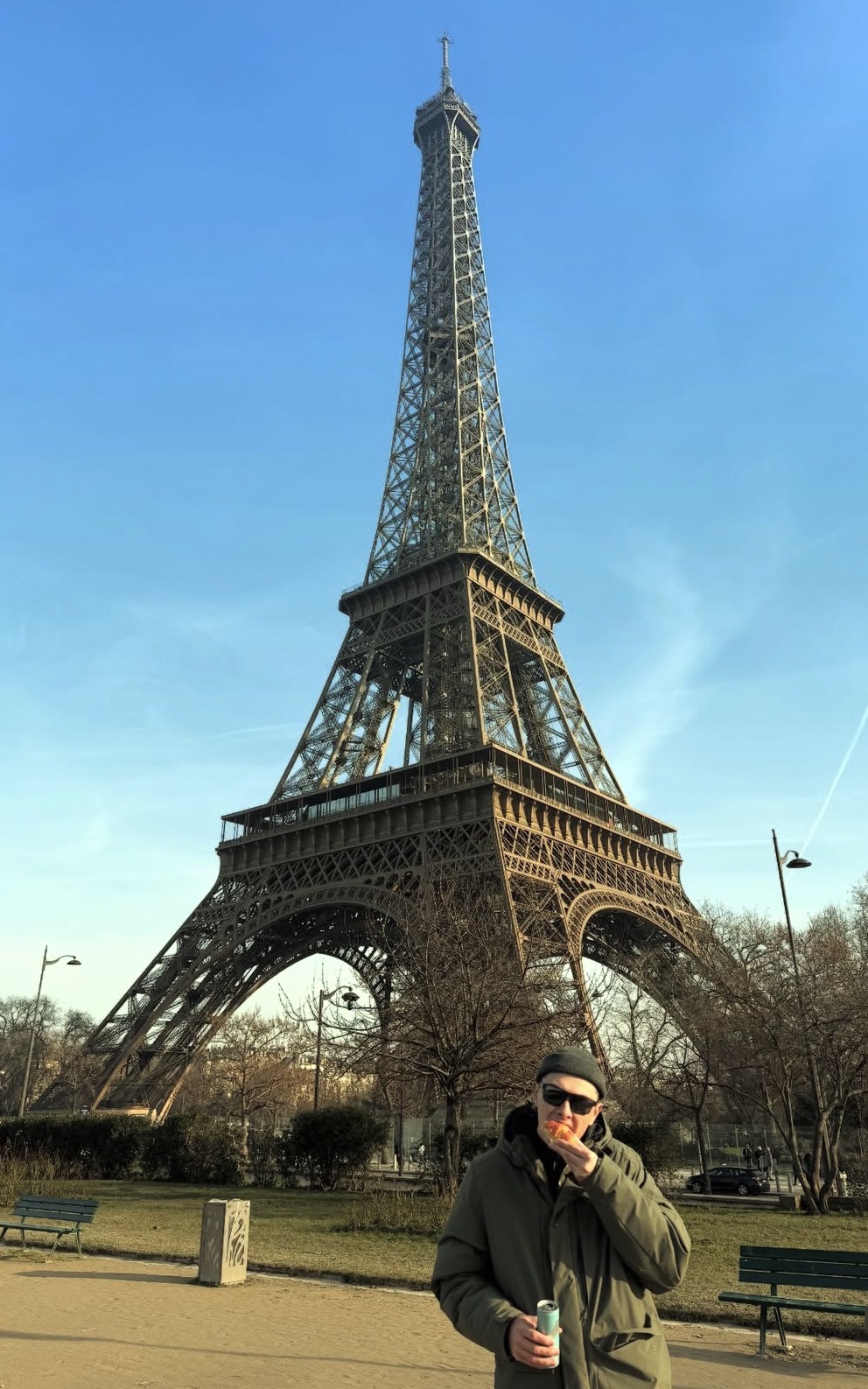
Whilst travelling, I popped in to see the lads who were undergoing rehabilitation abroad and had been released from captivity before me. In particular, a former comrade of mine was in Riga, and I went to visit him too. I also visited Germany and then travelled back to Ukraine.
My former commander had by then taken charge of the battalion. I told him I still had three months’ leave left. But the lads joked: "What leave?! There’s plenty of work to do here!" So I went back. In other words, I rejoined the ranks four months after my release from captivity. I was offered a vacant post in intelligence. I accepted because it sounded interesting.
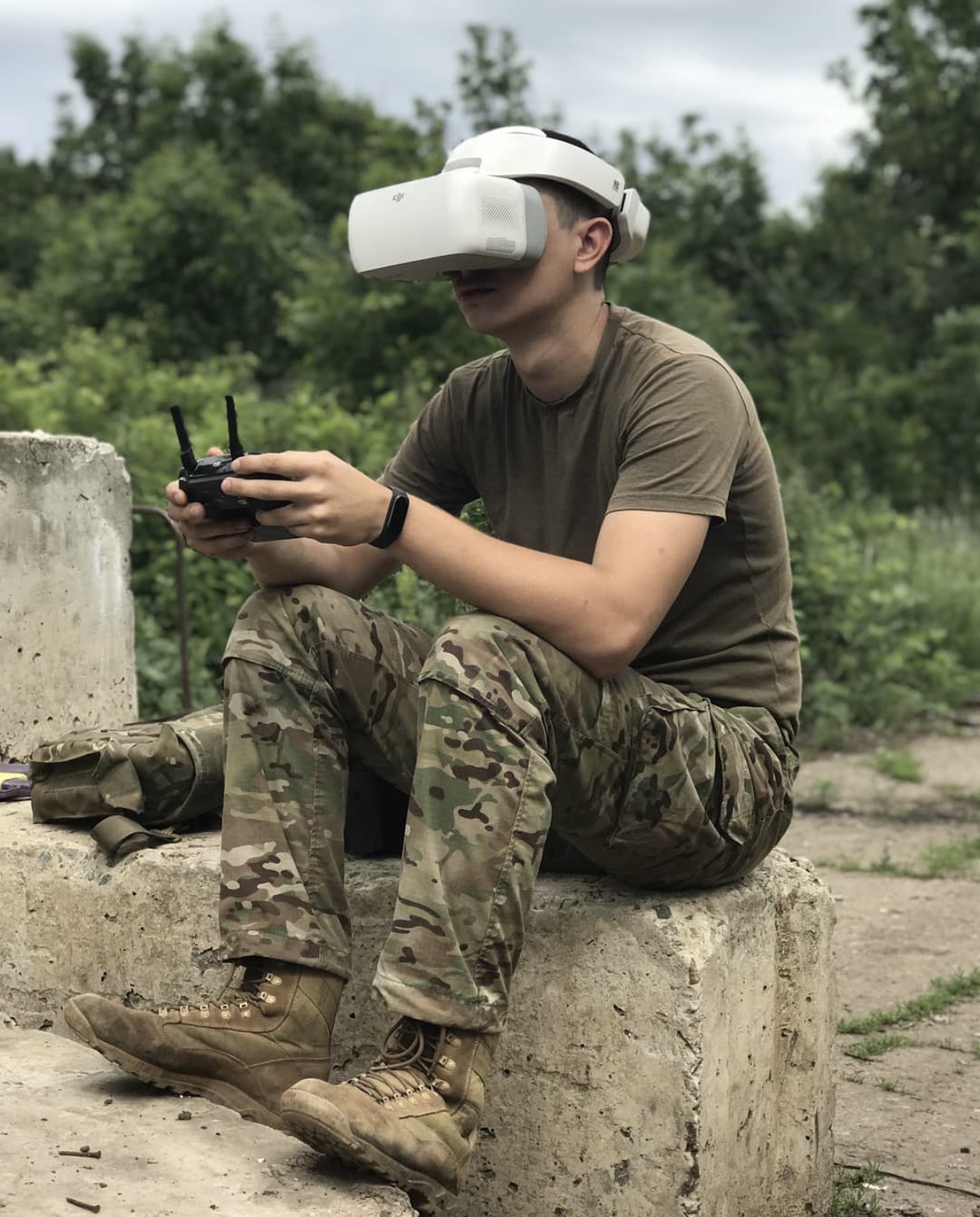
- Throughout your time in the war, you’ve served as an infantryman, a topographic surveyor, a gunner, a spotter, a UAV operator, a mortar platoon commander, and now in reconnaissance. Which of these roles has given you the best understanding of war? Or is it even possible to say that?
- You know, I can’t say that war can be understood at all, because it’s such a broad concept. First and foremost, you need to understand its purpose. From an intelligence perspective, that objective is always the same: to gain territory. Why? That’s another question altogether.
When it comes to the conduct of hostilities, it’s hard to say which specialism provides greater insight, as combat methods are constantly changing. Before we were taken prisoner, it was one kind of war; now it’s a completely different one. Today, one could say that we Ukrainians have launched a fifth-generation war by introducing the widespread use of drones. It’s a completely different story now compared to how it used to be.
Speaking specifically about intelligence, thanks to technological advances, information gathering has also become more high-tech. With all that, you feel like you want to wear a ‘foil hat’. Because there’s a real sense that everything in this world can be intercepted and exposed. The only way to ensure nobody finds out anything about you is to settle somewhere in the woods, in a dugout, and stay there. Otherwise, all information is obtained; everything, everywhere, is hacked. You start to understand how it all works, and it becomes very frightening.
- Do you have any idea when all this might end? And will this hostility last forever?
- The hostility will, in any case, most likely be forever. The only thing that could change that is if we lose and we, as a nation, are simply wiped out. Then, of course, there’ll be no hostility left among us, because we’ll become russians.
But if they do end up losing, the hostility between us will remain. Perhaps for most people over there, it will fade away somehow over the years. But I think it’s hard to forgive people for what has happened in the modern world. We tend to keep coming back to certain historical moments. Take the Second World War, for instance, and Germany. Time has passed. The Germans have already paid reparations, they’ve been forgiven, and everything’s fine. But the people in Germany 80 years ago and the citizens of russia today live in completely different information environments. Back then, they didn’t know much. But today in russia, people are well aware of what’s happening in Ukraine – of all the crimes their country is committing. And the Russians are consciously supporting this. How can you forgive people under such circumstances?! How can you have any kind of friendly relations when the veil of the ‘Russian World’ is lifted, and some people say: ‘But we didn’t know’?! Because that’s simply not true! They knew perfectly well – every single one of them: be it a schoolchild or a granny on a bench. They all understand everything perfectly. They all draw ‘Z’s’ and are very happy about the whole thing.
- But today the Russians have started to feel for themselves what war is like, thanks to our ‘friendly’ drones. Will that have any impact?
- I watch the news online and read what the Russians are writing. But moscow isn’t russia; it’s a completely different country altogether. Muscovites have only just begun to feel the war. But the Russians have been feeling it for a long time. Yes, none of them like it. That’s why they want to strike back.
The current Russian regime cannot afford to lose this war. On top of that, those at the very top are quite deluded – they don’t fully understand the true state of affairs. People genuinely believe they’ve already taken Kupiansk a million times. And that they took Kostiantynivka half a year ago. At every stage of reporting up the chain, the information is embellished. But when reality and understanding finally sink in, then something bad might happen. Something completely out of proportion. Because smo objectives were never actually stated…
- Demilitarisation, denazification?
- It’s all abstract. There are no objectives of smo as such. Right now they’re having a lot of problems with fuel, both in Crimea and in russia. But, in reality, that’s only part of what we can do. So I don’t even know what their reaction will be if we apply even more pressure.
However, their human resources are endless, unfortunately. They show no mercy toward people. Their infantry are simply sent to their deaths. I think there will be many more of them. And it doesn’t matter whether they want to be there or not, or whether they’re getting paid or not. They have a system that works: they put people in prison for any reason and send them off to their deaths from there. Because they’ve already used up all the people from the occupied territories. For example, in 2023, a lad from Horlivka who’d been taken prisoner told us lots of interesting things. In particular, about comrade prigozhin’s raid on moscow. We knew absolutely nothing about it. Nobody had told us anything. So he recounted the events: helicopters, gunfire, this and that. And I couldn’t believe it. I thought: "Did the ‘wagner’ group take rostov in a day? That can’t be true!" He also spoke about the mobilisation measures in Horlivka that took place in 2022. About the so-called ‘man-hunting’, when they stopped buses, rounded people up and sent them off to fight. We saw the calibre of these people in Mariupol – there were also ‘dnr’ fighters mobilised there: without training or body armour. In other words, they were given an automatic rifle, dressed in a uniform – usually one that didn’t even fit properly – and sent to their deaths. They marched in formation across the fields towards the city. That’s where they died. Later, we checked the documents and saw that these were conscripts – people who, just yesterday, had been working in, say, Khartsyzk.
So I’m saying that if our side loses this war, it means we’ll be drawn into another war further down the line. I understand this perfectly well. My fate, should we lose, is quite clear to me. I’ve already had a taste of it once. In our case, as I’ve already said, we’ll become Russians, whilst they’ll have to fight against the collective evil of the West. So they’ll need a mobilisation force to do this in the interests of some political elite in moscow.
- That sounds rather pessimistic…
- It’s just the worst-case scenario. I’m not saying that’s exactly how it will turn out. Not at all! What actually happens depends on us.
- Is there an understanding in the West that they could be next? In Poland, for instance – with whom our relations have now deteriorated significantly – do they realise that this is possible if the worst-case scenario comes to pass?
- Of course. It will be Poland, Lithuania, Latvia and Estonia. They understand this perfectly well.
You can see that the Poles have set up air defence systems all around their borders. They’re anxious and on tenterhooks. They know what might happen. Although they’re in a state of denial, just as we were before the full-scale invasion.
You’ll say again that I’m a pessimist, but my job today is to think like the enemy. I have to become that ‘enemy’ in order to understand and calculate everything. I’m looking at the worst-case scenarios. It’s all well and good to imagine a scenario where everything is fine and dandy, but I have to consider what if things turn out completely differently. So, the only thing we can do under the current circumstances is to improve our performance. Which, in principle, is exactly what we’re doing right now. And rather well, at that.
Olha Moskaliuk, "Censor.NET"
Photos courtesy of Frutti


