



We agreed not to surrender. My comrade pulled out grenade. I looked at pin and realized that I really, really wanted to live – Company Chief Sergeant Kalash
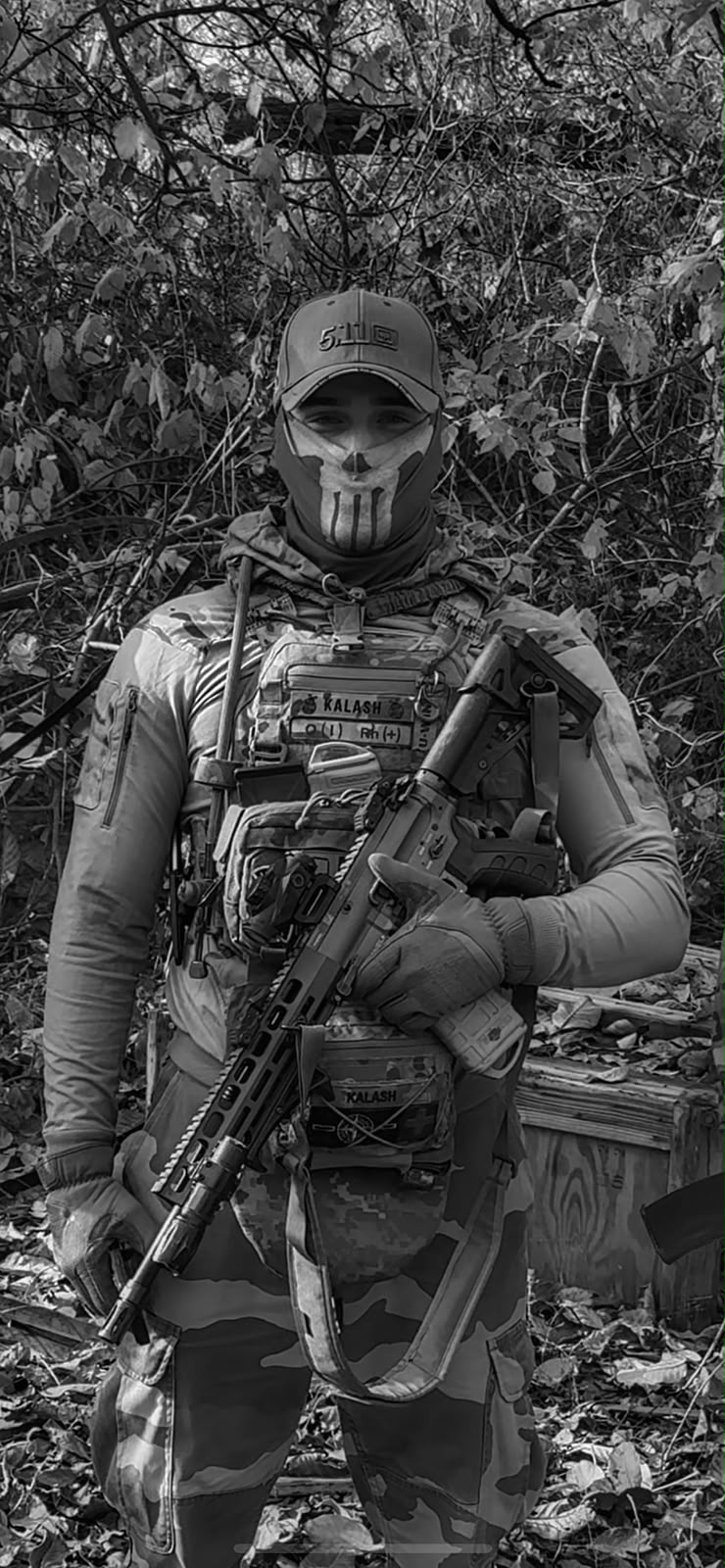
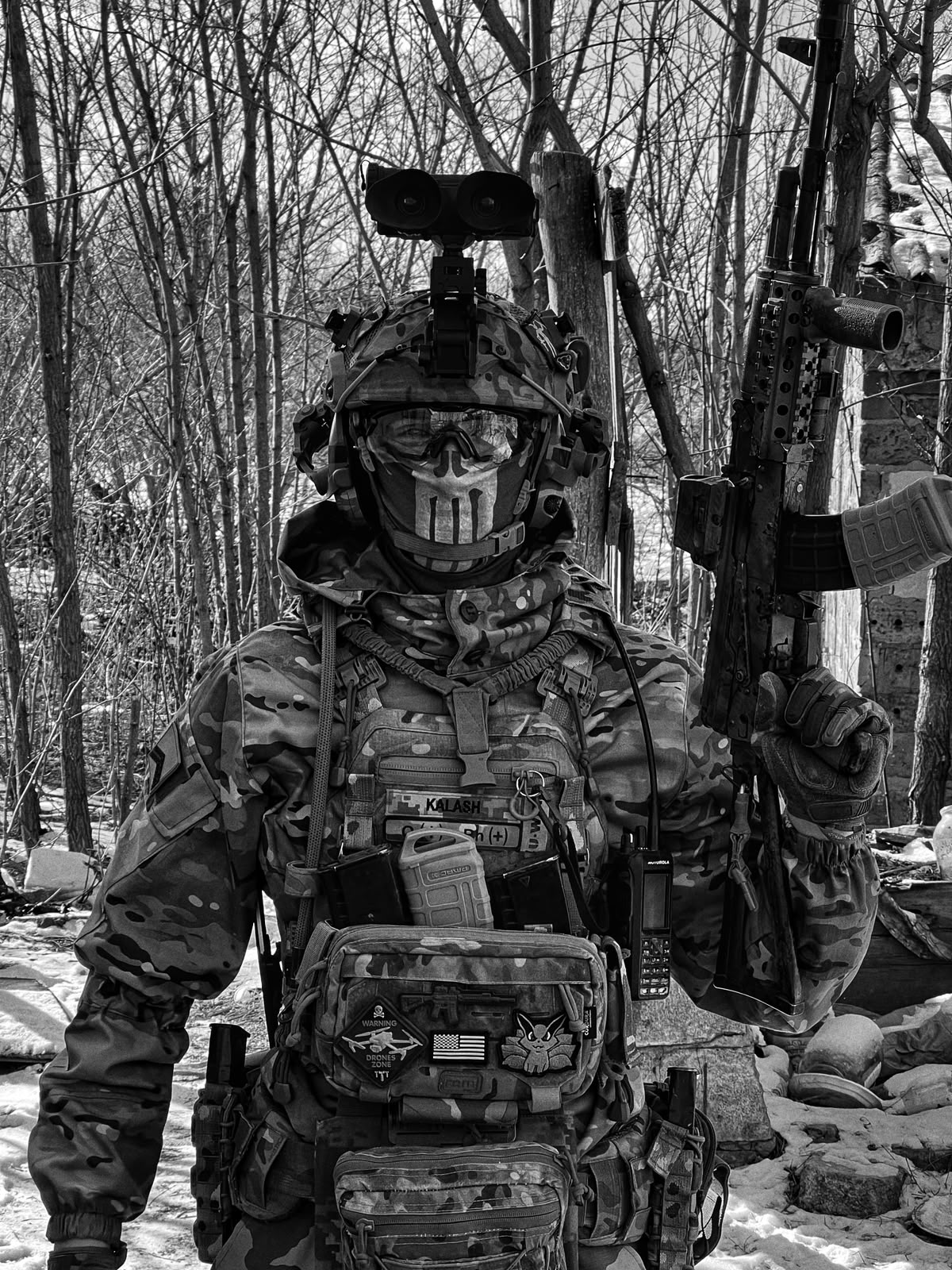
A soldier with the call sign Kalash, now the chief sergeant of the Quartz Company of the 148th Separate Artillery Zhytomyr Brigade, is one of those rare cases: he signed a contract back during the Joint Forces Operation but first saw combat during the full-scale invasion.
Kalash is proud of his company because its UAVs strike the enemy just as effectively as artillery. Before that, he fought as an infantryman with the 95th Separate Air Assault Brigade for almost a year. In fact, a third of the interview is a remarkably candid and concentrated account of several days of fighting in Donbas.
A recipient of three Golden Crosses, the Order for Courage and other decorations, he spoke candidly in an interview with Censor.NET about how he went from a young man who did not know how to fight to a true warrior. How the human body endures the extremely harsh conditions of constant danger and combat. How it adapts to fear.
KADYROVITES WERE DEPLOYED TO OUR SECTOR. EVERYONE WAS FRIGHTENING US WITH STORIES ABOUT THEM, BUT I KNEW NOTHING ABOUT THEM AT THE TIME
- I will be honest about my motivation. I first signed a contract back in 2020. When COVID began, I was working as a fitness trainer in Kyiv. All the gyms began closing because of the lockdown. I was left without a job and in something of a hopeless situation. I tried working at construction sites and earned a little money there, but I realized that would not lead anywhere either. So I returned home to the Khmelnytskyi region. I had a friend there who was serving in the military and had previously told me what it was like. The day after I arrived, I packed my things and went to the military enlistment office.
Representatives of the 95th Air Assault Brigade met me there. They looked at me and said, "Well, young man, you’re a sturdy fellow. Would you like to serve in the Air Assault Forces?" Of course, I agreed; it had been my childhood dream. That was how I joined the 95th Brigade.
I signed a contract and then trained for six months. When we entered the combat zone in the village of Zoria in the Donetsk region, it was already the Joint Forces Operation, not the Anti-Terrorist Operation. I was part of a reserve group. That was how I encountered the full-scale invasion.
- So you did not see combat during the Joint Forces Operation and first went into battle only during the full-scale invasion?
- The reserve group I was in was supposed to provide reinforcements in the event of an escalation. But our first escalation came on 23 February 2022. We had a formidable force, enough personnel and equipment. We were assembled before dinner, and our commander, call sign Zloi, told us directly: "Guys, don’t let your guard down. The situation is escalating."
We were told that Kadyrovites were being deployed to our sector. I had only just begun learning who the Kadyrovites were. Those who knew more tried to frighten us, saying that the Kadyrovites were seriously bad news. We were warned not to undress and to remain ready. We treated it with a degree of irony, joked about it, and went to sleep. Then, shortly before three in the morning, my brother called me. He was also serving with the 95th Brigade, but in a different sector. He said their position in Kostiantynivka was being bombed and missiles were flying overhead. I ran outside to see what was happening where we were and spotted a drone.
At that moment, I saw the duty officer give the order to wake the personnel. We did not even pack our things; we grabbed whatever equipment and assault rifles were at hand. Our convoy advanced towards the enemy, while an enemy convoy was also moving towards us. We tried to suppress such convoys from a distance using heavy tube artillery, tanks, and armoured personnel carriers.
- Was that when you took part in your first battle? Where did it happen?
- I first engaged in close combat near the village of Terny in the Donetsk region. We went in to assault it aboard Kozak armoured personnel carriers. We had a great commander, Solo, who planned everything very thoroughly. Here is a little background. Before we assaulted the village of Terny, we had entered the village of Zarichne. Solo understood that the enemy might break through between the villages around us. So he sent one armoured personnel carrier to each village to warn them about possible attacks.
The occupiers also began entering Terny. There were so many of them that they knocked out an armoured personnel carrier, although we miraculously managed to rescue its crew. The village was occupied, and we made unsuccessful forays into it. We then attempted to assault it twice, but both attempts failed.
Our commander was subsequently replaced with another one who had little experience. There was no coordination whatsoever before the battle. So we decided to hold a kind of meeting ourselves. The Donbas Battalion was also with us. Together, we decided to tell the command directly: we had an incompetent commander who was sending two men to assault a tank empty-handed. We concluded that if there was a genuine threat of encirclement, we would withdraw.
When we set out on the mission along the highway to Lyman, an enemy convoy was moving along our side of the road. Our commander drove away, abandoning both his deputy and us. We learned that we had indeed been encircled in the village of Zarichne. We gathered all the remaining troops from the 95th Brigade and withdrew about two kilometres from the school where we had been based. We waited for the Donbas fighters, formed a convoy, and set off. I got into a Dozor vehicle. We truly did break through by a miracle and reached Lyman. We explained to the command that we had no means of holding the positions; we had only assault rifles and ammunition.
I WAS SHOCKED BY WHAT I WAS CAPABLE OF! ONLY AN HOUR OR AN HOUR AND A HALF PASSED BETWEEN BATTLES, AND I DID NOT EVEN REST
- So, during the first months of the full-scale war, you fought in Donbas. As far as I know, you had some extremely eventful days there. Tell us about them.
- We were deployed near the village of Dovhenke, on the border between Kharkiv and Donetsk regions. The occupiers had already entered the village by then, while we took up positions in a tree line (known as the Elephant Tree Line). Two of our groups entered it and moved off in opposite directions. Later, when I was in hospital, I learned that the first group had been killed almost immediately. Our group held out for at least another week.
We split up among the positions, two men at each one. My friend and I ended up at the position closest to the enemy. Well, "ended up" is not quite the right phrase... Our guide said, "Guys, we need two men with balls of steel for this one." Everyone stood there in silence. Then my friend Shalom suddenly said, "Kalash and I will do it." And we barely had any combat experience...
It was a very long walk to the position, so we stopped to spend the night in another dugout. In the morning, another guide arrived from the position we were heading to, and the four of us continued moving. He got lost almost immediately but did not let it show. Long story short, we walked straight into the occupiers. What saved us was that the enemy began firing Grad rockets across the entire tree line.
The occupiers in the tree line spotted us and opened fire. We shouted, "Where the hell have you brought us?!" He said we had taken a slightly wrong turn. So we began running under Grad fire. They kept firing for a very long time, and we periodically hid in the bushes. Eventually, we reached the position and met the guys stationed there. They told us to be careful because the position we had entered, called Arena, was the closest to the b#stards, and the occupiers often sent sabotage and reconnaissance groups there at night. That was how they had wiped out a neighbouring position. And there we were, two green recruits, listening to this with our eyes wide as saucers.
There were eight of us at the position in total. On the first night, I stood watch with the guide, who told me where the Muscovites usually came from and how we were supposed to mow them down. We did not stay there long because shelling once again began from all directions. We were split into pairs and redeployed to other positions.
That was where I first saw a Russian infantry assault. I was shocked. They were walking across an open field, not crawling, but walking, and then they began firing. We were, of course, defending, so we simply began cutting them down. One of them would fall, and another would be walking right behind him. He would see his comrade fall, but he would not stop or retreat; he would just keep walking forward. We would engage him, and he would fall as well. What must be going through someone’s mind for him to step over his comrade and keep moving as though he felt no fear?
While we were fighting, our reconnaissance personnel reported that our main position, Arena, had fallen. We were ordered to withdraw. We moved back one at a time, covering the man ahead. We thought we were the last to leave. I met my friend Sheva, and we began withdrawing together, but then we came to three paths. We started calling over the radio to establish everyone’s location and determine which path to take. A comrade came running to get us and asked, "Where is Did?" It turned out that one fighter, Did, had remained at the position after us. I went back for him. He asked me to leave him because he had been wounded in the leg and had no strength left. We eventually persuaded him to come with us and covered him as he moved.
I did not regret going back for him because I know that he is alive thanks to that. He returned home and saw his daughter. He served in our unit for another year and was then discharged.
- So, in short, you all made it out together?
- We reached those intersecting paths, but it turned out that the guys had not waited for us. We began withdrawing on our own and reached the outermost position, Hrom, which was held by three men. They asked where we were going. I explained that there was an order to withdraw, but they knew nothing about it. "All we can see is the whole crowd passing through our position, and nobody is telling us anything." They asked us to stay with them. Did took up the machine gun, while I began covering the path along which we had moved; the occupiers were already conducting a clearing operation along it.
Then came a moment I will never forget. Silence. Absolute silence. From the place where I had picked up Did, I could hear single shots from an assault rifle. I understood that our turn would soon come. Suddenly, I heard a machine gun open fire. They had begun advancing across the field.
There is a rule in defence: if you do not hold your sector, the position will not hold for long. In other words, if your comrade is covering his sector, you must not interfere in it under any circumstances. If you do, your own sector will be left uncovered.
I spotted some kind of silhouette and began firing at it. Then I saw that everyone at the position was engaging targets within their assigned sectors. And then there was silence again. We had been firing, but no one had fired back at us. We had already started to relax. Then the entire group that had been withdrawing began returning. They said an order had been given to retake the position we were supposed to occupy.
My commander came up to me and said, "Kalash, Dert, have you been here this whole time?" I said, "Yes, we were helping the guys defend the position." Then two others and I were sent with the Kort detachment to assault and retake the position we had been observing and from which we had been fired upon.
- This is simply one long sequence of assaults and positions being recaptured. It is a little dizzying, to be honest.
- I was shocked by what I was capable of! I said, "All right, I’ll go." Only an hour or two had passed between those battles. I was running on adrenaline.

WE WENT GREY DURING THOSE FEW DAYS OF DEFENCE. WE BECAME LIKE OLD MEN
- And then the most emotional part of that defence began for you.
- We took responsibility for our flank and began moving quietly, without rushing. Whenever we left our positions, we always tried to take all our magazines and ammunition with us immediately because those were difficult times and there were virtually no resupplies.
We kept moving. In the distance, I spotted an orange magazine. It caught my eye, and I instinctively decided to put some rounds into that area. I opened fire towards the magazine (even though we were supposed to approach silently), and everyone looked at me. Then the return fire began, meaning there were enemy troops positioned there. They had been waiting for us to come closer.
- Why did you open fire? What made you decide to do that?
- It was pure instinct. Then all hell broke loose. Our major was killed immediately; a bullet struck him in the eye. We began dragging him away and clearing the area. You could say those were my first intense close-quarters engagements. We exchanged fire, and then there was silence again.
I decided to look at the area I had been firing at and saw a patch of green; they were wearing green uniforms. Summer was approaching; everything was already green, and their uniforms blended into the surroundings, making them difficult to spot.
A Georgian from our group then came over and put his hand on my shoulder. He said, "Nice one! At first, I thought you were an idiot for firing at random."
We then recaptured our position. But we were ordered to fall back 100 metres because the occupiers had already plotted that position on their maps. We established new positions and dug shallow trenches that could only be occupied lying down. We were positioned in a ravine, a fairly dangerous place. Those stationed in the ravine often ended up seriously wounded or killed. There was also a machine gun in the ravine that the enemy kept targeting. In short, we took up our positions. We lay there for a very long time, day and night. We slept in a staggered pattern. We had no night-vision devices and had to rely on our hearing. It was so dark that you could not see your own hands. It felt... as though you were lying in a little pit like a coffin. There was a branch above you, and everything imaginable was flying overhead, while every rustle made you wonder whether they were coming towards us or the neighbouring foxhole. If the sound came closer and closer, you began firing in that direction.
That was how we remained there, taking turns to stand watch in groups of two or three, with one manning the machine gun. I kept thinking that sooner or later, I would have to take my turn there as well. Every time, we had to carry men away from that machine-gun position with severe wounds. On one occasion, it took us six hours to drag the body of a fallen soldier 200 metres away from the machine gun because the snipers were firing so intensely. We had to drop to the ground every few steps because we could not keep dragging him.
At the time, it seemed normal to me. But when I later recalled it while lying in hospital, I realized what kind of hell I had survived.
- How did they explain why you were holding that position with such limited forces? Was its location in that ravine really so strategically important?
- If we had not held that ravine, they would have outflanked us from every direction. We were told that adjacent units would come to reinforce us, but until then, we had to hold the position to give the guys behind us time to dig in. We held it for a week. There were about 60 of us across the entire forest, then there were 30, then the number fell to 15. Eventually, there may have been only eight of us left.
It seemed to me that we all went grey during those few days, even though we were all young. We had the eyes of old men.
- Did the reinforcements never arrive?
- They kept saying troops from the second battalion were about to arrive. We no longer had the means to hold the line, and our Arena position fell. We withdrew to the Hrom position. A day later, it was my turn to man the machine gun.
There was also a guy at that position with the call sign Hrom. He said he would take two men and go for ammunition. We began covering them so they could run to the command and observation post for ammunition. We waited and waited for them, but they did not respond over the radio.
The commander and I decided to go and check because they might have walked into an ambush set by the occupiers. We reached the command and observation post, but its personnel were already withdrawing as well. We told them we needed ammunition. It turned out that none of our men had reached them. Then someone shouted over the radio that the Hrom position was under assault and needed ammunition.
We each began taking a zinc ammunition box. To give you an idea, we had not eaten throughout all those days; we had only been drinking water. That zinc box felt so heavy, as though I were trying to lift a 100-kilogram barbell. I picked it up but could not lift it because I had no strength left. It was the same for the other guys. I emptied everything into a sleeping-bag sack, slung it over my back like Father Christmas and began walking. I thought I was about to collapse because I had absolutely no strength left. Just as we reached the position, an enemy tank drove out and fired directly into a dugout containing three men.
It was a horrific sight. All three men were killed. We were all suffering from blast injuries, and everyone began retreating. The command and observation post was our last line of defence. No one understood what to do next or where the enemy was. They were advancing along every path. We began firing back and stocking up on water at the command and observation post.
I SAW A TANK STANDING IN THE MIDDLE OF THE FIELD. A COLD SWEAT RAN THROUGH ME. BUT IT TURNED OUT TO BE ONE OF OUR TANKS, THERE TO COVER US
- Did you have any means of communicating with one another and with the command?
- There were many radios, but I began stuffing them into my backpack so the occupiers could not get hold of them or monitor our communications. I also packed water and ammunition. I do not know how I managed to lift that incredibly heavy backpack. We were withdrawing... Four of us jumped into a small trench that was more like a pit, while the other four jumped into the one next to it. Logs had been laid across it, and we hid beneath them.
Then a strike hit the pit, and everything was blown apart as though it weighed nothing. One of the guys asked, "Do you remember what we promised? That we would not surrender. Let’s do this: I’ll pull out a grenade now, and it will all end here."
We really had discussed it when we entered that village. Everyone had agreed to blow ourselves sky-high if we were at risk of being captured. And then he pulled out the grenade... My daughter had been born the day before, and I had not even seen her yet. I looked at the grenade, at the pin, and realized that I really, really wanted to live. I said, "No, let’s try to get out." Everyone exchanged glances, and my comrade put the pin back in.
- It is a great blessing that you are here giving this interview now.
- And then the strikes began. The logs flew apart like matchsticks, and we were left completely exposed. We began climbing out of that dugout and moving in short dashes. All eight of us gathered in another dugout, and two more men came running in.
We radioed that we would be withdrawing because we no longer had the means to hold the defence; we had only four magazines each left. They told us we had to hold out a little longer. But we could hear the b#stards already clearing the command and observation post. In another minute, we would be fighting them. We eventually managed to get someone to explain how we were supposed to withdraw. We sat there, and you could see fear in everyone’s eyes. Our commander, Kesha, tried to conceal his fear to prevent panic, but you could still see it.
He ordered us to leave one at a time. He said he would go last, and I said I would stay with him. They explained the route to us; it was terrible; we had to run across a field. We began leaving in pairs. Our pair was the last to set off.
I ran in front, with Kesha behind me. He was covering me. Then I saw a tank standing in the middle of the field. I crouched down, and a cold sweat ran through me. I said, "Kesha, I think we’re screwed." He crouched down as well and stared at it. We sat there and waited. I said, "If it hasn’t fired at us, it must be ours, right?" We ran up to the tank and saw a Ukrainian flag. Oh... I was so relieved. It did not fire a single shot towards the occupiers; it was there to cover us.
When I reached the bushes, my appetite suddenly returned. I spotted a jar of cured pork fat among the bushes; humanitarian aid had been left there. Supply deliveries could not reach us, so they were simply dropped off in those bushes, and the guys were supposed to collect the supplies and carry them to us. But that never happened.
- Was that the first time you’d eaten in several days?
- Not exactly. I grabbed the jar of cured pork fat. We ran towards the trenches that had already been dug by the guys whom we had covered from our positions. We jumped into those trenches and finally relaxed. Then some commanders approached us. There were about 30 people there by then. They said, "Well done, guys. We have a 20- to 30-minute head start while the b#stards conduct their clearing operation over there."
We had only just sat down to eat the cured pork fat when their artillery began targeting us with great accuracy. All I remember is a flash directly in front of me. Then I blacked out, or so they later told me. The b#stards had located us earlier, probably because their Mavic had spotted us running across the field.
A LOCAL WOMAN RAN UP TO US AND SAID, "BOYS, I KNOW WHERE THE ORCS ARE HIDING"
- That was how that series of battles ended for you. But after undergoing treatment, you found yourself back in Donbas.
- I was carried out and woke up in hospital. I spent about two months there. Sometime in late summer 2022, I returned to my unit and joined a mobile rapid-response group. We conducted a clearing operation in the settlement of Ridkodub in the Donetsk region.
There was one funny incident there. We entered the settlement and began moving through it. Then a local woman ran up to us. She said, "Boys, I know where the orcs are hiding. They’ve been lording it over us here, and I know where they are. Come with me, and I’ll show you everything." So we set off with her. We were extremely cautious because anything could have happened. I thought she might lead us straight into their hands, so I remained on guard. There were plenty of people there waiting for the Russians, but there were also many who had been waiting for us. We arrived, and she pointed: "Look, boys, there’s a cellar over there. They’re inside it." We had barely reached the cellar when about six men ran out. We did not even have time to tell them to surrender. We cut them down with a hail of fire. Then we cleared the cellar with grenades. We went inside, and everything was filled with smoke. It was an old cellar with arched alcoves for storing jars. Then I spotted a small black bundle crouched in one of the alcoves. His eyes were as wide as saucers. I said, "Surrender." Perhaps he was suffering from a blast injury.
We brought him out and began questioning him. He came outside, saw his comrades lying there, and became even more frightened. He told us everything and showed us the body of his commander, who had ordered them to run into the cellar. He said they had not expected us to launch an assault and that he had refused to come out. I told him, "Well, you see, you were luckier because you stayed inside. Otherwise, you would be lying there with them."
- But things were hardly as easy after that.
- We also tried to conduct sorties towards Izium and later cleared the settlement of Sviatohirsk. Then came the winter of 2023. I remember an operation in which we mined the ground in front of their positions. Intercepted communications indicated that they were about to launch an offensive. After we completed the mission, we were told that enemy activity had indeed increased significantly.
We were sent in as reinforcements to replace the wounded. There was intense fighting. I remember waiting with a comrade for our turn to take over the position. There was a lot of snow at the time, and we were lying in a pit covered with branches, wrapped in a sleeping bag. I said, "We’ll take over the position soon. It’ll be warmer there. At least we’ll be moving around." We did not hold that position for long. I had only just begun taking aim at the occupiers when a tank round struck us with direct fire.
The blast threw me aside. I was wearing active hearing protection, and one earpiece was blown off. I fell to the ground with a blast injury and did not understand what was happening. Then I saw the occupiers advancing. I somehow managed to get up and began firing at them with my assault rifle, but it kept jamming. I had to reload it once, then again... I grabbed my comrade’s rifle, but it had the same problem. A chill ran through me; I had no idea what to do. Thank God we had a machine gun. You could even say I got caught up in the fight. But I had suffered a blast injury and could not hear anything at all. I was firing the machine gun when I sensed that something was wrong. Why was my comrade not firing? I turned around and saw him looking at me, already pale and cold. I went over to him—he looked fine from the front, but there was a hole in his back. I radioed that we had a seriously wounded man. They may have been saying something to me, but I could not hear them. At the same time, I was still fighting off the attack.
Then, all of a sudden, some man jumped into the position with me. I aimed directly at him because I thought the enemy had already outflanked me from behind. He said, "No, no, friendly! Friendly!" I provided cover while he tried to patch up my comrade. I tried to speak to my comrade, but I could see that it was over. The man said, "My friend, he’s dead." It all came crashing down on me—we had only just taken over the position. I had been through almost all my time in the infantry with him...
They carried his body out during the night, while I remained alone in that pit. I stayed on high alert the entire time, listening to every rustle because the occupiers had advanced slightly and anything could have happened. The following day, towards evening, they sent me a new partner to replace the man who had been killed. We held the position through the night. Towards morning, another battle began as the occupiers launched an assault.
We ran out of the dugout and returned fire. Then we took cover inside the dugout to reload. The next thing I remember is the impact. I was later told that a comrade from the neighbouring dugout had dragged me out, while my partner had been wounded in the leg and had run out without me.
My comrade came over and saw that our pit had been buried beneath a mound of earth. He spotted my assault rifle, and he knew that I would never have abandoned it. He dug me out and, with the other guys, pulled me free... The following day, the fellow soldier who had saved me was shot in the head by a sniper, but he survived, thank God.
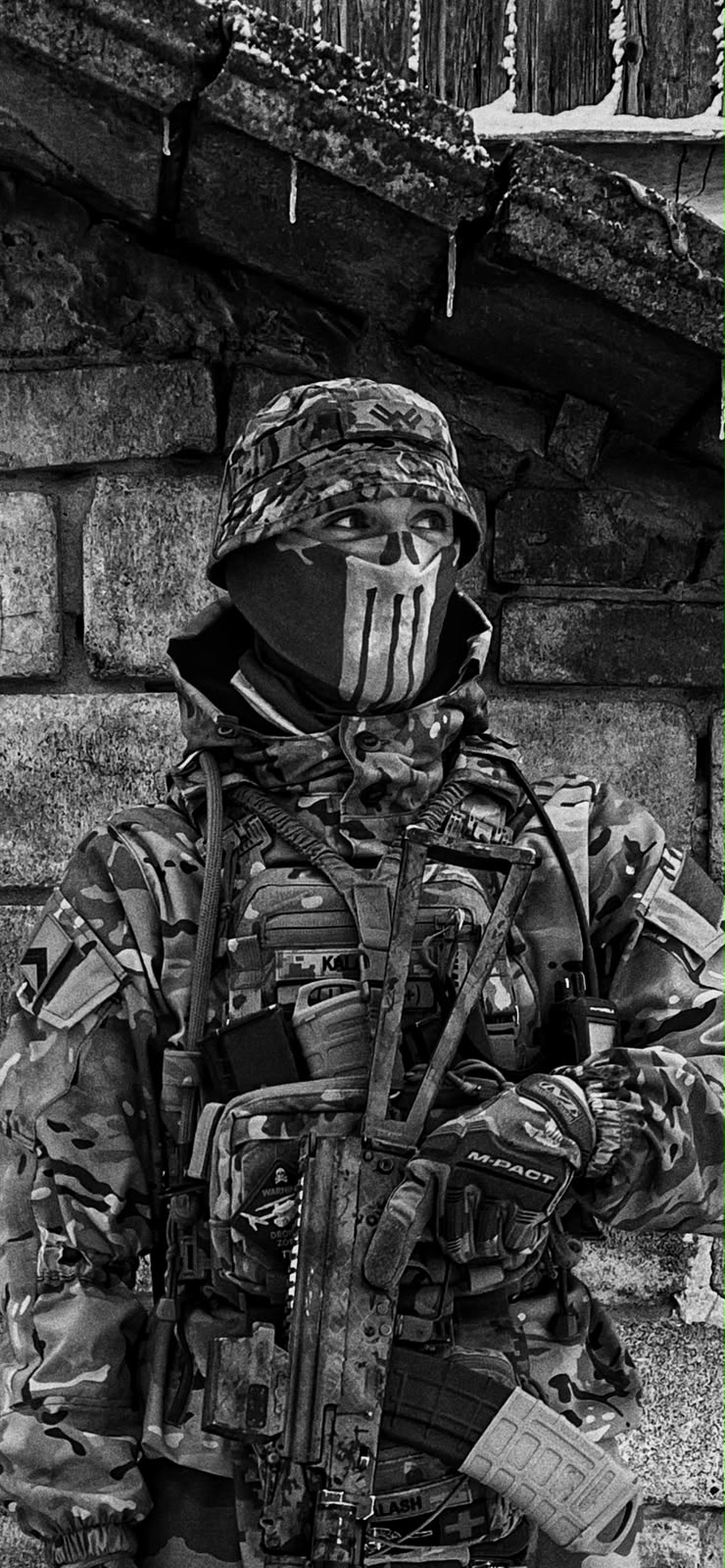
WE ENCOUNTERED OCCUPIERS’ RECONNAISSANCE GROUPS MORE THAN ONCE AND THREW A MAJOR WRENCH IN THEIR PLANS
- And on that heroic note, your time as an infantryman came to an end.
- I woke up in hospital. Once again, I was almost paralysed—I could neither walk nor speak. I spent about three months in hospital. Then I underwent a military medical examination and was found partially fit for service.
I was subsequently assigned to the brigade in which I am still fighting today. I wanted to return to my guys. I kept saying that I wanted to rejoin the 95th Brigade and return to the infantry. But the brigade commander made it clear that everyone found partially fit now had to perform other duties in the military and was not suitable for the 95th Brigade.
At the time, the 148th Brigade was not yet fully staffed, so everyone found partially fit was sent here. I have never regretted it. Things are very different and far more humane here than in most brigades.
- This is an artillery brigade. You now operate UAVs, but did you also have the opportunity to work with artillery itself?
- Yes, I served with Grad MLRS crews and later switched to drones, first Mavics, then Vampires and Nemesis drones. I am now the chief sergeant of the Quartz Company. I am proud of my guys; it is one of the best units in our brigade. Sometimes, in terms of successful strikes, it achieves better results than the entire brigade. There were even instances when our strikes were credited to the artillery.
- Did you begin training to operate UAVs here, in the 148th Brigade?
- Yes, I learned everything from scratch here. I really enjoyed it, and when someone enjoys something, they will put in the effort.
- Do you have any favourite drones?
- For reconnaissance, nothing is better than a Mavic. As for bombers, the Vampire, also known as Baba Yaga, is the best one for me.
- You have achieved a great deal in two years. Were there any strikes of which you are genuinely proud?
- We have carried out a great many strikes and engaged a great many targets. My friend now serves in the same brigade as a platoon commander, but in the rocket artillery. Before that, we were ordinary pilots and competed with each other to see who could take out more occupiers and score more hits on a single mission.
There were countless strikes, and later we ran into occupiers’ reconnaissance groups more than once and threw a major wrench in their plans. They thought they would enter from the other side, but then we flew in with a munition-dropping drone and cut them down.
I enjoy conducting clearing operations with a bomber drone. When we encircled the occupiers north of Pokrovsk, there were actually two pockets at the time; it gave everyone such a morale boost. Our unit took them out with Vampire drones. We observed the results of our work at fairly close range and in considerable detail, watching them being torn apart. It is brutal, but I understand that if I do not kill them today, they will kill me tomorrow.
We mostly struck equipment by dropping munitions from Mavics; we tried to drop grenades and thermobaric munitions into the hatches. But the best targets are always concentrations of personnel near equipment. Then we eliminate everything in one fell swoop.
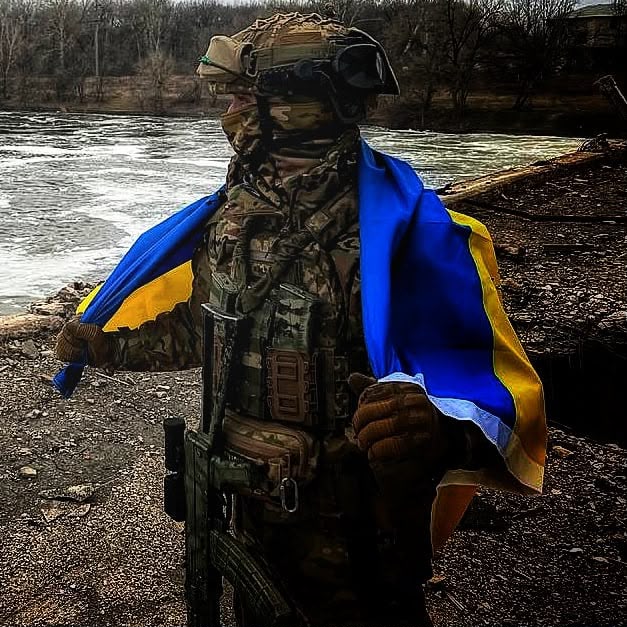
- You have repeatedly spoken about how frightened you were—which is entirely understandable; I cannot even imagine what that feels like. Yet you have been through more than one serious battle. How did you learn to cope with your fear? Everyone has different methods and different temperaments. Have you found a formula that works for you?
- Whenever I go on a mission, even back when I was in the infantry, I always tell myself, "I’ll be back at base tonight, sleeping in a warm bed." I simply set myself the goal of not ending up wounded and lying somewhere that day. Those who have served in the infantry and those still serving there now have already seen the full horror of war, and nothing can frighten them anymore. It is like becoming accustomed to training. You become accustomed to incoming strikes, to blood, to fear... Sometimes, you no longer even care where they send you on a mission because nothing can surprise us anymore.
Anyone who says they are not afraid is either lying or no longer in their right mind. It is better not to send people like that to war because you never know what they might do. People are always afraid, but everyone experiences fear differently. Some become accustomed to it, while others cannot and transfer to units further behind the lines. For me, you could say it has become a habit. I decided that I could handle it. Because if I were somewhere in the rear, I would not be able to help in any way, whereas I can at least be of some use here.
Olha Skorokhod, Censor.NET


