



Army Aviation Colonel Vasyl Mulik: B#stards did not see it coming, rockets suddenly started flying at them out of darkness
The Army Aviation colonel took part in the fighting in the Kyiv region during the first days of the full-scale invasion, when crews from the Brody brigade took out columns of Russian military equipment and troops positioned along the Zhytomyr Highway. Vasyl also spoke about the loss of a crew on 28 February 2022, commanded by his friend and former classmate Oleksandr Hryhoriev, who was posthumously awarded the title of Hero of Ukraine.
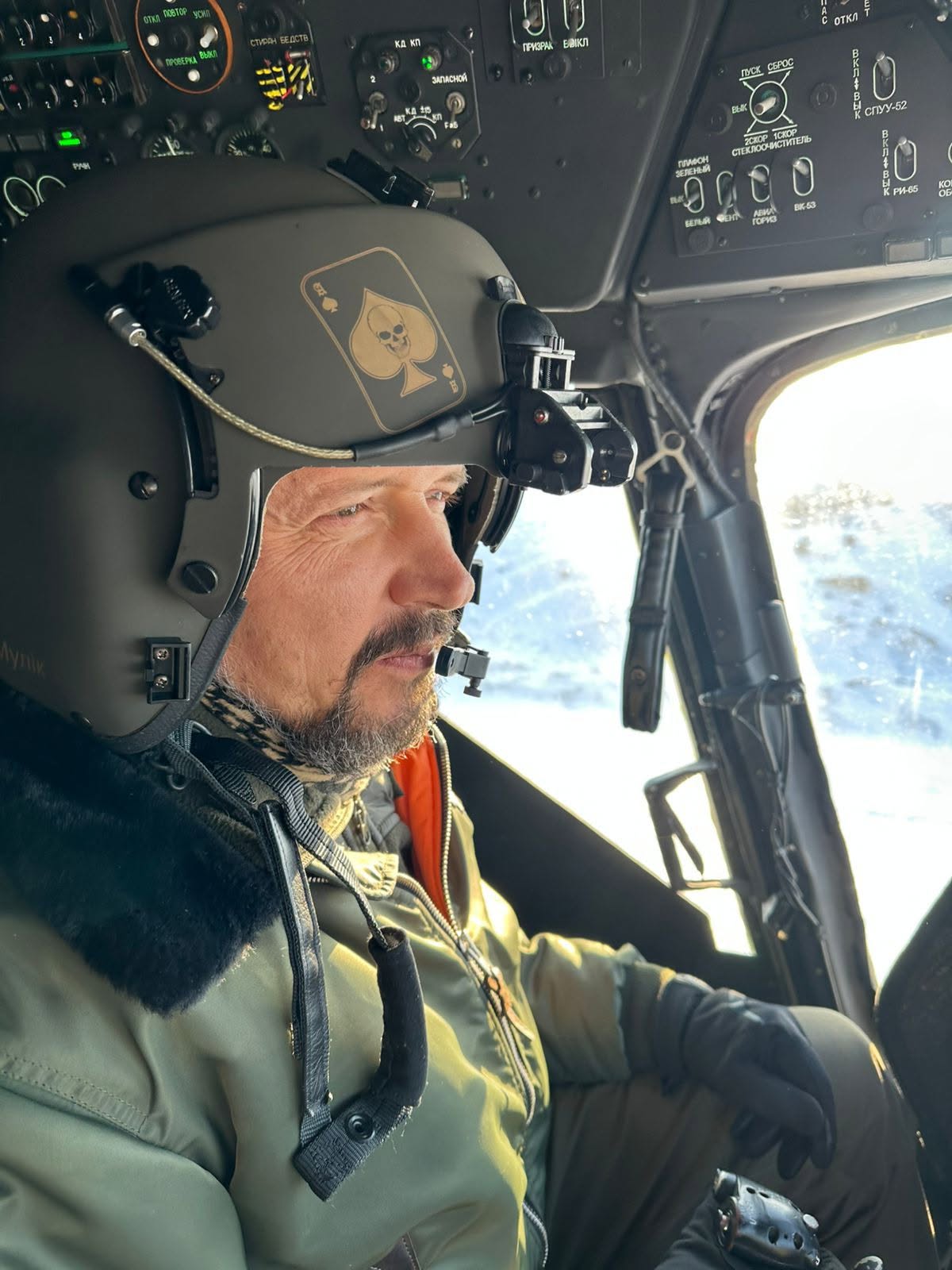
Strange as it may seem, Ukraine only began officially marking Army Aviation Day two years ago, even though Army Aviation has existed for 32 years. From the very first day of the Russian-Ukrainian war in the spring of 2014, helicopter crews – which form the core of Army Aviation – began carrying out combat missions in the east of the country. After several helicopters were shot down, they were no longer assigned fire missions, and the crews focused on transport and evacuation. But everything changed again in February 2022. To this day, Army Aviation helicopters take to the skies every day to defend them against Shahed drones, strike the occupiers, and liberate Ukraine.
It was Army Aviation that did everything it could to drive the Russians out of the Kyiv region in 2022. Helicopter crews destroyed columns of enemy military equipment around the capital. They also suffered heavy losses. That same spring, Ukraine’s helicopter crews received recognition from the state at the highest level for the first time: they were finally awarded the title of Hero of Ukraine. Unfortunately, the first such awards in Army Aviation came with the word "posthumously."
We spoke about the defence of Kyiv, inflicting losses on the enemy near the Zhytomyr Highway, managing to reach a landing site in a critically damaged helicopter, and the loss of a crew with whom he had set out on a mission with Army Aviation Colonel and People’s Hero of Ukraine Vasyl Mulik, a helicopter pilot whom Censor.NET has previously profiled.
"BY THE EVENING OF 24 FEBRUARY, WE HAD ALREADY INSERTED OUR PARATROOPERS AND CARRIED OUT OUR FIRST AIRSTRIKE ON THE ENEMY NEAR HOSTOMEL AIRFIELD"
- From 2015 onward, Army Aviation carried out only evacuation missions, is that correct?
- Yes, transport missions, medevacs, some support missions, and cargo transport.
- There were no combat sorties?
- There were no fire missions, but otherwise, in principle, all our sorties are combat sorties.
- I understand the distinction. Did you have a sense that Army Aviation would eventually be used again?
- It would be slightly wrong to call it a premonition. We all knew that it would happen one way or another. We all knew it, yet no one believed it. It is very human and very foolish to think: this will not happen to me. To someone else, yes, it is somewhere over there, on television, on the other side of the river, on another continent, in another country, but not here, not to me.
- Were you in your hometown of Brody on the night of 24 February?
- Three weeks earlier, our brigade had been deployed to a training ground, and we were stationed there. We were assembled and had been warned: lads, do not unpack your bags. So we were ready. In addition, on 17-18 February 2022, I spent two days conducting an aerial inspection of the northern border, flying from Shatsk all the way to Chornobyl and Dnipro. I surveyed the entire border with Belarus. Two brigade commanders responsible for those sectors flew with me to assess the situation. They were the commanders of the 14th and 10th Brigades.
- What did you see?
- Swamps and forests. I completed those two flights. After the training exercise, we returned to Brody and remained on standby. As I said, my bag was packed and standing by the door, and none of my comrades unpacked their rucksacks.
- Where did you spend the night of 23-24 February?
- At home. Early in the morning, while it was still dark, I received a call: we had been put on alert and ordered to head to the airfield. Several crews, including mine, boarded our helicopters and flew to a dispersal site, moving all serviceable aircraft out of harm’s way. I cannot say the flight was uneventful: it was dark, the weather was poor, and at that time we had not yet flown at night. We also landed at the site while it was still dark. But we did everything properly.
- When did the missiles hit your airfield?
- We were already at the dispersal site, located quite a considerable distance from our airfield, about 30 kilometres away. It was beginning to get light when we heard the impacts: one, two, three... We called: "Was that our airfield?" "Yes." Everything was clear: war.
- Was that when your car, which you had left at the airfield, was struck by shrapnel?
- Well, "struck by shrapnel" is putting it strongly... Yes, a couple of fragments made some holes in it, and all the plastic parts were blown off. We later relocated to another site, where a support unit and drivers arrived. I gave one of them my car keys so that he could pass them to my father, who then collected my car from the airfield.
- Does your father no longer fly?
- He retired in 2019 after reaching the maximum service age for flight personnel.
- How much did he want to help you? Did it tear him apart that you were flying and he was not? In 2014, he returned to duty, and both of you carried out combat missions...
- It took a severe toll on him; he had two heart attacks in quick succession, one in late 2022 and another in early 2023. I think that was the effect of constantly worrying about me.
- When did you arrive near Kyiv?
- On the evening of that same day, 24 February. We flew from the dispersal site to another location, where a support convoy arrived. There, we received new American helmets and night-vision goggles and then relocated to an area near Zhytomyr, where we established our aviation detachment. We refuelled. The paratroopers arrived, and that evening, on 24 February, we inserted them near the runway outside Hostomel and carried out our first airstrike on targets at Hostomel airfield.
- Did you know that the Russians were already landing there? Were you targeting personnel?
- We operated in darkness and struck according to coordinates; we could not see exactly what was happening there. Moreover, when we began our attack run, everything was already on fire, including the terminal. The glare through my night-vision goggles was so strong that I raised them: without them, I could see the fire and darkness; when I lowered them, everything was flooded with light. We carried out the strikes. They say we hit the targets. The b..tards did not see it coming: rockets suddenly started flying at them out of the darkness. They hid somewhere, and the artillery finished them off there. That is what I heard. After completing the mission, we returned to Zhytomyr.
- What were you thinking while carrying out strikes near Kyiv?
- I cannot say. There was no reflection at all. There was fear, adrenaline, and anger. There was this feeling that had been with me since the morning: this is it, it has begun. In other words, a major chapter had ended, a step had been taken, some kind of Rubicon had been crossed, and from then on, everything would be different, operating under an entirely different set of conditions.
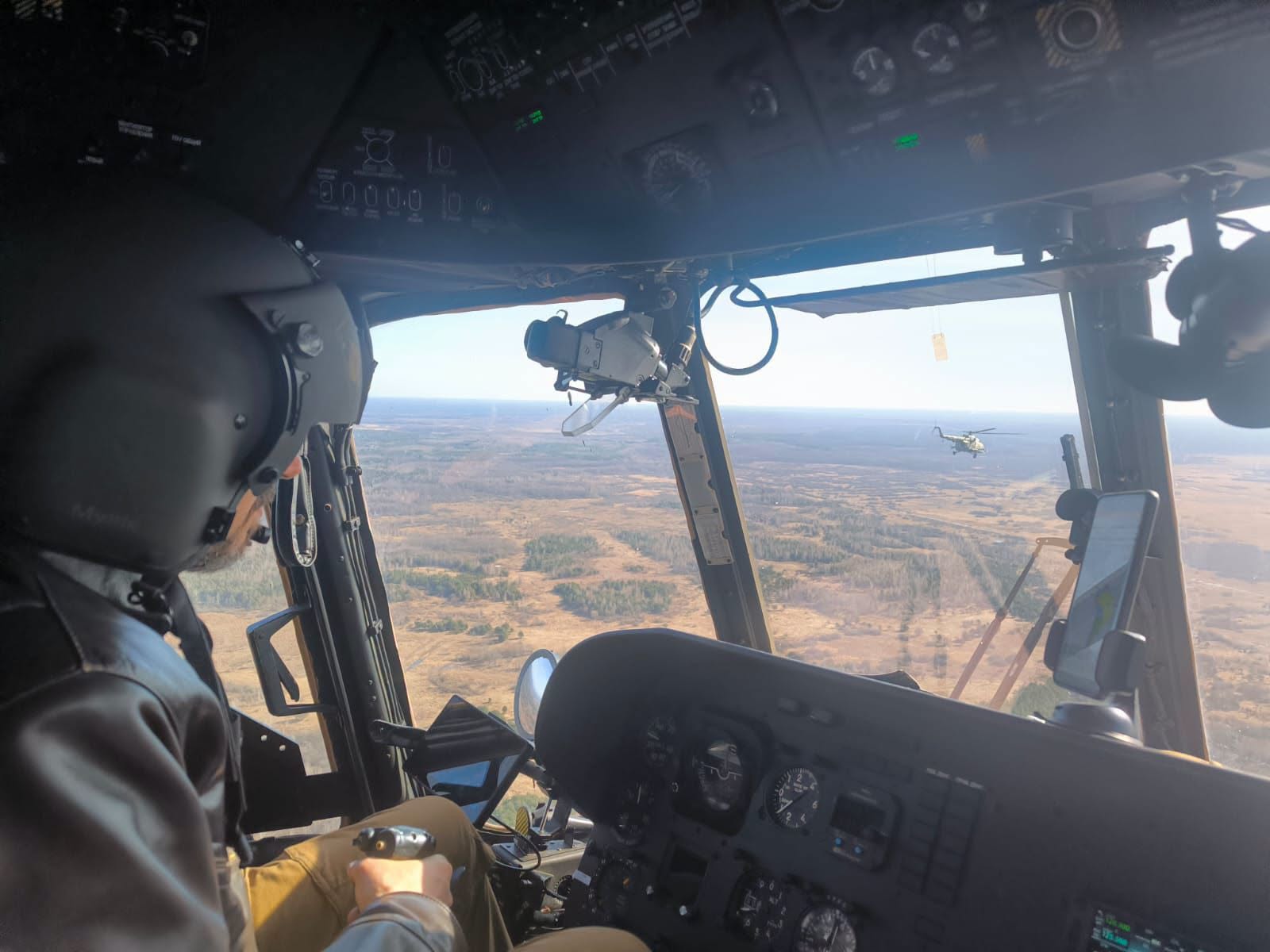
"THE FUSELAGE, LEFT ENGINE, ROTOR BLADES AND... MY ASSAULT RIFLE WERE HIT"
- There were many moments in those days that were funny and, at the same time, bordered on extreme danger.
While we were at the airborne training centre, arrangements were made for us to go to the dormitory to shower, shave and tidy ourselves up a little. It was bliss because we had not had that opportunity for several days and had all become overgrown. After washing, we were walking back past the checkpoint, where there was a solid concrete fence. Gunfire broke out. Bullets began striking the fence. The three of us, Hrynia, Ihor and I, dropped into a flowerbed and crawled under a tree. Hrynia had an assault rifle, I had a pistol, and Ihor was armed only with hatred for the enemy. We lay there. It was a training centre where, as I understand it, they were receiving first-wave reservists at the time. Right before our eyes, some heavily intoxicated man ran across the road under fire.
- Was it friendly fire?
- Yes. Everyone was having fun... And this guy, completely smashed, ran across the road under fire, dived face down into a walkway and began shouting to no one in particular: "Throw me a knife! Throw me a knife!" Everyone was running on adrenaline: "Are you wounded, you dumb...?" "No! Throw me a knife!"
- What did he need a knife for?
- He probably wanted to kill everyone... We were lying behind the tree as bullets hammered around us... Sashka’s arse was right in front of my face, and I had a pistol in my hand. He turned to me and said: "Listen, just don’t shoot me in the arse, whatever happens!" Words cannot describe how funny and horrifying it all was at the same time...
- When was your next sortie?
- The following day. My aviation detachment operated at night in the Kyiv region until 28 February. There was plenty of work. We always understood what we were striking because we were given descriptions of the targets. I know for certain, although I only learned about it later, that we performed very well near Yasnohorodka. My partner Ihor and I flew there as a pair. He was the lead, and I was the wingman. There are ravines running off the road in that area. A large number of those scumbags were hiding in one of them. We hit them hard there. We learned about it later, when Ihor went to France to take a survival course for aircrews. There, he met a forward air controller who had been in the same area when we carried out the strike. It turned out that he was the one who had directed us to the target. Those bastards had settled down for a little nap, so we "warmed them up" a bit.
On the morning of the 28th, we were already at another site, stationed at an airborne training ground normally used for parachute drops in peacetime. The day before, a cruise missile had struck near the site where we were initially based. I will not claim that it was aimed at us. Whether they had located us or not, I do not know. But it struck very, very close. We were receiving another assignment from the paratroopers at the time. We were standing around a table inside a small workshop when the missile struck, and the windows were blown out. My godfather and fellow helicopter crew commander Oleksandr Hryhoriev and I were lying under the table, while the stunned paratroopers were practically running across the ceiling and up the walls... As we evacuated the building with the paratroopers, one of our pilots suffered a broken collarbone. He continued flying and fighting in that condition for another three or four days.
We received our mission and took off. We inserted the troops near the Zhytomyr Highway. The paratroopers moved out, and we returned.
After that missile strike, we relocated and spent the night there. It was a "fun" night: it was bitterly cold, and a helicopter is essentially a metal box, not exactly the best place to sleep on 27 February. The following day, the 28th, we carried out our first daytime combat sorties. A flight of three, which included Hryhoriev, went out first. They returned, and another mission came in. I asked Hryhoriev: "Well, Sashka, shall we go?" "Let’s do it. You lead, I’ll be number two." And off we went. Our target was on the eastern outskirts of the village of Buzova, on the side closer to Kyiv. While we were already airborne, a young soldier messaged us: "Lads, don’t fly along the Zhytomyr Highway; there are already lots of bast...s there. Drop south and approach the target on a heading of approximately 50 degrees." So we "crept" south, about eight kilometres away from the highway, and flew almost due east.
This footage shows Vasyl Mulik’s crew in action near the village of Buzova in the Kyiv region on 28 February 2022.
I was in the lead, waiting for the bearing to the target to reach 50 degrees. I turned towards the target and began my attack run, preparing to strike. We had already armed the weapons system. Beyond the highway, I saw smoke. Something was burning and smouldering there. I cleared a small wooded area and saw something long, slightly ahead and to my left, covered with camouflage netting. As I understand it, this was their KamAZ command truck. They had already stretched camouflage netting over it, but you could still see this long, sausage-like shape, with f...ers scattering from it in every direction. I immediately turned in and attacked; it was practically a bayonet charge, from a range of 200-300 metres. I could clearly see people running at first, and then...
- ...not running.
- No, then they were flying. In pieces. I clipped the top of that KamAZ, and essentially all my rockets landed farther beyond it. I radioed the other crew: "Hrysha, follow my attack run!"
- Hrysha because his surname was Hryhoriev?
- That was how we always addressed him – Hrynia, Hrysha or Sasha.
I was breaking away when they opened fire on me. They tore up my fuselage and left engine.
- What altitude were you flying at?
- What altitude could there be? About fifteen metres. I cleared the forest, popped up and that was it. We were hugging the ground and trying to stay concealed. They may have had something heavy-calibre there because they tore up the fuselage and the fuel crossfeed lines, causing the entire cargo compartment to fill with kerosene immediately. They had ruptured a fuel line so badly that it was bent outwards. So they may have had something of a larger calibre than small arms.
They badly tore up the left side, the left engine, and the rotor blades. They even shot through my assault rifle.
A pilot usually places his assault rifle behind or underneath himself, beneath the seat. It is convenient to position it with the magazine facing upwards and the bolt-carrier cover facing downwards. When I somehow managed to limp to Ozerne, landed and realised that Sasha was gone, I was walking around the helicopter in a state of adrenaline and shock with the rifle slung over my shoulder. Something felt uncomfortable and was scratching my arm. Only then did I look and see that the magazine was cracked. Why is it cracked, I wondered? It had swollen because a bullet had entered, pierced the bolt-carrier cover, smashed the bolt, entered the magazine and lodged inside it. That was what made it swell. In short, I had been badly shot up. Honestly, it is remarkable that my crew remained unscathed through all of that. I had kerosene up to my ankles in the cargo compartment, and the side of the helicopter was torn apart, yet every one of us was completely unharmed.
- How did you manage to reach the base?
- "On a wing and a prayer" (He laughs).
- Was the helicopter still responding to the controls?
- It was responding normally. It kept flying and doing its job.
- And one of the engines?..
- Oil was simply leaking out of the engine. It was damaged, but it continued working. It was fortunate that it did not catch fire. Again, we did not know where our forces were or where the enemy was. With all that chaos around us, that whole absurd mess and the hysteria of those first days... You were thinking: can I land here or not? It is no secret that everyone was very eager to shoot at everyone else back then.
- So you had to reach a location where you were expected.
- Yes. I was already approaching the site we had taken off from when the flight director contacted me. He said: "Don’t come here; we have already left. They know about this location. Head to Ozerne." So I flew there and landed.
"AS SOON AS THE ENEMY WAS DRIVEN AWAY FROM THE ZHYTOMYR HIGHWAY, WE WENT TO RECOVER THE BODIES OF OUR FALLEN COMRADES"
- How long did it take you to reach Ozerne from where you had carried out the strike?
- About forty minutes, perhaps a little less.
- Were you looking for Sasha and his helicopter the entire time?
- That was not how it happened. I fired my rockets, began breaking away to the left, and they shot me up. Sasha fired his rockets. I asked: "Sasha, how are things?" "Fine. We’re breaking away." Then he told me: "Vasia, you’re leaking kerosene badly. And I have an RPM split." A helicopter has two engines, and their operation is monitored by two indicators, two needles that should essentially show the same RPM. When they diverge, you get what we roughly call a split. It indicates that something is going wrong with the aircraft, that something is not right. He told me: "Vasia, I’ll watch you, and you watch me. I’m on your right." "Sashka, how am I supposed to watch you? All my blister windows are covered with armour plating." At that moment, I also started the stopwatch, and we began calculating how much fuel we had and whether it would be enough to reach our destination. Sasha had told me I was leaking kerosene because he could see a trail of fuel behind me.
We calculated that I was losing approximately 200 litres per minute. Two or three minutes passed, and I radioed him: "Sasha, how are things?" But Sasha was already silent. I had flown no more than ten kilometres since our last contact. No more than that! And he was silent. I called: "Sasha! Sasha!" There was no response. I shouted: "F..k! Keep an eye on him!" Nothing. I sent him messages, but there was no reply. That was it; we had to go back! I turned around and followed my GPS track, retracing the route I had flown earlier. I flew for three minutes and saw nothing, neither the helicopter nor a fire on the ground. I realised that in another minute or two, I would run out of fuel and had to turn back. I decided to return without him. I thought he must have landed somewhere, that something had probably happened to the engine and that he was no longer inside the helicopter. I reached Ozerne and immediately began searching and repeatedly calling him. Footage of his crash emerged only later. It was filmed from Kopyliv or Motyzhyn, from one of those villages.
- Could you clearly see that it was Sasha’s helicopter?
- We could not see anything! No one understood what was happening there. The crash site was found later, and special forces personnel visited it, but there were no bodies.
- When did they visit it?
- A considerable time later. The bas...ds were still in the Kyiv region, but the special forces found the site, flew a Mavic drone over it, and later searched the surrounding area. The men did not retrieve or look for anything; they simply documented the location.
For our part, we contacted the police, the prosecutor’s office in Makariv, and local residents through various channels. That was how we learned there was a helicopter crash site between Kopyliv and Motyzhyn. We did not know for certain whether it was Sasha’s aircraft or even one of ours; we merely suspected that it was. We knew that local residents had recovered someone from the crash site and buried them. I told Army Aviation Commander Pavlo Bardakov at the time: "As soon as we learn anything, I will go and recover them." On 1 April, when the enemy had been driven out of those areas, I said: "Pavlo Oleksiiovych, well, I’m going." I took a friend with me. We also stopped at the 10th Brigade so that they could provide us with two reconnaissance soldiers, who, remarkably, arrived in a Porsche! (He laughs.) They already knew the route and where everything was located. I was driving my Subaru, and Liokha Hrytsenko came with me. We found the crash site. We found the remains of the flight engineer... We recovered the black box. The helicopter had burned out completely and was destroyed. To this day, I do not truly know what happened or why. I understand why I did not immediately see or find it: for some reason, the helicopter went into a very wide left turn. I do not know why. It veered left from our flight path in a wide arc, shifting almost two kilometres south of the route we had been following. It struck the ground on a heading opposite to the one on which we had been returning to the Zhytomyr region. It had turned 180 degrees. I still do not know why he did not make contact or say anything. Perhaps the radio failed, or perhaps there was a control-system failure and some of the control linkages burned through. But this was Hryhoriev. I do not know what would have had to happen to that helicopter for Hryhoriev to be unable to land it. That helicopter would have had to be completely f*cked... Apparently, that was exactly what happened. The footage also shows that it was already burning in the air. Perhaps it was hit, or perhaps it sustained some other damage, and the emergency ultimately became catastrophic.
- How did you establish that the flight engineer’s remains had been left at the crash site?
- Because local residents had buried only two servicemen at the cemetery near the church. But first, we went to the helicopter. We found evidence that one body was beneath the wreckage. We recovered the weapons; the assault rifles and pistols had also been badly burned...
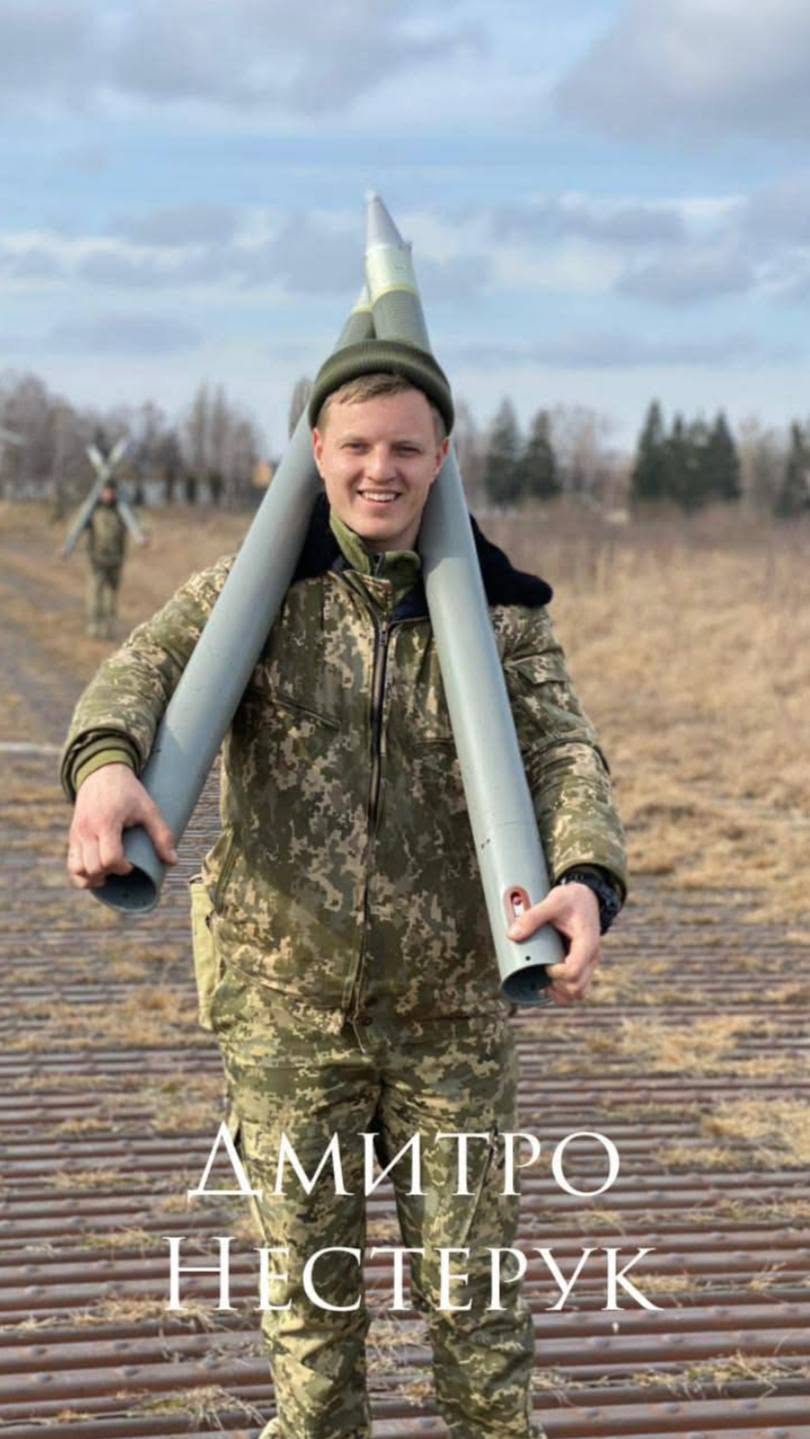
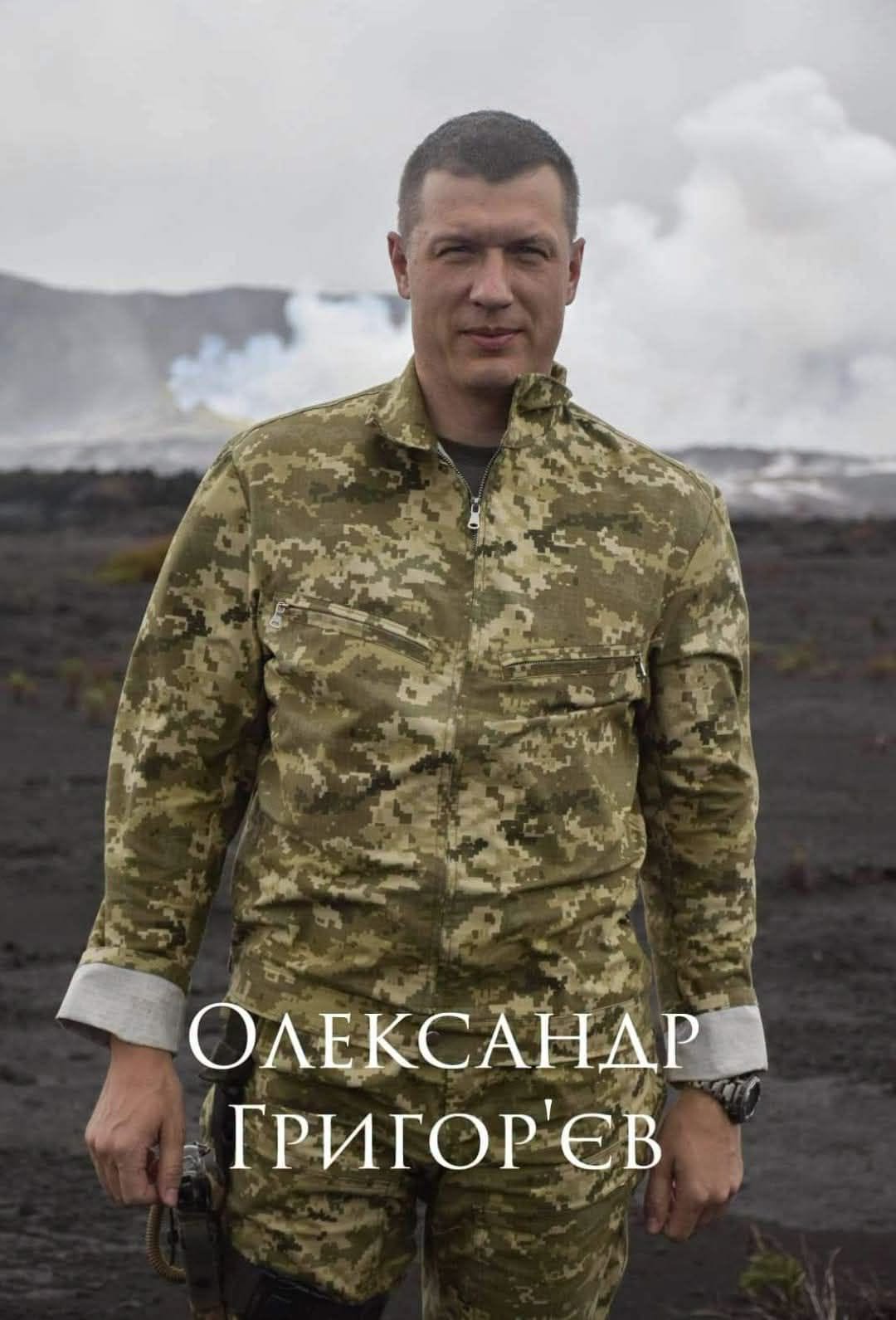

The crew killed near Kyiv...
"WE HAVE NOT HAD A SINGLE BREAK SINCE 2022—WE WORK EVERY DAY"
- "Back in March, I flew to Dnipro", Vasyl continues. "I had just stopped by my parents’ home for dinner when the commander called: "You need to fly to Dnipro." So I flew there carrying some top-secret electronics. I now understand that those top-secret electronics were the first Starlinks. I asked: "Why the rush? Could we wait until morning?" "No, it has to be done now!" So off we went. We landed at our site in the Kyiv region and refuelled. Dnipro was completely dark; the airfield was pitch-black, without a single light, because everyone was expecting a strike. We began unloading. Someone came in, but I could not see his face. I reported: "Greetings! Major Mulik, crew commander." "Vasia, is that you?! It’s Kurach!" So we met there. We finished unloading, and I flew from Dnipro to Oleksandriia. I landed there at about three or four in the morning. We spent the rest of the night there, got a little sleep, and headed back in the morning."
By late May 2022, I had already deployed to the Kharkiv region as commander of a combined helicopter detachment. We fought in the Kharkiv region, and I had a horse there!
- ???
- We were stationed southwest of Kharkiv but flew strike missions farther east. We skirted Kharkiv from the south and operated east of the city. I knew those areas from flying there in 2015-2017, when I regularly flew medevac missions from Svatove to Kharkiv. As for the horse... There was a farm nearby, and they gave me a horse to ride whenever the need arose.

- You were surprised that the 10th Brigade drove a Porsche. They were given a Porsche, while you were given a horse...
- There was also a dog that constantly barked at my helicopter and wanted to eat it. It was a village...
The mare, Kralia, was very calm and gentle.
During the same rotation, we moved to the southern sector and operated near Huliaipole. We also flew missions in the Kherson sector, which became the main focus of our operations in late summer and early autumn 2022. That was during the advance along the Dnipro, when a brigade broke through, and Kherson and the Kherson region were being liberated. Then, in November 2022, I deployed to the Donetsk sector – not as a detachment commander, but as an Army Aviation representative.
- Who did you work with there, and where?
- We most often flew towards Vuhledar, where the 72nd Brigade was stationed at the time. We usually struck targets in Mykilske and Pavlivka, which the enemy then called the new Stalingrad. The f..kers from the 155th Naval Infantry Brigade moved in there, and, in short, we caused them serious trouble. That happened. On one of the days when we struck Pavlivka, Khodakovsky (that f..ker from Donetsk’s Alpha) wrote somewhere: "The enemy used aircraft against Pavlivka; unfortunately, there are fatalities." I thought: "Fuck, it’s a shame it wasn’t you."
- But the forces are still unequal, including in aviation.
- They are unequal in manpower, artillery pieces and everything else. But that is no reason to surrender.
Throughout this entire period, since 2022, we have not had a single break. We continue working every day.
- Unfortunately, our pilots are being killed, both experienced and young. Are replacements coming in? How quickly can a pilot be trained?
- Take the young men with whom we deployed to the Kyiv region in 2022. My right-seat pilot was very young, and Sasha’s right-seat pilot was also very young. They had served as officer-pilots only since October or November; they had just graduated. During that short period, they were brought into operational service, gained a little flying experience and received some training. Then they flew with us. Today, that generation consists of experienced crew commanders; some of them, I have seen, are already flight commanders. They are "air wolves" who know how to fight. War teaches quickly and effectively. However, their graduating class suffered very heavy losses. Sasha’s right-seat pilot was killed, and mine was left severely injured, unfortunately.
- Did that happen later?
- Later, when Serhii Novosad was killed. My right-seat pilot was with him. They managed to pull the co-pilot out of the helicopter, but he now has spinal problems. Unfortunately, Serhii remained inside the helicopter; they did not have time to pull him out.
"ON ITS VERY FIRST ATTEMPT, ONE HELICOPTER CREW SHOT DOWN SIX SHAHEDS NEAR KYIV"
- When did the idea of trying to combat Shaheds using helicopters arise?
- It wasn’t an idea. It was an assigned task that had to be carried out. (He laughs.) What do you mean, "the idea arose"? In the military, you are assigned tasks! But it is not a conventional Army Aviation mission.
- Does Army Aviation engage only ground targets, or does it also engage helicopters in the air?
- Helicopter-versus-helicopter combat is not standard. There were attempts to engage enemy helicopters, but they did not go particularly well. We have one young pilot who clashed with a Ka-52 over Hostomel while flying a Mi-24. But those are different weight classes.
- Do you not have a captured Russian Ka helicopter?
- No. There was an incident in 2022 when special forces called our commander and said: "There are two Ka-52s here, but their crews are gone. Do you want to recover the aircraft?" But who among us knew how to start them or how they flew? They use a completely different system. Flying a Ka-52 requires separate training. Moreover, we would have had to transport pilots there, and this was somewhere right on the front line... So those helicopters were destroyed.
But let us return to shooting down Shaheds... Essentially, no one believed it would work because it was a highly unconventional mission. We developed a method. We worked hard and tried numerous methods and approaches. Eventually, we found one that seemed promising and experimentally tasked a single helicopter with this specific mission. On its very first night, it shot down six Shaheds!
- So you have to spot the target, acquire it and engage it?
- You have to spot it, manoeuvre, catch up with it, take up a firing position, fire the onboard gun and shoot it down. But on the very first night, during the first attempt to engage Shaheds, the night of 31 July to 1 August 2024, they shot down six at once!
- Is there a crew that has already shot down hundreds of them?
- There are records, but I will not disclose them. I can say that, as of today, Army Aviation as a whole has shot down almost 8,000 aerial targets.
- So now every pilot who knows how to fly a helicopter can not only engage targets using coordinates, hug the ground and fly in darkness, but also knows how to engage Shaheds?
- Not every pilot. I, for example, have not flown this type of mission. There is a specific training programme that prepares crews to carry out such missions.
- Can every helicopter pilot complete it?
- A pilot who has reached the required level can. They must already know how to fly and fight, so there are certain requirements. The pilot completes this programme and then begins engaging aerial targets. But by now, all the brigades probably have this capability.
- What other challenges have there been? What other targets have you tried to engage specifically from helicopters?
- We were torching the b...ards’ oil depots before it became mainstream. In 2022, two of our Mi-24s once flew into Belgorod at night... Incidentally, one of them was flown by the same young pilot who fought the Ka-52 over Hostomel. He is now a Hero of Ukraine.
- Have you carried out any other missions that are unconventional for helicopters?
- Of course we have!
- What kind?
- I’m not telling!
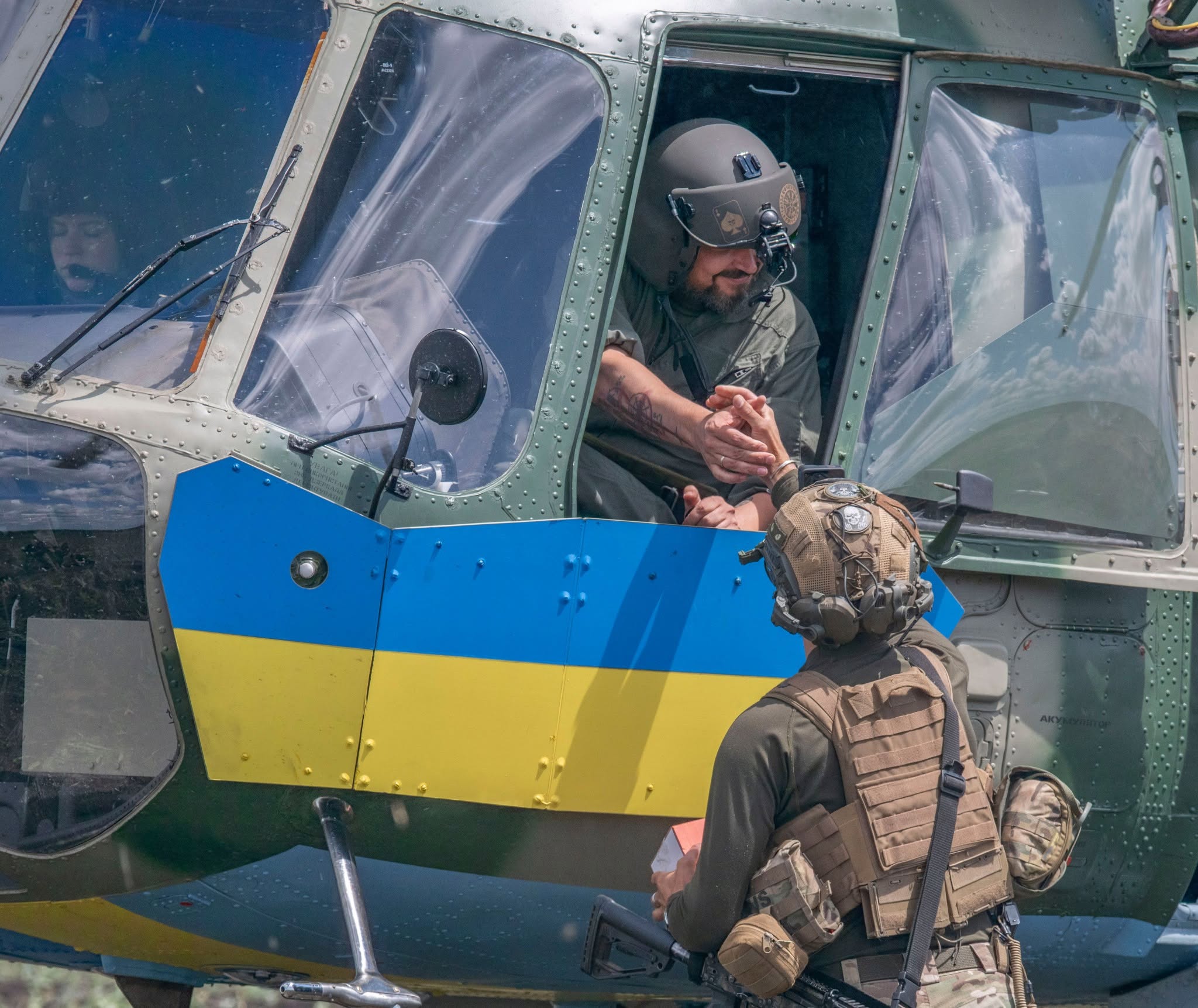
Photo by Serhii Takhmazov
- All right, then let me put it this way: how much has Army Aviation developed over the years of the full-scale war?
- You have to understand that helicopter crews are aviation multitools. In principle, a fighter pilot’s missions are more or less standard. I understand that those lads are absolute aces as well, and I have enormous respect for them. But the range of their missions has essentially remained unchanged. As for us... What is a helicopter? It can land in practically any clearing. It does not need an airfield or sophisticated radio-navigation systems. If the GPS works, great. If it does not, so be it. We will fly using a map. Wherever a fuel tanker can reach, we can land. We operate in forests and over rough terrain. Moreover, a helicopter can fire or not fire; it can carry borshch, evacuate the wounded, transport all kinds of useful supplies or carry the top brass... It is a true workhorse of war. But besides performing this broad range of missions, the war genuinely presents new challenges, and we are obliged to meet them. This also applies to hunting Shaheds. Army Aviation brigades have, in principle, always been tasked with maintaining combat alert duty to intercept low-speed, low-flying aerial targets. In other words, helicopters were assigned the mission of maintaining combat alert duty and destroying aerial targets. Did they actually carry it out? Such incidents were so rare throughout the entire history of rotary-wing aviation worldwide that they are barely worth mentioning. Today, however, in less than two years, we are approaching 8,000 aerial targets destroyed!
Violetta Kirtoka, Censor.NET


