



How do aircraft hunt down shaheds? Story of pilot who returned from abroad to defend Ukrainian airspace
...He speaks about aviation in a way that is both businesslike and poetic; people like that not only love what they do, but also know how to inspire others to love it too.
"People don’t just join the air force on a whim. They come here because their heart or their mind calls them to it. There are no accidental people here. To do their job well, everyone needs to have a feel for it: a pilot must have a feel for the aircraft, a gunner for the rifle, and a technician for the engine. Just as an artist must have a feel for the canvas, and a builder for his tools."
Stanislav rose through the ranks from the infantry to the Army Aviation of the Land Forces, gaining combat experience on the Sumy, Bakhmut, Toretsk, Avdiivka and Pokrovsk-Kurakhiv fronts. He was wounded during the full-scale war. For his bravery and courage, he has been awarded the Order ‘For Bravery’ (2nd and 3rd classes), the Gold Cross, the Medal for the Defence of Ukraine and the Defence of the City of Bakhmut, the Airborne Assault Forces Cross, the Badge of Military Valour and other honours.
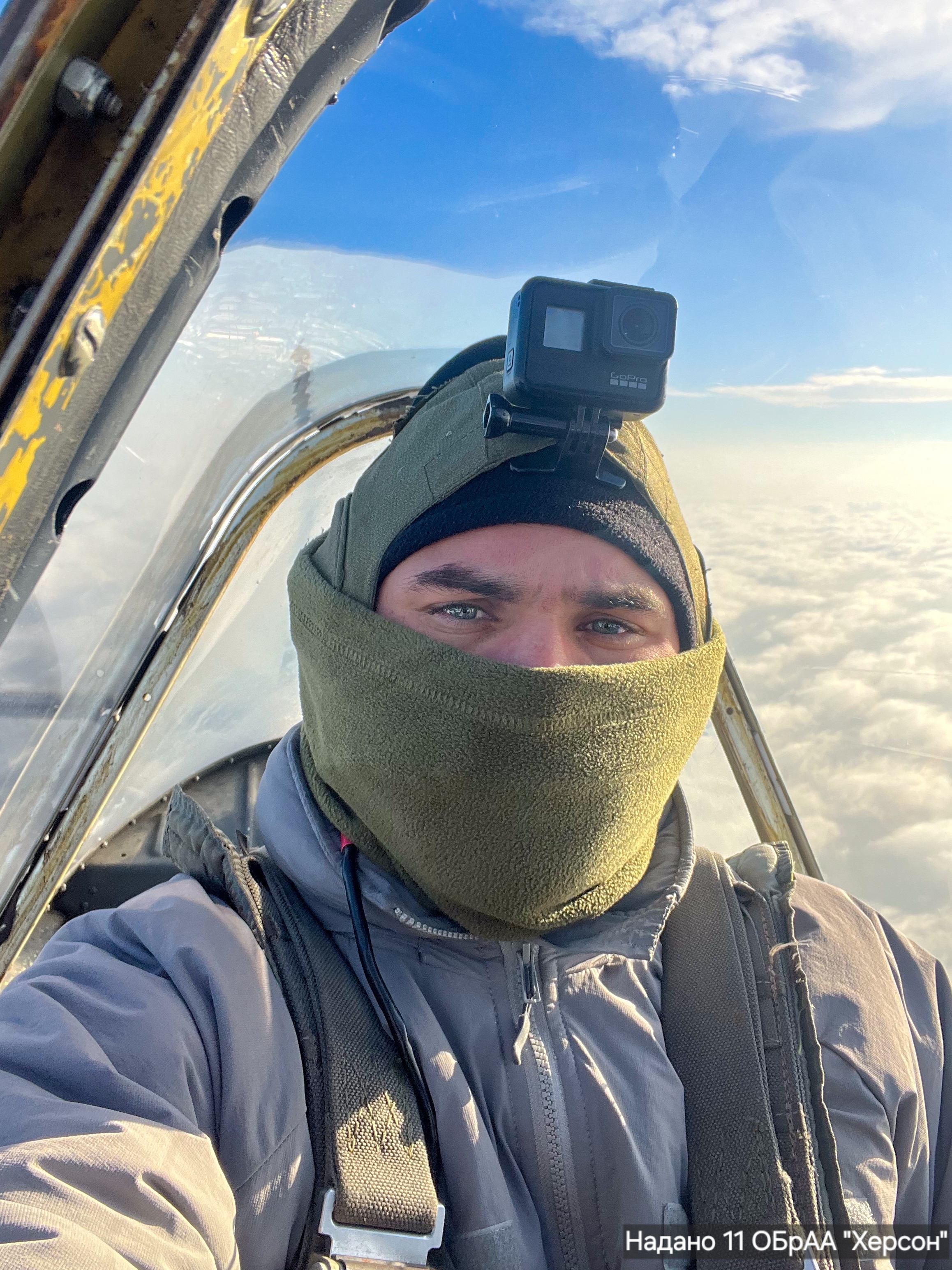
Currently, the officer, together with his comrades-in-arms, continues to carry out combat missions as part of the 11th Separate Army Aviation Brigade ‘Kherson’. A correspondent from ‘Censor.NET’ spoke to him there.
- Stanislav, you found yourself in the midst of a full-scale war with Russia whilst abroad. Did you have any doubts about returning home? I ask because I’ve heard of various cases. For some, it meant a sleepless night, followed by packing a suitcase and a quick journey home across the Eastern European border. Others stayed where they were and worried about Ukraine from there. How was it in your case?
- I began my service whilst still at the Ivan Bohun Military Lyceum in Kyiv. After that, I served in the Armed Forces for a long time. I swore an oath of allegiance to the people of Ukraine, and for me, a man is defined by his keeping his word.
An oath isn’t just words on a fancy piece of paper that you read out in front of the formation. It’s a responsibility you take upon yourself. You’re obliged to fulfil it. That’s precisely what defines a man, a Ukrainian and a person. So there was no hesitation whatsoever. All the more so, knowing that my family, loved ones and friends were there, I had no moral right to act otherwise. I travelled to Ukraine in the early days of the full-scale war, and by 1 March I had already been officially enrolled in one of the military units.
- When and how did you hear that a full-scale war had begun? And what did you see as you crossed the border?
- I found out that the war had started from a phone call from my mother. At first, I didn’t believe it. But after seeing videos of shelling on the news and Telegram channels, I realised I had to act very quickly – perhaps every minute counted.
I crossed the border at night and saw nothing except a huge convoy heading in one direction. The convoy heading into Ukraine was just as long. I was tired and realised I’d need my strength before taking action, so I didn’t pay any attention to what was happening there. Then I joined a military unit – and in the early days we were tasked with defending critical infrastructure.
- In the early months of the major war, one of the main demands made of our Western partners was a call to close the skies over Ukraine. Did you believe that was possible at the time?
- You know, I had no information on this subject and relied not on our Western partners, but on my own capabilities. I had my own motivation, my own goal, my own skills, which I was keen to put to use in defending Ukraine. Besides, there was no time to keep up with the current situation in the media.
- If you were to summarise your combat experience to date briefly and concisely, in which areas and in which vehicles did you fight?
- I began my military service in the infantry – with the liberation of the Sumy region and the border areas of that region. Next came the battle for the city of Bakhmut, and I spent over a year on the Bakhmut front. From the Soledar sector to Toretsk, I had to carry out my infantry duties.
I was then transferred to the Airborne Assault Forces. I joined them at the start of the counter-offensive, and remained with them until the end of the active phase, when the front line stabilised. This was followed by the fall of Avdiivka and the defence of the surrounding villages. Next came the Pokrovsk–Kurakhiv sector, where we worked to prevent the enemy’s advance and the development of their combat formations.
In other words, before joining the Army Aviation of the Land Forces, I served for four years in reconnaissance platoons of infantry units, and subsequently in an airborne assault battalion. I carried out my duties in this role and had absolutely no involvement with drones, aviation or air support coordination. The only thing related to aviation was the enemy’s aircraft, which were attacking us, at times, non-stop. That was the only aviation I could see...
- You are currently fighting in Yak-52 training aircraft, which are being used in this war to shoot down enemy drones. For readers who are unfamiliar with your work, here is a brief explanation of how it works. The aircraft is piloted by a pilot, whilst an air gunner sits in the open-cockpit instructor’s seat. Enemy UAVs are mainly shot down by the gunner using a machine gun or, occasionally, a shotgun. The pilot flies as close as possible to the drone, after which the gunner engages the enemy drone from the air. Have I got that right?
- Almost everything is correct, except that instead of a machine gun or a shotgun, we use assault rifles, and the distance to the aerial target must be safe, not just as close as possible.
- Stanislav, what else is important for the reader to know about the Yak-52 as an aircraft?
- They need to know that people achieve the impossible in this aircraft. Generally speaking, this aircraft isn’t designed to shoot down UAVs. It’s just you and the aerial target in the air – it’s an aerial duel in the truest sense of the word. A great deal depends on the pilot’s skill, and on the accuracy and professionalism of the gunner.
Video courtesy of the 11th Separate Army Aviation Brigade "Kherson"
- You’re saying that on a combat mission, you’re effectively engaged in a duel with an enemy target. These aren’t just fine words, but an accurate reflection of what’s happening, because enemy UAVs are rapidly improving and are capable of autonomous operation. So the enemy could use a UAV to attack your Yak-52, right?
- Yes. Time doesn’t stand still. Both the enemy and their weapons are improving. Targets are becoming more manoeuvrable. Various tactics are being developed to strike our targets. But for now, we are managing to carry out our combat missions effectively. Of course, we would prefer to carry out all this using much more modern equipment that is well-protected and equipped with machine guns or guided missiles for this purpose.
Much of the credit for our ability to carry out these flights goes to the engineering side of the air force. The equipment is outdated and requires constant maintenance and servicing. The same goes for spare parts – it’s a challenge.
That’s why the real heroes aren’t just those in the sky, but also those on the ground. Because sometimes it seems as though the technicians are doing the impossible just to get this aircraft airborne. And it’s not just the pilot and the gunner who have to freeze at five thousand metres whilst engaging a target, but also the technicians who, in camouflaged shelters – often without proper heating in winter – repair and service our aircraft.
- There’s a lot of talk about how there must be the utmost trust between the gunner and the pilot. But listening to you, trust in the ground crews who keep the aircraft in peak condition is just as important.
- You see, people don’t just join the air force on a whim. They come here following the call of their heart or their mind. There are no random people here. To do their job properly, everyone needs to have a feel for it: a pilot must have a feel for the aircraft, a gunner for their rifle, and a technician for the engine. Just as an artist must have a feel for the canvas, and a builder for their tools.
That’s why people come here – following a calling. That’s why there are so many like-minded people among us. The trust option is enabled by default, because the people here are motivated and ready to do their jobs effectively.
- You studied aviation abroad. Did little Stanislav dream of the skies as a child? How did you end up in aviation?
- Great things are achieved not in spite of, but thanks to. We all come from our childhoods; everyone has their own story. Mine is very simple: in the village where I spent my holidays, an An-2 aeroplane used to fly. It would spray chemicals over the fields. Every day I’d wait for it on the roof and wave different flags so it would see me.
And one day, my friend and I were sitting on the roof, and the aeroplane didn’t fly. My friend went home, saying the aeroplane wouldn’t be flying. But I stayed behind to wait. The aeroplane did come – and it didn’t just fly past: it spotted me, made a turn around me and flew off to the airfield.
- Brilliant!
- At that moment, I was probably the happiest child in the world. And I took it as a sign of destiny. It was on that very aeroplane that I wanted to start my flying career. So, at the age of 16, I joined an aviation sports club. I started with parachute jumps. Then I worked as a parachute packer. Later, I became an instructor. And when I reached a certain age, I was able to fly a glider and master the technique. It was then that I experienced the full beauty of a bird’s-eye view.
Next came the opportunity to train as a pilot abroad. There, I flew a Cessna. It was there that I completed my flight training, obtained the pilot’s licence I’d been hoping for, and prepared to dedicate my life to civil aviation. But, unfortunately, the war intervened, and those dreams and goals were temporarily put on hold.
But now, flying the Yak-52 and carrying out combat missions, I still feel happy. Because I have the chance to do what I love – and to defend my homeland, which I can see from above.
- You mentioned the issues with the Yak-52. In reality, the aircraft isn’t designed for this kind of combat use. It’s old, that’s true. But does the Yak-52 have any advantages specifically when it comes to hunting down enemy UAVs? Compared to fighter jets, for example?
- Its greatest advantage is its cost-effectiveness. For example, to destroy a ‘Shahed’, a fighter jet has to fire a missile costing tens of thousands of dollars. Maintaining a fighter jet also incurs significant costs. Whereas we need smaller airfields, far less fuel and fewer maintenance personnel – our costs are a fraction of those.
Our main advantage is mobility and speed. After all, the aircraft requires less time to prepare the crew and the aircraft itself for a combat mission. The aircraft’s speed relative to that of the aerial target is also important – we are able to immediately identify the type of UAV with a view to subsequently engaging it.
During one combat sortie, I managed to shoot down six ‘Shahed’-type aerial targets, using only a few hundred rounds of ammunition and a few dozen litres of fuel. In total, I managed to shoot down 12 confirmed aerial targets that day.
In other words, speed, manoeuvrability and fuel efficiency are our main advantages.
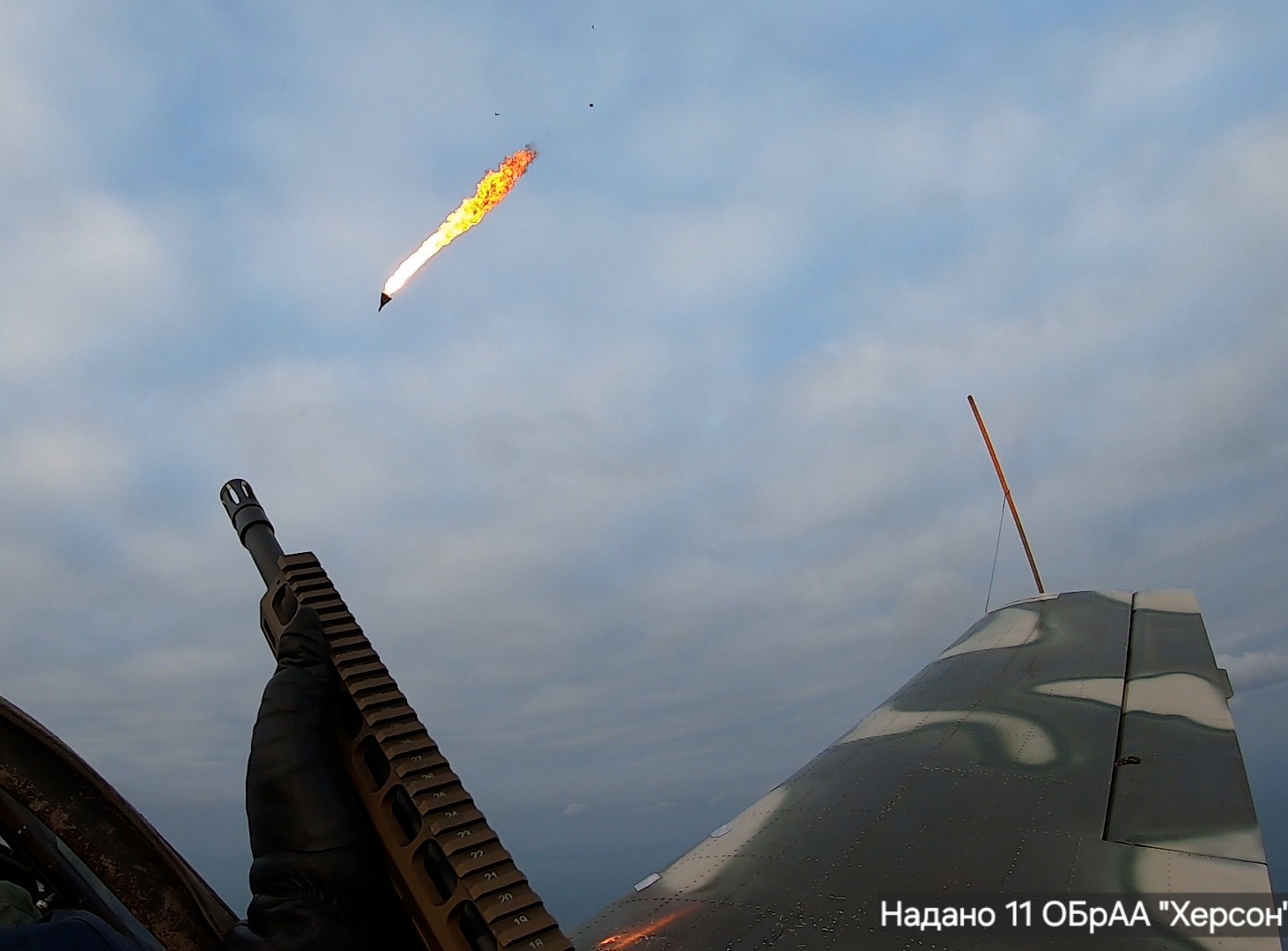
- How did you feel when you shot down an enemy target for the first time in a Yak-52 – and how do you feel now, as you shoot down one target after another? Is there a difference between these feelings?
- My first target was an ‘Orlan-10’ reconnaissance UAV. It was quite a difficult target for our crew – precisely because it was the first. Back then, during combat operations, I felt a rush of adrenaline and excitement. But when, after that first target, came the second, third, tenth, fiftieth – it simply becomes part of the job. If you get too worked up about it, you’ll just burn out. Instead, you see shooting down aerial targets as a duty you have to fulfil.
The best feeling, after completing a combat mission, isn’t something you experience in the sky. The real realisation comes when you return to your home airfield and see a clear sky, whilst hearing over the radio: ‘There are no more aerial targets.’ That’s when you feel a sense of satisfaction and peace. Especially when you’re returning at sunset and you really do see a clear sky. Only then, back on the ground, do you realise just how much damage a reconnaissance or strike UAV could have caused.
- You started out as a gunner in the crew and then became a pilot, so you’re familiar with both roles. What’s important in their interaction for successfully carrying out the assigned tasks?
- I’ll answer that simply: it’s not just down to the pilot and the air gunner. If you compare the current system to a spear, the pilot and the air gunner are its tip. But to throw that spear, a great many services need to be involved: the crew must be fed, the aircraft serviced and refuelled, and the airfield prepared. Communication and coordination with command and the operations officer on duty must run like clockwork. Co-ordination between all services is timed to the execution of tasks, and everyone has their moment of glory during the preparation of a combat sortie to ensure the aircraft takes to the air. The crew’s interaction with the air navigation control centre plays a major role.
And only when all the conditions are met – when the aircraft has been refuelled and serviced, the crew has been fed, the airfield meets the standards, communications are working perfectly, and the air navigation control centre accurately guides us to the target – only then can we successfully carry out a combat mission.
That is why we are merely the tip of the spear. The spear itself and the hand that guides it are the other services, without which this work would be impossible.
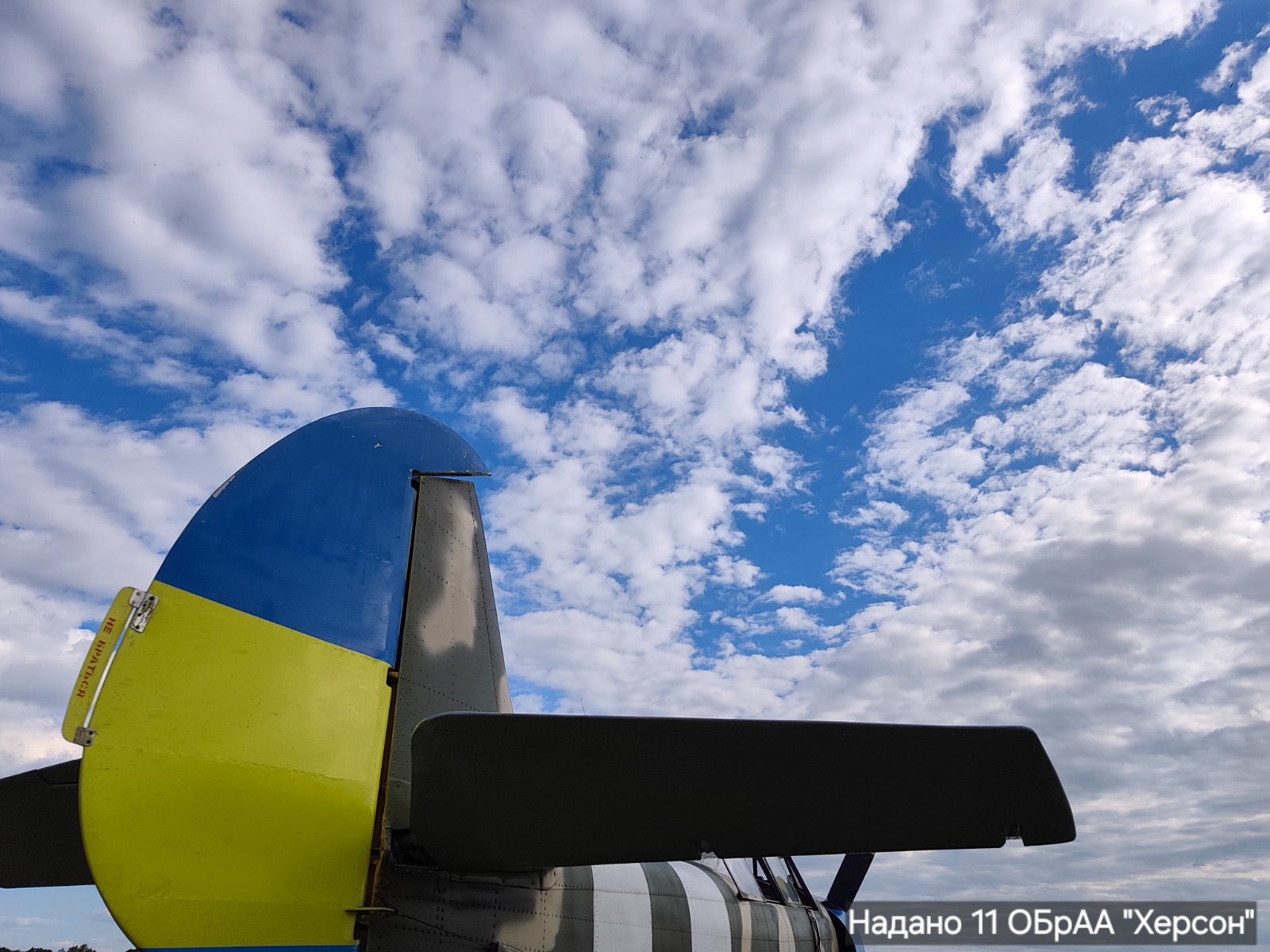
- Which enemy UAVs, both reconnaissance drones and Shaheds, have you had to engage?
- Our unit has shot down the full range of UAVs the enemy possesses. We can divide them into several categories encompassing nearly all the types currently in service: all Shahed-type attack UAVs, BM-35s and various Gerbera variants. There are also reconnaissance drones: Orlan, Merlin, Zala and Supercam. In addition, we have had to engage unidentified reconnaissance and attack UAVs.
- Apart from the UAVs you engage in aerial duels, what else does the enemy use against our Yak-52 crews?
- Most often, it is radio jamming that disrupts communications. Without communications, you simply cannot find the target. There have been cases of the enemy breaking into our radio frequency, impersonating an air traffic controller and ordering us to eject and abandon the aircraft. This happened to me in one area during a combat mission when we were flying to destroy an enemy aerial target.
- Please tell us more about that.
- It was a combat sortie to destroy an enemy reconnaissance UAV that was most likely preparing to guide a ballistic missile strike. We climbed so high that there was extensive cloud cover beneath us, making navigation difficult. That was when the enemy resorted to this tactic: they contacted us using our crew’s call sign and, pretending to be the Ukrainian side, ordered us to abandon the aircraft because missile launches targeting us had been detected. (The threat posed by guided missiles capable of striking us does indeed exist. The Yak-52 is not a fighter jet, so unfortunately there is a genuinely high risk of being hit by the enemy.)
But we understood that it was most likely the enemy.
- How did you realise that?
- First, you know the voice of the controller you work with. Second, the message was delivered in Russian... We had to suspend the mission and establish communications with the aviation guidance post via backup channels.
Everything ended well. We completed the mission and did not fall for the provocation.
- From time to time, after enemy UAV raids, you see indignant comments on social media along the lines of: "Enemy UAVs are flying over our homes today as if they own the place. Where is our air defence? Why weren’t they shot down?" The funny thing is that these are often the same people who previously wrote: "Thank you to our air defence forces for their work and for shooting them down!"
But I have a technical question: which UAVs are more difficult to shoot down? Kyiv, for example, is now being attacked by jet-powered UAVs with increasing frequency. Do they fall into the category of drones that are more difficult to intercept?
- It depends on more than just the type of UAV. There are many factors that affect this, including weather conditions, which do not always allow us to operate, as well as certain restrictions and the involvement of other air defence assets; aircraft are not the only means available.
But above all, people must understand that the enemy employs its own tactics and does not use just one type of UAV during large-scale attacks. It uses a combination of forces and assets.
- As I understand it, when a large-scale attack is underway and many UAVs are approaching from one direction, it is preferable to destroy as many of them as possible before they enter a populated area. But UAVs may still be destroyed there if there is already a risk that they could detonate near homes. Are there also certain restrictions in this regard?
- We shoot them down over safe areas so that enemy UAVs do not crash into buildings. In other words, we make a cool-headed and precise calculation of where the target will fall once it is hit. It must come down in a safe location, a field, the sea, or a deserted wasteland.
- At one point, the use of the Yak-52 in this war was an experimental project that originated in your brigade. Perhaps that is why it did not become as widespread as the use of helicopters. Do you think it would be advisable to deploy more such aircraft in army aviation?
- In my opinion, it would, because it is cost-effective. In general, every piece of equipment is effective in its own way and intended for a particular situation... I believe the Yak-52 is needed and that this concept is viable. But the main prerequisite for its success is not merely the aircraft itself, but also the people who must fly it, service it, and keep it in proper condition. The same applies to ensuring the timely supply of spare parts for these aircraft.
So there is a valid case for using this type of aircraft, but everything depends on the engineering and aviation service specialists who keep it operational. We are critically short of such people, and we need them. People often do not even know that units like ours exist. Ukraine once had many aviation clubs that employed aircraft technicians. But we understand the country’s current situation; there is a shortage of specialists. If people had the opportunity to contribute to this technical process, it would certainly be helpful...
Incidentally, regarding the indignation people express in the comments: ever since my time in the infantry, I have lived by the principle that you should live in such a way that you are not ashamed to look up at the sky. If I know that I flew a sortie that day and shot down an enemy UAV, then my day was not wasted, and the same applies to everyone involved in that process. It means we did everything possible to make it happen.
That is why I will take responsibility only for my own actions and within my own area of responsibility. If I could shoot down every Shahed with a single aircraft, I would gladly do so. But I cannot be everywhere. Our country covers a vast territory, so I pay no attention to such comments.
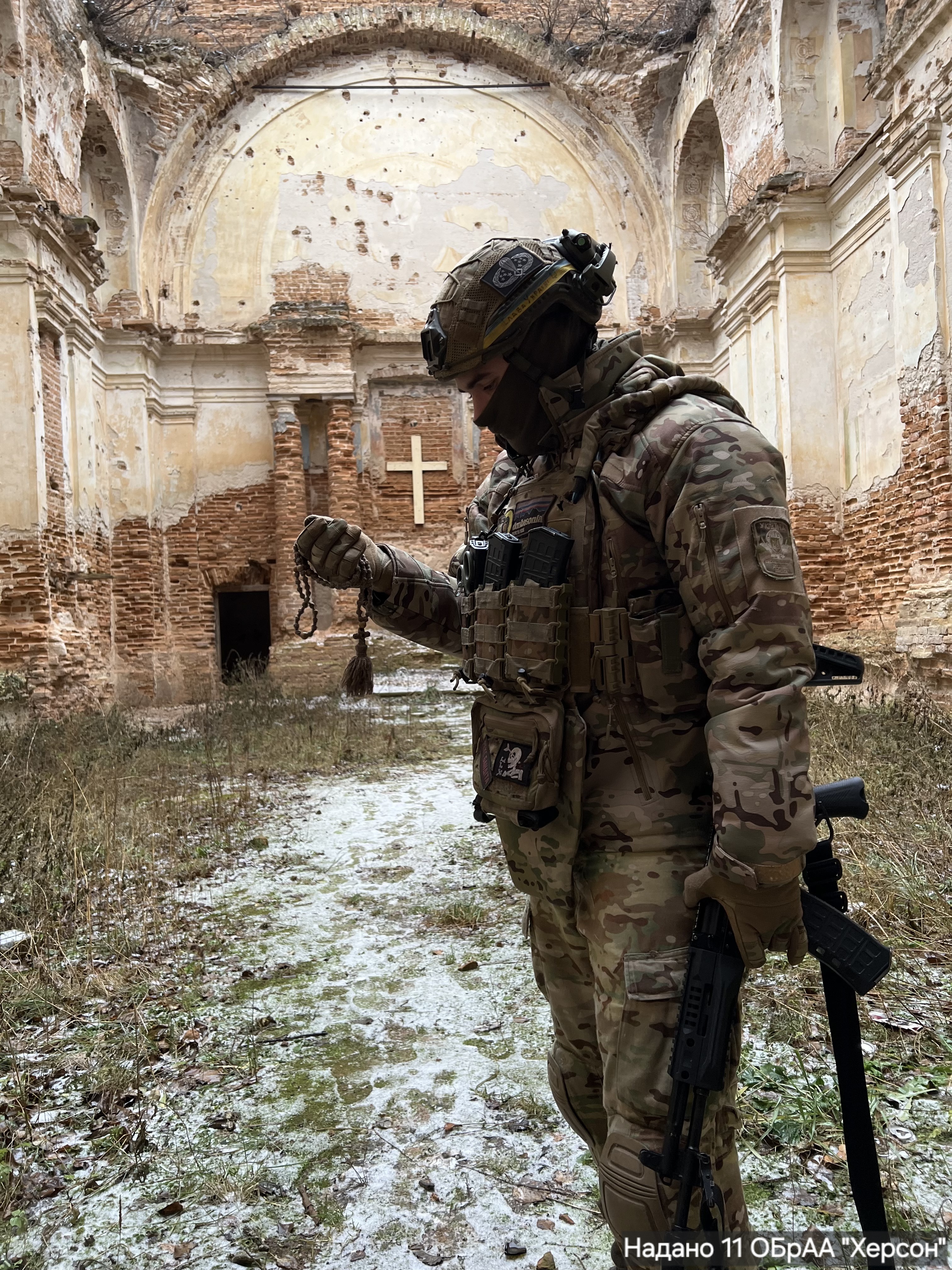
- And what do you pay attention to?
- The faces of people when I am on leave. These people have the opportunity to live their lives—to walk in parks, attend events, enjoy life, and be happy. I know that under different circumstances, an enemy UAV might have struck that kindergarten or that square. So I simply do my job, ignore those comments, and form my own view of everything happening in the civilian world (whenever I have the opportunity to see it).
- Let us change the subject. Of all the challenges facing your unit and others like it, which is the most pressing? Let me explain (mainly for our readers): the different branches of the military I have spoken with have different pain points. Snipers, for example, often lack ammunition for training. Medical companies face an acute shortage of funds for vehicle repairs. What about Yak-52 pilots? What do you need most? What should we ask our readers to donate towards? I believe donating to your unit is both important and justified, as you shoot down UAVs flying to kill Ukrainians, including those very readers.
- Our biggest problem is that the aircraft themselves are far from new, so we constantly have to repair and restore them. Some spare parts can be purchased abroad, but that requires funds. This would improve the effectiveness of our work and the technical condition of the aircraft.
- Stanislav, despite the war and the difficult situation in the country, some people still find 10 or 15 hryvnias to help us reach our fundraising target. This means people hear you and are supporting you. What would you like to say to those helping us complete the fundraiser?
- Thank you! The war is now being fought in the air, at sea and on land. The Armed Forces therefore genuinely need financial assistance. I would like to thank everyone who supports not only army aviation units but Ukraine’s Defence and Security Forces as a whole. I would like civilians to have faith in us, just as we have faith in them.
- You mentioned a childhood story about waiting for an aircraft and feeling like the happiest person alive. Now, when you fly combat missions at low altitude, do you see people below waving to you? And what does the sky mean to you?
- The sky is life. When you hear the roar of the engine, when the wheels lift off the runway, and you begin to climb, every problem remains on the ground. There is only you, the aircraft, and the mission you have to accomplish. It has always been that way, ever since my training flights.
Now, training missions have given way to combat missions, so when you leave the ground, you forget your troubles. Everything, both good and bad, remains on the ground. There is only you and the sky. And the sky is life.
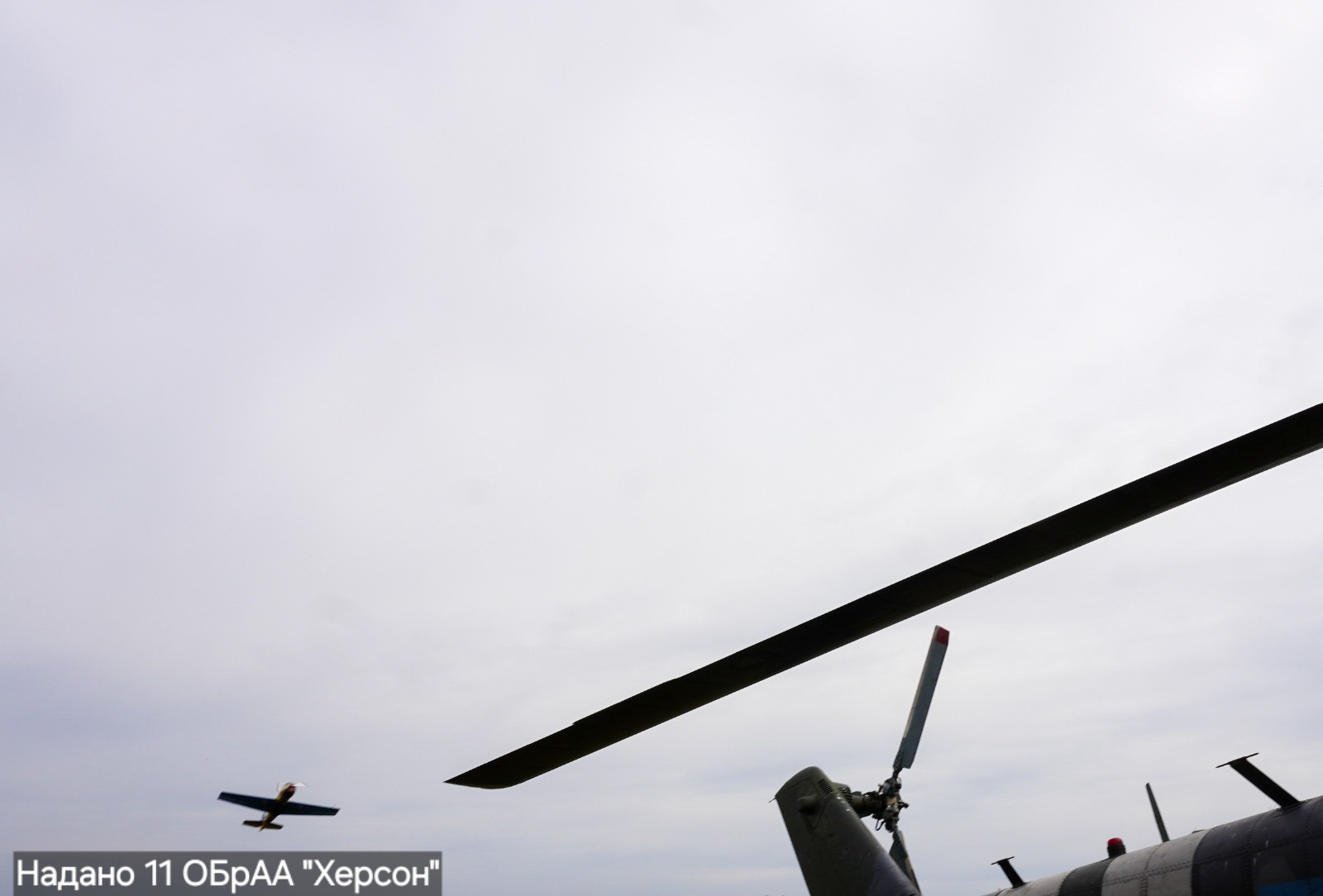
When flying, you naturally look down at the ground, not only admiring its beauty but also scanning for enemy aerial targets against the landscape. Moreover, while flying to or returning from a combat mission, you often spot a little boy on the ground, just like you once were, watching the aircraft and waving to you. You see him and mentally rewind your life by decades. Now you view the situation through different eyes. Now you rock your wings in return and make him the happiest child in the world.
Attention! A fundraiser is currently underway to purchase propellers for Yak-52 aircraft. Each propeller means another sortie, another UAV shot down, another home protected, and more lives saved.
You can support our defenders from the 11th Separate Kherson Army Aviation Brigade by donating via the fundraising jar at the following link:
https://send.monobank.ua/jar/8BwUggii5i
Jar card number:
4874 1000 3985 7464
Yevhen Kuzmenko, "Censor.NET"


