



"Azov" member Hennadii Kharchenko: "Events in Olenivka are landmark moments, just like Battle of Kalka or Battle of Kruty"
The night of July 28–29, 2022. Olenivka. A powerful explosion rocks the barracks where some Ukrainian prisoners of war had been transferred just the day before. In a matter of minutes, dozens of people are killed and more than a hundred are wounded. All of them were members of the Azov Battalion. Russia put forward its own version of events: allegedly, the camp was shelled by Ukrainian HIMARS. But the survivors still tell a different story.
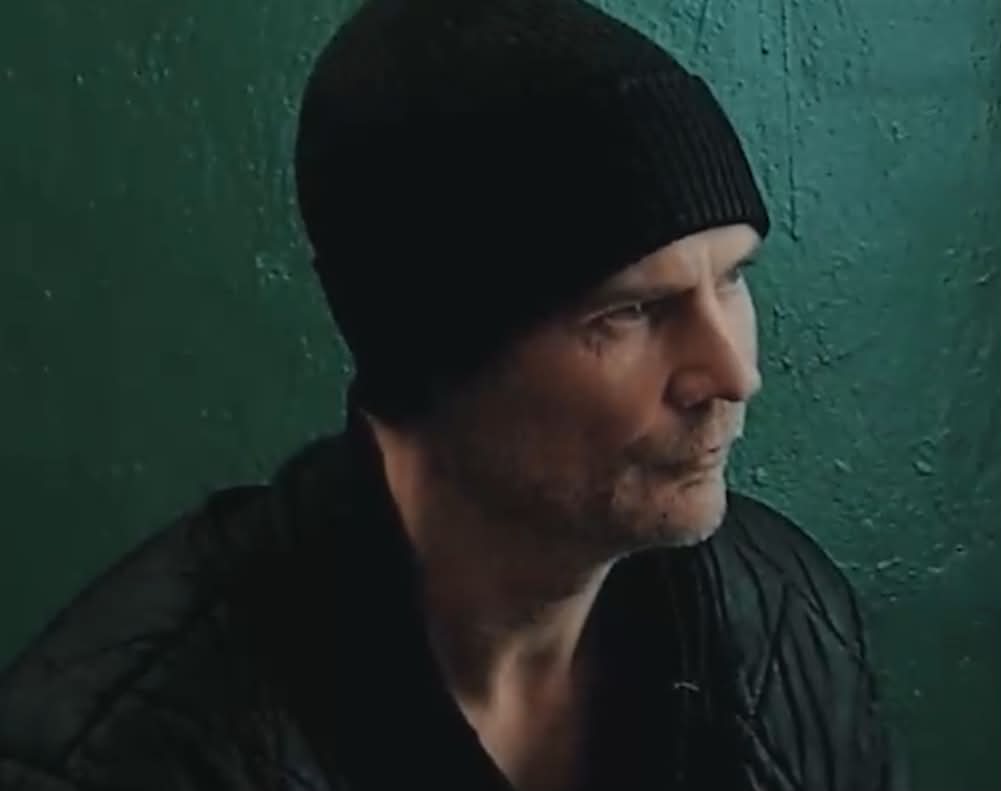
Hennadii Kharchenko, call sign Tereheria, is a soldier in the 1st Corps of the National Guard of Ukraine’s ‘Azov’ unit, a defender of Mariupol and ‘Azovstal’, who spent over two years in Russian captivity. He was among those who survived the tragedy in Olenivka, after which the occupiers sentenced him to 25 years’ imprisonment on trumped-up charges. In October 2024, he was successfully returned home as part of a prisoner exchange.
In our conversation, Hennadii recalls the defence of Mariupol, the evacuation from Azovstal, the night of the terrorist attack in Olenivka, his captivity in russia and the so-called trial; he discusses the fate of prisoners of war who remain in russia to this day, and explains why he has returned to active duty.
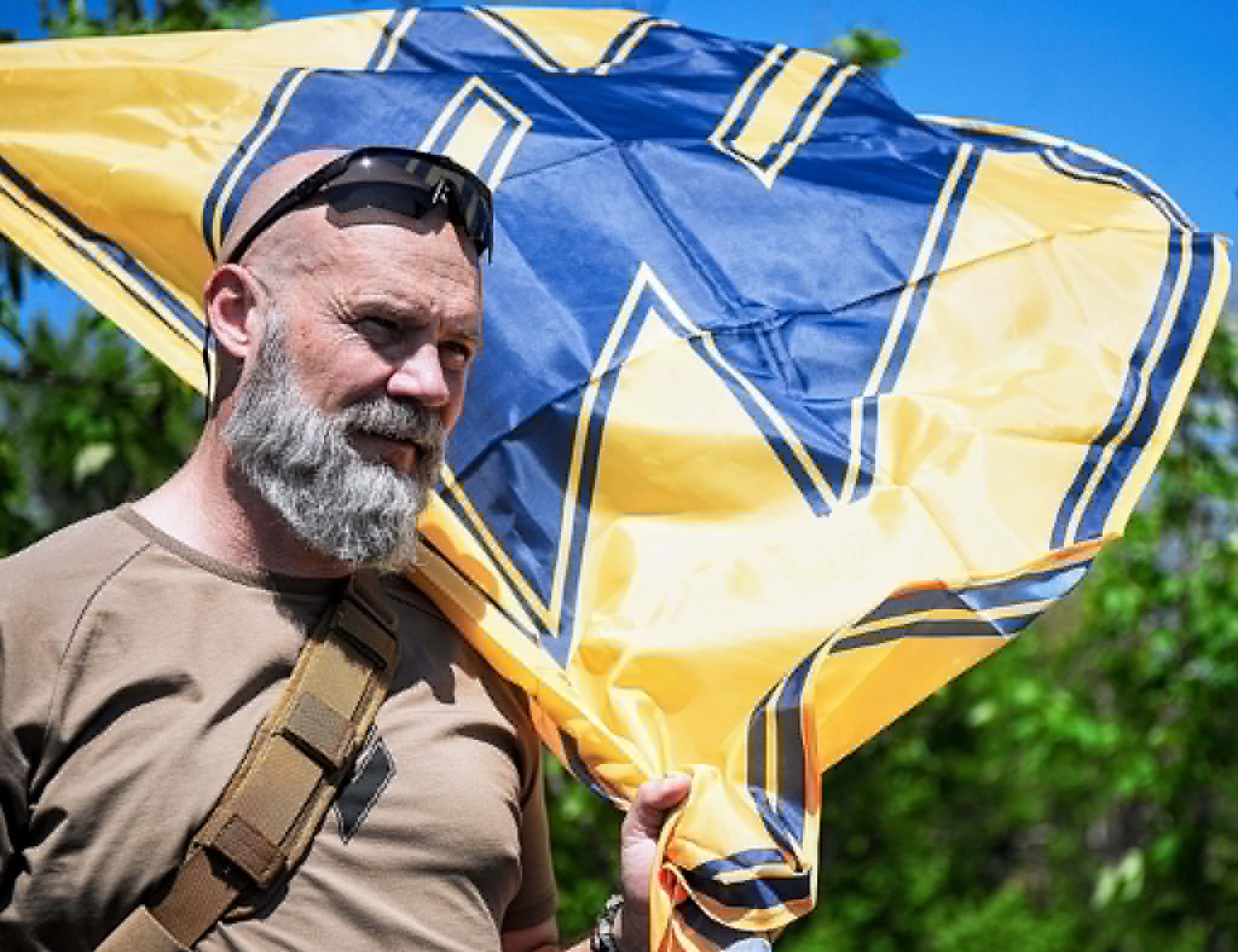
- I’d like to start our conversation with the beginning of the full-scale invasion. On 24 February 2022, you were in Mariupol. Were you prepared for such a turn of events?
- Generally speaking, "Azov" had always been preparing for a military clash with russia. Consequently, we were also prepared for a full-scale attack. We still have our training plans and the relevant documents, which outlined a scenario for a full-scale russian invasion – specifically from the very directions from which it actually took place: an amphibious landing on the coast between Mariupol and Berdiansk, and an offensive from the direction of Donetsk and Novoazovsk with the aim of encircling Mariupol.
In the run-up to the full-scale invasion, we were likewise selecting new positions, working out our next moves, and considering possible options for repelling or containing the aggressor. So it cannot be said that this came as a complete surprise to us. But, of course, the scale of it was staggering. As was the fact that it actually happened. And what was most shocking was that the first targets were not even military facilities, but civilian settlements. Initially, these were in the outskirts of Mariupol. Some of them had military garrisons, others did not. However, the Russians employed the tactic of completely destroying even small villages from the very beginning, in order to avoid street fighting and advance in columns. Incidentally, they are still trying to operate in the same way, altering only certain tactical approaches. Even when we were practising various scenarios at the training ground, we expected their columns to move under covering fire. But they did not do so. They directed their entire barrage of fire, first and foremost, at the civilian population: at destroying civilian infrastructure and residential buildings – both high-rise blocks and very small detached houses. Their cruelty and brutality towards everything – the civilian population and even their own fighters – was simply staggering. It is therefore no surprise that the enemy was and remains cruel, irrational, and conducts hostilities exclusively on the verge of, or already beyond, the bounds of war crimes.
- I remember that civilians were with you at ‘Azovstal’ when fierce fighting was taking place…
- Indeed, both during the fighting in Mariupol and later during the defence of Azovstal. The Russians constantly claimed that the ‘Azov’ fighters were supposedly using the civilian population as a shield. But it was they who blockaded both Azovstal and Mariupol, preventing civilians from leaving. Furthermore, people were constantly caught in enemy shelling from all types of weaponry. Even back then, combat drones, aircraft, long-range artillery – which was even firing from the Caspian Sea – as well as mortar and howitzer batteries surrounding Mariupol were being used. There is even a video showing the civilian population being shelled during the fighting for the city, accompanied by the songs: ‘Do the Russians Want War?’, ‘A Young Lad Went Out into the Donetsk Steppe’ and ‘Grass by the House’.
- Did the Russians play that on purpose?
- Yes. Loudspeakers were mounted on military vehicles, through which they urged us to surrender. All this was accompanied by a typical Soviet and post-Soviet disco playlist: Bernes, Kobzon, the band ‘Zemlyane’. Realising that we would not surrender, they would begin shelling precisely to the tune of these songs.
The Russians also forced the civilian population to wear white armbands – identification marks which they themselves used – and to approach our positions or even try to dismantle our defences, in order to deliberately provoke return fire. They shot civilians and then blamed it on the Ukrainian army, in particular the ‘Azov’ regiment. It is now practically impossible to establish even an approximate death toll. We can only make estimates based on those who have not been heard from, and on the burials that took place, in particular at Agrobaza – a suburb of Mariupol where the victims of the Nazis were once buried. The victims of the ruscists are also buried there today. In other words, their actions were in no way different from those of the Nazis. It is the same now.
- In one of your interviews, you mentioned that at the time, quite a few "Azov" fighters were killed whilst trying to evacuate civilians. And they were even wearing white armbands, weren’t they?
- Yes. The escort groups leading the civilian population out came under targeted sniper fire. Some of the lads were killed precisely whilst evacuating the population, even though they too were wearing white armbands, which Russian propaganda later used as a symbol of supposed surrender. Although they also wore white armbands when going out for negotiations – that was the agreed signal to indicate that these were groups involved either in the negotiations or in the evacuation of the civilian population. But later on, we did not go out to be taken prisoner either with white armbands or with our hands raised.

Another point: there was not enough time to evacuate civilians. ‘Azovstal’ was under constant heavy shelling, so the terrain there was constantly changing. Within just a few hours, it had become simply impossible to pass along the roads that had been planned for the evacuation. And Redis requested additional time solely to clear the rubble and create at least some passageways so that civilians could get through. But the Russians often failed to respond to these requests. Instead, they opened fire and accused ‘Azov’ and the Ukrainian fighters of violating the ceasefire.
- So they were deliberately luring them out to kill as many people as possible?
- Presumably so. The ceasefire was never fully observed. Not during the ATO, the so-called ‘smo’, or any other period of the war since 2014. Not even when they themselves proposed it, to evacuate their own wounded, or to stage some sort of parade or something else. They were the first to violate it and always blamed the Ukrainian side. In other words, we never had much trust in them. Nor did we harbour any hopes that they would honour it. But during the negotiations at Azovstal, Azov consistently demanded that, first and foremost, the civilian population be allowed to leave. Then – to evacuate the seriously wounded, who were already in a critical condition. However, there were no demands from our side regarding an exit or the possibility of lifting the siege for ‘Azov’, either during the fighting for Mariupol or during the defence of Azovstal.
- You were also wounded back then in mid-April, weren’t you?
- Everyone who was in the firing positions was wounded. But for us, being hit by fewer than three pieces of shrapnel wasn’t even considered a wound.
- What sort of injuries did you sustain?
- Both shrapnel and bullet wounds. I was lucky – my vital organs weren’t affected. I was sent to ‘Zaliziaka’ – a field hospital at Azovstal, the location of which the Russians were also aware of, so they deliberately bombed it, even though it wasn’t a military facility. The walls were literally shaking there, and from time to time there were very serious fires. There was no way to cook food for all the wounded who were there. At the same time, the conditions for carrying out complex operations were constantly deteriorating, whilst the need for them was only growing. I asked my commander not to send me there, because I didn’t want to take the place of those who really needed help. And there were more and more of them with every passing hour. So I said I felt fine. The commander replied: "We need to have this medically confirmed. If the medics give that assessment, then you won’t be staying there."
- What did the medics tell you?
- I explained the situation. I was given first aid. Plus, we had medical posts set up in various bunkers and shelters. So we agreed that I would receive further treatment directly in the bunker to which my commander would assign me.
- How did you feel about having to surrender?
- There was no sense of panic or defeatist thinking that we should just give up everything and go into captivity. We were waiting to see what the decision would be. We relied, first and foremost, on our commander – our friend Redis, who was then in charge of the units that had withdrawn to ‘Azovstal’. We were receiving some information from the outside. We knew about the overwhelming support from all over the world, about all the international events that were taking place, and we understood that some sort of decision would be made. Of course, there were various options – ranging from the most far-fetched to the most practical. The assault on Azovstal continued non-stop, day and night. Above all, the bombing posed a danger. We were warned that a massive air strike was expected, but there was nothing we could do to counter it. And the bunkers were no longer fit to withstand the attack or provide protection. Two of them, as is well known, were destroyed. Many of our comrades-in-arms were killed, even when an aerial bomb landed nearby. All we could do was hope that the bomb would not hit our bunker.
When we surrendered, everyone was tired and exhausted, but determined. It was not a capitulation, but the result of negotiations. Moreover, we had put forward our own conditions during those talks. At the time, the ceasefire was constantly being violated, with continuous assaults and provocations. But we were prepared to hold our defences for at least another month, despite the fact that we were already running short of food, water and ammunition. And when threats began that chemical weapons would be used, gas masks were handed out.
Once the decision had been made, Redis personally visited all the bunkers where the ‘Azovstal’ fighters were stationed. Although this was extremely dangerous – he even sustained a serious injury – he personally conveyed the order in every bunker and answered all the questions. We still had two dogs left in the bunker – Yarda, I think, and the now legendary Adik. We asked what would happen to them, and also whether we could take the remaining food and medicines with us, as we realised we would need them. This was what our medics had managed to get out at great personal risk and with great difficulty, moving it from one location to another, from one shelter to another. It seemed that, under such circumstances, there could hardly be room for two little dogs or even a small amount of medical supplies. But Redis said: "I’ll sort these matters out." In the end, he addressed them during the negotiations. He also ensured that the Ukrainian side would be handed over the freezers in which we had stored the bodies of our fallen comrades. He agreed on the handover of our battle flags, as well as on our being able to send our personal belongings. In other words, this was by no means a surrender. These were specific negotiations, as a result of which we left ‘Azovstal’. Could they have gone more smoothly? We do not yet know the full truth about them and cannot, to a certain extent, comment on them. However, this is a very telling, instructive and heroic chapter. And our friend Redis was not only a commander, but also proved to be a skilful diplomat and negotiator. But afterwards, the negotiations lacked proper follow-up. The agreements that had been reached were not implemented.
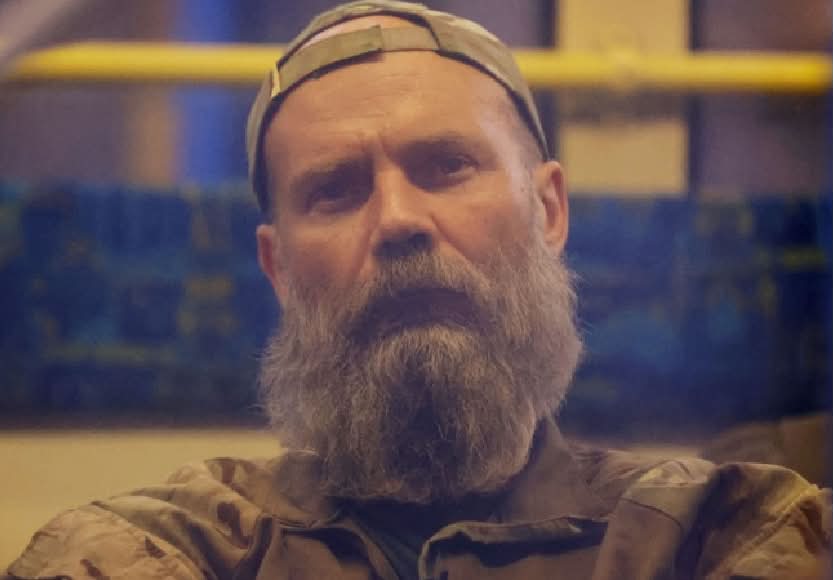
- After being taken prisoner, you ended up in Olenivka, where a terrorist attack took place on the night of 28–29 July. The Russians later claimed that it was Ukraine that had struck the prison camp. They said that after the explosion, they found fragments of a HIMARS rocket. Tell us what really happened.
- What HIMARS?! After the explosion, at about three or four in the morning, I went back to the barracks. Firstly, I was curious to find out what had actually happened. Secondly, it was very cold, and some of my comrades were dying or suffering from hypothermia. So I wanted to get something for the wounded – perhaps there were some clothes left, or at least some rags. Well, I’m prepared to swear on anything, on any holy book: there wasn’t a single fragment from a HIMARS, a shell or a mine there.
In fact, we’d been transferred there just a day before the attack. It wasn’t even a barracks, but a separate industrial building. For anyone who still has a Soviet or post-Soviet ‘Donbas’ fridge, here’s a little reminder: that’s exactly where they were manufactured. I’m not even sure that our intelligence or military command knew we’d been moved, as so little time had passed. And to carry out an operation, you need information, coordinates and preparation. russia made it seem as though investigations and interrogations had begun, so Ukraine decided to eliminate the ‘Azov’ fighters to prevent them from giving truthful testimony against, as the Russians put it, the ‘Kyiv regime’. We had a small but fairly reliable communication network at the time. ‘Azov’ maintained its military hierarchy. Daily meetings were held regarding the testimonies. For example, our friend Lemko would gather us together and explain what we were to say. We would come back from interrogations and report on the questions we’d been asked and what had happened there. So the whole process of giving evidence was completely controlled. The ‘regime’ knew this. What’s more, all the ‘Azov’ fighters who survived at Azovstal were taken prisoner. The position no longer existed, nor did the weapons. The documents had been destroyed. Any information regarding the organisational structure, weapons or firing positions that we could have provided was already completely irrelevant. The Russians could have used them solely to shift the blame for the destruction of the city and the killing of civilians primarily onto the ‘Azov’ fighters, purely for propaganda purposes. After all, they held no military secrets or strategic significance. We can see this from the verdicts that the Russians are trying to pass off as justice.
- We’ll talk more about the verdicts later. Please try to recall the night when the terrorist attack took place.
- Look, they rounded us up from various barracks. The selection process was based on specific criteria. First and foremost, these were lads who had served in the artillery (the branch of the armed forces that inflicted the heaviest fire damage on the Russian occupiers in Mariupol) or in technical units – repairs, maintenance of military equipment – or those who had Anglo-Saxon call signs such as Apache, Cowboy or American.
It was a sweltering summer. So, in the other barracks where we’d been before, we’d stay up late into the night. The conditions were appalling – it was stiflingly hot, and there wasn’t enough space. A third of the lads would be out in the courtyard, sitting and chatting until about two or three in the morning, gazing at the stars. But here, where we’d been transferred, there was a strict rule: after lights out, everyone had to be inside the building and were not allowed to go out until morning roll call. No exceptions. We decided then to conduct a poll to ask the prison management to move lights out from 10 pm to 11 pm, because at ten o’clock nobody was asleep yet. But, strangely enough, that night, as far as I can recall, everyone was asleep after lights out. That had never happened before. So when a massive explosion rang out, we didn’t immediately realise what had happened. We saw the fire and the torn-off roof inside the building. Screams and cries broke out. The first thing that really surprised us was that many of the lads were killed instantly. Even when a shell or a mine hits a large gathering – such as a barracks or a dugout – most of those present are usually only wounded. Sadly, we can still see this happening even now when civilian homes are hit. In other words, there are far more wounded than those who die. But here, a large number of lads were killed instantly. That is why I am absolutely certain that it was a thermobaric charge. Again, if Ukraine had wanted to destroy us – as the Russians claimed, so that we wouldn’t be able to give evidence – it would have been much easier for them: to shell the barracks we were already in, which were situated very close to one another. They were known targets. The coordinates were available. They knew them perfectly well. Why would the Russians have moved us to a new barracks? Because of the intense heat and stifling conditions, even before this attack was planned, we were allowed at our previous location to open or even remove the window frames entirely to allow at least some fresh air to flow in. And for a thermobaric explosion, it is critically important that the space be enclosed. That is why this industrial facility was ideal, as there were no windows as such there. Furthermore, the explosion occurred right in the corner. To ensure it was as powerful and concentrated as possible, that very spot was chosen.
Why did the terrorist attack take place on the night of 28–29 July? It was precisely on the eve of the anniversary of the formation of the ‘Alpha’ special forces unit of the Russian Main Intelligence Directorate, which is considered the most prestigious, the most combat-ready, and also Putin’s favourite. In other words, on the one hand, it was a sort of ‘icing on the cake’ for their professional anniversary. On the other hand, it was revenge for the encirclement of one of the unit’s groups in Mariupol. They were even forced to enter a student hall of residence and change into civilian clothes, retreating not by fighting but by blending in with the local population in order to somehow break out of the encirclement. Moreover, this is all very much in the Russian style: in order to create a political pretext and seize the opportunity to use force, russia has always carried out terrorist acts, even against its own citizens and opposition leaders, to manipulate public opinion. This is a long-standing tradition and a well-established practice for them.
Moreover, this began even before putin, who, of course, is a representative of these ‘KGB-style’ traditions of force. When Stalin came to power in the Soviet Union, he held a meeting with the criminal underworld, after which criminal concepts were fully integrated into the governing bodies, the Communist Party, the Soviet security agencies, and the leadership of the Soviet state. The criminal underworld received tacit permission to cooperate with the Soviet authorities. Even now, the slogans ‘Odessa is a Russian city’ and ‘Odessa is a gangster city’ are essentially one and the same. Yet we perceive any breach of the law – especially by the military or against the military – as an intolerable provocation, as something terrible. For them, however, there is no contradiction whatsoever: these ‘Russian’ gangsters are absolute heroes. Figures such as Kotovsky, Sumsky, Mishka Yaponchik and so on.
russia is, indeed, a terrorist state that has incorporated gangster methods and concepts into its actions. The claim that they only understand force is, in fact, not unfounded.
After the terrorist attack in Olenivka, there was a fundamental shift in the treatment of Ukrainian prisoners of war. Of course, the conditions and treatment had been appalling even before then. But there had been no systematic torture or abuse.
At the time, it was impossible to find out who had survived in Olenivka, who had been wounded, and where they were being held. Russia initially began releasing this information selectively and later openly, with lists appearing on the website of its Ministry of Defence. The Russian Federation classified those taken to three hospitals in Donetsk as having been seriously wounded in the terrorist attack. This was pure Russian manipulation. When our paramedics were treating us, they clearly divided the casualties into three categories: the dead, the lightly wounded, and the seriously wounded, those who needed to be evacuated to Donetsk. If a man was in serious condition but our medics were confident that they could help him, they tried to keep him there. Marks were placed on our foreheads to distinguish between the categories. They tried to keep as many people as possible under their own supervision rather than send them outside Olenivka. Therefore, information about their whereabouts, general condition, and injuries was already coming from the Russian Federation. And the relatives and loved ones of the wounded, let us be frank about this, began actively searching for information about them on Russian websites and in Telegram groups. In this way, the Russians managed to attract their attention and, to a certain extent, influence the views and sentiments of the prisoners’ relatives.
Meanwhile, the prisoners’ parents are waiting for the fair exchange that we were promised. It was not defined in percentage terms or made dependent on the number of personnel from other units. The promise specifically concerned the Mariupol garrison at Azovstal: you will be exchanged within three or four months. These are our citizens! We must bring them all home.
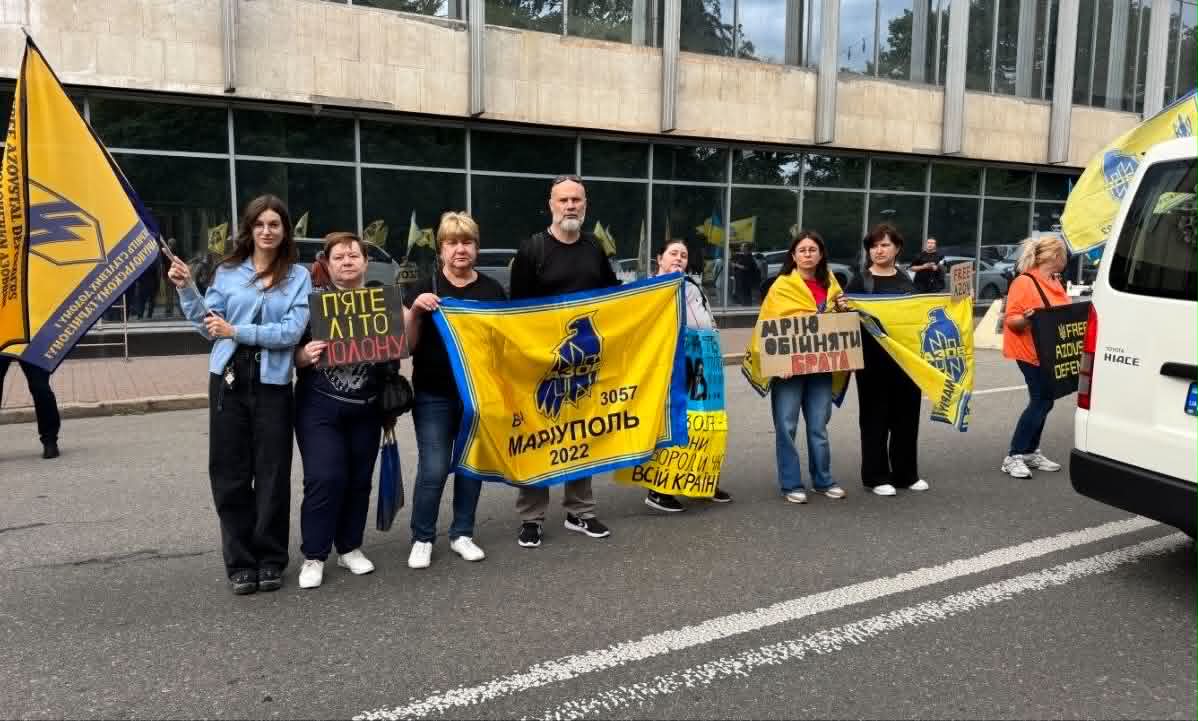
In general, the events in Olenivka, like many things in our history, are landmark events, such as the Battle of the Kalka River or, for that matter, the Battle of Kruty. They must be properly understood so that the appropriate conclusions can be drawn.
- While in captivity, you were sentenced to 25 years in prison for alleged involvement in a terrorist organisation, attempted murder of civilians, and the destruction of civilian infrastructure. How was your trial conducted?
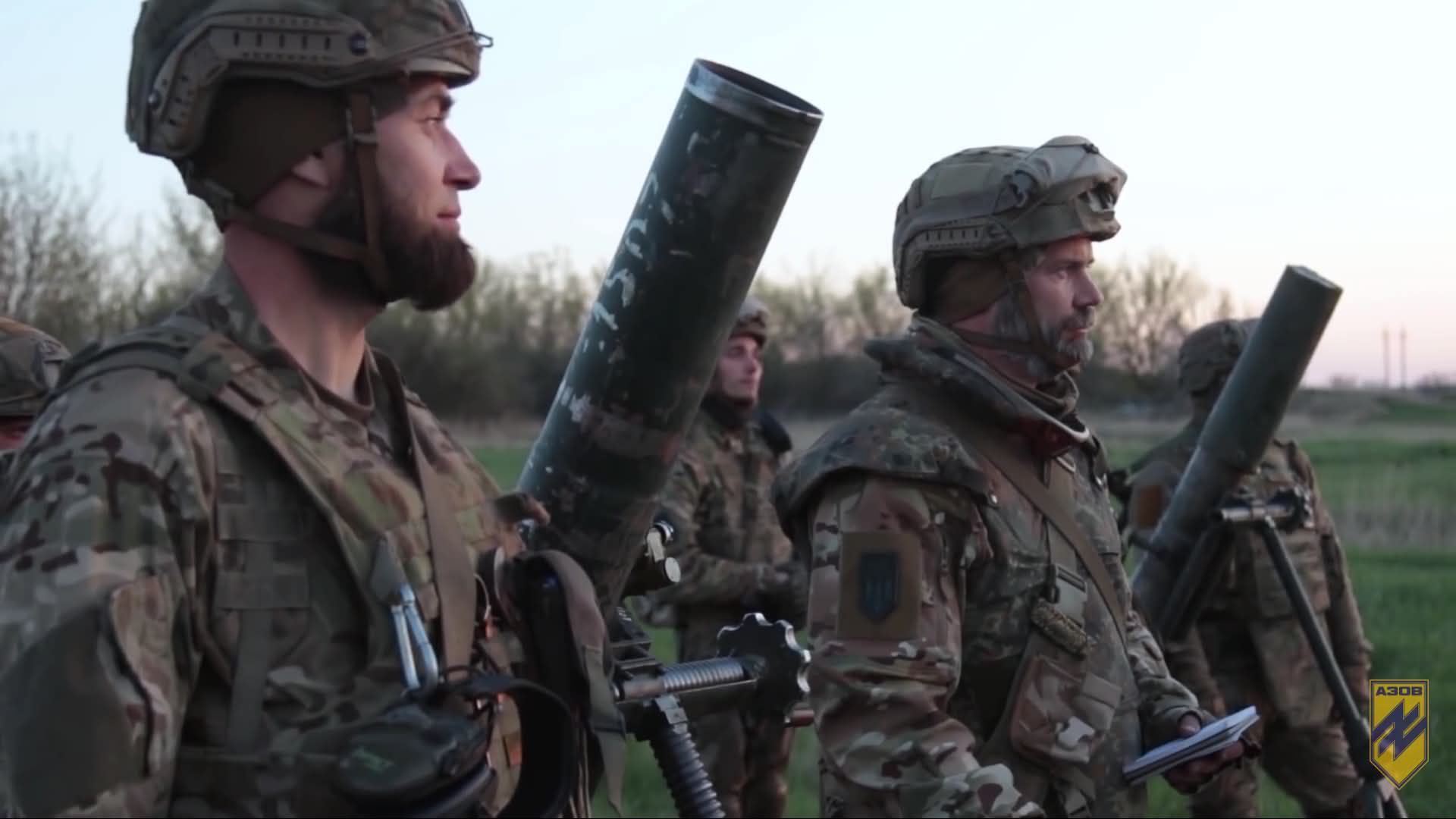
- Our lawyers, judges, and prison guards were all former employees of the Ukrainian prosecutor’s office, courts, and law enforcement system who now work for the enemy. The trial was a mere formality. The men from my mortar crew were convicted alongside me, without a single witness or piece of evidence. We even went to the site where our mortar had been positioned and to the area we had fired at. The investigator was in despair when this happened. We had been firing at the intersection of Ukrainskoho Kozatstva Street and Azovstalska Street. It was clear that this was precisely where the Russian groups had entered the city. There was corroborating photographic and video evidence. But the nearest houses were very far away. So they relied on the possibility that inaccuracies could have resulted from the mortar’s poor technical condition or wear and tear, or from the quality of the mortar rounds. I even found my notebook containing my records and showed them the calculations and the remaining number of rounds. These made it possible to determine with absolute precision where the rounds had landed. Moreover, the man who directed our fire was at our firing position. And we could see that there had not even been any accidental "erratic rounds," as artillerymen call them. We fired exclusively at the columns. I asked for my records and the gunner’s and mortar commander’s notebooks, which I had hidden, to be entered into evidence. I had thought we would return and that I would use them then, although not as evidence in court. The investigator took them. However, because they directly undermined their version of events, those records were not included in the investigation. On the mere assumption that a round might have deviated from the direction of fire, we were also charged with attempted murder and the destruction of two residential properties.
When the other men and I looked at the supposed "damage," we joked: "Let us compensate them right now and go home. We can reach a court-approved settlement with the victims right here." But even the alleged victims were not there. Claims were formally filed in their names, even though those people had never seen or drafted them. They were prepared by Russia’s military prosecutor’s office. Similarly, a minor injury was classified as attempted murder. The cases against all three of us began in exactly the same way, with the Maidan, even in the case of the man who had not participated in the Revolution. In other words, our alleged crimes in Mariupol stemmed from our participation in the events on the Maidan.
The judgment stated that we had opened fire out of ideological hatred for the civilian population. Although they maintained that there had been no Russian troops in Mariupol at the time, it also stated that our mortar had been destroyed by return artillery fire. When we were asked whether we had any questions regarding the substance of the judgment, I said: "Your Honour, if there were no Russian troops there, which of those two grandmothers destroyed our mortar with return artillery fire?" The judge simply picked up the judgment, threw it onto the table, looked at the prosecutor, and said: "God, what nonsense you write!" When asked whether we understood the judgment, I said that we did and added: "But we disagree with the claim that we hated the local residents. On the contrary, they helped us, and we helped them." For that, I was given an additional one-year suspended sentence. However, when the sentence is already 24 or 25 years, it does not make much difference. Incidentally, the Russians usually produced news reports showing sentences being handed down. But there was not even a short clip from our hearing. A pity.
- Fortunately, you were exchanged in October 2024. How did you feel when you returned home?
- I will put it this way: neither then nor now have I felt completely free. I am troubled by the fact that our men remain in captivity. They are strong, resilient, and holding up with dignity. But those who are the most exhausted need help. This entire situation also takes a severe toll on their families, especially their mothers. So, of course, I feel deeply for them, because I have been through intake procedures, shakedowns, "working-overs," and mass beatings myself.
- Your ribs were broken in captivity, and you lost 30 kilograms…
- Everyone except those who collaborated with the occupiers lost weight like that. So everyone comes back severely emaciated. You can see it immediately, even in photographs and videos. Do you remember Maksym Bobyliev (a former Ukrainian prisoner of war suspected of subjecting other captives to cruel treatment – О.М.)? He grew fat in captivity by stealing food from the prisoners he was also torturing. And after returning, he stood there with a Ukrainian flag, seemingly without feeling any moral responsibility for what he had done. And remember Nadia Savchenko. Her case should already have made one thing clear: if someone declares a dry hunger strike and returns 30 kilograms overweight, perhaps it is worth paying attention, because something is clearly not right.
- Why did you decide to return to the army?
- It’s not about making a decision, but about returning to the family. There’s a place for everyone. A post is chosen taking all factors into account: age, physical and mental condition, and so on. They try to match people so that they feel comfortable and are where they can be of the greatest use. You could say this is also part of rehabilitation. Because when people are waiting for you, respect you and take an interest in you – that’s what gives you strength, makes you want to return, and helps you believe in yourself and in the significance of your struggle.
- Hennadii, besides being a serviceman, you are also a writer and historian. Looking at this war in broader terms, what is it about for you?
- I became a writer thanks to Censor.NET. The idea arose to create a body of military memoirs containing truthful and honest accounts by those who took part in the events. My book (An Artilleryman’s Diary– О.М.) was also published as part of that project. The credit for this goes to Nastia Rinhis and Yurii Butusov.
As for the war, I would put it this way: the way the world sees us, and the assistance we receive, are due to our character, our military, and our determination to defend the principles of justice and democracy and our own freedom. Ukraine is seen as a nation fighting for noble ideals. But we must not descend into another era of the Ruin, internecine strife among princes, and the defeats of the first liberation struggle. Our system of government must leave no room whatsoever for violations of the law or corruption. Otherwise, as our history demonstrates, this becomes a profoundly dangerous trend.
Olha Moskalyuk, "Censor.NET"
Photos courtesy of Hennadii Kharchenko


