



Government expands arms export opportunities: What drone and EW manufacturers say
Drone Industry
On July 1, Ukraine introduced a mechanism allowing private arms manufacturers to legally sell finished products to foreign customers: Resolution No. 875 on controlled exports.
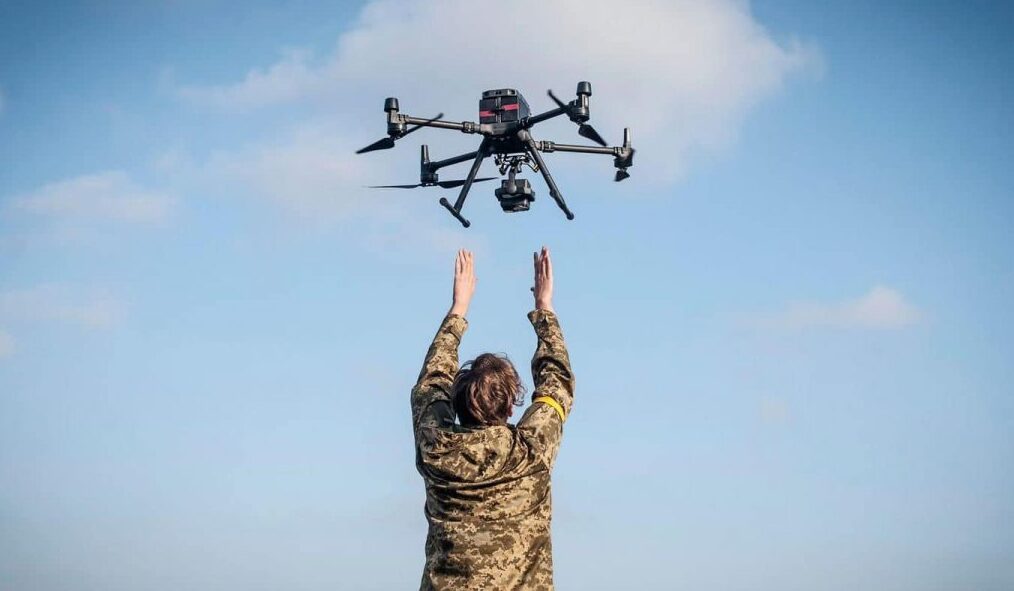
Business Censor contacted four companies already working actively with international partners – TAF Industries, BlueBird Tech, Kvertus, and Frontline Robotics – to find out how the business community views the issue of exports.
Resolution No. 875: Terms and the first precedent
The document’s full title is "Certain Issues Regarding International Transfers of Goods During the Period of Martial Law in Ukraine." The mechanism covers weapons, defense technologies, and dual-use goods.
Under the mechanism, finished products may be exported subject to the following conditions:
- only after the state order has been fulfilled;
- the contract value must be at least UAH 15 million (there is no threshold for components);
- applications are reviewed within 30 days;
- a portion of the proceeds – 20% from finished products and technologies and 30% from components – is allocated to a special fund for the defense-industrial complex.
The first export permits, however, were issued even before the resolution was adopted. At the beginning of the year, after a hiatus of several years, the Interdepartmental Commission on Military-Technical Cooperation (ICMTC) convened – the body that, under the prewar procedure, grants final approval for each export transaction.
"As soon as the commission was convened and approved the relevant decision on February 10, 2026, export operations became possible in Ukraine," explains Mykyta Rozhkov, CBDO at Frontline Robotics.
TAF Industries welcomes the Drone Deal initiative overall – a framework for long-term agreements with partners that covers exports (Resolution No. 875 provides a procedural "fast track" specifically for the export component of the initiative), joint production, and the exchange of combat experience.
"We view the launch of the Drone Deal initiative very positively. It is a genuinely important step toward simplifying exports of Ukrainian defense technologies and could help manufacturers enter international markets faster," says Mykhailo Diachenko, CBDO at TAF Industries.
Overall, when discussing international partnerships, the companies surveyed by Business Censor speak less about exports and more about the need to ensure stable supplies to the front by establishing joint production facilities abroad, easing the burden on production facilities in Ukraine, and protecting them from strikes.
TAF Industries: Direct authorization instead of one-off licences
TAF Industries, one of the country’s largest FPV drone manufacturers, has opted to operate through an internal export control system (IECS). Certification of the IECS allows the company to obtain authorization from the Cabinet of Ministers to export military goods independently, without securing a one-off permit for each transaction.
"We do not yet have such authorization. We therefore view obtaining our own export authorization as a strategic investment in the company’s development. It is a more complex and lengthy process, but it provides greater independence, predictability, and resilience in international operations. For a company planning to operate in the global defense market over the long term, this is an important stage of development," Diachenko explains.
For now, the company’s revenue comes primarily from centralized procurement and DOT Chain, the Ministry of Defence’s digital marketplace through which combat units order drones directly from manufacturers. Diachenko describes international sales as the company’s "first confident steps." The company keeps its prices competitive "within the profit margin set at the state level."
Production facilities under attack: Some capacity moved to Europe
Russian strikes on defense companies are a constant backdrop to the industry’s operations. TAF Industries’ second international track involves joint ventures abroad: the company is locating some of its future capacity where missiles cannot reach.
This year, the company signed memoranda on joint ventures with two German manufacturers – Wingcopter and Thyra and the Polish defense group PGZ; in June, it also announced joint production with the Swedish innovation company Recas.
As a reminder, Oleh Dubish, chairman of the board of the Ukrainian-Polish Chamber, previously told Business Censor that part of Ukraine’s defense production needed to be relocated to Poland, describing it as an option that has yet to be used.
Among the reasons cited by Diachenko are not only access to markets but also the security of production facilities:
"In the near term, joint ventures can reduce the burden on domestic capacity, protect production facilities from potential enemy attacks, provide access to international markets, and lay the foundation for the future," he says.
Diachenko stresses that these agreements are unrelated to the resolution on controlled exports: "These are two parallel processes." The company also responds directly to concerns that joint production could lead to Ukrainian technologies leaking abroad: "This is not conventional export, nor does it involve a complete transfer of technology."
Diachenko describes the format itself as follows: "Build with Ukraine is not about ‘obtaining technology’ but about creating shared value, with each side retaining its strengths."
"We must begin building a global presence today so that tomorrow we remain part of the global defense tech ecosystem, work with NATO countries, secure direct contracts, and ensure stable growth," Diachenko says, explaining the strategic rationale.
Frontline Robotics: Export experience in support of defense capabilities
Frontline Robotics gained its export experience even before the new resolution was adopted. The company’s joint venture with Germany’s Quantum Systems – Quantum Frontline Industries – also operates under the Build with Ukraine initiative, while authorization for the technology transfer was obtained under the prewar procedure through the aforementioned Interdepartmental Commission on Military-Technical Cooperation (ICMTC).
The German facility primarily serves the Ukrainian front. It has made it possible to ensure uninterrupted supplies of Linza drones to Ukrainian troops.
"One of the decisions adopted by the reconvened ICMTC was to authorize the transfer of technology for the QFI joint venture under Build with Ukraine to ensure uninterrupted supplies of our Linza drones to Ukrainian troops," Rozhkov says.
At the same time, the technology transfer became a new commercial source of revenue for the company, supplementing the industry’s conventional channels: state contracts, DOT-Chain, Brave1 Market, and direct contracts with more than 80 military units, to which Frontline supplies Zoom and Linza drones and Buria robotic turrets.
First-hand export experience has made the company cautious in its expectations for the fast track. NATO codification – the NATO Stock Number, which the company already has – "is only the first step, not a pass into the NATO market," Rozhkov notes.
"The European market is not a single monolith but 27 separate markets, each with its own regulations, certification requirements, and even specific restrictions on component composition. Even with the introduction of a simplified procedural fast track for exports in Ukraine, companies still face an enormous amount of preparatory work," he says.
The company identifies a shortage of engineers and a lack of secure production premises as the main constraints on growth. While TAF is responding to the threat of strikes by establishing facilities in Europe, Frontline is looking in the opposite direction—underground.
"That is why we, as a manufacturer, emphasize the critical need for government instruments, whether concessional lending or special targeted programs, that would encourage the construction of underground production complexes for the defense sector," Rozhkov says.
BlueBird Tech: Awaiting revisions to the resolution
BlueBird Tech – a company with more than 350 specialists that manufactures drones, electronic warfare systems, and drone detectors – expects to begin exporting directly in the medium term.
The company says it has carefully reviewed the new resolution on controlled exports under the Build with Ukraine program but believes that some of its provisions still require clarification and revision. According to company representatives, industry associations are already preparing proposed amendments.
"At the same time, we believe that some of its provisions still require clarification and revision for the mechanism to become fully operational in practice. We know that industry associations are already working on the relevant proposals, and we hope the government will take them into account when finalizing the document," says Tetiana Uzhvii, Head of Export at BlueBird Tech.
The company views exports as a source of funding for expanding its factories in Ukraine.
"Additional export revenue will allow us to scale up production capacity in Ukraine, increase output, invest in product development, and implement new technological solutions together with foreign partners. At the same time, this does not alter our strategic objectives in any way. Supplying products to the Defense Forces of Ukraine has been, remains, and will continue to be our top priority," Uzhvii emphasizes.
The company says that the government, through Ministry of Defence agencies, is currently its main customer. Its other customers include military units, the National Police, the State Emergency Service of Ukraine, charitable foundations, and buyers through its own online store.
Asked about profit margins, Commercial Director Anastasiia Matvieieva says the priority is to maintain the ability to steadily expand production, fulfil large contracts on time, and bring new solutions to market.
Kvertus: More than 50 manufacturers competing for a single state order
For Kvertus, a manufacturer of electronic warfare systems, the case for international expansion begins with the domestic market, which has become extremely crowded during the years of full-scale war. CEO Yaroslav Filimonov describes competition in the sector as follows:
"Competition in the sector is indeed very intense. There are already far more than 50 manufacturers, and their number continues to grow. On the one hand, this means that the market has become much more crowded for manufacturers: state orders that were previously distributed among fewer players are now shared among dozens of companies. On the other hand, competition is a positive factor for the industry and the state. It forces manufacturers to develop products faster, improve quality, adapt to changes on the front, and offer more effective solutions."
Price competition is also constrained by government rules, including caps on profit margins and requirements governing cost calculation. Filimonov warns that comparing electronic warfare systems by price is misleading in any case.
"Electronic warfare systems are difficult to compare as like-for-like products. Even within the same segment, products may differ significantly in terms of frequency ranges, power output, type of application, configuration, software, remote-control capability, servicing, and support. Therefore, a lower or higher price does not always mean ‘cheaper’ or ‘more expensive’ in the literal sense. It is often a matter of functionality, configuration, and the tasks for which a particular system was designed," Filimonov explains.
Over three years, Kvertus itself has moved from the volunteer-funded market to the state market. In 2022, charitable foundations and businesses purchased about 80% of its products; by 2024, state orders already accounted for 85%.
Filimonov says the company has gained greater predictability, but also more bureaucracy: more complex procedures, longer approval cycles, and greater responsibility.
"For businesses, therefore, this is not simply ‘more money’ but a transition to work that is more systematic, yet also more tightly regulated," Filimonov says.
The company therefore views international expansion as a logical step and does not tie it to the end of hostilities.
"Ukraine already has unique practical experience in countering UAVs, and this experience is of interest to partners," Filimonov says.
He predicts that demand will only grow.
"We see global demand for counter-drone solutions increasing because drones have already become a factor not only in warfare but also in the security of critical infrastructure, borders, major facilities, and cities. Ukrainian companies whose products have been tested under real-world conditions are therefore well positioned to enter international markets."
The priority is supplying the front
The companies surveyed by Business Censor view international partnerships primarily as a secure rear base for the ongoing war rather than a new sales market. TAF Industries is seeking backup production sites in Europe, while Frontline is asking the government to finance underground production facilities at home. Both approaches have the same objective: to protect production from strikes and prevent disruptions to supplies for the front.
Direct exports under Resolution No. 875 remain secondary for now: the mechanism is available, but none of the companies surveyed has yet used it. The government’s July decision expands opportunities for Ukraine’s defense-industrial complex, but for now it is laying the groundwork for the future rather than changing the daily operations of companies whose main priority remains supplying the Defense Forces of Ukraine.


