



"Prison guards would say to me during shakedowns, "Khyliuk, why are you so thin?" I weighed about 55 kg. Now I weigh 74," journalist Dmytro Khyliuk, one year after captivity
When journalist Dmytro Khyliuk was released from Russian captivity in a prisoner exchange in August 2025, and all his colleagues wanted to interview him, Censor.NET decided to wait and speak with Dmytro a year later. We wanted to learn how he had readjusted to life in Ukraine, how he had reconstructed his view of the world after three and a half years in the information vacuum of Russian prisons, and what Ukraine looked like to him in the fifth year of the war.
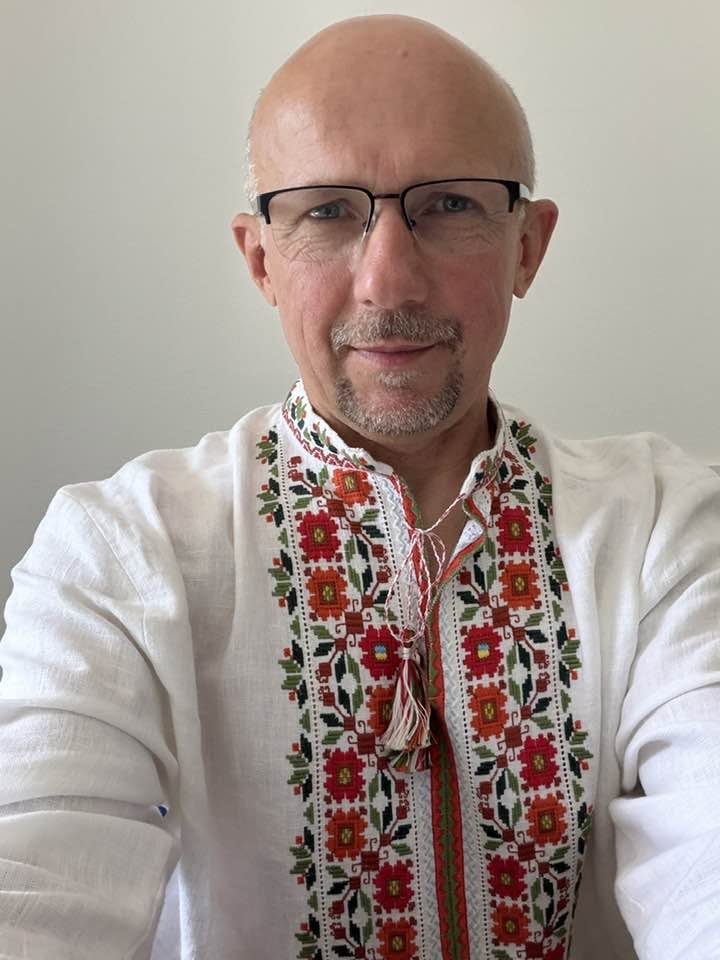
All the more so because Khyliuk had an eventful year: he travelled around the world, speaking about his experience in captivity; covered social and political developments for his home news agency, UNIAN; and rebuilt his house in the Kyiv region.
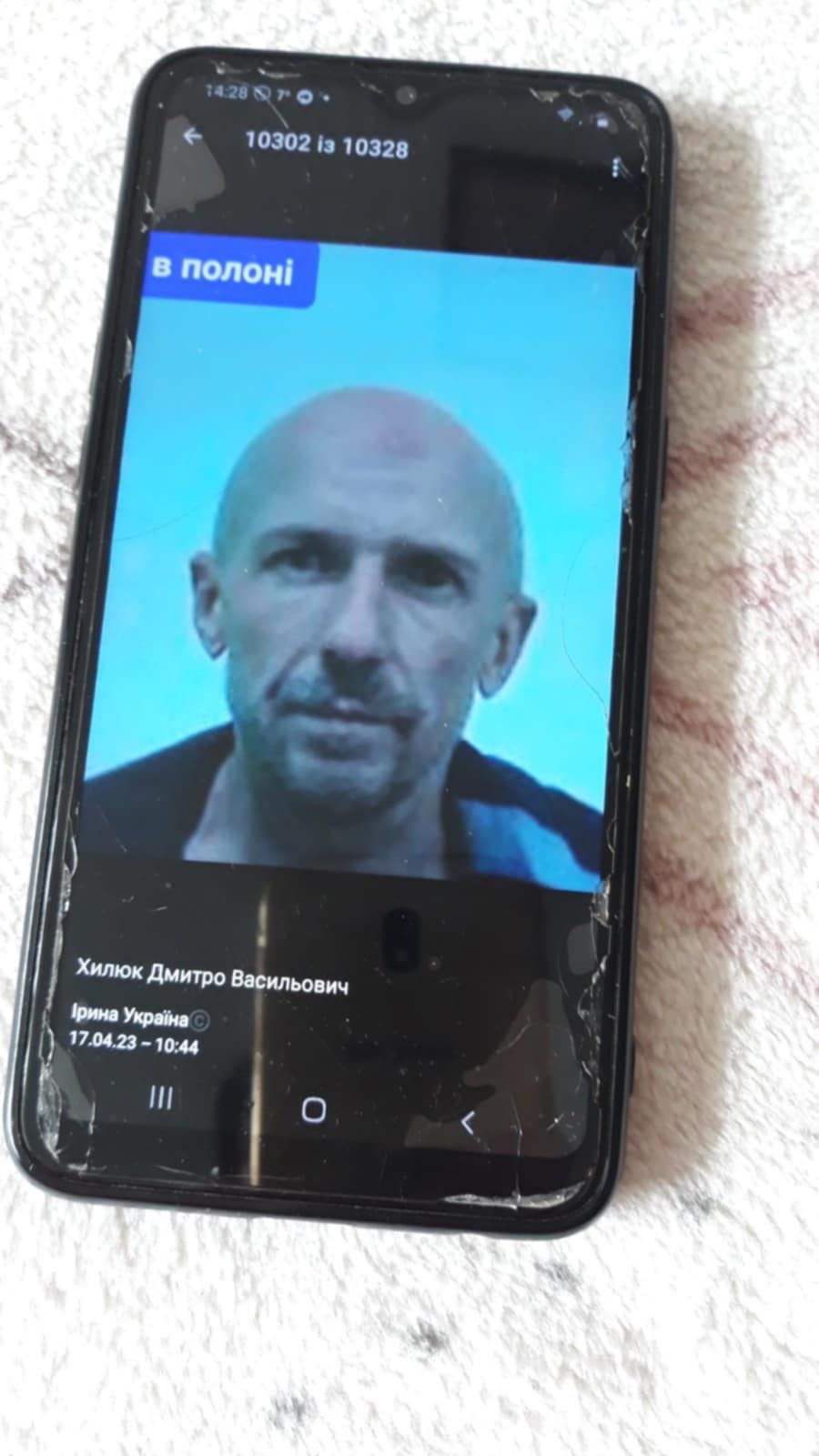
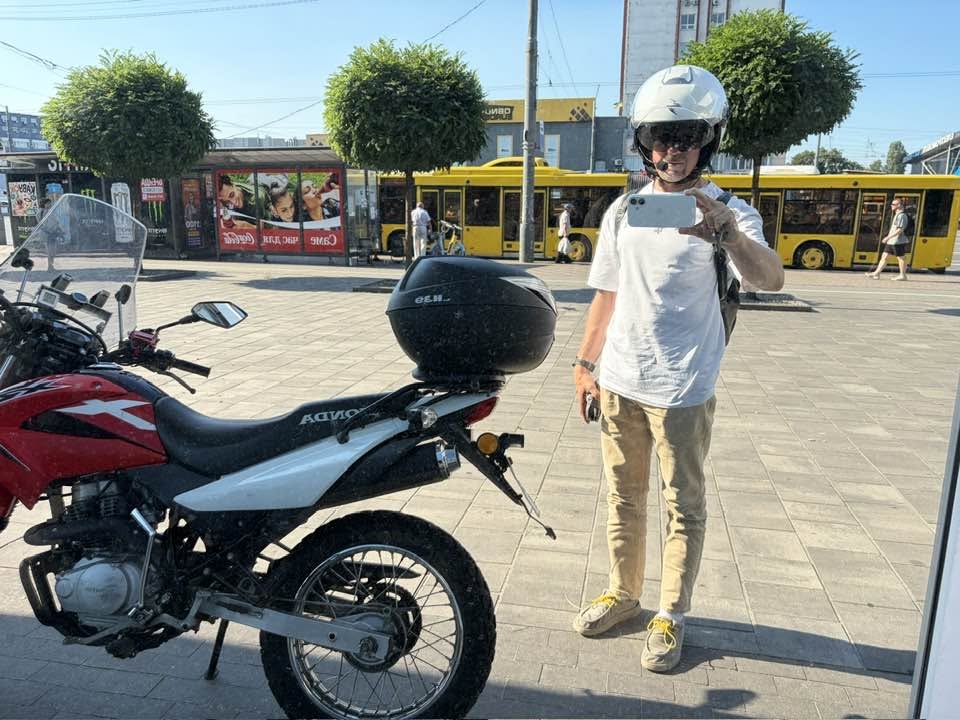
And then the day finally came. Dmytro arrives for the meeting on a motorcycle, wearing an AC/DC T-shirt. His face is smiling, worlds apart from the only available photograph of him taken in captivity.
Although, of course, that is only a superficial impression. Much more becomes clear during the conversation.
- Dmytro, you spent several years in places where they demanded that you betray your country, your friends, your comrades-in-arms or yourself, often through torture.
During this year since regaining your freedom, what have you managed to forget, and what have you not, and realise that you probably never will?
- God only knows. I do not remember that captivity with outright horror, thinking, "Poor, unfortunate me, how I suffered there..." Perhaps it is a trait common to all people: all the negative experiences are pushed into the subconscious. Or disappear altogether. It happened, it is over, and now life is normal.
The only thing is that my colleagues are urging me to write a book. And I cannot work on it for long stretches. You know, there are two types of actors. Some are very good at pretending, while others immerse themselves in the role. So I have to immerse myself in that past to describe it in a reasonably readable way...
- But you do not exactly want to immerse yourself in it.
- It is difficult for me. You plunge into that story, and it is as though you are already there: you experience those events all over again. And that is when it becomes unpleasant.
- The past, both good and bad, returns to people in their dreams. Do you dream about anything from that period?
- I do, but it is the opposite: I dream that I am back in captivity and think, "How can this be? I was already home. How am I back in captivity again? Now I somehow need to get home; what the hell is going on?"
Then you wake up and think, "Phew, thank God, it was only a dream..."
- Have you had dreams about escaping from captivity?
- Sometimes I think that I need to find a way to escape, but in the dream, the place where I am being held is somewhere close to home. When I was in captivity, I dreamt that I climbed over some fence and was already home. I thought, "Damn, that was so easy!"
- How are you sleeping in general?
- Not very well. I wake up at four or five in the morning. I do not feel sleepy. Then I spend the entire day feeling drowsy. Falling asleep is not a problem, and neither is waking up. But then you are sleepy all day.
- Well, that is your body telling you it wants to sleep.
- Yes, mostly during the day. That is probably another consequence of captivity. You constantly feel the need to do something. You are afraid of missing out on something; how can I just lie around and do nothing? I have to do something! There is this restlessness, this need to remain constantly active.
- Prisons where captives are held, just like ordinary prisons, are teeming with sadists. Everyone knows about Viktoriia Roshchyna, has seen interviews with released Azov fighters, and some have read Stanislav Asieiev’s book In Isolation. Did you encounter outright sadists in captivity who combined work with pleasure?
- Yes, there were many of them. It is a well-known fact that places of confinement attract sadists. It could be a prison, an orphanage, even a hospital for older people, a geriatric care home, or a psychiatric hospital. Sadists are drawn to those who cannot defend themselves. They want to be somewhere they can mistreat other people with impunity. And such inhuman creatures are particularly drawn to prisons. More than half of the people there were like that. They got a kick out of hitting, humiliating, or insulting you. Their official duties did not require any of it. It is a particular kind of psychology...
- When, over time, a person behind bars tries to appease a sadist in some way to protect themselves from abuse, does that encourage them too?
- Our situation was slightly different: they apparently had orders to keep contact with us to a minimum. I think it was a fairly strict order, especially in the second prison where I was held. So they could not interact with us very much, even in a negative sense. They were forbidden from doing so. When did they have contact with us? During morning and evening inspections, when we were taken out each day for the so-called "walk," and on Fridays for the bathhouse. On Sundays, we remained inside the entire day.
During these trips or inspections in the corridor, they could punch or kick us. During inspections. There were entire teams of such sadists. Everyone knew them; everyone knew when the shift that had abused prisoners a year earlier had arrived...
- And that makes the day extra sh*tty because you are constantly expecting them to do something vile?
- Yes, when those bad shifts were on duty, they tormented us constantly. They would peer through the peephole or monitor the cells to make sure no one sat on a bunk. Or they would force us to walk around all day. There were 15 men in our cell: three would sit while the rest walked. You were effectively on your feet all day. And when those shifts were on duty, it was extremely difficult.
Or they would abuse us during inspections. We would stand in a circle, and they would throw mattresses over us. All sorts of things happened...
- It brings to mind those infamous photographs from Abu Ghraib prison, where staff forced prisoners to simulate sexual acts while their tormentors posed for photographs in front of them...
- We did not experience anything like that, at least not publicly. They did take some of the guys into the corridor and draw penises all over their faces with markers. They made verbal homosexual advances; it seemed as though they might have been of that orientation themselves. For example, the same two guys would always hand out the food. And the guards would harass them: "What are you two, faggots?"
- In your experience, do people like Konoval realise that they are Evil and act deliberately? Or has their worldview simply been distorted by propaganda, their upbringing and their own inadequacy, while they genuinely do not consider themselves sadists?
- I think they do consider themselves sadists. Konoval himself, also known as Doctor Pus or the Druid, is around 50 and has two children (as I learned after returning home). He is supposedly some respectable family man. But I think he fully understood everything he was doing... It is a combination of propaganda and an underlying sadistic disposition.
There were four medics in the unit, and they worked in shifts. I have no complaints about the others. They simply did their jobs: if one had a pill, he would call you out and give it to you; if he did not, he would not call you out or give you one. But this one (Konoval. — Ye.K.) took pleasure in abusing people.
- A popular view in Ukraine (and an understandable one, given the many years of war) is that because Russians are perverted by their imperial sense of superiority and cruelty towards other peoples, every individual member of that nation is likewise a bearer of this cruelty and superiority. Do you agree with this generalisation? Or do you have a different view of individual Russians? (I realise, of course, that I am asking this question of someone who only saw Russians as prison guards or torturers.)
- Yes, it was that kind of social bubble...
I believe we did not read the Russians carefully enough. They have always been like this. We simply had this illusion, dating back to Soviet times, or perhaps even before then, that we were one people, that we were brothers. And we did not see what they really were. But if you read their literature carefully, with an open mind, you will find the answers to every question. Take their great writers: many of them fought in the Caucasus. Tolstoy himself, the conscience of the nation, revered throughout the world. He was an invader in the Caucasus; he killed the local people with a great sense of dignity. Where was his humanism then?!
- Nevertheless, Tolstoy wrote Hadji Murat, an utterly scathing book about Russian colonial brutality.
- But he took part in it! Just like Lermontov. Yes, to him, the Caucasus was an exotic land: Mtsyri, unfamiliar local traditions... But, man, you went there to kill those people. In other words, it is programmed into their DNA that they will kill you while simultaneously believing that they are doing nothing wrong.
- At the same time, there are people in Russia who are imprisoned because, during the first days of the war, they placed tiny Ukrainian flags on supermarket price tags. Or because they publicly spoke out in support of Ukraine, which, under their utterly deranged regime, is quite a courageous act. These people are imprisoned for standing up for Ukraine. Admittedly, together with those who left the country, there are very few of them.
- (Ironically) Their circle is narrow; they are terribly far removed from the people... They will change nothing because Russia has an imperial genetic code. If someone could now convince millions of these Vankas and Mankas, completely overturning their worldview, that they are not a great people but merely a people like everyone else, there would be nothing left in their minds. Their so-called greatness is the only thing underpinning their community and unity. Take away that foundation, and they will fall apart. They have nothing but their supposed greatness. They live poorly; most villages still have no toilets or gas. They are poor, and the Chinese are plundering their eastern regions. There are interethnic conflicts within the country that are now being heavily suppressed by totalitarianism. Is that what their greatness rests upon? It rests upon their constant wars of conquest against their neighbours. Therefore, the minuscule proportion of decent people among them is the exception that proves the rule. Russia must either disintegrate or become a vast North Korea behind a concrete wall, with relations reduced to the bare diplomatic minimum.
- Over three and a half years in captivity, you gained a fairly clear understanding of how Russians imagine us (at least within that prison bubble). Can you give us a brief account of what they say about us?
- In the first prison, they were deeply outraged that we had resisted. They would ask the military personnel quite sincerely: "Why didn’t you surrender?" That was in the first prison, where we spent a year. At the time, they thought they would win by around September 2022, hence their surprise. They were certain they would arrive, and we would immediately surrender and say: "O great ones, come and rule over us!"
In the second prison, the prison guards were such a moronic bunch... First of all, they never engaged in any conversations with us. They were extremely arrogant; they despised and hated us. And they hated everyone: military personnel, civilians, the old and the young. They had always been like that.
- Do you believe that once there is a ceasefire, our children and grandchildren will be able to live with them in relative peace?
- God only knows. It is difficult to say. Take France and Germany: how much suffering the Germans inflicted on the French and the British... But there is one major difference. The Germans repented, and I think their repentance was sincere, at least for most of them. These people will never repent. I hope that, until the last person who witnessed this war has died, there will be no reconciliation between them and us, not until this history passes into books and the written record.
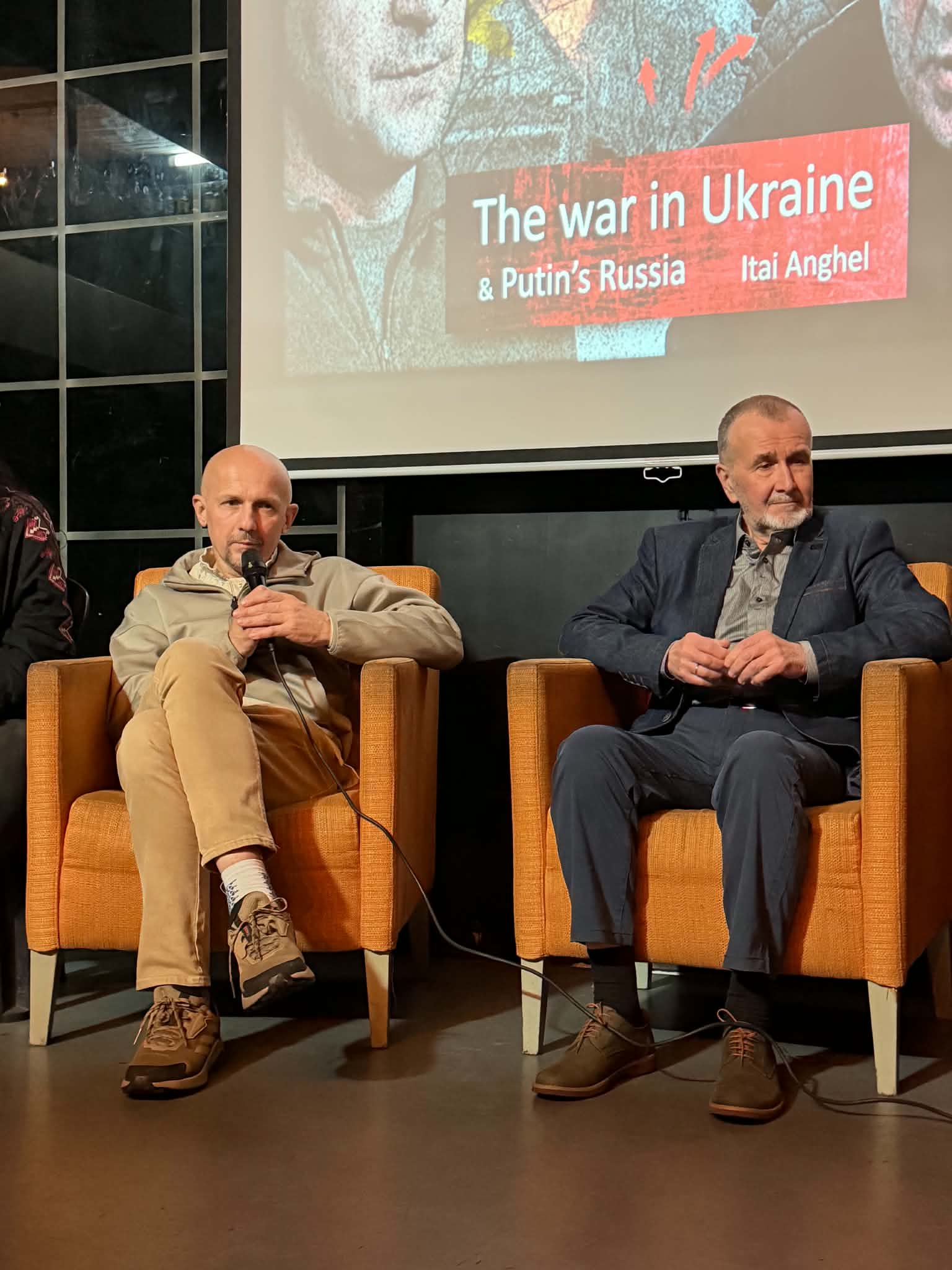
- Let us move from Russia to Europe. When you returned, you spent a month or two recovering physically and reading about everything you had missed while in captivity. Then you travelled quite extensively across Europe, speaking at various institutions in different countries about your captivity, the horrors of the Russian perception of reality, and the fact that modern Russia is not Chekhov and ballet, but propagandist Solovyov, sadist Konoval and missiles striking Ukraine.
I have no doubt that you did everything you could to make yourself heard. But did they hear you? What is your own impression?
- Every political institution there has groups of friends of Ukraine. They certainly heard us. Our MPs and politicians work with them.
- They probably did not need much convincing in the first place. Nor can those on Russia’s payroll be persuaded. But what about those in the middle?
- I think they heard us. We visited Cyprus, for example; it was an advocacy trip together with former Kherson mayor Volodymyr Mykolaienko. We had many different meetings there, with our diaspora, representatives of both Cypriot and Ukrainian civil society, and politicians. It seemed that the people attending those meetings were seeing actual people from Ukraine who had been held in captivity for the first time.
- Did you see genuine interest from them, enough for them to start asking questions themselves rather than merely listening and nodding? After all, you began travelling when what is known as "Ukraine fatigue" had already been prevalent for some time.
- Not everyone showed an interest. Perhaps that was because the schedules were very tight and many of the people were extremely busy. I noticed that journalists showed more of a human response than politicians. And, surprisingly, Poland, with which we now have a very difficult relationship, showed the greatest interest in this regard. (Although that was still in the autumn.) In Poland, I was constantly visiting the studios and newsrooms of their television channels, newspapers and online media outlets.

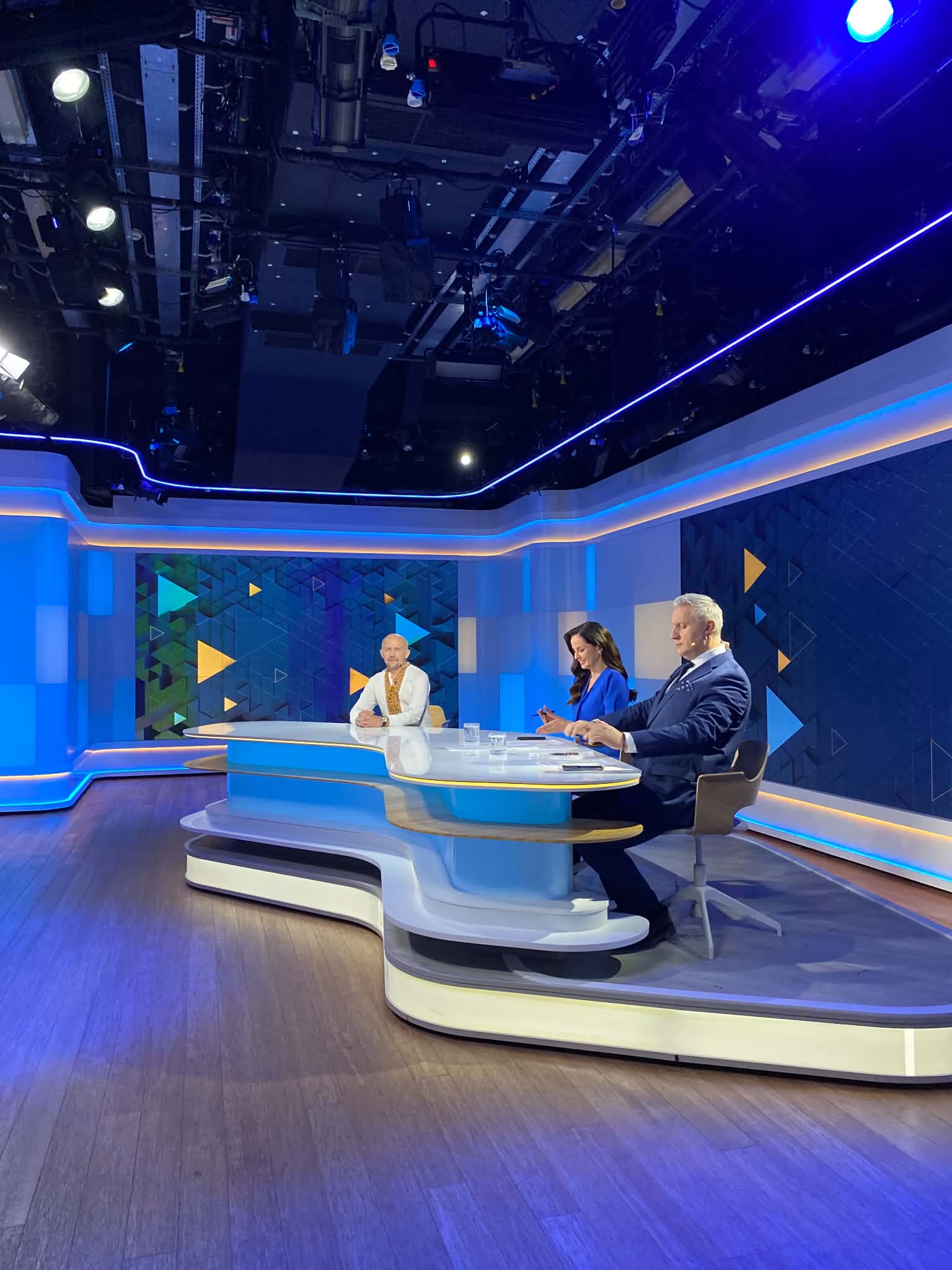
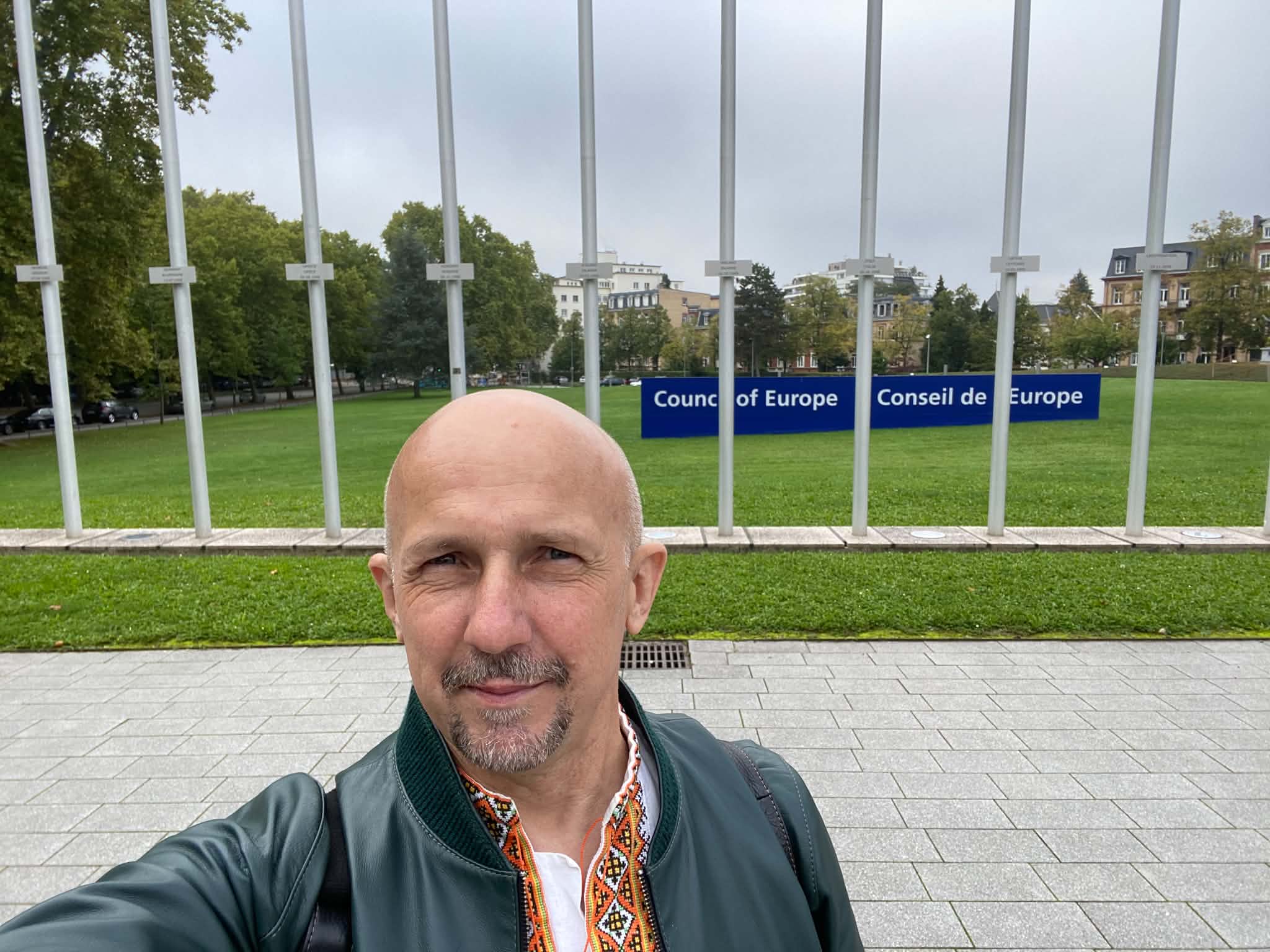
It was the same in Israel. There is a large Russian-speaking community there, so they also took an active interest. In Cyprus, however, there was far less interest. And in Strasbourg, the local press had no interest in my story at all. The reaction of the press always reflects the level of public interest. If the press is not interested, there is no public demand for the story either.
- As a media professional and someone with experience of this kind of engagement, tell me: how should we maintain an emotional and intellectual connection with them so that their societies do not forget about us entirely?
- It has to be people-to-people diplomacy, like what Mykolaienko and I did. People who witnessed these events must travel there: military personnel, former captives, and civilians who suffered.
- But unfortunately, they will respond with the perfectly natural answer: "We have had enough of your sad, unpleasant stories about the war! We want a break; we have enough turmoil in our own lives."
- They need to be told that the Russians will come for them too. France may not be under threat, but Poland, Czechia, Slovakia and Finland, not to mention the Baltic states, most certainly are. And those who are under threat understand us. Those who do not should be told that if things go badly for us here, you will receive not as many refugees as you did this time, but five times as many. You will not be able to feed that many people.
Perhaps they do understand something along those lines, since they give us money and tell us: "Fight."
- During your three and a half years in captivity, you were in an information vacuum. Did you have even the slightest sense that Europe, having received appeals from Ukraine, was making efforts to secure the release of you and other civilian captives? Or did you realise this only during the final stage before the exchange?
- Even during the final stage, I had no way of knowing anything. We knew only one thing: if we were still there, the war was still going on. I also assumed that, because I was a journalist, someone other than my family would be pressing for my release. But I had no idea that it would be pursued at such a high international level.
- You know, at the beginning of your imprisonment, I was deeply concerned that if people demanded Khyliuk’s release too forcefully, the Russians would wonder why there was so much interest in you and start examining your Facebook page, where you had hardly been an obedient little boy towards their regime. I was afraid that after seeing it, they would never release you.
Now I understand that pressure must be applied from the very beginning. The more publicity, the better.
- Yes. The more publicity, the better. That applies to everyone, especially at international forums. When someone like Lavrov attends one of the events he is still allowed into and is repeatedly told, "You are holding a journalist. Why are you holding him? He is a civilian," it makes them uncomfortable. Sooner or later, they will say: "Just release them, I am sick of hearing about it. What value are they to us anyway? Let them go!"
- You were away from Ukraine for three and a half years. How have the country and its people changed during that time? I realise the question could be the subject of a dissertation, but nevertheless...
- I thought people would be living the war more. But I returned to Kyiv, and most of the time it feels like there is no war. If it weren't for the shelling. And then again: corpses are lying right here, while a shop 100 meters away is open for business.
- You can see that in frontline cities too.
- But so be it. Just because people were killed there does not mean those nearby must die too. Life goes on despite everything.
- Do you remember the Maidan in 2014? People had been killed in the square, but 300 metres away, people were out enjoying themselves.
- That is not even what I mean. People are simply going about their peaceful lives. I thought things would be worse. I thought there would be very little money, that gas would cost 100 hryvnias per cubic metre and that people would freeze in winter. In reality, the only reason people are freezing now is because of these strikes. Nor have people themselves changed. Kyiv is a bubble; everything here is as it was before. The only thing that shocked me was the prices.
- But you expected that, so why did they shock you? The war has been going on for several years, and we have always had inflation.
- Another thing that stands out is how much fewer people and cars there are in Kyiv than before the war. The decline in the number of cars is particularly noticeable. Take Khvoiky Street, where there used to be a Soviet factory that was later converted into an office centre. Before the war, I often bought motorcycle parts there. I would arrive, and there were many numbered parking spaces, and they were all packed... After returning from captivity, I went there a couple of times. It was empty, with lights on in only a few windows. There are still traffic jams in the evenings, but they are not as bad as before the war, when traffic would crawl from the city centre towards Obolon until 10 p.m. Public transport runs much less frequently now. When I was still in hospital, I needed to get down to Pochaina. I went out to catch trolleybus No. 18, thinking I would wait and take it. I waited and waited, then gave up and walked...
- What about the people? Have they changed? Did they seem shaken or exhausted?
- One thing is clear: everyone is nervous and on edge. Far more people are breaking traffic rules. On Khreshchatyk, I have repeatedly seen drivers make U-turns across double solid lines. Everyone is extremely nervous and wound tight, and in any conflict, people immediately become aggressive.
- How do you cope with missile and drone attacks? Or, compared with three and a half years in captivity, does this feel like a resort?
- Psychologically, it is slightly easier for me because I do not live in Kyiv and hope that my area will be the last to be hit (and that if something does hit it, it will be by accident). Where I live is not a target. On the other hand, if you live in Kyiv, you cannot keep running to shelters. Fine, if you live near a metro station and are young and healthy, you pull on your trousers and run. But what about an older person? Or someone with young children? You go to bed, and then at midnight or one in the morning, the siren sounds – where are you supposed to run with those children? Especially with ballistic missiles: one or two minutes, and they hit. It is a disaster for people and not only in Kyiv.
- After returning, you had to absorb an enormous amount of information. All you knew about the war was that it was still going on. So what shocked you most among everything you had missed?
- I was unpleasantly surprised that the political infighting between Poroshenko and Zelenskyy was still going on. I had been convinced that the war would knock some sense into both of them.
- You know that there was more or less a moratorium on politics during the first year and a half or two years, and then it all began again...
- I thought that Russian riffraff, Boiko and the Opposition Platform – For Life would be gone. Some of them left for Russia, while others remained and are full-fledged members of parliament. What is this? They are outright agents of influence, FSB operatives. You have a majority in parliament, so pass laws that will force them to leave the country.
The same applies to this so-called Russian FSB church. I was certain it would no longer exist in Ukraine. It turns out that court proceedings have already been dragging on for three years because judges recuse themselves from cases seeking to outlaw it. Then make the political decision to designate the Ukrainian Orthodox Church of the Moscow Patriarchate as a terrorist organisation, like the "LPR" and "DPR."
- You understand why this is happening. On the one hand, useful idiots in the West theorise that this constitutes pressure on freedom of religion. On the other, many people still attend this church. And the current government does not want to alienate part of the electorate. After all, it needs to win elections somehow.
- I think the second factor is decisive. And it poses a direct threat because these are Russian agents. The entire organisation is an agent network. But no, they take the matter to court...
Then there is this disgrace involving the TCR and SS, with draft evaders being turned into heroes: "Look how clever they were, they managed to leave for Europe!" It is like having a venereal disease, yet they walk around boasting about it. It is such a slap in the face to conscientious people!
- Was Andriy Parubiy killed after you had already returned?
- Yes. And it was a shock, of course. Again, it shows that the "Russian World" still feels fairly comfortable here, even if not as comfortable as before the war. Or take this riffraff, these so-called bloggers: "I will speak Russian; you cannot tell me what to do." Grab those brats by the a*s, summon them to the SSU for a talk, and the next day they will crap themselves and shut up!
We have no strategy. It feels as though everyone is simply waiting for the war to end so that we can go back to doing what we did before.
- Clearly, people have changed: PTSD compounded by the devastation of war. Children have grown older in a deeply sad way. Few people make plans more than a few months ahead. But in your experience, what do people still fail to understand?
- The threat, which has not gone anywhere. They do not understand that, God forbid, if Russia comes here, the Russians will kill everyone. Literally kill them. It will not merely mean a change of currency or new management at a school or factory. They will come to kill. Just as they did in Bucha, Hostomel and Borodianka. They will kill wherever they go.
- You are now continuing to work as a journalist. I saw you at the court hearing to determine a preventive measure for Andrii Yermak. You were there as a journalist. But what was Khyliuk the citizen thinking throughout that time?
- In terms of corruption? I thought that what distinguishes us from those in power is that they have somewhere to retreat to. God forbid everything goes completely to hell; they will jump into their motorcades, take a plane from Poland, and head to their estates, carefully purchased well in advance. Foreign bank accounts with many zeroes, emergency bags packed and ready, full fuel tanks, they have it all. Unlike us, they are merely feeding off this country. We will be left here to deal with the consequences and die. They understand that and, unlike us, are not risking their own lives.
That is why corruption and embezzlement continue during the war. And as a citizen, I find it deeply infuriating.
- You attended the "cardboard protest." Did you go as a journalist or as a citizen?
- I went there to, as someone wrote during the second Maidan, occupy my pixel on the enormous screen. First, it was an unconventional crowd – pleasant and interesting, with many young people from alternative subcultures. You look at them and see that they care about more than drinking, eating, and fucking. They have other interests.
- Parliament is currently in recess, and the president has made it clear that, as far as he is concerned, the matter of Fedorov as defence minister is closed. Do you think these people should continue protesting?
- They should. Elections have been put on hold for an unknown length of time. So what poses a threat to those in power now? They are not at risk of being replaced. This street democracy and electoral pressure are therefore the only things they still have to pay some attention to. So it is good that people are taking to the streets. And they need to keep doing so. Even during the second Maidan, there were periods of decline: we keep coming out, but Yanukovych does not give a damn.
- Do you feel that people are taking to the streets specifically for their values, rather than merely to help Fedorov, a young man with political ambitions, secure either the post of defence minister or a launchpad for a political career? Do you think people understand that?
- I think they do, because they came out when our president went full tsar: "I have decided this because it pleases His Majesty." We deeply dislike that in this country. Yanukovych went full tsar twice. The first time was together with Kuchma, during the first Maidan: "It will be as I say!" And we remember how that ended.
I am more than certain that if Zelenskyy had said, "I am dismissing Fedorov for the following reasons; I made this decision because I have the right to do so," there would have been no cardboard Maidan. And that entire television show would have ended with highbrow experts saying that Zelenskyy was right.
But it happened differently. Out of nowhere: we are reshuffling the government. Why? Were there any concerns about Fedorov? Where exactly did he fail? Zelenskyy was foolish in this regard. If he wanted to get rid of Fedorov so badly, there had been that disaster in Vyshneve; he could have pinned everything on Fedorov. At least then he would have provided some justification for his decision. Instead, it was simply: "Because it pleases me. We, Nicholas II, have decided..."
- Dmytro, some time has passed since your return, so I can ask you this now. In your opinion, is the state doing everything it should for former civilian captives?
- It depends on your perspective. They brought us back – that alone deserves thanks. I could have been left there to rot until the end of the war, with no one remembering me. That is if we speak in absolute terms...
And if we speak in non-absolute terms, then, of course, compared to the military personnel who returned from captivity, civilians are heavily discriminated against. Because we have no support system whatsoever; there is no financial support like the military has, who receive a salary for their entire time in captivity. The salary paid to the military on the front line.
- What do former civilian captives receive?
- A one-off payment of 100,000 hryvnias and another 100,000 for each year in captivity. Compared with military personnel, these are entirely different sums. Military personnel also receive medical care and health-resort rehabilitation. Our treatment, however, was perfunctory, merely for show. They checked that we did not have tuberculosis or AIDS, and that was it. Take dental problems, which everyone suffers from: people arrange treatment wherever they can find it. My employer helped me because the cost was extremely high, well over 100,000 hryvnias.
One person who returned with me was diagnosed with cancer, and he spent all the money he received on treatment.
- In the state’s approach to former civilian captives who have returned home, there is simple bureaucratic indifference. But there is also the view that while military personnel fought for Ukraine, civilians are a mixed group. Some are not pro-Ukrainian, yet they still returned to Ukraine. In other words, not everyone can be treated in exactly the same way. And this severely disadvantages genuinely pro-Ukrainian, patriotic people who once put their lives at great risk.
- It is a complicated issue because several civil society organisations in Ukraine deal with these problems. Some maintain that only civilians who returned through official exchanges can be called captives or hostages. Those who managed to return by other means, by hook or by crook, cannot.
I would define it this way: if you were held in a place of confinement in Russia, you are a captive. Perhaps this requires further consideration. There are probably some nuances. But it is one thing to be in prison, where nothing belongs to you, not even your own life, and quite another to be forcibly taken to somewhere like Chelyabinsk but still be able to find work, buy yourself a piece of bread, and rent some corner to live in. That was not your choice either, but at least you retained some control over your own life.
- They say that only those who have been deprived of their freedom understand its true value. Do you feel that many people, during the full-scale war, have failed to appreciate life in an imperfect but democratic society?
- Most people do not appreciate that kind of life. They take it for granted that they have food, clothes, and a roof over their heads every day; that they can choose whether to work or not, whether to rest or not, and whether to earn more money or not. You have freedom of choice. People take that for granted. But all of it could be taken away from you, and you would be powerless to do anything about it. No one will understand that until they experience it themselves. God spare anyone from ever having to go through that!
- If someone said to you, "Dmytro, move abroad, and we will provide the funding," would you agree?
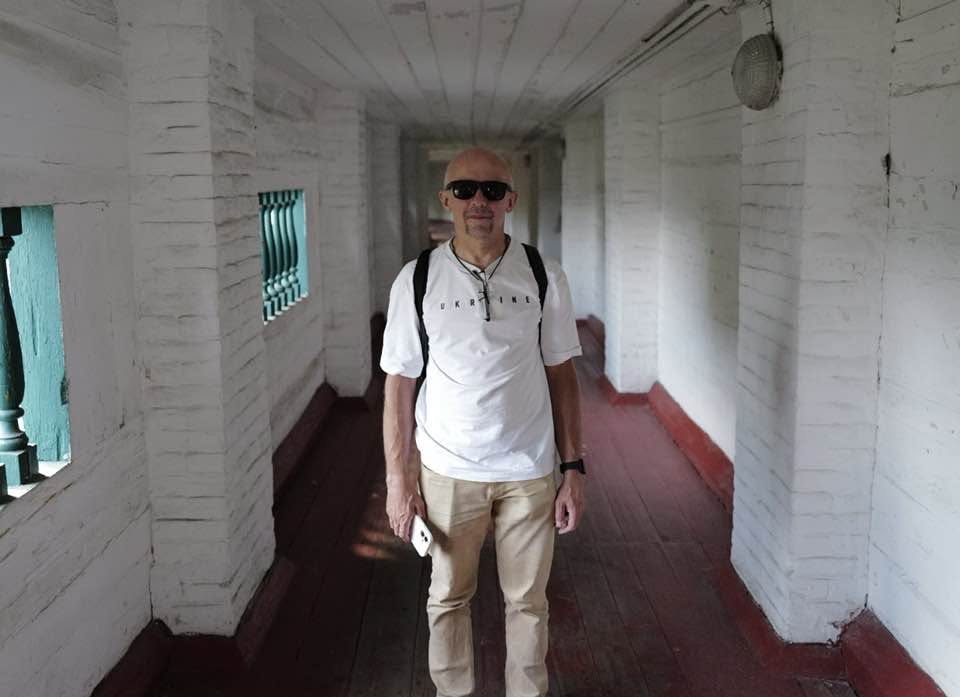
- No. I am rooted in the land. Not in an agricultural sense, but in a deeper one. I have a home, a motorcycle, and plans. I like all of it. This is my life. To exchange it for life in a foreign country – I do not think I would settle there. It depends on the person. It is an individual matter.
Besides, I like my country. I like Kyiv, with all its shortcomings. I like the villages I pass on my way to work. Wherever I go to visit relatives, whether in the Khmelnytskyi region or Rivne, I like it there. And I realise that if I lived abroad, I would no longer be able to see any of it.
And however good life abroad may be, you are still an outsider. You have to adapt, accept the rules established by that society and be the "poor relation." Here, you are your own master.
- Is it just my impression, or have you grown more fond of all sorts of animals since captivity?
- That is true. You suffered in captivity for three and a half years, and now you have this little creature and want it to be happy. Perhaps it is some form of compensation...
- What have you enjoyed most during this year after spending three and a half years behind bars: food, travelling or socialising?
- Travelling and socialising. Not food. Although we were hungry there for years and fantasised about food. It was truly awful in the first prison and during the initial period in the second. They did not weigh us in the first prison; they only began weighing us in 2024... I weighed around 55 kilograms. But that was still in the first prison. During inspections, when the guards carried out shakedowns, they would all say to me, "Khiliuk, why are you so thin?" We all seemed to be thin there, yet for some reason, they kept asking me...
- How much do you weigh now?
- Seventy-four. So that is 20 kilograms.
Do you know what it means for your stomach to stick to your spine? When we went to wash in the so-called shower, I would stand there washing myself like this and could not see my stomach. It really was somewhere far back there. Your eyes become sunken when you do not eat for a long time. I could see my brow ridges and my nose.
I was taken captive on 3 March, and I first saw myself in a mirror sometime after 20 April. A month and a half had passed. I looked at myself and was horrified - I was a skeleton... There had been almost nothing to eat during the first month.
- You say you enjoy travelling. You know, when I looked at your travel posts on Facebook, I had this joyful feeling that God was compensating you for the years you spent in a cell and that you should now revel in different languages, landscapes and architecture.
- That is exactly how it feels.
- Where did you like the most?
- Strasbourg. It is a really great city; the canals and trams are very cool. It is not a large city, so you can walk all the way around it. It is cosy and green. The airport is cool too.

- Your parents probably still have not hugged you enough?
- Yes. Yesterday, when there was that trouble with the explosions at the exhibition, my father called. He said, "Just let me hear your voice..."
Yevhen Kuzmenko, "Censor.NET"


