



Story of serviceman who swam across Tysa to return to Khartiia after going AWOL
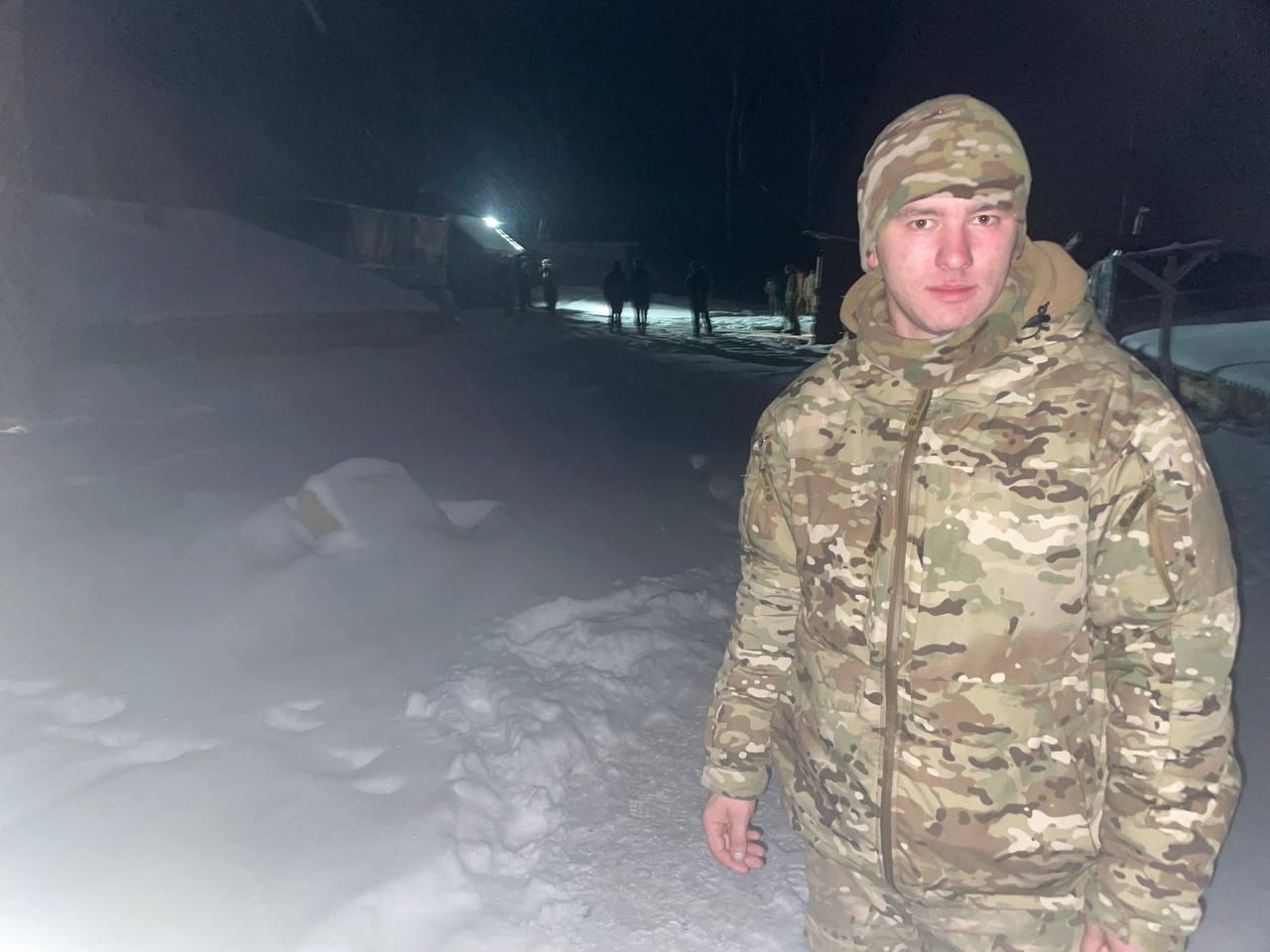
He swam across the Tysa, but not to flee Ukraine. On the contrary, he did it to return. While some military-age men risk their lives trying to reach the opposite bank and evade mobilisation, Roman did the opposite: he took up arms again and went to war. This story earned him the call sign Tysa. He serves as a UAV operator in the anti-aircraft missile and artillery battalion of the 13th Khartiia Brigade of the National Guard of Ukraine.
His journey has been eventful and remarkable. Back in 2019, he began his compulsory military service and later signed a contract, choosing a mountain patrol unit that appealed to him because of his passion for mountaineering. From 24 February 2022, he trained mobilised personnel, later fought in the Serebrianskyi Forest, took part in battles in the Kursk region, and had a conflict with his command that led him to go AWOL. He spent ten months abroad: he crossed the mountains on foot to reach Romania and then moved to Poland, where he worked and tried to start a new life. But thoughts of returning gave him no peace. Eventually, after a year AWOL, he found himself back in the military.
- Let us begin our conversation with the moment you first put on a military uniform. Why did you decide to do compulsory military service?
- I received a summons, so I showed up at the military enlistment office.
- Why did you then decide to sign a contract?
- While we were undergoing basic military training, representatives of one of the military units came to recruit personnel for contract service. They told us about their unit and invited us to join. I found it very interesting at the time, so I agreed.
- What exactly interested you about it?
- It was a mountain patrol company. I come from the mountains myself, so it was something close to me. They offered high-altitude training. Since I had been involved in mountaineering before my compulsory military service, I liked the offer.
- So, you were serving in the military when the full-scale invasion began, correct?
- Yes, I was. I went home on 23 February, and on the 24th I was supposed to conduct live-fire training at the training ground. But something did not go according to plan.
- Military personnel who served before the full-scale invasion often tell me that they knew such an attack was possible because they had been preparing for it. What was your experience?
- We were preparing too, but for some reason, we trained with shields and batons. Those were rather peculiar exercises at the time (smiles. – O.M.). Everyone was recalled from leave and days off, wherever they happened to be. We were expecting something, but not everyone fully understood that it would ultimately unfold the way it did.
- You did not want to believe it?
- You did not want to believe it?
- How did you react to the news of the full-scale invasion? Where were you?
- Since I was a contract serviceman, I was living in a flat near my military unit at the time. I was at home on the night of 23–24 February. We were put on alert. Messages went out in our group chats saying that a full-scale invasion had begun. Everyone reported to the unit and received weapons and ammunition. Those who kept their go-bags there collected them, and we waited for further orders from the command.
- What were those further orders?
- Combat coordination began. People sent by military enlistment offices were actively joining us. Since I was an instructor, I was assigned people to train. They were civilians whom I trained in specific areas, including weapons training, tactics, and so on.
- What did you talk about among yourselves at the time?
- People were highly motivated to go and defend the country, unlike what is happening now. They wanted to learn, prepare, and go into battle.
- Were you afraid?
- Of course I was. But fear was secondary. Our motivation was stronger.
- After the combat coordination, you fought in the Serebrianskyi Forest. Tell us what it was like. As far as I know, it is always difficult there.
- Yes. Our unit was also assigned a section of the front that was not a continuous straight line but had a kind of "appendix," with hostile forces on three sides. They had a very large number of artillery systems and mortars. The ratio was one of ours to five or six of theirs. It was the same in terms of manpower.
- What did you have?
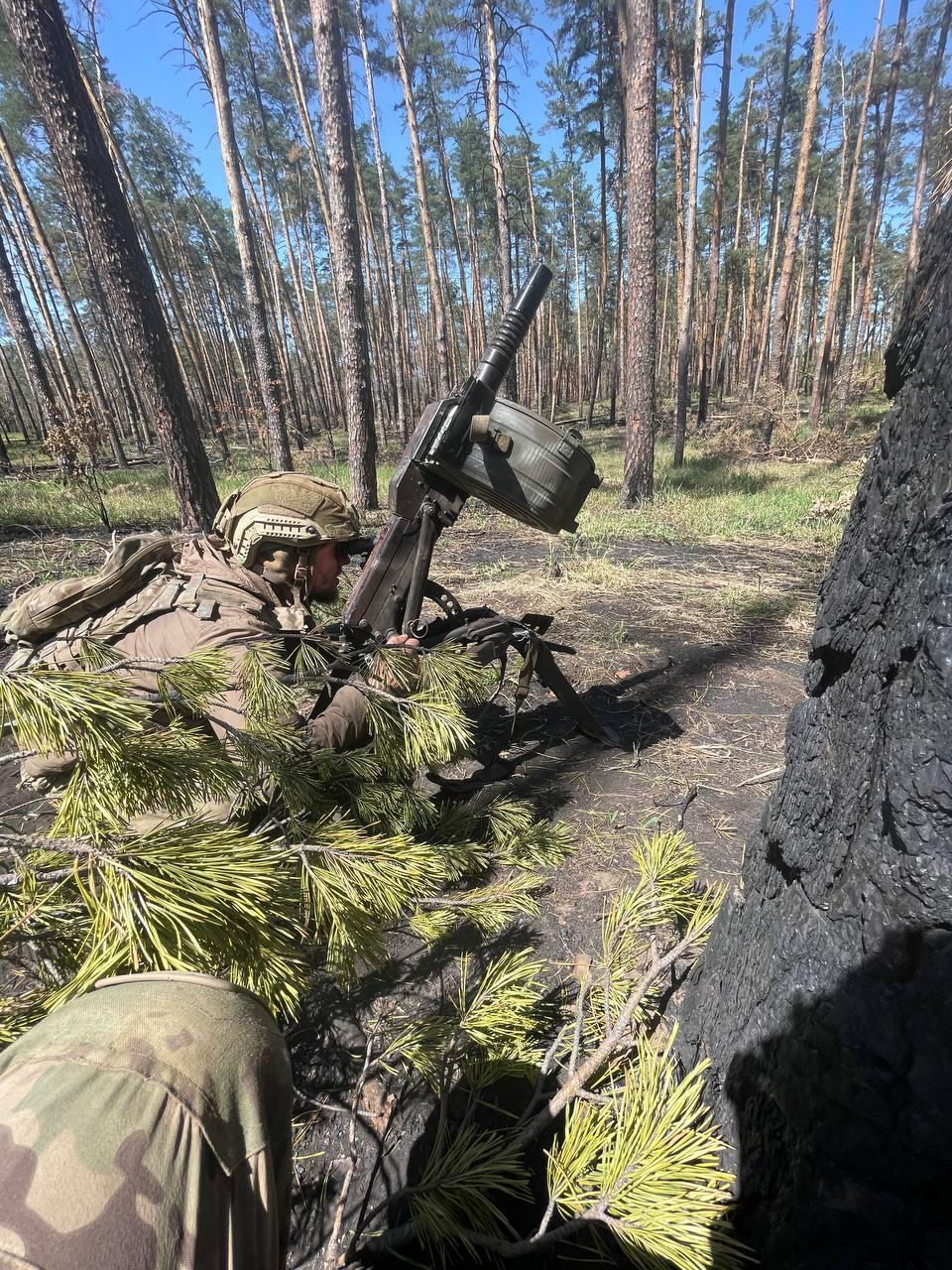
- At the time, I served in the fire support platoon under the man who was my commander then and is my commander again now. Thanks to him, everything was excellent in our unit. We worked in a coordinated manner, orders were clear, and the personnel were motivated. It was not the case that someone who operated an automatic grenade launcher (AGL) could not fire an automatic grenade launcher or take the controls of an IFV. Everyone was trained to perform different tasks, so we could cover for one another. We had a very close-knit and well-coordinated team.

- By comparison, how has the enemy changed since then?
- It is better trained now. Another important factor is that there are more drones now. Back then, there were not really that many. There were only drones dropping munitions. There was no talk of FPV drones. By the time we were leaving the forest, they were beginning to appear here and there. In other words, they were rare, unlike today. We are talking now, and I can hear a Molniya circling above me. That is the reality.
- Where were you sent after the forest?
- To protect a state facility. We provided security at the Rivne Nuclear Power Plant. At the same time, we prepared positions near the border in case anything happened from the direction of Belarus. That was how we performed our duties and prepared for future full-scale combat operations wherever we might be sent.
- Was the Kursk region next?
- Yes.
- I remember there was considerable debate at the time over whether Ukrainian forces should have entered Russian territory. How did you feel about the war moving onto enemy soil, as the president put it at the time?
- Positively. Because two can play that game.

- Was it difficult?
- A little.
- Did you interact with the locals there?
- We did. We were conducting clearing operations. We encountered civilians. We delivered medicine to them if they needed it. When we found them, we gave them food packages that we always carried in our combat vehicle, field rations, and any other assistance they needed.
Those who wanted to leave for Ukrainian-controlled territory were prepared for evacuation: we collected and recorded their details and passed them on to another service, whose personnel then came and collected them. There were several such cases.
The only thing that surprised me was how many locals there spoke Ukrainian.
- Military personnel who were also in the Kursk region told me that elderly people had been left behind, including bedridden people abandoned by their relatives...
- I encountered one such case. There was a woman who was nearly 60. She was paralysed. She had been lying in bed with no one around for more than a week, at the very least. She said that her children had simply abandoned her: they packed up and left. They did not even tell her anything. We helped her by giving her food and water and notified the relevant services that we had found such a person. Apparently, she was supposed to be taken to the hospital. I do not know the details.
- The guys also said that the locals abandoned their animals.
- Yes, a great many of them. Incidentally, we were clearing business premises, a sausage factory with a farm next to it, and there were many dead livestock there that had simply starved to death.
- Where have you found it most difficult to fight since the beginning of the full-scale war?
- During the initial period in the Kursk region. Probably because it was unfamiliar: it was urban terrain, and there were local civilians whose presence we had to take into account to avoid accidentally harming them. The Russians did not care, though: they bombarded people with KABs and razed Sudzha to the ground.
- There were many Russian conscripts there, correct?
- Yes, we encountered them too.
- And what happened?
- They did not surrender. In one case, there were two conscripts and two Kadyrovites in the same house. We had to eliminate them.
- After the Kursk region, you had a conflict with the command of your military unit. Why?
- Let us put it this way: the commander and I did not see eye to eye. He did not like me, and I did not like him. I returned after my days off. Then came stupid assignments that I had no desire to carry out. I realised it would be difficult to continue serving there. I tried to transfer. It did not work. My transfer requests would disappear somewhere. It became clear that they would not let me leave. Then, at one point, the commander and I had a very serious argument, and I decided that after my shift, when I was due to report for public-order duty, I simply would not return. On top of that, I had been assigned to patrol the city. I reported for duty, handed in my weapon, collected my belongings from the contract servicemen’s quarters, and did not report for duty the following day. It was a spontaneous decision. I had not planned to go AWOL – I had simply had enough. I went to Bukovel, where I had an acquaintance. I worked there for a while. But I kept submitting applications to return to duty after going AWOL. They were rejected, with people saying it involved too much hassle and that perhaps it could be done later. Just so you understand, even after I had been AWOL for a month, my unit had not opened or forwarded a case against me – there was no investigation whatsoever.
- While you were in Bukovel, did the commander call you?
- I received calls telling me: "Come back, everything will be fine." But I did not trust them. I knew I would practically end up in the brig again. I understood that their attitude towards me would certainly not change and would only get worse.
So I spent two months in Bukovel. Then I went home. I live in the border zone. I made it through all the checkpoints without any problems – my AWOL status was not showing up yet. I showed them my documents: my contract serviceman’s ID and proof that I was a local resident. I got through without any trouble. I spent two days at home and then decided to go abroad. I drove up to the border, walked around and looked at it, and realised it was feasible. The next day, I called my mother and said I needed something sweet and asked her to buy four Snickers bars (he laughs. – O.M.). I simply love them. My mother came home from work and brought them. I told her: "Well, I’m going to Romania tonight." My mother looked at me and replied: "Well then?! Go." What else could she have said?!
- During the two days you spent preparing your escape, were there moments when you had doubts about your decision?
- I simply did not want to get caught, be detained by our border guards, and then be sent back to my unit. But it all worked out.
- Did you cross the border into Romania on foot through the mountains?
- Yes, I grew up in those mountains. I often went near the border and picked mushrooms and berries in the forest. I knew the route I had chosen almost by heart. So I set off at night without a torch. In the forest, I met two guys who were in the same situation as me. At first, I thought they were border guards, while they thought I was a border guard. We came to an understanding. As it turned out, they had become slightly lost. They had no supplies at all. There was no signal either. They were sitting there thinking that perhaps it would be better to encounter the border guards. I said: "If you want, come with me – it is not far from here."
- Were they civilians or military personnel who had gone AWOL?
- One was a serviceman who had gone AWOL, and the other was a civilian. We reached the border together and crossed it. We arrived at a Romanian national park, where I had seen on the map that there was a post. There were people there. I handed over the knife I had with me so that there would be no unnecessary questions when the police arrived. One of the guys had a canister of pepper spray (I do not know why he had it in the forest), so he handed that over too. They fed us and called the police. We waited for a while and drank tea with the park staff. The police arrived and asked: "From Ukraine?" "Yes." They searched us to make sure we had nothing prohibited and took us to the police station. A couple more men were later brought there from the border, and then we were taken from that location to the town of Sighet, across the border from Solotvyno. There was a migration office there. We completed all the paperwork, were searched again, fingerprinted, and photographed. We were granted temporary protection in Romania for one year.
I had nothing to do in Romania, so I was taken to the railway station. I found a hostel and stayed there for another two days because I could not buy tickets, as that is difficult there, and then I travelled to Poland. My brother and some acquaintances live there. I called him from Romania and said I had bought tickets: "I’ll be in Warsaw in 30 hours." He said: "You must be joking!" He had not known that I was planning to cross the border, so I simply presented him with a fait accompli: "I’m on my way to you" (he smiles. – O.M.).
I arrived, spent a couple of days walking around and getting a sense of how things worked. Then I took a job in construction. I did not like it there. As circumstances would have it, I met a man who worked in industrial rope access, and he hired me. I worked with him. Admittedly, I worked illegally because obtaining the documents was very expensive and took time. So I kept assuring them that my paperwork was being processed (he smiles. – O.M.).
- How long did you work there?
- Seven months in rope access, and I spent ten months there in total.
- When did you realise that you regretted your decision to go abroad?
- As soon as I started working in construction. I wanted to go back home.
- We see the unpleasant incidents involving Ukrainians in Poland today. What was the attitude of Polish people towards you at the time?
- The same as it is now. For example, when people asked me about the war, they would say: "Fuck off to the front, back to Ukraine!" I explained that I had already been there. After that, they treated me normally.
- Did you tell them that you had gone AWOL?
- I did. During my final days there, I was living in a hostel; a woman was renting me a room. I told her I was going back to Ukraine. She tried to dissuade me. She said: "If you want, you can stay with me for another month free of charge." That surprised me a little. But everything had already been decided.
- So how was that decision ultimately made?
- My birthday was on 17 January. My friend Saigon called me. He wished me a happy birthday and asked what I was doing. I said: "I’m at work." He asked: "Aren’t you tired of being AWOL?" "Of course I am!" He replied: "Come back and join Khartiia. It is a very good unit." He described it to me in broad terms. Fine, I would come back. But how? I needed the appropriate documents to cross the border. I could have obtained them eventually. But I was worried that I would be detained at the border and sent to serve either in Skelia or back in my former unit, which I did not want. So at first, I considered swimming across a river in Poland. But that was not an option. Then I came across a video of someone swimming across the Tysa. That gave me the idea. I called my friend Saigon and told him about it. At first, he laughed because he thought I was joking. Then he realised I was serious when I began sending him various locations where it could be done. He was on leave at the time. We agreed on a day for him to come and collect me. So I bought a ticket to Romania. When I arrived and crossed the border into Romania, I called him and said: "I’ll be there in a couple of hours." But there was a slight complication: the bus travelled faster than it was supposed to, so I had to take a taxi another 400 kilometres across Romania to the location I needed. The taxi took me almost all the way to the Tysa (he smiles. – O.M.) – I only had to walk a short distance across a field to reach the river. The Romanian taxi driver was also shocked when he realised what I was planning.
- Were you afraid to swim across the Tysa?
- Not at first. But when I realised there was far more water than I had anticipated, it became difficult. The snow melting in the mountains played a major role. The water level had risen. The current was pretty strong. Fortunately, I had chosen a particular bend in the river where the current was supposed to carry me towards Ukraine. That is exactly what happened. But by then, I had swallowed so much water that I could not breathe. I thought: I had so many opportunities to die in the war and survived, only to drown in the Tysa. It was funny, although not really.
- And you also had a backpack weighing about 15 kilograms?
- Yes, I had a backpack. It is standing not far from me right now (he laughs. – O.M.).
Then I grabbed hold of something, either a rock or a log, and immediately felt the riverbank. I climbed out and lay there for a couple of minutes to catch my breath. The main thing then was to climb over a fence that I had not expected to find there. I spent a little time dangling upside down from it (he laughs. – O.M.). When I finally climbed over it, I immediately took out my phone and called my friend Saigon. He drove over from a petrol station to pick me up. I got into the car, we drove a couple of metres, and I took off all my wet clothes. He gave me a dry uniform, a blanket, and coffee from the petrol station.
- How did you manage not to get lost?
- It is simple there. Where the border runs, our houses stand right beside the road. You can look out of your house and see what your Romanian neighbour is doing.
- When were you more afraid: when leaving Ukraine or when returning?
- When returning – the moment when I almost drowned.
- Are you a good swimmer?
- I swam in the river as a child. Before joining the military, I also lived in Zatoka near Odesa for three years. As it turned out, I had not lost my skills.
- How was your transfer to Khartiia arranged?
- I was transferred. After returning, I did not even stop by home. Once I got into the car and recovered, I called my mother: "Mum, I’m already in Ukraine"...
- Did your mother not know that you were returning?
- I told her I was going to Romania to renew my temporary protection status. So my mother was a little shocked, although she said I had already lasted there for quite a long time. She had thought I would not stay that long and would return sooner.
My friend Saigon wanted to take me home. I said: "What’s the point?! Let’s go straight to Kharkiv." He was due to head there the following day anyway because his leave was ending. So we stopped at his place, he collected his belongings, and we set off for Kharkiv.
- How did you choose the UAV specialisation?
- While my friend Saigon and I were at the petrol station, we talked, and I kept asking him how everything worked because I was interested. I chose either Mavic or FPV drones – whichever needed more personnel. It made no difference to me. Earlier, while awaiting trial, I had tried flying both, learned how to maintain drones, and studied how they could be repaired in the field. I needed to do something instead of simply sitting and waiting.
- Which did you prefer? After all, the work is quite different. Besides, after several hours of continuous FPV operation, the goggles can make your eyes hurt.
- It is the same with a Mavic: you sit in front of a monitor for four to six hours, which is not easy either. But we do not drop munitions. We shoot down enemy reconnaissance drones. Our drone remains intact, while theirs falls.
- What was your first combat flight like?
- It was during the 28 days I spent at a position. I left it only five days ago.
- Wow!
- I chose to stay there longer myself so that the guys could get more rest. I had already had plenty of rest (he smiles. – O.M.).
- So how did your first flight go?
- I located an enemy drone while conducting a free search and made two attack runs. It spotted me, but I caught up with it again. However, I did not have enough battery power left, so I had to return. I did not manage to shoot it down – but these things happen.
Overall, there is nothing difficult about it. The main thing is having the desire.
- I assume that while abroad, you followed what was happening in Ukraine, particularly on the front...
- I did.
- We increasingly say that this is now a war of drones. What would you say about that?
- After spending a few days on combat duty, I realised that everything had changed dramatically. Six FPV drones tried to pay me a visit at the time. But they did not succeed.
- Based on what you have already seen, how would you describe their pilots? What are they like?
- I still have little experience, but I can already tell from how a drone moves whether it is being controlled by an experienced pilot. If it does not hover in one place and is actively reconnoitring, it is immediately clear that you need to be more cautious and approach it from the right angles so that it does not see you. But if it constantly hovers or circles in one place, you can tell that the operator is either a beginner or simply a poor pilot.
- Do you like it? Do you regret choosing this specialisation?
- I do not regret it at all! I want to fly, and I’m motivated to keep improving. During my service, I have tried many things and mastered various types of weapons. In "Serebrianka" (the Serebrianskyi Forest. – O.M.), my former commander even let me drive a tank once. Not into combat, though, just to our neighbouring unit.
- Apart from the proliferation of drones, what other changes have you noticed over the year you were away from the war?
- Logistics has become easier. For example, if you need something at a position, a Vampire drone or a UGV is dispatched to deliver it. It is good that people do not have to carry supplies themselves. It saves lives. We did not have anything like that before. It was something from the realm of science fiction or something only a specialised unit would have.
- Incidentally, efforts are now being made to develop UGV capabilities as quickly as possible. Would you like to operate such a system?
- I tried driving one once, but I want something more active.
- Is it more difficult or easier to control than a drone?
- For anyone who has played on a PlayStation (a Sony games console. – O.M.), there is nothing difficult about it at all. Pick up the controller and off you go.
- Did you play?
- Yes, yes, I did. If someone has never played, it is better to put them in front of a PlayStation first so that they learn to coordinate their fingers with their brain, and then give them the controller for something more interesting – a drone or a UGV. Anyone who has played will have no problems. On my first day, I also tried flying an Autel – that was nothing, really. When we operated an AGL, we would launch it and observe where our rounds were landing. But flying into a tree line and searching for the enemy is another level.
- Do you use Autel drones now?
- I do not, but the corps does. I have also seen the Russians using them.
- Do you feel that your experience of going AWOL changed you as a person?
- As it turned out, it became an impetus for me to change for the better.
- If a serviceman considering going AWOL were standing in front of you today, what would you tell him?
- Join Khartiia! I simply have something to compare it with.

- I take it you were given your call sign here?
- Yes. The call sign I had before was already taken here. So they did not have to think long (he smiles. – O.M.).
- How long are you prepared to remain in the military?
- For as long as necessary. Definitely until the war ends. We will see what happens after that.
- Do you have the strength to keep going?
- Yes! The main thing is having motivation, a good team, and sensible commanders. That is very important.
- What do you make of intelligence and media reports that Russia plans to mobilise 500,000 people after its autumn elections? The Russians continue to rely on sheer numbers and wage war primarily with manpower.
- They are learning too. The enemy is also developing. We should not underestimate it...
- That is true. But they continue sending their soldiers into the meat grinder.
- I saw that in "Serebrianka" – that was how they conducted their assaults. In one case, the two of us had 74 confirmed kills of Russian troops in a single day. It began at 4:20 a.m. and continued until around five in the evening.
- What did you use to eliminate them?
- An AGL and an Mk 19. They simply could not reach our infantry’s trenches.
- Returning to this potential Russian mobilisation, what do you think might happen in that case? Or am I looking too far ahead? More broadly, does the concept of tomorrow exist for you in war?
- Of course it does. You want that tomorrow to come. If there are more of them, all our troops will simply work more effectively, that is all.
Olha Moskaliuk, "Censor.NET"
Photos and video courtesy of Khartiia


