



Drones and turrets for businesses: Who buys "private air defense" and when can anti-ballistic solutions be expected?
Since the beginning of August, Russia has been deliberately targeting Ukrainian businesses. On the night of 5 August, missiles and drones destroyed Nova Poshta’s sorting centre in Kyiv, Rozetka’s warehouse complex in Brovary, two logistics facilities and an Epicentr factory; facilities belonging to Fozzy Group, Silpo and NOVUS were also damaged. Since 24 February 2022, a total of 1.05 million square metres of warehouse space has been destroyed, including 750,000 square metres in Kyiv Oblast. At the same time, since November 2025, businesses have had a legal means of self-defence – the right to establish their own air defence units.
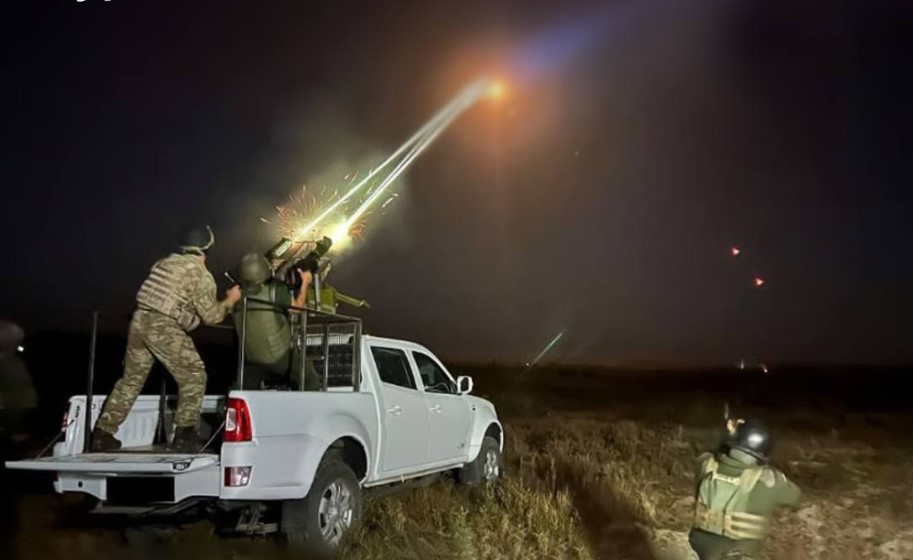
Business Censor spoke with MPs, a security holding company, manufacturers of protective equipment, and lawyers to understand how private air defence works in practice, how much it costs, when it can be a lifesaver, and when it will be of no help at all.
Businesses pay, the military commands: how the model is structured under the law
The legal framework for private air defence is Cabinet of Ministers Resolution No. 1506 of 19 November 2025, which launched a pilot project to strengthen air defence. As of mid-July this year, the Ministry of Defence had authorised 51 of the 62 companies that applied to establish air defence groups. The combat teams have destroyed more than 50 attack and reconnaissance UAVs.
In conversations with Business Censor, lawyers describe the term "private air defence" itself as a convenient shorthand:
"Companies do not have the autonomous right to conduct air defence operations at their own discretion. They establish civilian structural units that are integrated into the overall air defence command-and-control system of the Armed Forces of Ukraine and operate under the coordination of the relevant air command," Ivan Bondarchuk, partner and head of the Energy & Projects practice at LCF Law Group, explains to Business Censor.
The mechanism works as follows: a company that is not subject to sanctions and has no ties to the aggressor state applies to the Ministry of Defence, obtains authorised status and adopts a joint decision with the relevant air command. The document defines combat duty areas, the list of protected facilities, rules for the use of weapons and funding arrangements. Businesses purchase permitted equipment – drones, electronic warfare systems, radars and vehicles – at their own expense, while weapons and ammunition are supplied by the Armed Forces of Ukraine.
Lawyers say the groups accept people aged 21 and over who have no criminal record and have passed medical, psychiatric and substance-abuse screening. In practice, they are predominantly veterans, according to companies directly involved in protecting Ukrainian airspace.
"They are veterans, but they are also our employees and full-time staff members who undergo licensing through the air command. Only after that are they authorised to work. We cannot simply put just anyone behind the controls," Yevhenii Shevchenko, the executive responsible for physical security, humanitarian demining and protecting facilities against aerial threats at SHERIFF Holding, whose company deploys private air defence systems for clients, tells Business Censor.
It should be noted that a pilot resolution is a tool commonly used in the defence sector. MP Halyna Yanchenko, who also supports legalising private military companies, recalls that the government used the same approach last year to stimulate the production of explosives:
"There was a pilot resolution that allowed a different profit margin for drones, electronic warfare systems and ammunition to encourage the expansion of their production. The margin was higher – up to 25% – compared with all other conventional weapons, for which it was capped at around 7–8%," Yanchenko explains.
How much does protection cost, and when do companies turn clients down?
The companies approached by Business Censor for comment offer different protection models. However, the counter-drone solutions available on the market can be divided into turrets that shoot drones down with bullets and interceptor drones.
The first category consists of AI-powered turrets fitted with 12.7 mm Browning M2 machine guns, with an engagement range of up to one kilometre. The ballistic computer, thermal imager, rangefinder and weather station operate automatically, with minimal human involvement.
"The expected probability of downing a conventional Shahed is as high as 75%. This refers to a single target, not a group of targets. These statistics were collected for propeller-driven Shaheds. Data on jet-powered Shaheds are still being collected, as they were not previously launched on the same scale as they are now," Shevchenko says.
The second technology is interceptor drones. According to Shevchenko, drones from various manufacturers are used, and the company also has its own solutions. The choice of drone may depend on the pilot. If an operator has extensive experience with a particular model, it makes sense to let them control the one they work with best.
Moreover, "civilian" interceptors differ from military ones. If a military drone misses its target, it self-destructs in mid-air, whereas drones used for "private air defence" have a remotely controlled safety mechanism. They can be switched from combat mode to normal mode, landed and reused.
In this context, Shevchenko warns of an important risk: uncoordinated procurement. Some businesses purchase equipment before obtaining approval from the air command and are subsequently prohibited from using it at their location.
In practice, drones and turrets operate as an integrated system: drones can be launched at a certain distance from the facility, while a turret fitted with a Browning serves as a "weapon of last resort", engaging targets within a one-kilometre radius of the facility.
One interceptor costs UAH 80,000–100,000, depending on the modification. A basic package comprising a control station, an antenna and 20 drones costs UAH 2.2–2.7 million, Shevchenko says. At the same time, clients cannot purchase the equipment independently, as special permits are required.
"They purchase the necessary equipment through us. We essentially act as a conduit for the funds without adding any markup," Shevchenko explains.
Yanchenko, however, puts the average cost of equipping a single defensive position higher, at UAH 5–10 million.
SHERIFF immediately turns down roughly half of prospective clients because of their location. The Browning has a lethal range of four kilometres: a bullet fired at an angle can reach residential areas, meaning kinetic weapons are effectively not used within cities.
The most active clients are solar power generators and private gas producers. According to Shevchenko, the agricultural sector shows the least interest in protection: decisions are made by comparing the cost of the system with the cost of rebuilding the facility.
"If the numbers do not add up, they decide that it would be better to let it burn and rebuild it than to try to shoot anything down," Shevchenko explains.
Wild Hornets, the MilTech company that established the private Night Hornets unit back in 2024 (before Resolution No. 1506 was adopted), now describes it as Ukraine’s first private " short-range air defence" unit. The unit was established to test Sting interceptor drones together with the military.
Since then, the unit’s pilots have trained more than 1,000 military personnel to operate interceptors. The company says that one of its air defence crews consists of at least three people: a pilot, a navigator and a sapper-spotter, who prepares the drone for launch at the position. According to the company, interceptors have become the primary tool for countering drones throughout the defence system:
"Drones now account for the destruction of 70% of Shaheds and Gerberas. Meanwhile, the share accounted for by mobile fire groups and turrets has declined significantly," the company told Business Censor.
At the same time, Wild Hornets is not yet working with commercial clients, as the company is focused on training military personnel and gathering analytical data.
"Only once the Defence Forces’ need for trained personnel has been fully met will we begin offering our solutions to the private sector," the company said.
Legal complexities: who is liable for errors and the operator’s health?
The dual chain of command for group members raises the most questions among lawyers. The employment contract, work schedule, salary, and disciplinary matters are determined by the employer. During duty shifts, orders are issued by the air command.
Bondarchuk notes that Procedure No. 1506 does not answer fundamental questions: what legal status a military signal has for a civilian employee, who is liable if a target is misidentified, whether an operator may refuse an order to engage a target, what to do if communications are lost, and who will investigate violations.
The second risk concerns their status under international humanitarian law.
"A civilian operator may remain an employee of a company under Ukrainian labour law but, while directly participating in the detection and destruction of targets, lose the protection from direct attack normally afforded to civilians," Bondarchuk says.
The third issue is social protection. The Procedure does not establish a separate life and health insurance regime for group members, compensation in the event of death or injury, or payments to the families of those killed. Formally, an operator is an ordinary company employee, and under the Civil Code, the company itself is liable for damage caused by its employee while performing their duties.
The limited time horizon also poses a legal problem. Pilot resolutions are usually adopted for two years, according to the Rada.
"Once this resolution expires, unless another pilot resolution is adopted, this mechanism will cease to exist for us and for Ukrainian businesses. But if, during this period, private air defence units that have proved effective, satisfied both businesses and the state, saved the state money and provided employment for veterans were to lay the groundwork for enshrining this model in law, that would be a positive scenario. That is what we should strive for. It should be regulated not by temporary resolutions, but by proper permanent legislation," Yanchenko stresses.
What can small businesses do: electronic warfare or cooperation?
A fire team is an expensive solution available primarily to large companies. Smaller businesses can instead opt for electronic warfare systems. However, deploying them at their own discretion is unacceptable.
Tymofii Yurkov, co-founder of manufacturer Contra-Drone, describes the current model as a "state-controlled private capability": businesses are entitled to purchase electronic warfare systems and finance fire teams, but operating them independently outside the military framework is prohibited.
The equipment is inspected by the General Staff and the State Service of Special Communications and Information Protection to ensure that it does not jam friendly communications, radar or navigation systems. Approval takes one to three months. Only the military air defence operator responsible for the sector may issue the command to activate jamming or open fire.
"A standalone electronic warfare system merely creates an illusion of security," Yurkov says.
Integrated electronic warfare systems work best against commercial quadcopters and FPV drones, completely jamming their command-and-control and navigation channels. Against jam-resistant long-range UAVs, fibre-optic drones or drones equipped with machine vision, electronic warfare systems merely reduce strike accuracy or buy time for fire teams.
Shevchenko is unequivocally sceptical about local electronic warfare systems:
"Local electronic warfare systems installed at a single site will not protect that facility from anything," he says.
According to him, cases in which business owners simply purchased electronic warfare systems available on the market and installed them without coordinating with the military command have had tragic consequences.
"One company bought a large number of very powerful electronic warfare systems, while newly established Armed Forces of Ukraine units equipped with interceptor drones were stationed nearby. When the electronic warfare systems were activated, they disrupted the control links for the interceptor drones protecting the area. The facility was ultimately destroyed: the electronic warfare systems had no effect on the enemy drones, while the covering unit could not operate amid the electronic warfare jamming. Both the drones and the facility were lost. This situation was caused by a lack of coordination," Shevchenko says, citing an example.
According to Shevchenko, effective defence against Shaheds requires a layered network of systems along their approach routes. A standalone system may force a drone off course, after which it will switch to inertial guidance.
"It may indeed deviate from its course, but it could then strike somewhere no one expected it to," Shevchenko warns.
For companies that cannot afford a fire team, MP Halyna Yanchenko proposes cooperation:
"A small or medium-sized company cannot afford a mobile fire team. But companies can cooperate. Five, ten or twenty companies located together in an industrial zone can consider joining forces and organising a mobile fire team," she suggests.
In practice, however, such models are far from ideal. Shevchenko does not believe in this model at all. According to him, the company has already attempted to place several businesses in the same industrial zone under shared protection, but the participants were unable to agree on funding.
"I find it hard to believe that they will be able to join forces and accomplish anything. We all understand that we live in Ukraine," he says ironically.
Private air defence is powerless against ballistic threats, but a solution exists
All private air defence models currently available in Ukraine are designed to counter drone threats. However, during the attack on Kyiv and the surrounding region on the night of 5 August, Air Force data showed that it was the ballistic targets – Iskander-Ms, Zircons and Oniks missiles – that could not be intercepted.
"If this is a deliberate attack specifically targeting the facility and involving ballistic weapons, private air defence will be of no help," Shevchenko acknowledges.
Yanchenko notes that only a handful of systems, such as Patriot and SAMP/T, can intercept ballistic missiles. Businesses, however, clearly cannot afford to purchase them.
"No company could afford to purchase even one system, even if they all pooled their resources. For now, this remains in the realm of fantasy," Shevchenko says.
Wild Hornets also identifies ballistic missiles as the main source of uncertainty for businesses. At the same time, they are being used increasingly often to attack industrial facilities in both frontline and central regions.
The only potential step in this direction is short-range missile technology, which Shevchenko says is currently undergoing approval for use in private air defence:
"If we were to reach that stage, it would be a much more professional capability offering a guaranteed degree of effectiveness," he notes.
From air defence to private armies: could it work?
Yanchenko sees private air defence as more than a temporary tool for protecting warehouses.
"If a private company provides its employees with weapons and pays their salaries, while they coordinate their activities with the government and the military, what is that if not a form of private military company?" she asks.
Yanchenko stresses that conventional private military companies (PMCs) generally do not engage in combat. Their main activities are training, communications, intelligence, logistics and security. By this logic, de facto PMCs are already operating in Ukraine: dozens of private schools train both military and civilian drone pilots; private companies deploy military mobile communications near the front line at their own expense; and a private US company conducts reconnaissance over the Black Sea on behalf of the Pentagon.
It should be noted that the issue of establishing a legal framework for PMCs in Ukraine is not new: it has been discussed throughout the years of the full-scale invasion. Three bills have been registered during this period, but none has reached the relevant parliamentary committee. Yanchenko attributes this to prejudice among some politicians.
The industry, for its part, points to the legal constraints surrounding PMCs.
"I support private military companies and private air defence in general. Why? Because my clients need them. But the current legal framework limits my ability to help them," Shevchenko explains.
At the same time, he says the holding company is structurally prepared to operate under a PMC model: most of its air defence and demining personnel are veterans with combat experience. However, he declines to predict how or in what direction the private air defence programme itself will develop.
Halyna Yanchenko warns that the window of opportunity will not remain open forever.
"We are already approaching the point where it may even be too late to legalise private military companies. Once again, we will be late with this decision, just as we were late in deciding to open up arms exports," she says.
The word "late" is also being heard from the industry. The head of one company that has been protecting businesses against drone attacks since May declined to comment on the record. However, in a private conversation, the veteran of the Russo-Ukrainian war and entrepreneur explained that companies should have started thinking about protection as soon as the initiative was launched.
According to the source, his firm built up a pool of clients almost immediately after the programme was launched and does not intend to accept any new ones. "You need to take care of security before things start flying," he stresses. In his view, it is already too late to seek protection now.
By this logic, two key questions remain: whether a solution to the ballistic missile threat will be found, and whether a legal framework for private air defence can be established before the "pilot" resolution expires.


