



Europe shifts right: What will upcoming elections across Old World mean for Ukraine?
Looking at the list of elections due to take place in European countries this year and next, one cannot help but wonder: how will these elections affect the level of European assistance to Ukraine as it fights a war? In which countries will the vote bring us allies, and where, on the contrary, will it bring determined opponents of support for Kyiv in the Russo-Ukrainian war?
The troubling example of Viktor Orban’s regime blocking various tranches of European aid to Ukraine provides compelling evidence that we cannot afford to ignore a change of government in any country of the Old World, no matter how ordinary or "inconspicuous" that country may seem.
In this article, Censor.NET helps readers understand what we should expect from the potential political changes facing European countries in 2026–2027.
Spoiler: Europe may shift considerably to the right. Will this benefit or harm Ukraine?
FRANCE: WHO WILL STOP MARINE LE PEN AND HER PROTÉGÉ?
France is due to hold a presidential election on 17 April 2027. The country will choose a successor to Emmanuel Macron (who cannot run for a third term because of the constitutional limit on the number of consecutive presidential terms). Marine Le Pen of the far-right National Rally party currently leads the presidential polls. She will face competition from politicians largely representing the left of the political spectrum. The contest will be fierce and will almost certainly proceed to a runoff.
Censor.NET spoke to Alla Lazareva, The Ukrainian Week’s correspondent in Paris, about the main contenders in the election and their positions on the Russo-Ukrainian war.

- For as long as I have been interested in foreign policy, every five years Europe and indeed the entire world has feared the possibility of a member of the Le Pen family coming to power in France. First the father, then the daughter. This year, it is the same story, but with a twist: Marine Le Pen and Jordan Bardella have formed a duo. They often even attend public events together, don’t they?
- Yes, they travel together because Marine is still involved in legal proceedings. She lost her appeal but filed a cassation appeal. The case concerns her financial misconduct while serving as a member of the European Parliament. She paid assistants who did not appear at Parliament but worked for her party. By Ukrainian standards, perhaps this would not be considered such a grave offence, but it is nevertheless precisely this offence that has landed her in court. She has already lost twice—at trial and on appeal. The third and final instance remains: the cassation court.
She can therefore continue travelling, but the situation is essentially make-or-break for her.
- What would "making it" look like, and what would "breaking it" mean?
- If she becomes president, all proceedings against her will be dropped, and she will continue pursuing what she wants. If she does not, she goes to prison! Since there is a very high chance that she will end up there, she is trying to travel around the country with Bardella and boost her popularity so that she can ultimately win. She is already putting her "partner" through his paces, teaching him and preparing him for a political future.
Despite travelling around the country together, relations between Le Pen and Bardella are far from ideal, at least according to the French media
He is, in fact, not the worst political project the far right has produced. He is young, highly active on TikTok, and has won over young voters. This is an entirely new trend for the French far right, whose support has traditionally come from older people. Now we see young people taking part in marches in support of the far right. It is an unexpected trend. In TikTok videos, Bardella shows himself frying eggs and talks about the music he likes. This somehow brings people his own age together around him.
- But should we continue to describe them the far right-wing? Or has their ideological agenda shifted closer to the centre?
- I would say that they are drifting slightly towards the conservative right. They are toning down the xenophobic component somewhat—but only at the leadership level. Their base essentially remains what it has always been. And this component, especially the anti-Islam one (which is always present in their politics), is not disappearing. Interestingly, Bardella’s grandmother is of Algerian origin. So he himself is partly of immigrant descent, at least through previous generations.
Most importantly, they formulate their political doctrine very cautiously. On the one hand, at certain events they never fail to express support and sympathy for the heroic Ukrainian people. On the other hand, in the European Parliament they always vote against military support for Ukraine and insist that, for there to be peace, the shooting must stop. In other words, they have many "wonderful" ideas that closely echo Russian narratives.
- So, for now, they are trying not to alienate either those who support Ukraine or those demanding an end to financial and military aid to Ukraine?
- Yes, they formally condemn Russia’s "brutal attack" on Ukraine but do not support supplying us with weapons. Incidentally, the far left takes exactly the same position; on this issue, they are in complete agreement, like brothers. In this sense, Macron’s inevitable departure presents quite a challenge for Ukraine because we currently enjoy substantial French support. We should not forget that Macron also brought European leaders together and created the "coalition of the willing." How effective it has been is another question, but he has nevertheless tried and continues trying to do something. He has revived the defence industry, which is also important, and is urging other European countries to join these efforts.

But what happens next, and what his successors will do, is a very, very big question.
- Let us turn to the actual rivals of the Le Pen-Bardella duo. As I understand it, Russian bots and propagandists are now actively targeting these rivals. Could you please tell us about them and their positions on the Russo-Ukrainian war?
- Yes, they are targeting them very actively. But let us take them one at a time. The next major bloc of voters is the far left. Incidentally, they are often offended when they are called that, arguing that they are not really so extreme. But to be honest, they are indeed extreme, because they display a maximalist refusal to accept any reality other than their own. It is a kind of adolescent mindset in which their leaders remain trapped. Jean-Luc Mélenchon, the leader of La France Insoumise, has run for president many times. He is no longer young, but he is incredibly active.
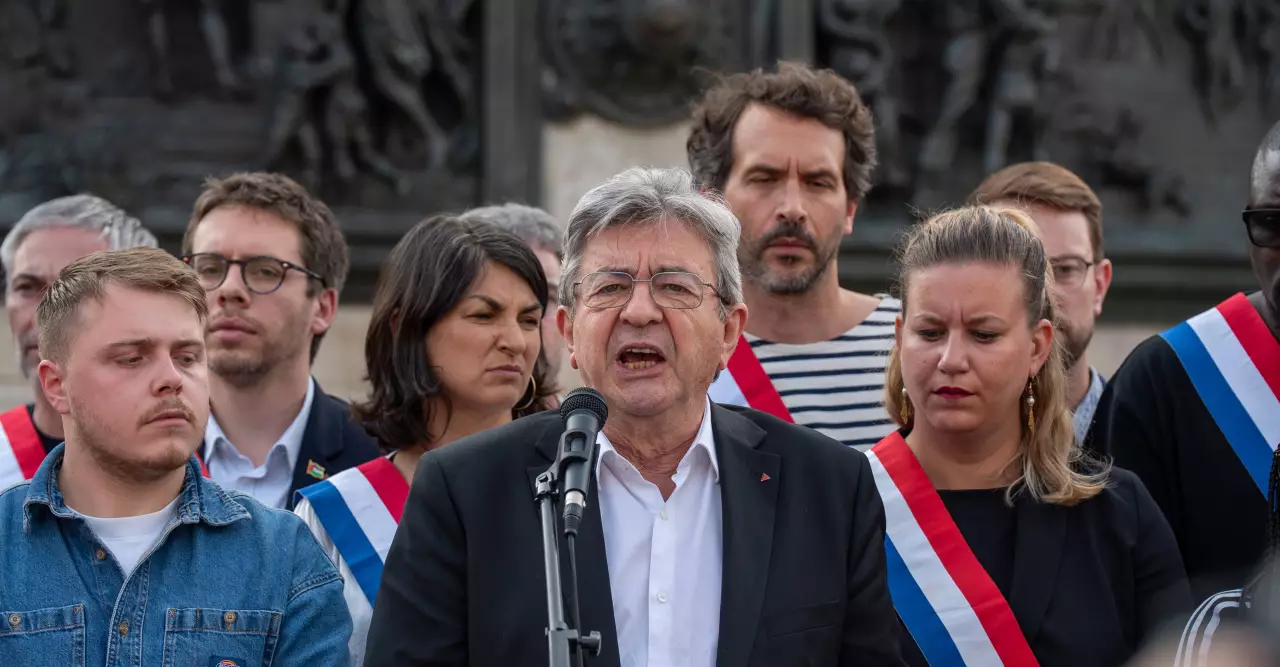
Strangely enough, young people support him. That camp probably brings together a solid third of the country’s electorate. The far left is highly receptive to support for Palestine in the Middle East and takes a simplistic view of the conflict. It is also evident that Moscow strongly supports this political force. Although Russia Today has been banned, its proxy outlets, which carry similar content, continue operating without any problems. Numerous websites and bloggers are producing and promoting the same information as official Russian propaganda, merely in different packaging. Judging by the support they receive from pro-Russian outlets, it is clear that the far left also suits the Kremlin.
Now let us turn to those who do not suit the Kremlin. First and foremost, there is Raphaël Glucksmann. Politically, he is a moderate left-winger, perhaps even a centrist, with an unequivocally pro-Ukrainian position.
He came to the Maidan during the events of 2013–2014. And he has already been targeted by a Russian smear campaign.
- In what way?
- They created an entirely fake version of a popular media outlet here—the Blast website. They even used the real names of its journalists. It would be like creating a fake Censor website, using your photograph and publishing an article that you would never write in your life. Yet everything would look as though it really were Censor.NET and really were your photograph, as though Yevhen had indeed gone and said something completely contrary to everything he always writes... It was a highly sophisticated forgery intended to discredit him. Evidently, in this case, Glucksmann’s pro-Ukrainian position was an irritant to the Russians.
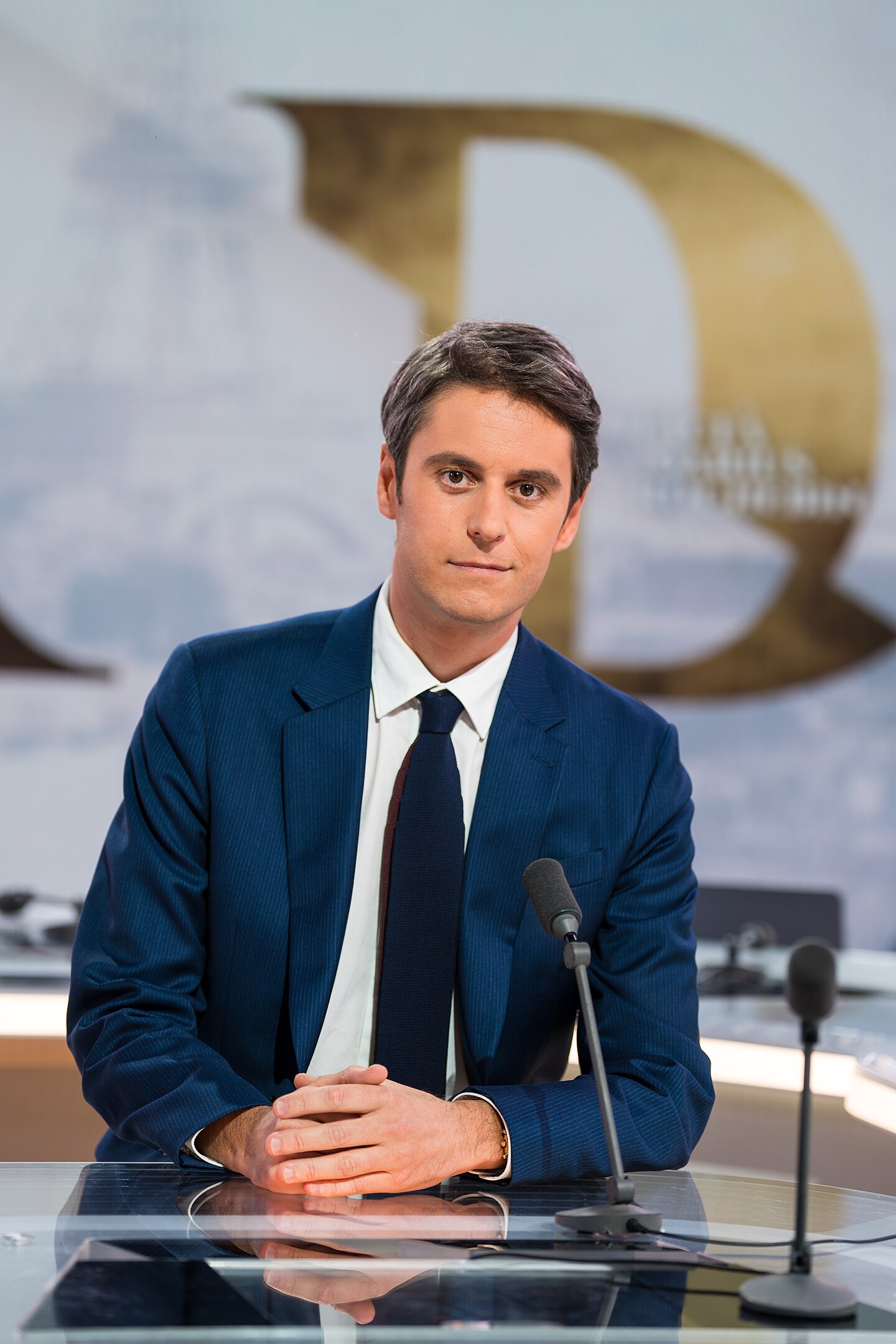
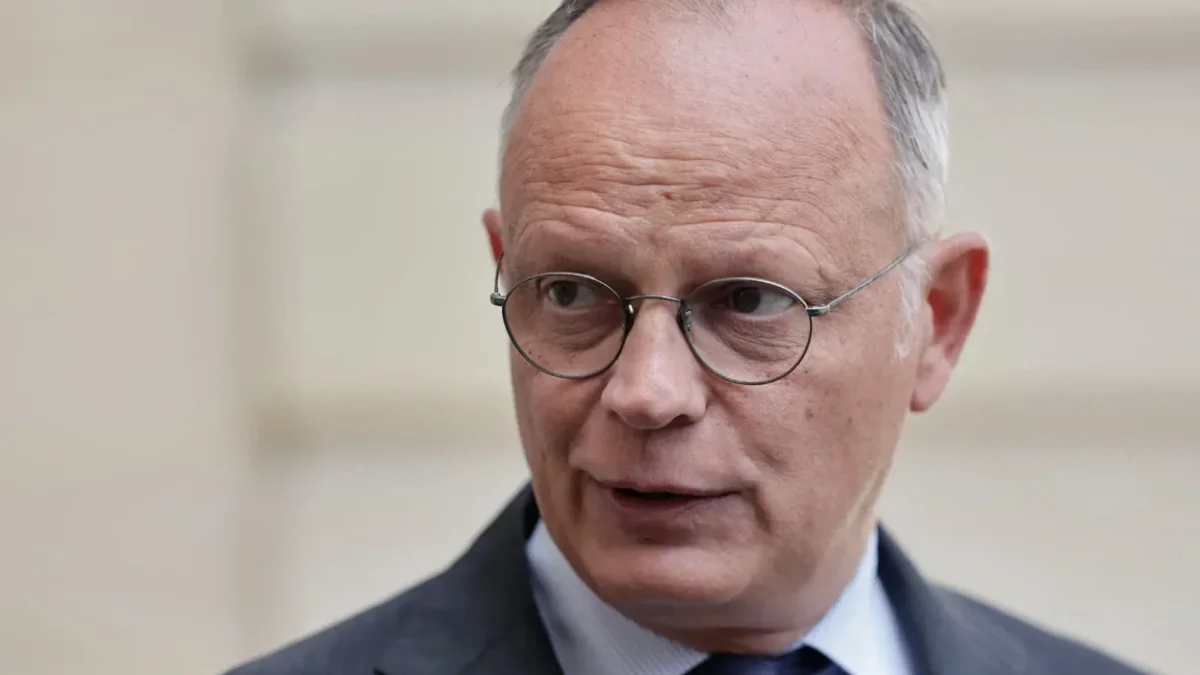
There are other serious candidates, such as Gabriel Attal and another of Macron’s former prime ministers, Édouard Philippe. Moscow dislikes both of them as well. Attal is also being targeted by the covertly pro-Moscow sector; these attacks can often be seen on television.
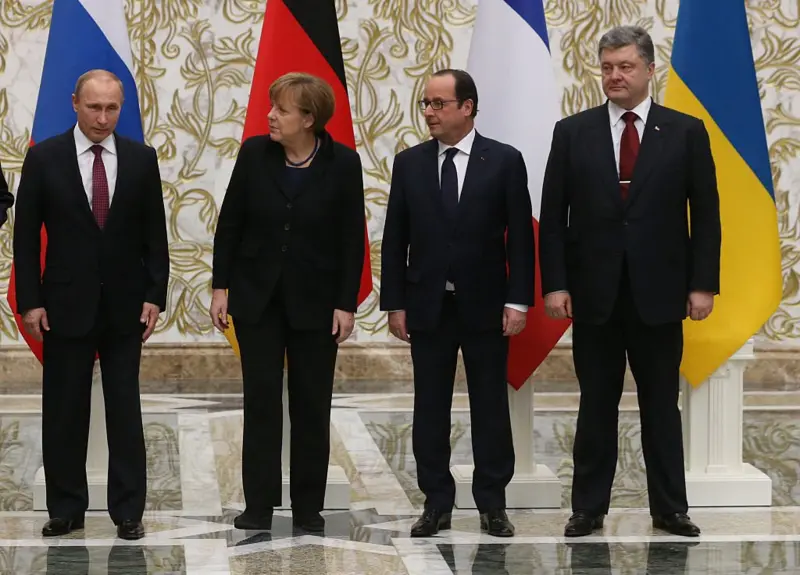
As for those who might yet run (and who would probably be good for Ukraine), there is, surprisingly enough, former president François Hollande. He is a socialist, but he was by no means a bad partner for Ukraine. It was Hollande who cancelled the contract to supply Russia with advanced Mistral-class helicopter carriers. Under the Russian plan, one of these vessels named Sevastopol was to be based in Crimea. Fortunately, Hollande halted the contract, despite facing fierce criticism, and that should count in his favour. He is also a decent person in his own right. So now, as the left searches for someone to nominate (because it has few potential candidates), he could well return and enter the presidential race.
- Although Raphaël Glucksmann may appear to be the best candidate for Ukraine, reality calls for an entirely different approach: should we support whichever candidate is most likely to defeat the Le Pen-Bardella tandem? According to the polls, who currently appears most likely to do so?
- According to the polls, everything looks dreadful so far, because the second-most popular candidate is Jean-Luc Mélenchon—the leader of the far left and an entirely pro-Moscow figure. He is now trying to conceal this, but archives do not burn, or if they do, virtual ones do not. Everything he has said remains on record, and we all remember it. That is without even mentioning the familiar narratives that arms supplies must be stopped because, if there are no weapons, there will be peace... In other words, he presents capitulation as peace. We Ukrainians understand this, but here in France, not everyone is as attuned to Ukrainian issues. It is cheap populism and the same applies to domestic policy: lower the retirement age, increase pensions, and create more jobs. But where will the money come from? He does not say. People like simple solutions, after all, not only in France but in other countries as well...
So, unfortunately, everything looks very bleak for now. But everyone hopes that, if not a black swan, then at least a white or perhaps a grey one will emerge. And that this new, unexpected candidate may save the French. Among the colleagues I speak with, for example, people are horrified by the prospect of having to vote for Mélenchon to keep Le Pen out. For many, it would feel like jumping into an abyss.
- Ms Alla, our conversation began with the observation that, for the past 25 years, elections in France have looked like this: here is a member of the Le Pen family, and here are those opposing the far right. French society has generally always shown that, at the decisive moment, a week or two before the vote, a certain consolidation takes place and a centrist or centre-left candidate wins the election. Should we hope for the same thing again?
- Yes, everyone is pinning their hopes on that, because the French are, for the most part, a nation with a Cartesian mindset. In other words, they generally act logically when they are very frightened. It is therefore entirely possible that French voters will cast their ballots strategically in the first round to keep Mélenchon out as well.
So far, as you rightly point out, this consolidation has worked. But will it work this time? No one can guarantee that. Until now, the French have had the necessary critical minimum; their common sense somehow coalesced and prevailed. What will happen now is unknown. There is hope that a new candidate might emerge. Macron himself appeared quite unexpectedly in his time, virtually at the last minute. No one thought he would become president. Yet he won an absolute majority of the vote in the first round, and everyone was simply stunned! So it is entirely possible that, amid this dearth of options, some fish may yet leap out of the ocean...
GERMANY, SPAIN, ITALY: SCUSI, KEEP RIGHT
The upcoming elections in Germany, Italy and Spain have one thing in common: they are taking place amid the growing influence of far-right and nationalist parties. All three countries could shift markedly to the right—and this poses a considerable challenge for Ukrainian politicians, diplomats and negotiators at various levels in general. We will have to establish contacts in an often unfriendly environment.
We spoke about what we should expect from the elections in these countries with Ukrainian MP and head of Ukraine’s permanent delegation to the NATO Parliamentary Assembly Yehor Cherniev.
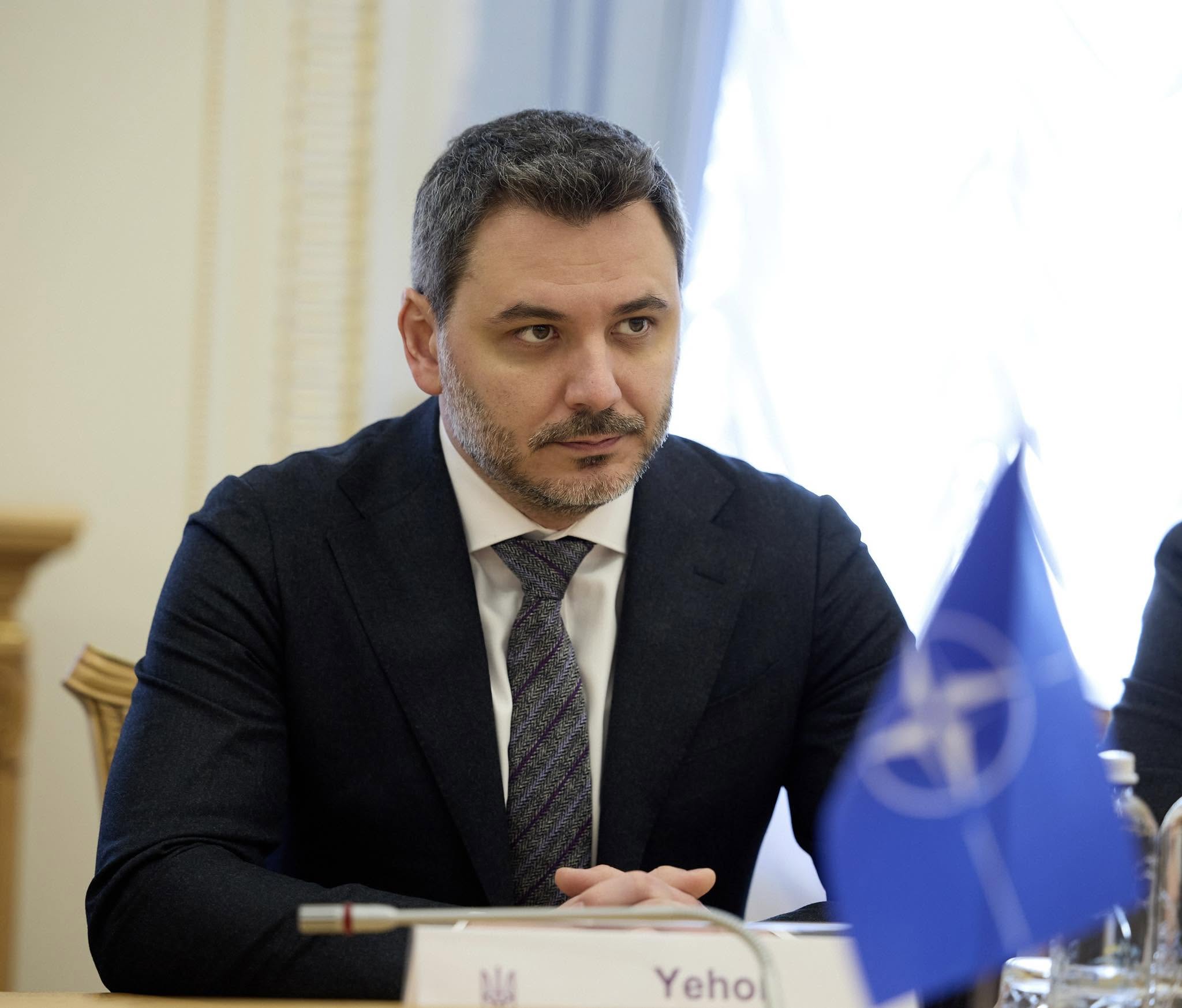
- Let us begin with Germany. Elections to legislative bodies in several federal states are scheduled for September: Saxony-Anhalt, Mecklenburg-Western Pomerania and the city of Berlin. On 30 January next year, the German Federal Convention will hold a presidential election.
Should we be seriously concerned about these elections?
- I think the issue is not even these elections, but Germany’s rather sharp turn to the right. This shift is linked to public demand for the far right and the growing strength of the Alternative for Germany party. This will eventually force mainstream parties such as the CDU/CSU or the SPD to enter into a coalition. Although there is currently a form of cordon sanitaire preventing them from entering a coalition with the AfD. But I think it will happen eventually; alternatively, the AfD will grow so strong that it will be able to form a government on its own in the next Bundestag.
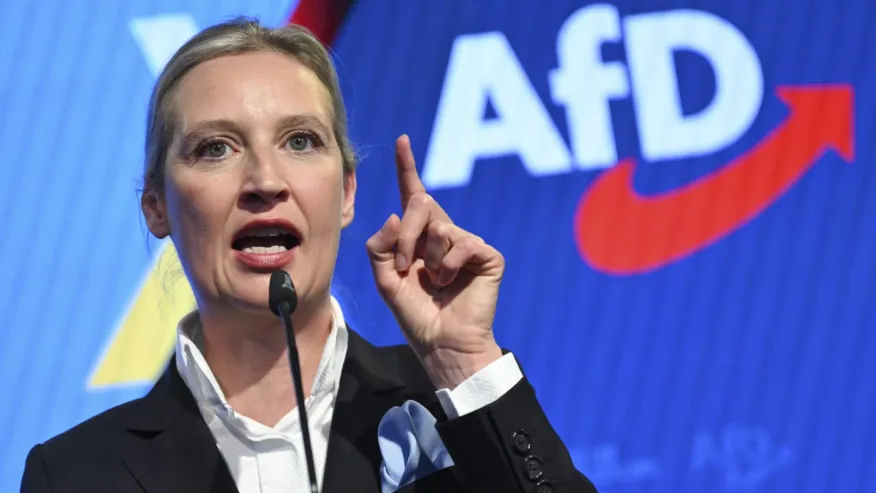
- And we certainly cannot ignore this.
- No, we cannot—and we must build relations with this party. Yes, we see its positions on aid to Ukraine, and there are certain concerns about the long-term prospects for assistance from Germany (which is currently the leading provider of aid to Ukraine). Germany also carries the greatest weight within the European Union, and our further progress towards EU accession depends on it. So I already believe that we need to build relations with the AfD. We must also remember that the Alternative for Germany includes different kinds of people. Not all of them, shall we say, oppose aid to Ukraine. The AfD phenomenon is that its support is concentrated precisely in eastern Germany, where, unfortunately, both Russian networks and Russia itself have traditionally maintained a strong presence.
- Why is that?
- They appeal largely to a certain nostalgia. Despite the fall of the Berlin Wall, eastern Germany has not been fully integrated into western Germany. This nostalgia for a certain kind of stability still persists. East Germany once belonged to the socialist bloc, and even after 30 years in the capitalist camp, its people still find integration difficult. Alternative for Germany politicians also appeal to those who have lost their jobs. And, of course, all of this is further fuelled by the Russian Federation, its propaganda and disinformation.
Our task is to cooperate both with them and with the European Union. This could become a problem not only for Ukraine but also for the European Union and NATO. In this context, both the European Union and NATO understand the threats and are trying to prepare for any possible turn of events.
- Yehor, have you spoken with reasonable German politicians who support Ukraine about our shared concerns over Germany’s shift to the right?
- Of course we have discussed it. They share these concerns. Frankly, I have no recipe for success to offer them other than co-opting the agenda of such far-right parties. But that would then run counter to the governing parties’ own positions. This applies particularly to migration, economic and environmental policy. In principle, I think much of it would conflict with EU law. But this is a pendulum; it has now swung to the right, and there is nothing surprising about that.
- And, unfortunately, such swings of the pendulum do not disappear in a matter of months.
- They cannot. Frankly, the mainstream left-liberal parties simply missed the moment when they should have moved somewhat closer to the centre instead of continuing further to the left. The only proper response, it seems to me, is to change from within and acknowledge that society’s demands have changed. Incidentally, this is also a valuable lesson for Ukraine—because in our pursuit of European integration, EU membership and the defence of European values, we have forgotten that we are currently defending not European but left-liberal values. We forget that Europe has always embodied traditional values; it was only after the war that Europeans veered in the opposite direction and took it to an extreme (which, in many respects, the populations of European countries no longer accept). So we must not repeat these mistakes. While we seek bipartisan support in the United States, for some reason we have worked exclusively with and focused solely on left-liberal parties here. We urgently need to build relations with the right wing as well, whether we like it or not.
- What would you say about the election to be held by the Federal Convention on 30 January? Following the vote, the country will receive a successor to Frank-Walter Steinmeier from the governing coalition, a man our country remembers chiefly for the phrase "Steinmeier formula." The office is ceremonial to some extent; should we be seriously concerned about who succeeds him?
- We certainly need to understand whom we will be working with—even though the office does not carry much executive power. To some extent, the choice will reflect the prevailing mood within the Federal Convention. We should not dismiss the person who is elected merely because we dislike them or because they oppose aid to Ukraine; we must still build relations with them. We have difficult relations, for example, with the United States and its current president—but, as you can see, we have no choice but to build, restore and improve those relations. I think the same approach should apply to European countries.
- Let us leave Germany and turn to Spain, where large-scale local and municipal elections are scheduled for May 2027 in most of the country’s regions; regular nationwide elections to the Congress of Deputies and the Senate are expected at the end of 2027. (That is, unless an early dissolution of parliament is announced.)
- As for Spain, Prime Minister Pedro Sánchez’s position is currently very precarious, and he is, incidentally, the president of the Socialist International. He is what one might call the leader of the left.
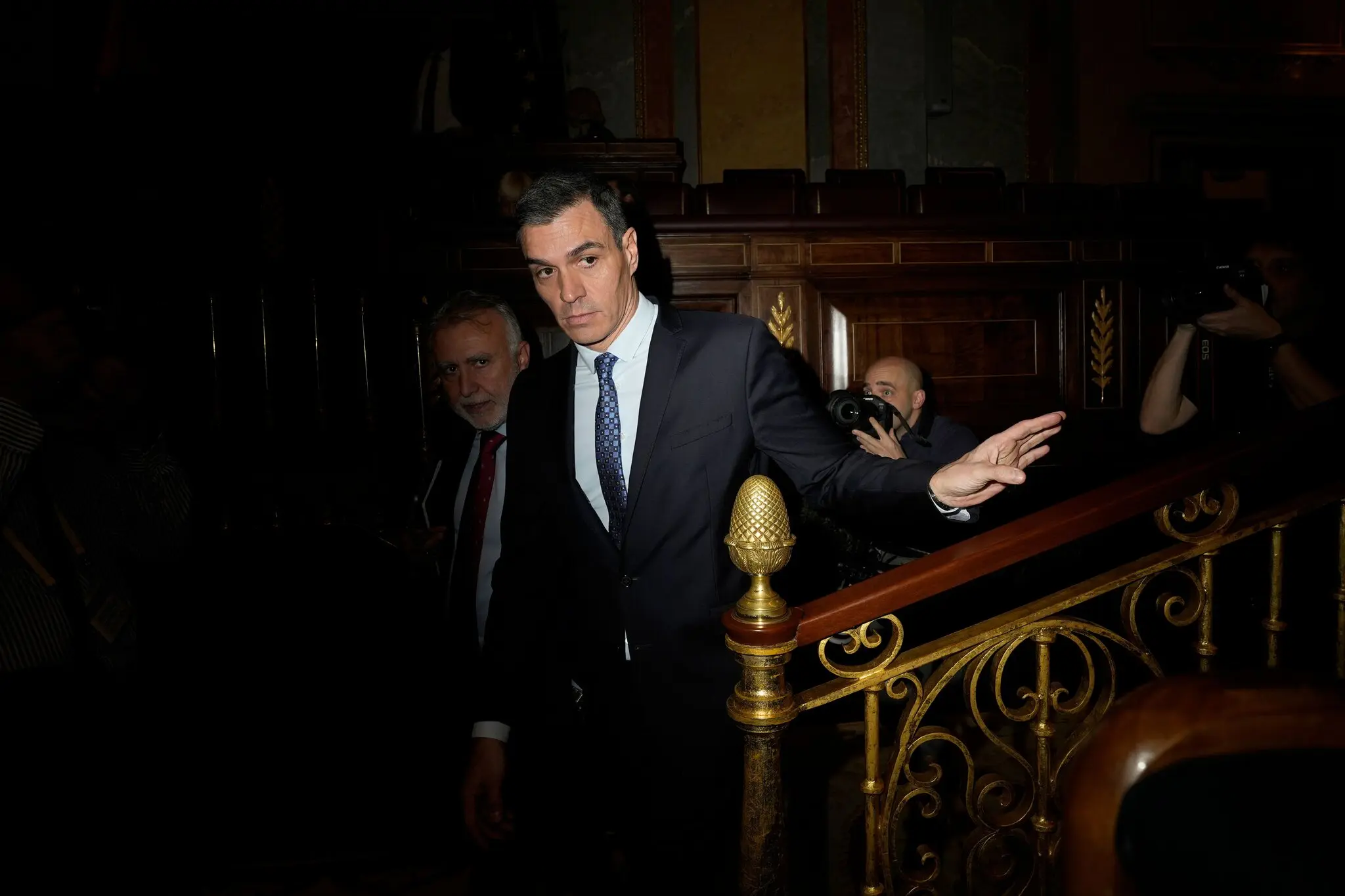
- The recent episode involving the temporary overrunning of the Spanish enclave of Ceuta by Moroccan migrants dealt a noticeable blow to Mr Sánchez’s reputation.
- And even then, the response to the entire episode was fairly feeble. Unlike Italy’s response, incidentally. The point is that Spain is a highly welfare-oriented country. Since the beginning of Russia’s full-scale invasion of Ukraine, Spain has adopted a position suggesting that it stands with us. It provides us with assistance—but considerably less than it could, shall we say. Add to this Spain’s position on increasing defence budgets. It was categorically opposed and bargained for spending not 5%, but a much smaller percentage of GDP. But again, because Spain is a welfare-oriented country, people there take a negative view of the need to cut social spending in some areas and redirect the money towards defence budgets. Traditionally, moreover, the right supports defence spending, while the left opposes it.
But the situation is changing—not least because of certain absurd laws in Spain itself. For example, landlords cannot evict tenants from their apartments if they do not pay or refuse to pay. In other words, there are certain imbalances that society no longer accepts. So I think that, once again, demand for more right-wing policies will grow.
- What would you say about the parliamentary elections in Italy? They must be held no later than December 2027.
- As for Italy, it has what might be called the healthy version of right-wing parties. Prime Minister Giorgia Meloni, who represents the right, unequivocally supports Ukraine.
However, there are also certain internal divisions, as well as the influence of the Russian Federation and Russian propaganda. It is therefore becoming increasingly difficult even for Meloni to defend support and assistance for Ukraine. As we recently saw, there was a scandal when one of the coalition parties (Matteo Salvini’s League — Ye.K.) did not oppose aid to Ukraine in general but questioned whether such aid was necessary. The party was put in its place and acknowledged that it had spoken on its own behalf rather than on behalf of the coalition. In other words, the coalition will continue supporting Ukraine.
- An important question: should we wholeheartedly wish for the victory of Ms Meloni’s party and its allies on the right of the Italian political spectrum? Or might we have other partners in Italy who could eventually nominate their own candidate for prime minister?
- It is always Italy’s choice, and we will respect any choice it makes. We currently have very good relations with Meloni. Moreover, she represents not only her own party but also a coalition, and that coalition supports Ukraine.
In general, of course, we would like support for Ukraine in Italy to remain strong regardless of who comes to power.
CHERCHEZ LE RUSSE: WHERE TO EXPECT RUSSIAN INTERFERENCE IN FOREIGN ELECTIONS
Let us temporarily approach the issue of elections in European countries from a different angle. The experience of hybrid warfare in recent years clearly demonstrates that, if an election campaign (and the vote itself) in a European country is marred by various provocations, fake news and electoral fraud, there is a strong likelihood that the Russian Federation is behind the attempts to influence the will of its citizens.
The arsenal available to Putin’s intelligence services, propagandists and agents of influence is exceptionally broad: from pro-Russian statements by paid local politicians to fake versions of local media websites; from AI-generated smear videos to unidentified drones appearing in public places or over strategic facilities in foreign countries.
Volodymyr Solovian, head of the Hybrid Threat Analysis Group at the Ukraine Crisis Media Center, shares with Censor.NET readers his experience of how the Russians do this and where they might deploy their hybrid technologies this time:

- GERMANY
As with several major Western European countries more broadly, Russia exerts systematic influence on Germany. At present and over the next several years, the primary objective of this influence is to reduce support for Ukraine through arms transfers and joint projects in the defence-industrial sector. The entire information campaign is built around these narratives. Russia will use elections in Germany—state elections, elections to the Landtags and federal elections—specifically to spread narratives that serve its interests. This is because elections are a period when information flows intensify. Consequently, amid this torrent of party slogans and messages, social media users and readers of news outlets find it more difficult to filter out manipulative content planted in the information space.
What form does this planted content take? Recently, Russia has been trying to adapt it to the local context. This is the main difference between its current approach and the campaigns of the 2000s and 2010s, when Russia attempted to introduce its own political projects, corrupt openly pro-Russian politicians and establish overtly pro-Russian party projects. Today, the emphasis is on exploiting existing anti-Brussels narratives directed against the European centre and the idea of deeper European integration. And, as I said earlier, the central theme is reducing support for Ukraine. The Kremlin will therefore be interested in any political force at the local or federal level that advocates reducing support for Ukraine and prioritising the development of domestic resources by cutting assistance to Ukraine.
Of course, in this context, the most important partner for the Russian intelligence services and the units within the Russian system of government that conduct international influence operations in Europe is Alternative for Germany. Russia will use information operations specifically to strengthen the AfD’s electoral position. But, of course, it will also amplify anti-migrant narratives, controversies surrounding green energy, and doubts about support for Ukrainians as refugees.
What tangible forms of this influence are we observing? Fake websites, fake news, bot activity and so on. I believe the operations of projects such as the Social Design Agency will be expanded; this organisation is affiliated with the Russian Presidential Administration. Its information operations have been extensively documented by international OSINT researchers and European think tanks. The best-known example is probably Operation Doppelganger.
The activities of projects such as the Social Design Agency and its own initiatives are aimed at polluting the information space by creating replica websites that imitate official sources of information. This involves creating substitutes for official resources or outlets familiar to German audiences, including prominent websites and news agencies. In this way, a kind of parallel reality is created.
By scaling up publications on lesser-known websites, simply increasing the overall volume of information and creating information noise, the Russians are also trying to pollute Western artificial intelligence models. Artificial intelligence generally selects certain data from the available body of information, but the algorithms are not always sufficiently refined to filter out Russian planted content and disinformation specifically. The Russians’ objective is to increase the proportion of Russia-generated texts, photographs and videos processed by Western generative artificial intelligence models. And this activity will, of course, intensify ahead of election campaigns. Elections are generally a time when the Russians try to launch particular information campaigns or intensify existing ones. But this influence is continuous because the Russian objective of reducing aid to Ukraine is systemic and not limited to election campaigns.
- FRANCE
Here, as in Germany, the Russians will try to make reducing support for Ukraine the central issue. To achieve this objective, they will seek to back whoever has a realistic chance of winning. Current electoral trends indicate that the second round will feature a representative of the right (Le Pen or Bardella) and one of the centrists, such as former prime ministers Édouard Philippe and Gabriel Attal. The Russians will most likely focus specifically on providing information support. At the same time, I do not think the French right wants any links with the Russians to become a subject of public discussion. This will not involve overt support or direct financing. In other words, the Russian authorities—possibly through statements by Zakharova and Lavrov—will publicly distance themselves from supporting Le Pen and the French right in general so as not to further tarnish them through an association with Russian support. They understand that this is unlikely to benefit the right electorally.
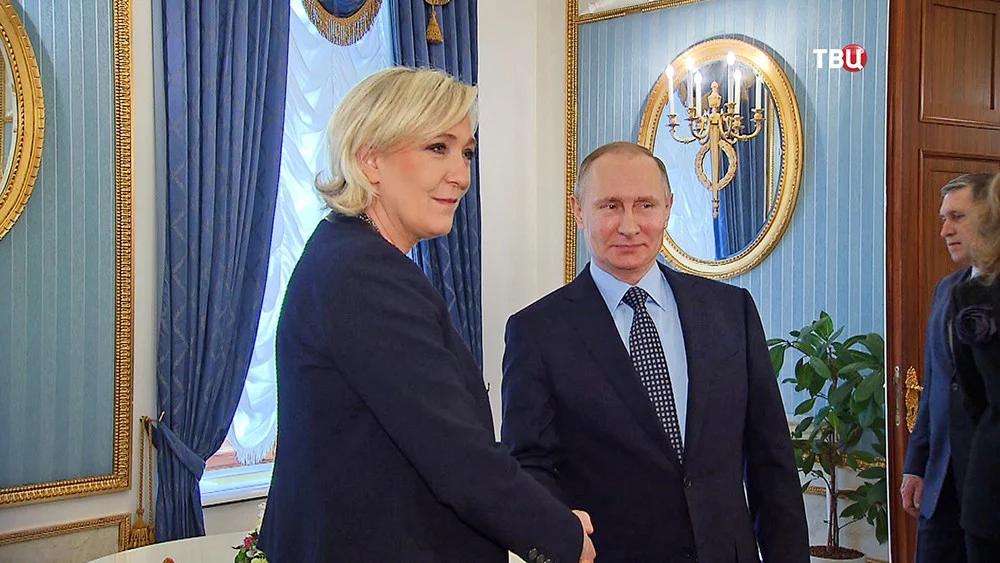
Overall, however, a victory for Le Pen or Bardella would certainly benefit the Kremlin. Although it would not necessarily mean a radical reduction in support for Ukraine, it would serve the mechanics through which the Russian power structure operates. Funds from the federal budget are allocated to information influence operations abroad. It is advantageous for the various units and organisations conducting these information campaigns to convince those at the top, in the centre, that such influence is entirely possible and that the election results will lead to certain changes in France’s position on supporting Ukraine. Funding will therefore be allocated, and information operations will certainly take place.
I think the methods here will be similar to those we have seen in Germany over the past several years. Migration will be the central issue. The Russians will most likely use their information agents and artificial intelligence tools to create certain fake stories, spread accounts of everyday conflicts involving migrants, and foster a sense among French voters that migration poses a threat. Russian hybrid influence agencies believe that such methods could have at least an indirect effect on the election results.
- ESTONIA / LATVIA
Overall, it is clear that no significant change in policy towards Ukraine should be expected here. Russia is therefore focusing on consolidating the pro-Russian electorate and ethnic Russians so that it can use the Russian ethnic minority both for information purposes and for possible future provocations (if such decisions are made in Russia). Estonia and Latvia have the largest proportions of ethnic Russians who are citizens of these countries and therefore have the right to vote.
In Estonia, Russian influence is most likely to be exerted through the Estonian Centre Party, which has a history of cooperation with the United Russia party. Although the party has distanced itself from this relationship since 2022, it still relies partly on pro-Russian voters. Overall, this will not affect the policy of the future government, but I would focus attention on Russia’s attempts to place individual political figures within the Estonian Centre Party and other political projects. From within, these figures could provide intelligence and generally influence the pace at which particular decisions aimed at supporting Ukraine are adopted.
In Latvia, the situation is more difficult for the Russians because pro-Russian projects are fragmented: the country has several pro-Russian political parties that have no chance of entering parliament or becoming part of a coalition. The only party that currently has a realistic electoral chance is Latvia First. Most likely, however, it will end up in opposition following the election.
Overall, this is an attempt to consolidate ethnic Russians and the potentially pro-Russian electorate around particular political forces. It is important to understand that the Russians want to preserve these forces’ ability to operate in practice. Excessive radicalisation of these political projects is therefore unlikely—otherwise, they would be banned and consequently lose the ability to influence public opinion through their electoral presence. The Russians understand this risk, so pro-Russian narratives are generally incorporated into broader anti-Brussels rhetoric and criticism of the country’s economic situation. Calls to reduce the amount of aid provided to Ukraine are linked specifically to economic grievances and contentious issues in relations with Brussels.
ELECTIONS FROM ESTONIA TO GREECE: WHAT SHOULD UKRAINE EXPECT?
We now return to our electoral journey across Europe. In 2026–2027, several other European countries will hold elections that are important (to varying degrees, including for Ukraine). All of these countries have a vote in the European Union, while some, despite their small size, are important allies of Ukraine (and considerable irritants to the Russian Federation).
For Censor.NET, Vassilis Petsinis, an academic expert on Central and Eastern European politics at Corvinus University of Budapest, provided an outlook for the elections in several of these countries:
Estonia: Indirect presidential election — 2 September 2026. Parliamentary elections must be held by 7 March 2027. According to most public opinion polls and studies conducted from late 2023 to the present, the nominally conservative/national-conservative Isamaa party is expected to win the parliamentary elections. Meanwhile, the liberal/centre-right Reformierakond party is projected to record its weakest electoral result in many years. Although Isamaa is generally more "protectionist" and somewhat more Eurosceptic, no significant changes in foreign policy (for example, relations with the EU and NATO, the war in Ukraine and so forth) are expected if it ultimately wins.
Latvia: Parliamentary elections must be held by 3 October 2026. An indirect presidential election is expected by May 2027. Latvia’s party landscape has long produced often fragile governing coalitions and has consistently been characterised by fragmentation and a certain degree of instability. One prediction I could make, however, is that the liberal-centrist New Unity alliance and the national-conservative National Alliance will, in one form or another, once again enter a coalition government. As in Estonia, no significant changes in foreign policy are expected.
Greece: Parliamentary elections must be held by 25 July 2027. Although the governing conservative/centre-right New Democracy party, led by Kyriakos Mitsotakis, continues to lead in the latest public opinion polls, it is projected to fall short of securing a parliamentary majority on its own. Meanwhile, the emergence of a highly fragmented party landscape across the left-to-centre-right spectrum, for the first time since the restoration of parliamentary democracy in the late 1970s, makes the question "Who could be New Democracy’s potential coalition partners?" particularly difficult. The same applies to New Democracy’s principal challengers from the centre-left (namely the formerly dominant PASOK and the newly established ELAS party, led by former prime minister Alexis Tsipras). As with Slovakia below, reliable long-term predictions are currently impossible.
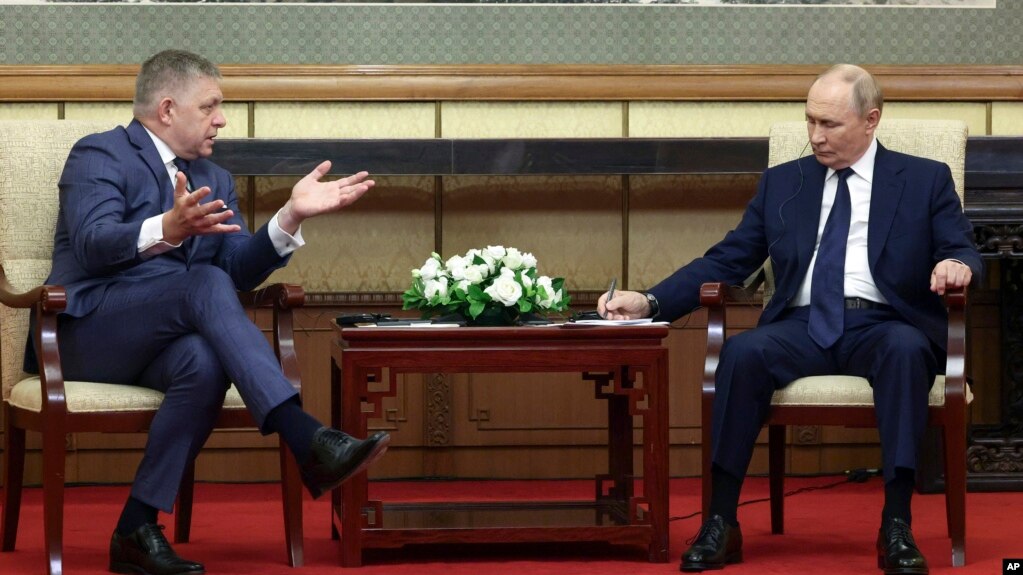
Slovakia: Parliamentary elections must be held by 28 September 2027. The current governing coalition (SMER-SD/Hlas/SNS), led by Prime Minister Robert Fico, faces criticism on various grounds (for example, for its preference for a "multi-vector" Slovak foreign policy). At the same time, as became evident during the government led by Igor Matovic, the centrist/liberal opposition does not appear particularly convincing to most rural voters outside Bratislava and other major urban centres (for example, on issues of social welfare and regional development). It is therefore difficult to make well-founded long-term predictions.
Regarding the parliamentary elections in Sweden (13 September 2026) and Finland (18 April 2026), Ukrainians should know that both countries have a clear consensus on continuing to support Ukraine in its war against Russia. Yehor Cherniev comments:
— It can be stated with confidence that there is an absolute consensus on supporting Ukraine in the Nordic countries. This issue currently unites the different political forces in their parliaments. Moreover, they compete with one another over who is prepared to do more to help Ukraine because they understand the importance of this assistance in view of the direct threat that the Russian Federation poses to their countries. This policy also reflects the position of society. In other words, public opinion is similarly united on assistance to Ukraine. I am confident that, even if power changes hands in these countries, we will not encounter any problems.
Yevhen Kuzmenko, "Censor.NET"


