



Dmytro Koziatynskyi: "Had Fedorov come out to meet crowd, it would have politicized protest"
We recorded this interview with war veteran Dmytro Koziatynskyi, who on July 15 called on people to take to the streets to protest the president’s personnel decisions, several hours before Volodymyr Zelenskyy submitted a motion to the Verkhovna Rada to appoint Yevhen Khmara as Minister of Defense.
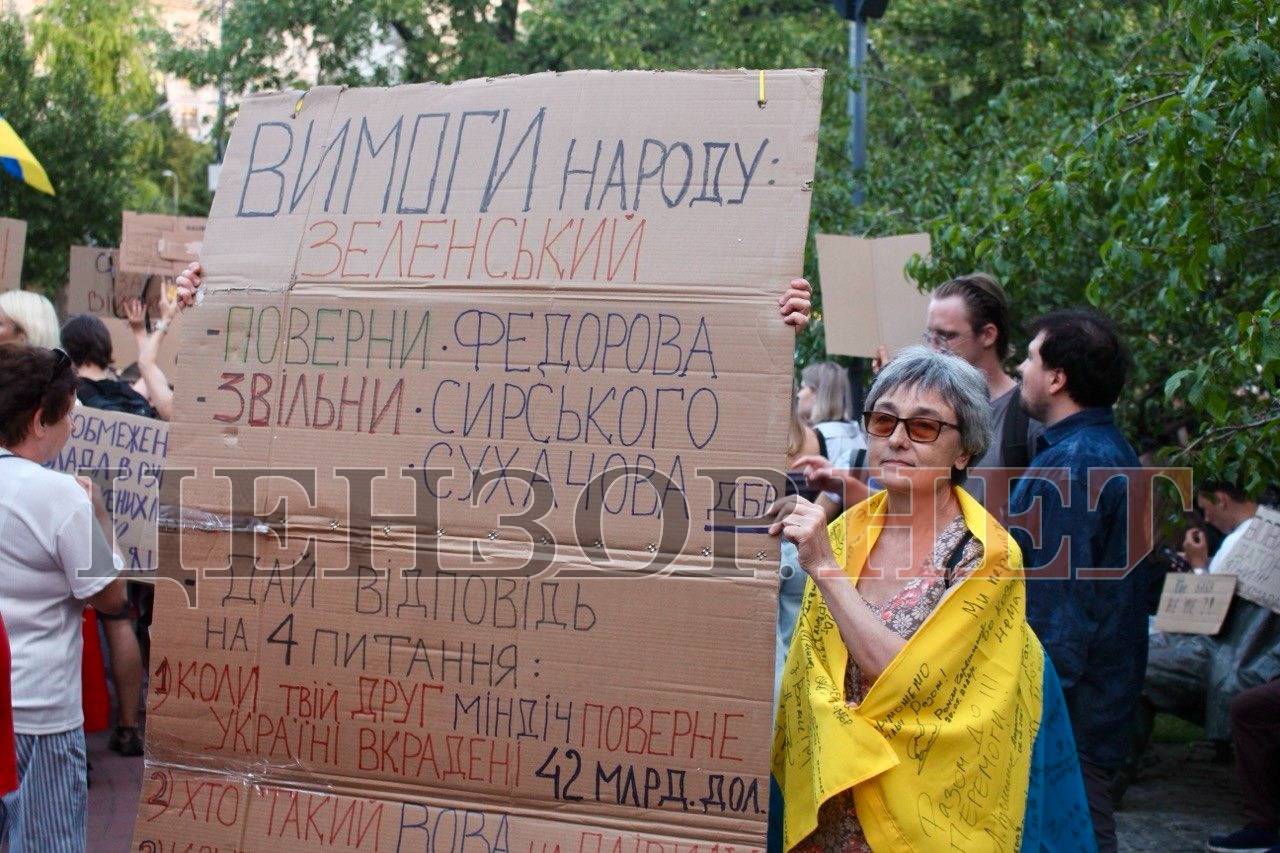
Just the day before, on Sunday, protesters chanted Mykhailo Fedorov’s name during a peaceful march in Kyiv. However, after more than a month of protests, it has become clear that this issue has long since moved beyond the question of who exactly will head the Ministry of Defense.
For those taking part in the demonstrations, it is also about the authorities’ personnel policy, the lack of clear communication, and the unwillingness of the Office of the President to engage with society. Dmytro is among those publicly calling for dialogue between the authorities and society. He admits that he is already seriously exhausted, yet sees no other means by which citizens can convey their position to the authorities. He believes that ignoring the protests only fuels anger and frustration, which could eventually erupt into a much more serious crisis.

- We are speaking at a time when the Verkhovna Rada is holding its first plenary sitting following a break in its work. MP Oleksii Honcharenko has just reported that the president will most likely submit Yevhen Khmara’s nomination for Minister of Defense today. Yet Fedorov’s name could still be heard during Sunday’s peaceful march. How do you view everything happening around the appointment of the Minister of Defense?
- For me, this protest is primarily about establishing some form of dialogue between the Office of the President and society. I think people will continue taking to the streets to demand Fedorov’s return. Honestly, I am already so exhausted that I do not know what I will do. It is difficult to say right now. This past month has left me truly drained emotionally. I am deeply disappointed that the president has still not engaged in dialogue. In my view, this has already become an institutional problem, because the president himself said that we face a difficult winter. As a result, society will enter this winter deeply frustrated and disoriented, without proper communication from the authorities. This is very dangerous. Unfortunately, I do not see what can be done about it today.
- So the president is not listening to the people who have taken to the streets in protest?
- Exactly. The strategy currently being pursued is one of ignoring them. In his address yesterday, the president even mentioned the traffic accident that occurred in central Kyiv, yet he did not say a single word about the protests.
- But people demanded the dismissal of Oleksandr Syrskyi, which the president eventually did. So there was a response...
- Syrskyi’s dismissal was undoubtedly a major victory. And Drapatyi’s appointment was an even better development. But this is how it feels: first, they can do something bad and then do something slightly better, yet the problems do not cancel each other out. Bear in mind that there was no communication whatsoever about the change of government, including the fact that the Svyrydenko Cabinet was dismissed simply to remove a single minister.
We understand that it takes at least six months to fully assume the role of head of the Ministry of Defense, because it is an enormous institution. Because of all these personnel reshuffles in the government, newly appointed ministers simply cannot pursue strategic reforms. A new minister comes in, sees what happened to their predecessor, and realizes that they too will be removed in six months or a year. So instead of doing anything strategic, they simply spend their time plugging ad hoc gaps.
In my view, Ukraine needs some kind of vision, as Mr. Fedorov puts it, a specific, visible plan for waging the war. That is impossible when such replacements are constantly taking place.
- There has been a great deal of positive feedback about Khmara. I, for one, have not encountered any negative comments.
- I have absolutely nothing against him. He is a combat officer and a general who has the support of the military. He has indeed conducted a vast number of successful operations and built up Alpha.
The key issue here is that neither he nor Zelenskyy has communicated any plan for how the war will be waged going forward. I cannot speak for the entire protest movement, but if such a plan were communicated, I would have no objection to Khmara succeeding Fedorov, provided that he pursued reforms, fought corruption, and so on.

- MP Roman Kostenko told me that Khmara attended a closed-door meeting of the National Security Committee on Wednesday, where he presented his plan and vision for waging the war. He evidently understands that the president will submit his nomination. At the same time, Fedorov rejected all the posts offered by Zelenskyy and insisted specifically on the Ministry of Defense. He did not come out to meet the protesters. How did you perceive that?
- I understand why, because it would have immediately politicized the protest, which is apolitical, peaceful, and grassroots. People are not taking to the streets for Fedorov as a political figure, but for Fedorov as an instrument for implementing reforms in the defense sector, including anti-corruption reforms.
It would be excellent if Khmara could continue these reforms. But again, I cannot speak for the entire protest movement; I am speaking only for myself.
- Did you expect Fedorov to come out to meet the people?
- Perhaps during the first few days. But it later became clear that, first, he was probably not prepared to openly oppose the president. Second, as I said, it would have politicized the protest. And I am not sure that was actually necessary.
- During Sunday’s peaceful march, people not only spoke about Fedorov but also discussed the need for dialogue between the authorities and society, which the president is currently refusing to engage in. You said that you were tired. Evidently, the people are tired as well. What happens next?
- There is no specific plan. During wartime, however, we have no other instrument besides peaceful street protest. For now, it appears that the president is not responding. This protest momentum will therefore naturally subside over time. People will disperse. But it must be understood that this frustration and anger are not going anywhere; they are building up.
- But it is bound to spill over into something eventually, isn’t it?
- Exactly. This is actually a very dangerous situation, because further crises will inevitably arise in the future. I fear that this anger and frustration could eventually erupt into some form of social explosion. I repeat: this is dangerous during wartime.
- And what do you think of the argument that people should not take to the streets and protest during a war? After all, we often hear: "We are at war; we must remain united."
- Street protests during wartime do, of course, entail a certain degree of social destabilization and upheaval, because the ruscists constantly exploit them. In my view, they should be used as a last resort, when there is no other option left. During the years of the full-scale war, there have been only two situations in which this was genuinely warranted: the fight for the independence of the anti-corruption agencies last July and the current protest against the government’s dismissal.
- Indeed, both protests began in July...
- Because my birthday is this month (he smiles. – O.M.).
- Mykhailo Drapatyi was appointed Commander-in-Chief on your birthday.
- Yes, I received quite a present.
- Last July, as you mentioned, people took to the streets in support of NABU and SAPO. It was the first major protest of its kind during the full-scale war. You also called on Ukrainians to take to the streets at the time. Were you not afraid that something might go wrong?
- Of course I was. I had no idea how it would unfold. It truly is frightening. The same is true now. There could be provocations and so on.
- As far as I remember, there were no provocations?
- There were none this year. Last year, however, some people tried to bring a political agenda into the protest: several men showed up with flares, but they were swiftly and seamlessly removed, and everything was fine. Incidentally, this demonstrates the maturity of our civil society: it is capable of organizing itself and holding an entirely peaceful, organic protest.
- Did you receive any threats? Perhaps someone sent you their "regards"?
- No, nothing like that. The Security Service of Ukraine did take an interest in me last year, but that is their job. They checked whether I might be some kind of Russian agent. Once they had established the facts, no one bothered me again.
- I watched several of your interviews and live appearances in which you were asked whether Fedorov had contacted you. You said he had not. Is that still the case?
- No, he has not contacted me. I obtain information solely from his interviews. Just as you do, I suppose.
- I take it that representatives of the authorities have not contacted you either?
- No, no one has.
- But on Sunday, you brought a petition that you had previously been unable to register on the president’s website. Tell us about it.
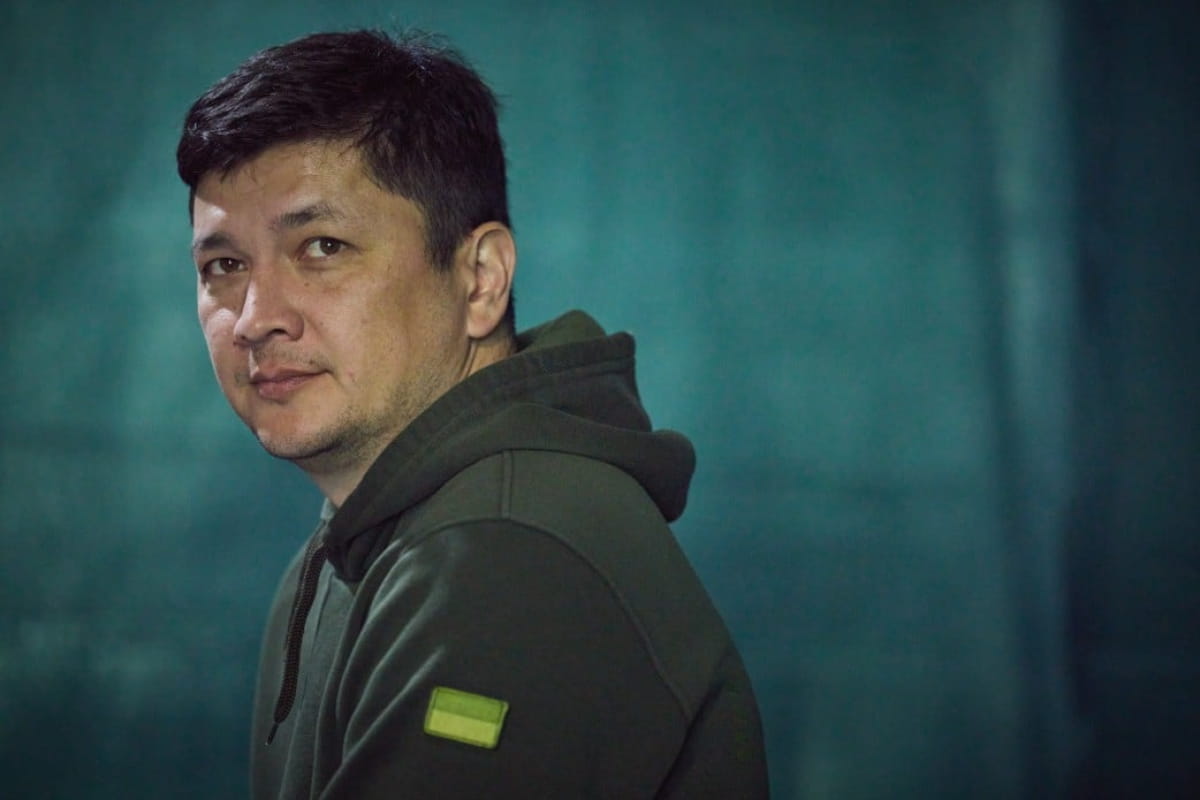
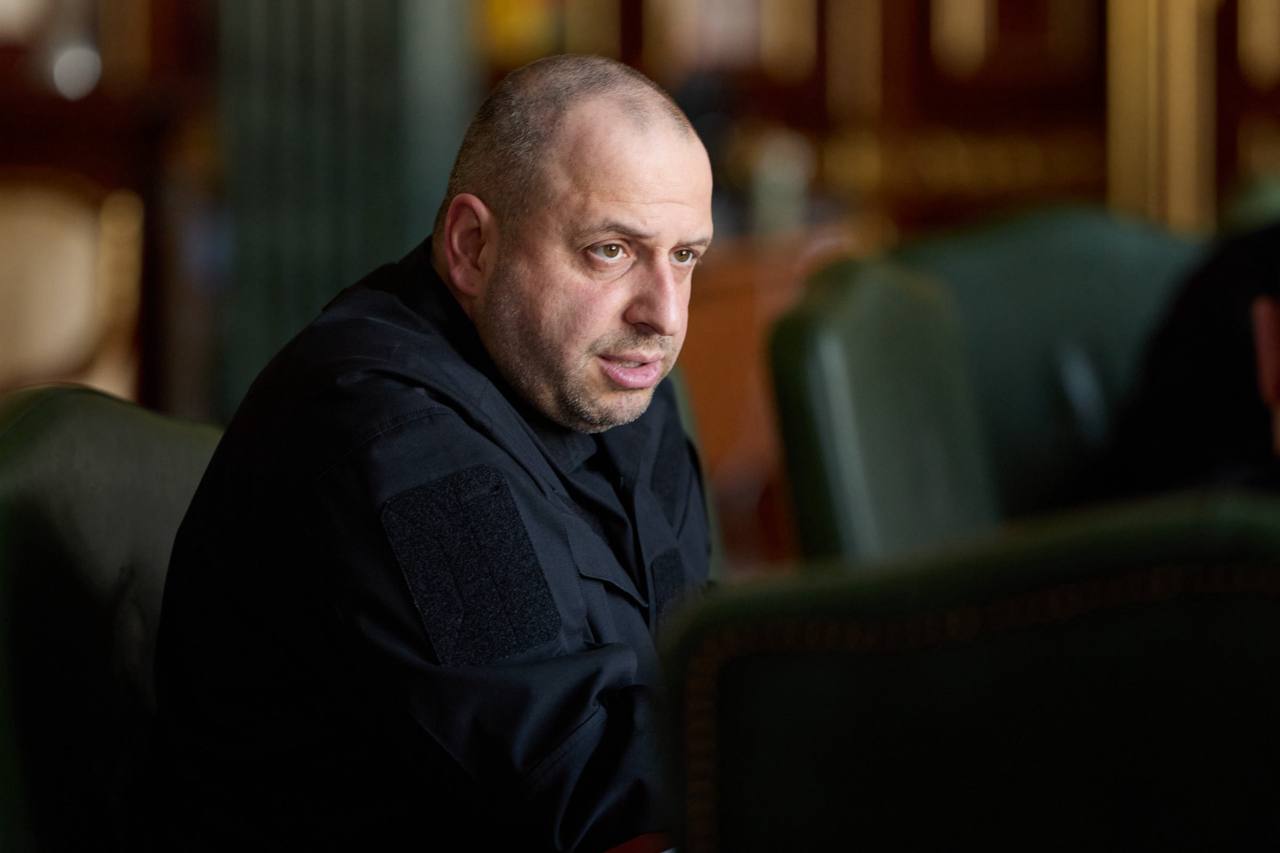
- It is an attempt to remind the president of the importance of dialogue and of his responsibility for personnel decisions. It concerns not only Fedorov, but also the broader fact that many people are now being appointed to positions without the necessary expertise. For example, Mr. Umerov to the Foreign Intelligence Service and Mr. Kim to the Ministry for Veterans Affairs. These are very strange appointments. I do not understand why they are being made. Moreover, Mr. Umerov is implicated in Operation Midas. Taking such steps amid the protests is extremely troubling.
- During the march, people also pointed out that the Ministry for Veterans Affairs should be headed by a veteran...
- Exactly. The Ministry for Veterans Affairs should be headed by a veteran, or at least by someone with experience working with veterans. I do not know Ms. Kalmykova, but she at least had some relevant expertise. Mr. Kim, however, has no connection to veterans whatsoever. This appointment therefore makes absolutely no sense to me.
- Could it be that the president simply has a shallow "bench"?
- Then they should have brought Reznikov back again (he smiles. – O.M.). But in general, they have been shuffled around so much that it is no longer clear who is where.
- Incidentally, you are not the first person to be puzzled by the appointment of Umerov, who has already held several key positions during the full-scale war.
- I do not know why the president is so fond of him. I think there are reasons that we will never learn about.
- Who from the Office of the President accepted the petition from you?
- I do not know who it was. It was someone I did not recognize. There has still been no response. Perhaps they are testing the petition for anthrax or something like that (he smiles. – O.M.)
- What do you plan to do next?
- I desperately need some rest, because this has become extremely difficult both physically and emotionally. Last year was easier because the protests did not last this long. It is now day 33, and I realize that I simply cannot keep this up.
- But the rallies will continue, won’t they? Will people continue to gather?
- Of course. But I have no influence over that whatsoever. People decide for themselves whether to go or not. As long as they are prepared to take to the streets, they will do so. It does not depend on me in any way.
- What would indicate that the authorities had heard the protesters and entered into dialogue? Does the president need to deliver an address? How do you envision it?
- The president has communications specialists. Dmytro Lytvyn, for example. They should be the ones thinking about that.
- Purely theoretically, the president could communicate with the public and say, for instance: "I see and hear you, but I have made my own decision," and then explain his reasons. Would that kind of dialogue satisfy you?
- Honestly, I simply cannot understand why this has not happened yet. I will go further: had the president immediately spoken out, commented on the government’s dismissal, and explained why it happened, there most likely would not have been any protests at all.
What would satisfy people now? It depends on how it is communicated, in what form, and so on. It is difficult for me to say exactly what it would take to satisfy people. But there must at least be some communication. Given that he has not mentioned the protest even once in any of his addresses over the past 33 days, it looks very strange.
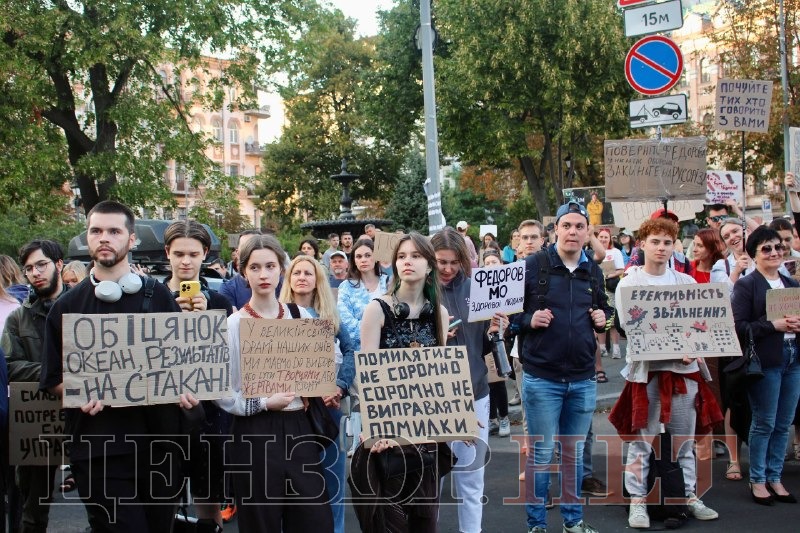
- What was the mood like during Sunday’s peaceful march?
- The mood was good. In fact, considering how long the protests have been going on, I was very surprised that such huge numbers of people were still turning out.
Before last July, I was concerned that most activists were fighting in the war and that there was no one left to stand up for civic causes. But I am delighted that there is nevertheless a new generation: active young people prepared to defend their ideals and Ukraine’s democratic European course. Military personnel in civilian clothes also attended the demonstrations, as did quite a few veterans.
Some people claim that the rallies are paid for. Only someone who has never attended this protest or spoken to the people there could say that. A protest like this simply cannot be bought. Those people are standing up for their future.
- What do you think about politicians attending the protests? Yaroslav Zhelezniak and Mariana Bezuhla were there.
- As long as they do not bring their own political agenda, they are welcome to attend. MPs are citizens just like us, and they have every right to express their civic position.
I see it as positive that Lozynskyi, Zhelezniak, Bezuhla, and Yurchyshyn attend. It is excellent. They are not pushing their own agendas there. Our protests are entirely apolitical.
- Have you considered a political career?
- I do not particularly like receiving a great deal of attention. I generally identify more with business. Politics is mentally taxing. People are constantly trying to smear you. I am not sure that I need that. I would like to change the country for the better, but probably not through politics. Perhaps I will contribute to its development through the economic sector. Peace of mind is more important to me than political matters. My involvement in the protest is an expression of my civic position, not of political ambition.
- Finally, what would you like Ukraine to look like in the future? How do you envision it?
- First and foremost, as a European economic hegemon with a democratic course and a strong system of checks and balances after Russia collapses.
- Do you think it really will collapse?
- I believe it will.
- But Europe is not exactly waiting for us...
- Geographically, we are Europe. I am not talking about the European Union. I mean that we must become a European power that no one, not Poles or Hungarians, would dare to push around.
Olha Moskaliuk, "Censor.NET"


