



Ministry of increased cloud cover: What challenges and problems await new defence minister?
On Wednesday, the Verkhovna Rada approved Yevhen Khmara’s appointment as defence minister with a near-constitutional majority. A total of 312 MPs voted in favour. However, despite such strong support, the minister faces extremely difficult times ahead.
He will have to move quickly to find new members for his team, weather a change in leadership at the Defence Procurement Agency (DPA), and resolve issues surrounding funding from partners and obtaining tactical and technical specifications for weapons, as those same partners demand transparency in the relevant procedures.
Military duty
But let us begin with Khmara’s personal legal dilemma: how he relinquished his military status.
To head the Ministry of Defence, one must be a civilian. This is one of the requirements intended to bring Ukraine into line with NATO standards.
Yevhen Khmara had served in the military for many years and, frankly, was not eager to give up that status. From 2011, he served at Special Operations Centre A of the Security Service of Ukraine. In April 2023, he was appointed head of Special Operations Centre A (also known as Alpha), and in August 2025, he was reappointed to the post by a presidential decree.
The authorities could either follow the "Lutsenko precedent," under which the law was amended to accommodate a specific individual, or seek another way out.
As recently as last week, many believed that Khmara would continue serving in an acting capacity. However, this would have severely restricted his powers and prevented him even from appointing deputies.
Ultimately, on 18 August, President Zelenskyy submitted the nomination for the new defence minister.
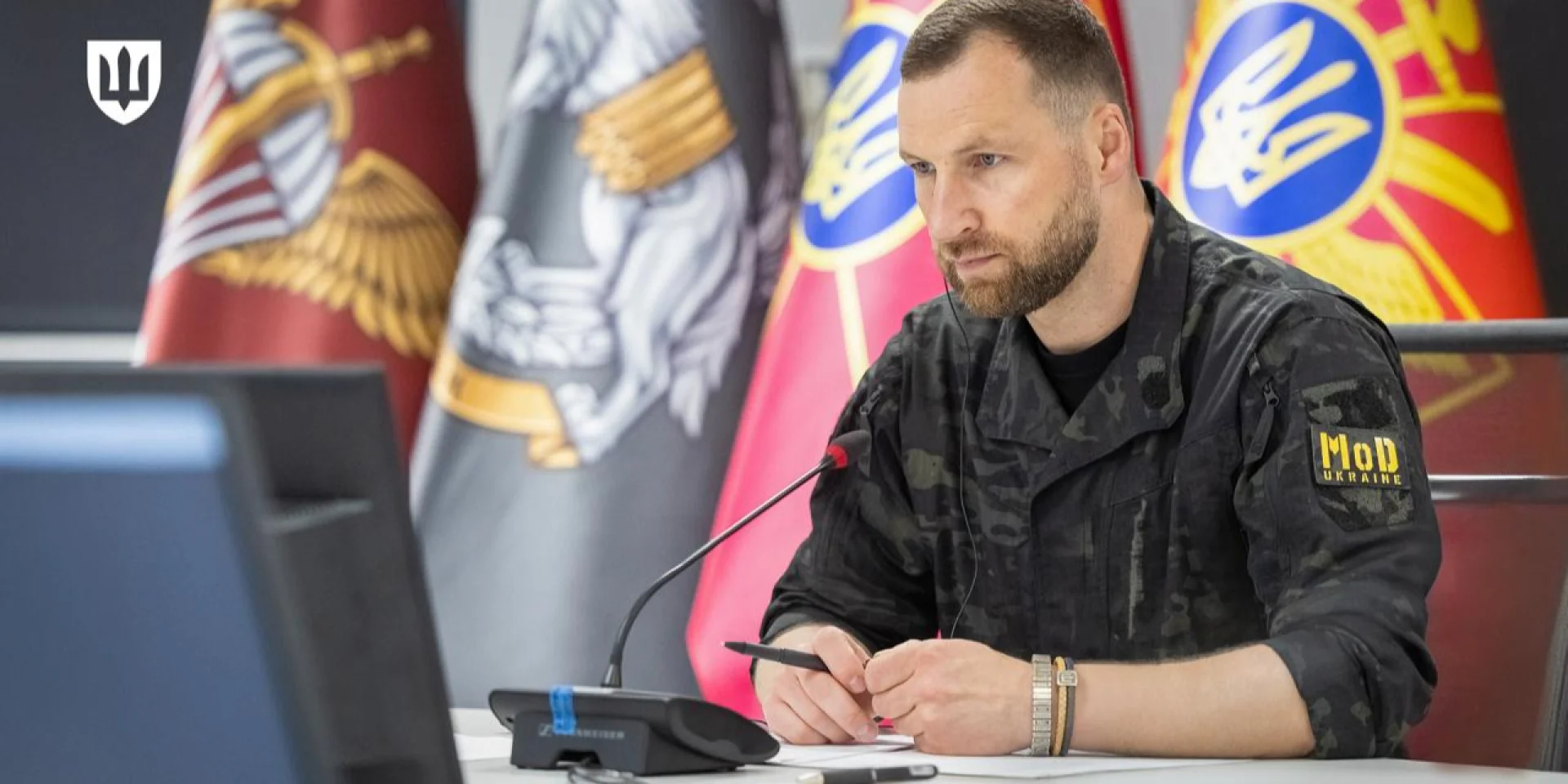
Speaking from the Verkhovna Rada rostrum, Yevhen Khmara said:
"I stand before you as a civilian, having been discharged pursuant to Article 26 of the Law of Ukraine ‘On Military Duty and Military Service,’ under the provision on discharge from military service in connection with organisational measures concerning senior officers."
"We adopted this provision several years ago because Defence Intelligence of Ukraine (DIU), the Security Service of Ukraine (SSU) and the Foreign Intelligence Service (FIS) wanted to remove a large number of generals who did nothing and merely remained on the service rolls. The reorganisation provision was introduced at the time, and it has now been used in Khmara’s case," one MP told Censor.NET.
Interestingly, before the appointment, there was also debate over whether enough votes could be secured. Some MPs were hesitant amid protests in support of Mykhailo Fedorov.
That morning, amid searches of the office of Opposition Platform – For Life MP Vadym Stolar in a case concerning the collection of funds to post bail for former minister Herman Halushchenko, questions even arose as to whether the group would now withhold its votes.
"I think they will be frightened into voting for him. But even without them, there are more than enough votes," a senior MP said.
"In fact, Fedorov did Khmara a great favour with his statement, because Servant of the People MPs were deeply offended by the passage claiming that they were corrupt and received under-the-table payments in cash-filled envelopes. Even those who had been hesitant voted in favour today," another opposition MP added.
According to the voting records, 193 MPs from the presidential faction backed the new minister. By comparison, Fedorov was supported by 171 MPs six months ago.
Overall, all parliamentary factions supported the appointment.
Cadres decide everything, but who they are
The next question for Khmara is who he will work with at the ministry.
Over the past month, the Cabinet of Ministers has appointed three deputy ministers.
Serhii Boiev was brought back to the ministry from his temporary exile at the leaderless "Ukroboronprom." He handles international affairs and has worked in this area under four successive ministers. Allowing this area to fall apart as well in a leaderless ministry would have been the height of madness.
After a wait of almost six months, Liubov Halan was appointed to oversee social affairs. Previously, she headed the Pryncyp Human Rights Centre for Military Personnel.
The third appointee is Mykola Shvydkyi. There is no information about him in open sources, and even the Ministry of Defence website did not provide details of the deputy minister’s career. "He appears to be a serviceman and will handle liaison with the front," a source at the ministry said.
"However, Khmara does not yet seem to have realised that procurement is the undoing of every defence minister," he added.
And this is where it gets most interesting. The question is whether Fedorov’s deputies, who were responsible for this area, will remain under Khmara. These are First Deputy Minister Oleksii Vyskub and Mstyslav Banik. Fedorov brought both of them with him from the Ministry of Digital Transformation
There are differing assessments of their prospects. Initially, it was said that Khmara had a good working relationship with Fedorov and would retain Fedorov’s deputies.
Other sources, however, see things differently. "They did indeed have a decent working relationship, but that means nothing for the deputies’ prospects," one of them said.
Moreover, Fedorov’s team could face serious problems over the results of its work, particularly with regard to tactical and technical specifications for weapons and the allocation of funds.
Why weapons were not being procured
At the end of last week, Ihor Fedirko, head of the Council of Arms Manufacturers, said that the DPA was effectively not procuring the weapons required because the Ministry of Defence had not drawn up the necessary tactical and technical specifications (TTS) for the products.
It is worth explaining that before Fedorov arrived at the ministry, the General Staff determined the list of items to be procured. This left the DPA no room for manoeuvre other than deciding when to announce tenders.
With Fedorov’s arrival, this approach changed. Procurement decisions for drones began to take into account their strike performance and requests from brigades. This significantly changed the pattern of orders compared with the previous system, under which the General Staff simply placed a specific product on the list at its own discretion.
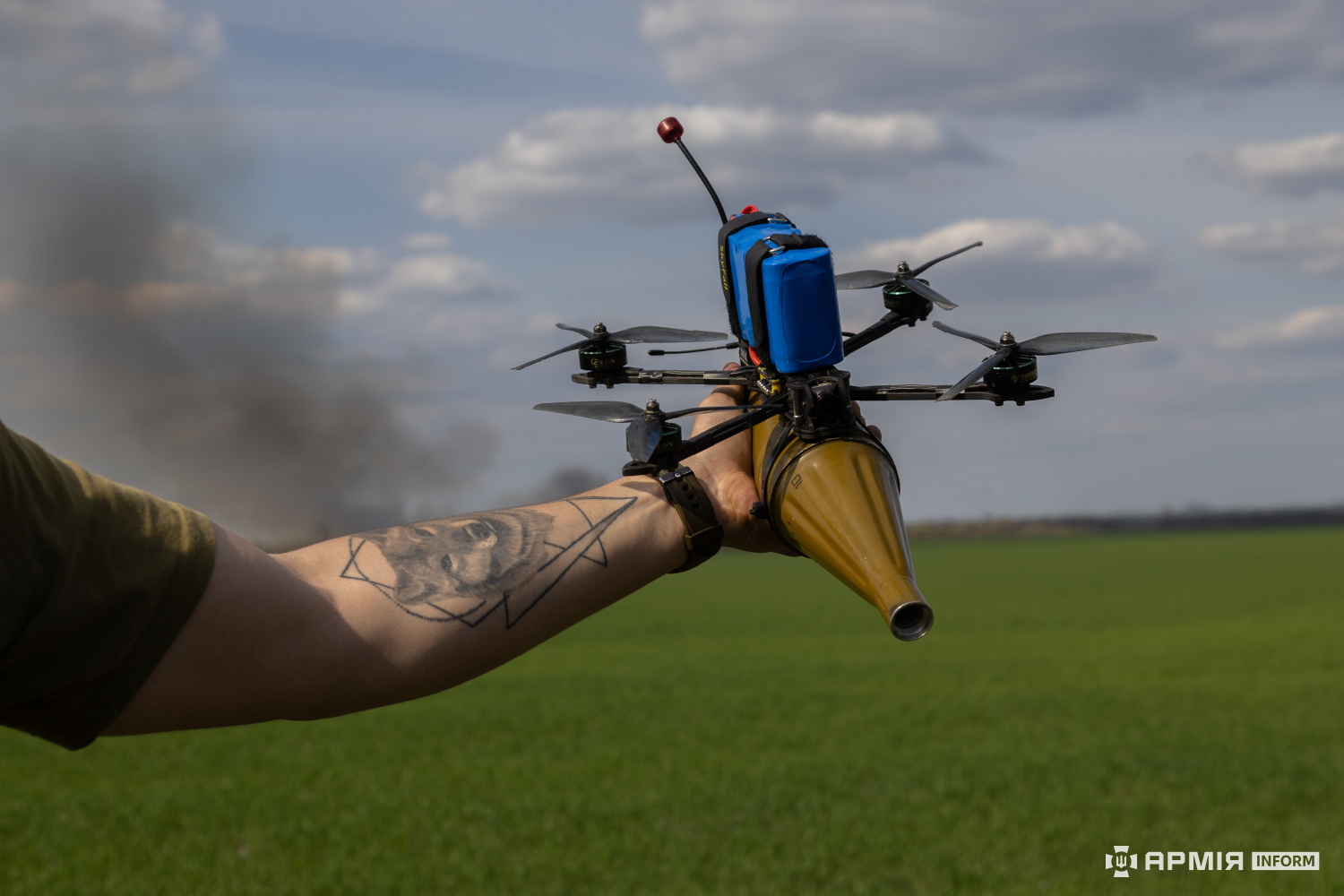
In addition to the minister’s innovations, the partners' rationale was also at play here, as they refused to fund drone contracts selected according to opaque principles. Not to mention how their costs were determined.
Therefore, whether the ministry wanted it or not, it had to implement the mechanism of TTS to improve the transparency of the bidding process – not in terms of publicity, but rather the explainability of the choice.
However, developing the TTS turned into a nearly six-month quest. This was because the Ministry of Defense and the General Staff spent all these months arguing rather than cooperating.
"At the end of February, the Ministry of Defence announced the launch of a process to establish competence centres in key technological areas. More than five months have passed since then, yet the number of TTS developed for the existing product range remains critically low.
"Without finalised TTS, the Defence Procurement Agency simply cannot announce tenders," Fedirko said.
He added that blaming the DPA for failing to conduct procurement procedures for which it had not received approved requirements was, at the very least, dishonest.
We will return to the DPA later, because it did have TTS for 155 mm ammunition. However, some manufacturers are now privately accusing Zhumadilov of favouring a particular company, as it will be the only one able to supply drones under the latest call for proposals.
For now, however, let us return to the competence centres.
"They were either arguing with each other or writing TTS tailored to particular manufacturers. It was only after they received a dressing-down from the parliamentary committee that they began doing anything. Then Fedirko spoke out," a Censor.NET source on the National Security Committee said.
In any event, on Saturday, 16 August, manufacturers and ministry officials held a meeting moderated by Maria Berlinska.
"According to the information presented at the meeting, the overwhelming majority of the TTS that the market had been awaiting for months were approved only yesterday evening and this morning and forwarded so that procurement could begin. Some contracts that had long been awaiting signature also suddenly began moving forward," Fedirko reported.
It is not known exactly how many TTS were forwarded. According to Censor.NET, at Saturday’s meeting, the DPA said that it had not yet received anything. TTS submitted included those for certain types of UAVs: multirotor, interceptor and reconnaissance drones, as well as some UAV munitions.
At the same time, contracts for these items are also at risk because of funding problems.
"I will not disclose specific figures or certain information received for security reasons. But the overall picture can and must be discussed. First and foremost, the funding situation is indeed difficult. A significant share of procurement depends on European funds, which do not arrive at a steady rate or according to the schedule required for contracts to be placed. Ukraine’s domestic resources are limited and do not cover all the needs of the Defence Forces," Fedirko wrote.
"We were shown a plan for further contract awards. The Ministry of Finance and other responsible authorities have been informed of the need for additional funding, and efforts to secure the necessary resources are ongoing. But while this plan remains only partially funded, risks persist for the end of this year and the beginning of next year," the head of the Council of Arms Manufacturers added.
Why are there funding problems? In fact, they arise every summer. Last year, Denys Shmyhal had to find an additional $6 billion for weapons while also covering military personnel salaries through a loan from the Europeans. The Europeans provided a loan once and said: never again.
But the Ukrainian authorities decided they could try again.
At the beginning of each year, all available funding is traditionally committed to weapons contracts. This year, Fedorov’s ministry likewise reallocated funds intended for salaries, fuel and equipment repairs. Those funds also went towards drone procurement.
It was hoped that the shortfall could be covered once funding was received under the Ukraine Facility. However, those funds are intended solely for weapons and are disbursed in instalments.
Moreover, the money cannot be used to purchase every type of weapon or buy from every manufacturer.
Partners also continue to demand improvements to procurement procedures. Under the NATO–Ukraine Strategic Defence Procurement Review, it was agreed that a closed tendering system modelled on Prozorro would be created. In addition, parameters are to be introduced for mandatory and optional expenditure items that affect pricing.
For now, however, procurement is failing, and officials are looking for someone to blame.
Goodbye, Zhumadilov
Against this backdrop, rumours that Arsen Zhumadilov would step down as director of the Defence Procurement Agency have finally been confirmed.
His early departure had been actively discussed since the beginning of the summer and was attributed to the DPA chief’s own decision and his constant disputes with senior Ministry of Defence of Ukraine (MoD of Ukraine) officials.

A resignation letter has already been drafted, and the tentative departure date is 1 September. In the meantime, Artem Romaniukov, head of the Ministry of Defence’s Digitalisation Department, will reportedly serve as acting director. A competition to select a new head should then be held by the agency’s supervisory board. However, the board itself is currently operating with only a partial complement: its members are Stanislav Haider and Taras Chmut as state representatives, and Lukasz Stolarski as an independent member.
The supervisory board should have two more independent members, but the ministry is now on its third minister without showing any urgency in appointing them.
Consequently, the upcoming leadership change will only weaken procurement processes, particularly given that Zhumadilov staffed the agency with his own people, who will leave with him.
Against this backdrop, and amid accusations that both the TTS and tenders were tailored to particular manufacturers, the minister and the ministry will have to find a way to bring the process back to normal.
"I genuinely do not envy Khmara for having taken this post," one MP said.
As for procurement, we will return to it after the head of the DPA presents his report at a conference to which Censor.NET was not invited.
Tetiana Nikolaienko, Censor.NET


