



When you announce that you will host Olympic Games in Ukraine, ask yourself whether you have stadium – "Opora" head Aivazovska on possible elections
A recent statement on elections by former Defense Minister Mykhailo Fedorov has once again fueled debate over whether they are possible at all. What kind, and when. Ukrainian law explicitly prohibits holding any elections under martial law.
I decided to discuss this with the person I consider the foremost expert on these issues, Olha Aivazovska, head of the Civil Network OPORA.
– What did you make of Mykhailo Fedorov’s statement?
– All the criticisms voiced in the first half of the video address are, in my view, well-founded. But the solution proposed as a way out of this political crisis, namely, elections during the war, is clearly a losing option for all sides. This is not merely a technical and organizational issue; it is a security issue.
– Did you understand which elections Fedorov was referring to – parliamentary or presidential?
– In this country, it always means presidential elections.
– Who would have to do what to launch the electoral process now?
– To begin with, we would have to abandon the Constitution. In effect, the Constitutional Court would have to declare absolutely anything constitutional. And that would be a failed state. Parliamentary elections during the war are entirely out of the question. The Constitution contains an explicit provision prohibiting the termination of the Verkhovna Rada’s powers until the legal regime of martial law ends and the relevant elections are held. The current legal regime of martial law is crucial to the Defence Forces and the mobilization of resources and personnel. This is why we have derogated from a number of human rights obligations and notified the Council of Europe and other international organizations accordingly. Under conditions of national defence, certain rights and freedoms have to be restricted. The obligation of state institutions and branches of government to continue functioning is also part of this framework. Parliament is protected by this constitutional provision so that, God forbid, some Commander-in-Chief does not decide to become the sole authority within a system comprising different branches of government and dissolve parliament because, for example, he lacks a majority. But the Constitution says no: when the country is in a state of defence and martial law is in force, parliament is obliged to perform its functions. This is not parliament’s right; it is its duty.
There is no such explicit provision governing presidential elections. But the Constitution guarantees us a range of rights and freedoms to ensure that elections are free and fair. What kind of elections can be held without freedom of speech or freedom of movement? When a candidate can be mobilized at any moment and removed from the election campaign, or when a drone can strike the apartment of the head of a non-governmental organization that will monitor the elections and critically assess the process. And so on and so forth. Can the state currently fulfill the entire range of its obligations? No. This applies to both parliamentary and presidential elections.
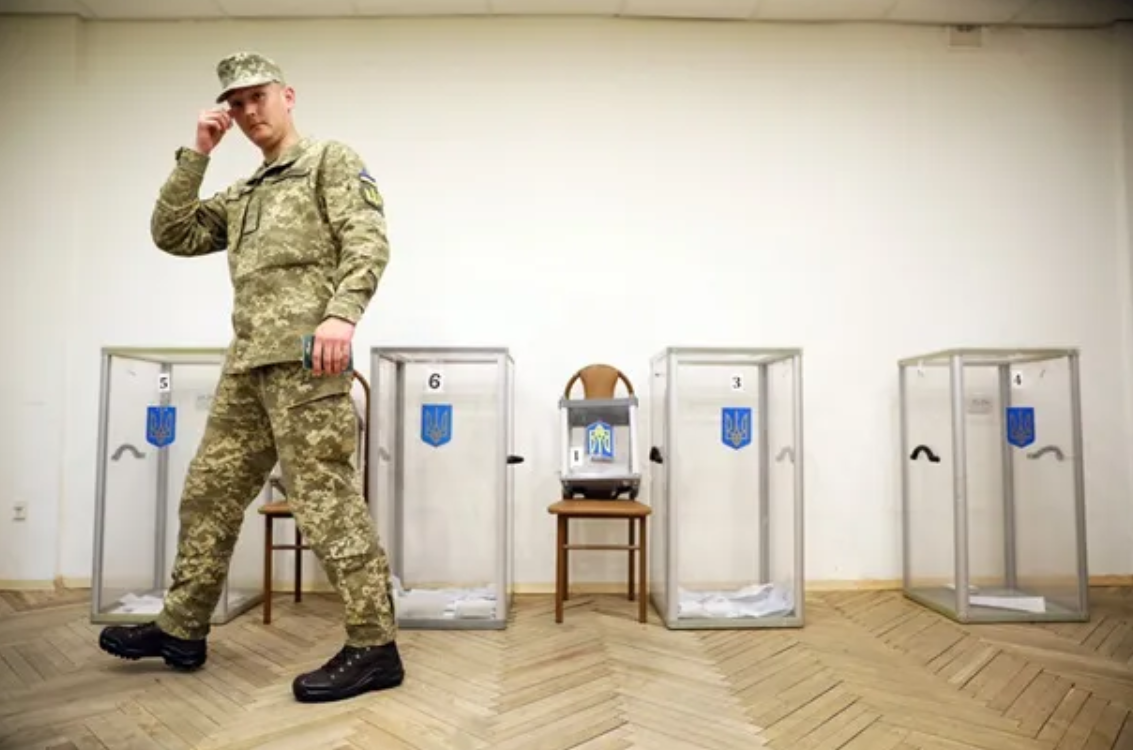
The process of preparing the infrastructure for these elections must begin. This ranges from legislation to specially equipped and protected polling stations where people in certain territories can exercise their right to vote. This is far more difficult than it would be, say, in Lviv or Ivano-Frankivsk. The process requires an enormous amount of time and resources, yet the state is doing nothing about it. When you announce that you will host the Olympic Games in Ukraine, ask yourself whether you have a stadium.
– Name a few reasons why we cannot hold elections now.
– There are many, but I will name the fundamental ones. We have no legislation governing the first postwar elections or elections during a transition. Even the designation given to the elections determines who calls them and how. Regular presidential, parliamentary, and local elections are called by different bodies under different procedures. Early elections are called differently. Right now, they would be neither regular nor early elections. We have already missed the regular elections. They should have been held on the last Sunday of October in the fifth year of the Verkhovna Rada of Ukraine’s term, on the last Sunday of March in the fifth year of the president’s term, and on the last Sunday of October in the fifth year of the term of local self-government bodies. And these would not be early elections either. So, first of all, we need to adopt a law defining what kind of elections can be held now: regular, early, transition, or transitional elections. This law must determine who calls them and in which territories they will not be held. Even in Kherson, elections could not be held under certain conditions. If FPV drones continue flying around and chasing the drivers of small vans selling vegetables, would a particular polling station not become a target for an FPV drone? Of course it would. This applies even if we are talking about the postwar period. Imagine a mined territory with no infrastructure, no people, no schools, no healthcare and no police... Even if a particular territorial community has a hundred voters, we cannot hold elections there. There is a draft law that is 65% complete...
– What draft law is this?
– It is being developed by an official working group established within parliament at the end of December 2025. Our team and I personally took part in its work. The group worked actively for four months and then ended the active phase of its work. Many issues still need to be regulated. For example, how will service members operating under combat orders take part in the elections? They cannot go to an ordinary polling station in the nearest village or settlement. Clearly, a special polling station must be established for them. What should govern the procedure for establishing it? The law. We have one million service members. They are all voters, and their right to vote must be guaranteed. It must be guaranteed in such a way that the Ministry of Defence cannot, for example, register half a million service members at special polling stations where they will vote as their commander tells them. Someone could use this as a tool of administrative and coercive leverage capable of influencing the final election result. We must therefore strike a balance between security and risk, between physical security and the risk to the exercise of the right itself.
The same applies to the overseas electoral district. In Poland, for example, where one million of our citizens currently reside, we have only four polling stations. Is that enough to ensure voters can exercise their rights? No. Do these citizens have a constitutional right to participate in elections and vote? Yes. So how has the state developed the infrastructure needed to prepare for this process? Has it negotiated with the host country? Concluded a bilateral agreement? Ensured that additional polling stations are opened? Extended the voting period? No, none of this has happened. Twenty percent of our population is now abroad. These are not people who left over the course of a hundred years in search of work or a better life. A large proportion of them left because of the crime of aggression. No citizen should be deprived of the right to vote because, through no fault of their own, they became a victim of aggression.
Next is the State Register of Voters. Twenty-nine percent of citizens inside the country do not live at their registered address. That is one-third. Add to that the 20% of citizens who are abroad. In other words, half of all citizens eligible to vote do not live at their registered address. Imagine the scale of the discrepancies in the State Register’s data.
– Plus there are people registered in the occupied territories. I, for example, am registered in occupied Prymorsk.
– As someone registered in an occupied territory, you can change your voting address today through the voter’s online account at drv.gov.ua. That is the State Register of Voters. For this register to function, we must not expect the state to locate us on its own. We need to conduct a public information and voter mobilization campaign and invite voters to update their details in the register. Those who fled the war or swam across the Tysa and do not plan to return to Ukraine or maintain contact with the state have the right to do so. I do not think they want to participate in Ukraine’s political life at all. And, frankly, that is probably better for the state. If a citizen wants to sever ties with the state, that is their right, or at least an option they have exercised, sometimes unlawfully. But citizens who want to maintain their connection with the state and retain political influence over it must know that their rights are protected.
We conducted a survey in May. According to its results, 77% of our citizens abroad want to participate in elections. The figure among those in Ukraine is also over 70%. Fifty-four percent are willing to change their voting address. The number of those willing to do so will increase by another 20% if the state reaches out to them.
– What will happen if the State Register of Voters is not updated?
– Ninety percent of voters who have moved abroad will remain included in voter lists in Ukraine. This means that turnout will be very low. And that, of course, will not enhance the elections’ legitimacy. Could someone exploit this? Suppose half a village has left, but those people remain on the local voter lists. I am not claiming this will happen, but it could plausibly encourage some unscrupulous actors to exploit the situation.
We also face enormous problems involving issues that cannot be resolved simply through a parliamentary decision. They require specialized skills, knowledge, and the institutional capacity to respond appropriately. I am referring, for example, to cryptocurrency, which is permitted in Ukraine. Take Moldova as an example. Cryptocurrency is prohibited there, but Russia funneled election funds through crypto wallets. Incidentally, it did so through Ukraine and Romania. The Russians used this money to buy votes in Moldova and cashed out funds to finance the election campaign.
The second issue is cognitive warfare. This problem involves social media, algorithms, artificial intelligence, campaigning and abuses by actors with vast resources related to this toolkit. These are primarily China, Russia and the United States. Could any Ukrainian actors receive backing from third parties? They could. Does this influence citizens’ opinions? It does. Cognitive warfare is waged primarily for people’s emotions. Does a particular combination of videos, photographs and information provoke negativity, hate or resistance in you? Yes. Election campaigning used to be simple and paper-based: billboards, handouts, campaign tents and television. Now everything is becoming far more complex. Take Romania as an example. More than EUR 300,000 was pumped into funding microbloggers who propelled a man nobody knew into the top ten global hashtags online! They nearly made him president. The state realized it had been hacked when it was already too late to do anything. It had to annul the election. The man who was nearly made president through manipulation on social media later said he would no longer be involved in politics. He was a one-off actor. Is this a problem for Ukraine’s postwar elections? It is a major problem. We are utterly exhausted, and people with PTSD, trauma and sleep disorders can be far more susceptible to manipulation. We cannot regulate this at present.
There is also the issue of election-related political violence, which is particularly relevant in countries with highly polarized societies. Cognitive warfare fuels this phenomenon.
– What is political violence?
– When someone shot at Donald Trump, for example, that was a result of polarization. It does not necessarily have to be ordered or carried out by an intelligence service. There are always people in psychological states that could lead them to do something like this. During a war, it is very easy to manipulate people into committing a crime that, in their view, may serve a just cause. We have examples of this: Russian intelligence services identify a Ukrainian in a severe psychological state, cultivate and direct them, and then that person takes certain actions believing they are acting in the interests of the Security Service of Ukraine and that they are a hero. Money is not necessarily involved.
The purpose of political violence may be to eliminate a political actor or, for example, to whip people up in order to deepen divisions within society. This will lead to chaos. It is therefore clear to us that this field requires substantial intellectual investment.
– What does the draft law you are working on say about the possibility of voting in the occupied territories?
– We have an established practice here, and nothing new can happen. Ukraine has not held elections in the temporarily occupied territories since 2014 because this is an environment beyond its control. Even hypothetical electronic voting or some semi-clandestine format would endanger our citizens there. They could be identified very easily through traffic analysis and similar methods.
– Could elections be held through Diia, for example? Or by some other electronic means?
– I am very surprised by such ideas. They are simply illogical, especially against the backdrop of Mykhailo Fedorov’s dismissal. I know that online voting and voting through Diia were discussed previously, when he headed the Ministry of Digital Transformation. He was certainly involved in those discussions. But that process was stopped. There is now an understanding that Diia falls entirely under the government’s jurisdiction, while the government is completely loyal to the president. This means that anyone voting through Diia must understand that their personal data and how they voted will be known to the state. The greatest problem with electronic voting is, in fact, the secrecy of the ballot.
There could even be a form of psychological pressure. Suppose you are a civil servant working at a government agency and you want to vote against the incumbent authorities. You may simply fear repercussions for your professional career. With that in mind, you may decide not to vote for anyone else.
Estonia is the only country in the world that has conducted electronic voting in national elections for the past 20 years. It therefore has experience, established practices and a high level of public trust in the state. Citizens have no concerns about the abuse of administrative resources, corruption or election fraud. They do not even consider the possibility that the state might know how they voted. Yet the state most likely does know, because voters use their ID and vote online. In Estonia, you can vote during what is known as early voting. You can then return and recast your vote. Suppose you learn about a corruption scandal involving your candidate and change your mind—you vote again. This means that your vote and your ID card are in the same basket. But as an Estonian citizen, you trust your state so much that you do not even understand why it would want to abuse that knowledge. Our reality is entirely different.
Diia should be used—but not for electronic voting. It should be used for voter education and mobilization, changing a voting address, and temporarily changing the place of voting. Voting itself will remain analog. And I have mentioned only the abuse of administrative resources and the secrecy of the ballot. What about Russian interference? What about discrediting the process and its results? If we weigh the risks against convenience, the risks are far greater than the convenience gained by using Diia. Because such a mistake, or the disruption or discrediting of the elections, would undermine the legitimacy of the government. And the end of the state. How can someone elected through elections whose results society does not trust issue orders to the Armed Forces of Ukraine? How can such a person negotiate with foreign partners? How can that person be trusted? I am referring to the institution of the presidency. The same can be said of parliament. Therefore, legitimacy is security.
– Fedorov cannot possibly be unaware of all the arguments you have presented. So what was that statement of his about?
– I think Mykhailo Fedorov has stepped into a political role. When you have to explain to society that we have corruption problems, that institutions like these need to be built, that supervisory boards need to be introduced, that selection commissions with foreign members are needed, and why this does not diminish sovereignty... You have to explain that budgets are needed for this, that legislation must be amended, that everyone must be honest... Explaining all of this is difficult. But saying that corruption can be defeated through elections is easy.
Fedorov obviously understands this, but this is a stage of the crisis in which there is no other way out except to raise the stakes. If you propose visions, strategies, or programs, society finds them difficult to grasp. I am not talking about experts or the engaged members of society who watch the news and read analytical articles every day. I am talking about ordinary voters. They understand that something is wrong and that there is a conflict, while elections offer a way out of that conflict. It is very simple and easy to understand. It is an element of populism.
But the consequences may vary. The calculation may be that someone will begin genuinely preparing the conditions necessary to hold elections. Both institutionally and in terms of infrastructure, by adopting a law, developing mechanisms, and establishing institutions that will implement them and organize the process. This is years of work. But the statement could also have a different consequence. Ukraine is currently making progress on European integration, albeit slowly. As part of that integration, we have a great deal to accomplish, including in the area of elections, and we are making progress, however slowly. There are deadlines in both 2026 and 2028, all of which concern future elections. Another consequence of Fedorov’s statement could be the complete suspension of that process. Fedorov also has opponents. Unfortunately, his statement is therefore more likely to deepen the systemic political crisis and raise the stakes further than to spur action. This is a problem.
– But you are developing a model for postwar elections. Tell us about it.
– We see parliamentary elections as an essential component of the transition of power from wartime to peacetime. In a parliamentary-presidential system of government, parliament is the key governing body. Parliament is responsible for the coalition agreement. We have had a single-party majority only once in its history, and I do not think we will see such a configuration of forces in the Verkhovna Rada again. The coalition agreement therefore forms the basis for shaping government policy and appointing a government representing different political groups, as was the case before 2019. Parliament is therefore crucial. Outside the legal regime of martial law, the president does not, in fact, have that many lawful constitutional powers of governance. The transition from war to peace must therefore take place primarily through a renewal of the legislative branch, which will establish the legislative framework for the relevant processes. The restoration of democracy, which Fedorov refers to in his statement, must proceed according to a certain logic and in a clear sequence. The first elections should be parliamentary, followed by presidential elections and then local elections.
Iryna Romaliiska for Censor.NET


