



"Downed drone bore words ’Armani is devil’": Hero of Ukraine, call sign Armani, on hunting enemy UAVs with net launchers
He wanted the very thing that nearly every Ukrainian man fears today — ending up in the infantry. At 19, a year before the full-scale war, he signed a military service contract. He served in the infantry during the first rotation of the full-scale invasion.
It was there, in one of the most intense areas of fighting in the Serebrianskyi Forest, that he realised the importance of aerial cover and that reconnaissance and the destruction of enemy drones were equally vital. He could not stand by and watch as the enemy carried out one munition drop after another on the positions of his fellow infantrymen. He brought down his first enemy drone by attaching a stick suspended from a rope to a Mavic. Today, his tally stands at 500 enemy UAVs brought down and, as a result, hundreds of Ukrainian infantrymen’s lives saved.
On Independence Day, 24-year-old UAV operator Rostyslav Vardanian, call sign Armani, chief sergeant of the Silver Trio unit of the Pomsta Brigade, received the highest state honour — the Gold Star Order of the Hero of Ukraine.
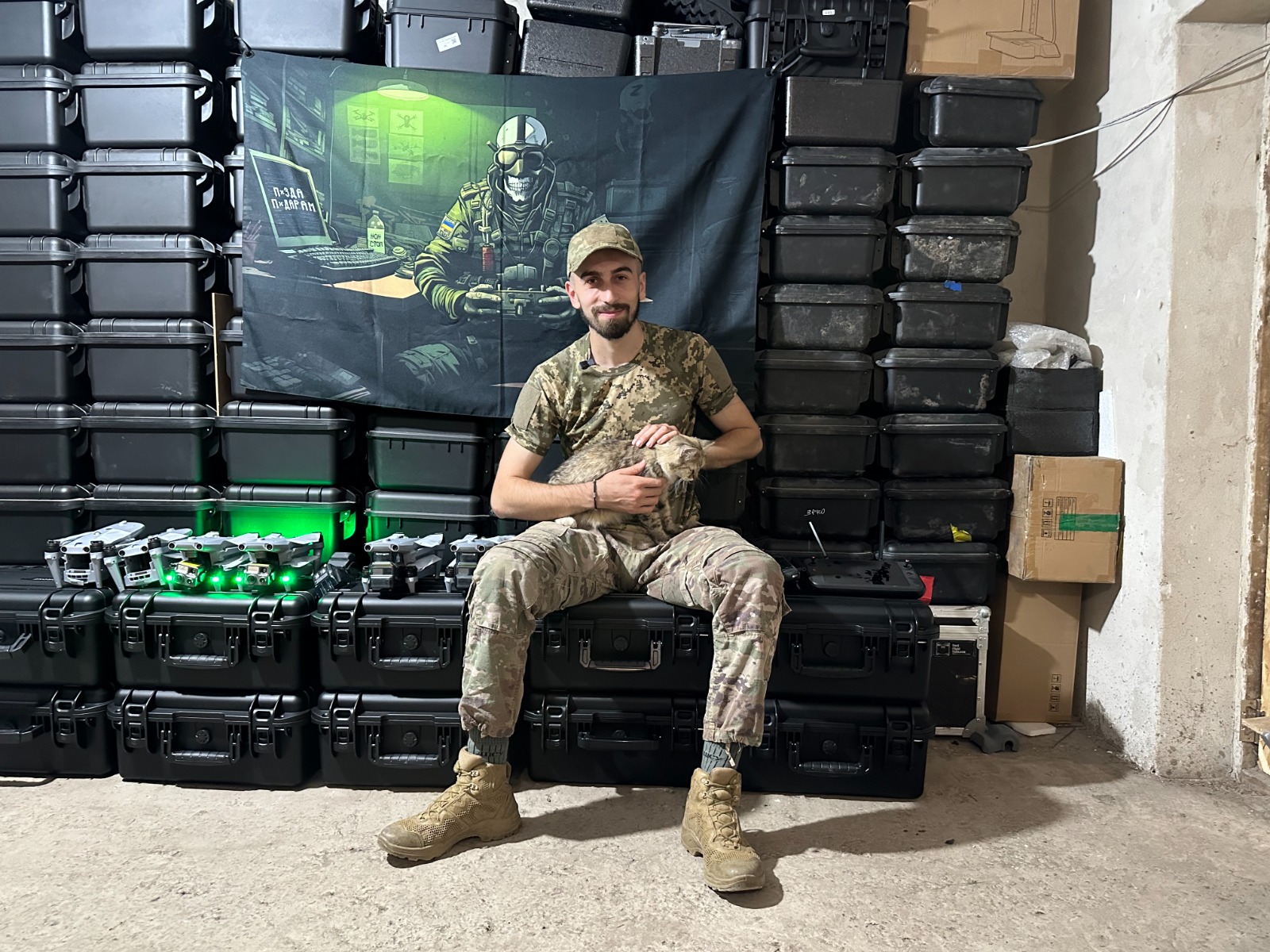
— Until now, you have tried to avoid giving interviews, and when you did agree, you asked for your face not to be shown. Were you afraid?
— Not exactly. I generally do not like publicity and do not consider myself a hero. I believe the real heroes are the infantry. I do not like fanfare or excessive attention; I am not used to it. And yes, to be completely honest, I would not want to get "taken out" simply because the Russians now know what I look like and are hunting me.
— You can now be photographed and filmed. What has changed?
— I thought it would look strange if, in the photograph of the President presenting me with the Order of the Gold Star of the Hero of Ukraine, there were a bunny mask instead of my face (laughs — author).
Seriously, though, perhaps I have matured a little and now take a more philosophical view of it. If you have been at war for a long time and understand the enemy’s tactics, the question is no longer whether they know you by sight. The question is whether you know how the enemy operates, so that you can react in time, stay alive longer, and bring down even more of their drones.
— You now expertly bring down enemy drones using net launchers. But you did not have them from the outset. At first, you had only an improvised stick and rope. Do you remember when you decided to use them and why?
— I do. It was back in 2023, in the Kurdiumivka sector. Enemy drones were regularly dropping munitions on our positions, while I had only just begun to become reasonably proficient at flying drones and was still learning the craft.
When our crew flew missions, we could see how the enemy was "terrorising" the infantry. It seemed as though the guys were defenceless. They had this hole they could not get out of because they were under constant attack.
My comrades and I decided to try to do something to help. Our first attempts involved ramming one drone with another. The aim was to catch the enemy drone’s propeller with our drone’s front arms so that it would stop and fall.
Later, I continued improvising: I would rig up a piece of thread or a small stick, and so on. We mostly worked with whatever materials we had at hand.
— How did you come to use net launchers?
— The enemy regularly used net launchers in the same sector. The operating principle is no secret; it is fairly obvious, and both our manufacturers and theirs can make a net launcher.
After I saw the enemy using them, I began searching the domestic market, but initially found very little. The key consideration for me was airtime. It is one thing when you know where a drone is hovering: you fly up to it, engage it, and it goes down. It is another thing to find it and reach it. That is difficult and takes time. Accordingly, you need a higher-capacity battery and a lighter net. I started with Mavics. A Mavic can carry 600–700 grams, while the first Ukrainian-made net-launcher systems weighed around 350 grams. Plus, as I have said, we needed extra batteries to have enough time to search for the enemy drone. That was why I initially could not find suitable net-launcher systems on our market. Later, when we were already in the Dvorichna sector in Kharkiv region, I saw that the same Mavics were also being used to drop munitions, so I began monitoring the market more closely. I found one fairly interesting manufacturer. He made the system itself more functional, light enough for a drone to carry.
But I was still not sure it would work effectively. Second, I was constantly at my position and had to ask someone to order it and somehow get it delivered there. So for a while, I continued tying a thread to the drone and working that way. Sometimes successfully, sometimes not so much.
— Why? Can you explain what kind of setup it was?
— A thread is attached to the drone, with a couple of weights fastened to it so that it can snag a propeller. It is not very effective because, while making your way to the target, you cannot manoeuvre much with the thread attached.
That was why I looked for other methods. For example, my comrades and I tried to make a release mechanism by attaching weights to it. Once you are above the target, you press the light button and the thread is released directly into the propeller. But that is also fairly impractical. It is more like a toy, whereas I was interested in a real solution capable of bringing down several drones a day and helping to address a range of issues when we support the infantry. The infantry needs to reach a designated point, establish a position, and dig in. That takes an enormous amount of resources, time, and nerves. An enemy drone can destroy that position with munition drops in a single day. So I eventually turned to net launchers. That was when we were redeployed to the Serebrianskyi Forest.
My primary task there was reconnaissance. I detected the enemy on the approaches. But we faced the same problem, so to speak. Whenever the infantry moved in, everyone would call me. They would say, attach a thread or do something else. It was an extremely difficult move into position. There were constant munition drops, and I really felt for the infantry.
That was when I began consistently bringing down enemy bomber drones with a net launcher. It was no longer like before: maybe I would get lucky, maybe not; maybe I would bring it down, maybe not. Instead, I would fly out to a sector where an enemy Mavic was harassing our position, knowing that I had the skills to bring it down. And the system itself was a tremendous help.
— When your drone is flying with a net launcher, can the enemy see it?
— Of course. It is more visible because the net itself is dangling underneath. But in that case, the enemy drone has to break off its reconnaissance mission and monitor the sky. Reconnaissance is the primary task for both them and us, after all. They scan the tree lines and our positions.
Finding me also takes quite an effort. Of course, I need to use the right tactics as well. You cannot simply bring down enemy drones at random. Everything has to be carefully planned and made as secure as possible.
Now, as we can see, they are very keen to find us. So we are working out how to avoid leading the enemy back to our dugout.
— Do you mean that an enemy drone you failed to bring down could follow you?
— Our crew is exempt from reconnaissance duties; we work with net launchers and protect the infantry. We know, for example, that the infantry is being targeted by FPV drones and artillery. Artillery has its own "eyes", and they need to be brought down.
I now have enough experience to understand where they may be, at what altitudes and so on, and how to locate them. We therefore bring down the spotter drone, giving our infantry a little time to relocate and take other necessary measures.
The next drone that arrives then has a harder time finding the infantry. Once you locate the enemy, you fix their position by reference to a particular area and terrain features.
The next drone then focuses on the same area. But if your drone is brought down, you can no longer be certain that the enemy will remain in the same place.
The same applies to enemy bomber drones. They try to strike accurately. They fly in, hover above our infantry and attempt to drop a VOG grenade or some kind of improvised explosive device. We can prevent that because, as I have said, we are skilled enough to bring them down.
— I saw in a video that a drone caught in the net falls. Can the enemy operator lift it back up with the net attached and fly it home?
— That is quite difficult to do. The operators are positioned four or five kilometres from the line of contact, where the drone is brought down. To bring it back – which might only be possible with an FPV drone – they would need a very good connection and clear radio line of sight. They almost never manage to recover them.
If a drone falls somewhere near them, they can retrieve it, of course, but they still have to go out into the field and find it. That is not always a good idea.
— If an FPV drone carrying a munition is caught in the net, will it explode as it falls?
— Some do explode. But they explode in the field rather than on the infantry. An FPV drone is a more difficult target, however. If it uses a radio link, it is faster than my system.
— What if it is fibre-optic?
— There are nuances there as well. Sometimes it flies slowly because the fibre-optic cable may break, but it also flies low. And sometimes differences in elevation prevent me from descending that low.
Elevation changes, radio line of sight – everything has an impact.
— And what happens to your drone? Can it return after neutralising an enemy drone?
— Of course, our drones return. For example, I have been at my position for a second week now, and during that time the enemy has lost vastly more drones than we have.
— Because of your work?
— Yes, because of our crew’s work. You have to understand that there is no single hero in a crew. The entire crew is the hero.
— How much does one drone cost? Do you keep track of the losses suffered by your crew and by the enemy?
— A new drone costs 200,000. So work out the total when fifty of them have been lost.
The most important thing for us is to remove the enemy’s "eyes" from the sector where our infantry is operating. When troops move into a position, they need cover. Once they are holding the position, the enemy tries to "soften it up" with FPV drones and munition drops before launching an assault.
That is when we take off and bring down their drones. In most cases, once we have downed two or three drones, the constant harassment of the position stops, making it easier for our infantry to continue fighting.
Of course, I would say the priority is to destroy the enemy position from which the drone is launched. If there are any incoming strikes, they will at least be forced to remain in their hole. If we detect the position, we pass on the data so that it can be engaged. But some time will pass, and they will change positions. It may take half a day or a day – I do not know; every case is different. I will then no longer know the exact location of the person directing the fire. Accordingly, the simplest option is to bring down the drone.
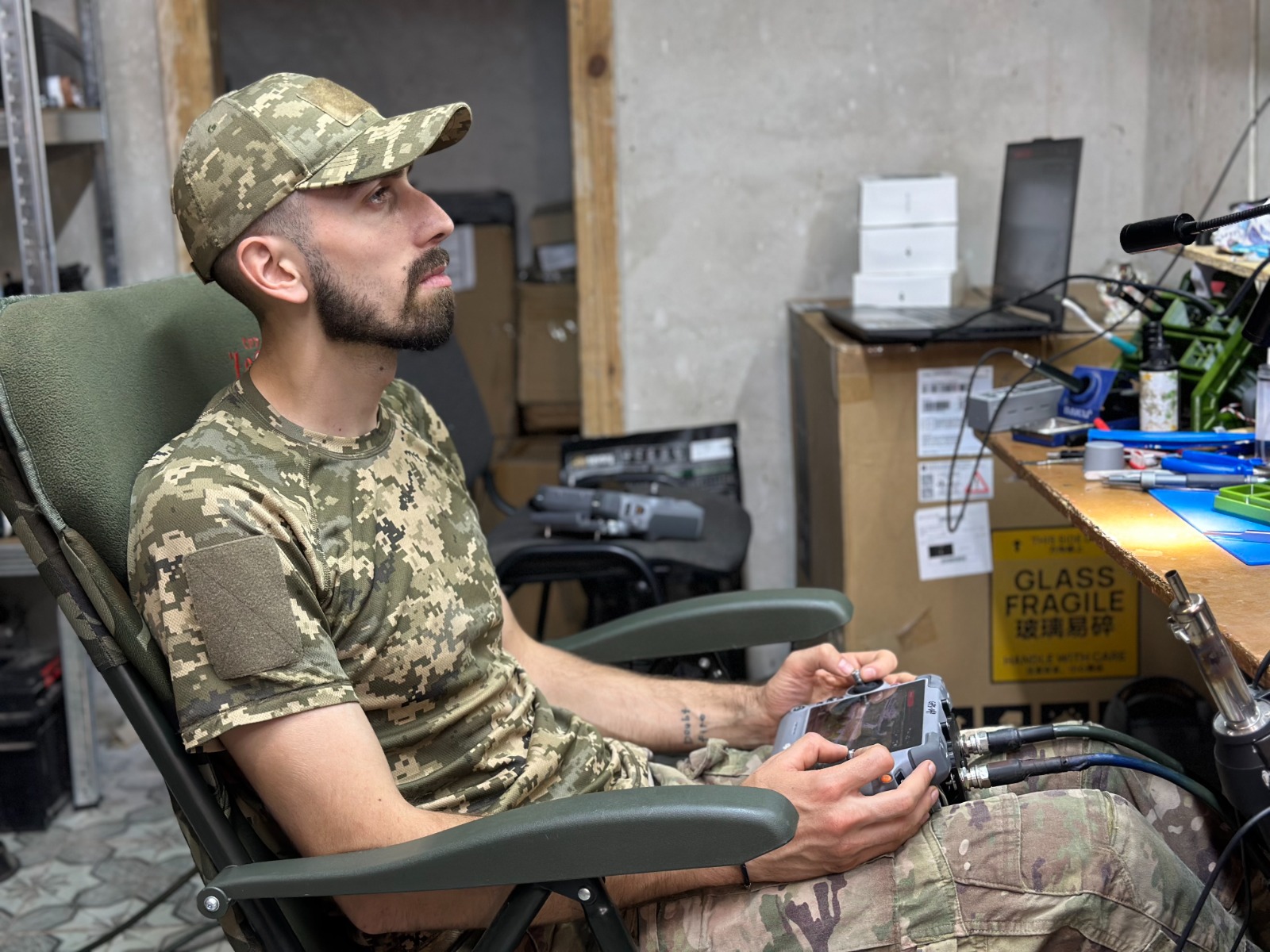
— Is it difficult to distinguish friendly drones from enemy ones during intense fighting?
— We try to mark our drones properly. My crew has to know whether a particular drone is ours or the enemy’s. Clear coordination between neighbouring units and our crews is essential.
I personally try to keep track of which markings everyone uses, who is conducting reconnaissance where, and so on.
— I imagine that is quite difficult. Fatigue inevitably sets in, so how do you cope?
— At first, I thought there was no fatigue, but it does exist (smiles — author). You are constantly concentrating because the situation keeps changing and you have to remain focused.
Of course, I have comrades at the position who help me. It is a team effort, not solely my work. During the summer, we average 12–16 hours of active flight time.
— Have infantrymen ever told you that your work specifically saved their lives? Or do they simply not know it was your work?
— I remember one occasion. I was heading to my position through an infantry position, and we got talking. Otherwise, they usually just see that someone out there is bringing down a drone.
Sometimes I remain on the radio net with the infantry so that I understand what is happening in a particular sector. When we bring down enemy drones, they hear or see it. It is quite gratifying to hear words of thanks from the infantry.
By the way, I have just remembered a story about one of my comrades. It happened in the Serebrianskyi Forest. I came off the position, and he took over from me. He had only just begun his service and had less experience, but he saved a soldier. He brought down a drone carrying a munition above an infantryman who was wounded at the time. It was already the second drone. He reacted quickly, replaced the net, and handled the situation very well.
Our crew has brought down more than 700 drones in total.
— I read that you once brought down ten drones in a single day. Was that an exceptional day, or is such a number routine?
— That happens often.
— Having worked with net launchers for some time, can you say whether they are effective? Is this worth scaling up?
— They are effective if the crew works systematically. You need to bring down drones repeatedly. Bringing down one or two drones in an hour is a good result, but it will not make much difference in that sector of the line of contact. That is how I see it. Accordingly, we are now trying, so to speak, to increase the number of crews so that we can stop them on a mass scale.
Our objective is not to bring down a drone but to save a life, right? If a drone is brought down but no life is saved, it means we are not doing enough. We need to work harder. We need to, well, think harder about how to make that happen.
— I have been told that you are reluctant to take leave because you try to remain useful to the infantry, whom we have mentioned so often today, and therefore spend most of your time in the combat zone. But you have said yourself that fatigue is real. What keeps you at the front?
— I feel something akin to guilt towards the infantry. It is an inner feeling that is difficult to explain.
I do not know what to do on leave while my comrades, who have become like family to me, are here at the front. Besides, we are living through a war and cannot allow the enemy to advance any farther, so I do what I can here.
Now, for example, we need to spend more time training new soldiers and motivating them.
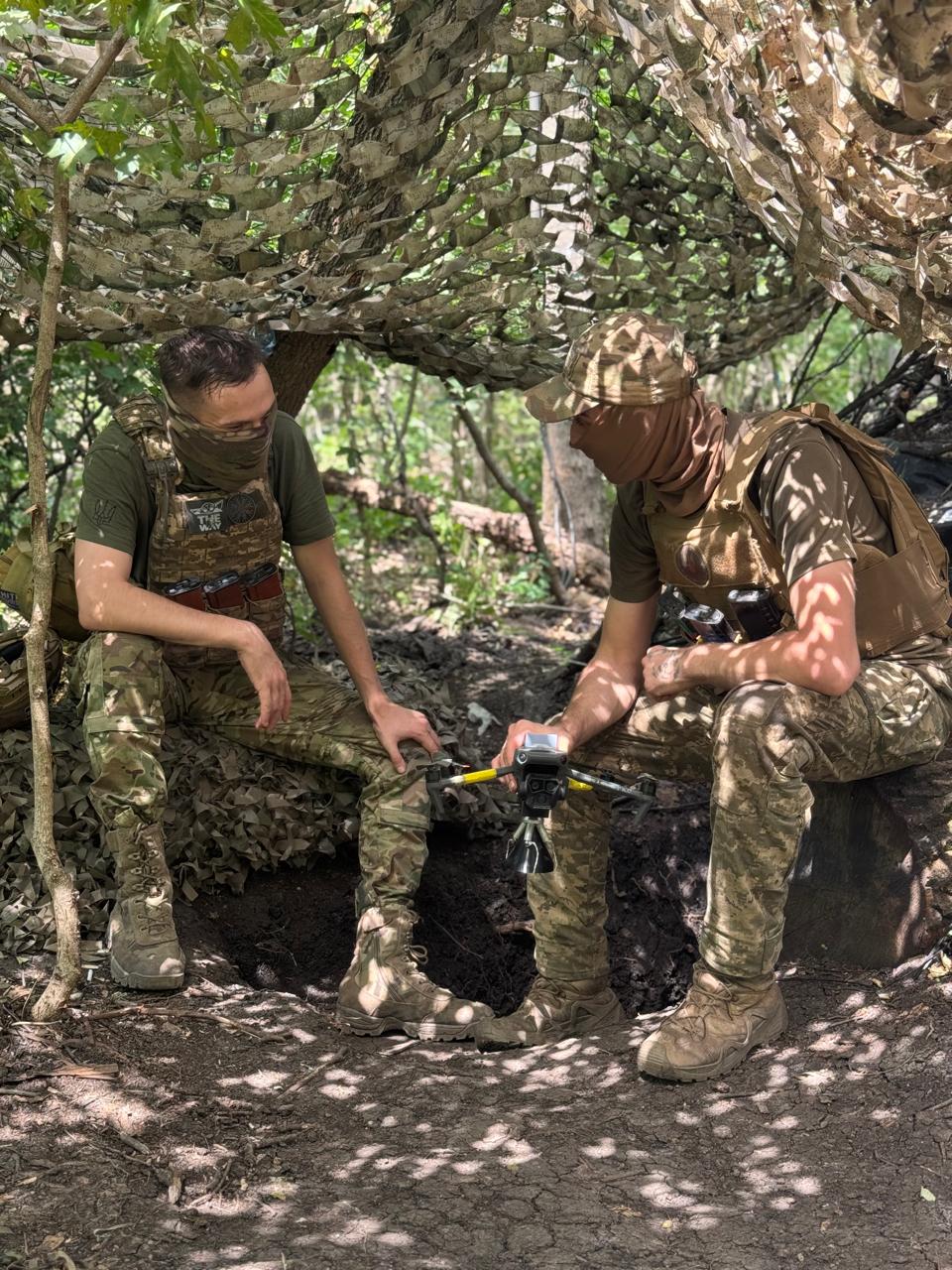
— Are you succeeding in training and motivating them?
— We can train anyone who has the desire and genuine enthusiasm. But if someone is doing something solely because their commander told them to, probably not. Internal motivation is essential — the desire to accomplish something or prevent something from happening. However, people need time to adapt, understand where they are and what is happening around them, and learn to trust comrades with more experience. Drones are the last thing on the minds of newly mobilised soldiers when they first join us.
What do civilians generally think the front is like? That it is all chaos, death and so on. They need help understanding that this is not the case. Once a soldier feels more at ease, they can begin training.
— In frontline areas, Russian drones actively hunt down civilians and simply kill them. Do you think it would be possible to create groups of law enforcement officers or volunteers, for example, similar to Volunteer Formations of Territorial Communities, to bring down drones using net launchers?
— Drones are quite difficult to detect unless they are directly overhead, let us be honest. Detectors essentially do not pick up fibre-optic FPV drones. Their video feeds cannot be intercepted. They fly at low altitude, making them difficult to locate. I doubt this could be done.
— So people have no way to protect themselves from this kind of safari?
— How can an individual combat this? I do not even know what to tell you. Perhaps more settlements could be covered with anti-drone netting.
Pump-action shotguns? Issuing one to every resident is unrealistic.
Actually, you know what? There are also handheld net launchers, which soldiers use at the front. Infantrymen call them the "last hope".
As soon as an FPV drone comes at you, you use the launcher, the net reaches it and the drone falls. It has a fairly decent range, and the net spreads quite wide. You just need to handle it skilfully. I have never held one myself, so I do not know, but the idea is quite interesting and it has received a great deal of positive feedback. It does cost a considerable amount of money, but a life is worth more.
— How much are we talking about?
— It costs around UAH 10,000, but if it were made more affordable and people were trained to use it, it might work.
— Is it difficult to hit a target with one?
— I have not tried it. You asked how this threat could be countered, so I assume it could be quite a good option for residents of regions where such situations occur frequently. The only issue would be making the device more readily available to them.
— How do the Russians respond to your work on the battlefield? I have heard that they know your call sign and send you "messages". Is that true?
— There was one incident in the Serebrianskyi Forest. I came off my position, gave an interview and then returned to the position. I continued destroying drones and approached one of their drones. I always record footage from my drone itself because its onboard camera provides good image quality.
So I brought down the drone, returned and reviewed the recording. It read: "Armani is a devil." Only later did I realise they had written it after the interview.
— Were there any other instances?
— I know from radio intercepts that I have really been giving the Russians hell. That is the short version.
— Do they ever try to study some of your tricks? Do they attempt to copy you or engineer deliberate showdowns?
— Most of them get very angry, although some have shown what I would call respect for an adversary — essentially admitting that I had really got under their skin.
As for direct confrontations, there was once an enemy net-launcher operator in our sector who brought down many of our drones. I had spotted him on Telegram quite some time before because I also studied enemy tactics there. You have to do a little digging into their equipment, their systems and how they operate. Then I recognised the sector where we were operating. I thought, "Aha, so that is the crew bringing down our drones." They were posting videos of themselves bringing down our drones.
It was with him that I had my most significant confrontation, so to speak. He hunted me, flying out specifically after me, while we tried to stay one step ahead by engaging their targets.
— You began your service before the full-scale war. Why did you not choose a civilian career and instead sign a military contract?
— I never considered a civilian career. At first, I wanted to join the Armed Forces of Ukraine, but I lived in a border area, took the advice of people who cared and joined the State Border Guard Service. In 2022, I was deployed to Chornobyl on rotation and then to Bakhmut. We were a composite infantry detachment. Eventually, I transferred to the unit in which I serve now. I will remain here for as long as I can be useful.

— In 2022, I often asked soldiers whether they had a dream because I wanted to believe that everything would end quickly and those dreams would turn into plans for life in peacetime. Then I stopped asking. Perhaps because I realised that this would last a long time. People were growing tired as well. Dreams were the last thing on anyone’s mind. But I felt like asking you.
— About a dream?
— Yes.
— I do not know… Do you know what I would like most? For us to be a united nation that understands who the real aggressor is and does not look for enemies among its own people.
— So you want Ukrainians to live in harmony rather than wishing for their neighbour’s cow to die?
— Yes (smiles — author). But seriously, I believe society needs to understand the cost of holding the enemy back. Because when I go on leave now, I see a rather different trend.
My comrades and I have one objective here — to keep the enemy away from the infantry. Our main priority is to preserve lives. But when you return to the rear and see how people treat one another and the military, I cannot say that I like what I see.
— What bothers you most?
— It seems to me that we are becoming more distant from one another.
— Are we beginning to lose the sense of unity we had at the start?
— I think so. We are losing it. I want to come back here because the soldiers here understand the cost of what we do.
P.S. Today, the border guard received the highest state award and gave the President his unit patch.


Tetiana Bodnia, "Censor.NET"


