



"One held Tymofii by legs while other smothered him with pillow. They had this game called "TCR." Story of bullying
"I cannot get justice," says Natalia Sevriuk. There are tears in her eyes. She is a prosecutor working on the so-called "Maidan cases". But we are not talking about those cases; we are discussing her personal tragedy. Natalia insists that her 10-year-old son was bullied at the "Ring" sports school in the capital. And this is not the first incident.
SPORTS CAMP IN BULGARIA
Natalia’s husband and Tymofii’s father, serviceman Pavlo Sevriuk, is a Hero of Ukraine. He now commands one of the country’s distinguished military units.
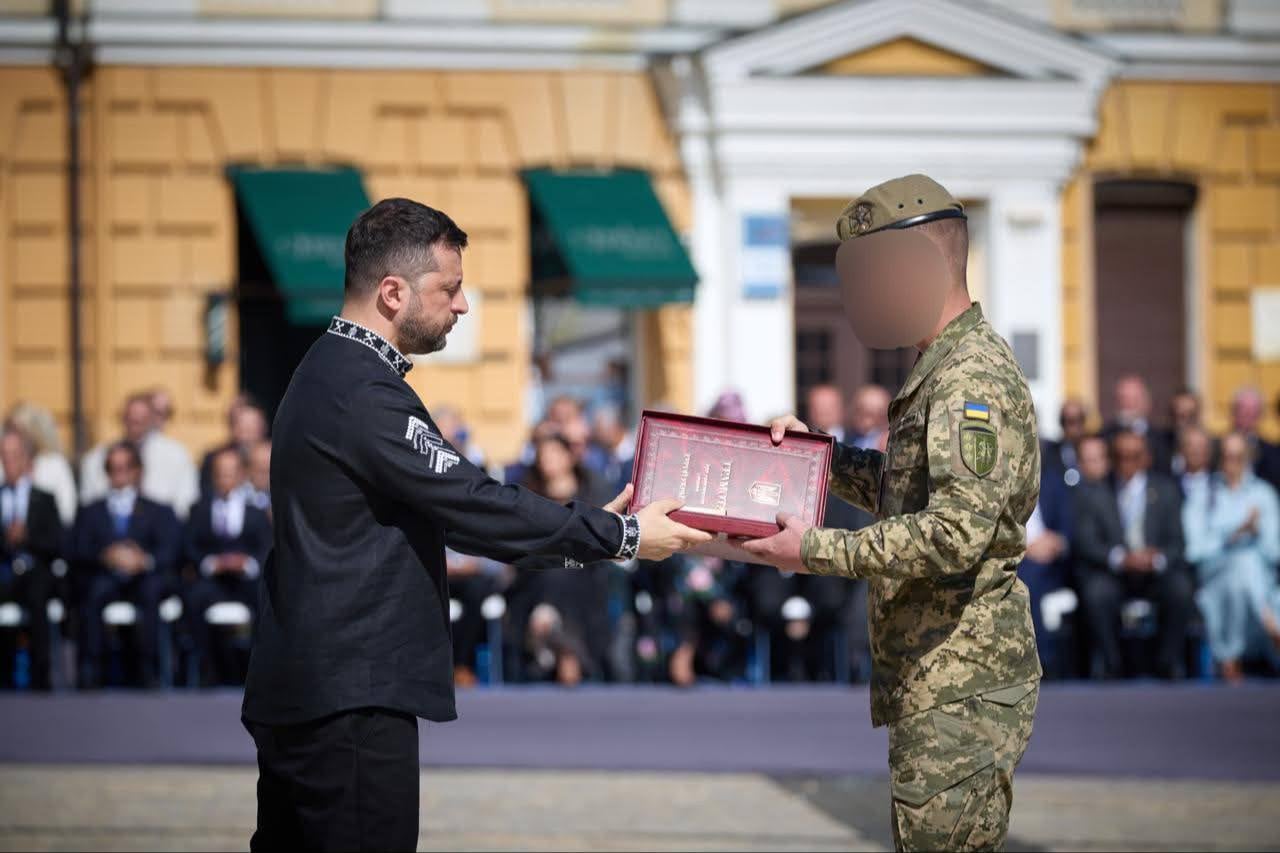
The President awards Pavlo the title of Hero of Ukraine. Source: Office of the President of Ukraine
The Sevriuks are internally displaced people from the occupied part of southern Ukraine. "My son struggled terribly with the fact that we had moved away while his grandparents stayed behind. He struggles with his father being on the front line. He is very attached to his father and proud of him," she says.
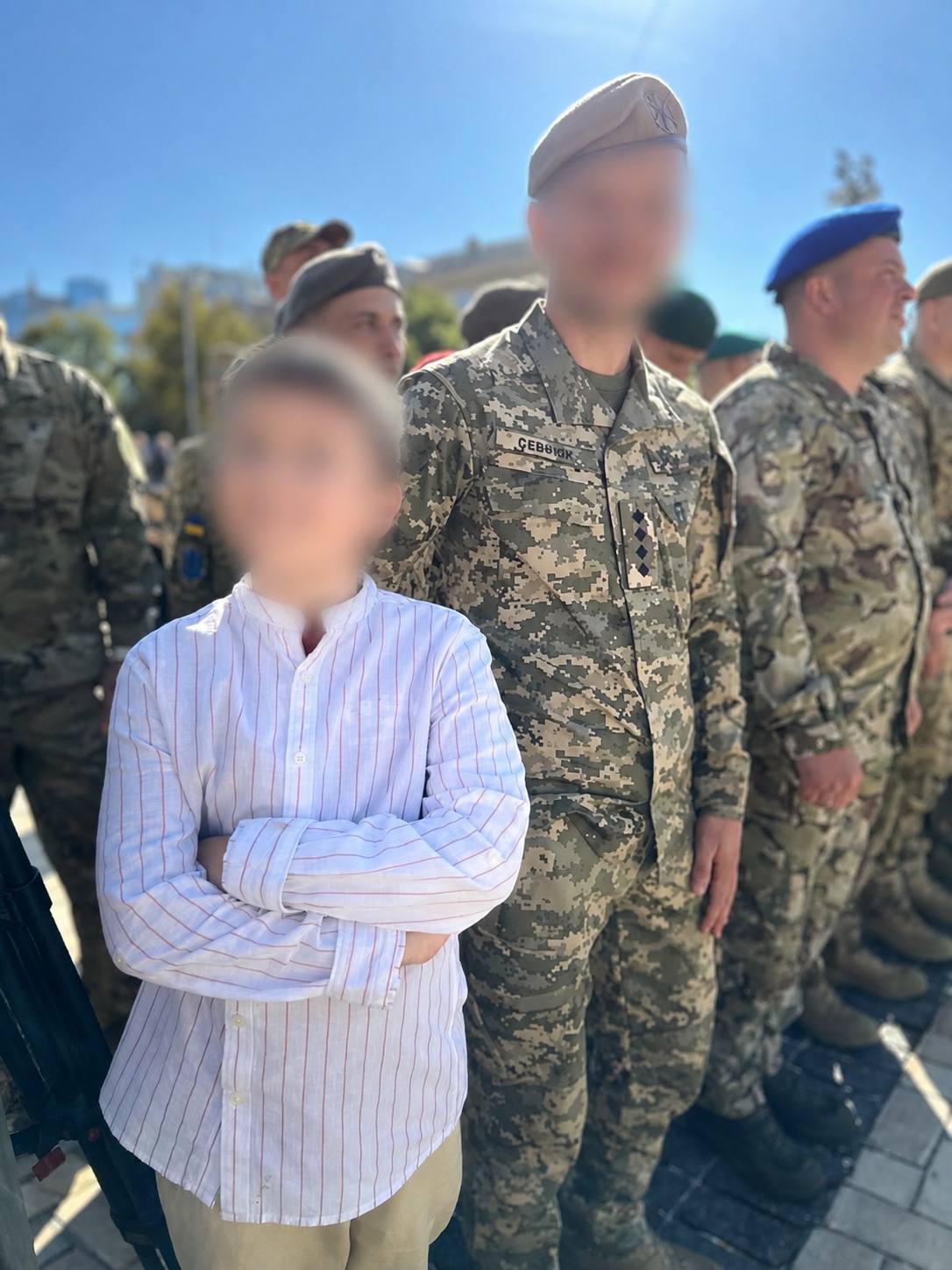
Tymofii stood beside his father when the President presented the award. He even took his father’s military boonie hat with him to the seaside in Bulgaria, where he travelled in May with a group from the "Ring" sports school. The boy had been playing hockey at the school since August last year. The children on the trip were 15 boys from the "Kyiv Bulldogs" team. They included boys who were stronger than Tymofii, regular starters, and the team captain. Natalia says they bullied her son. The conflict came to a head at the hotel during the afternoon rest period.

Timofey at training. Sevryuk family’s personal archive
"One of the boys held Tymofii by the legs while another smothered him with a pillow. The third was the coach’s son, who stood nearby laughing. They had this game called "TCR". They made my child the ‘draft dodger’: he was lying face down on a pillow, his head was covered with another pillow, and his legs were wrapped in a blanket and held down as well. The door to the room was locked. They were smothering him. The fact that they called him a draft dodger is especially humiliating and painful for me, because my husband has been serving on the front line since the very first days. And that matters a great deal to Tymofii," Natalia says.

Natalia found out about the abuse of her son by chance. She was picking Tymofii up from the bus station when the children returned from camp. She gave several other children and their mother a lift. They told her what had happened at the camp. "One of the mothers, Olena, told me: ‘Well, I’ll probably get the blame and regret telling you, but they were tormenting him, smothering him with a pillow. Two other mothers and I heard his screams and rushed into the room!’ That’s what she told me," Natalia says.
According to her account, the boys repeatedly attacked Tymofii, beat him, threw his clothes into the pool, and mocked him.
THE IMPACT ON TYMOFII
While at camp, Tymofii did not tell his parents about the smothering incident. "He acted like a man. A little grown man. He didn’t complain," Natalia says. But her son has since developed panic attacks and nervous tics, and makes uncontrollable sounds. At times, he reacts intensely to ordinary things. Natalia recounts: "After he returned from camp, I was just playing around with him, holding his legs and tickling him. And he became hysterical. He shouted: "Mum, this isn’t a game anymore! You’re tormenting me!" Having his legs pinned down triggered him. Just as the boys had done when they smothered him with a pillow."
Natalia provided the editorial team with the findings of Viktoriia Bohuslavska of the National Academy of Internal Affairs, who holds a master’s degree in psychology. The document describes Tymofii as an empathetic and sensitive child.
The following is an excerpt from Bohuslavska’s findings: "A particularly significant source of distress for Tymofii is an episode of physical violence during which other children smothered him with a pillow and forcibly restrained him. When describing this situation, he reported that he could not breathe properly, felt intense fear, and thought he might die. From a psychological perspective, such a subjective experience of an immediate threat to life or health is one of the most significant traumatic factors for a child of early primary school age. It is significant that the negative interactions directed at the child did not stop after this episode. According to Tymofii, certain members of the hockey team continued to subject him to aggressive and humiliating behaviour. The child reported incidents in which he was punched in the chest near the arena, deliberately shoved into the boards during training, and struck with fists on his hockey helmet. The boy also reported incidents in which he was deliberately locked out on a balcony while at sports camp. Given that Tymofii is afraid of heights, these actions caused him additional feelings of fear, anxiety, and helplessness. Thus, the child’s distress is associated not only with an isolated episode of physical violence, but with a series of events that continued over a period of time and involved both physical and psychological pressure from his peers."
Tymofii is now seeing a psychologist and a neurologist and taking a combination of anti-anxiety medications. At home, the family is trying to create the safest possible environment.
His father, Pavlo Sevriuk, speaks to his son on the phone every day. When he learned what had happened, he told Tymofii that he, too, had experienced bullying as a child and had learned to defend himself. Natalia recounts: "My husband asked our son whether he could overpower them as a group. He said no. Then he advised him: catch them one at a time and make it clear that you won’t let them bully you. But our son said: "Dad, there will be consequences!" So even here, the child is thinking about the other children rather than himself."
NOT THE FIRST INCIDENT
We contacted Viktoriia Ahapova, whose son also played hockey at the "Ring" school. The boy’s name is Yaromir, and he has a disability due to epilepsy. He also has atypical autism. Viktoriia says the coach knew about his diagnoses. "He behaves a little differently from other children," his mother says. "He reacts more emotionally to everything." According to her, a group of boys tormented her son: they tripped him, pushed him, and prevented him from playing properly. This is the same group of children whom Natalia Sevriuk also accuses of bullying.
"On 30 April, five children tormented Yaromir throughout the training session, mocking him and preventing him from training. At the end, they knocked him down onto the ice and all five beat him. One hit him in the head with his elbow," Viktoriia Ahapova says. According to her, the coach even spoke to the children, and for a while they stopped picking on him, but the bullying later resumed. "On 18 May, Yurii (the boy’s name has been changed - ed.) knocked Yaromir down onto the ice and repeatedly punched him in the head as he lay there. Afterwards, my child felt unwell and developed a headache. He left training early and complained to my husband. Then, in the changing room, in front of the parents, Yurii continued to subject Yaromir to psychological abuse, laughing, describing how he had beaten him, and saying that you don’t beat someone who is down; you finish them off. The parents laughed and did not reprimand the children," she says.
Yaromir had an epileptic seizure after four years in remission. According to Viktoriia, a psychological assessment found that the child had suffered psychological and physical abuse by a group of other children over a prolonged period. His mother says Yaromir began sleeping poorly, only goes out for walks with his parents, and has developed other symptoms of psychological trauma.
The school management refused to acknowledge that bullying had taken place. She says: "At a parents’ meeting (an internal investigation into bullying), the school administration and the coach persuaded all the parents to give statements saying there had been no bullying, to avoid problems for the coach and the school. The meeting was attended by parents with a vested interest, whose children had taken part in the bullying, and they decided that there had been no bullying, only isolated conflicts."
Viktoriia Ahapova withdrew her child from the school and contacted the police. There has been no response yet.
ANALYSIS
Tymofii’s mother also contacted the police and the prosecutor’s office. They are looking into the matter. The police also interviewed Tymofii. Another psychologist who assessed him during the police interview concluded: "No reasons were identified that might lead the child to give false testimony." And further: "As a result of the psychological trauma caused by the events in question, changes occur in mental functioning, accompanied by psychologically traumatic experiences that may lead to personal maladjustment, disrupt the normal functioning of the mind and the body as a whole, and have delayed consequences."
We contacted Olena, the woman who, according to Natalia Sevriuk, had told her about the bullying in Bulgaria. When we asked her to provide details, Olena replied: "Sorry, there was no bullying. There is nothing to tell." Natalia Sevriuk is convinced that Olena, like the other parents, was pressured by the school administration and coach Pavlo Lehachov, and that he is covering for his son, who she and Tymofii say was among those who mistreated him.
Natalia, however, says that Olena herself called her while still at camp with the children, saying that Tymofii was being picked on and that she needed to speak to the coach. She showed us her correspondence with the coach, in which she told him that Tymofii was complaining.
At Natalia’s insistence, the sports school held a commission meeting. The commission concluded that there had been no bullying and no smothering with a pillow either, supposedly because there had been no witnesses.
Natalia, who is herself a prosecutor, says: "Law enforcement agencies called for an internal inquiry in accordance with the regulations. I have questions for the school administration, which failed to notify either me or law enforcement of the bullying, despite being required to do so as part of its duties. And, accordingly, I have questions for the coach, who did not inform the parents about this situation, even though he was also required to do so under the Law on the Protection of Childhood."
We approached Olesia Kliuchka, director of the "Ring" Comprehensive Children’s and Youth Sports School, for comment. She did not respond to our request to explain her position.
We also contacted coach Pavlo Lehachov. He initially agreed to meet, but later cancelled. In a message, he replied that he had been questioned as a witness the previous month and warned of criminal liability for disclosing information about the proceedings. He added that checks had been conducted. "All other details are currently subject to investigative confidentiality," he wrote, declining to comment on the substance of the matter.
In response to enquiries from Censor.NET, the police and the prosecutor’s office said they were conducting checks.
WHAT THE PSYCHOLOGIST SAYS
Censor.NET also contacted Viktoriia Bohuslavska of the National Academy of Internal Affairs, who holds a master’s degree in psychology and conducted an assessment of Tymofii’s psychological state.
- Viktoriia, do you conclude definitively that the boy was bullied?
- Can I, as a psychologist, say with certainty that bullying took place? No. A psychologist does not establish whether bullying occurred or determine who is to blame. My task is to examine what is happening with the child and how the events he experienced have affected his condition. In Tymofii’s case, I can see that this is emotionally distressing for him. When he talks about the camp and specific incidents, his behaviour changes and he becomes more tense. After the trip, he developed fears, anxiety, nightmares, and nervous tics. The psychological assessment also showed high levels of anxiety and signs that he had experienced severe stress. So I cannot say, "I have proved that bullying took place," but I can say that the child’s psychological reactions are consistent with his account.
-
Could he have made these incidents up?
- Like adults, children can mix things up, misremember certain details, and sometimes lie. That is why a psychologist never reaches a conclusion solely on the basis of what a child says. We look at the whole picture: how the child behaves, how they react to certain topics, what they are afraid of, what has changed since the event, and what psychological testing shows. In Tymofii’s case, these findings do not contradict one another; they form a fairly coherent picture of the stress he has experienced.
According to the psychologist, there are many signs that your child may have become a victim of bullying. For example, your son or daughter may suddenly refuse to go to school or training, become withdrawn or irritable, sleep poorly, have nightmares, fear specific children, frequently complain of feeling unwell, or come home with damaged belongings or injuries. These are certainly reasons to have a conversation.
What should parents do if their child is being bullied? Viktoriia Bohuslavska says that if a child complains, their words should be taken seriously. Do everything you can to make your child feel safe with you, and say: "I’m glad you told me," "I’m here for you," and "We’ll sort this out."
"And I would not advise simply teaching a child to hit back," Viktoriia says. "If there are several attackers or they are stronger, this can make the situation even more dangerous. Children need to be taught to protect themselves, get out of dangerous situations, call for adult help, and always tell someone what is happening."
Natalia Sevriuk withdrew Tymofii from the sports school. She continues her fight, trying to secure what she considers justice through law enforcement agencies: "This is not the first incident in this team. At least four children have left this year alone, and their parents have not always made it public. But the situation is the same. There is no objectivity, and there never will be as long as the responsible authorities have a vested interest in avoiding such negative statistics to hold on to their positions. Given how difficult this path has been for me, I feel for other children who remain defenceless when school administrations conceal bullying and parents without the relevant legal education are unable to obtain justice."
Iryna Romaliiska, Censor.NET


