



Kravchenko is leaving, but "Carthage" remains? What happens next?
Kravchenko resigns amid Operation Carthage as MPs debate his dismissal, political responsibility and who could become Ukraine’s next Prosecutor General.
The following day, Kravchenko was due to attend a meeting of the Verkhovna Rada Committee on Law Enforcement. There, the Committee planned to hear from him about the high-profile Operation Carthage, a large-scale investigation by NABU and SAPO involving employees of the Prosecutor General's Office (PGO). MPs wanted Kravchenko to explain the situation and answer questions about the actions of his subordinates. However, the planned discussion never took place. After an evening meeting with the president, the Prosecutor General announced that he was stepping down, calling it a deliberate political move.
Kravchenko nevertheless attended the Committee meeting, accompanied by his deputies. This time, however, MPs were dealing not only with the scandal surrounding the Prosecutor General's Office, but also with the issue of the Prosecutor General's resignation.
"THE ISSUE IS PRESERVING WHAT REMAINS OF THE PGO'S INTEGRITY"

MP from the Servant of the People faction and Committee member Oleksandr Bakumov described how the Committee meeting unfolded:
— I proposed that we not approve the agenda item, but instead hear information on the work of the prosecution authorities, including what had originally been planned: personnel management and internal oversight, together with the issue of granting consent to dismiss Ruslan Kravchenko from office. I asked the leadership of the Committee Secretariat whether the President's Office had submitted a proposal seeking consent to dismiss Ruslan Kravchenko from office. The Committee Secretariat stated for the record that it had not. As of yesterday (September 7), when this Committee meeting was scheduled, we understood that the Prosecutor General was not leaving office, and that there were crisis issues connected with what was happening at the Prosecutor General's Office. Today, however, the circumstances are completely different. We see that all that remains is to dismiss the Prosecutor General, and that is it; there are no contradictions here. The Committee therefore supported a decision to convene as soon as a proposal is received from the President's Office seeking the Verkhovna Rada's consent to dismiss the Prosecutor General from office. The Committee is now awaiting the relevant proposal. It will convene without delay, and during the discussion, other issues of interest to fellow MPs will also be raised.
Personally, I will vote to dismiss Kravchenko from office. I am confident that most MPs will do the same. The issue here is something else – preserving what remains of the integrity of this institution. In my view, the current response to these events has been delayed. It should have come earlier. So I believe that both the Committee and parliament will perform their functions very quickly, promptly and effectively. Incidentally, the Prosecutor General can also be removed through a vote of no confidence by the Verkhovna Rada. For that to happen, an MP must submit a signature sheet and begin collecting the signatures of 150 colleagues, followed by the registration of a resolution and a corresponding decision by the Committee. This is a somewhat different procedure, and a complicated one. What we are talking about now is dismissal from office on the basis of a resignation application. Importantly, the Prosecutor General is appointed and dismissed by the President, while the Verkhovna Rada gives its consent. That consent is a mandatory part of the procedure. Therefore, as soon as the Verkhovna Rada has grounds to provide that consent, the process will move quickly.
As for the Carthage case, we are not an investigative commission. It is probably not entirely appropriate for us to establish all the circumstances of what happened at the Prosecutor General's Office with a person who has submitted a resignation application. The question that needs to be asked is how the Prosecutor General's Office, and the prosecution service as a whole, should institutionally emerge from this situation. If there are law-enforcement questions for Kravchenko, they should be asked by law enforcement agencies. Although I assume that such questions may be raised during consideration of whether to consent to his dismissal. There should not, however, be a report by the Prosecutor General to the Verkhovna Rada before the vote. The heads of the State Bureau of Investigation and the Prosecutor General's Office report in accordance with the law. Their reports are submitted to the Verkhovna Rada following the relevant calendar year and are heard under separate procedures. In other words, the report is a separate matter. It has nothing to do with granting consent to the dismissal.
"KRAVCHENKO'S RESIGNATION IS ABSOLUTELY RIGHT FROM A POLITICAL STANDPOINT"
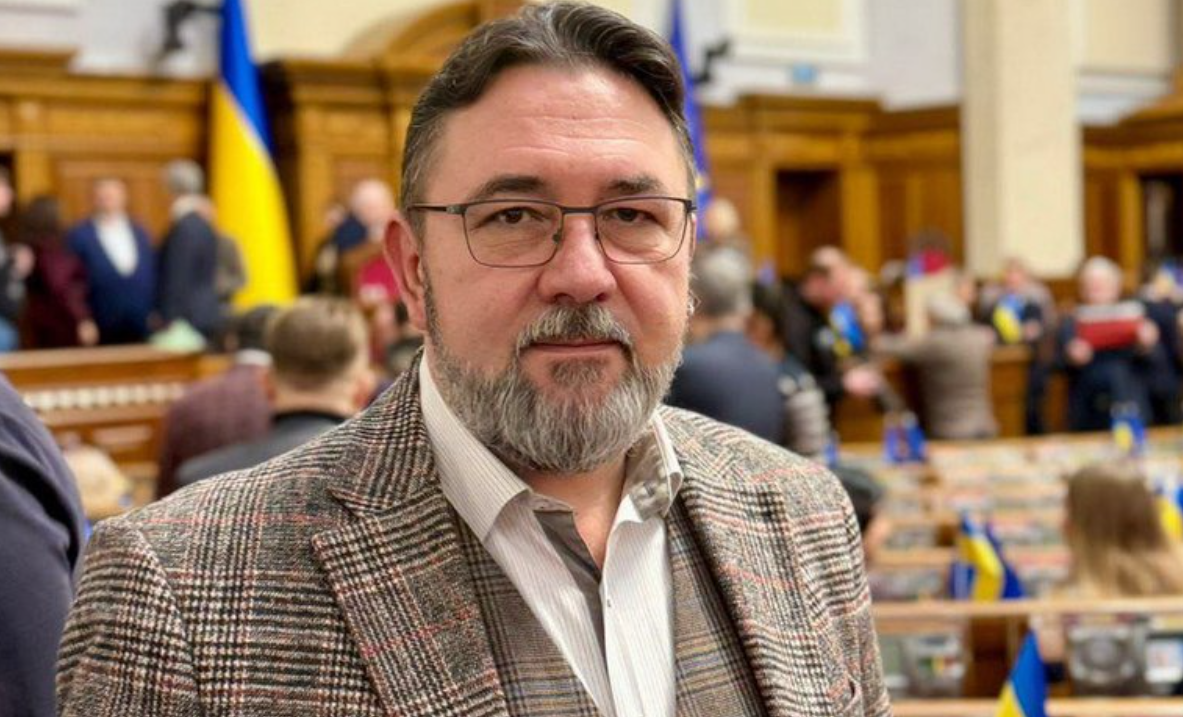
Servant of the People MP Mykyta Poturaiev sees no need for Kravchenko to deliver a separate report to the Verkhovna Rada:
— He has obviously already said what he wanted to say: that he is not guilty, knew nothing about it, and was in no way connected with this group of people who, according to investigators, set up this criminal scheme. He has stated his position and is not going to change it. So what else is he going to add from the Verkhovna Rada rostrum?! If my colleagues insist, they have the right to vote to summon him to the Verkhovna Rada. But in that case, I will go have a coffee and read a book, because I value my time.
Overall, this resignation is absolutely right from a political standpoint. A person may be completely innocent and blameless, but if they head an agency in which, according to investigators, such crimes are taking place, they must bear political responsibility. After all, the post of Prosecutor General, as in many other countries, is a political appointment and entails responsibility for the work of the entire agency. Obviously, if you failed to keep track of what was happening in the body under your authority and, accordingly, failed to put things in order there, then even if you had absolutely nothing to do with any of it, you must bear political responsibility. It is good that such things are already becoming standard practice here. In the past (and not only during our term in office) people sometimes stayed in their posts, as they say, to the bitter end. That is a bad practice. There is criminal liability, of course, but there is also political responsibility. The two do not always coincide. But I fully understand that the decision on the resignation was not made without efforts on the part of the President. As we could all read, the two had a meeting. Obviously, the President reminded the Prosecutor General of political responsibility.
I will, of course, vote for Kravchenko's dismissal. I will say more: I am convinced that the opposition was preparing for the possibility of collecting signatures for the Prosecutor General's dismissal. But this was also discussed within our faction — more as a way of supporting the President's decision and demonstrating the faction's readiness to agree with it.
"THE PROSECUTOR GENERAL SHOULD BE SOMEONE WITH EXPERIENCE INVESTIGATING MILITARY AND WAR CRIMES"
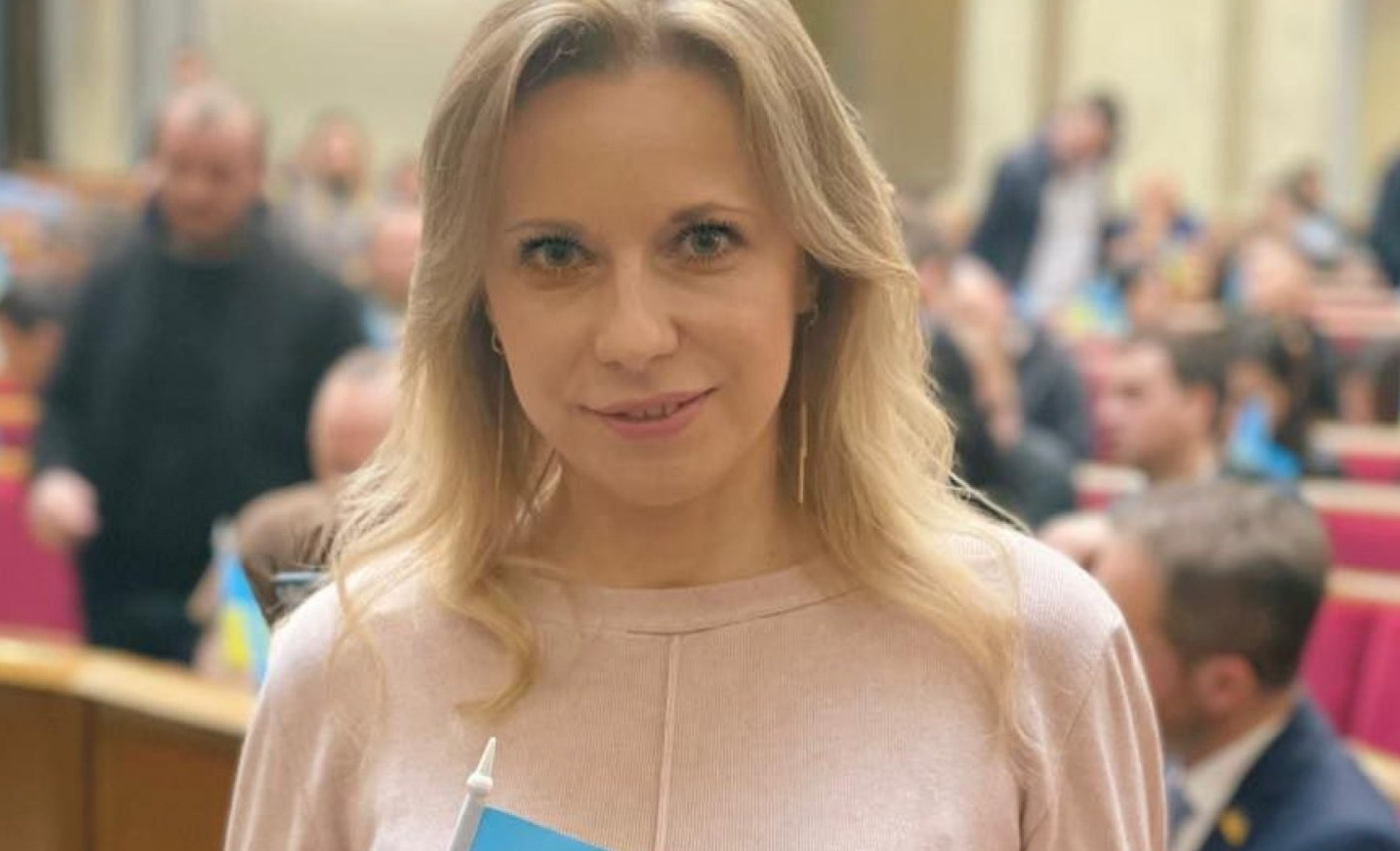
Unaffiliated MP Yuliia Yatsyk will also vote for Kravchenko's dismissal:
— Can you really force someone to stay if they do not want to work?! Of course I will vote for it. I think there will be enough votes in parliament for his dismissal. Although I do have questions about those MPs who have a host of criminal cases against them. What position will they take during the vote? Because, theoretically, there could be a conflict of interest here, since it is the Prosecutor General's Office that provides procedural guidance in such cases.
I think Carthage, Kravchenko's meeting with the President, and Kravchenko's resignation are interconnected. After all, the head of the Prosecutor General's Office bears political responsibility for what happens there. As for his possible involvement in certain events, that is for the investigation to determine. I do not think we should comment on it if we do not have access to the case files. It is a rather complicated matter. As a lawyer, I always adhere to the presumption of innocence. But if there are grounds and his involvement in those cases is established, we will learn about it.
Overall, I consider Kravchenko's decision to resign a politically honourable act, provided he was not involved in the events at issue in Carthage. Recall how, in January 2022, when a National Guard serviceman in Dnipro shot and killed his fellow servicemen and fled, Mykola Balan submitted his resignation even though he had not been involved in the incident. He explained that he bore political responsibility as Commander of the National Guard. I believe that this is the right and honourable position for a man, a leader, a head, a person in charge who is responsible for everything that happens within the organisation entrusted to him.
Who could become the new Prosecutor General? I believe the post should go to someone from the former military prosecutor's office. This is because we are dealing with issues related to violations of the rules of warfare and with cases that fall under the investigative jurisdiction of the State Bureau of Investigation (SBI) and the Security Service of Ukraine (SSU), in which the Prosecutor General's Office provides procedural guidance. Therefore, I think this should be someone with experience specifically in investigating military offences and war crimes.
"KRAVCHENKO'S RESIGNATION IS A CONSEQUENCE OF OPERATION CARTHAGE"

European Solidarity MP Andrii Levus will also support Kravchenko's dismissal as Prosecutor General:
— But I do not think this will fundamentally change anything as long as there are no institutional changes in the country, including to the procedure for selecting the Prosecutor General. There should be a competitive selection process. A relevant bill requiring such a competition, with the involvement of both civil society and international partners, has already been registered in the Verkhovna Rada. Safeguards need to be put in place, because manual control leads to collapse. We can see how this is spreading, including across all the country's security and law enforcement bodies. In recent weeks, we have been witnessing truly appalling things in this area. Moreover, this bill is part of the European integration agenda. The President recently delivered a fiery speech about the need to vote for such bills. The so-called majority also declares its commitment to European integration, democracy and so on. So they have a great opportunity to demonstrate this through concrete action and adopt this bill. That would make it possible to start with a clean slate at the PGO. But the situation today is such that the single-party majority will press the buttons for whichever candidate Bankova wants. Who might they propose for the post? I have heard various names. Even Vasyl Maliuk has been mentioned. One would like to hope that they will at least give some thought to the country when selecting a candidate and that common sense will play some part in the process. However, the number of mistakes being made practically every day does not inspire much hope for optimistic scenarios. So it is entirely possible that they will continue to bulldoze ahead and appoint whoever they need. The main problem is that people are selected according to a single criterion – loyalty to the authorities. This then leads to further failures in how the system functions.
It seems that Bankova is now playing the same game as it did during the protests following the dismissal of Fedorov and Syrskyi, when the President met with various candidates every day, and public reaction was then gauged. So certain names may now also be floated simply to see how the public and international partners react. That is why there is no point in fixating over the next few days on the names currently being mentioned. Closer to the resumption of plenary sittings next week, we will hear more realistic options.
Overall, Kravchenko's resignation is a consequence of Operation Carthage. That is a fact. Even an ordinary citizen, putting two and two together, understands that this is a consequence of all those events. A great deal has already been made public; searches have been conducted at the Prosecutor General's Office, including in the Prosecutor General's office, and court proceedings are under way. It is difficult to put a brave face on a bad situation here. People in Ukraine are beginning to understand that the "nest" of corruption and disorder is on Bankova. Whether the President himself is involved in this or whether it is his, as he calls them, effective top managers, I think we will soon know much more. The case is still ongoing. I hope that in the near future we will see further steps and hear more names.
"MOST LIKELY, THE NEW PROSECUTOR GENERAL WILL BE THE SAME KIND OF POLITICAL APPOINTEE AS KRAVCHENKO"
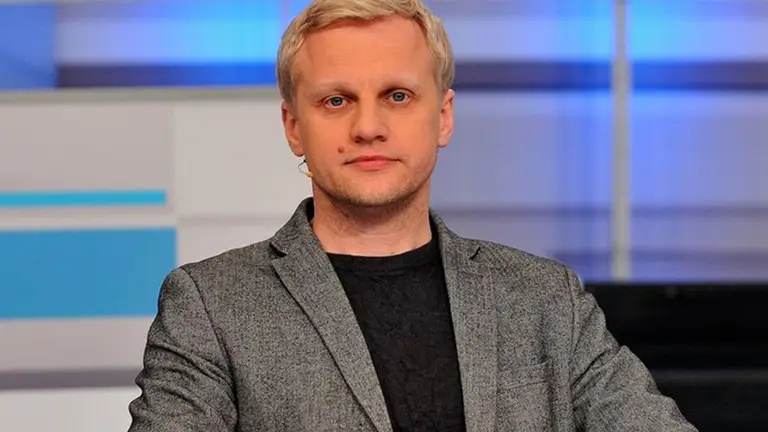
Head of the Anti-Corruption Action Center Vitalii Shabunin believes that Kravchenko resigned because the President asked him to:
— Davyd Arakhamiia and a couple of other influential people in government tried to keep him in office. But without success, because their arguments were weak.
What happens to Kravchenko next remains to be seen. We have already seen how things unfolded with Klymenko's appointment as Secretary of the National Security and Defense Council (NSDC). Could he be sent abroad as an ambassador? At this point, I do not see what democratic country would grant him agrément after what happened. As for whether Kravchenko could end up behind bars if he is served with a notice of suspicion in the Carthage case, that is also unclear for now. The situation here is similar to what we once saw with Yermak.
Unfortunately, there is currently no chance that the next Prosecutor General will be selected through a competitive process. Under the Ukraine Facility, the "price" attached to adopting the bill on a competitive selection process for the Prosecutor General has not yet been determined. Such a direct requirement is due to appear specifically in the Ukraine Facility Plan in early 2027. For now, it is included only in the enlargement report. Obviously, if the EU promises us funding in exchange for adopting the reform, that will increase the chances of a competitive selection process being introduced. But for now, the most likely scenario is that the new Prosecutor General will be the same kind of political appointee as Kravchenko. What they will actually do remains to be seen.
Olha Moskaliuk, Censor.NET


