



"Drone tested us to limit, crashing half metre from vehicle": border guard Dorsay on driving without headlights, electronic warfare and evacuation from front line
Border guard Viktor Buchuk, call sign Dorsay, was earning a good salary working abroad when a full-scale war broke out in Ukraine. And when he returned to volunteer for the front line, he did not realise that a driver’s role at the front was not merely about logistics, but about sustaining life on the front line: transporting infantry and ammunition, delivering supplies for drone operators, and constantly evacuating the wounded whilst under enemy fire.
And such evacuations do not always take place by vehicle. During the gruelling winter campaign in the Serebriansky Forest, at a temperature of minus 27 degrees, Dorsay was responsible for logistics and the evacuation of the wounded. He crossed the Siverskyi Donets River by boat, delivering food, water and heating supplies to soldiers at their positions under constant shelling, and transported soldiers.
In an interview with "Censor.NET", the 56-year-old driver and mechanic from the "Silver Trio" unit of the "Pomsta" brigade described how — driving at high speed at night without headlights and just metres away from enemy FPV drones and ‘Zhduuns’, why a driver’s job has changed radically during the full-scale war, and how his combat skills help him save the lives of his comrades on the hottest front lines.
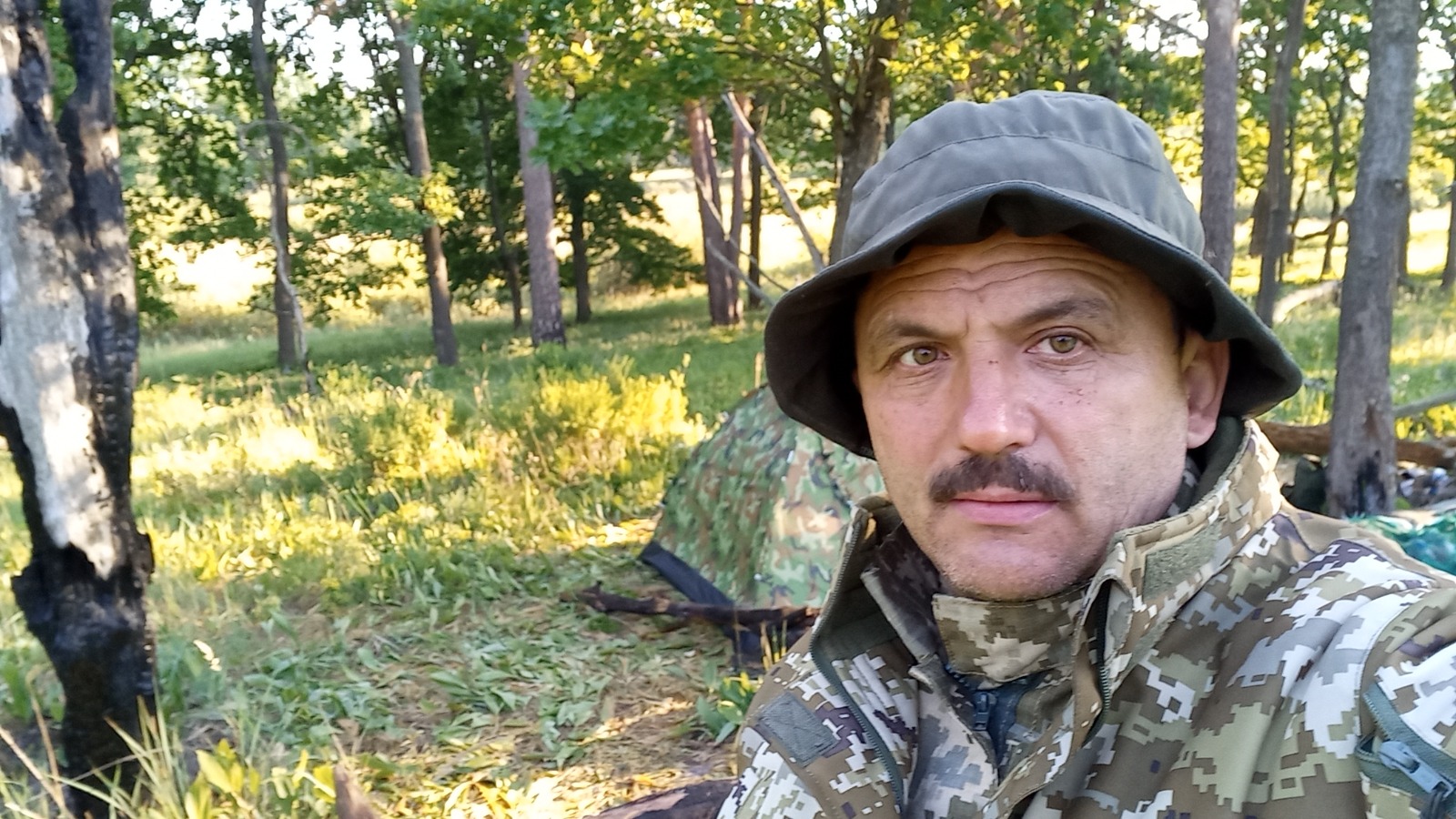
THE SILVER FOREST, BOATS UNDER MORTAR FIRE AND TOUGH ENDURANCE
— How risky is it to be a driver in the army?
— It’s certainly risky. Because right now, any vehicle is a priority target. If, God forbid, they spot a vehicle approaching within range, that’s it – trouble’s coming. That’s why we try to drive stealthily, mostly in the fog.
Recently, by the way, a drone tried to test us. We were taking our comrades to a location, and on the way back, I had to brake suddenly on one of the bends – it’s a very sharp one. And in that village there’s a water tower. One of the drones was perched on top of that tower. As you can see, it all ended well.
— So ‘Chuyka’ detected it, and the electronic warfare systems were switched off?
— No, you can’t drive there without electronic countermeasures; it’s close to the contact line, so they were activated. So, we carried on driving; there was another 90-degree bend, and literally 5–7 minutes before we got there, a drone using fibre-optic cable had taken out a ‘Hummer’ belonging to our colleagues. We were still picking up the lads who’d been in that ‘Hummer’—one of them was a 300th. We rushed him to their evacuation point, where he was picked up. But he looked fine. Well, of course, he was covered in blood; you could see he’d been hit in the arms and head. But, thank God, he’s alive, everything’s fine.
— Has anything like that ever happened to you?
— Thank God, no. Never.
— What was the most dangerous route you’ve personally had to take?
— We had some very dangerous routes in the Serebriansky Forest. Last year we were also in the Kharkiv region, but in a different area; it was quite ‘eventful’ there too.
Generally, we always travel with a partner, because it’s dangerous on your own. Situations vary. For example, there was a time when we’d just driven past, and straight after us, a car carrying lads from another SRG unit was hit. They survived, but some of them were injured.
Another story took place in Yampil. There, too, an FPV drone tried to strike us, but once again our electronic countermeasures kicked in; it fell onto its propeller, spun round and didn’t explode.
It fell behind the vehicle. And it just so happened to land between the wheels, so it was tricky to drive off without running over it.
And on the Kharkiv front last year, we came under mortar fire, and some shrapnel flew towards us. There was also an incident where we came across a ‘Zhduun’ on the road. You could tell it was still operational because it was flashing, but it didn’t take off. I don’t know whether the jammers suppressed it again or perhaps the radio horizon was lost. We were driving at night without our headlights on, so we only spotted it a few metres in front of us just as it exploded.
— Tell me, what’s it like driving at high speed at night without your headlights on?
— I’ll even show you what it’s like. You’ve probably already noticed I’ve got some dental problems, haven’t you? That’s the result of forgetting to turn whilst driving at high speed without headlights at night, going straight on and ‘kissing’ the steering wheel. There was one occasion when we were picking up 14 people with two pick-up trucks; it was a rotation. Near the contact line, of course, we had to load the people quickly. Maximum light concealment. And you just see that there’s a road and put your foot down.
We’ve got night-vision goggles and an infrared lamp. If they spot our headlights from a distance, they can instantly dispatch a patrol vehicle to catch up with us. That’s why we drive without headlights, so they’re less likely to see us arriving or leaving. Because it’s very dangerous.
If drones are flying at night, they’re all equipped with thermal imaging cameras. Whether you’ve got your headlights on or off, it makes no difference to them. They can see you anyway. But the risk is still minimal if you drive without your headlights on.
It’s tricky, but we carry on.
— Tell me, was there ever a moment when you felt with all your heart, ‘I’m alive, God, I’m alive’?
— I had one really serious incident where I genuinely thought it was all over. But it wasn’t in a car. I was crossing the Siverskyi Donets by boat, and with me were three fighters from ‘Azov’ (our units were stationed together in the Serebryanskyi Forest at the time). Mortar fire began, and the boat suddenly came to a halt.
— Were you transporting wounded fighters?
— No, they were just on rotation; I was picking them up. Picture the situation. I had to walk all the way back across the boat, open the engine compartment, tap the starter, get back in and start it up.
I’m going over it in my head and thinking to myself: blimey, I’ve got to get up from here, walk past these lads, and they’re lying there in full kit. By the time I’ve made my way over them, done all that, and come back, we’re done for. But then I thought, let’s give it a go. A turn of the key, and everything starts up. I hit the throttle, and the boat rears up.
— Did you often have to cross by boat?
— It was 2024; we spent 10 months in the Serebriansky Forest. Back then, 90 per cent of our logistics were by boat, so to speak. Especially at the start.
From the moment we went in there in January, everything was delivered by boat. Water, food, supplies. People were brought in by boat too. And the 300th Brigade were evacuated down the river.
— Do drivers have to wear body armour and a bulletproof vest when going on a mission? Is that just showing off, or is it important?
— It’s not about showing off at all; it’s not just important, it’s essential. It’s for your own safety. Even in an armoured vehicle. It’s an extra chance of survival. That helmet saved me; otherwise, I’d be one of the ‘three hundred’. I swerved to avoid a ‘zhdun’; in winter, the car skidded and rolled onto its side. I hit my head, and my shoulder was badly bruised. But the helmet saved my head.
Now, when you’re on the road, you stock up as much as possible so you don’t have to go out again for a while. Because every journey increases the risk of running into something or hitting something.
Recently, some of my comrades hit a landmine whilst driving. It was on the same supply route I used to take. Fortunately, everyone is safe and sound.
— When did you start your service?
— I first signed a contract in 2005. It was for three years, and then I left.
Then, in February 2015 – that was the fourth wave of mobilisation – I went to the military recruitment office myself, rejoined the border guard service, and in 2016 went on rotation to the ATO.
When the full-scale war began, I was working abroad, making furniture; the pay was decent, the conditions were decent. So, let’s just say, everything was fine for me. But the question of whether or not to go to Ukraine never arose. The only question was – when. That’s all.
My daughter works abroad too. Well, you can imagine, right at the start of the war everyone was confused and panicking. She had two children in Ukraine with their grandmother – that is, with my wife. And she decided to bring them to live with her. They were four years old. So I went with her; we drove as far as the border. My wife took them across the border then. We drove our daughter and grandchildren back to Prague. After that, I packed my things, sorted things out with my bosses and set off.
— Why was it so important for you to go?
— I’m a veteran of the ATO; I served in Mariupol, in the 23rd Coast Guard Detachment. As a driver. I covered, you could say, the entire front line from Mariupol to Kramatorsk. I was in Soledar, in Bakhmut, in Novotroitske, in Mariinka, and in Volnovakha. My mum’s on her own at home, my wife’s mum’s on her own too, and my wife’s on her own. I was abroad. And then the war started. So what now? My mum won’t go, my mother-in-law won’t go, and my wife doesn’t want to.
— But what’s the point of you going off to war when you might get killed?
— Who said I was going there to get killed? (laughs – ed.)
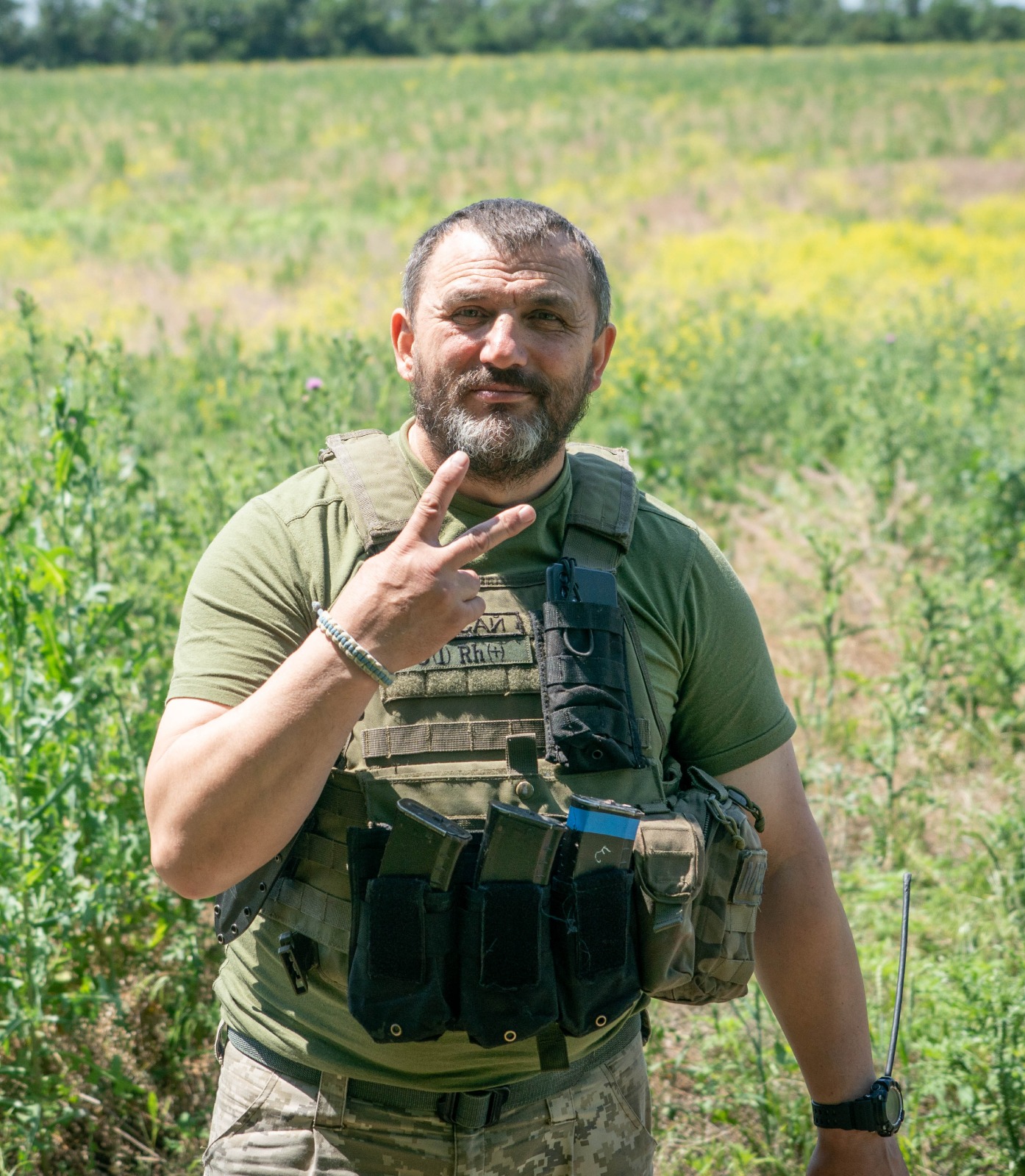
— If you compare the start of the full-scale war with the current situation, how much harder has it become for drivers? Is there a difference?
— Yes, of course there’s a difference. At the start of the war, say, back in ’22 or ’23, well, there were risks, of course. Artillery fire, mortar fire, landmines if a sabotage group got through. But there were no drones.
Back then, for you to come under fire, you had to be spotted first. And you could hide, protect yourself from it. Woodlands, forests, ravines. Back then, you could drive straight into a position through the woodland. Well, you’d drive up, pull in, unload there, then reload.
If an ‘Orlan’ was flying somewhere, everyone would be talking about it on the radio. ‘An Orlan’s flying over there, oh, there’s such a commotion, it’s mad. That’s it, hide.’
But now there are drones – as thick as mosquitoes. The risk is very high. Because drones are fast, they’re accurate. You only spot them when they’re right on top of you. Getting away from them is also tricky. Let’s say you’re driving across a field at 60–70 km/h, whilst they can reach speeds of up to 100 kilometres per hour. If they’ve spotted you in advance, for example, and prepared themselves in time, they can catch up with you in no time.
Or take the ‘stalkers’. They just sit there, waiting for you to drive up. And that’s it. Of course, this isn’t just a problem for drivers. It’s the same problem for infantry. It’s the same problem at the front lines.
"Mavics" with drop-off capabilities. FPV drones… By the way, at the moment, many civilian drivers don’t know what to do.
— As an experienced driver, could you give some advice? My mum, by the way, lives in the Kharkiv region, in Zolochiv, which is near the front line. So could you give some advice to drivers who, just like you, might come across a ‘waiter’ or an FPV drone?
— Just leave the car there, don’t look at it or at the things inside, and run away – just hide. And most importantly, don’t stay in a group. You know, when people run towards each other? But when a drone is flying towards people, you need to spread out – one here, one there. Look for some sort of cover – bushes, trees.
It’s quite difficult to outrun a drone in an ordinary car. Armour greatly increases your chances of survival.
— What should civilian drivers do? Say he’s delivering bread, water, or some groceries. Maybe he should buy a ‘Chuika’?
— Definitely. If you can, then get a ‘Chuika’ or something similar. It’s not cheap, but it’s a matter of life and death. Once you’ve bought one, you’ve got a chance. But there’s another problem if you’re near the front line – fibre-optic cables. Well, a ‘Chuika’ against fibre-optic cables, I’m afraid, is useless. So, if you’re on the lookout, you need to watch very carefully. Because the operator has to be positioned somewhere where they can see the road too. In other words, they won’t be sitting in a foxhole, because they wouldn’t be able to see anything.
So you drive along and keep an eye out. If you spot one, there’s a chance to turn back, provided he hasn’t spotted you yet. In other words, turn round and get out of there. If there are soldiers around, tell them – they’ll come over or send a drone to neutralise it. If there aren’t any, well, sorry. So, wait for someone from the military to arrive and neutralise it. But don’t do it yourself, because it’s extremely dangerous.
— When there are several people travelling in a car, what do they need to bear in mind? For example, don’t put bags in the passenger compartment; it’s better to put them in the boot.
— Absolutely. Keep your hands free, and don’t lock the doors so you can open them easily and jump out.
— So, you don’t secure them?
— No! Under no circumstances! Don’t wait to see if the car has come to a complete stop. If you can, jump out as quickly as possible. Of course, people’s physical fitness varies; not everyone can jump out of a moving car without getting hurt.
You should also run off the road into some bushes. The car will be blown up. But to hell with it—there’ll be another one.
A first-aid kit is also essential. A tourniquet. You need to learn how to apply it properly. You also need to know how to apply a pressure bandage. How to bandage a wound correctly with a bandage. In other words, the basics. So that a person doesn’t have to think about what to do, but simply knows.
I’ve got one, see? One first-aid kit here. And another one on the armour, that’s a must.
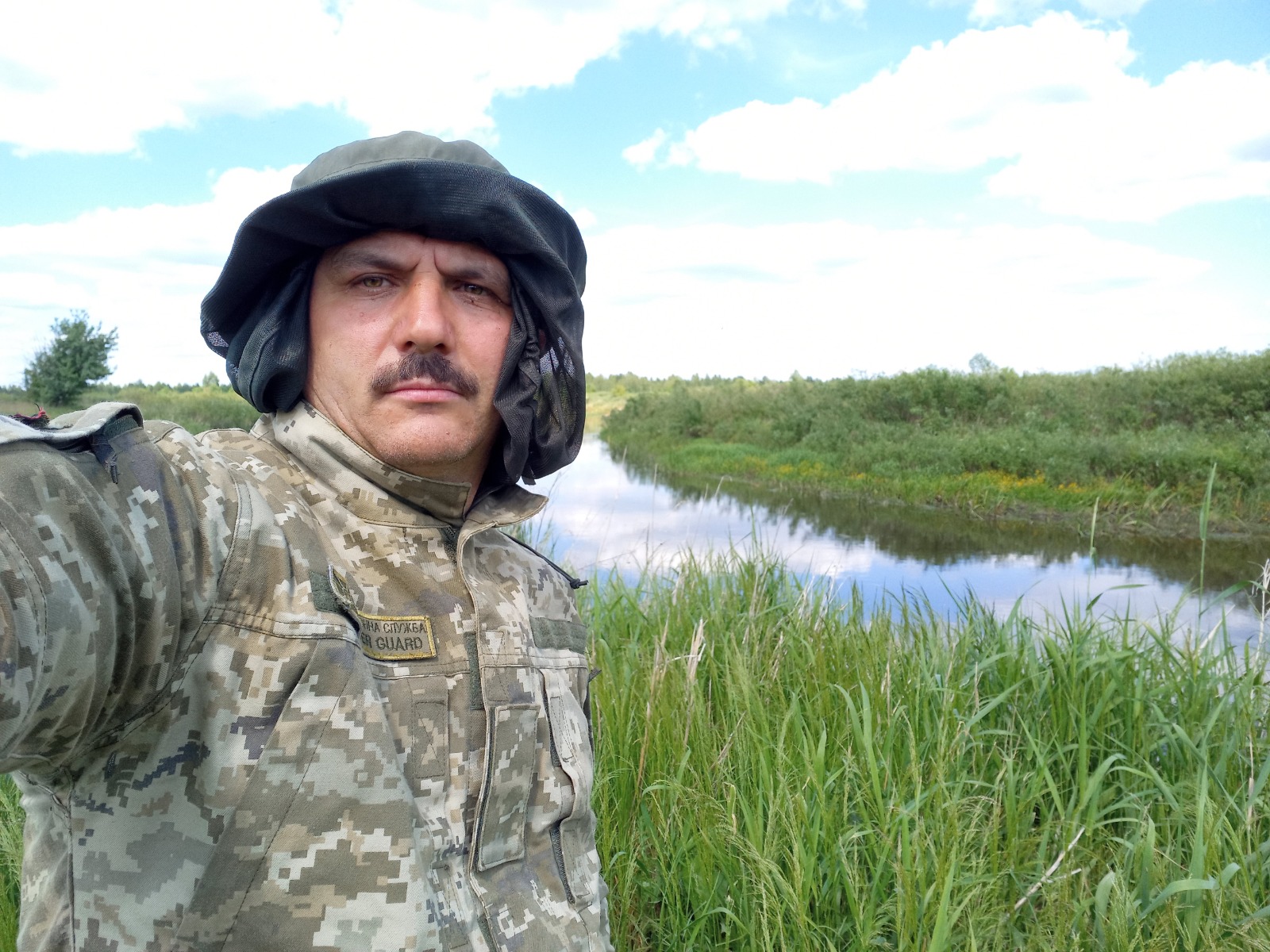
"WHY SHOULD I DIE? I HAVE TO SURVIVE"
— Do you have any awards?
— Yes, I do.
— Which ones?
— Decorations from the 30th Mechanised Brigade. Then I’ve got some departmental awards. My most recent award is from Syrskyi. A Gold Cross.
— Did you receive it in person?
— I wasn’t in Kyiv; they presented it to me here, on the spot. The command.
— What do they mean to you?
— To me? They’re recognition of my work. As they say, if I’m needed, it means I’m doing something right here. But, to be honest, the award came as a surprise to me.
The commander hinted that there’d be an award. I said to him: ‘Colonel, an award? What are you on about? For what? The heroes are the lads on the front line.’ But I’ve got it – a cross from Syrskyi. It was a real pleasure to receive it. I won’t beat about the bush; I’ll tell it like it is. But I want you to write this down – nobody came here for an award.
There’s an infantryman with the call sign Viking; after he was wounded, he was my second-in-command, the driver who rode alongside me. For managing, despite being wounded, to lead the lads out of the encirclement and even take two occupiers prisoner, he’s been awarded the Cross of Military Merit! Viking actually joined us last year, in 2025, at Serebryanka. He’s very young. He did his job, he did it right, he did it honourably.
Was Viking after a medal? No!
Take Killer, the sniper who holds the Gold Star of the Hero of Ukraine – was he after awards? He’s saved so many lives! And he continues to save them by training the new recruits. But every award is very important to us, of course.
For example, my first award from the 30th Brigade – that was near Bakhmut, when I was fighting alongside them. I received the ‘For the Defence of Ukraine’ medal. My commander rang me and said: ‘You’ve got 20 minutes, you’d better be there.’ The commander even ordered watches for us. With our unit’s insignia. Our motto there was ‘God and Ukraine’.
— What has become of your comrades-in-arms who were awarded at that time?
— Some left the service. One is training to be an officer at the academy. One, sadly, is missing in action. Volka.
There was one lad, Yura, and we actually persuaded him to leave the service ourselves.
— How so?
— His brother was killed. In Krynky, in the marines. He signed up at the age of 18.
Yura didn’t want to leave, but we basically forced him to. He was left on his own. His brother was killed, and his mum’s gone. Their aunt brought them up.
He’s at home now. He’s always in touch with us. In fact, he came to visit us here recently.
When he left the service, I told the lads: ‘It’ll be a month at most before he’s begging to go back.’ And that’s exactly what happened. He rang me from home and said: ‘Uncle Vitya, can I come and stay with you? I’ll just live with you – I can’t stand it there.’ I replied: ‘Yura, come on over.’
He stayed here for a while. And it’s the same with a lot of the lads.
— These days, a lot of people say, ‘I don’t want to die on the front line.’ If you were talking to someone like that, what would you say?
— What is there to say? Nobody comes here to die, and nobody should come here to die. You have to think that you’re not going to die; you’re going to destroy the enemy. I understand it’s scary. I understand nobody wants to. But who else, if not us? There’s nobody else left in Ukraine, just us.
— That’s what I mean about ‘dying’—what sort of stereotype is that?
— What, don’t people die in civilian life? On building sites, in car crashes, on bikes, drowning in rivers – don’t people die there?
— Someone might say, ‘But I’m not a soldier…’
— We’ve got all sorts of people serving here and, let’s put it this way, 90 per cent had absolutely no connection to military affairs whatsoever. None at all. But people came of their own free will; they’re serving, they’re fighting – thank God. I realise that, of course, there are casualties, there are the ‘three hundred’, but this is war, after all. You don’t want to just sit around waiting for the Russians to come to you, do you?
— So you didn’t go there to die?
— No, of course not. I went to win. I went to fight so that everything would be alright for us – that was my mindset. Why should I die? I have to survive. I have children, I have three grandchildren. Of course, I have to live.
— If you use your head and do everything right, will you survive?
— You’ve got to be sensible. You’ve got to listen to people who’ve already been here, who’ve already been through things, who know something, who can give you some advice. Don’t just think, ‘Well, to put it bluntly, he’s 25 and I’m 40 – what’s he going to tell me?’ Maybe that 25-year-old lad already has combat experience under his belt. He’s already survived some kind of hell. He’s got some medals. So he knows a bit more than you do about the situation, the circumstances, and what to do.
If you keep a level head and think things through, your chances of survival increase as much as possible.
— You evacuate the wounded. Which of these incidents stands out most in your memory?
— Those of my comrades who were killed or wounded were younger than me – much younger. I’m 56, by the way. When I’m transporting these lads, I look at them – they’re like my own sons. Some are even younger. In 2022, lads who were 19 joined me. And they fought with honour. Some left the service, some were wounded, some transferred to other units, but… If a comrade had his foot blown off, or stepped on a mine… A young lad had his eye gouged out. You look at him… That memory stays with you for the rest of your life.
Many were evacuated. And in the Serebriansky Forest… You can’t remember them all.
Sometimes one of the lads says: "Dorsay, don’t you remember me?" I say:
"Mate, I’m sorry, there were so many people…" "You were the ones who took me away as part of the 300th group, thank you."
Evacuations mostly take place at night; you can’t see people’s faces. And he says: ‘I recognised you by your voice.’ And this isn’t just one instance. So, to be honest, it makes me happy. It means I’m doing something right. It means I didn’t come here for nothing.

— Are there any of your fellow drivers who have lost limbs or been killed?
— No, no one has been killed. But there was one incident where the Russians dropped something from a drone, booby-trapping the road. It exploded at the front left and the driver, sadly, lost a leg. He’s alive; his mates evacuated him.
— Did the other drivers put themselves at risk to save him?
— Of course they did.
— Who rescued him, by the way, and how did it happen?
— We always have a backup vehicle, and when we’re on the move, our drones escort us. The driver who was with him (we always travel in pairs) reported the explosion over the radio, and we saw it from the drone too. So his partner applied a tourniquet and dragged him back to the landing zone, and the lads arrived in an armoured ‘Tisa’ and picked him up. You realise that the enemy could have spotted the explosion and just waited for someone to come to the rescue, so they could attack everyone with drones or artillery. But we got away with it.
— Are we fighting until victory?
— Only until victory, nothing else.
— Do you believe in victory?
— Absolutely. What’s the point of us being here if we don’t believe in victory? It’s bound to happen.
Nataliia Konova for "Censor.NET"


