



Once, drone brought us water, but katsap FPV drone shot it down as it approached our house, – soldier Oleksandr Rudnitskyi on six months at position
Kyiv native Oleksandr Rudnitskyi (Rudyk) has been in the military since 2022. He has fought in several brigades, suffered a serious wound and earned the right to wear the Marine beret. His most distinguished and extraordinary mission was his latest, with the 37th Marine Brigade, which lasted almost six months — the time Rudnitskyi and his brothers-in-arms spent at a single position.
Now he looks back on that experience as if from the outside, assessing what was hardest. To give something away in advance, Censor.NET can say it was not the fighting.

I WAS OVERCOME BY SOMETHING LIKE RESENTMENT. PERHAPS THAT FEELING OVERSHADOWED THE FEAR
– I went straight to the military enlistment office when the full-scale invasion began. There were huge queues. I wanted to go and defend the country; I could not sit still, so I was a little disappointed when they told me to wait. I looked for ways to be useful. You know that well-known footage from Obolon, where weapons were being handed out from a KamAZ truck; I went there with my older son too, but there were none left for us because they had all been taken. Three or four days later, I went back to the enlistment office and was told to wait again.
Then, together with my friends, including Yurii Levchenko, with whom we had founded our party, "Narodovladdia", we set up the UA.HELP volunteer centre. From the first days, we began helping Kyiv residents whose windows had been damaged by explosions: we bought plastic sheeting and handed it out so people could at least cover their windows somehow. UA.HELP is still operating and helping the front.
Later, I took my children to my mother's house in a village. The local guys and I set up a checkpoint there. That was how it went: I did what I could. Then we returned to Kyiv because my younger son played football, and his team was about to leave for Slovakia. My older son went to the Lviv region. Once I had got the children somewhere safe and waited for my brother to arrive, the two of us went to the Territorial Centre of Recruitment and Social Support (TCR and SS). They offered us places in a combat brigade, and we agreed without a second thought. They gave us call-up notices on 5 April and told us to report to the Obolon TCR and SS with our belongings on 6 April.
Of course, it was a shock for our wives, but we explained that if we did not do it, our children and grandchildren would have to fight this enemy later.
– So they offered you a specific brigade, the 95th, as I understand it?
- They took us to the 95th Air Assault Brigade, and that day marked the beginning of our service in the Armed Forces of Ukraine. We spent up to two weeks there. It was easier for me than for those with no military experience because I had served around the time the Soviet Union collapsed. I was assigned to the Black Sea Fleet then, so I had some idea of military service and weapons.
They put us through our paces at the training ground, taught us a little tactical medicine, and showed us some Western weapons (they only let us hold them because there was no opportunity to fire them). On 19 April 2022, they took us to the 95th Brigade's permanent base in Sloviansk. My brother was assigned to the headquarters battalion because he held the rank of senior sergeant, while I joined the fire support company of the 2nd Battalion. So our paths diverged a little there, but we stayed in touch.
About five days later, I went out to the front line for the first time, near the village of Kurulky in the Kharkiv region. Izium was still occupied, and the 95th Brigade's main task in that particular sector, on the border between the Kharkiv and Donetsk regions, was to hold the Izium–Sloviansk highway. The enemy was advancing from Izium and wanted to capture Sloviansk, and our task was to prevent them from doing so.
– So you had to hold your ground.
– We were in a tree line, digging trenches. Each trench held two people, and we spread out through the tree line in a staggered pattern. When we started digging them, I was really surprised that the soil was nothing like it was in the Kyiv or Poltava regions. The soil in the Donetsk region is hard to dig, and when you are digging in heavy body armour, you only have enough strength for five minutes before you have to swap with your partner. And all of this was under fire.
There were not as many drones then as there are now. Mortar fire was the main thing giving us trouble. The return fire from our side was very weak at the time, while the katsaps could fire at us all day. That was how we held the position. There were a few occasions when their infantry tried to break through, and we fought back; there was an exchange of small-arms fire. The katsaps achieved nothing, and everyone on our side came through unscathed.
It really was very hard. Just getting through another day was a relief because we slept barely two hours during the day and about the same at night. When mortar fire starts, you drop down into the trench, and then it is like roulette: you might get lucky, or you might not. But thank God, everyone in our squad survived.
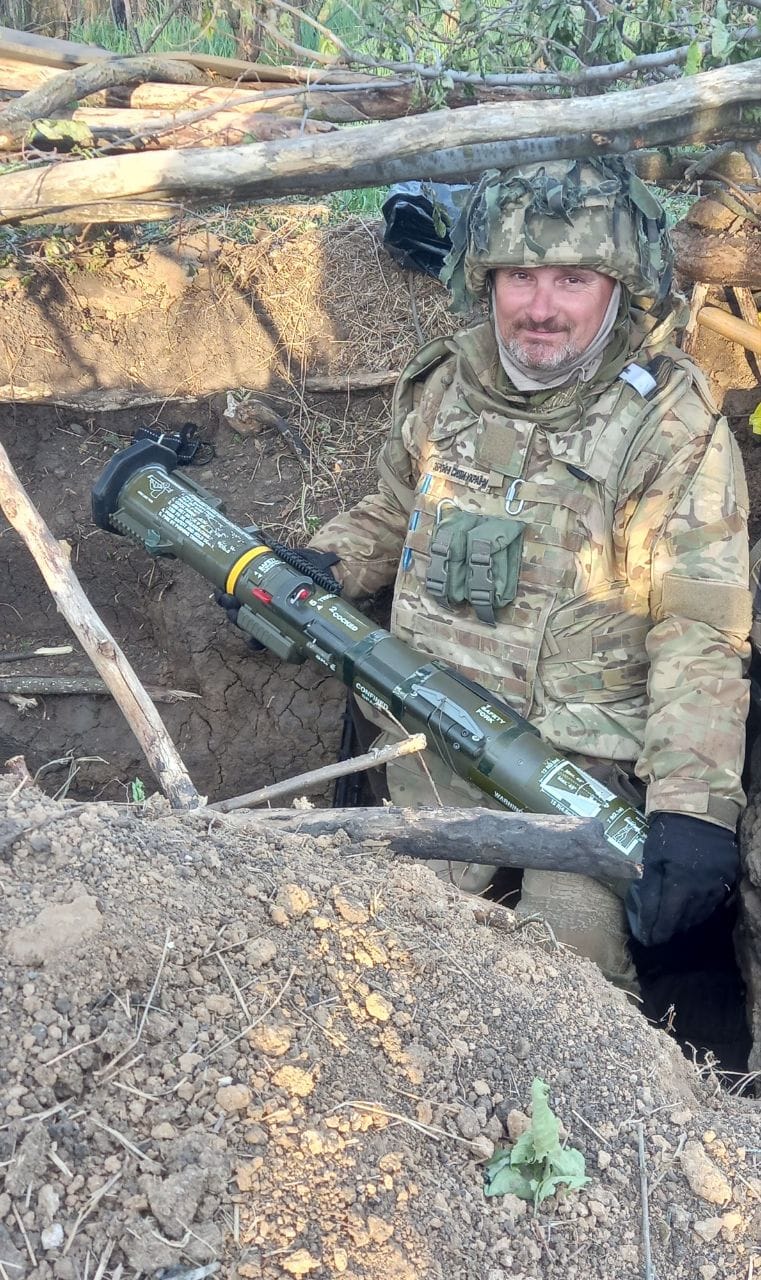
We held the tree line for about five or six days, then we were relieved. Later, we went back to those same positions for a second time, to the same trenches we had dug. The second time, we also spent about five days there. That was when I saw death for the first time: a sniper killed a guy from another unit, and they brought his body out through our positions.
– Your first deployments to positions, your first battles, your first awareness of death... Do you remember how you felt and how you prepared yourself mentally?
– From the very beginning, I could not quite make sense of how I felt. There was no real fear. I was overcome by... something like resentment. I thought: if the katsaps kill me here now, it would hurt to think I would never see my children or grandchildren again.
Perhaps that feeling overshadowed the fear. My body also had a strange reaction when shelling began: for some reason, I would keep getting sleepy. My eyes would close on their own, and I would drop to the bottom of the trench, but I would not fall asleep. Instead, I would slip into a strange, sloth-like state.
Something curious happened one morning just before dawn. I was on watch when I heard movement, a rustling sound, about 20 metres behind me. I alerted the guys in the neighbouring trenches, and we got ready. We thought katsap saboteurs had got behind us, but it turned out to be cows wandering around. They walked past us, and there was a mined road at the end of our tree line. We were worried they might step on the mines. But it turned out that cows are intelligent creatures: they walked around the mines. I felt sorry for them, though. A cow eats and then needs milking, but there was no one to do it.

IN A REAR-AREA UNIT, I FELT OUT OF MY ELEMENT
– So once again, your task was essentially to remain in the trenches and repel any potential assaults?
– Yes, we did not conduct assaults at the time. Our task was simply to hold that tree line and prevent the enemy from advancing.
Then we were pulled out for another rotation, after which we changed our deployment location. We stayed there for two days, and then they took us out for our third deployment, this time to a different position.
We began fortifying the position. At 5 a.m. on 24 May, we were hit. I was seriously wounded. My brothers-in-arms and I were evacuated and taken to a hospital in Kramatorsk. Then came Dnipro, Ternopil, and Zhytomyr. Months of treatment and rehabilitation followed. After undergoing a Military Medical Commission examination in early 2023, I was declared fit for limited military service.
– So this was the injury that would later largely determine the course of your subsequent combat service?
– Yes, I suffered one of the most serious injuries; the other guys were wounded less severely. There was a major with us, the commander of our group. Despite being an officer, he stayed with us and did everything we did. I do not know why he was sent with us. He was very seriously wounded. I was hit by shrapnel almost all over my body; my left forearm was shattered, and my right arm was lacerated. I was bleeding heavily because a chunk of flesh had been torn out of my right arm. Somehow, I climbed out of the trench on my own, and the guys quickly applied tourniquets to my arms. An evacuation team arrived and escorted us for about a kilometre and a half to the place where the evacuation vehicle could reach us. The major and I were taken to Kramatorsk, where we underwent surgery.
– How did you end up in the Marine Corps with such an injury?
– I transferred to Kyiv, where I lived, and joined a rear-area logistics unit. Then, in 2024, an order was issued requiring everyone classified as fit for limited military service to undergo another Military Medical Commission examination, which I did in July. Two years had passed since a plate was inserted into my arm, and it was time to have it removed. Later, the unit received an order to send a certain number of personnel to combat units. I was placed on that list, and that was how I ended up in the Marine Corps. By 25 January 2025, I was serving with the 37th Separate Marine Brigade (Military Unit A4548).
– So there was no question of keeping you out of a combat unit after such an injury? Soldiers’ experiences actually differ: some say they were eager to return but were not accepted, while others complain that they cannot be discharged even after suffering serious wounds. How did it happen in your case?
– The chief of staff summoned me and asked me directly: "You have combat experience. Would you mind if we included your name on the list?" I said: "If that is what is needed, put my name forward." So there was no coercion, and it did not come as a surprise. Besides, I still felt drawn to the combat troops because, in a rear-area unit, I felt out of my element.
I again underwent specialist military training and basic combined arms training, after which we were sent abroad for a form of basic combined arms training conducted to NATO standards. I was there from May until the end of June.

DURING THE TEST FOR THE RIGHT TO WEAR THE MARINE BERET, I PLANNED TO DROP OUT AT THE RIGHT MOMENT, BUT I MANAGED TO MAKE IT TO THE END
– What were your impressions? Some say they teach useful practical skills there, while others believe that Western instructors do not understand the realities we face and provide guidance unsuited to our war.
– I agree that they do not all understand modern warfare. For example, this is how they taught us to clear a building: the two of you move past a window, you aim your weapon through it while your partner stands behind you, and as you pass the window, one person covers it while the other covers your back and the opposite side. We do it very differently: a grenade is thrown inside, then the room is fired into; no one walks beneath the window. We explained this to them, but they said it was inhumane because there might be civilians inside. How could we explain to them that there could not be any civilians there? If we cleared buildings the way they taught us, the enemy would wipe out our group.
In other respects, however, the experience was mostly positive, and I enjoyed the training. Above all, because of the way we were treated. We had instructors from Germany, Sweden, and the Netherlands. Learning how to conduct assaults from boats was new to me. The training in cold water in a swimming pool was well designed. They also listened to us on certain matters, especially those of us with combat experience. But they had a standard training programme of their own, and they followed it.
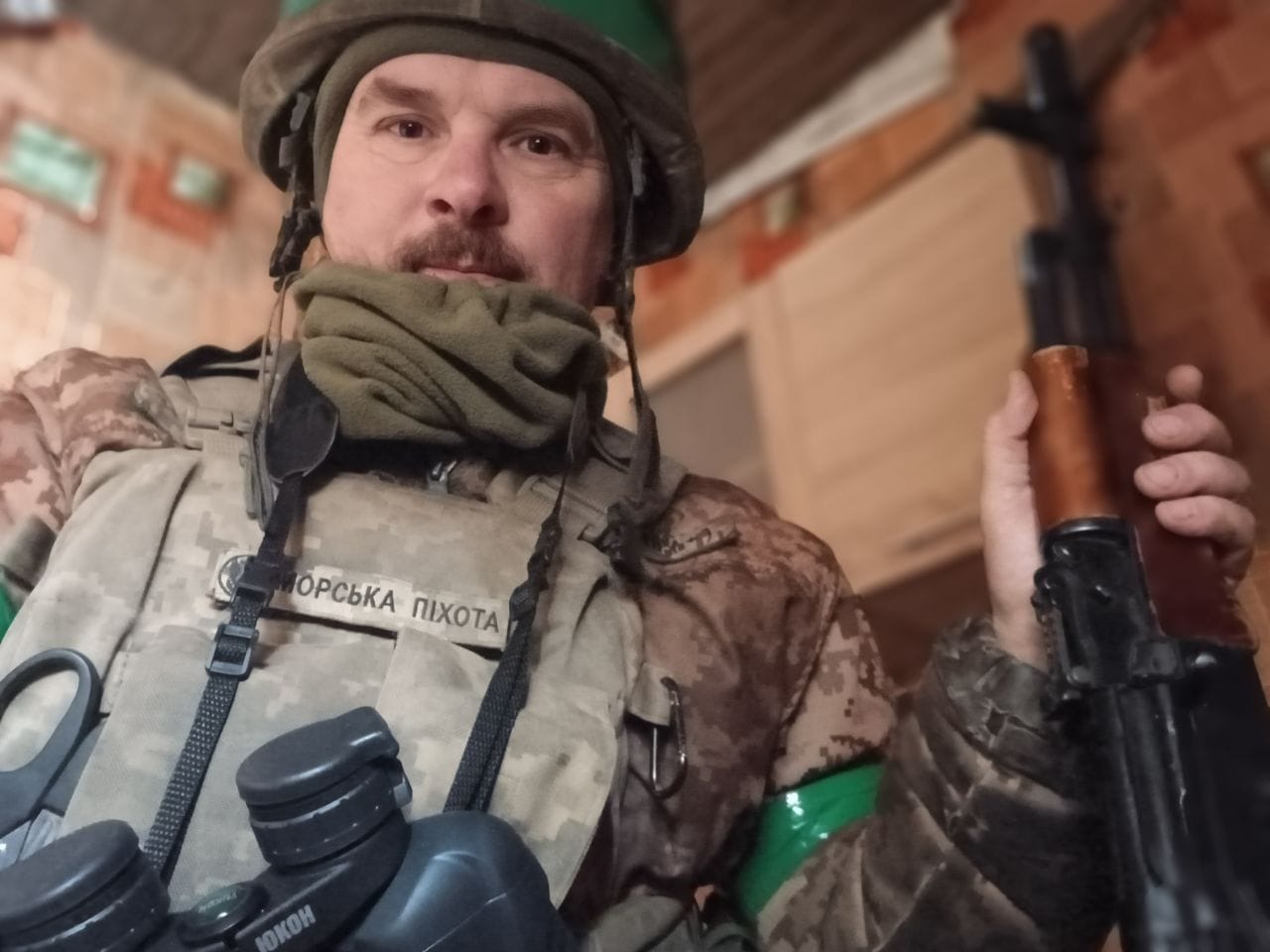
Eventually, in September 2025, I passed the test for the right to wear the Marine combat beret. To earn it, we had to complete a 13-kilometre psychological obstacle course. They really put a soldier through the wringer there, with obstacles in the water — like in the film G.I. Jane.
– It seems to me that those who had suffered serious wounds would have been unable to do this by definition. Yet you were allowed to take part, and you made it to the end!
– Before the start, the doctors asked who had been wounded. I said I simply wanted to try it for myself. I could withdraw up to a certain point of no return. If you did not withdraw before that point but later found you could no longer continue, your brothers-in-arms would have to carry you. I had actually planned to withdraw in time, but I managed to reach the finish. There were a couple of moments when it was extremely difficult, but I made it. Of the 12 men in our group, three dropped out at the beginning and nine finished. Unfortunately, one of them, a young guy, was killed six months later.
WHEN "GUESTS" CAME TO US, WE CALLED IN AN FPV DRONE, AND IT QUICKLY TOOK THEM OUT
– And after that began your six-month ordeal at a single position.
– In late October, we moved to another deployment location, in the Dnipropetrovsk region, and were sent on assignment. We were from the 3rd Battalion of the 37th Marine Brigade and were attached to the 1st Battalion. On 25 October, we were taken to forward positions in a village on the border between the Dnipropetrovsk and Donetsk regions.
Our task was to quietly observe everything that was happening, relay information by radio, and prevent the katsaps from occupying our house or any other house in the village. Put simply, we had to keep the village from becoming a grey zone.
We occupied a house and cleared it. The first thing we did was check beneath the floor and set up a shelter. Then we got to work: we reported everything we saw and heard, and when necessary, our UAV would arrive and do its job.
– So you essentially had an observation post and had to avoid giving away your presence so that the enemy would not spot you.
– Yes. We, on the other hand, recorded everything ourselves, and then a drone would fly in and check it all. A Vampire drone delivered food, water, and ammunition to us at night.
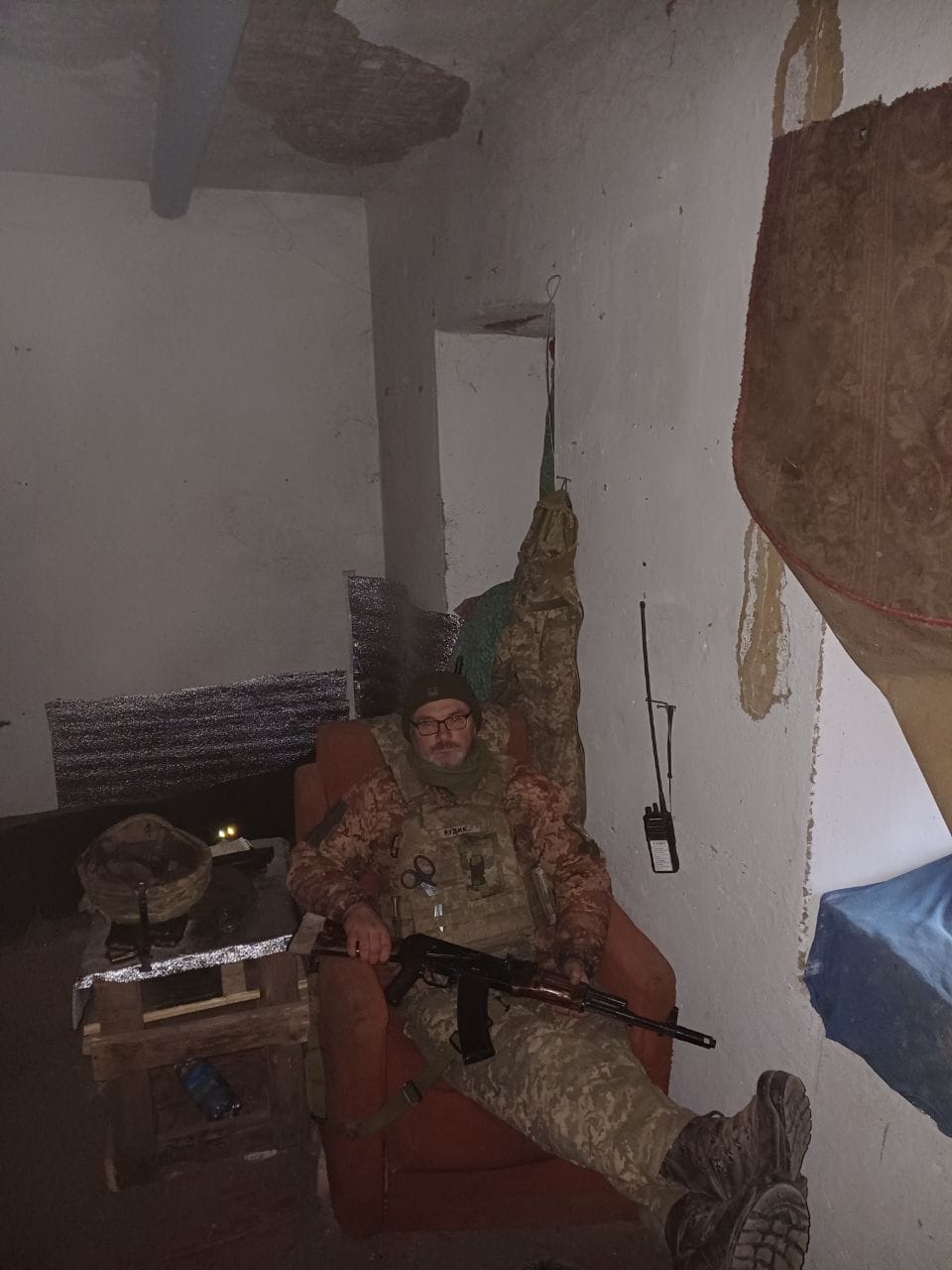
Once, we saw an enemy soldier carrying a sack. We directed our UAV towards him; it located and eliminated him.
Our first "guests" appeared in December. Perhaps they spotted us while we were collecting supplies, because the next day an FPV drone flew into our house. However, it struck the rear of the house, where trees were growing, while we were in another room. It left a hole where the window had been. We quickly gathered it up and radioed our command. They sent us a UAV with replacement supplies.
– So even after that strike, you remained at the position? That means you may already have been detected, yet you stayed there anyway.
– Yes, we remained at that position. We did not know whether we had given ourselves away. Perhaps the drone simply happened to fly through that window; that happens too. Everything was quiet after that until January. Then, in January, we detected katsaps in a house 100 metres away from us. Our forces began striking them.
The fact is that the following day, the katsaps began demolishing our house. Perhaps they had seen that we were there and thought we would not continue holding out. They struck our house from early morning until evening. We spent almost an entire day in our bunker. It was difficult and bitterly cold. The katsaps destroyed half the house and everything in the yard that could be destroyed. We were instructed over the radio to hold out until morning.
When we came up in the morning and saw what had happened above us, I told the guys that we had been born a second time. We had all suffered some degree of blast concussion. Everyone’s hearing was badly affected, and some of us felt nauseous. That morning, we were moved to a neighbouring house. There was constant drone traffic around it, both ours and the enemy’s.
Once again, we began setting up the position and dug a fortification, slightly larger than the one at the first house. We lined the inside with plastic sheeting because the roof had been blown off and rainwater dripped in from above. A drone brought us the items we had requested, including the plastic sheeting and medicine.
We continued standing watch in the same way until the day when two more "guests" paid us a visit. I happened to be on watch at the time; it was around 4 p.m. The guys were resting. I heard someone speaking Russian: "Come over here, come over here." They entered our yard and rushed into the shed. I quickly called in our UAV. Our people confirmed that we had visitors and instructed us to prepare for battle.
Our FPV drone flew into the shed, but they survived. One of them was buried up to his waist under some planks, while the other came out of the shed towards us and even tried to fire, so we took him down. UAV then finished them both off.
– How closely were you able to observe their tactics? What can you say about them?
– They are like zombies: they keep coming and coming. They are killed, and then more of them come. They walk right up to the front door. I do not know how they train them... At the neighbouring house, one of them walked right up to the front door where our guys were positioned and began peering inside, so they took him down.
WE WERE TOLD WE WOULD BE THERE FOR TWO MONTHS, BUT IT TURNED INTO SIX
– Judging by what you have said, your support was well organised. As soon as they entered the yard and you reported it, one of our drones arrived. Yet you were not rotated out. How was that explained to you? It is generally considered abnormal for someone to remain at a position without leaving for six months.
– First, we were attached personnel, and the reality is that they rotate their own people first and attached personnel afterwards. Second, we were told there was no one to replace us. We had been told we would be going in for two months, but it turned into six. The guys at the neighbouring position, who deployed at roughly the same time as us, stayed even longer than we did.
About two weeks before we left, we found ourselves in the strike zone, with rounds frequently hitting our yard or nearby. The soldiers at another position had to move between five houses because of constant strikes, and we also took a few hits.
– Were the final days the hardest?
– The hardest thing is having no communications because then you do not know what is happening or where and when the enemy might try to advance. The lack of water was difficult. We could somehow manage without food. Once, because of the weather, they could not deliver food and water to us for three days. On one occasion, a drone brought us water, but a katsap FPV drone shot it down as it approached our house.
We managed to rush outside and retrieve the water, but we left the drone where it was. There is a rule: if something is lying near the house, you cannot touch it because it has probably already been spotted and photographed. If something is lying differently from before or disappears altogether, they may realise that someone is there. So that Vampire lay there for about two months, until its battery died. It kept beeping, but we could not retrieve it because the katsaps had already seen it.
We survived on the meagre supplies in the house; there was some canned meat. There was water in large bottles, but we could not touch it because we did not know what was in it. Those who had wells near their houses had it a little easier.
– You could not collect snow either without revealing your presence?
– Going outside meant giving ourselves away, especially in the snow. It was difficult to go almost six months without properly washing. We had wet wipes and dry-shower supplies, but using a dry shower when it is minus 17 outside is a bad idea. Somehow, though, we endured it.
– Were you eventually rotated out as planned or after the position had fallen?
– When the final explosion brought the house down on us, we held out there for another two days. When our replacements finally came, we told them there was no point in occupying that house because it was impossible to set up a shelter there. In the end, we were withdrawn, and our replacements were sent to another house that was still intact.
– How did you get out?
– It was morning, and it was raining. It took us all day to make our way from one end of the village to the other because we had to hide from drones. We reached the other side of the village, closer to our forces, and waited in a house until evening.
That evening, we walked another two or three kilometres to reach our positions. The following day, we ran into more trouble. We spent the night in our troops’ dugout in the forest, and an Oshkosh armoured vehicle came to collect us in the morning. Those vehicles have decent off-road capability, but ours skidded into a field and then into a tree line, and we rolled over. We had to get out quickly because enemy drones could have arrived at any moment. We were lucky: another evacuation vehicle picked us up an hour later. I suffered bruised ribs, and one of my brothers-in-arms sustained a minor cut to his head.
I AM GLAD THAT I MADE MY SMALL CONTRIBUTION TO THE ADVANCE OF UKRAINIAN FORCES
– And now you have once again been declared unfit for service with your unit...
– I spent a week receiving treatment at our medical company and then went home on leave. I recently underwent another Military Medical Commission examination. Its conclusion was that I am unfit for service in the Marine Corps or the Air Assault Forces. But I told my unit that I wanted to remain in the Marine Corps. Several possible assignments are already under consideration. I want to stay in the Marine Corps and help on the second or third line until this war ends.
– How are you feeling now?
– I am fine now. My unit gave me a voucher for a seven-day stay in Bukovel, and my wife and I went to the mountains. Then we were sent to a rehabilitation centre near Odesa for five days of psychological recovery. It was an interesting programme. Psychologists worked with us, and I reflected on everything that had happened during those six months at the positions.
– Did you come to any realisations?
– The final month was the hardest. I could see it in myself and in the guys. You receive no news at all. All you get from your family are voice messages. You can only get on the radio at night and record a message for your wife and children. Then you wait for a message from them. Whenever one arrived, it lifted our spirits.
Some unusual people must have lived in that last house. There were books on esotericism and three volumes of Bulgakov. I had to reread that Ukrainophobe several times to keep myself going emotionally.
– Oleksandr, do you know what has happened to the position you managed to hold?
– It is ours, and Ukrainian forces have advanced much farther into the Donetsk region. It is calmer there now. Katsap drones hardly ever fly there. The only problem is that KABs can still cause trouble. So yes, I am glad that I made my small contribution to that.
– Do you think about the future? About what you will do after the war and how you will go about it?
– Of course. If the war ends, I will return to political activity, as I am one of the co-founders of the Narodovladdia party. There are many problems in civilian life. While my brothers-in-arms are dying, what is the country’s leadership doing in the rear? They steal, misuse funds and invest money in who knows what. I live in Obolon, so I have plenty to say about the parks and islands that Klitschko has developed instead of redirecting those funds to the Armed Forces of Ukraine or to social programmes supporting veterans, displaced people and those who have lost their homes. The new public transport fare is absurd. That is why I have decided to continue my political work and improve the lives of ordinary people and my brothers-in-arms.
– In that context, I have to ask: what do you think about the mobilisation process and how it is organised?
– In some respects, it is certainly excessive, but this would not be happening if the authorities had created proper conditions to encourage people to mobilise. In 2022, people stood in queues; now men are being bundled into vans, and the authorities are satisfied with that. So I have mixed feelings about the whole situation. People need to defend the country, and they can choose a brigade themselves and go to defend their family and their land, but the fish rots from the head. We therefore need to understand that unless the authorities change their approach, there is little hope of improving people’s willingness to join the military.
Olha Skorokhod, Censor.NET


