



Why is Fridman still in "Kyivstar," and can Ukraine remove him following lifting of EU sanctions?
On September 22, the EU did what Volodymyr Zelenskyy and Kyrylo Budanov had publicly warned Europe against: it removed Mikhail Fridman from its sanctions list. At the same time, his indirect economic interest in Kyivstar Group remains at around 16.9%, while the combined interest of Fridman, Petr Aven and Andrey Kosogov stands at around 43.4%.
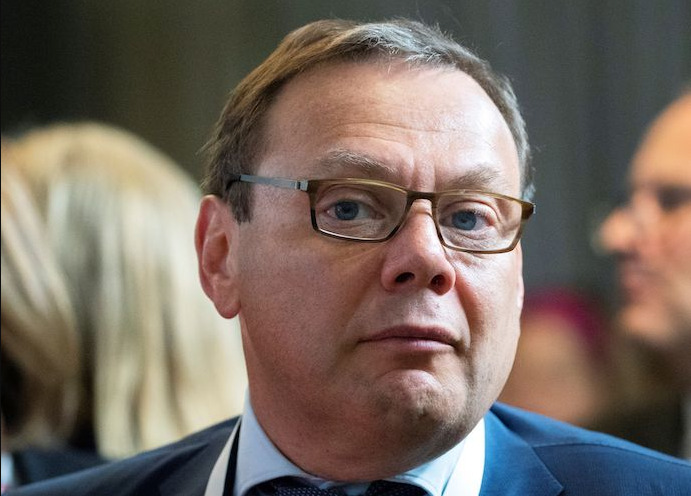
Fridman remains under sanctions imposed by Ukraine, the United States, and the United Kingdom, so his rights will not be restored automatically. But the sanctions blocked those rights; they did not strip him of ownership. Now one of the key barriers has disappeared, and Fridman may begin seeking to regain formal voting rights, payments, access to corporate information, and the ability to sell or pledge his stake in Luxembourg-registered LetterOne, VEON’s largest shareholder.
While Fridman’s rights were considered "frozen," Kyivstar listed on Nasdaq, acquired Uklon, Helsi and Tabletki.ua, and built an ecosystem that processes an increasing amount of Ukrainians’ data. Ukraine nationalized Sense Bank, is seeking to confiscate IDS assets, and lifted the seizure of corporate rights in Kyivstar. The question now is simple: will Ukraine act while it still has sanctions and legal means at its disposal, or wait until Fridman begins reclaiming his rights to this asset one by one?
In 2023, Ekonomichna Pravda asked why Russian interests remained in Kyivstar. Three years later, those interests have not disappeared, while the operator is becoming an ecosystem spanning communications, transport routes, healthcare, medicines, and television.
We analyzed Kyivstar Group’s and VEON’s financial reports, European and Ukrainian registers, and documents concerning management, relations within the corporate group, and Kyivstar TV. Here is what they show.
The 44.6% that supposedly does not exist
Kyivstar’s corporate structure became longer after its Nasdaq listing. The controlling party did not change.

Dutch company Kyivstar Holdings B.V. owns 99.9947% of PJSC Kyivstar and is owned by Bermuda-based Kyivstar Group Ltd. VEON Amsterdam B.V. controls 83.6% of that group through another Bermuda-based company, VEON Ltd. The structure resembles a Russian nesting doll, a comparison made particularly apt by the fact that, until 2017, the Bermuda-based VEON Ltd. was called VimpelCom Ltd. It shared its name with the Russian parent company (which owned the Russian mobile operator Beeline, and Mikhail Fridman personally headed it).
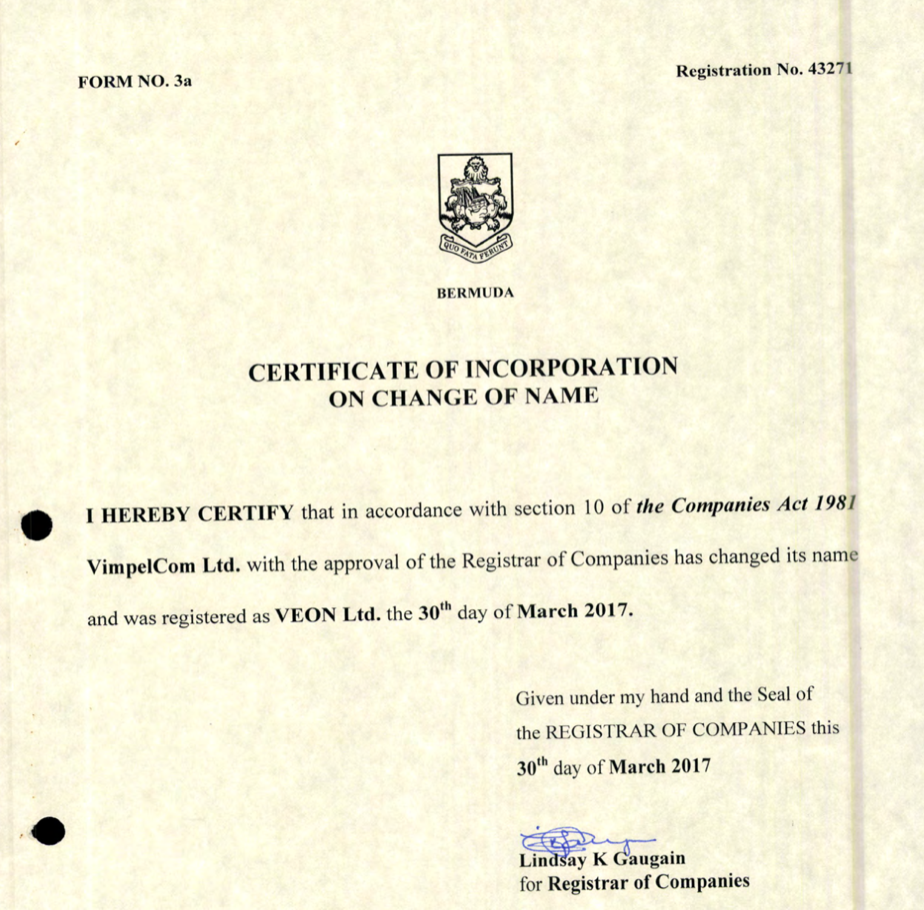

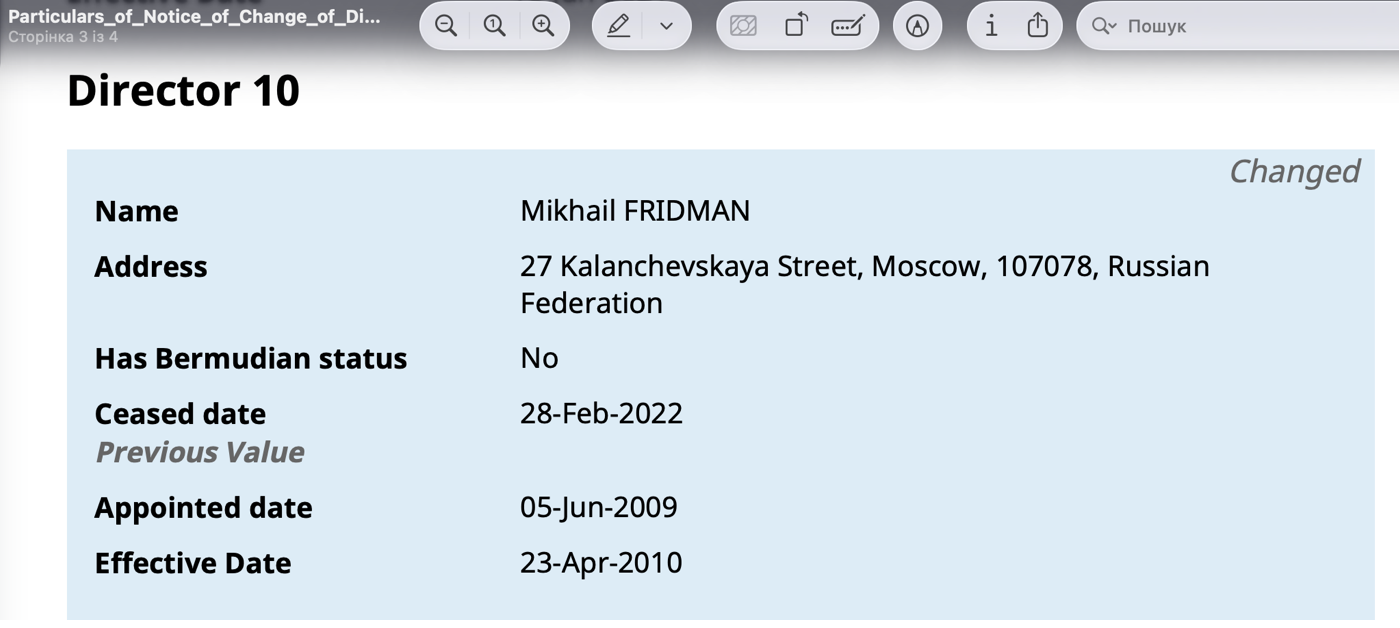
In its SEC filing, Kyivstar Group describes itself as a "controlled company": VEON holds a majority of the voting rights and has decisive influence over the election of directors, the issuance of shares and debt, and major transactions.
LetterOne remains VEON’s largest shareholder. Its entities control 45.46% of VEON’s shares and votes. Another 7.89% has been transferred to the Dutch foundation STAK: it votes independently, but the economic benefit from that holding belongs to a LetterOne entity.
LetterOne’s combined economic interest in VEON therefore stands at 53.35%. Taking VEON’s stake in Kyivstar Group into account, this amounts to around 44.6% of the indirect economic interest in the Ukrainian asset held by LetterOne. It is not a direct voting stake in PJSC Kyivstar: VEON controls the group. But it represents the largest VEON shareholder’s real share in the value of the Ukrainian asset.
Kyivstar Group itself identifies who stands behind LetterOne, citing a memorandum from the holding company: Mikhail Fridman owns around 37.86% of LetterOne, Petr Aven 12.13%, and Andrey Kosogov 47.24%. Together, they own 97.23%.
Calculated as a share of Kyivstar Group, the trio’s indirect economic interest is around 43.4%: 21.1% for Kosogov, 16.9% for Fridman and 5.4% for Aven. The founders of Russia’s Alfa Group still stand behind the offshore ownership chain.
Their defense is that Fridman and Aven left the boards of directors, do not vote, and receive no payments. LetterOne said so in 2022. But freezing their rights did not end their ownership. LetterOne’s audited financial statements for 2025 still list Fridman-linked Haberfield Limited and Aven-linked Dendar Investment Fund Limited as shareholders. Their stakes have not been sold, cancelled or confiscated.
LetterOne itself is not under EU, US, UK or Ukrainian sanctions, and its 45.46% stake in VEON carries voting rights. In its annual review, the holding company states explicitly that its teams are responsible for strategy, finance, capital allocation and the selection of senior management at its portfolio companies. What is more, LetterOne says it invests where it can have "real influence."
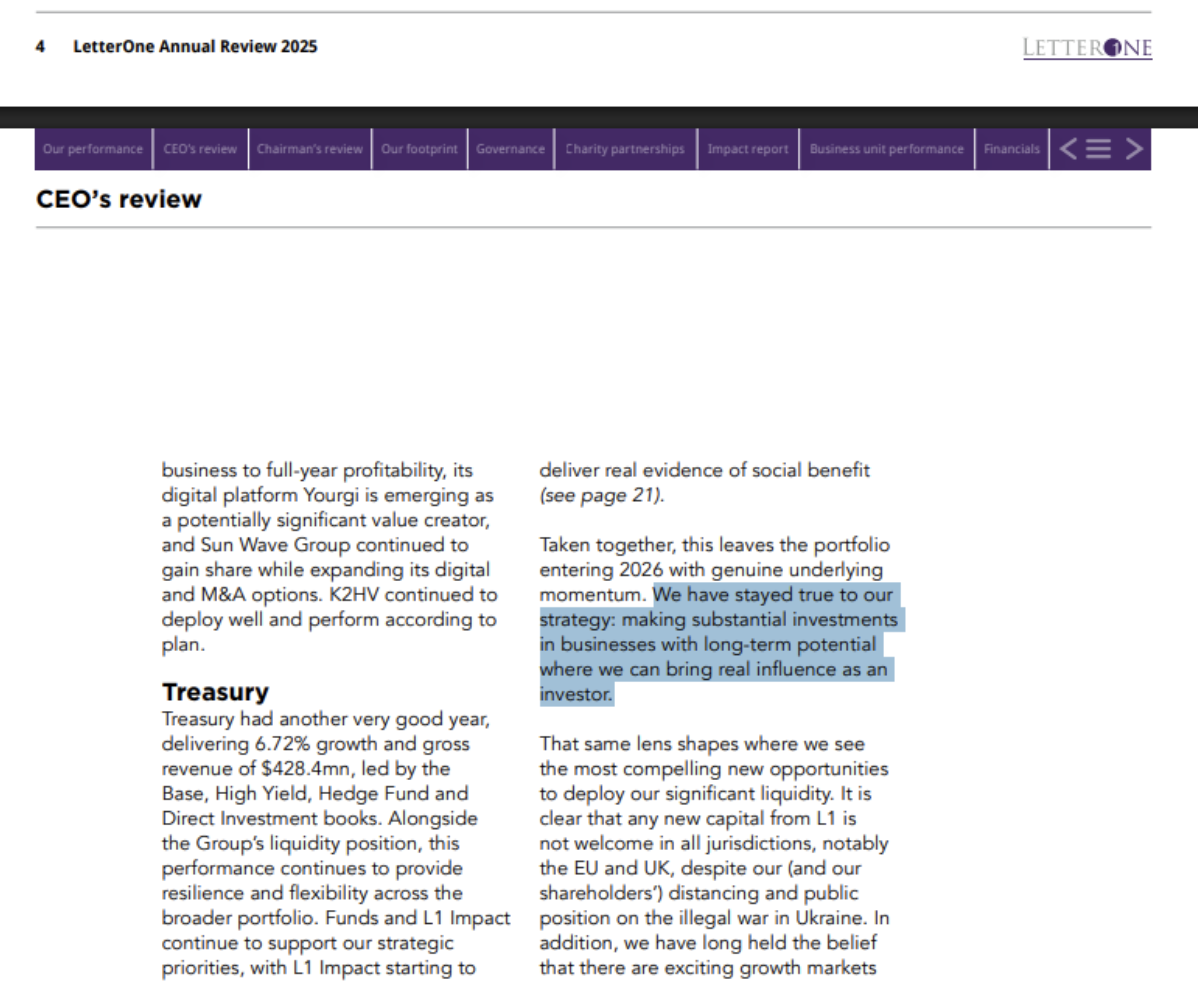
That is why the claim that "they do not vote" changes nothing in substance. Their ownership remains intact, LetterOne’s largest stake in VEON remains in place, and Kyivstar’s value remains part of the value of their holdings.
A freeze is not the removal of Russian ownership. At a minimum, it preserves Russian capital until conditions become more favorable for its owners. Though perhaps it does more than that.
The Dubai headquarters and Alfa managers
The principal executive offices of Bermuda-based Kyivstar Group and VEON are located in Dubai’s Index Tower. Ukraine’s PrJSC Kyivstar remains in Kyiv, but its president, Oleksandr Komarov, uses the Dubai holding company’s address in SEC filings. Sources within the company say Komarov regularly flies to Dubai for closed-door meetings with VEON’s management, where key decisions concerning the Ukrainian business are agreed.
The management center is located in a jurisdiction where Western sanctions do not apply automatically and can only be enforced through separate domestic decisions by the UAE authorities. The formal mechanisms of control, meanwhile, leave little doubt: VEON nominated nine of Kyivstar Group’s ten directors; directors affiliated with VEON may share information with its board for "management, supervision and control"; and an agreement running through the end of 2028 provides for strategic, legal, regulatory, financial and personnel services to Kyivstar.
This chain of control also rests on people. Andrey Gusev was a managing director at Alfa Group from 2001 to 2005 and headed its telecommunications holding company Altimo from 2013 to 2014. He now sits on VEON’s board while also serving as a senior partner at LetterOne Technology.

Lasha Tabidze has worked in VimpelCom/VEON’s Georgian business since 2011 and headed VEON Georgia from 2021 to 2023. He now holds a limited power of attorney at Kyivstar Holdings B.V., the direct owner of the Ukrainian operator.
LetterOne is headed by Jonathan Muir, a former finance executive at Alfa’s oil assets, Sidanco and TNK-BP.

Duncan Perry, in turn, sits on both the VEON and Kyivstar Group boards and works as a lawyer for LetterOne. Brandon Lewis also sits on both boards and is a strategic adviser to LetterOne. These are current overlaps in positions, rather than ties to a former team.
Boris Dolgushin has worked at VimpelCom/VEON since 2004: more than twenty years in Fridman and Aven’s telecommunications business.
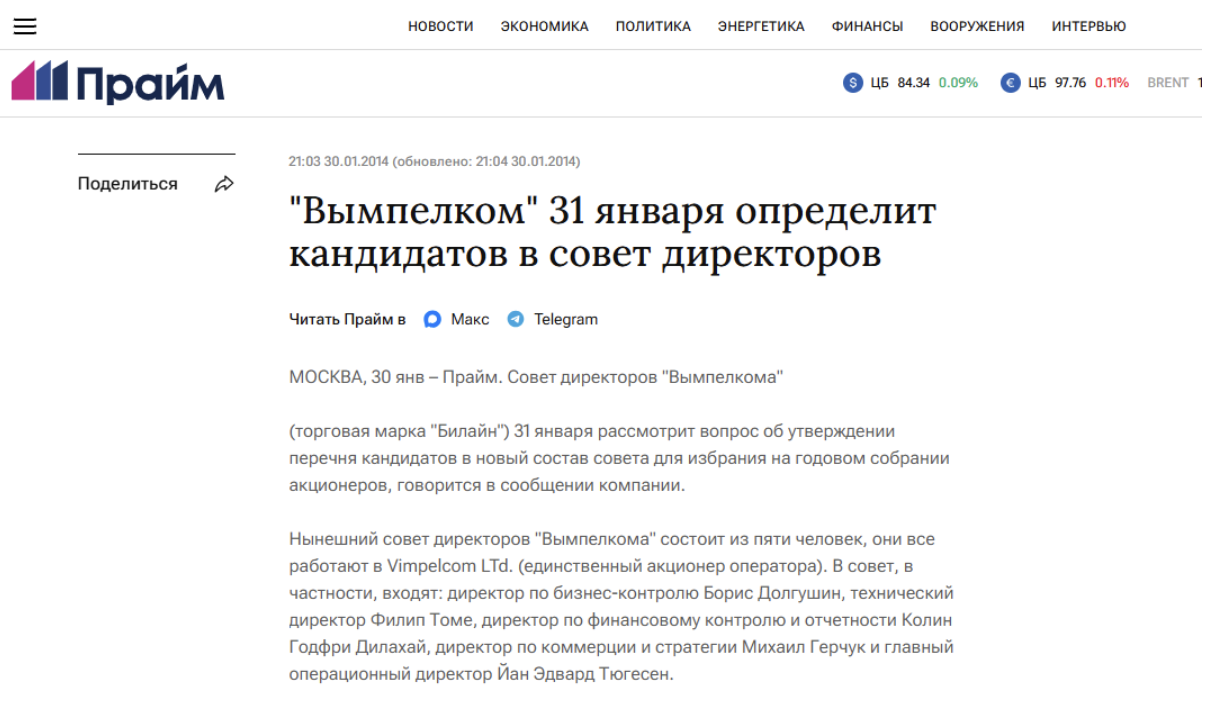
From 2019, he oversaw the finances of Ukraine’s Kyivstar, and from June 2025, those of Bermuda-based Kyivstar Group. As of July 1, 2026, Dolgushin is formally no longer CFO, but he remains Komarov’s adviser on strategic projects. A power of attorney that remains valid until revoked allows him to sign SEC forms on Komarov’s behalf. After changing positions, he continued to describe himself on LinkedIn as "Group CFO | Board Member."
Alfa’s management network and VEON’s mechanisms of control have therefore remained in place.
The Russian corporate network that survived the sale of VimpelCom
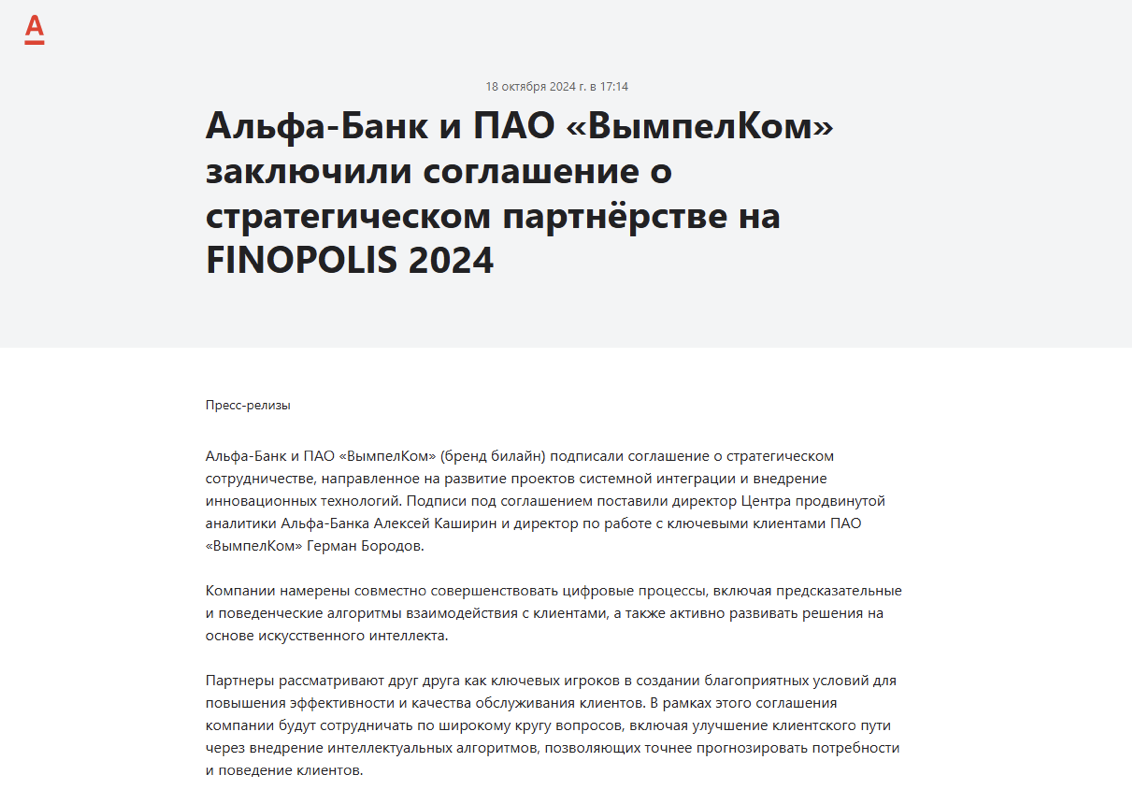
In October 2023, VEON sold Russia’s VimpelCom to an entity controlled by its management. This has been a common arrangement since February 24, 2022. Beyond questions about whether the management had the funds for such a deal, there is another telling factor. After the sale, Alfa retained financial leverage over the Russian operator. In VimpelCom’s 2025 financial statements, Alfa-Bank remains one of its two major creditors: the debt amounts to 45 billion rubles, and the agreement runs until 2031. In October 2024, after the change of ownership, the bank and the operator signed a strategic partnership agreement.
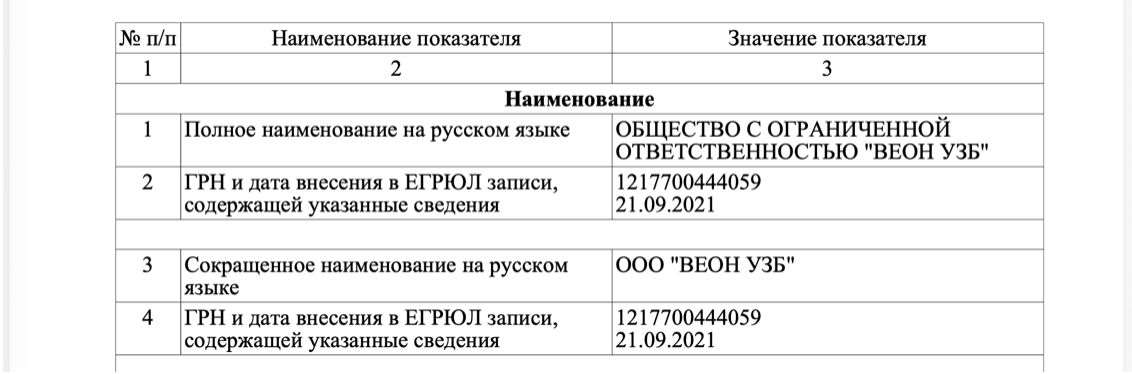
Another revealing link is Russia’s VEON UZB LLC, established to formalize the corporate structure above Unitel, the Uzbek operator known locally as Beeline, which was separated during VEON’s exit from Russia. VEON Holdings B.V. owned almost 100% of the LLC, while VEON Ltd. held a nominal stake. At the time, these two companies stood directly above Ukraine’s Kyivstar in the ownership structure. The Russian LLC was dissolved only on December 26, 2024, 444 days after VEON announced its exit from Russia.
Thus, until 2025, Ukraine’s PrJSC "Kyivstar" and Russia’s LLC "VEON UZB" had an identical ownership structure at the legal level: Netherlands-based VEON HOLDINGS B.V. (>99%) and Bermuda-based VEON LTD (<1%).
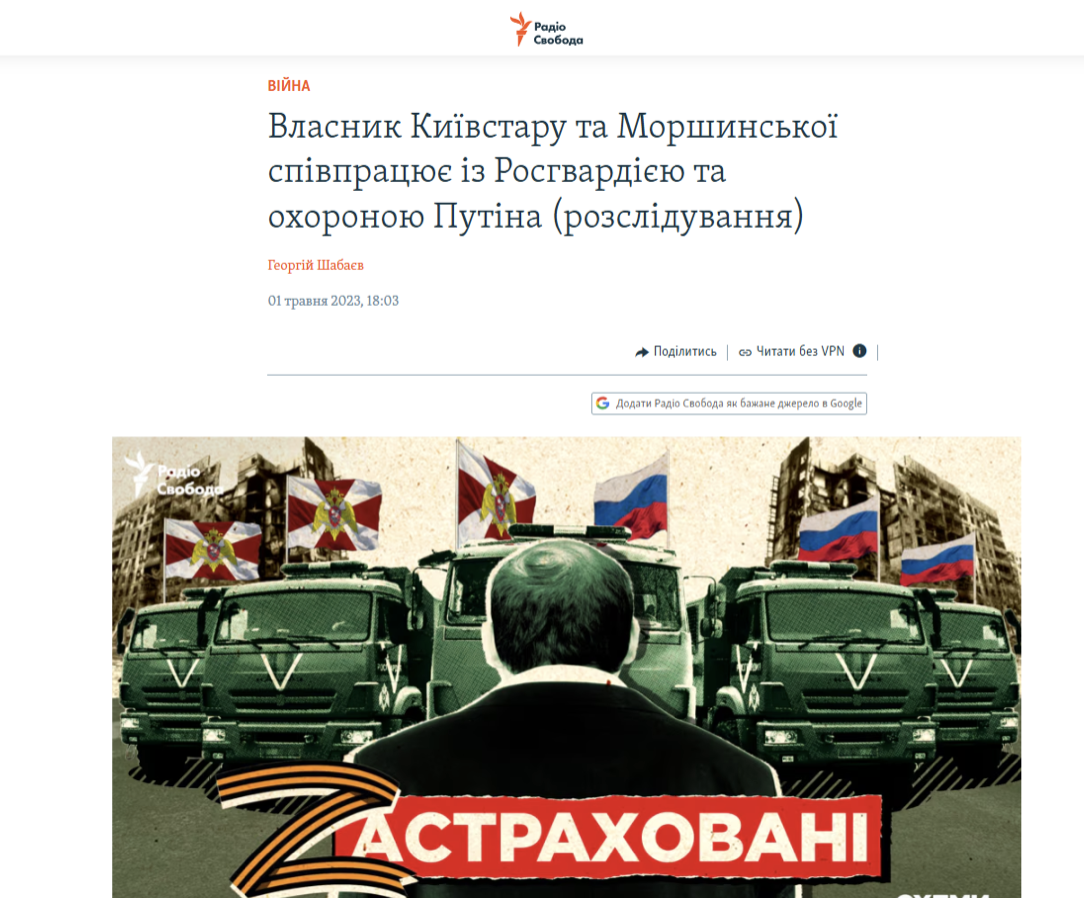
A Russian corporate footprint is sensitive in itself. It becomes far more troubling when viewed alongside Alfa’s actions directed against Ukraine after the full-scale invasion. Journalists at Schemes found that AlfaStrakhovanie insured Rosgvardia service vehicles: contracts signed between 2018 and 2022 totaled at least 280 million rubles. At the time the contracts were signed, the insurer belonged to Fridman and his partners. Fridman’s and Aven’s stakes in Russia’s Alfa-Bank and AlfaStrakhovanie were later acquired by their longtime partner Andrey Kosogov, now LetterOne’s largest owner with a 47.24% stake.
In 2023, the Security Service of Ukraine issued Fridman a notice of suspicion in absentia over the alleged financing of Russian aggression. According to investigators, after the start of the full-scale war, he invested around 2 billion rubles in Russian military factories, including the Tula Cartridge Plant and the Ural Optical and Mechanical Plant. Fridman was placed on a wanted list. There has been no verdict in the case.
This is the same business circle that retains an economic interest in Ukraine’s largest telecommunications operator.
Nasdaq: VEON retained control and monetized Kyivstar
On August 15, 2025, shares in Bermuda-based Kyivstar Group Ltd. began trading on Nasdaq. The listing was promoted as that of the "first Ukrainian company," but it did not change who controlled the group: VEON retained its 83.6% stake and gained a new way to monetize the Ukrainian asset.
In September 2025, Kyivstar Group paid VEON $124 million under a promissory note received by the parent company during the corporate restructuring. In February 2026, VEON sold some of its shares to outside investors and received another $139.8 million in net proceeds. Kyivstar Group itself received nothing from that sale. Through these two channels alone, VEON therefore received at least $263.8 million.

On August 31, 2026, the group filed a preliminary registration statement covering the potential sale of all 192,967,440 shares remaining with VEON Amsterdam. This is not a sale yet, but if it takes place, VEON will again receive the proceeds, not Kyivstar Group.
The Nasdaq listing did not remove Russian ownership from Kyivstar. It left VEON in control and turned the Ukrainian asset into a liquid, exchange-traded asset.
A smaller LetterOne funded with Ukrainian money
While the question of Kyivstar’s ownership structure was absent from the public agenda, the operator became a digital ecosystem. It bought 97% of Uklon for $158 million, increased its stake in Helsi to 97.99%, and in 2026 acquired Tabletki.ua for $160 million. Kyivstar TV, Kyivstar.Tech, big data, cloud services, and digital financial services are developing in parallel.
This structure follows the LetterOne model: telecommunications and technology, healthcare and everyday services are brought together around a single corporate core. Kyivstar provides it with a steady Ukrainian cash flow and an audience of tens of millions, while each acquisition expands the revenue base and potential value of the overseas Kyivstar Group, in which LetterOne holds an indirect economic interest of around 44.6%.

The mechanism is straightforward: Ukrainian money, users and services acquired in Ukraine increase the value of an asset in which Fridman, Aven and Kosogov retain an economic interest through LetterOne.
Kyivstar TV: from Alfa to the media network of Kolomoiskyi and Kvartal
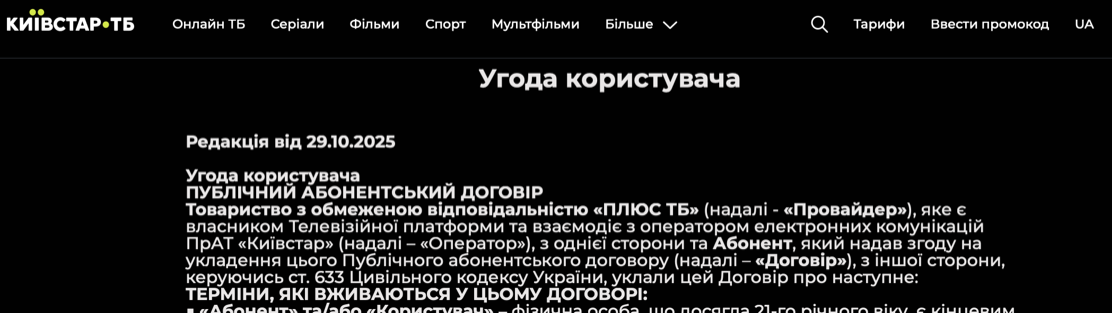
Kyivstar TV’s publicly available terms of service, dated October 29, 2025, name Plus TV LLC as the service provider and state that users enter into a contract with that company. Kyivstar Group’s SEC filing, however, states that since September 1, contracts have been concluded directly with Kyivstar, while Plus TV only supplies content and the platform. Two public documents from the same ecosystem contradict each other.

The more significant point is that the original corporate link from Plus TV leads to Ihor Kolomoiskyi’s media network. Plus TV is wholly owned by Solutions LLC, which also owns 100% of Vision 1+1 LLC, the legal entity behind the 1+1 Ukraine television channel. All three companies are registered at 23 Kyrylivska Street, the office of 1+1 Media, a group Kolomoiskyi publicly owned and controlled.

According to the ownership structure submitted to the National Council in 2024, the economic interests in Solutions belonged to Svitlana Mishchenko and Andriy Malchevskyi, with 38% each, and Yaroslav Pakholchuk, with 24%. All three are longtime 1+1 managers: Mishchenko has held senior positions in the group since at least 2016; Malchevskyi has developed its paid online platforms since the same period; and Pakholchuk became CEO and chair of the board in 2019.
Thus, Plus TV’s corporate lineage begins within Kolomoiskyi’s network. Indeed, the practice of transferring an asset into the names of trusted media executives is a particular form of Ihor Valeriyovych’s know-how.

A second notable branch leads from Solutions to Kvartal 95. The company founded an entity that later became Vision Kvartal TV. In 2024, Serhiy Shefir, Tymur Mindich, Ruslan Osadchyi and Pakholchuk became its shareholders. Pakholchuk remained a founder of Kvartal entities until August 31, 2026.
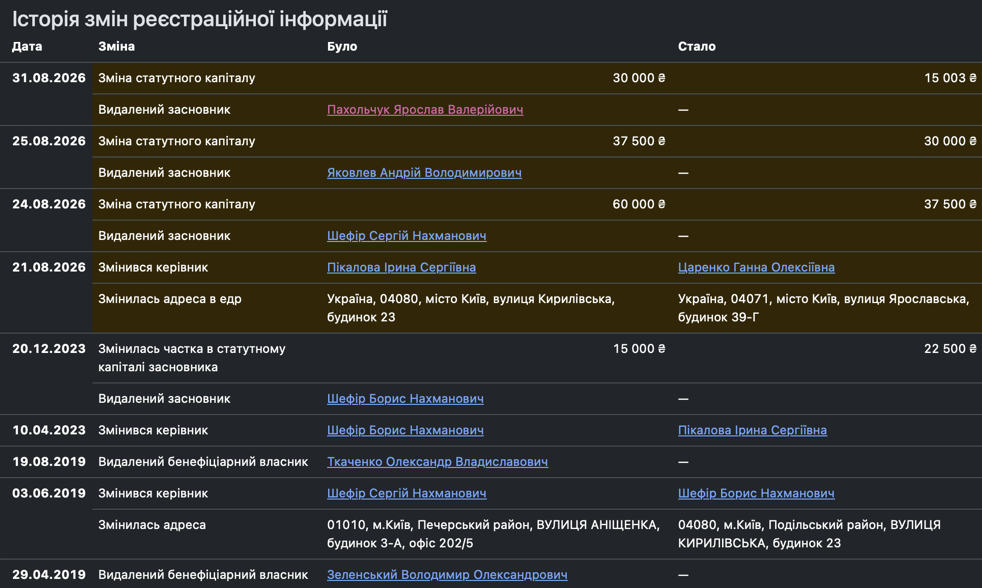
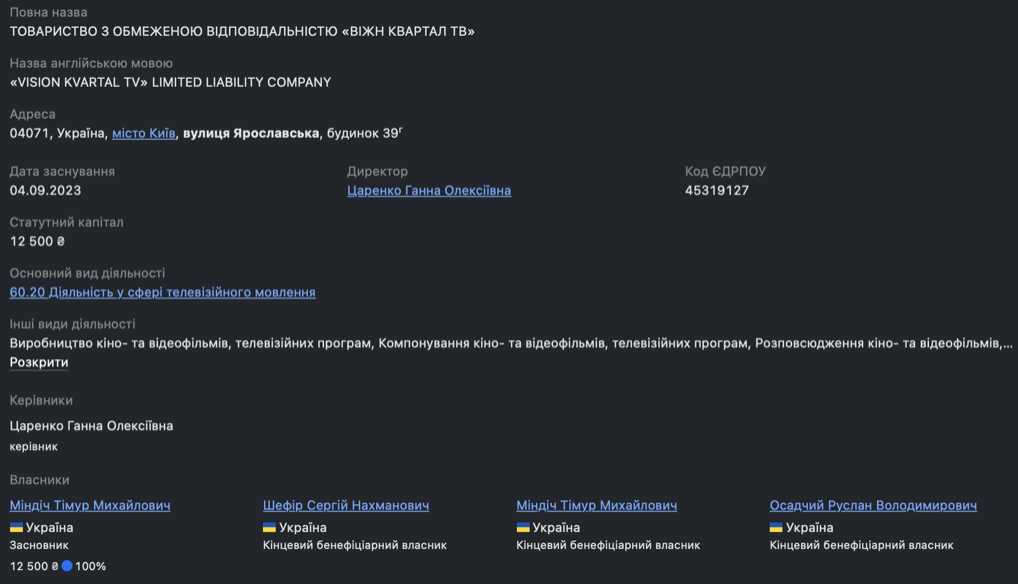
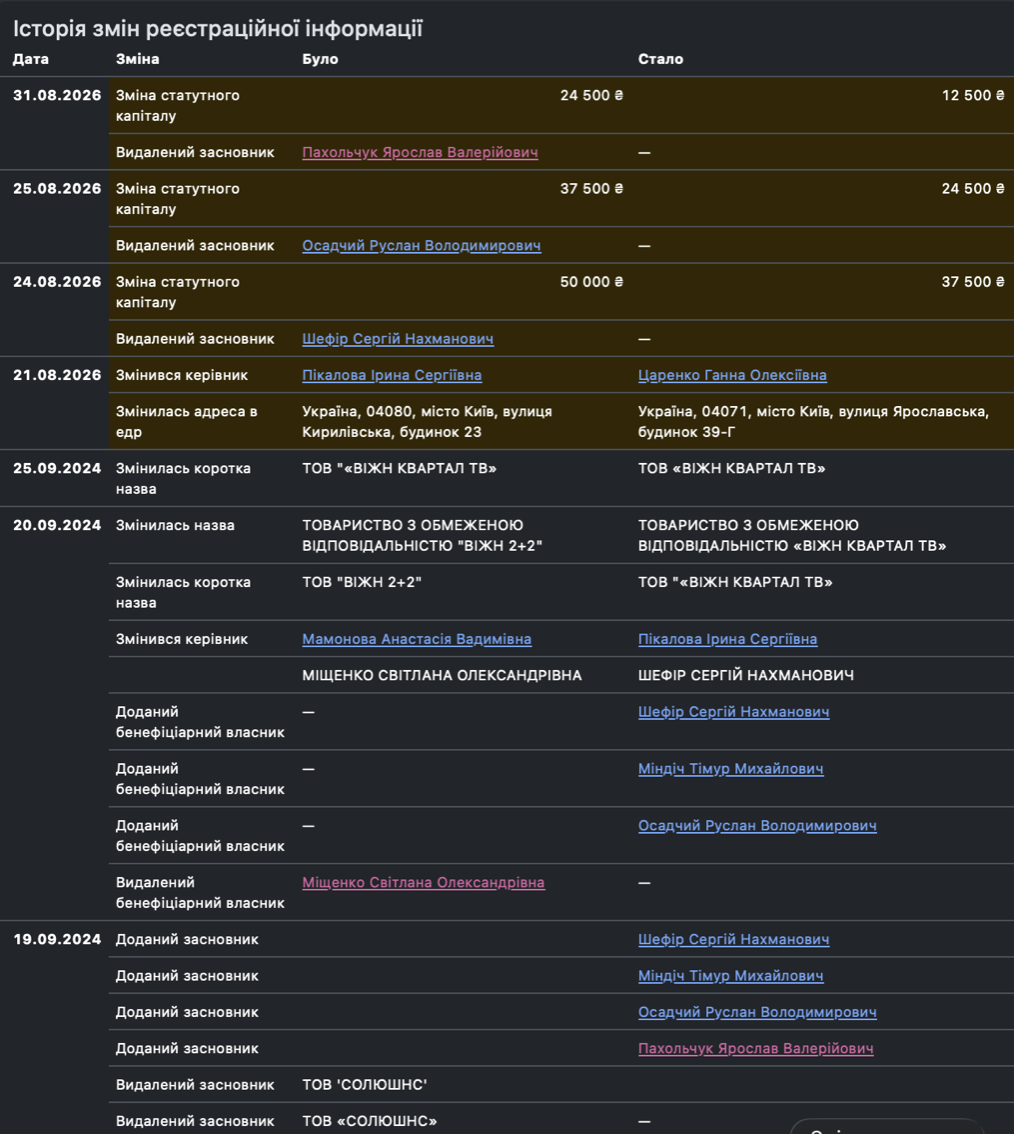
Thus, Kyivstar TV’s contractual partner emerged from Kolomoiskyi’s media network and has a direct corporate link to Kvartal through Solutions and Pakholchuk. Whether Mr. Mindich has any influence here remains an open question, but the hypothesis that the owners of VEON and 1+1 have reached broader understandings appears well founded.
"Big Fridman is watching you"?
"We know where this customer is. We know what transport they use," Oleksandr Komarov said in an interview with Nasdaq, explaining the advantages of big data drawn from various sources.
At the end of the second quarter of 2026, Kyivstar had 21.8 million mobile subscribers, while the group’s digital services had 29.3 million quarterly active users. Admittedly, this is not a count of unique customers: one user may be counted across several services. But it is precisely this overlap in audiences that the group is turning into a business model and actively monetizing.
In its second-quarter report, Kyivstar Group describes users moving between services within the ecosystem and services drawing on each other’s audiences at "near-zero acquisition cost." For Helsi and Tabletki, it lists lead generation, telemedicine, prescription medicine orders and advanced data analytics.
Within a single ecosystem, the telecommunications division processes billing, payments, and device location data; Uklon handles addresses and routes; Helsi, medical appointments and prescriptions; Tabletki, medicine searches and reservations; and Kyivstar TV, content consumption history. Is too much data about Ukrainians being concentrated within a single corporate network linked to such beneficial owners?
Admittedly, the documents do not prove that a single database exists in which all this information is combined into one personal profile, and the group does not disclose the extent of data matching. But they explicitly document audience migration and analytical synergies. The phrase "Big Fridman is watching you" is therefore, of course, an abstraction. Yet it reflects a very specific systemic risk: through LetterOne, the capital of Fridman and his partners remains within an ecosystem spanning communications, transport routes, healthcare, medicines and media consumption.
After the Russian cyberattack in 2023, when, according to the Security Service of Ukraine, the attackers had been inside Kyivstar’s systems since at least May, this is also a matter of national security. The public has still received no detailed explanation of what happened beyond Oleksandr Komarov’s statement that "an employee’s account was compromised." Questions about who has access to these data, how they are matched, and what barriers separate them from the overseas management hierarchy also remain unanswered. Fridman’s "frozen rights" do nothing to eliminate these risks.
For the bank — nationalization. For water — a confiscation lawsuit. For telecommunications — Nasdaq
On July 21, 2023, Ukraine nationalized the systemically important Sense Bank because of sanctions risks associated with its owners. In response, ABH Holdings, an entity belonging to the former shareholders, brought a claim exceeding $1 billion before ICSID (the International Centre for Settlement of Investment Disputes).
In September 2024, the Ministry of Justice filed a lawsuit with the High Anti-Corruption Court against Fridman, Aven, Kosogov and Rissa Investments, seeking, among other things, the confiscation of IDS Ukraine’s assets. Haberfield, Slavisilla and Dendar — the entities through which the same individuals own LetterOne — were joined as third parties. The ownership chains of IDS and Kyivstar differ, but the people and the sanctions against them are largely the same. And the strategic importance of an operator adding healthcare, transport, medicines and television to its telecommunications business is clearly greater.
Ukraine has already recognized Fridman’s connection to Kyivstar as legally significant. In October 2023, corporate rights that investigators attributed to Fridman were seized: 47.85% of PrJSC Kyivstar, as well as stakes in Ukraine Tower Company, Kyivstar.Tech and Helsi. The key point is that the state considered the connection sufficient grounds for seizure at the time.
VEON secured the removal of the restrictions: on November 29, 2024, a court lifted the seizure. Nine months later, Kyivstar Group listed on Nasdaq. Yet, for some reason, the Ministry of Justice has not filed a similar lawsuit concerning Fridman’s, Aven’s, and Kosogov’s economic interests in Kyivstar Group.
Meanwhile, Kyivstar Group itself warns investors in its SEC filings of the risk of nationalization or confiscation because of the sanctions status of some LetterOne owners. In its filings, the company separately identified the easing of sanctions against LetterOne shareholders as a risk. On September 22, that risk partly materialized: the EU removed Fridman from its list, although US, UK and Ukrainian restrictions remained in force. Aven, incidentally, remained on the EU sanctions lists.
Following the EU’s decision, the Ukrainian authorities must answer three questions.
First. Why is the Ministry of Justice seeking to confiscate IDS from Fridman, Aven, Kosogov and related entities, while taking no comparable action against their economic interests in the strategically more important Kyivstar? And why are the authorities not even raising the question of forfeiting to the state or nationalizing the stake behind which sanctioned Russian co-owners stand?
Second. Has the Security Service of Ukraine conducted a counterintelligence review of the personnel and management hierarchy linking LetterOne, VEON, and Kyivstar, and of the risks associated with access to data? Has there been an independent technical audit of the ability to match data across Kyivstar, Uklon, Helsi, Tabletki, and Kyivstar TV? Has the Verkhovna Rada Committee on National Security, Defense and Intelligence requested such reviews and heard their findings?
Third. What will Ukraine do now that the EU has already lifted sanctions against Fridman? Have the National Security and Defense Council, the Security Service of Ukraine and the Ministry of Justice identified exactly which barriers currently prevent the Russian oligarch from regaining voting rights, receiving payments and corporate information, and selling or pledging his stake in LetterOne, VEON’s largest shareholder? And is it not time to act now, while those barriers still exist?
Until yesterday, the question was: what will Ukraine do if the West starts lifting sanctions against Fridman? Now the "if" is gone — the EU has already done so.
Ukrainian, US and UK restrictions remain in place. But sanctions have not stripped Fridman of ownership: his economic interest remains, while Kyivstar continues to grow in value, buy up new businesses and accumulate ever more data about Ukrainians.
The EU’s decision has made the threat concrete. Fridman may not automatically regain all his rights tomorrow, but he could begin reclaiming them through the courts, political agreements and corporate decisions, just as he has already secured the lifting of European sanctions. Waiting until his voting rights, payments, and access to information are restored would mean acting after the fact once again. It is time for Ukraine to initiate its own legal mechanism for removing Russian economic interests from Kyivstar while it still has the sanctions and legal tools to do so.


