



Andrii Illienko: "I don’t remember Rada ever leaving for four weeks in September to do who knows what"
The Svoboda Battalion is currently fighting in two sectors at once, Dobropillia-Pokrovsk and Kharkiv, so Andrii Illienko and his comrades-in-arms have to carry out very different types of combat missions. The Svoboda Battalion officer described those missions in an interview with Censor.NET.
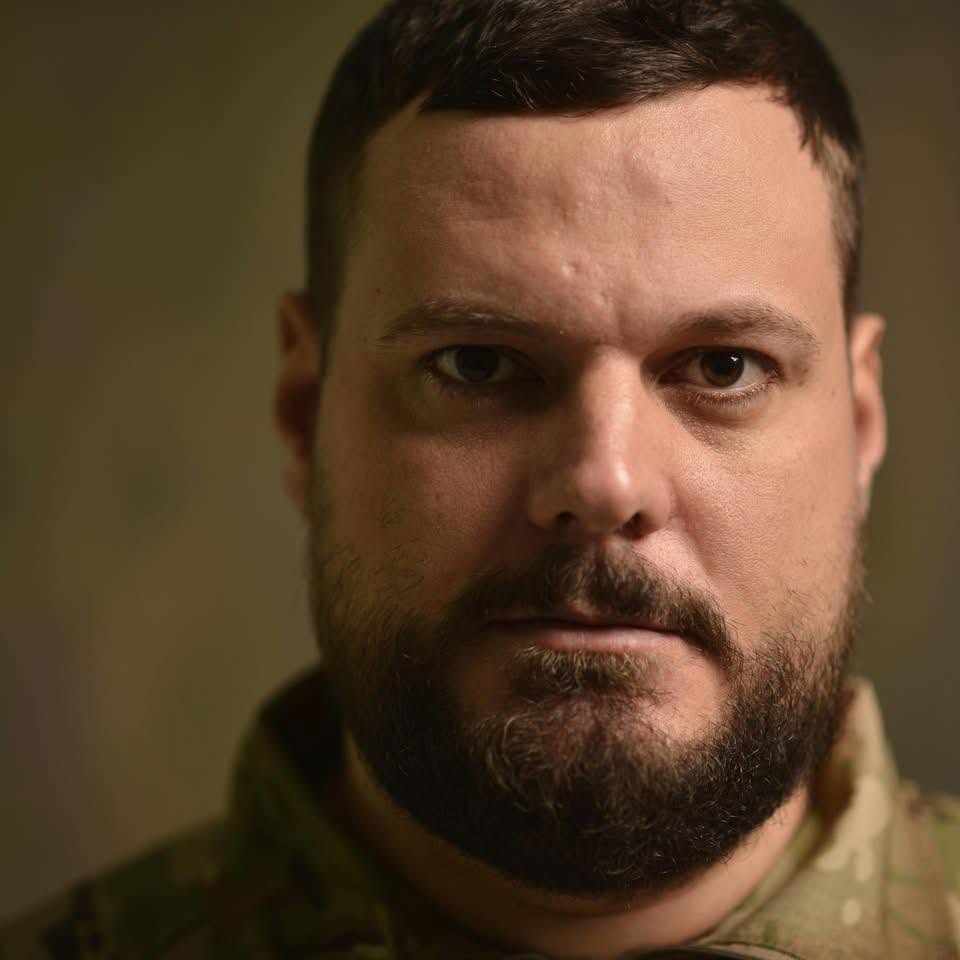
And given that Illenko has considerable experience as a Member of Parliament, we asked him about the issues surrounding the 2027 State Budget, about mobilisation, and also about what the state’s priorities should be in the fifth year of the Russian-Ukrainian war.
The conversation also included a brief historical digression — naturally, in the context of the current state of affairs...
But we began with purely topical issues.
- Yes, the Svoboda Battalion has indeed been carrying out combat missions in two sectors simultaneously for several months, Illienko confirms. The first is the Dobropillia-Pokrovsk sector, where most of the battalion is still deployed. The battalion has been fighting there since the middle of last summer and continues to carry out missions as part of a defensive operation.
As for the other part of the battalion, it has been carrying out missions in Kharkiv Oblast for several months. In this case, it operates as the unmanned systems component of the 23rd R.U.G. Assault Regiment of the National Guard’s 2nd Khartiia Corps.
- So, in this case, your unmanned systems component was sent to reinforce Khartiia in Kharkiv Oblast?
- Well, we were already part of the Khartiia Corps, but here we are talking specifically about the 23rd Assault Regiment. The regiment is distinctive because its assault units are staffed by foreign volunteers, mainly men who come from Latin America. The Svoboda Battalion is now in the process of becoming an unmanned systems battalion within the 23rd Assault Regiment. A smaller part of the battalion has already made that transition and is carrying out missions in Kharkiv Oblast, while most of the battalion remains in the Dobropillia-Pokrovsk sector.
- In the Dobropillia-Pokrovsk sector, you are on the defensive, countering heavy enemy pressure. The enemy is launching meat assaults, using KABs and deploying an ever-growing range of UAVs. Do you just have to endure it?
- Generally speaking, yes, but we do more than endure it. We actively strike the enemy, and the battalion has demonstrated its adaptability and effectiveness. It is important to understand that the battalion has been fighting since the first day of the full-scale war, starting with the defense of Kyiv. For all those years, it fought as an infantry battalion, but it now has a large, well-developed unmanned systems component, including both strike drones and unmanned ground vehicles. So we have extensive experience in both infantry and unmanned systems operations. The combination produces results: despite spending more than a year without rotation in a very difficult sector of the front, we are successfully holding the line and inflicting enormous losses on the enemy. Before that, the battalion also fought in extremely difficult battles: we defended the outskirts of Siversk for more than two years. Then, last summer, we were urgently redeployed near Pokrovsk when serious problems arose there.
- So you were moved from one crisis to another?
- Yes, and the battalion withstood that transition, although it was very difficult given the minimal rotation. We have now been fighting for a year and two months without any rotation at all. Of course, people come off their positions when possible, but the battalion has not been withdrawn to recover. The part of the battalion that remains there continues to carry out combat missions.

- How does the command explain why the battalion has not been withdrawn to recover?
- It doesn’t. No one offers an explanation, because this is war: there are orders, and they have to be carried out. We have to hold our positions; that is the operational situation. Everyone understands this and manages as best they can. If there is an opportunity to pull people back for rest, they are pulled back. If there is an opportunity to give people leave, they go on leave. If people have come back from their positions, of course they are given time to rest. Seeing their families and going home, that is essential.
So it is not as though people have gone a year and two months without being home or seeing their families. They do have that opportunity.
- You mentioned the enormous losses the Svoboda Battalion inflicts on the Russians. What do you make of the figures cited by Polish Prime Minister Tusk, suggesting that Ukraine loses around 27,000 service members killed and wounded each month? Were you surprised when you heard that figure?
- You know, my experience in my fifth year of service tells me that figure does not reflect reality. And it includes wounded personnel who may be able to return to duty within a week.
But even as a combined figure for those killed and wounded, it is greatly exaggerated. Our media distorted it further: in many places, 27,000 total casualties immediately became 27,000 killed.
- That happens. As figures pass from one outlet to another, they take on false meanings...
- Especially since even the most basic statistical calculation shows that the average ratio of those killed to those wounded is about one to four. That is the standard assumption for modern wars. So even from that standpoint, the figure is already exaggerated by at least a factor of four.
But let me say it again: even in that form, the figure is not credible. We do not have losses on that scale. It is grossly inflated.
- Let me ask about something else. Before every conversation with troops on the front line, I ask what urgent needs we should raise money for. The usual answers are drones, vehicle repairs and armoring electric vehicles.
What does the Svoboda Battalion need donations for?
- The Svoboda Battalion is constantly fundraising. That is unavoidable, given the nature of modern warfare. Without the help of benefactors, local authorities and Ukrainians who care, it would be very difficult. Frankly, we would not have managed without that help.
So we run fundraisers all the time. Some are at the battalion level, for example, to pay for the battalion’s communications equipment, UGVs or drones.
Others are local fundraisers, when the guys themselves raise money to repair a beat-up vehicle or something like that.
- Or a fundraiser like this one, through the media. What are we raising money for in this article?
- Our battalion has its own patronage service. We try to care for our wounded and for the families of those killed.
- What exactly does the Svoboda Battalion’s patronage service do?
- A great deal. For example, if one of our soldiers is wounded, he is not left on his own. People visit him and provide help as quickly as possible. He receives a support package containing adaptive clothing, hygiene supplies and underwear. Almost always, when someone arrives after being evacuated from a position, their clothes are bloodstained, burned or torn. Or the clothes may simply have been cut off while they were receiving medical care. Then they have no clothes or underwear. Everything they had may be dirty or unusable.
Here, they are given hygiene supplies right away. After that, the service stays in contact and, if needed, helps with the many issues that arise.
Its primary role, though, is to accompany, help and support our wounded. It also works with the families of those killed and missing in action.
That is a fairly broad range of issues, and the patronage service is among those handling them. Of course, all this requires funding – from fuel for travel to the purchase of the supplies themselves. Especially since this work is done entirely by volunteers.
- Readers who want to help the wounded soldiers of the Svoboda Battalion will find the necessary information at the end of the article. Let’s turn to another subject. Andrii, as part of a broader initiative, the Svoboda Battalion offered those who had gone AWOL before June 12 of this year a way to return to service by transferring to your battalion. The offer remained open throughout the summer. May I ask what the results were?
- Yes, it was a broader initiative. A deadline was set at 100 days, and it expired on September 20. As for our battalion, look, unfortunately I cannot say it was a spectacular success or that people were lining up. There have been some results, though. Of course, we would have liked better results, because bringing people back from AWOL is a very important part of the work.
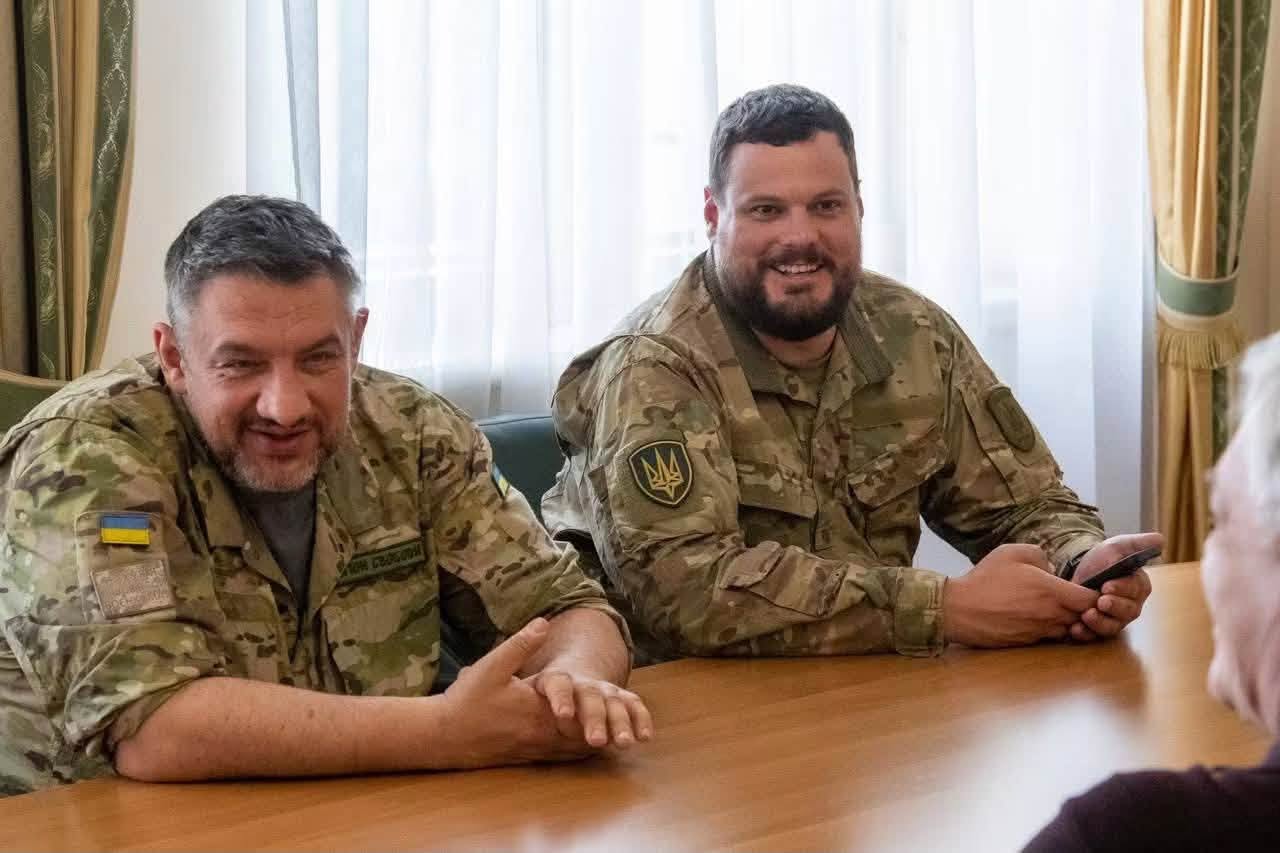
Each case has to be considered individually. There are different kinds of AWOL cases, and different people can end up in that situation. Each person’s circumstances need to be considered on their own merits. If someone goes AWOL from a training center immediately after mobilization, or even before reaching the training center (that happens too), that is one situation. But if someone goes AWOL, for example, because of a complete breakdown in their relationship with their commander (or because they were not allowed to transfer to another military unit), that is an entirely different situation.
So each case has to be considered individually.
- What problems did you encounter in bringing these people back from AWOL?
- When there are windows for returning to service, there are no major problems. But there was one significant administrative problem this time. Previously, when it came to returning from AWOL, we could take in anyone, regardless of where they had gone AWOL from — the National Guard, the Border Guard Service or the Armed Forces of Ukraine. This time, a rule was introduced under which we, as a National Guard unit, could take back only those who had gone AWOL from the National Guard. We could not take in those who had gone AWOL from the Armed Forces.
I think, by the way, that this is the main reason why far fewer people came this time than usual. Previously, most of the people who came to us were from the Armed Forces. They had gone AWOL while serving in the Armed Forces and later returned to service with us. This time that was not possible because, in my view, an entirely bureaucratic, agency-specific barrier had been introduced. I understand the reasoning – why should our AWOL personnel replenish another agency? – but I still think it undermines the very logic of voluntary return.
- Do you think that, if this narrow internal bureaucratic rule were removed, the opportunities to bring people back and the number returning would be much greater?
- Of course. The Armed Forces are a much larger organization than the National Guard. So, mathematically, more people have gone AWOL from the Armed Forces. That also means there is a larger pool of people who could potentially return to service with us, whom we could take in. Not every unit actively campaigned to bring people back. Those that did were the ones genuinely working on it and experienced in it, including us. And, without false modesty, our battalion is well known and, I believe, has a good reputation. That is why many people come to us.
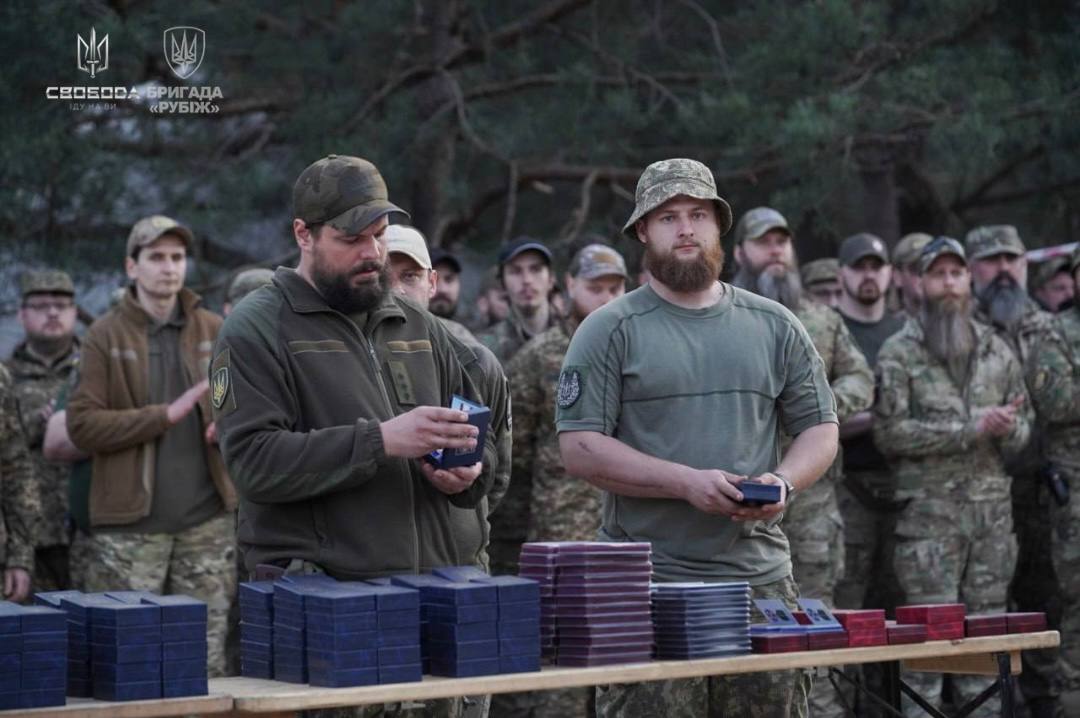
- Let’s move from the issue of AWOL to mobilization. Many active-duty service members are dissatisfied with how it is conducted and the principles behind it. In your personal view, what important reforms should be made in this area, even if they may be unpopular on the home front?
- Look, mobilization has never been popular in any society, country or era. It involves an element of compulsion, and a compulsory process cannot, by definition, be popular. What matters is making it as reasonable as possible and minimizing the questions and problems it raises.
What do I see as the priorities? Several things. First, fair mobilization. That does not mean sending everyone to the front at once. It means that mobilization should apply equally to everyone, regardless of social status, connections, wealth and so on. It is unacceptable when people with a certain social and financial standing serve only if they decide to do so, while people without those advantages, money, connections or social status, are not asked whether they want to serve. This creates additional social tension and gives enemy propaganda arguments to use. The mobilization process must therefore be demonstrably equal for everyone.
That leads directly to the second issue: corruption, which must be stamped out as firmly as possible at every stage of mobilization.
And third, no less important: a country fighting a war for its existence, for its survival, cannot allow open anti-mobilization propaganda or open propaganda against its own army within its borders. It cannot tolerate attacks on service members, the killing of service members away from the front, or similar acts. That is unacceptable, and it must be stopped just as firmly as corruption in the mobilization process.
Those are the things I consider the priorities. Of course, we also need maximum transparency, digitalization and simpler procedures across the board. But it seems to me that we already have quite a lot in place in this respect. Reserve+ and so on. You cannot say that nothing is being done. I do not even know whether there are other countries where mobilization has been conducted using digital tools...
- A fundamental question. Recently, some politicians and even senior representatives of state institutions have begun to say something that used to be considered taboo: that the mobilization age needs to be lowered. Do you support such a move, perhaps with certain reservations?
- Given the all-encompassing nature of the war we are in, I believe we need to do what we have not yet done. For example, there are now a great many people who are already subject to mobilization under current law but are evading it. Some are evading mobilization outright, without any documents to cover them. Others have documents obtained through bribes or falsified medical findings.
Exemptions from mobilization are also very often granted too broadly. It is one thing to exempt employees of genuinely critical enterprises, those without which the country truly cannot function. It is quite another when the exemptions extend to absurd and unfair cases.
To sum up, I would start by putting things in order within the existing mobilization framework, including the current age limits. Only then would I consider other steps.
- Another painful subject is the 2027 state budget. Andrii, you served on the budget committee during your time as an MP, so your opinion carries particular weight.
- I did, I did, but that was a long time ago, during the 2012–2014 parliamentary term...

- Our country’s leaders openly say that Ukraine faces serious liquidity problems and a shortage of funds to cover both current wartime needs and spending in the coming period. Zelenskyy speaks of an "astronomical funding shortfall"; the finance minister says the budget is under its greatest strain since the start of the full-scale invasion. Prime Minister Serhii Koretskyi warns that public finances are close to a critical state.
So everyone understands (how could they not?) the immense scale of the problems. But are we seeing a response that matches the scale of the crisis?
- I think there are several factors here. First, we have to understand the situation we are in. We are now in the fifth year of an all-out war. And much of the state has continued to function, I would not say well, but at least satisfactorily. Salaries and pensions have been paid on time, and basic budget programs have been funded. There has been no catastrophic economic collapse.
That is a major positive in itself, because things could have been much worse. We understand that this has been possible largely thanks to the support of our foreign partners. Without that support, the situation would, of course, have been extremely difficult.
But there are things I cannot understand. For example, our budget problems are an open secret. People began talking about them back in the spring. Now it appears that the final months of this year will be difficult. Unless additional funds are secured and the necessary bills are passed to obtain further financing from our European partners, we will face a serious problem in the final months of this year.
- Especially since the state’s defense and security spending is many times greater than its own revenues. The draft budget for 2027 envisages spending of more than UAH 7 trillion, while taxes are expected to bring in only about UAH 2.8 trillion.
- The problems are very serious. We also need to think seriously about next year, because, as we all know, the budget process is now in full swing. At the same time, we face the question of how to cover the shortfall in the final months of this year.
And I repeat: these problems were known by the middle of summer at the latest. They had been discussed again and again. Yet in the second half of July, the Verkhovna Rada which has a host of unresolved issues and must do its part (because budget policy and finances are the responsibility of both the government and parliament) — simply goes on recess for a month and a half! Then it meets briefly, does nothing to resolve these problems in any fundamental way, and goes on another break! That means the Verkhovna Rada will again hold no sittings for almost a month. Honestly, I do not understand the logic.
- Neither do I. Andrii, you served in the Verkhovna Rada for two parliamentary terms. Can you recall a time, even during peacetime, when parliament did not work in September?
- No, I cannot. On the contrary, September was always a very active month because it was the first month after the so-called recess. The budget process also always began in September, and many legislative initiatives were ready for consideration.
I do not idealize the work of previous parliaments in any way. But I genuinely cannot remember the Verkhovna Rada ever taking four weeks off in September to do who knows what. It is very strange and troubling, given the state of the economy and what is happening in our country now. Especially since it is being said openly that the Verkhovna Rada must pass an entire package of measures. This is not a single vote: there are dozens of decisions parliament must make to try to stabilize our financial situation and prevent major problems.
- I usually try to avoid making value judgments in interviews, but I will make an exception here. I can only call this irresponsibility and immaturity on the part of the current authorities. I mean the authorities as a whole, because we know whom the parliamentary majority answers to.
- I can only agree with your assessment. The current Verkhovna Rada certainly does not inspire confidence as an institution that guarantees the stability of the state system. Unfortunately, quite the opposite.
But we have to work with what we have. Objectively, we cannot elect a different Verkhovna Rada now. So we must get this parliament to pass the decisions the country critically needs. I hope that will still happen. But with this approach to work, with these long breaks...
- Let me quote the Accounting Chamber: "There are difficulties in meeting tax and customs revenue targets, as well as growing tax debt, forcing the government to seek additional domestic resources and restrain or postpone non-essential spending."
That brings me to a question for you. Does the state have ways to at least ease these difficulties? In other words, where can it find the money?
- Look, I understand that there are larger issues, such as European assistance and everything else. But let us do the homework we can do ourselves, without waiting for help from someone else.
- For example?
- For example, I simply do not understand how the construction of stadiums and parks can be funded today.
- ...as well as various facilities far from the theater of operations.
- Yes, facilities that are far away, expensive and unnecessary. You know, I have spent years in the east, where there are several frontline cities that were even occupied before being liberated. When this construction began, those cities were 30 kilometers from the front line. Yet after 2022, during the full-scale war, new civilian infrastructure was built there. Those facilities have now been destroyed. They simply no longer exist. Nor does the money spent on them.
I remember well how we drove through Pokrovsk the summer before last, when it was still the main route into and out of Donbas. As we drove through in the summer of 2024, we saw flowerbeds, benches, little parks and so on being installed all over Pokrovsk. They were put in place, and just a few months later, fighting began in the city...
What else can you call all this absurdity? It is, you know, a feast in time of plague. Madness. And if you add it all up, many billions are being spent on these things. We cannot allow that! Today, state money should go to two things: the military and the defense industry. In other words, to what is critical for the country to keep functioning. Everything else can wait. This waste of billions, this absurdity, must stop. The same goes for populist schemes such as "let’s give everyone a thousand hryvnias." Listen, even for the poorest person, that thousand hryvnias will not change their life.
- What do you think drives such measures more: a genuine desire to support people and lift their spirits, or a desire to retain electoral support ahead of elections that will eventually take place?
- I think it is all of those things. The point is that it is populism. We need to understand that today, amid such a trial, everything must serve one goal: victory and the country’s survival. There are no elections now, and we do not know when they will take place. More than that, we still have to fight hard to ensure that they can take place at all, that they are elections in an independent Ukraine, rather than in exile.
- Does it irritate you when you return to areas away from the front and civilians ask, "When will all this end?"
- No, because I am used to it. I understand that there are two sides to it: people ask me not only as a soldier, but also as someone they once saw "on television," so to speak...
- Someone privy to state secrets. Yes, television gives people that aura.
- They think I must know something... In reality, I analyze events and follow them closely, but I have no inside information. I am not involved in the negotiations, nor am I part of the country’s or the military’s senior leadership. So I have no exclusive information. I have only what I know and see from open sources. I analyze that and draw conclusions. For now, my conclusion is this: Putin has no intention of ending the war. He wants to keep fighting for as long as he can. As long as Russia has an economy and a political system that allow him to continue the war, or as long as he remains in power, unless he drops dead or is removed by a palace coup or political upheaval, while all that remains in place, the war is very unlikely to end. He can no longer imagine his rule without war. As long as the war continues, he can keep selling the claim that "we will soon force Ukraine to yield, and then..." The moment the war stops, even in a limited way, even through a temporary truce or ceasefire, he will have no way to explain what it was all for, or why such an enormous price was paid if Ukraine still exists: independent, armed and beyond the Kremlin’s control.

- And large numbers of their soldiers will be returning home, creating serious problems. Not to mention that shifting an economy from wartime to peacetime is much harder than putting it on a war footing. You cannot run the meat grinder in reverse.
- The most important thing is that the question "What was it all for?" will hang in the air, even if he suppresses everything he can inside Russia. The elephant in the room will remain: you are no great restorer of the empire; you are a pathetic failure.
You do not need to be a great expert on Moscow’s history to know that every major period of turmoil in Russia began after an unsuccessful war, not necessarily even a lost one. Take the First World War as it stood in 1917, before the fall of the Russian Empire. It had not ended in a catastrophic defeat for Russia. German troops were not yet near Moscow, as they were during the Second World War. The front was in Right-Bank Ukraine and Belarus, still quite far away. But at a certain point, it became clear that the war could not be won. It had dragged on, losses were heavy, and the prospects were unclear. The home front was exhausted, the troops at the front were exhausted and an explosion followed.
- So what their rulers fear most is the point when their subjects begin to think: we believed you were a tsar, so we allowed you everything. But it turns out you are weak...
- Yes. Weakness is not something Russian tsars or general secretaries are forgiven for. They were forgiven much, if not everything – even brutality and mass repression. What mattered was that they succeeded in wars and conquests and upheld imperial prestige. If they cannot do that, if they cannot win a war, they will not be forgiven.
That is why Putin will borrow money and take off his last jacket, but he will keep playing until he has lost everything. It seems to me that, as long as he is still in the game, he has hope of winning. That is why I said I do not yet see much prospect of this ending. In the near future, probably not. I think the war will continue for now, because Russia wants to keep fighting.
Attention! Those who wish to help wounded soldiers of the Svoboda Battalion can donate here:
Patronage Service of the SVOBODA Battalion
"Tsentseriia Veteraniv"
🔗Fundraising jar link
https://send.monobank.ua/jar/7Hg4spSxXT
💳Fundraising jar card number
4441 1111 2368 4767
Contribute to the envelope via Privat24
https://www.privat24.ua/send/gr1k2
Envelope card number
5168752137110360
PayPal
[email protected]
Yevhen Kuzmenko, "Censor.NET"
PHOTO: Andrii Illienko’s Facebook page; Svoboda Battalion media team


