



We should not automatically apply global statistics on mental disorders to Ukraine, as our war is still ongoing, – psychiatrist Oleksandr Lysianyi
Beyond the hardships Ukrainians endured during the Holodomor, the past winter exposed another issue: many people with significant mental health disorders live alone in urban apartment buildings yet receive no effective medical or social support. Neighbors often only became aware of these individuals when they flooded an entire vertical stack of apartments or blocked access to utility systems within their own units.
There is a myth that healthcare reform in Ukraine has abolished compulsory treatment for people with mental health conditions, leaving not only those affected but also their loved ones in a desperate situation. At the same time, the public is largely unaware of how the new system of psychiatric care actually works.
Where should one turn, and how can treatment be secured for those who need it but do not recognise this, without causing harm? Where and why is the system failing? Is it possible to protect oneself from terrorist attacks such as that carried out by the ‘Holosiivskyi shooter’, and how should the system respond in such cases?
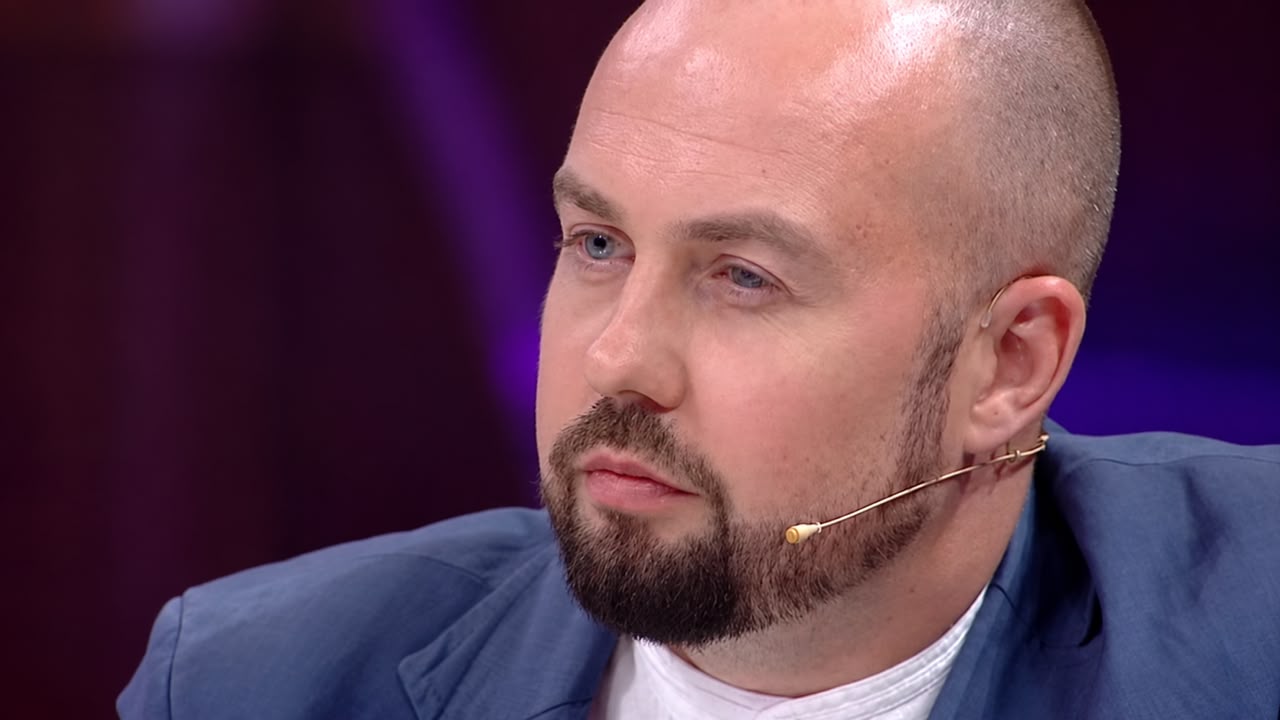
Oleksandr Lysianyi, a psychiatrist, psychotherapist and PhD student at the O.O. Bogomolets National Medical University, agreed to speak to Censor.NET on this very complex topic.

ONE MAY DEVELOP A FEAR OF LOUD NOISES OR FEEL ANXIETY FROM CONSTANTLY READING THE NEWS, BUT THIS IN ITSELF DOES NOT NECESSARILY INDICATE A DISORDER
- It is now commonly believed that everyone who has remained in Ukraine under Russian attack suffers from mental health issues in one way or another. In your opinion, to what extent is this true? How can a person recognise for themselves that they need the help of a psychiatrist rather than a psychotherapist?
- I certainly do not agree that everyone who has remained in Ukraine has a mental health condition. According to WHO statistics, one in five people among populations who have experienced armed conflict have mental health conditions. In other words, it is not 100 per cent, but around 20 per cent. Most often, these are anxiety and depressive disorders. Sometimes these are conditions that existed before the war and have worsened against the backdrop of hostilities, or the person has lost access to treatment. In February–March 2022, many patients told me they had only 10 tablets left and asked what they should do next, as they couldn’t get the medication they needed.
These global statistics should not automatically be applied to Ukraine, as the war is still ongoing here and there has been a period of adjustment. Fear, grief, anger, and exhaustion are perfectly normal in such circumstances. During the war, sleep patterns may be disrupted, a fear of loud noises may arise, or anxiety may result from constantly reading the news, but this in itself does not necessarily indicate a disorder.
There is the concept of psychological distress. This is a state of constant, significant emotional strain. And it is fair to say that the majority of Ukrainians are indeed in this state. The concept of a mental health assessment, on the other hand, refers to a state where a person is unable to cope on their own.
- So when should one see a psychiatrist?
- You should seek help when there are already pronounced symptoms, when they have persisted for some time and are significantly affecting a person’s life.
In other words, when a person is unable to get back to sleep, loses interest in their usual activities, finds it increasingly difficult to work, and struggles more and more to look after themselves or interact with family and friends. In such cases, it is certainly worth seeing a specialist to assess the situation. That said, very often, when a person finally does see a specialist, they say during the consultation: ‘Well, I’m still working, everything seems fine – where did this come from?’
So you shouldn’t try to decide for yourself whether you have a diagnosis or not. You could start with a psychologist, or you could start with your GP – if the word ‘psychiatry’ puts you off. To begin with, your GP may prescribe mild medication – and that may be enough. You could see a psychologist, who will offer advice and techniques for calming down, relaxation and breathing. This may help some people.
If the condition is indeed more complex, then you can consult a psychiatrist. A psychiatrist will assess your state of health, make a diagnosis, and determine the treatment plan and duration of medication, if necessary. Or perhaps you’ll need psychotherapy rather than medication.
If there is an emergency and a loved one is unaware of their condition: expresses suicidal intentions, takes concrete steps towards suicide, or has lost touch with reality, is speaking incoherently, is confused, is excessively agitated, is experiencing hallucinations, or has not slept for several days – then this poses a threat to their life, and you must not delay; you should call 103 immediately. You should describe the person’s condition to the doctors in the simplest terms possible, rather than saying, for example: ‘My husband has gone mad’.
- Following the Soviet experience, psychiatric care in Ukraine remains stigmatised to this day. What would you say to people who are afraid to see a psychiatrist?
- I wouldn’t describe the current situation solely through the lens of the Soviet experience. Fear and prejudice do indeed still exist, but in my practice I see certain changes. More and more people are able to freely seek help from a psychologist or psychiatrist and aren’t afraid to talk about it. This is particularly noticeable among the generation born and raised in independent Ukraine.
And to those who are hesitant, I would probably say that a consultation with a psychiatrist is, first and foremost, an opportunity to understand what is happening to you and to discuss options for help. A consultation does not mean automatic hospitalisation or the loss of your right to drive or work. The aim of modern psychiatry is to help people regain their sense of well-being and their ability to live their lives. If anything is unclear during the consultation, you can ask for it to be explained in simpler terms.
WITH THE REDUCTION IN THE NUMBER OF BEDS, WE HAVE LOST THE OPPORTUNITY TO HAVE ENOUGH TIME TO MONITOR PATIENTS
- There are psychiatrists in almost every outpatient clinic. To what extent, in your opinion, do Ukrainian psychiatrists currently work to the latest standards?
- I think there’s always room for improvement. There are international protocols, and they’re freely available. Anyone interested in the latest knowledge and modern psychiatry can familiarise themselves with them. Even if you’re not fluent in English, it’s now possible to translate the webpage into Ukrainian.
As for the professional standard of psychiatrists, that depends on the individual. If a doctor is keen to learn, to deepen their knowledge and to expand their ability to help those who come to them, then they will seek out information, take an interest, and attend conferences. The main thing is to have the desire.
I’d also like to mention the WHO’s mhGAP programme. It was created to broaden access to mental health care. A large number of non-specialist healthcare professionals have undergone training under this programme. So if you’ve come for a consultation with a doctor but feel that your questions are being ignored, you have the right to see another doctor.
- This option is even available online now.
- The pandemic has taught us all to work online, and now it’s completely normal. Half of my outpatient consultations are online.
- Many people say that the old system of psychiatric care has collapsed, whilst the new one has not yet been established. Everyone remembers the so-called ‘punitive psychiatry’ of the Soviet Union, yet there are occasional suggestions that today many people in need of mental health treatment are not receiving effective help, thereby putting not only themselves but also others at risk. What is your view on this?
- The problem does indeed exist, but to say that the system has collapsed and has not yet been rebuilt is too categorical. The main issue is the continuity of treatment and access to care. I support the idea that treatment should be available close to where people live. The closer to home a person receives help, the better it is for them. In other words, we should have not just one regional hospital where everyone is taken, but several small departments as close as possible to the local community.
- What was the essence of the reform?
- The essence of the reform is to reduce the number of inpatient beds and expand outpatient care. It’s about providing alternatives, about the accessibility of outpatient treatment, about the availability of crisis support, about social support, and about caring for those who need it. In practice, however, whilst we did reduce the number of beds, outpatient services were by no means properly established everywhere.
How did the previous system work? Psychiatric hospitals often dealt not only with treatment but also fulfilled a certain social function: they helped patients to restore their documents, apply for social benefits and resolve issues regarding their future accommodation. Upon discharge, the information was passed on to the local psychiatrist. In other words, there was a continuity of care. It was important to take this experience into account and build on it going forward.
Admittedly, there were flaws in the system, such as when people could be kept in hospitals for months, or when relatives had a family member admitted to hospital for years without any valid reason to keep them there. In other words, the reform was aimed at eliminating abuses by doctors who kept patients in hospital for too long, and by people who tried to get rid of those they found inconvenient.
But now, alongside the reduction in the number of beds, we have lost the opportunity to have sufficient time to monitor patients. The response to antidepressants occurs 2–3 weeks after starting treatment, so it would be important to have this time to monitor the patient in hospital. It really has turned out to be a case of ‘first we’ll tear everything down, then we’ll build something new’. And now we’re at the stage of building it.
- How is the process going? Is outpatient care developing?
- Outpatient care has changed. Multidisciplinary teams have been set up, comprising, for example, a psychiatrist, a psychologist and a social worker. Their work includes providing outreach services. Usually, cooperation is established with the village head, and an announcement is made that the team will be visiting the village on specific days. In fact, such services also make care more accessible. For some people, these regular consultations may be sufficient.
Mental health centres have also been set up at many healthcare facilities. There, you can receive psychological or psychiatric counselling and obtain a prescription if needed. Mental health centres can also provide support on a day-care basis.
The main issue is funding, which must cover the costs of treatment. For example, there was a time when hospitals were housing large numbers of homeless people. In fact, they might not have had a diagnosis, but there was nowhere else to put them. The old system ‘allowed’ them to be admitted to hospital, and they lived there. The new system has closed this ‘loophole’. But when you do away with something, you need to create a replacement, and no such replacement was created. Consequently, we end up with a situation where people find themselves on the streets without receiving any help.
THERE ARE NO EFFECTIVE RULES IN UKRAINE GOVERNING CO-OPERATION BETWEEN DIFFERENT SERVICES – THE POLICE, MEDICAL AND PSYCHIATRIC SERVICES
- When discussing the prevention of severe mental disorders and their consequences for society, the mass shooting on 18 April in Kyiv immediately springs to mind. The so-called ‘Holosiivskyi shooter’, Dmytro Vasylchenkov, killed six people. This incident highlighted problems in psychiatric prevention. Would it have been possible to identify the potential perpetrator in advance? What form should the system take, and how should cooperation between the police and psychiatrists be organised?
- You are right that there needs to be cooperation between different services. In many countries, there is cooperation between the police, medical, psychiatric and prison services. Their main task is to assess risks and threats. In other words, it is not as it happens in Ukraine – where each service deals with its own area of specialisation in isolation and does not discuss matters with other services.
There must be a legal framework enabling them to share this information with one another. For example, if a person who has experienced domestic violence seeks help from a psychiatrist, the police must respond. Conversely, when a person comes to the police’s attention who is suspected of having mental health issues or exhibiting aggression during periods of exacerbation, a psychiatrist is automatically involved.
- As a doctor, have you had any experience of working with the police?
- Yes, I have. It varies. When I worked on a psychiatric ambulance team, there were situations where a person showing signs of a mental disorder was aggressive. The police always responded; a police patrol would arrive, and together we were able to assess that person or take them to hospital for admission.
At the same time, when I was head of the compulsory treatment ward at the regional psychiatric hospital, we quite often encountered difficulties in organising the escort of patients to comply with court orders. Some police units claimed they lacked resources – vehicles, fuel, staff, and so on. Other units, on the other hand, were responsive and found ways to help. In other words, a great deal depended on specific individuals, as there are no effective rules for cooperation enshrined in regulations or legislation.
- ‘Strilets’ posted messages to this effect on Facebook for a long time. There is a view that people who leave such statements on social media are unlikely to take active action. To what extent is this true?
- I think it’s not a good idea to rely on assumptions when it comes to safety. The fact that someone writes publicly about violence doesn’t rule out a subsequent attack, but if it’s not just a one-off post, there’s no need to wonder for long whether they’re planning to do something. A single post in itself doesn’t mean anything. Any of us might say the wrong thing about certain issues in the heat of the moment.
The SBU won’t automatically monitor all citizens and analyse their social media accounts. So in such cases, the reaction of those who see such posts is probably crucial. You can save the link or take a screenshot so that the date and the person’s details are visible. Then, report it to the cyber police or the police, or perhaps the SBU; after that, it is up to these services to respond.
The main rule, if you see such posts online, is not to provoke the author, not to threaten them in return, and not to arrange a meeting. There are specific agencies in place to assess such threats.
- The ‘shooter’ obtained a firearms licence based on a report from a private psychiatric clinic. This raises two questions. Firstly: should private clinics be trusted in this process? Secondly: what form should a psychiatric assessment take when issuing a firearms licence?
- Without access to the case files, we can only speculate about the details. But I believe that the form of ownership alone cannot determine the reliability or otherwise of such a report. Both state and private psychiatrists must act within the bounds of their authority and carry out a proper examination.
In practice, I have not been involved in issuing such assessments, but as far as I know, it is largely a formal examination. In other words, you are asked a few questions; if you have not previously come to the attention of psychiatric services, you will be granted a firearms licence.
That is why I would like to reiterate the importance of a comprehensive exchange of information between different services. This would enable the doctor issuing the licence to check whether there is any information about that person in the police database. However, after the medical assessment, there must still be training, a specific examination and the completion of paperwork. And problems can arise at these stages. And at the time of the examination, the person might genuinely have had no complaints whatsoever.
GROUNDS FOR COMPULSORY TREATMENT – SEVERE MENTAL DISORDER
- However, there are even people who conceal their diagnosis from others or have refused treatment. It is plain to see that there are people on the streets who most likely need mental health support. But they themselves do not acknowledge this, or they conceal it, or they refuse help. Some of them openly listen to Russian propaganda, and we do not know what is going on in their minds.
At the same time, last winter we saw how many lonely people, particularly the elderly, with mental health issues need help but do not receive it. Meanwhile, those around them suffer (for example, when water from the flats of people with mental health issues floods the entire stairwell, a foul smell spreads, or constant shouting can be heard). How should one act in such cases? Compulsory psychiatric treatment is virtually non-existent in Ukraine. Am I correct in understanding that, at present, the only route is through the courts – a lengthy process, and one that few are willing to endure?
- Ukrainian legislation does provide for cases and situations in which psychiatric care may be provided without consent. However, it is important to distinguish between the different circumstances. There is a psychiatric assessment without consent, there is involuntary hospitalisation, and there are compulsory medical measures within the framework of criminal proceedings. These are all different procedures.
The grounds for involuntary treatment are a severe mental disorder where a person is unable to look after themselves and poses a real threat to someone else. To be more specific, you’ve already given the simplest example: a person is disrupting an entire block of flats. However, if they are behaving strangely, that does not necessarily equate to a diagnosis. If a person shows signs of mental ill health, neighbours can write a joint letter to the local psychiatric service requesting an assessment. And let me remind you that you should not make assumptions about the doctors, but rather list the specific actions of the person suspected of having the condition. Ultimately, you could involve a local councillor for this purpose.
If the psychiatrist at the district facility considers the circumstances you have described to be sufficient to suggest the presence of a mental disorder, they may visit the premises themselves. If the person refuses hospitalisation, this can only be enforced by a court order.
- There is a common belief that one should file four reports with the police regarding a person suspected of having a mental disorder, and that the police will then pass the information on to psychiatrists. Is this not the current practice?
- There has never been such a rule; it is a myth. Even a single complaint is sufficient, provided it is a collective one. Neighbours or relatives of a person who is disturbing the peace should make a collective complaint to the police. The police must record the complaint or go out to investigate. Why are these complaints necessary? So that, should the district psychiatrist ultimately agree that there are signs of a mental disorder in this case, they have grounds to prepare the paperwork for the court. In other words, they cannot prepare it solely on the basis that the person is unwell. They must include documentation showing that public order has been repeatedly disrupted and that the police have been called.
At the same time, the person must genuinely pose a real danger to themselves or those around them. The GP and social services, for their part, describe all this in written reports based on the facts: the person has no water, gas, electricity or heating in their home; there is no food; and the children are neglected. And then the whole process is set in motion. But it is bureaucratic; the wheels turn slowly.
- That’s assuming there’s an understanding that help is needed. But if a lonely person is simply shut away in their flat, nobody will even know.
- Yes, the thing is that these days people don’t even know who lives next door, and they don’t even say hello when they’re in the lift together. And so it really is unclear, but if you can smell a foul odour coming from there, or hear alarming noises, for example, that’s already a reason to contact at least the housing office, the residents’ association, the police or the State Emergency Service.
WE WERE PRINTING ALL THE DOCUMENTS UNTIL MIDNIGHT AND BROUGHT THEM TO COURT FIRST THING IN THE MORNING. BUT THE JUDGE, DESPITE THE OPINIONS OF THREE PSYCHIATRISTS, SAID: ‘HE IS OF SOUND MIND’
- How long do court proceedings regarding compulsory treatment typically last? Let us recall the high-profile case of Zarina Mayer, which took place some time ago in Kostiantynivka. A woman with undiagnosed schizophrenia effectively drove her eldest daughter to her death, and then lived for several years with her younger daughter right next to her daughter’s corpse. None of the relevant services responded, even though the circumstances in which the younger child was living were clearly evident. Now this daughter – Zarina, who is now an adult – has moved her mother to Kyiv and rented a flat for her, but the mentally ill woman is causing a nuisance to her neighbours whilst refusing treatment. The daughter has written a desperate post stating that she has been trying for a long time to secure treatment for her mother through the courts. So is this really such a lengthy process, even in such clear-cut cases?
- From what I’ve gathered from media reports, charges were brought against this woman in November 2025, and sometime in January the prosecution submitted documents seeking a ruling on compulsory medical measures. In May, a court order was issued to place this woman in a psychiatric institution as part of the criminal proceedings.
In other words, this is not yet a final ruling. When it comes to criminal proceedings, there is a security measure provided for under Article 508 of the Code of Criminal Procedure. This allows a person exhibiting mental disorders, who is still under investigation, to be placed in a psychiatric institution whilst the case is being heard. The prison service is responsible for enforcing these decisions.
So, about half a year has passed between the prosecution’s submission and the court’s ruling. Yes, it takes time, but the system must protect those who suffer from the inappropriate behaviour of a potentially ill person, whilst at the same time safeguarding them from unjustified coercion. In this particular case, the situation is more or less clear, but there may be cases where relatives simply want to have someone who is causing them trouble admitted to a psychiatric institution. That is precisely why everything is done through the courts. The court is not a psychiatrist, but it can call upon a psychiatrist or a panel of psychiatrists to carry out an assessment.
In principle, when I worked within the compulsory psychiatric system, the processing times were roughly the same – half a year, sometimes a year.
- Is there any way to speed this up? I get the impression that effective prevention isn’t happening because the relevant services are faced with unrealistic deadlines and targets.
- I’m not an MP, and it’s difficult for me to judge, but these matters should be handled more smoothly. In other words, perhaps to prevent abuse, the composition of the specialist commission should be expanded to include social services and a community representative. At the same time, there needs to be a simpler mechanism so that a person in need of help can be admitted to hospital more quickly.
Under current legislation, even if we were somehow to admit a person without their consent, the psychiatrist has 24 hours to submit the documents to the court. Again, will the court even consider the case within 24 hours? And if we bear in mind that the court does not sit during a state of emergency, it is clear that this is practically impossible. I think it would be a good idea to extend this timeframe.
- Another case that has attracted widespread attention and gives pause for thought is the assault and beating of journalist Oleksandr Shvets’s daughter at a public transport stop. As far as we can tell, it was carried out by a mentally ill man. The police detained him. They indicated that he had been handed over to a psychiatric team, who apparently released him because he has an established diagnosis. He continues to roam the city and poses a danger to those around him – factors that are crucial for compulsory treatment. What should have happened in this case, if we are talking about effective prevention?
- You see, the problem we’re discussing keeps recurring – cooperation between different services. I haven’t seen this man’s medical history or the legal documents, so I’m just speculating now. The psychiatric team takes such a person and brings them to a psychiatric hospital. There, the psychiatrist on duty speaks to the man and tells him: ‘Sign this form to confirm your voluntary admission.’ The man refuses. What grounds does the psychiatrist have to detain him? Aggressive behaviour? Let’s suppose the psychiatrist takes it upon themselves to hospitalise him involuntarily. They gather the documents within 24 hours and submit them to the court. The court rules: he did indeed commit an offence, but this falls under the jurisdiction of the police – minor bodily harm – so there are no grounds to keep him in a psychiatric hospital. That’s it; the doctors are obliged to discharge him on the same day.
I had a similar case in my practice in the Kyiv region – where a man who had previously been treated in a psychiatric hospital refused further treatment. Over time, his condition deteriorated; he behaved aggressively towards neighbours and relatives. He was brought in, but refused to sign the consent form. We could see he was unwell, so we admitted him. We spent the night printing the necessary documents and took him to court first thing in the morning.
The court reluctantly scheduled a hearing, so we brought this patient in. The hearing took place, and at the end of the session the judge said: ‘He is of sound mind; you have no right to detain him.’ I was completely taken aback, as three psychiatrists had signed off on the fact that he was unwell and had previously been in hospital.
But in most cases, the procedure usually works. That is, you bring the person in, and if all the documents are in order, with confirmation from both the medical authorities and the police that the person has committed offences, then the court grants the order.
- And what happens next when the court refers the case to the police?
- Next, there should simply be an investigation into the minor bodily harm. There will be court proceedings; at some stage, a motion will be filed regarding his mental state, and he will be examined by a forensic psychiatrist. The psychiatrist will state that he is indeed unwell. In that case, no punishment can be imposed on him at all, because the Criminal Code is about punishment. Medical measures must be applied to him instead. Minor bodily harm is not a serious offence, so he will be subject to compulsory outpatient psychiatric care. In other words, he must visit a psychiatrist every month and undergo treatment.
- But what if this man is already seeing a psychiatrist every month?
- In that case, he is most likely already receiving outpatient treatment. And that brings us back to where we started – the provision and quality of outpatient care.

RESIDENTIAL CARE HOMES AND FACILITIES FOR PEOPLE WITH MENTAL HEALTH PROBLEMS HAVE BEEN MADE SELF-FINANCING
- It’s a vicious circle… The question here is: what if a patient crosses the line and starts to pose a threat? Can this be predicted?
- There are certain mental disorders which, even without treatment, will not pose a threat. They will simply cause the condition to gradually worsen. I don’t particularly like to put it this way, but I’ll give the example of schizophrenia, which everyone fears. The nature of the illness isn’t that the person is aggressive. The nature of the illness is that the person’s connection with the outside world breaks down and they become increasingly immersed in their own inner world and their distressing experiences. For example, such a person might have been unwell for 10–15 years. They have no relatives; they’ve ended up on the streets – for instance, someone has taken their home away from them. They pose no threat to anyone. They wander about, constantly talking to themselves, don’t wash, and scavenge for food in rubbish bins. What grounds are there for hospitalising them – purely from a social and humanitarian perspective?
- For example, if they frighten children at a playground – this is something I’ve experienced recently. Admittedly, this alone isn’t enough grounds for hospitalisation, but what does our healthcare system provide for such people? And after all, there are known cases where mentally ill parents have killed their own children. And in principle, this person clearly needs help. There—I’ve just thought of three reasons…
- I agree that someone needs to look after such people. There should be social services and care homes for people with mental health conditions. Under the new system, we cannot, for example, help such a person in hospital to sort out their paperwork, apply for a pension, and arrange for them to be admitted to a care home, because that would take half a year.
- As I understand it, there are hardly any care homes left.
- They’ve also been cut back and switched from state funding to self-financing. But even if the care home were to take the entire disability pension, it wouldn’t be enough to cover the running costs. So someone has to support these care homes – the local community, philanthropists.
NOT EVERY CHILD ABUSER HAS A PAEDOPHILIC DISORDER, AND NOT EVERY PERSON WITH SUCH A DISORDER COMMITS A CRIME
- The issue of paedophilia. Law enforcement agencies have started talking more about crimes against children, and the view is sometimes expressed that such crimes have increased. Personally, I think it has always been this way; it’s just that the police have become more effective in this area, and this is being brought to the public’s attention.
- Generally speaking, over the last 10 years or so, we have, after all, been receiving more and more sex education. Children are being told about sexuality, about boundaries, about the ‘underwear rule’ and so on. And it’s not as though there are more crimes. I also don’t think the number has gone up. It’s just that when a child knows that something is wrong, they’re more likely to speak out about it.
It’s a different matter when nobody has spoken to the child about this, or – God forbid – nobody in that family cares about the child at all, and then someone turns up who shows an interest in them, pays them attention, and ‘plays with the child’ in ‘secret’. Only later does the child realise that this is wrong.
- There are numerous known cases where people who have committed sexual offences against children have served their sentences, been released, and gone on to commit similar offences again. If chemical castration is deemed ineffective, should life imprisonment be introduced for such individuals? What form should the system take?
- We must distinguish between a sexual offence against a child and paedophilic disorder as such. These are not interchangeable concepts. A diagnosis requires clinical assessment, whilst a crime requires a legal determination. Not every offender may have paedophilic disorder, and not every person in whom such a disorder can be diagnosed will commit violence. For example, it is entirely possible for a person to realise that they are sexually aroused by a child and to suffer as a result. Such a person might go to a psychiatrist and say: ‘I’m suffering; please do something. I don’t want to harm a child; I have wonderful children of my own.’
As for chemical castration – it’s not that it doesn’t work; after all, it is a form of hormone therapy that reduces testosterone production and lowers sexual desire. That is, if we’re talking about a case where the person is of sound mind.
But will compulsory chemical castration prevent someone who has already committed child abuse from committing further offences? Hardly. They may commit such abuse in other ways. Therefore, if we are talking about treating such disorders, the approach must be comprehensive. There must be a specialised system of both psychotherapeutic and pharmacological support. In other words, in some cases this may involve antidepressants, whilst in others it may involve the very same hormonal treatments.
Life imprisonment on its own is unlikely to solve the problem. There is a very good book by Anna Salter called *Predators*. She conducted research with individuals who had been convicted of sexual offences against children. Her findings are truly horrifying. It turns out that a person may have been imprisoned for one or two proven offences, but whilst working with a psychologist and the author of the book, they might confess to dozens, even hundreds, of such offences that simply no one had managed to prove.
She cites statistics showing that only around 3 per cent of such offences come to the attention of the police. We cannot protect a child in any way, and the only thing that works is prevention and sex education, so that a child knows how they should not be treated; and, should a child become a victim of sexual abuse, they will be able to tell a trusted adult or the police – which, in turn, can protect other children from that offender.
- There are known cases of crimes against children committed by people after they had served a prison sentence for previous sexual offences against children. There was a high-profile case in Dnipro where a man joined the Armed Forces of Ukraine whilst in prison, thereby reducing his sentence. From there, he deserted to the northwest and committed another sexual offence against a child, ultimately killing the boy.
- There needs to be a system of comprehensive psychological support, rather than the offender simply serving their sentence. For example, suppose he is given 15 years; he could spend all 15 years in prison fantasising and plotting, analysing where he went wrong so that next time he can commit the crime differently. Therefore, mere isolation will not resolve this issue. There are international studies (though not many, as the problem is quite specific). They all agree that comprehensive support is needed – including medication, psychological care and follow-up support after release.
CASES OF REPEATED VIOLENCE AMONG CHILDREN SHOULD RAISE ALARM
I’ve left the most complex issue until last. Mental disorders in children that pose a danger to society: psychopathy, sadism, narcissism… Is it possible to identify these, and how can we protect against them? How should a prevention system operate?
- Psychopathy, sadism, and narcissism are distinct concepts. They should not be used as ready-made diagnoses for a child. Emotional coldness, which may be characteristic of psychopathy, does not in itself mean that a person will derive pleasure from violent acts (whereas for a sadist, deriving pleasure is key). The need for special treatment, which is characteristic of a narcissist, does not in itself mean that a person will be prone to violence (which is characteristic of a psychopath).
One or two incidents do not provide an answer. It is necessary to assess the motives, the frequency, and the severity. It is important for parents, for society, for neighbours and for the school to notice such behaviour. It is cause for concern when there are repeated acts of cruelty towards people or animals, threats or arson.
It is also important to assess the circumstances in which the child is growing up. It may be the case that the child is being bullied at home and is simply repeating this behaviour because they know no other way of being treated. In that case, it is a completely different story. Then the problem lies not with the child, but with the family.
- First and foremost, I am referring to psychopathy and other disorders that have a genetic cause.
- Psychopathy itself takes two forms. There is a concept known as core psychopathy, which is determined by a specific set of genes. Even if this is a congenital genetic factor, if we can secure the cooperation of social services, a paediatrician, a psychiatrist, a school psychologist, a school teacher, and some form of psychological support for the family, then it can be addressed. Yes, it is a complex process; it does not guarantee 100 per cent success, but it can influence future manifestations.
Let’s imagine that the genes were inherited from one of the parents, but circumstances are such that the child has been left with the parent who is in better health. And that parent has the opportunity to help the child. Therefore, a great deal depends on the social support provided to such families.
But psychiatry must not swing to the other extreme. Let’s imagine that a child in a family is not given any time, their interests are ignored, and they become accustomed to the idea that they can only attract attention through bad behaviour. And then the parents, despite having themselves neglected the child’s upbringing, take that child to a psychiatrist and say: ‘Give them some sort of pill so that they become normal’.
Our entire discussion, one way or another, comes back to the need for cooperation between services – on a legal basis and whilst safeguarding personal privacy. If we can organise this process effectively, we will achieve an early response to paedophilia, to other forms of abuse, and to the need for psychiatric care.
Olga Skorokhod, Censor.NET


