



Call sign Trail: "Peace won’t fall from sky. It’s only possible through position of strength"
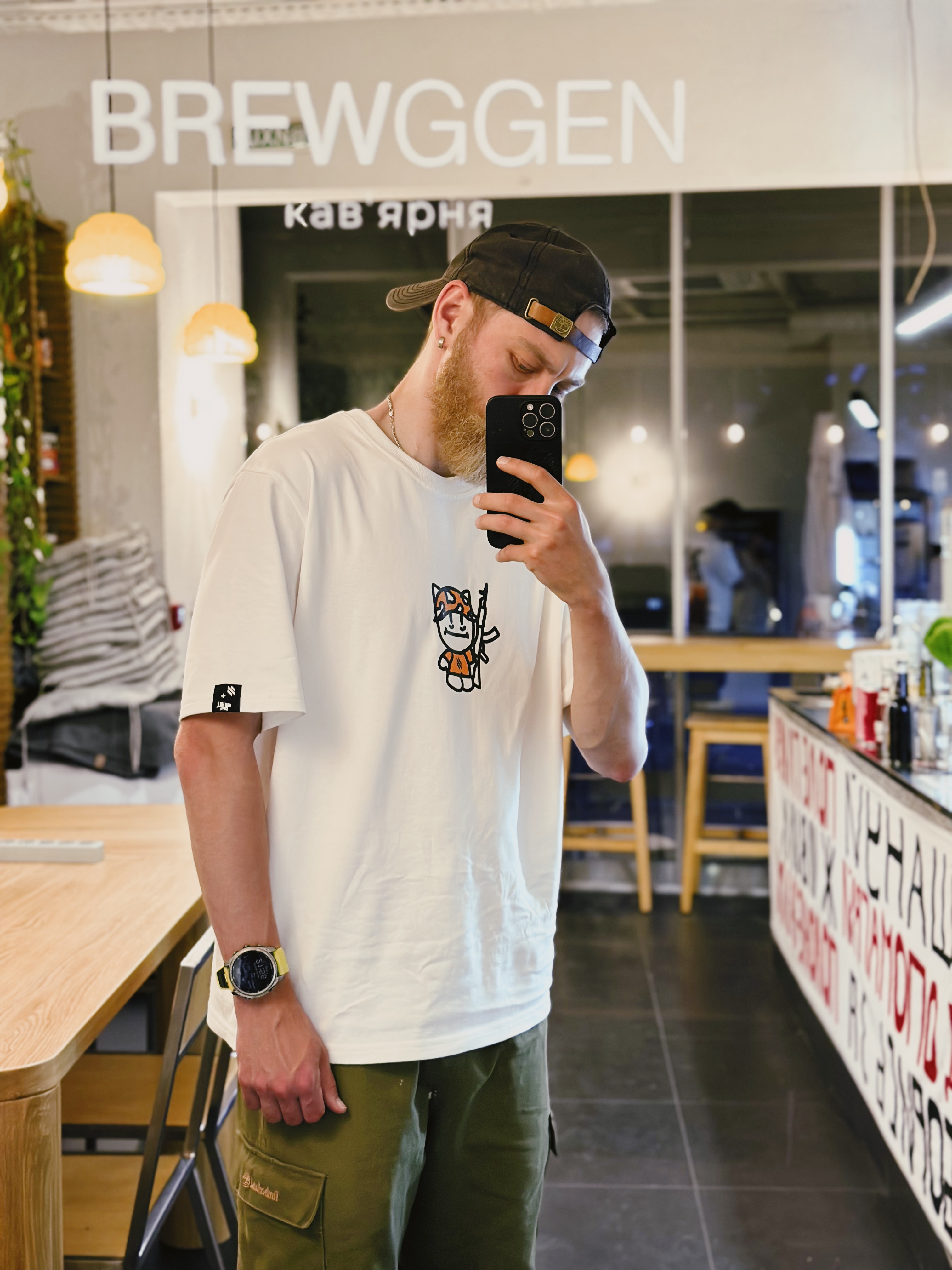
As we meet with the chief sergeant of the strike drone company of the 21st Separate Unmanned Systems Regiment "KRAKEN" of the 3rd Army Corps, call sign Trail, another air raid alert sounds in Kyiv. I ask him what he makes of this atmosphere in the capital. "My first encounter with the realities here was last summer, when we were forming a separate medical battalion and lived in Kyiv for a while," he replies. "That was when the first mass drone attacks began, with 400–500 UAVs heading towards the capital at a time."
And so, during one such attack at night, I opened the curtains, looked out, and right in front of me "Star Wars" unfolding right in front of me: tracer rounds flying, lasers and beams shining, everything exploding. I thought: "Can’t you just send me back to Izium?! I felt a bit calmer there".
And yesterday, whilst travelling on the underground, I saw people with their belongings starting to gather at the station during the air-raid alert. I realise they’re going there to spend the night. When you see something like that, you naturally have just one desire: to do everything in your power to put an end to all this suffering of our people as quickly as possible.

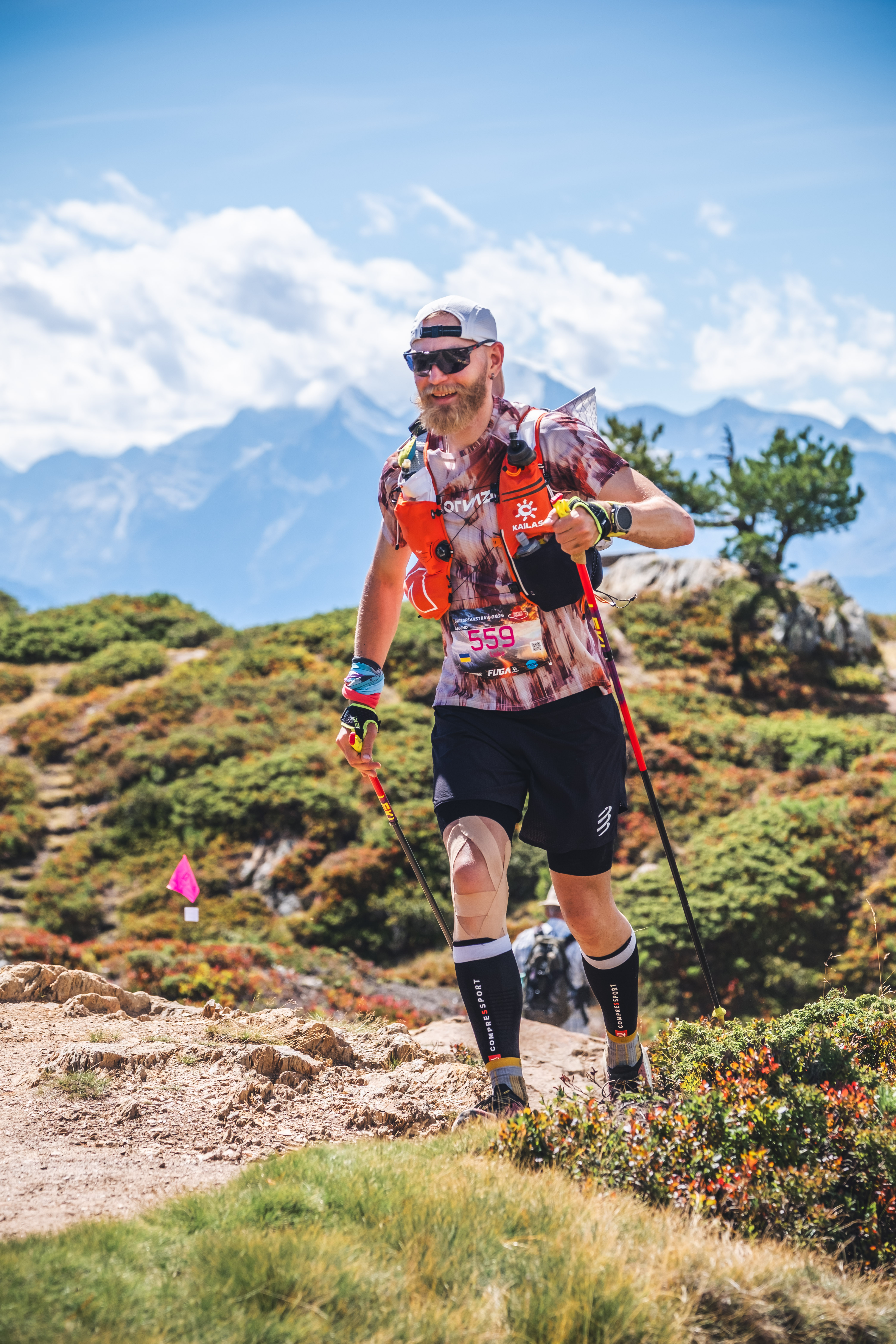
On the eve of our meeting, Trail had just returned from Switzerland, where he’d taken part in the Swiss Peaks Trail international trail running competition, finishing in the top 30 athletes after covering more than 400 kilometres in five days. Sport has been a part of his life since childhood, and before joining the army he spent many years in the restaurant business – opening bars, managing chain projects and running his own establishments. That’s where we began our conversation.
- What did business teach you that proved useful in the army?
- First and foremost, that people are the most important resource in life. For example, when training in small-group tactics, it’s often said: one is zero, but two is already one. In other words, the smallest combat-ready unit is a pair. That’s two people, a pair. On your own, you’ll never be fully effective or achieve great success by yourself. That’s why the most valuable thing we have is the people around us – our team. In business, it was a team; now, it’s my comrades.
- Where is it easier to communicate: in civilian life or at war?
- They really are two somewhat different worlds. But it’s hard to say where it’s easier to communicate. Everything’s just different here. You have to adapt and use all the skills you’ve acquired previously, whilst already in service. Then everything will work.
- So, exactly which skills from your previous life are coming in handy now?
- The ability to make decisions and take responsibility for them, the ability to communicate – knowing when to listen to someone and when to get your point across. This applies to communication with both the command and the troops. Because my role as company sergeant major involves, on the one hand, representing the needs and requests of the troops to the commander. A sergeant is the link who was a soldier just yesterday, so they know best and remember all the difficulties and problems that the troops face. On the other hand, you understand the commander’s vision and intentions, the tasks he sets, and you have to convey them to the troops: to explain why we must do this, why in this particular way and, ultimately, where we are heading. That is why these communication skills play such an important role.
- What is more important for a staff sergeant: to be an authority figure or to be competent?
- To be a competent authority figure (smiles – O.M.). Of course, you must be an authority figure. A sergeant’s credo is ‘Follow me, do as I do’, which means you must lead people not simply by giving orders: ‘I said it – you did it’. It doesn’t work like that! You lead by example, first and foremost. It’s not about you running ahead with everyone else following behind. It’s about your knowledge, skills, physical fitness, stamina and professionalism. It is precisely this combination that builds authority. All of this then enables you to be effective in your role.
- I think trust plays a huge part in this as well.
- Absolutely! As they say: trust takes a very long time and a great deal of effort to earn, but it’s easily lost. Fortunately, in our corps, the sergeant corps is very strong. In other words, the sergeants really are what they’re meant to be and what they ought to be. And this aspect of looking after the personnel is also very much present. So sometimes you help resolve even some of the soldiers’ personal problems, but, apart from that, you look after them in terms of their training too. After all, if they are trained and prepared, it contributes to two things. Firstly – the effective execution of combat tasks. Secondly – simple survival. If they are properly trained, the chances of everything going successfully and without casualties are much higher.
- What do you find most challenging about your job? After all, everyone is different: each person has their own life experience, psychological and physical condition. How do you manage to find the right approach to each soldier?
- The hardest thing is managing myself. Generally speaking, I don’t view my role and duties as a sergeant through the prism of authority: what I can tell someone to do and what someone must do. It strikes me as a somewhat ‘Soviet’ approach. Of course, discipline is essential: if there’s an order, it must be carried out. But first and foremost, I see my role through the lens of my own personality. That’s why, as I said, the hardest thing is to manage myself, to be self-critical, to constantly improve and develop, so that I can be a true authority figure and role model for others. And once you’ve got yourself under control, it’s much easier to find common ground with people. Empathy is certainly important here too. Overall, we have a healthy working environment. You realise that every person is an individual, and you try to take their physical and emotional characteristics into account in order to find the right approach for each one.
- To do that, you need to know enough about your soldiers, don’t you?
- Of course! We have a strong culture of non-commissioned officers. We’re always in close contact with the personnel. We know where everyone is, how they live, and what they’re interested in. We’ve got some who are passionate about music – they record and release songs. There are sportsmen and theatre enthusiasts. You need to be aware of what your troops are into in order to be on the same wavelength as them. It works both ways: when people see that you care, they perceive you in a completely different light. When you approach them and say, ‘Right, lads, now we’ve got this task to do’, they treat you as one of their own, rather than a stranger who’s come down from an office somewhere to tell them what to do. They realise you’re right there with them, ready to tackle the task together.

- You’ve been involved in various sports since childhood: tennis, judo, folk dancing, swimming, and now trail running too. Clearly, this isn’t just about physical fitness, but also discipline, perseverance and determination. How has this experience shaped you as a soldier?
- It just so happened that tennis played an important role in my life. It taught me that, in order to win, you first have to be able to lose – to accept defeat, draw conclusions, learn and grow.
It’s true, I’ve been involved in a lot of sport since childhood. I’ve always been interested in all sorts of things. What does sport offer, apart from the obvious – physical fitness and stamina? It significantly broadens your outlook on life, because you find yourself in different environments, take part in various competitions and interact with a wide range of people. All of this together shapes your character, opens up the world and its people to you. You learn to interact, and, very importantly, you learn to fight and to succeed.

- Tell us about the competition you’ve just returned from.
- Generally speaking, in recent years (both before and during my service) I’ve been actively involved in running, particularly trail running – in the mountains. I’ve taken part in several competitions across Ukraine, but the ones you mentioned took place in the Swiss Alps. Incidentally, this year marked the 10th anniversary of the Swiss Peaks Trail. It’s one of the most famous and, at the same time, most challenging trail running events in the world. The programme features two extremely challenging ultra-distance races, and I took part in one of them – a 400-kilometre course with an elevation gain of nearly 28–29 thousand metres. In total, I managed to complete this distance in just over 123 hours. In fact, for me it was a great honour, a challenge and a responsibility. When you go to such competitions, you realise that very few Ukrainians currently have the opportunity to compete at this level. So you represent Ukraine, the Armed Forces, and our Third Army Corps – in particular, the 21st Regiment of ‘KRAKEN’ Unmanned Systems Forces and your own company. People look at you in a special way. You see yourself in the same light. In other words, you realise that you have no right to make a mistake. But this doesn’t weigh you down like some kind of burden of responsibility; on the contrary, it gives you even more drive, because you want to devote yourself fully to this process and showcase your unit and Ukraine as brilliantly as possible. I’m bold enough to say that I succeeded in this. After all, I finished 27th overall in a race featuring 260 participants from all over the world. I managed to break into the top 30 alongside athletes who train in countries where there is no war, who have the opportunity to be in the mountains all the time. And yet, given my heavy workload in the service, I wasn’t able to attend a single training session in the mountains this year. The Kharkiv region is flat enough to train in – it’s not mountainous. Yet I was still on a par with well-trained athletes.

There were some funny moments during the competition too. The course is very long, and one way or another you end up crossing paths with someone at some point. So, on yet another hill, I’m calmly making my way along the course, and behind me is a lad who can barely walk. I said to him, ‘Actually, I haven’t even been to the mountains for a year.’ He looked at me with his eyes wide open: ‘How on earth is that possible?!’ (smiles – O.M.). In reality, consistency and regularity overcome all adverse conditions and even talent. Being talented, motivated and having great training conditions – that’s all very well. But if you lack consistency and discipline, it won’t get you anywhere.
- Were there any Russians there?
- Fortunately, no.
- Theirs?
- A joint one (smiles. – O.M.).
- Did the participants know that you were in the military?
- I was open about it. Plus, my social media accounts aren’t private, so it’s all there. In fact, it was received very positively: when they heard I was from Ukraine, and especially that I was in the military, everyone immediately started sharing their own experiences of engaging with our diaspora: they told me how they’d raised funds for various causes and supported Ukraine. The athletes I spoke to showed a fairly good level of understanding and awareness of the situation. There were instances where they actively asked questions and were keen to find out what things were really like. The reception was very positive. For me, it was also extremely important to speak openly about being from Ukraine, so that our country would be heard at this level and remain relevant.
- In your life, you’ve been involved in business and sport – so you had some preparation. But what was the hardest thing when you started your service? I don’t think it was the physical training, although it’s very tough in the Third Army Corps.
- It’s just that our approach is that we don’t go easy on ourselves, nor do our instructors ever go easy on us during various training exercises. That’s the right approach. It’s better for training to be tough, so that carrying out tasks later on will be easier.
If I had to say what was the hardest part (pauses for a few seconds. – O.M.)… I don’t know. I’ve never sat down and thought: ‘This is all so difficult!’. Both in business and in the military, I think in these terms: there isn’t a problem, but a new task, so I need to find ways to solve it. Because if you think in terms of problems, you’ll have them all the time. In reality, there are loads of challenges. Especially in the service. When you’re also in a position with a specific area of responsibility, problems come from all sides. But if you view them simply as new challenges or tasks, and focus on the constructive side – you just need to work out how to do it. That’s all! Another advantage here is the way the Third Army Corps is organised: without any grandstanding or propaganda, I can say that we really are one big family. If, for example, you’re lacking a particular skill, some specific knowledge or a resource, you can easily find the right person to contact, simply give them a call, and without long explanations say: ‘Mate, I need some help with this. Could you, please, do this for me?’ And you’ll never be turned down. If you like, that is the secret to the success of the Third Army Corps – the reason why we were and remain one of the most effective units in the Defence Forces. Nobody shuts themselves off from one another; everyone works together towards a common goal. That’s why I can’t single out anything as being the most difficult for me, because I simply don’t focus on that.
- How did you actually come to the decision to go and fight?
- It wasn’t difficult for me to make that decision, as everything had been developing naturally up to that point. I was in Lviv when the full-scale invasion began. I immediately received an offer from some acquaintances to join the Volunteer Unit of a Local Community. At the time, we had absolutely no idea what to expect. We were even preparing for the possibility of Russian paratroopers being dropped by helicopter in Lviv (smiles – O.M.). As I have a medical education, I was called up to serve as a medic in this unit. No questions! Until around May, we were going on training exercises, drills and assemblies. It was brilliant, because I picked up a lot of essential military skills there. But it wasn’t leading anywhere. They started setting us some strange tasks, like: ‘Let’s take turns manning some checkpoints.’ I thought: ‘Checkpoints in Lviv?!’ I’m sure I could be much more effective somewhere else. So I gradually stepped back from that and focused more on what I could do at the time – namely, supporting the units financially, because the business was still running. In fact, this had been going on from day one. When I woke up at about five in the morning on 24 February 2022, I realised from the news what was happening. The first thing I did was record a video message to the team, saying: ‘Right, everyone, I see no reason why we shouldn’t carry on working. As long as the security situation allows it and there are no restrictions, that means we’re going to work. There’s no room for gloom’ (smiles – O.M.). My business didn’t stop for a single day. I immediately set the percentage that we would be transferring from our profits. At first, we did this daily – the funds went to both the National Bank of Ukraine’s official accounts and those of major foundations. But over time, I realised that for this support to be more effective, we needed to choose a specific unit. So we began working with the First Mechanised Battalion of the Third Assault Brigade – focusing mainly on helping to repair vehicles. This all continued until December 2023. And all the while, I kept coming back to the thought that the economic front was, of course, a good thing, but that, after all, they could manage here without me. This gave me the inner push to decide that I needed to sign up and go into service, because I’m healthy, strong and intelligent, and I can do a lot of useful work in the army. So I spoke to my family about it…
- What did they say to you?
- When I rang my mum and told her I had to go and serve, she paused for literally five seconds and replied: ‘I knew it would be like this.’ She didn’t expect anything else, because she knows me. Of course, like any mum, she’s worried and anxious. That’s only natural. But, thankfully, nobody around me said, ‘Are you mad?! What’s the point of that?!’ Everyone took it in their stride.
I then spoke to the Triika recruiters in Lviv, whom we already knew very well. I said: "Guys, I’ll need about half a year to sort out all my business affairs and get everything legally sorted. In the meantime, let’s look for a unit for me to join." We agreed. Eventually, I received an offer from the medical company of the Third Assault Brigade and signed a contract in July 2024. I set off to complete my basic military training. I was lucky – I flew to Britain for training. On my return, in September, I arrived at the operational zone, where my service with the brigade began.
- How did you first encounter war in your work?
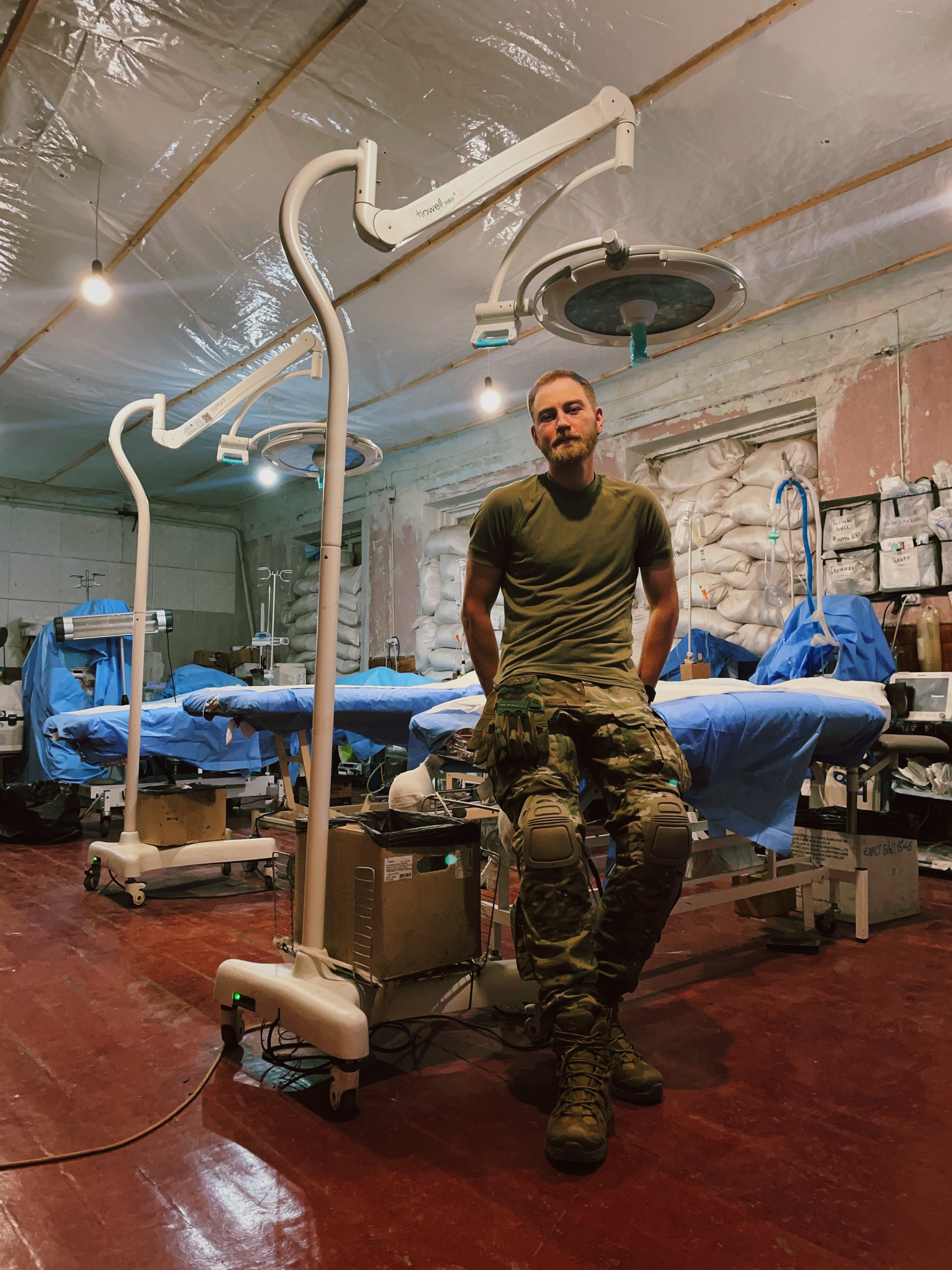
- I was, in essence, acting as a surgeon at a stabilisation point. We were the first point to which all the wounded were evacuated, located about ten kilometres from the front line. Because drones weren’t used as extensively back then, the war was different. But I remember arriving at the stabilisation centre and hearing this endless artillery barrage going on all day long, without ever letting up. It was a strange sensation. I wouldn’t say it frightened me much, but it was unusual, as we were right at the epicentre.
Evacuations weren’t like they are now either. At that time, active assault operations were still taking place, so the number of wounded was considerable. Our evacuation teams operated very efficiently. If we knew that a particular battalion was launching an assault, the first casualties would arrive at our field hospital just a few hours after being wounded. In other words, everything always ran at a very high standard.
I served there from autumn 2024 until summer 2025, by which time the corps reform had already begun. The Third Army Corps, as you know, effectively set the standard for both the speed and quality of its formation, and was the first to take up its designated area of responsibility. The question arose of forming units for the so-called corps complement. Among these was a separate medical battalion. A number of personnel from the brigade’s medical company, myself included, were assigned to help organise it. I was involved in recruitment and certain organisational processes. Essentially, we spent two months doing this and returned to the operational zone in August. That was my first time in the Donetsk region, specifically in the city of Sviatohirsk—now well known—which the Russians are actively promoting as their own. However, our commander, Andrii Yevhenovych, showed that this was not the case at all. So we worked there for a while. But I began to feel, deep down, that I was capable of more; I wanted to be closer to the front-line action. I’d long been interested in drones and innovation. I saw plenty of opportunities and a bright future in this field. That winter, I received an offer from my current commander – a friend Dolyna – to join his unit within the 21st Separate Regiment of ‘KRAKEN’ Unmanned Systems Forces of the Third Army Corps. I went to my command, explained where I wanted to be transferred to and why. They were understanding about it. So I completed my assigned tasks and, in February 2026, joined the ‘KRAKEN’ regiment. In fact, I’m currently continuing my service in the strike unmanned aerial vehicle company, now as a staff sergeant.
- Did you take up this post straight away?
- Yes. After joining the unit, I undertook specialist training. This was both my personal wish and the commander’s plan. We have our own ‘Kill House’ training centre, which is, in fact, excellent. Just to give it a bit of a shout-out (smiles – O.M.), I’ll say that its doors are open to both military personnel and civilians. For anyone thinking about joining the army, it’s a brilliant way to test yourself, understand how things work, and learn the ropes. I completed a basic course there in operating FPV drones. I returned to my unit and, after a short while, set off for another training course. This was a sergeant’s course, where, essentially, sergeants are taught how to be sergeants. I gained a wealth of valuable knowledge, tools and insight, and significantly improved my professional skills. Since returning, I have continued to work there to this day.
- In your opinion, how should a ‘KRAKEN’ fighter differ from a fighter in another unit?
- Look, I certainly wouldn’t single out a ‘KRAKEN’ fighter; I’d talk about a serviceman of the Third Army Corps. This ties in precisely with what I’ve already touched upon a little in our conversation – brotherhood and the fact that we’re a family. So we have very high internal standards, which we all strive to meet. Essentially, it’s an environment where everyone is equally motivated and passionate about a shared cause. We share a common vision of what we’re fighting for, how we do it, and why. That’s probably what sets us apart from other units. Here, there is a high level of professionalism, discipline, motivation and a significant degree of this very awareness. We have a separate banneret division: these are the people responsible for the fighters’ awareness, for ensuring that everyone has the same understanding of the path we are taking today. This is to ensure it doesn’t turn into some sort of crude propaganda, but that you truly feel and understand the historic significance of the events in which you are directly involved. Because, to put it in a historical context, we are currently in the midst of our third struggle for liberation. For the first time, they have a chance of ending in success, with us achieving a truly independent state and forging ourselves into a powerful, united nation. These things are no less important than recapturing territory. We must be this monolith in order to have a bright, successful, and great future.
- But don’t you feel that a gulf is gradually opening up between military personnel and civilians today, one that could prevent us from becoming that monolith? We all see what happens on the streets during so-called busification and how people react. Do you see a misunderstanding here that certainly does us no favours?
- Again, I’ll speak from my own experience. What motivated me to join the military? First and foremost, when I look at myself in the mirror, I want to respect the man I see there. Your motivation should not come from the government, contracts, or money. This is your duty and your personal responsibility. Without any grand rhetoric, that is the strongest motivation there can be. If it isn’t there… You know, I actually feel sorry for those who have the opportunity to be part of these epoch-defining, momentous events but avoid it.
There was a second thing that motivated me personally. I imagine a happy future for myself somewhere down the line. God willing, I will have children someday. And I imagine my child growing a little older and going to school, where they will study Ukraine’s contemporary history. They will come home and ask: "Dad, what did you do during the Russian-Ukrainian war?" And I want to have something to tell them. I don’t want to tell them that I spent three years without leaving my flat or fled through forests, fields and rivers to Romania.
You know, we very often ask questions of others and demand things from them. But in doing so, we very often forget about ourselves — that we should hold ourselves to the same standards. If people ask themselves questions more often, the gulf you describe will narrow very quickly.
- What would you say to a civilian man who is afraid of mobilisation because he does not understand what awaits him in the military?
- Look, we are actively growing and expanding. If we take all our current personnel needs, let’s consider them using the example of a fixed-wing UAV operator vacancy. Alongside that one combat role, we need drivers, clerks, copywriters, social media managers, IT specialists, 3D modellers, and engineers. See how many other roles I’ve listed alongside a single combat position? And if you join us as a 3D modeller, that is what you will be doing. Andrii Yevheniiovych, for example, openly says that, in his view (and I completely agree), the main reason soldiers go absent without leave is not war fatigue, but the lack of proper treatment and a sense of being unable to fulfil their potential. We have an internal culture. We really value our soldiers’ skills. Moreover, if someone wants to develop those skills further, we have every opportunity to help them do so. Training in the Third Army Corps is a whole subject in itself. We offer a wide variety of courses, and plenty of them. After a certain period, you can leave the military as an even more highly qualified specialist in your particular field. Joining the military does not mean putting your life on hold or heading towards your grave. Back in, say, 2022, there was a great deal of uncertainty, and it was unclear how things would turn out. The situation is much clearer now.
There is another important aspect to all this: here in Ukraine, we all love talking about our rights. But alongside rights, there are duties. And it is natural that our rights should stem from fulfilling our duties. You earn a right by fulfilling your duties. I urge everyone to act responsibly. We are all adults. We should behave like adults too.
- Another argument raised by the civilian men I mentioned is that the government has still not established clear terms of service. Rotation is also a pressing issue for those currently serving. I imagine you, too, would like to take perhaps six months off. How do you feel about this?
- Of course, things can be difficult for us at times, both physically and mentally. All sorts of things happen during military service. We all understand that. But it really helps to get your thoughts back on track when you stop and simply reflect: what are we all actually doing here? When you realise that your service, like that of all your comrades and all personnel in Ukraine’s Defence Forces, is more than simply performing official duties. We are directly countering Russia’s armed aggression against Ukraine. Our service is intended to do everything possible to end our people’s suffering as quickly as possible, preserve human lives, and protect Ukrainian cities and villages from destruction. When you think about it in that context, do you need to rest? Understanding what all this is for gives you strength and inspires you to keep going.
God willing, the time will soon come when we can all rest. But right now, we need to work. Peace will not fall from the sky. Nobody will bring it to us. It is possible only from a position of strength, through establishing the status quo on the battlefield. And to achieve that, we all still have a great deal of work to do together.
- So you don’t believe in the negotiation process?
- Commenting on diplomatic efforts is above my level. I think we have enough competent people dealing with political and geopolitical issues. Let’s leave that to them. Our job is to make our case on the battlefield. This is where our negotiations take place. And that is everyone’s duty. We need to focus on this and do everything within our power.
- Obviously, nobody knows or can currently say how much longer this might last. Many factors influence when the war will end. But if you consider your life an ultramarathon, which kilometre are you at now?
- You know, most people probably want to imagine that they are only at the start and that everything still lies ahead. But you rightly said that nobody knows what awaits us. So we need to live in the present. The moment I am in right now is the best one for me. That is what I need to focus on. As the Bible says: "Tomorrow will take care of itself." So I don’t know which kilometre I’m at now, but I know for certain that I am where I should be, where I want to be, and where I can be most useful and effective.
Olha Moskaliuk, "Censor.NET"
Photos provided by Trail


