


Call sign Lucky: "I’ve got two ’three-hundreds’ (both to head), and six Russians are advancing toward us. Plus, their sniper is working."
Given the number of battles Nazar Yakovlev has been through in this war, his call sign—Lucky—is well-deserved. But luck alone won’t keep you alive in many head-on combat engagements. No, you have to think quickly, make decisions on the fly, and act even faster.
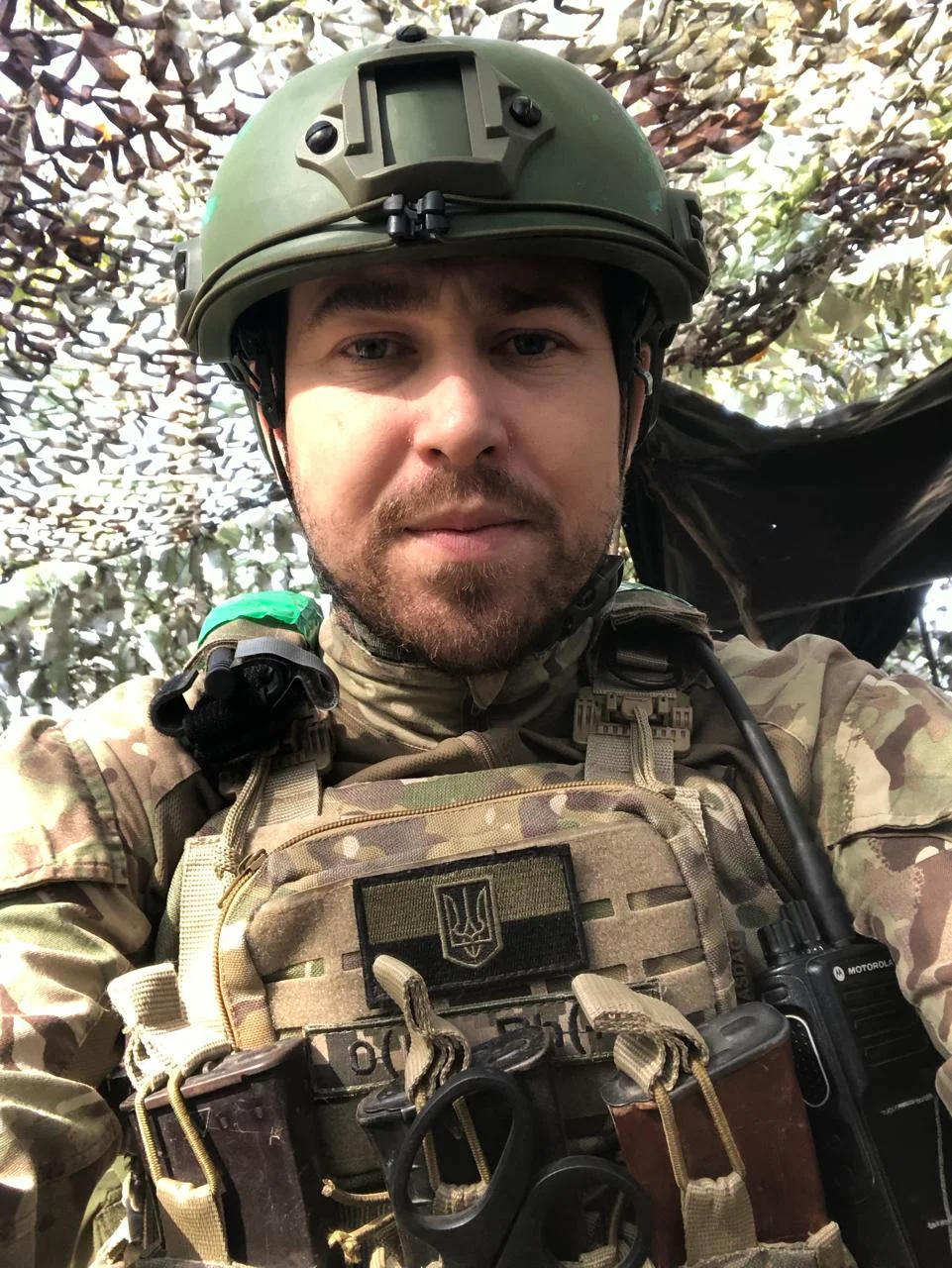
It was precisely these qualities that Major Yakovlev demonstrated whilst leading the infantry during the famous Operation ‘Vivaldi’. The task of the infantrymen from the ‘Silver Trio’ unit of the ‘Pomsta’ Brigade was to consolidate their positions on the new front lines immediately after the assault. And although the liberated areas are immediately monitored by Ukrainian UAVs, which do everything in their power to destroy the enemy as they approach the infantry’s positions, contact with the enemy is inevitable. The advance and withdrawal of infantry during active assaults become significantly more dangerous. The commander’s task at such moments is to give clear instructions to the infantrymen: to quell panic and anticipate the risks and advantages.
The assault was moving swiftly, and Nazar had to simultaneously manage several high-risk operations: the infantry’s advance to one position, their withdrawal from another, the evacuation of the wounded, and the delivery of provisions and ammunition to the UGV positions by heavy bombers. Amidst all this, he still found time to reply to the families of his infantrymen, who were unable to contact the military. The command post at such a moment resembles a Hollywood blockbuster: an officer stares at several monitors at once and, time and again, shouts instructions into various radios on different frequencies. He has to keep a close eye on the live feed from the reconnaissance drone, monitor the movements of the UGV as it evacuates a wounded soldier who has had a limb amputated, and ensure that a soldier heading to his first position does not stray onto a mined path…
The unit managed to minimise personnel losses. At the same time, during an attempt to recapture lost positions on the Lyman, the ‘Silver Trio’ eliminated 176 occupiers!
The successful actions during Operation ‘Vivaldi’ are typical of Nazar Yakovlev’s military career. He underwent his first baptism of fire in 2024–2025 in the Serebrianskyi Forest District. At that time, the enemy had a six-fold advantage in both equipment and manpower. Nazar was a captain and commander of the 3rd Air Defence Unit. In Serebrianka, he personally led his men right up to the front line and was the first to launch the assault. On one occasion, the captain single-handedly entered an enemy dugout and took three occupiers prisoner. Under his command, the infantry managed to break out of an almost complete encirclement. It was there that he was wounded and, for his daring, earned the call sign ‘Lucky’.
Nazar Yakovlev is now a major and the commander of the 1st Airborne Battalion. We began our conversation as part of the joint project "Censor.NET" and the Ministry of Internal Affairs, "Commanders. The Front Line", focusing on his participation in Operation "Vivaldi".
"The operation got off to a fast start, with everything hinging on coordination," says Lucky. "Five coordination exercises with different units in a single day. We had two days for rapid planning, and during that time our units were also regrouping."
- As a commander, what did you prioritise during the regrouping?
- I gathered the most capable people, plus some from the rear, and withdrew others from their positions. I identified the reserve forces that would soon be deployed.
- What were the difficulties at that stage of the operation?
- It was difficult because a large number of assault groups were arriving. They were moving across the fields – so you’re constantly on the radio and on the phone, guiding them. Plus, we had to issue orders to our positions to ensure they met these assault groups. On top of that, the Russians had partly given away that large groups were on the move – and mortars were targeting them, inflicting casualties…
It took about 1.5 to 2 hours to reorganize—and then we moved on.
That was the dynamic at the start of the operation. And then, every day at four in the morning, we’d get up – and off we went! We’d gradually bring the groups forward: the assault troops would clear the way, we’d quickly consolidate our positions and hold the defence. Or the assault troops would pull back to regroup, whilst we held the front line.
And then everything proceeded in stages: you brought in the men. They had to dig in, because there was minimal cover – just small little foxholes.
So there was engineering preparation, logistical support, loads of medical evacuation missions, plus evacuations. There was a lot of hard work.
- Did you get very tired?
- I was working flat out. I’d get 4–5 hours’ sleep. And the phone was ringing off the hook.
Those are my memories of the start of the operation. After that, we gradually consolidated our positions, repelled assaults, and coordinated with all units…
"THERE ARE SOME PEOPLE YOU THOUGHT WERE HOPELESS – YET IN THE COMBAT ZONE THEY PROVED THEMSELVES, HEROICALLY CARRYING OUT MANY TASKS"
- Nazar, before you were entrusted with commanding a certain number of personnel during the war, did you imagine what it would be like? And did you have any doubts about your ability to lead people, both in general and in difficult circumstances?
- I did, because I’d had to lead people before; they were, for the most part, officers and ensigns who were no longer young. But here, in leadership roles at the Third Command Post, I thought it would be easier; yet the mobilised contingent here is a tough lot and, shall we say, a mixed bag. In other words, there are all sorts of people – and thousands of stories about how each person ended up in the army, how they were mobilised.
- And where do you find out about these stories of the conscripts?
- Look, every soldier here spends a significant amount of time on the front line. And as a commander, I talk to each soldier and gather the information I need. Even when you first meet them, you have to remember their surname, first name and patronymic. We talk about how they ended up in the army and what their mindset is. I do this to understand whether they could be a senior figure in the group. Because there are also groups of three or four. And I need to know who has more of a commanding nature, and so on.
- You have to find the right approach for each of these people. How do you communicate with them? Do you have any set rules?
- There aren’t any specific rules. Every person is an individual, and you find your own way of dealing with each one. There are some people who are simply unreasonable, and, basically, they’re on their own wavelength.
For me, the most important thing is to explain their role and what tasks they’ll generally be carrying out; what will save their lives. I convince them that they must listen to the commander, because I know more, and if they listen to me, they’ll have a much better chance of completing the mission and returning in one piece.
- Looking at these people, how do you assess them?
- You can tell everything straight away from their character traits and behaviour.
- You yourself say that people are different, and the contingent is a complex one. Do you encounter many pleasant surprises on the front line?
- Yes. There are some I thought were hopeless – yet in the combat zone they proved themselves, heroically carrying out many tasks. They saved the lives of their comrades, evacuated the ‘three-hundreds’ and guided those who couldn’t find their way on the map.
"WE WERE LUCKY THAT WE WERE PARTLY PREPARED FOR THEIR OFFENSIVE; WE HAD AN AMMUNITION AND OVER 50 CAPTURED MAGAZINES; THEY WERE ALREADY LOADED AND PLACED IN THE GUN NEST..."
- We’ll come back to that later, but for now, a question about the Serebrianskyi Forest, where in 2024 you and a few fighters from the 3rd Border Guard Detachment held your ground against the enemy’s massive, meat assaults. What was your priority as a commander during those days?
- The main thing for me was to ensure my soldiers were constantly combat-ready. That everyone knew their position and their duties. You man this embrasure, you reload. Then you swap places. If there’s gas, you put on your gas mask...
It was important to me that the men understood their responsibilities and didn’t lose focus. That they realised: when you’re on sentry duty, it’s not just one life at stake, but three.
- What combat situation from those days in the Serebrianskyi Forest do you remember most vividly?
- When I’ve got two ’three-hundreds’ (both to the head), and six Russians are advancing toward us. Plus, their sniper is working, and there were only two of us left. So one fighter held the defence, whilst I administered first aid to the other two. Well, I administered it part-time – and we took turns.
We were lucky that we were partly prepared for their attack; we had an ammunition, over 50 captured magazines, which were already loaded and sitting in the embrasures. And when the assault rifles jammed, we’d grab them from ‘300s’ and fire back.
I moved between all the positions. I’d go to one – spend the night there to see the lads and boost their morale; then move on to another. The position I’ve just been talking about was already the fifth one I’d visited and spent the night at. That’s where I encountered that attack. At that particular moment, I was in charge – plus three other fighters at the position.
- And in total, how many were coming at you...?
- …more than ten people. But we immediately reported that we were under attack — and drones spotted some of the enemy. So we took out a few—three hundred, two hundred. But six of them got through, plus there was a sniper at work.
- What conclusions did you draw from that experience?
- That there need to be more people at the position. And that soldiers need better training in tactical medicine. Because the soldier who was with me couldn’t provide medical assistance to his comrades.
- And have you since tried to address this skills gap among everyone working with you?
- Yes. And since we had no rotations, and the men were constantly at their positions, a medic would come round and demonstrate procedures, supply them with first-aid kits, and teach them the most basic things.
"THERE WERE TIMES WHEN, FOR EVERY ONE UGV TASKED WITH EVACUATING A SOLDIER, THERE WERE EIGHT ENEMY FPVs..."
- Nazar, is it usual for you to analyse the pros and cons and draw conclusions after a battle or a combat mission?
- Of course. Since I studied at the Defence Institute at a more advanced, operational level, everything essentially revolves around planning and analysis. In other words, every situation must be analysed to prevent any miscalculations in the future.
- Do you organise this analysis in any way? A diary, notes, and so on?
- I have a notebook where I write everything down. If something pops into your head, you jot down a brief note of what needs to be done – and then you hold your subordinates to account, trying to implement it and improve on it.
- Tell me, have you ever had to deal with panic attacks among your subordinates? And what should be done in such a situation?
- Yes, I have. What should you do? Well, situations vary, and it depends on the person too. If a panic attack occurs, the person is already disoriented. And in my experience, there have been many such cases. Mainly after assaults or when a person has become ‘a 300’, though not a powerful 300—just some shrapnel wounds and the like. The person starts to panic. It’s all right; we calm them down by talking to them and reassuring them.
- Have you ever experienced such attacks yourself during combat?
- For me, it was more of an emotional experience, an inner fear. When I realised I might die, I simply prayed and said my goodbyes.
- By the way, in the film you mention a combat situation: you crossed yourself – and went off to do something.
- Well, yes, because when five men are coming at you, and you hear them, work out where they’re approaching from, and your ammunition supply is minimal, you’ve got absolutely no chance.
- I’ll quote one of your comrades-in-arms and subordinates about you as a commander: ‘He’s constantly with the fighters; he doesn’t just sit in the command post, but he’s always leading the men, showing them where to stand, defining the sector and going out…’.
In other words, without leading by example and doing what you order others to do — without all that, you won’t be able to build a proper relationship with your unit, will you?
- Let me put it this way: you won’t know your subordinates and you won’t be confident in their ability to carry out the task. Because there are people who’ve turned up, holed up in that dugout, in that trench — and just sit there. They’re not monitoring either the sector or the entrance — they’re just sitting there doing nothing, waiting to be pelted with grenades. That’s why you need to get people into position and make it absolutely clear to them: lads, the enemy might come from over there, from your sectors. And this here is our rear; our own fighters might be passing through here; God forbid there should be any friendly fire. And you must insist that they keep a constant watch, take turns on duty; and draw up a rota for them. Well, and define the senior officer’s responsibilities.
- Another quote, again about you: ‘If someone’s become '300th', we’re sure he won’t give up, he won’t say: "Come on, mate, see you in the next world." I’ve got a difficult question: have you ever had to make the tough choice of who to carry out first?’
- We tried to evacuate everyone. We managed to do so because the situation allowed it. Did we ever have to choose? No. There were moments when, as a commander, you’d be watching the video feed and see that for every single UGV (ground-based robotic complex — ed.) tasked with evacuating a soldier, there were eight enemy FPVs. And you make the decision to have the neighbouring position carry out the evacuation. And you realise what a risk that is, and that two of your own soldiers might also be killed… And that’s hard. That’s the kind of moral strain you face – when you realise that a person is about to die, and there’s nothing you can do to help…
But when we were in the woods, I took a direct part in the evacuations. They’re gruelling and take ages. You end up on your knees. But we carried everyone out. The situation allowed us to do so at the time.
- In the film "Sriblianka: A Hellish Battle", there’s a harrowing scene where you don’t immediately realise that your comrades are no longer alive. — And only later do you see that the enemy had pelted them with grenades. Do you remember how you felt? How quickly were you able to recover from the shock and regain your composure?
- Within a day, I suppose. It was difficult because I knew those fighters well. And once I’d got over the shock and the grief at what had happened, I came to the conclusion that you mustn’t get too attached to your subordinates. Because it’s very hard to cope with.
- And as a commander, do you have to speak to the families of those who have died?
- Yes. Actually, there was a situation where I did become attached to a subordinate. I had a brilliant fighter; he was killed during ‘Vivaldi’… In just three sorties, he killed six f#ggots and took three prisoner. He had such confidence in himself… I reckon it was my mistake to give him free rein. In other words, I allowed him more freedom; he was so sure of himself.
And we were so close that he gave my number to his wife. She’d ring once a week, and I’d tell her everything was fine. Or I’d record him saying hello to her over the radio.
And then he was killed. It was impossible to evacuate his body: at that time, we were on the front line. And so his wife and mother kept phoning, crying. They know that I’m a decent commander and that we were close. And I explain to them that we’ll evacuate his body, that I promise, and so on. But the pressure on me was so constant that I sometimes had to block their calls and explain that we were on the offensive, that we were in a difficult situation, that I had to get on with my work.
And so it turned out that I’d lose my focus a little when they’d ring, crying into the phone. But we did evacuate the body; I kept my promise.
"IT ALL STARTS AT 5 OR 6 IN THE MORNING. CONSTANTLY ON THE RADIO, ON STREAMS. AND IN CONTACT WITH THE COMMANDERS..."
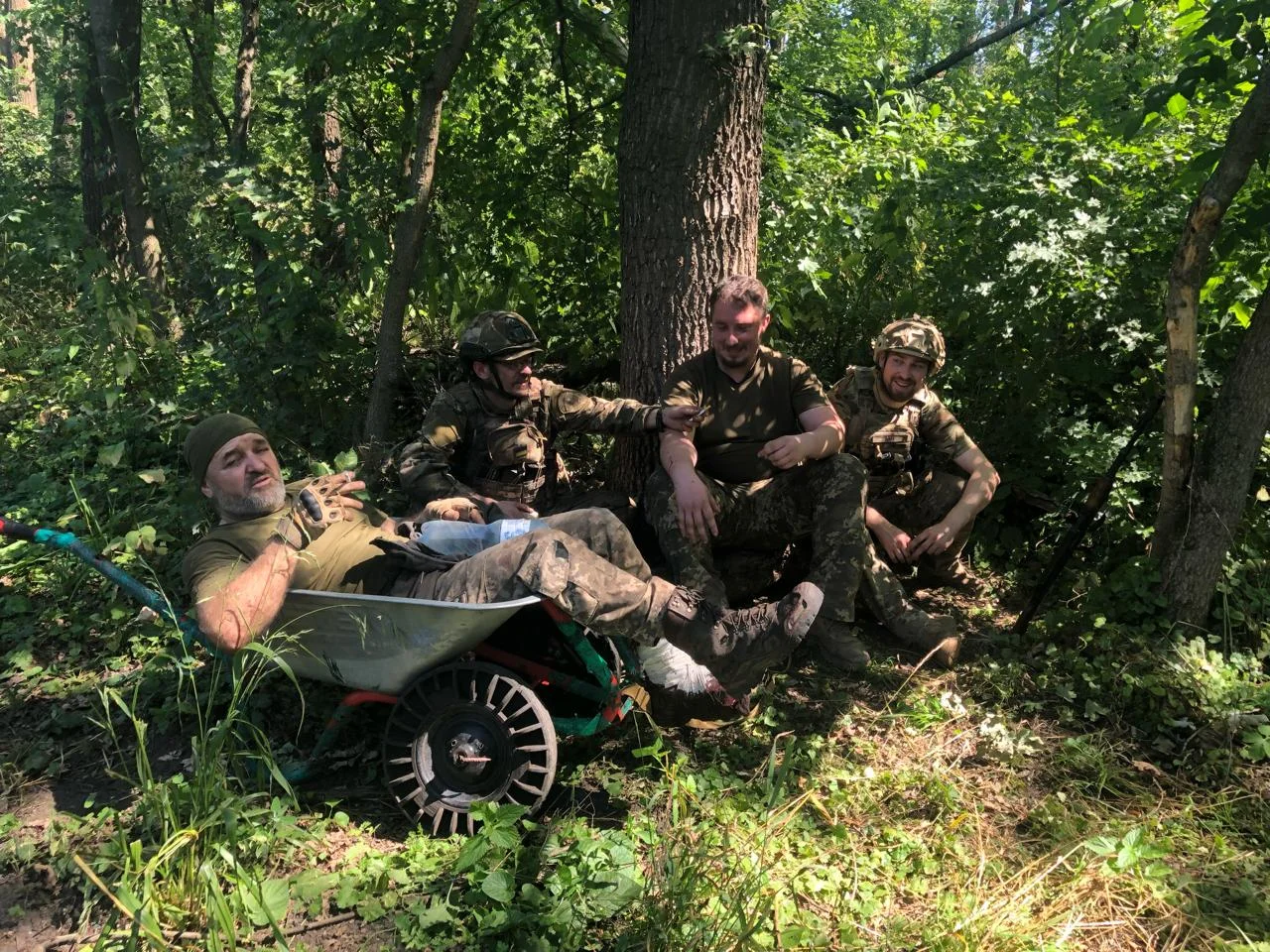
- When extreme situations occur almost daily and the sense of tension is practically constant — how much does humour help? And can a commander joke about everything with his soldiers?
- Absolutely everything. For those who appreciate humour, it’s a source of positivity. It eases the tension. You find yourself smiling – and you stop thinking about the worst-case scenario.
- Can you remember any jokes?
- A soldier calls his wife and says: "Why do you keep nagging me? Look, if I don’t die, you’ll be getting decent money. And if I do die, they’ll pay you even more afterward. It’s a win either way!"
- Nazar, it is widely recognized that a successful commander needs to strike the right balance when it comes to morale and discipline within the unit. Too much familiarity undermines discipline, while tightening the screws too far breeds resentment or even hatred among subordinates. Do you have any personal rules for avoiding these extremes?
- Let me explain how things work in my unit.
You treat people decently, absolutely everyone. But I explain: if you get yourself into trouble, you’ll be treated very differently. You’ll no longer be in favor, so to speak. And no one will make any concessions for you anymore. If there’s been a bad incident, it will be taken into account.
So discipline is there. Otherwise, there would be lawlessness and chaos.
- As it happens, your experience in this war has mostly involved defensive operations. But sometimes you also have to attack. In the Serebrianskyi Forest in 2025, you were tasked with retaking the Arkadiia position, which the enemy had captured. How do you prepare soldiers mentally for an assault from which some of them may never return?
- It’s simple: the commander goes, and they follow.
- So, by leading by example?
- Yes. Of course, I took the best-trained, experienced soldiers, some younger ones too (there were a few). And if something needs to be done, I say: I’m going. Who’s coming with me? They volunteer themselves; you don’t even have to persuade them. It works on trust.
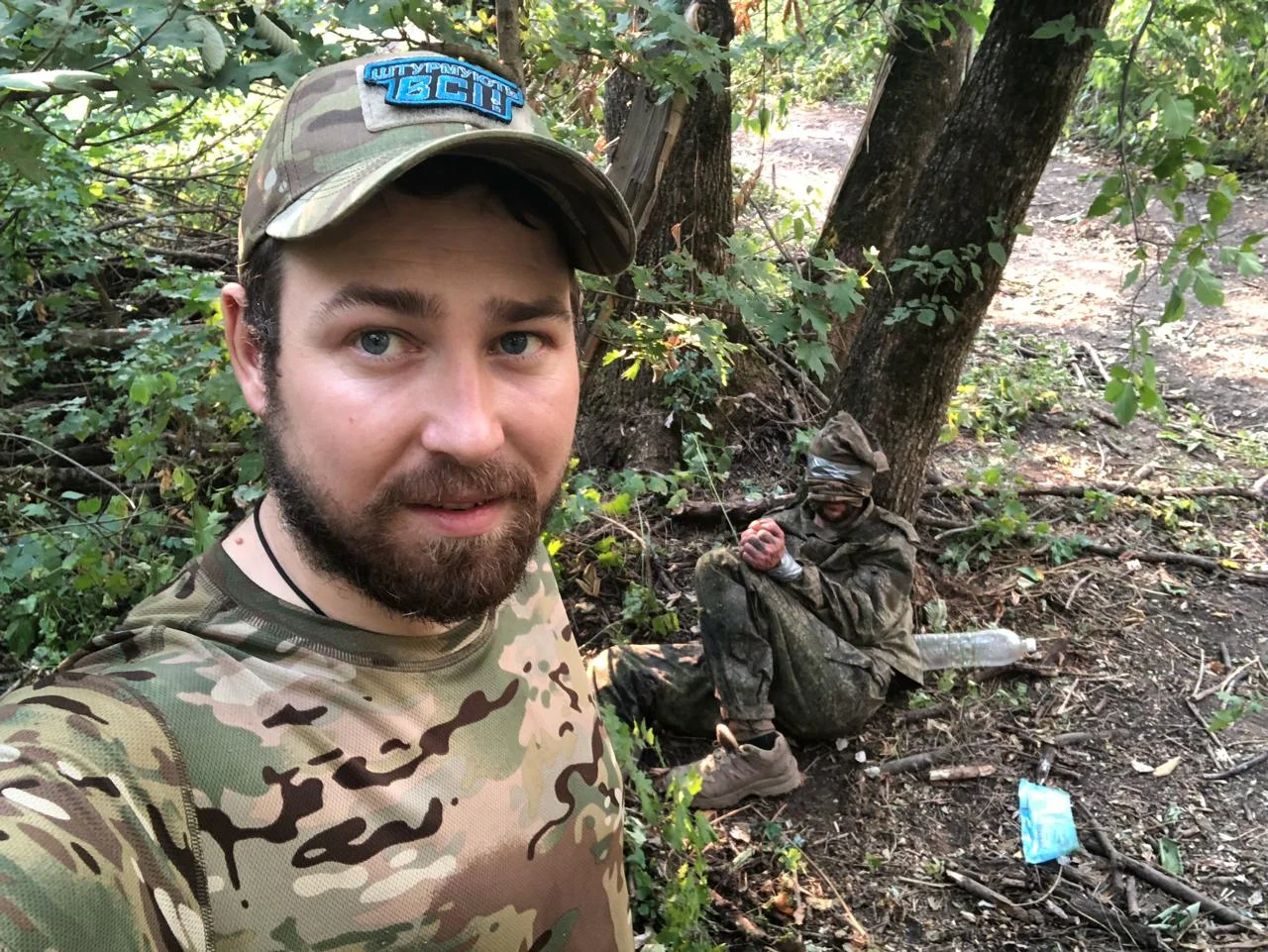
- What does your day as a unit commander involve? Since I understand that the answer may vary depending on the combat situation, the location, and a whole host of other factors, let’s focus on the Serebrianskyi Forest in the summer of 2025. How many people were under your command then, and what did a typical day look like from the very beginning?
- It varied. When you’re at the positions, it’s one thing; when you’re not, it’s another.
- All right, what was it like at a position?
- I rested at night so I could think clearly in the morning. At 6 a.m., I check on the soldiers, contact them by radio, and get an update on the situation.
And mostly, I talk to the soldiers, and we hold the line. There’s no connectivity at the positions, so there isn’t much else you can do. You just have to stay constantly alert. Because if you miss something, there can be serious consequences. Sometimes, you can even lose your life.
- And what is your typical schedule when you’re not at a position?
- Then everything starts at 5–6 a.m. I’m constantly on the radio, monitoring live feeds. And I’m in constant contact with commanders and so on. We’re assigned a task, and we carry it out. But I delegate some tasks. I do some things myself and entrust others to the best-trained officers.
- So you’re not one of those leaders who try to do everything themselves?
- If we don’t delegate authority, we’ll quickly go under. If there are people you trust, people you know with 100% certainty will complete the task, and who really know what they’re doing, then you can hand some tasks over to them.
- Your colleague from the State Border Guard Service of Ukraine, Major Serhii Bezushkevych, told me that even in a stable positional defense, you must not get used to following a fixed set of rules. Because "when everything follows an established pattern, it doesn’t work. You have to come up with something. Something new every time, in everything. From the routes you take to what you do."
Do you agree?
- Partly, about 80%.
- Because some rules are necessary too?
- Yes. When I give instructions and explain things, I want people to understand that everything is in their hands. If you dig in properly and keep watch; if you build your position properly and have at least some basic protection, everything will be fine. For example, I also have soldiers place remotely detonated mines near their dugouts. This will help them keep the enemy from approaching their shelter if they hear or detect them in time. Do that, and you’ll be all right. The only risk is a direct artillery hit.
- Tell me, do you spend much time talking to your subordinates one-on-one? People say there are plenty of situations in combat units where these conversations are essential. Someone might be on the verge of going AWOL. Or there might be a conflict within the unit. Someone needs support, or, conversely, needs to be reined in (but without excessive pressure). And you also need feedback from the unit.
- It’s fairly straightforward in my unit. There’s a deputy commander responsible for personnel who is required to know every soldier, work with them, know their family, and their morale and psychological state, including any family or other problems they may have. And when someone is having problems, I come over, and we talk to the subordinate. Or I take him aside and ask: How can I help? What do you need to resolve this?
There were cases where we let someone go to Kharkiv for five days plus two days off so his partner could come and see him (because things were already heading toward divorce). Others had different problems, including financial difficulties. The deputy commander keeps track of all this, and whenever a problem arises, we try to resolve it together.
- Nazar, do you make a practice of adopting successful approaches from fellow commanders?
- Yes. These are isolated cases, but you can learn from anyone.
- Could you give an example?
- Of course. The deputy commandant for logistics, call sign Strila, used to be a company commander and now holds a higher position. He had people he trusted. There weren’t many of them, but they helped him a great deal. I adopted that approach too. Why did I pick the best people? It’s not about favorites or privileges, but you can achieve a lot with their help. After all, the team makes the leader. I didn’t do everything myself... And once I saw that this approach worked well, I introduced it in my own unit.
- As a rule, people aren’t born commanders; they develop leadership qualities as they go through life. And they change along the way, too. Have you noticed these changes in yourself during the war?
- Of course. Since graduating and becoming a lieutenant, you grow wiser and gain experience with every passing year.

- Has the habit of giving orders carried over into your interactions with civilians? What do your loved ones, friends, and wife say about you? Do they see these changes in you?
- We don’t discuss it, because I don’t tell them everything that happens here. But they say I’m becoming more serious and more responsible.
- Many of the soldiers I’ve spoken to talk about how the war has changed their priorities in life. Has it been the same for you?
- Well, yes, my values have changed. We used to worry about getting more time at home, working less, getting paid more, and so on. Now I worry about keeping people alive, making sure they survive, and having fewer bad situations, fewer wounded and dead. Because it throws you off balance, I’ll be honest. It’s hard.
- This war will end someday. Has anything happened during it that you’ll tell your children and grandchildren about?
- Of course. There have been plenty of situations. You know, if I’d been sitting in an office, that would be one thing. But when you’ve spent some time on the ground and been through all sorts of situations, you have things to remember and stories to tell…
Yevhen Kuzmenko
Photos from Lucky’s archive


