


Destroyed phones, knew about call centers, blamed NABU: what SSU General Duka admitted and failed to explain at hearing of Honcharenko’s TIC
SSU (Security Service of Ukraine) General Serhii Duka admitted at a hearing of the TIC (Temporary Investigative Commission) that he had destroyed two phones during a search. He said Vasyl Maliuk had introduced him to the criminal Osipov. He stressed that there had been political interference in the investigation into NABU’s leadership. He stated that the father-in-law of Abakumov, the head of a NABU detective team, has a business in Russia. He accused anti-corruption agencies of blackmailing the authorities, but when asked whether he had evidence, replied: "I don’t."
All of this was said during the nearly three-and-a-half-hour hearing of the TIC on November 18.
The general, whom NABU and the Specialized Anti-Corruption Prosecutor’s Office (SAPO) suspect of participating in a criminal organization, insists that the case against him is fabricated and that the investigation is an act of revenge by the anti-corruption agencies.
"You are obliged to give truthful testimony and explanations about all circumstances known to you that are relevant to our inquiry," the parliamentary inquiry commission’s chair, Oleksii Honcharenko, explains to SSU Major General Serhii Duka at the very beginning of the hearing. Duka was given a written undertaking to sign, pledging to tell nothing but the truth.
We listened carefully to the general. And we checked which of his statements are supported by facts, which contradict his previous statements, and which remain mere accusations.
Background
On November 13, the entire country watched as SSU Major General Serhii Duka walked out of pretrial detention. Several dozen people in camouflage, with no identifying insignia and their faces covered, greeted him with applause. They handed the general, himself a suspect, a weapon. Duka’s lawyer later explained that some of those who greeted him were SSU personnel.
Nine days earlier, on November 4, NABU and SAPO arrived to search the house where Duka lives with his family. He was detained. They then released a film titled "Operation Carthage: The Sequel." It has already received 1.8 million views.
The identities of those featured in the film were concealed behind various aliases: "Kryminal," "Meksykanets," "Prais," "Konsultant," "Akim," and others. Censor.NET published a detailed analysis of the film. Over the past two weeks, almost all of them have been identified. Among them is "Akim" – SSU Major General Serhii Duka, first deputy head of the Department for the Protection of National Statehood. According to NABU and SAPO, he was part of a criminal organization involved in drug production and trafficking, currency counterfeiting, fraudulent call centers, beatings, kidnappings, and other crimes.
Acting SSU Head Oleksandr Poklad removed Serhii Duka from his post but did not discharge him from service.
After several days of silence, President Volodymyr Zelenskyy said: "It is important that the investigation establish the full truth about this situation and that those who ordered the crimes be punished."
The High Anti-Corruption Court remanded the general in custody with bail set at 65 million hryvnias. Within days, the money was raised by SSU personnel, according to Duka’s defense team. According to SAPO prosecutor Mykola Karas, contributions varied, ranging from 10,000–20,000 to 100,000–150,000 hryvnias.
Upon leaving pretrial detention, Serhii Duka said that the case against him was fabricated. He also said he would call on MPs to establish a temporary investigative commission "to investigate corruption in NABU." Oleksii Honcharenko, now an unaffiliated MP and chair of the Verkhovna Rada’s Temporary Investigative Commission on Investigating Possible Violations of Legislation in the Defense Sector, responded to the call. "We’ll be expecting you, then)" commission chair Oleksii Honcharenko said.
Duka quickly responded on his newly created Facebook page: "Oleksii Honcharenko, thank you. I accept the invitation."
On his wife’s parents holding Russian citizenship
According to the Anti-Corruption Action Center, Duka’s wife’s parents, Liudmyla Mustafaieva and Tazhydyn Mustafaiev (natives of the Republic of Dagestan, part of the Russian Federation - ed.), obtained Russian citizenship in 2022.
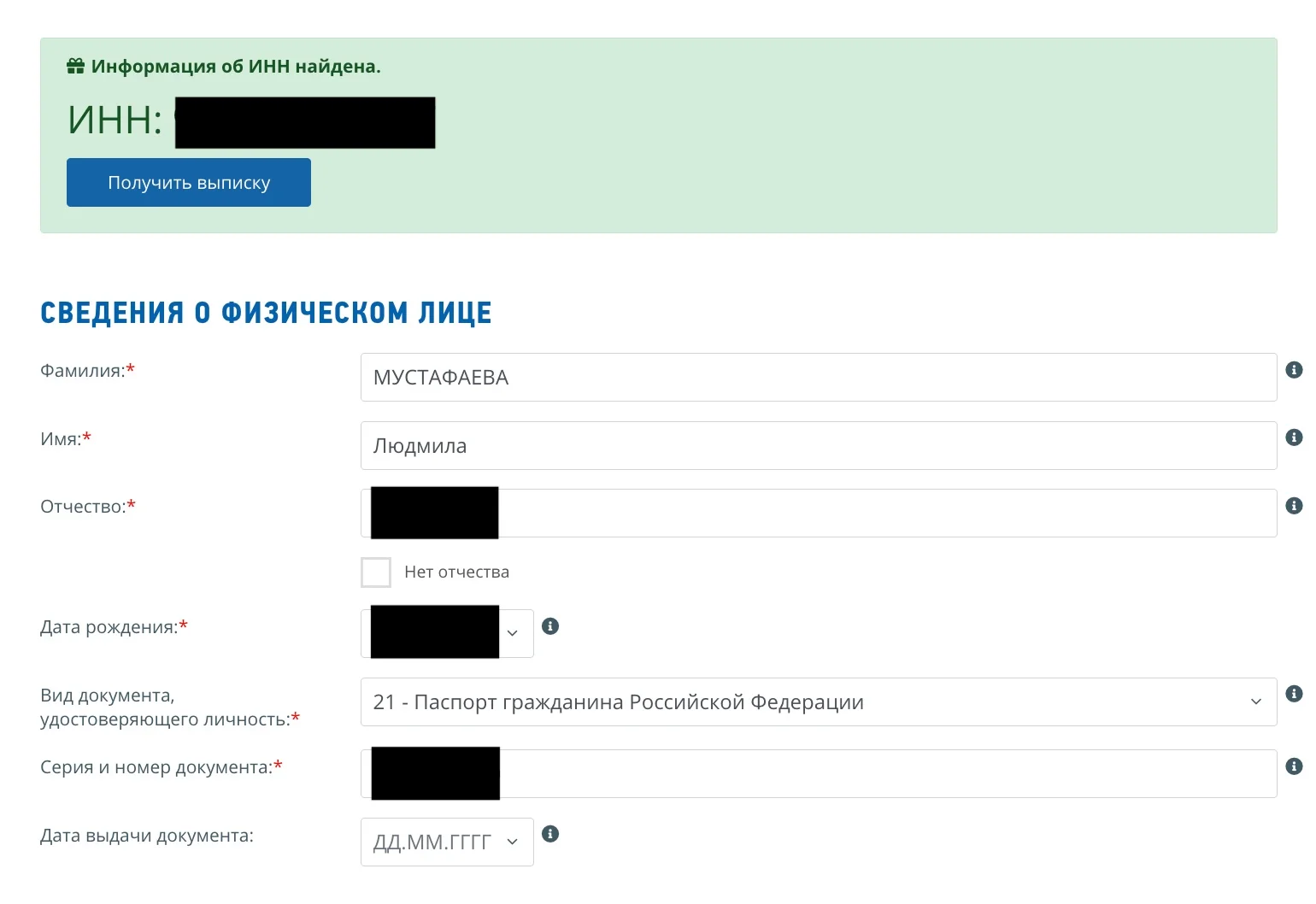
Information from the Anti-Corruption Action Center

Information from the Anti-Corruption Action Center
Duka: My wife’s parents are not my close relatives. I do not communicate with them. I have no confirmation that they hold Russian passports. I am from Hola Prystan district (Kherson region - ed.). Many of my relatives have remained in occupied territory. But they are distant relatives, not close ones.
Honcharenko: Does your wife communicate with them?
Duka: Their relationship is strained because of this. But the grandchildren communicate with them.
It should be noted that people in the occupied territories were forced to obtain Russian passports. "Obtaining a Russian passport under occupation does not in itself prove voluntary cooperation with the occupation authorities. However, the fact that a senior SSU official’s close relatives hold Russian documents and have accounts and businesses in occupied territory creates potential risks for the performance of his official duties," the Anti-Corruption Action Center concludes.
This raises a question: did the SSU assess whether Russian intelligence services could pressure Duka through his relatives’ circumstances, their property, or their businesses?
On the 65 million hryvnias in bail money raised among SSU personnel
Duka: No one forced anyone to contribute this money. But I have a question for our independent, super-professional media. And for the High Anti-Corruption Court, SAPO, and NABU. Why did you make the lists of these individuals, SSU personnel, publicly available, with journalists now calling them and asking uncomfortable questions? Why do that? We are at war, after all.
We have our own team. We have brotherhood, mutual respect, and support. I do not know how this (the fundraising - ed.) happened. But I am very pleased, and once again I am grateful to everyone who helped me get out on bail.
Censor.NET was unable to find a publicly available list naming the SSU personnel who allegedly contributed to Duka’s bail.
On the seizure of "criminal case materials" from the deputy prosecutor general’s office
In early September, NABU and SAPO released the first part of the case codenamed "Carthage." Searches were conducted at the Office of the Prosecutor General of Ukraine, including in the office of First Deputy Prosecutor General Mariia Vdovychenko. Serhii Duka’s position (as well as that of fugitive Prosecutor General Ruslan Kravchenko) is that, during these searches, NABU and SAPO seized materials from Vdovychenko’s office relating to an investigation that prosecutors and the SSU were conducting into the leadership of NABU and SAPO.
According to media reports, Vdovychenko left for Austria, as did the now former prosecutor general, Ruslan Kravchenko. Before fleeing abroad (he called it a "business trip" but did not return - ed.), Ruslan Kravchenko himself said that he had signed two notices of suspicion. One was for NABU Director Semen Kryvonos, the other for "a person close to SAPO Head Oleksandr Klymenko." Kravchenko also stated that there were "dozens of criminal proceedings" concerning the leadership of NABU and SAPO, their subordinates, and "persons associated with them," involving serious and especially serious crimes.
Honcharenko: How many proceedings are there concerning NABU, and in which of them were the incidents involving Kryvonos investigated?
Duka: Everything stated by the prosecutor general is absolutely true! During the searches at the Prosecutor General’s Office, all these materials were seized from Mariia Vdovychenko’s office. For what purpose is unclear.
Honcharenko: The heads of NABU and SAPO said that only a briefing note containing a list of detectives was seized, rather than case materials.
Duka: There was a detailed briefing note on the cases.
Honcharenko: So there was one briefing note?
Duka: It was a briefing note covering all the materials, all the investigative work concerning NABU personnel.
When Major General Serhii Duka left pretrial detention on 13.11.2026, he claimed something different: that what had been seized was not just a briefing note but "all documents and materials." His exact words were: "During the first phase of Carthage, NABU personnel seized from Mariia Vdovychenko’s office all documents and materials relating to investigative work concerning NABU personnel and individuals close to the leadership of the anti-corruption agencies."
Thus, during the TIC hearing, Duka described the scope of the seizure differently from how he had described it after his release from pretrial detention. The general did not explain why he had previously referred to all documents and materials, but now spoke of a single briefing note. In his posts, former Prosecutor General Ruslan Kravchenko also says that what was seized was not a single briefing note but "documents from the criminal proceedings."
Is it standard practice for criminal case materials to be kept in the first deputy prosecutor general’s office? Censor.NET asked its sources within the prosecution service. Here is the answer: "No, this is an anomaly that does not occur in the real world. At the pretrial investigation stage, criminal case materials are kept by investigators, not prosecutors. They may be kept by prosecutors supervising the proceedings. But I cannot recall cases in which the prosecutor general or their deputies acted as prosecutors in criminal proceedings to the extent of directly overseeing the investigation. They have the right to request and examine criminal case materials. But in practice, they never do this personally — their subordinate prosecutors handle it."
On the "notice of suspicion" against NABU Head Kryvonos and the "political decision"
The "notice of suspicion" against NABU Head Semen Kryvonos, released by now former Prosecutor General Ruslan Kravchenko, concerned two incidents. First: in 2008, Kryvonos arranged paperwork concerning a child to avoid criminal liability in a voter bribery case. Second: the extortion of $72,000 for a plot of land in the Kyiv region in 2014, when Kryvonos headed the registration service of the Obukhiv City and District Justice Department.
Kryvonos dismissed Kravchenko’s accusations as absurd and declined to comment on them in detail.
Duka: In fact, the notice of suspicion against Kryvonos was ready at the end of 2025.
Honcharenko: Why was it not served at the end of 2025?
Duka: That is a question for the former prosecutor general (Ruslan Kravchenko - ed.).
Honcharenko: Did you speak to him about this?
Duka: He said there was no political… How do I put it? (Duka directs this question to his lawyer Sukhov, who was attending the TIC hearing with him.)
Sukhov: …decision.
Duka: …political decision. That we needed to wait.
Duka says he did not ask Kravchenko whose "political decision" the prosecutor was waiting for. Ruslan Kravchenko himself stated: "Because of pressure from the president, I did not sign the notice of suspicion much earlier."
Censor.NET has sent inquiries on this matter to the Office of the President. We will publish the response as soon as we receive it.
After Kravchenko fled abroad, his "notices of suspicion" were revoked by the acting prosecutor general — one of his deputies.
On the alleged instruction from the "top political leadership" not to investigate cases involving NABU and SAPO
After leaving pretrial detention, SSU Major General Serhii Duka said that criminal cases against NABU and SAPO officials "were not acted on because that was the instruction of the country’s top political leadership."
Honcharenko: Who do you mean by the "top political leadership"?
Duka: Maliuk gave me this instruction, to stop pursuing cases in which action had already been taken.
Honcharenko: When did Maliuk give you this instruction?
Duka: In the fall of 2025.
In the fall of 2025, Vasyl Maliuk was serving as head of the SSU. Duka could not recall in which month that fall Maliuk had given this order. But General Duka’s account implies that Vasyl Maliuk interfered in the investigation for political reasons. At the very least, Duka himself should have reported a crime.
Honcharenko: Did Vasyl Maliuk summon you to his office?
Duka: Yes, me and my subordinates.
Honcharenko: Who else was in the office with you?
Duka: Anton Kravchuk and Andrii Fonariuk, my deputies.
Honcharenko: What specific instruction did Vasyl Maliuk give you?
Duka: That we needed to suspend work on the materials concerning NABU personnel for the time being.
Honcharenko: So this was in the fall of 2025. Did that include the Kryvonos case? Because you were investigating it at that very time.
Duka: Exactly. That case was already ready. As I told you, it had reached the stage of a notice of suspicion in the fall.
Honcharenko: No, you said it had reached the stage of a notice of suspicion sometime toward the end of the year. Fall is not quite the end of the year. So the notice of suspicion was already ready in the fall?
Duka: Yes.
Honcharenko: You also said Maliuk gave you this instruction. Did he refer to anyone who had given him such an instruction?
Duka: No. He did not refer to anyone, but this happened after he returned from the Office of the President.
Honcharenko: Do you see a connection between these events?
Duka: Yes, I see a connection between these events. NABU and SAPO ceased to be anti-corruption agencies long ago and have become a means of exerting influence over the country’s top political leadership.
When Honcharenko asked whom Maliuk had met at the Office of the President, Duka said he did not know.
And further questions arise. If Vasyl Maliuk gave the instruction to suspend the investigation, why did Duka himself not report a violation of the law? And why did Ruslan Kravchenko not do so, if he had allegedly received such an instruction from the president?
Censor.NET has asked the SSU press service whether General Maliuk gave such an order to his subordinate Duka. We will publish the response as soon as we receive it.
Honcharenko: Does the head of the SSU have the authority to instruct you not to investigate a particular criminal case?
Duka: Well, he did say not to investigate it; he said not to speed it up.
Honcharenko: Is that, in principle, a lawful instruction?
Duka: Well, that decision is made by the prosecutor.
On the "blackmail" of the top political leadership
Honcharenko: Do you mean that they (NABU and SAPO - ed.) could fabricate a case…
Duka: (interrupting) I am certain of it!
Honcharenko: (continuing) …and use a fabricated case to blackmail the top political leadership?
Duka: I am certain of it.
Honcharenko: Is that your analytical conclusion?
Duka: That is my analytical conclusion.
Honcharenko: Or do you have facts?
Duka: I do not have facts. We have simply figured out how they organize their work. When they need publicity, they first prime the media with a particular issue. Then, once the media have been primed, they take concrete action. They make a sensational film. They accuse everyone of everything without a court verdict. And as far as everyone is concerned, that person has been erased; they no longer exist. And they move on.
On Tomas Fiala and "destabilizing the situation in the country"
Tomas Fiala is a Ukrainian businessman of Czech origin. He also owns several media outlets, including Ukrainska Pravda, NV, and Radio NV.
Honcharenko: What is Tomas Fiala’s role here?
Duka: Using all media platforms to promote NABU and destabilize the situation within the country.
Honcharenko: So you believe there is some organization, which you consider criminal…
Duka: (interrupting and wagging his finger) I did not say "criminal organization"!
Honcharenko: (continuing) …that includes the leadership of the anti-corruption agencies, as well as businessman Tomas Fiala, who owns certain media outlets. Is that what you meant?
Duka: Yes.
Honcharenko: Not a criminal organization, just an organization?
Duka: Just an organization, yes.
Honcharenko: And you mean that they jointly plan their activities, particular investigations, and what is the purpose of all this?
Duka: Destabilizing the situation in the country, undermining our… Look at what is happening. First, they portray us as super-corrupt, and then we are denied money (presumably referring to Western partners — ed.) because we are corrupt.
So is this work in the interests of the state or against the state? What is more important to us: ammunition on the battlefield or the films "Carthage-2," "Carthage-1," and "Midas"?
The question is: if the SSU general really had information about organized activity directed against Ukraine’s national security, did he pass it on to law enforcement agencies? And are there documents substantiating his claims?
For example, Article 111 of Ukraine’s Criminal Code, "High Treason," defines treason as "intentional acts by a citizen of Ukraine to the detriment of Ukraine’s sovereignty, territorial integrity, defense capability, state, economic, or information security." At present, no such case exists.
Censor.NET has sent Tomas Fiala an inquiry on this matter.
On the house where Duka was detained
NABU and SAPO personnel detained Major General Serhii Duka on November 4, following searches of the house where he lives with his family. The house is in the village of Roslavychi in the Kyiv region, near Kyiv. According to journalists at Slidstvo.Info, the property legally belongs to Olesia Starostina, who purchased it in April 2021, rather than to Duka. Her husband, Dmytro Starostin, has business ties to the general’s brother-in-law.
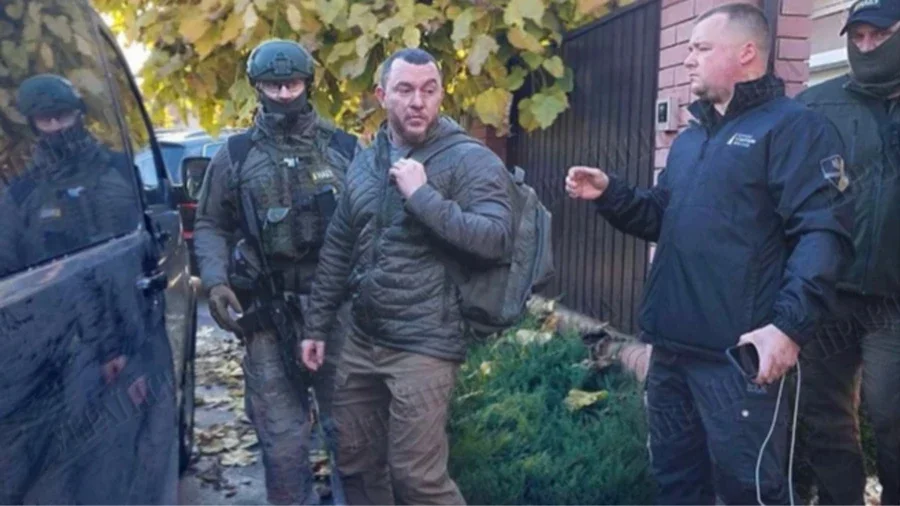
Duka: They came in like Buryats: over the fence instead of through the gate! That is how Buryats went to the toilet: not into the toilet bowl, but onto whatever they liked!
Honcharenko: What is this house? Who owns it?
Duka: I rent it.
Honcharenko: From whom?
Duka: A Ukrainian citizen.
Honcharenko: What is their name?
Duka: The surname is Starostina.
Honcharenko: How long have you lived in this house?
Duka: Since 2021.
Honcharenko: How much is the rent? How much do you pay for this house?
Duka: That is an arrangement between my wife and the owner of the house.
Honcharenko: You do not know?
Duka: No, I do not.
Honcharenko: You live in a house and do not know how much you rent it for?
Duka: My wife handles these matters.
Honcharenko: Has your wife signed an agreement? Is there a rental agreement?
Duka: There is an oral agreement.
Honcharenko: So you have not signed a contract?
Duka: No.
In Ukraine, an agreement to rent a residential house must be made in writing. Article 811 of Ukraine’s Civil Code expressly requires this. At the same time, Article 218 of the Civil Code provides that failure to comply with the written-form requirement does not automatically invalidate a transaction unless otherwise provided by law. Thus, the absence of a written agreement violates the formal requirement for residential rentals, but does not in itself prove either corruption or tax evasion. Nevertheless, questions arise: did Duka declare his right to use the house? For an SSU official, this is a separate issue under anti-corruption legislation.
On the searches of the house where Duka lives and the standoff with Alpha
On November 4, searches of the house where General Duka lives began at 5:20 a.m. According to NABU and SAPO personnel, they were met by armed members of the Alpha special unit, who prevented law enforcement officers from executing the court order, refusing to let them even enter the yard. In an interview with Ukrainska Pravda, NABU detective team leader Oleksandr Abakumov said that a member of NABU’s special operations unit tried to climb over the fence to open the gate. At that point, a weapon fitted with a laser sight was aimed at him, and he was threatened with gunfire. The detectives showed their identification and the court order, but were not allowed through. SAPO prosecutor Mykola Karas reported that the armed men chambered rounds and blocked access to the house for almost two hours.
Duka: At 5:20 a.m., unidentified people tried to climb over the fence. The alarm went off, signaling a perimeter breach. Then Alpha personnel got involved.
Duka’s lawyer, Yurii Sukhov, had previously told journalists that Duka was under constant protection by the SSU’s Alpha special unit because the Russians were hunting him.
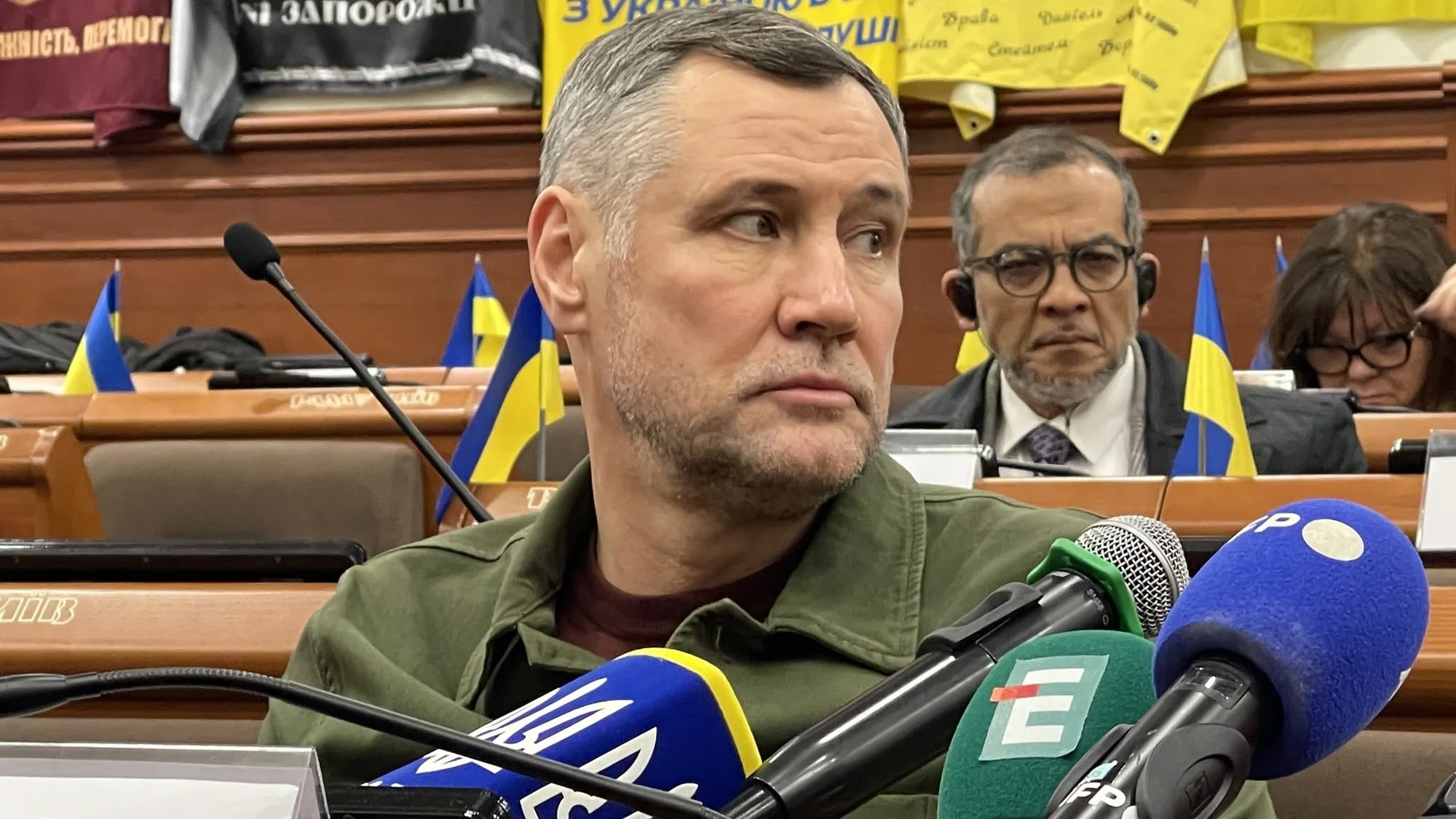
Duka: No one rang the intercom! They started climbing over the fence. Then a conflict of sorts started: Alpha insisted on one thing; they insisted on another. Then it was unclear what was going on. Then the head of the Special Operations Center "A" (the SSU’s Special Operations Center "A" - ed.) had to tell Alpha to stand down. Then they started establishing who was who and what was happening, making calls — I do not know at what level. So it all dragged on. When Abakumov (the NABU detective team leader — ed.) came in, I said to him: "Why didn’t you come through the door? You could have just come and said you had a court order!"
NABU detective Oleksandr Abakumov and SAPO prosecutor Mykola Karas both maintained that they had shown the court order immediately upon arrival. The question remains open: if Alpha personnel did indeed obstruct a lawful search, were they acting on their own initiative, following the protection protocol, or carrying out an order from their superiors?
On detective Abakumov’s father-in-law
At the TIC hearing, Serhii Duka says he first met NABU detective team leader Oleksandr Abakumov during the search on November 4. Yet he reveals his familiarity with Abakumov’s background.
Duka: Incidentally, Abakumov and I are in very similar situations. According to their information, my father-in-law is in occupied territory. Abakumov’s father-in-law is also in occupied territory, holds a Ukrainian passport, and has a business in the Russian Federation. But for some reason, he is not allowed to do this, and neither am I.
This was first reported by Informators.press in the summer of 2025, immediately after the SSU’s attack on NABU and SAPO. The publication claimed that Abakumov’s father-in-law was Dmytro Stohniiev and that he owned a business in occupied territory.
Informators.press does not appear on lists of trustworthy media outlets compiled by independent media experts, including the Institute of Mass Information. Informators.press did not provide a response from Abakumov or publish documents confirming his family connection to Dmytro Stohniiev.
A person named Dmytro Stohniiev heads a farming enterprise in the occupied part of the Luhansk region. Censor.NET found the enterprise "Stohniiev" in both the Ukrainian and Russian registers. It is registered in the village of Zaikivka, Bilokurakyne district, Luhansk region. The Russian register states that Dmytro Stohniiev holds Russian citizenship. Abakumov’s asset declaration lists his wife Olha’s maiden name as Stohniieva and her patronymic as Dmytrivna. However, the editorial team has not yet obtained documentary confirmation of a family connection between them.
Oleksandr Abakumov himself has not yet commented on this information. Censor.NET has approached the NABU press service for comment.
On the destruction of a hard drive and phones
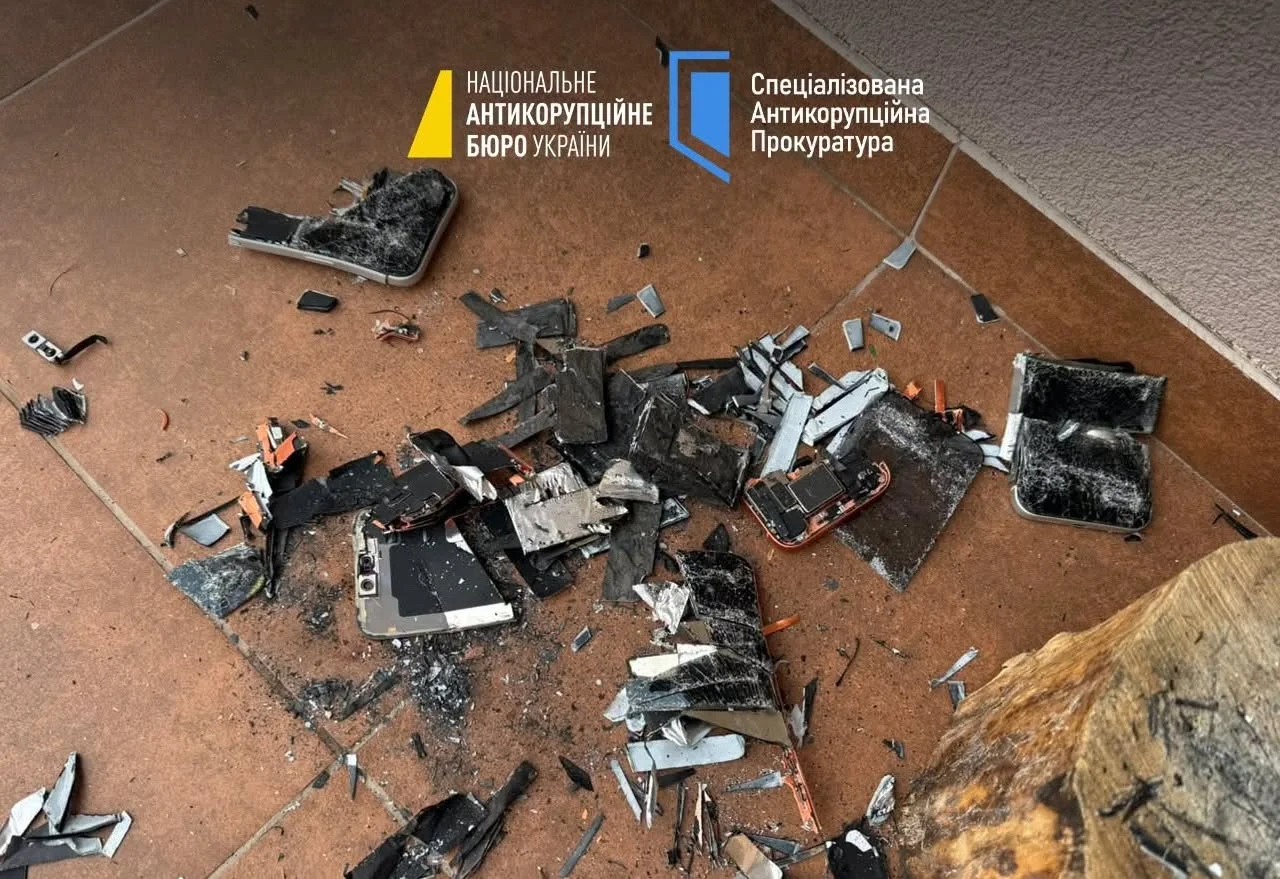
NABU and SAPO representatives maintained that on November 4, while Alpha personnel were preventing NABU detectives from entering the house, SSU Major General Serhii Duka was on the balcony smashing two phones and a hard drive with either an axe or a hammer. Prosecutor Mykola Karas displayed the remains of the smashed phones in the courtroom during Duka’s remand hearing. Duka’s lawyer, Yurii Sukhov, said on Butusov+ that this was manipulation. "I do not know what that was. I am not an expert. I could also bring something in a bag and say these are broken mobile phones." In court, he suggested that the children might have broken them. Now his client admits that he smashed the phones with an axe.
Honcharenko: Did you destroy hard drives and phones?
Duka: Not the hard drive.
Honcharenko: The phones?
Duka: I destroyed the phones right at the beginning, yes. Because I did not understand what was happening at all.
Honcharenko: How many phones did you destroy?
Duka: Two.
According to NABU and SAPO, the mobile phones belonging to the suspected SSU general could have served as physical evidence in the case: they might have contained information confirming Duka’s criminal intent or actions.
Duka: Why did I do it? I will answer. When Mahamedrasulov smashed his phone, they said he was protecting his materials and his network of agents. But in my case, NABU says I was destroying evidence. So where is the truth?
Honcharenko: I think that when you submitted materials to the court concerning Mahamedrasulov, you also wrote that he was destroying evidence.
Duka: Yes.
Honcharenko: So now they are saying the same thing. You suspected him, and now they suspect you.
In the summer of 2025, when the Office of the President and the Verkhovna Rada tried to strip NABU and SAPO of their independence, the SSU conducted extensive searches targeting NABU personnel. The SSU reported detaining detectives whom it suspected of cooperating with Russia and committing high treason. SSU General Serhii Duka was directly involved in this operation.
Among those detained was detective Ruslan Mahamedrasulov. He broke his phone during the search. In an interview with Suspilne, Mahamedrasulov said: "It contained many operational contacts and communications with people who assist us. Disclosing this information poses a threat, above all, to them, to their lives and health." In addition, according to the detective, the searches were conducted without a court order.
The SSU suspects Mahamedrasulov of aiding Russia by allegedly helping his father sell industrial hemp to Russia’s Dagestan. He spent almost five months in pretrial detention. On December 3, 2025, a court released him from custody. His father, Sentiabr, had been released earlier. However, the case against the detective was not closed: in 2026, he continued reviewing the investigation materials. He denies the accusations.
On Andrii Osipov, "Kryminal"
Andrii Osipov is a Ukrainian criminal with several convictions. In their investigative film, NABU and SAPO identify him by the alias "Kryminal." According to investigators, Osipov founded and led the criminal organization whose members included SSU General Serhii Duka.
Honcharenko: When, where, and under what circumstances did you meet Osipov?
Duka: Maliuk (Vasyl Maliuk, former head of the SSU - ed.) introduced me to him when I came to Kyiv. It was in 2020 or 2021. At that time, Maliuk was first deputy head of the SSU and head of the Main Directorate for Combating Corruption and Organized Crime.
Honcharenko: So he was above you in the chain of command?
Duka: Yes.
Honcharenko: In what capacity did he introduce him to you?
Duka: As someone who could help serve the interests of the Service. Osipov comes from the criminal underworld. So, in terms of understanding the operational picture, perhaps some…
Honcharenko: (interrupting) So Osipov was introduced to you as an SSU agent in the criminal underworld?
Duka: No, I cannot say he was an agent. He was someone who could help with certain matters on an ad hoc basis.
Honcharenko: And how did Maliuk know Osipov? Did they tell you anything about that, then or later?
Duka: No. I do not understand.
Honcharenko: How would you describe Maliuk’s relationship with Osipov? Did the three of you meet in person? Or did Maliuk give you his phone number?
Duka: He gave me his phone number.
Duka says he does not remember the details of calling Osipov or their first meeting because it was five years ago. He confirms that he met Osipov more than once. Asked by Honcharenko whether there had ever been meetings involving all three of them, himself, Maliuk, and Osipov, Duka says: "I do not remember. I do not think so." He describes his relationship with the criminal as "strictly professional."
Honcharenko: In your correspondence, you call each other "brother."
Duka: Well, what correspondence is this? I have not even reviewed the investigation materials. I know about this correspondence from the film.
Honcharenko: Do you remember a recent meeting with Osipov in the SSU building? I want to find out what you discussed and who else was present.
Duka: These meetings regularly took place in my office. It was just the two of us. We would often simply meet when we had not seen each other for a long time. He would come and tell me: "This is the situation there, that is the situation over there, so-and-so is the overseer there, someone there is being replaced"… Routine operational work. Let me put it this way: to detain a drug manufacturer, you need another drug manufacturer; only another thief can turn a thief in.
Censor.NET’s law enforcement sources explain that if Osipov was Duka’s informant in criminal circles, Duka should have formally documented their conversations and the information he received. It is currently unknown whether he did so. If no such operational records were kept, this could indicate that their relationship was not "strictly professional."
In the NABU and SAPO recordings, Andrii Osipov refers to someone who had taken a senior position in the SSU as the "Korostyshiv hooligan." Censor.NET’s sources in anti-corruption circles maintain that he was referring to Lieutenant General Vasyl Maliuk, the former head of the SSU. Maliuk is from Korostyshiv in the Zhytomyr region. Osipov himself is from the same town.
In an interview on Butusov+, former Ukrainian Prosecutor General Yurii Lutsenko explained the connection between Maliuk and Osipov. Lutsenko had also investigated the activities of the Khimprom drug cartel.
"Until 2019, Maliuk was deputy head of the SSU’s Zhytomyr regional directorate. He was the deputy in charge of combating organized crime. His official duties included maintaining a network of agents among criminals. He had agents. And one of them was this crook, an out-and-out thug, whom we now know by the alias ‘Kryminal’ (Andrii Osipov - ed.). This Duka, whom you are now hearing all about, who, according to the recordings, essentially organizes protection rackets and everything else with ‘Kryminal,’ was given the contact details of an obscure Zhytomyr crook," Yurii Lutsenko said.
Duka himself describes his relationship with Maliuk as "professional and friendly."
On Burkin / Levchenko, the head of the Khimprom drug cartel
The NABU and SAPO materials feature "Meksykanets." According to investigators, he founded and heads the transnational Khimprom cartel. Originally from Russia, he fled to Ukraine in 2016. He has also been wanted in Ukraine since 2019. His name is Yehor Burkin. In Ukraine, he obtained a passport under the name Yehor Levchenko.
Honcharenko: When did you first learn of Osipov’s connection to Burkin?
Duka: I knew nothing about it until "Carthage-2."
Honcharenko: What do you know about Burkin?
Duka: Burkin. Levchenko. Incidentally, there is a very interesting story about this Levchenko.
Honcharenko: Tell us!
Duka: He was stripped of Ukrainian citizenship at one point, but now he has won all the court cases on this issue. So he will soon be a Ukrainian citizen again, Yehor Levchenko.
Duka also stated that in 2023, he and the State Bureau of Investigation prepared the documents for the president of Ukraine to impose sanctions on Yehor Burkin. Duka further said: "There is operational information that NABU employee Drahov traveled to meet Burkin in late 2025." This information has not yet been confirmed.
On fraudulent call centers
The call centers form a network of fraudulent operations whose employees scam people out of their money. They also operate in EU countries, which have repeatedly informed Ukraine’s leadership about them. In the anti-corruption agencies’ film, detective Oleksandr Abakumov says that in the fall of 2025, "Meksykanets" (Yehor Burkin / Levchenko - ed.) ran a network of such call centers. "The activities of the call centers could not have gone unnoticed by personnel from the SSU, the National Police, and the prosecution service. Using his connections, ‘Kryminal’ (Andrii Osipov - ed.) quickly established contacts and channels for passing bribes to all these agencies," the detective says. According to him, the standard bribe paid to law enforcement was $7,000 per month per call center. Investigators calculated that at least 52 call centers paid this tribute, employing at least 2,700 people nationwide.
Honcharenko: Did you know about Osipov’s involvement in call centers?
Duka: I knew he had his own call centers. That he might have been involved somewhere — well, that is his life; he has been involved in one thing or another all his life. Did he approach me about call centers? No, because call centers are also outside my remit.
If SSU General Serhii Duka knew that the criminal Osipov was involved in call center fraud and this was not part of their cooperation agreement, he should have reported the crime to the National Police. Duka does not mention making such a report.
In their film, NABU and SAPO published an excerpt from an exchange between Andrii Osipov and Serhii Duka (identified in the film by the alias "Akim" - ed.). In July this year, Osipov writes to Duka: "Brother, what is the situation with the call centers? Is everyone going to run?" Duka replies: "Yes. We need to change addresses. Move into apartments. And operate underground." Oleksii Honcharenko asked Duka about this particular exchange at the TIC hearing.

Honcharenko: Did you write this message?
Duka: No, I did not write this message.
Honcharenko: How, in your view, could these call centers have operated in Ukraine for years, involving thousands of people and renting entire floors and entire business centers in Kyiv, Odesa, Lviv, and other cities? How did they operate without attracting the attention of law enforcement agencies?
Duka: Well, there are specialized National Police units that deal with this issue. It is outside my remit, so I never got involved.
The finale
"I repeat once again that this case is an act of revenge against me by the heads of NABU and SAPO," Duka says. He proposes summoning everyone he mentioned, including NABU Head Semen Kryvonos.
"We are inviting and summoning NABU Director Semen Kryvonos, SAPO Head Oleksandr Klymenko, NABU detective Ruslan Mahamedrasulov, former SSU Head Vasyl Maliuk, and former Prosecutor General of Ukraine Ruslan Kravchenko for Monday, November 23, at 12:00 p.m.," Oleksii Honcharenko concluded.
Honcharenko added that the commission was prepared to hear Kravchenko online if he was "afraid to enter Ukraine."
The show must go on!
Iryna Romaliiska.


