


"Better to have extra medicines in first-aid kit than ’Snickers’: day with combat medic from 3rd Army Corps – Staff"
A senior combat medic in the 3rd Assault Company of the 1st Assault Battalion of the 3rd Assault Brigade of the 3rd Army Corps, with the call sign "Staff," had no prior experience in medicine before the full-scale war. Until 2022, he lived abroad—in Poland and the Netherlands. He worked in construction, gradually advancing in his career, and eventually became a foreman.
When the full-scale invasion began, he couldn’t stand by and do nothing – he didn’t want to simply watch what was happening in Ukraine whilst his family and loved ones were still there. So he decided to return home almost immediately. That very evening, on 24 February, he told his employer he was resigning. He rang a transport company, who picked him up on the way. Upon his return, he went straight to the military recruitment office. But he was only 19 at the time, so they didn’t accept him into the army straight away. He started volunteering. However, his desire to join the army hadn’t gone away. After a while, he went back to the recruitment office and made it clear that he wanted to be an assault soldier. That’s how he ended up on a trial week with the Third Assault Brigade. He says he really enjoyed that time. There was plenty of support, training, new information and opportunities to test himself. Upon completion, the soldiers were issued with certificates and were also helped to decide what they wanted to be and which role they’d like to take on. He decided he wanted to join the reconnaissance unit. His first combat sortie was indeed as a reconnaissance soldier. But then his unit commander suggested he become a medic.
"First, I went on a training course, completed the CLS, returned to my unit and continued my training," he explains. "Then I completed the CMC, also gaining an instructor’s certificate. Next came training in blood transfusion, which I really enjoyed." That’s how, bit by bit, I worked my way up to becoming a company medic. What’s the most important thing here? You have to focus as much as possible on your work, be completely absorbed in it. You help people, doing everything in your power to save their lives and protect their health. You don’t get distracted and you just keep moving forward.
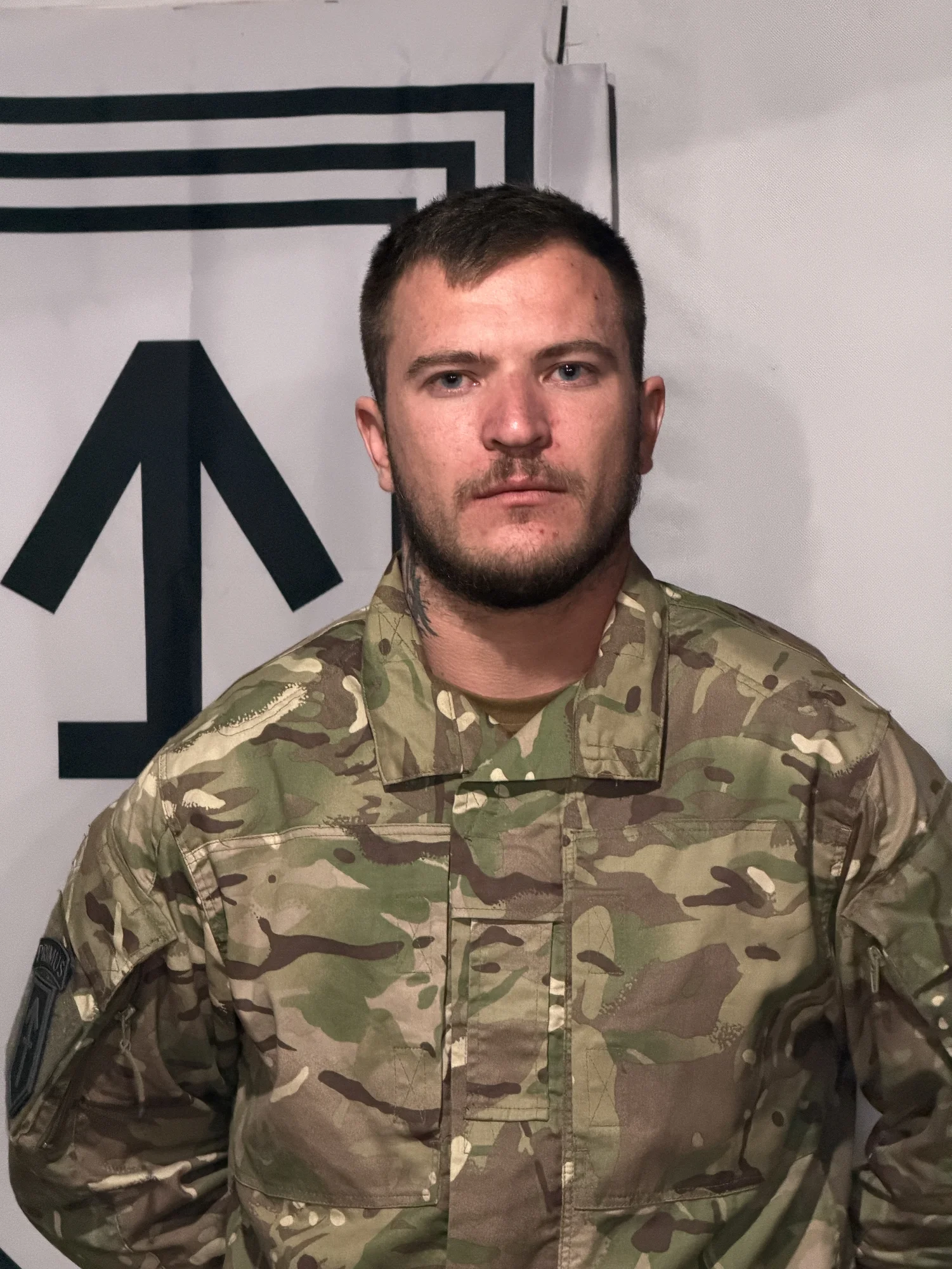
Staff filmed a few short videos for us from his working day. He attached a GoPro camera to himself to show his work literally from his own perspective – from assisting the wounded and their evacuation to training fighters and looking after the troops on a day-to-day basis. He added a commentary to each video and explained exactly what was happening.
I’m taking a soldier’s DNA sample before he leaves. Everyone goes through this procedure, regardless of their rank. You mustn’t eat, drink or smoke before the sample is taken. I warn them about this in advance. Then the paperwork is completed: a statement is drawn up confirming that the soldier consents to these procedures, and all their details are recorded, including their telephone number, home address and so on. I do not keep these documents myself – I pass them on to the medical centre, and from there they are sent on.
In addition, when a new person arrives, they must undergo what is known as a screening. This includes a blood test and various other tests: for hepatitis, HIV, sexually transmitted infections, and so on. This is followed by a consultation with a general practitioner. If there are any issues of concern, the examination also includes a chest X-ray, as well as consultations with a surgeon, an orthopaedic surgeon and a neurologist. That is all that is required. You could say it’s a sort of local ‘MMC’, as we need to determine whether it would be better for the person to undergo treatment now, so as to identify any potential problems at an early stage:
***
Checking a soldier’s first-aid kit before they head out. This is also essential. I’ve spoken to several servicemen who’ve come from the AWOL from other brigades, and many said: once they’d been issued a first-aid kit, nobody even looked inside it again. I take a very meticulous approach to this matter – I check everything. I even add more items of my own than the basic kit requires – better to have extra medicines than ‘Snickers’ or something like that. I’ve been told stories of soldiers being wounded, their first-aid kits being opened, only to find chocolate bars inside. That’s not on!
A first-aid kit must absolutely contain four tourniquets, which must be ready for use (both in the kit and attached to the body armour), pill packs for wounds and for concussion, an occlusive plaster, an Israeli bandage, a standard bandage, plasters, a marker pen, scissors, a casualty card and tamponade material.
The concussion kit runs out very quickly. When it comes to wounds, tourniquets are applied very frequently. If the platoon medic is some way off, the lads can get on the radio to ask for advice on the best course of action. But as they’ve undergone training, they know a great deal themselves:
***
I'm collecting pill packs for first-aid kits. The one for concussion must contain 8 milligrams of ondansetron and paracetamol. And for wounds – paracetamol, meloxicam and moxifloxacin.
We have to restock the pill packs very frequently. A first-aid kit is issued as soon as a soldier joins the unit. Even during training, if, for example, he gets a headache, he can take a tablet from there to relieve the pain. Before we head out, I check everything again and top up whatever’s needed:
***
Preparing documents for a MMC with a soldier. Generally speaking, there are various scenarios for MMCs. If a wounded soldier is in hospital, they may be referred to the medical board straight away. But if they’ve already been discharged, and have had a short leave or something similar, then I issue them with a referral either for a MMC or for a fitness-for-service assessment:
***
I’m accompanying a soldier during his MMC. There were huge queues. We were right at the back. I had a prosthetic limb that I needed to take to the orthopaedic surgeon. So, out of necessity, we managed to skip the queue. He had his consultation. They issued him with a consultation report stating that he needed to undergo a MMC. After that, I have to issue him with a referral to the commission, but I can’t do that without the doctor’s report, because this report must bear a stamp and signatures:
***
Sorting through the paperwork: deciding which soldiers need a MCC and which need hospitalisation. Overall, I spend a great deal of time dealing with paperwork:
***
This is the road to Kharkiv. I’m accompanying two soldiers to hospital for admission. Beforehand, in situations like this, I arrange a time for the journey, let them know what to pack, and explain how everything is planned:
***
Accompanying a soldier to hospital. Here it depends on the situation: if instructed, I transfer them to another hospital, or even to another city if necessary. I usually speak to the doctor about the next steps. After that, the soldier is admitted to hospital. This mainly concerns the wounded. If they’re ill, I refer them to the local facility. We have our own medical unit, which does a great job. Here, I also register the patient; we arrive, and they’re examined by a GP, or by a surgeon or traumatologist if needed. Treatment is prescribed in the same way:
***
This is infantry training in applying tourniquets and conducting examinations using the MARCH system. I try to go beyond the standard procedure. I usually train them so that the scenarios are as close to reality as possible, just as it should be on the battlefield. I follow the TCCC protocol, although I make my own adjustments to improve it. This is how I do it: we learn the theory, then practise it, and so on in a cycle. After a certain period, I conduct another assessment on what they’ve learnt to ensure it’s properly retained, so it doesn’t end up like this: they’ve learnt it now, but in a couple of days they’ve already forgotten it. I constantly remind them: it’s about self-development, not TikTok or Instagram. If they’ve got a spare minute in the evening – they ring their families, have a chat, and then open a book or the TSSS app, read through it, reflect on it and commit it to memory once more.
I’m a strict instructor because I care deeply about each and every one of them. On Medical Workers’ Day, I received a message from a former battalion I’d served in: ‘Happy Medical Workers’ Day! You really are a very good medic. Although you’re a strict sergeant, you’re fair." It was a foreigner who, after being wounded, opened his first-aid kit to treat himself and saw that there were far more medicines in it than usual. He told me: "I actually cried then." So I really am both good and strict. After all, I try my very best to make sure they feel comfortable and confident, and don’t think they’re being neglected or anything like that. If they’ve got a toothache, I take them to the dentist; if it’s a finger, to the traumatologist, and so on. We do everything.
Is it difficult to teach them? At times it is, when they’re not keen. There have been cases where he just couldn’t get the hang of it. I understand, and I always – I’ll say it again – emphasise self-development. I even ask his fellow inmates who live with him to help him learn. I say: "You know more about medicine at the moment; sit down together in the evening, have a chat, go over it. You can ring me when you’ve got some free time. I’ll come round and explain and show you whatever’s unclear. If necessary, I’ll do it again":
***
A wounded civilian man is being examined. He was near that car. He was injured whilst riding his motorbike to go fishing. Comrades from another unit spotted him and brought him closer to us. We carried him to a shelter, where we treated him. He had injuries to his leg, buttock and arm. He said it hurt. We kept talking to him, asking where he’d been going and what he’d been doing. That sort of conversation really does help.
I don’t often get the chance to help civilians. I usually go to other places. But there aren’t that many civilians here either:
***
We’re administering medication to the wounded man. This is the painkiller Nefopam, Tranex to stop the bleeding, and Ondansetron to prevent nausea. To put it in perspective, this sort of injury isn’t a big deal for us. After the painkiller, this man was even joking:
***
We’re covering the wounded man with a thermal blanket to keep him warm. Then we laid another blanket over him. He’d lost a great deal of blood, so he’d have been cold anyway. And it’s better to prevent hypothermia than to treat it later. That’s why we took pre-emptive action. We even joked that he now looked a bit like a shawarma. He’s such a funny chap. He told us his wife was waiting for him at home. We found out where they lived and passed on all the information so she wouldn’t worry, as his phone had been left at the scene of the incident:
***
Evacuating the wounded man. I was sitting in the front of the vehicle. My comrade was by his side, making sure everything was alright. We kept talking to him, asking how he was feeling, whether the painkillers had taken effect, about his wife and children, and why he hadn’t left. He said he’d lived there his whole life, so he didn’t want to go anywhere. He was feeling fine.
When we communicate with a wounded person, we assess their condition. If we don’t talk to them, they might lose consciousness. That’s why there has to be constant contact.
We then hand the casualty over to the next stage of the evacuation. A team from our unit, with whom we’ve already liaised, takes them away. There are specific stages to the evacuation to avoid driving the vehicle all the way to hospital. We explained the circumstances of the injury, the treatment provided and the medication administered. Usually, a report is also prepared in writing. In this instance, I didn’t write it in a notebook but in electronic format, where I specified everything:
***
I’m carrying out a food safety inspection. I’m checking the fridge for any out-of-date food. The soldiers need to keep an eye on this, as it could cause food poisoning. I’m teaching them to monitor this themselves. I don’t turn up on any specific day, but at random times, so they don’t know when I’m coming. Because they might think: ‘The use-by date was yesterday – it’s no big deal, we can still eat it.’ Or, when they’re tired, they don’t check the dates, they just eat, and then they end up with stomach aches and upset stomachs. That’s why everything has to be checked. If anything’s been opened, it goes in the bin too.
This time I found some butter that had gone off. Everything goes straight into the bin in my presence. Usually, the platoon commander is standing right next to me. I tell him: ‘We need to go through everything again from the start and give the fridge a thorough clean.’ And they’re already on it. They do make mistakes, but I understand them. They’re tired, exhausted; they want to rest, so they don’t have the time. They don’t always even have the energy to eat. I know from my own experience: when I was doing basic military training, I was so tired that I didn’t always feel like eating. The opportunity was there, as it was part of the schedule, but the desire wasn’t always there.
I also keep an eye on their hygiene. I emphasise this all the time, telling them to always wash, because they’re constantly sweating – which can lead to fungal infections and all sorts of problems. So I keep an eye on that too. I make sure their hair is trimmed and their nails are well-groomed. A serviceman must look the part:
***
Talking to the staff. I realise there are people who are too shy to say anything or are afraid of something. It’s better if I ask again. After all, I remember who I’m looking after, what medication they’ve been prescribed, how long their treatment will last, when they need to come for a medical appointment, and where they need to go. Besides, I’ve got everything written down, and I’ve got a lot of it in my head. But when I chat with them, they might add something else. That way, they open up more, and I can better understand whether something is helping them or not, or whether they’re actually sticking to their treatment and recommendations:
This time, I spoke with foreign soldiers. A staff sergeant stood beside me, acting as an interpreter, as my English isn’t very good – I speak more Polish. There’s also often an interpreter at these meetings. I’ve also got a platoon medic who knows English. He can talk to them whilst I listen, ask questions, have him translate, and we sort everything out. I know the standard phrases. If they need to, the lads can write to me directly, and I’ll have the interpreter look at it.
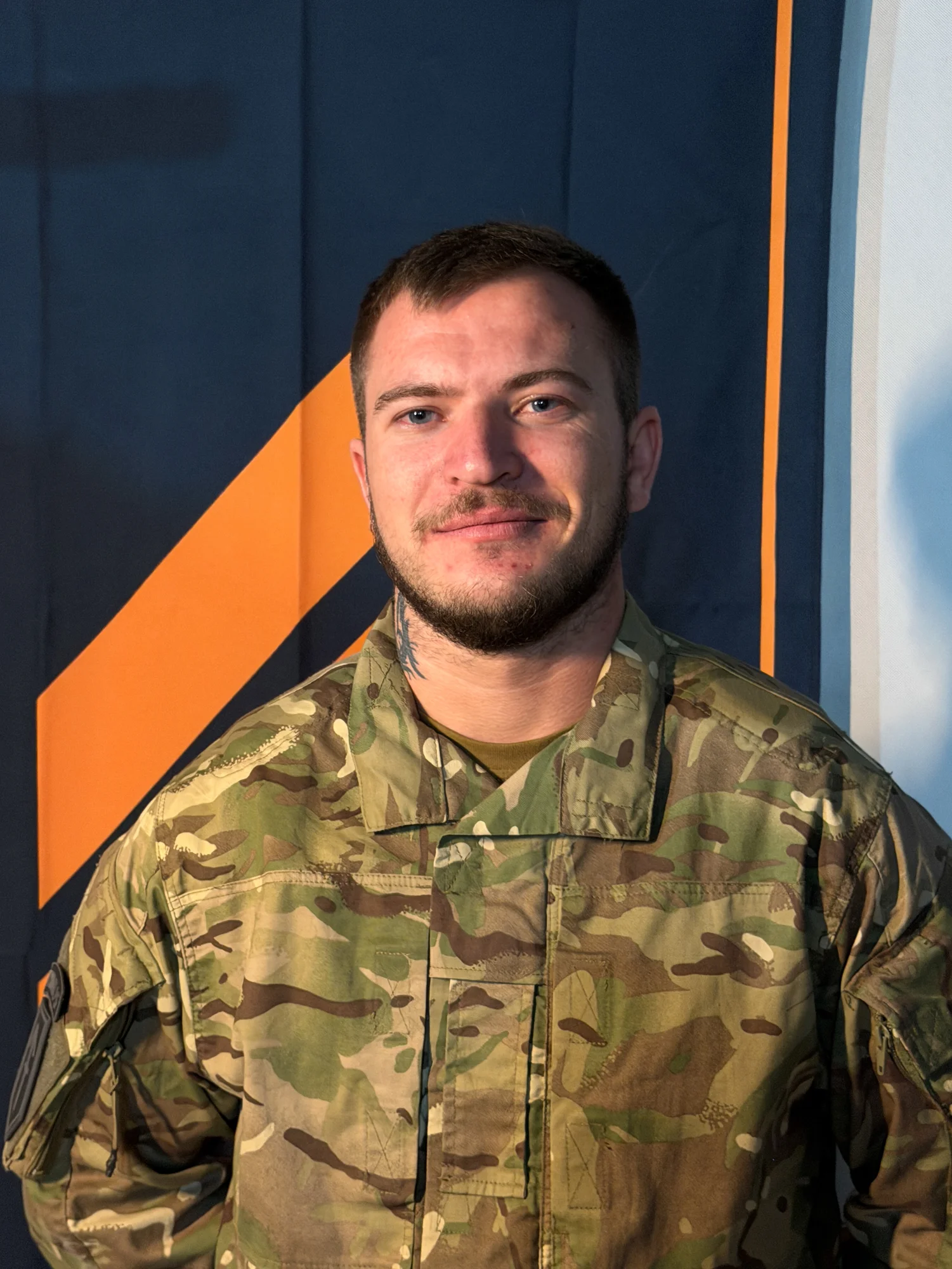
Of course, I’d love to visit them every other day, but I don’t always have the chance. There’s always something else to do: one thing, then another. I try to be there twice a week, sometimes even three times. And if there’s someone undergoing treatment – for example, receiving a drip or something similar – I usually visit them every day. How do I manage to do it all? I’m just a bit of a go-getter.
Olha Moskaliuk
Photos and videos provided by Staff


