


"Puppet NGOs, conferences with leaflets and photos – it’s all a sham": how Kim’s words have upset Ukraine’s defenders and what to do about it
For a week now, the Ukrainian media landscape has been facing a new wave of demands directed at the government: "Kim must resign."
Within a few days, the petition calling for his resignation had gathered the required number of signatures. This is how serving military personnel, veterans and their families and loved ones are reacting to a recent interview given by Vitalii Kim, the Minister for Veterans’ Affairs. People were most outraged by the way the head of the Ministry of Veterans’ Affairs spoke about psychological support for veterans – which he described as a marketing ploy – and by the fact that he effectively agreed with the suggestion that veterans, upon returning from the army, would pose a threat to public order. To quote him verbatim: "People return with certain skills, a reduced sense of risk and a heightened sense of justice. This applies not only to crime, but also to social tensions, revolutions and other processes."
The minister responded to the criticism by citing data from a survey conducted by the Ministry of Veterans’ Affairs’ veterans’ fund. It shows that the concerns he expressed are allegedly shared by the veterans themselves.
Amidst the tone of the conversation and the minister’s indignant responses to several questions, his remarks about the action programme announced by Kim – particularly regarding the construction of housing for participants in the Russian-Ukrainian war – were lost. His critics argue that 100 days in office as minister is more than enough time to demonstrate not just plans, but concrete results. The state lacks funds, so most veterans’ programmes must be financed by donors, and it is Kim himself who is responsible for raising these funds, he adds.
Censor.NET has gathered views on the current situation from those directly affected by it – veterans, servicemen and members of their families who possess political or civic expertise. So, what is wrong with Kim’s statement, what questions should be put to the Ministry of Veterans’ Affairs, and how should veterans’ policy be organised in Ukraine?
THE MINISTER STILL HASN’T UNDERSTOOD EXACTLY HOW HE UPSET THE VETERANS’ COMMUNITY
Inna Sovsun, a Member of Parliament from the ‘Voice’ faction, whose partner has been defending Ukraine since the very first days of the full-scale invasion, notes that Kim spoke to people who had been through the hell of war as if they were exotic animals. The main difficulty facing the Ministry of Veterans’ Affairs is that it effectively operates through other ministries, but she believes this problem can also be resolved.

- What exactly outraged you about the minister’s remarks? Where is he wrong, and where might he be right?
- We need to respond to the whole situation as a whole – to the initial interview and the minister’s subsequent communications on this matter. And I believe that he still hasn’t understood exactly how his comments offended the veterans’ community, serving military personnel and their families. Because instead of apologising and saying, ‘perhaps the tone of the conversation was wrong’, he said that there are problems and we will have to consider what to do about them.
No one is denying that there are problems. In fact, the Ministry of Veterans Affairs was set up precisely to address veterans’ problems. The problem with the interview was that he spoke of veterans as objects of state policy, not as equal partners, not as people whose experience we respect, value and consider important.
Yesterday, I saw a post from several military personnel – including some of my former students who are now in the armed forces or veterans – all conveying the same message: that ‘we shouldn’t be spoken to as if we were children, or referred to as children’. They are adults; indeed, they are probably more mature than most. It was precisely this that deeply outraged people – both the servicemen and their families.
The part of the story I found most unacceptable was the comparison of the experiences of military families with those of his own family. For me, such comparisons are deeply painful, because as someone whose partner has been serving on the front line since the very first day of the invasion and continues to do so to this day, I interpret this as meaning that the minister completely fails to understand what makes the experience of being a member of a serviceman’s family so unique and painful.
- The Ministry of Veterans Affairs has been in existence for quite some time, and it has seen many changes in leadership. The public has many questions regarding this ministry. How would you assess the work of the various ministers, and if your assessment is negative, why do you think this ministry is struggling to make progress?
- The Ministry of Veterans’ Affairs is very specific, because in practice it is supposed to coordinate the work of other agencies or institutions—which report to other ministries—in how they deal with veterans. For example, the area veterans most frequently complain about is healthcare. Clearly, the Ministry of Veterans’ Affairs itself does not have any hospitals under its direct control and therefore cooperates with the Ministry of Health on this issue. The question then becomes how effectively they will be able to establish processes of cooperation so that hospitals work differently with veterans.
The same applies to education. It is clear that the Ministry of Veterans’ Affairs does not provide education and does not have any schools, universities or colleges under its direct control. It operates through the Ministry of Education. Social services are also a huge area. Again, this is not the remit of the Ministry of Veterans’ Affairs, but rather the work of the Ministry of Social Policy and the departments under its authority. This Ministry has its own specific characteristics, and the difficulties it faces are linked to these characteristics. That is why any minister finds this role challenging.
Consequently, even ministers who understood the subject matter found it difficult, as they have to work through other ministries. And in these other ministries, to put it mildly, attitudes can vary as to how important it is to address the problems faced by military personnel, veterans and their families. The second issue is that, generally speaking, government policy in Ukraine – particularly in recent years – has been heavily geared towards very simple, quick and populist solutions.
I work very closely with veterans’ organisations, and they complain a great deal that there is currently a massive trend towards creating some sort of ‘space’ for veterans. You can turn up, cut the ribbon, take some photos, but in reality, veterans need to resolve issues such as housing, for example, and that is much more difficult to achieve. Incidentally, the issue of housing is one of the most pressing concerns raised by serving personnel and veterans. Clearly, this requires complex, long-term solutions, investment, and prioritising who receives housing and who does not, and so on.
It seems to me that veterans’ policy is falling victim to populist politics of quick fixes. Such approaches are of little help in other policy areas too, and certainly not in veterans’ policy.
So, strictly speaking, there were indeed issues with all previous ministers as well, but it seems to me that Vitalii Kim has crossed the line, because previous ministers at least spoke respectfully about veterans and their experiences. Here, however, people have felt that their problems are not being resolved, and to make matters worse, they are being spoken of in such a tone as if they were second-class members of society.
- In that case, what should the policy be? How should the work be organised?
- There is no single, universal solution, but at the very least we need to start by understanding a better vision of what this veterans’ policy should be. And this vision needs to be translated into specific draft legislation. This raises the question of the Veterans’ Code, which has been in and out of development for years; now Kim has said it will be adopted by the end of the year, but it is already late November and it has not even been drafted yet.
As for how it ought to be, let me give you an example. Recently, the Ministry of Defence published the Concept of State Policy on Support for Servicemen and Members of Their Families. By and large, it was drafted with the involvement of representatives from various veterans’ organisations. It is important to understand that veterans include serving military personnel who have been recognised as having participated in combat operations (UBD); in other words, this is a very diverse group of people. Veterans’ organisations were involved in drafting this concept, which was published by the Ministry of Defence specifically for military personnel.
They propose a much more comprehensive approach, where one must consider the individual as a whole and the support they may require; recognising that these forms of support can vary and may change at different stages. In other words, to put it simply, a veteran returning from service with injuries immediately requires medical care and psychological rehabilitation. However, a year later, for example, they will need further training in order to find a job.
Such comprehensive solutions require professional support to help them better achieve their goals and fulfil their potential in civilian life. This sounds a bit abstract, as I am trying to summarise a vast document in just a few sentences. But this is the approach that should be adopted.
As for the fact that this Ministry operates through other ministries, this problem could be resolved if every ministry had a designated official responsible for liaising with veterans. Alternatively, this should be coordinated at the level of the Deputy Prime Minister. I won’t go so far as to say that the very idea of the Ministry of Veterans is completely pointless, because such coordination is possible; however, the Ministry of Veterans should not be turned into an events agency specialising in the opening of veterans’ centres, as is all too often the case at present.
Therefore, it seems to me that if the Ministry of Veterans Affairs had a comprehensive vision of how to provide this support whilst taking into account the different experiences and life stages of veterans, and if other institutions had people responsible for ensuring veterans’ rights and opportunities are realised, then it could work in this form.
IF SOCIETY SEES VETERANS AS A PROBLEM, THAT IS VERY BAD. IN FACT, VETERANS ARE A RESOURCE FOR DEVELOPMENT
Myroslav Borysenko, a historian, veteran and officer in the Armed Forces of Ukraine, likes to draw an analogy between Ukrainian and American veterans. If veterans are given opportunities for development in civilian life, they will become a driving force for the development of society. The ‘Great America’ that Trump longs for is an example of this.

- Many people were struck by Mr Kim’s words. The minister later explained that he was raising issues that are usually swept under the carpet. What is your view on this?
- I don’t think there’s any silence on the matter, because, most likely, Kim was expressing a viewpoint that prevails in a certain section of society – a fear of veterans. A fear of some kind of uncontrolled aggression that they might bring into civilian life. This is a very common stereotype that definitely harms veterans.
As a veteran myself, I would say that we shouldn’t idealise the veteran community. On the other hand, I recall the history of veteran policy in the US, as it is constantly held up to us as an example. The US has what is arguably the best veterans’ legislation in the world, and its veteran policy took shape after the Second World War. And it not only helped Second World War veterans to integrate into society, but even turned this into a powerful driving force for change in American society. So-called ‘Great America’ was created by this magnificent generation. However, when the Vietnam War veterans arrived, the same laws were applied to them, but they did not work in their case.
The Servicemen’s Bill of Rights was passed in 1944. It remained unchanged until 2008, when a revised version was adopted. In other words, Vietnam veterans enjoyed the same benefits as those of the Second World War. After the Second World War, veterans were able to access free education (at that time, education was very expensive and inaccessible). However, if we compare the proportion of Second World War and Vietnam War veterans who went on to higher education, the figures do not favour the veterans of the 1960s and 1970s. More than half of Vietnam War veterans were unable to complete their studies for various reasons, including the negative attitudes towards them from fellow students and lecturers.
In other words, it turns out that the issue lies not only in legislation, but also in society’s attitude. Society did not accept Vietnam War veterans, and they were unable to fulfil their role as veterans. Therefore, I believe that the question of society’s attitude is very important.
If society sees veterans as a problem or a source of problems, that is very bad. In reality, veterans are a resource. And the task facing Kim and the entire ministry is precisely to reverse and change this attitude towards veterans.
- This has been a challenge facing the ministry for quite some time, just as the ministry itself has existed for a long time, but there are more and more questions being raised about it. Why do you think the ministries aren’t making progress in this area?
- This is a very difficult question for me. I’ve calculated the funds that the state or local budget has spent on me as a veteran. It turns out that 70 per cent of these expenses relate to the scheme for utility bill concessions. In fact, this is the main benefit enjoyed by most veterans, yet it was not initiated by the Ministry of Veterans’ Affairs.
The relevant law was passed back in the Kuchma era, and it turns out that veterans with my background received the greatest financial support not thanks to the Ministry of Veterans’ Affairs. Therefore, it should review its strategy.
- What should the policy towards veterans look like – both in social terms and in terms of engaging with society?
- I believe the Ministry’s influence on the actual situation of veterans, on how they are perceived by society and on their protection is minimal. We often rely on outdated legislation, and I don’t think anything particularly groundbreaking has been introduced since the Ministry of Veterans’ Affairs was established.
If the question is whether we should start from scratch, then why not? Should we introduce quotas for public authorities to ensure the representation of veterans? Why not? I would vote in favour of that. Should the education system include at least 10–20 per cent of people with ‘participant in hostilities’ status? I think that would be very good. The Ministry of Veterans’ Affairs and our veterans’ policy must make veterans visible.
I also realise that we ourselves must speak out about ourselves and our needs. We ourselves must shape the image of veterans, not just ministries, foundations, international organisations and so on. However, adopting the Ministry of Veterans’ Affairs’ new strategy, aimed at developing the veterans’ movement and supporting veterans, isn’t such a bad idea. Of course, this will require legislative changes.
WHAT ARE WE TALKING ABOUT WHEN, IN UKRAINE, A VETERAN IS IN MANY CASES UNABLE TO LEAVE THEIR FLAT?
Oleh Symoroz, a civil society activist and veteran who lost both legs and suffered severe injuries in the war with Russia, is, in Vitalii Kim’s words, extremely frustrated. He believes Ukraine needs a new social contract regarding veterans.
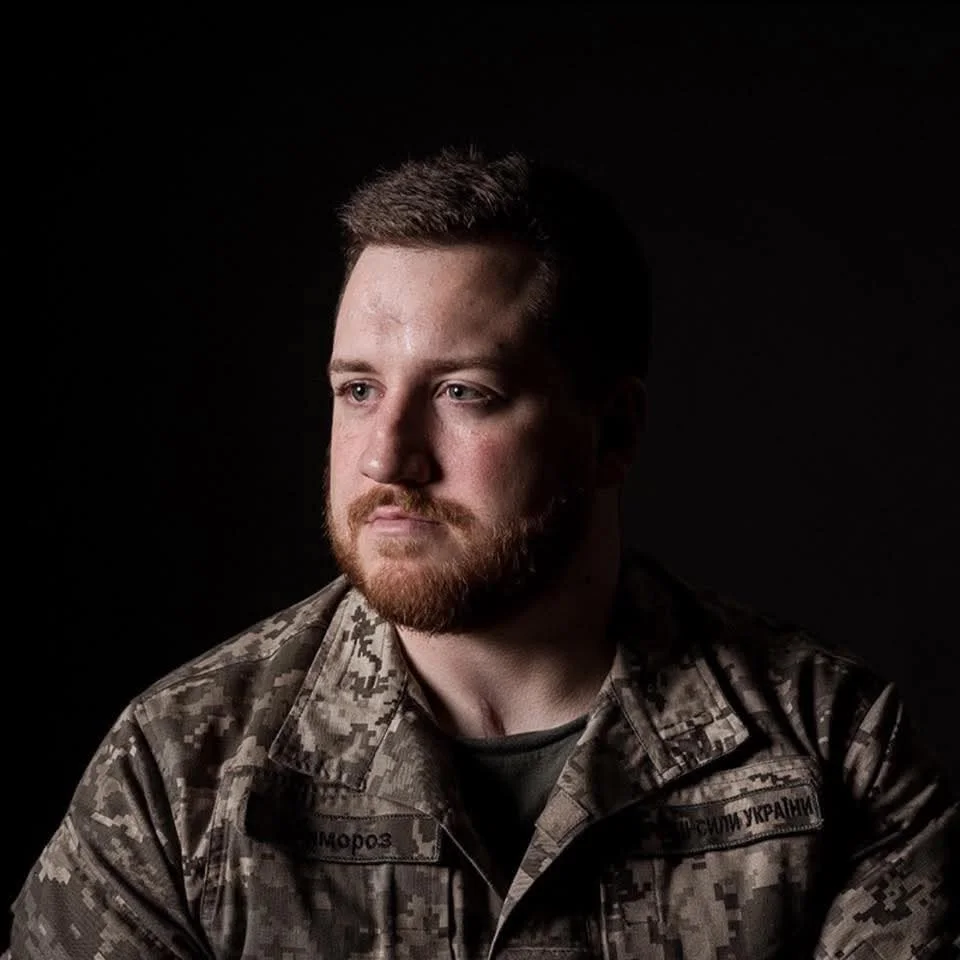
- What is your impression of Vitalii Kim’s latest interview and his subsequent comments?
- The interview is as brazen as it gets and demonstrates how out of touch he is, because he didn’t merely suggest but stated categorically that veterans would turn to crime. That niche is already occupied by his colleagues in power; we’ve seen this from the NABU investigations.
He also made absolutely appalling remarks about psychological support. For years, we have been encouraging our comrades to seek help from psychologists. We are trying to raise this to a separate level in Ukraine, as there are problems both with people seeking help and with stereotypes. We have been promoting this for years and running various campaigns, so it is surprising to hear from the minister that this is merely marketing and an exaggeration of trauma.
I don’t think Kim said this out of any great wisdom, but it shows that he doesn’t understand what veterans’ policy should be. As for the statistics he refers to, I wouldn’t take them as a reliable basis, as only 250 respondents took part in that survey. Moreover, it was conducted, I believe, by a foundation linked to the Ministry of Veterans’ Affairs.
- The Ministry of Veterans’ Affairs has been in existence for a long time. One could argue at length that the situation was different before 2022, and that there have been changes in leadership. Yet you still rate the ministry’s performance as unsatisfactory. Why do you think this is the case?
- Because these people are not in the right positions. The people in parliament and the government are now the President’s people. It is his party; he interviewed all the members of the government himself. Who was appointed, and how? Kalmykova, for instance, was appointed on the basis of loyalty, nothing more. I have seen neither a good reputation nor any serious expertise on the issues in any of the ministers.
There are people with a good reputation within the veterans’ community, particularly those with expertise. Many proactive and capable people are currently studying, constantly acquiring new skills, and enjoy authority within the veterans’ community, amongst other things. But these people are not loyal. Most of them are not politicians, so they do not care whether the ‘Servant of the People’ party or the President likes them or not. But that is the problem. The President’s team lacks the right people. Excuse me, but he cannot even appoint a Prosecutor General. The problem, I believe, is that the President is more interested in appointing loyal people rather than professionals.
- Vitalii Kim’s position: in its current state, the state does not have the funds to implement the policy on veterans that we would like to see.
- That is not true. Kim could approach the Ministry of Finance and ascertain how many expenditure items remain in the state budget that ought to be cut during wartime. We need a mature discussion about what state policy on the protection of veterans should look like. I would start with the most vulnerable cases, where there is the greatest injustice. Just think about it: the highest pensions go to Kivalov and various judges and prosecutors, even though it was the military who preserved the state and its independence, paying for it with their health – both physical and mental. That is why a comprehensive review must take place.
If I were in the Ministry of Veterans’ Affairs’ shoes, I would insist on the monetisation of pension benefits. In fact, we do not even have a separate military pension. A war-related disability pension is a joke, because even civilians are entitled to it if they were caught in the crossfire. And this, to put it mildly, isn’t very fair, given that military personnel knowingly take on extremely difficult missions. My father is also a veteran; he retired on reaching retirement age. He receives a pension supplement for participation in combat operations – 700 UAH.
- What should veterans’ policy look like?
- We face very serious challenges on many fronts, including psychological support, but the root of the problem is that a state veterans’ policy has not been established and has been a complete failure under every government. Mr Kim is no exception here – he has done nothing even to raise awareness of the issues, let alone bring about the creation of such a policy. These conferences with their leaflets and pretty photos are just a sham. Puppet NGOs and photos with veterans – that is not a veterans’ policy.
Veterans’ policy must be built on the basis of a social contract between veterans and society. I would highlight several areas. Firstly, social support for veterans, with a people-centred approach – something that is currently lacking. At present, services are as confusing as can be, particularly in the areas of rehabilitation, prosthetics and psychological support. There is no certainty that you will be protected as a veteran, or where to turn for help, and so on. Services are fragmented between local authority institutions, state institutions and various other bodies. Different ministries oversee all of this, creating chaos within what should be a unified system, even in digital form. A similar situation exists with benefits, which function rather poorly, and with pension provision, where a veteran loses 100 per cent of their working capacity as a result of carrying out a combat mission. These benefits do not even match the average wage, so there are grounds for saying that veterans are undervalued.
The second point concerns inclusive policy. Many veterans have undergone amputations and use prosthetics or wheelchairs. They require a completely barrier-free environment. What are we talking about if, in many cases, a veteran cannot even leave their flat? Take me, for example. My arms are broken, and I have no lower limbs. From time to time, I need to have MRIs and other scans. I pay for all of this out of my own pocket. In other words, we need to be a bit more down-to-earth and start with the basics.
Thirdly: the state must make clear how it views veterans. The United States, for instance, went through a lot of hell during the Vietnam War and even the Iraq War. They had a high incidence of PTSD, which often led to suicides. But now they’re working very actively to provide veterans with social guarantees, support and a comprehensive social package, which is quite extensive compared to ours. Over there, the state takes veterans very seriously. You can’t insult or humiliate them there. It seems to me that a veteran there feels as though they’re on a par with a senator.
In Ukraine, on the other hand, a veteran can be told to get lost outside a supermarket for parking in a space reserved for people with disabilities. In Kyiv, the police won’t turn up with a tow truck to remove the offender’s car. And the veteran feels humiliated. It’s particularly awful when this happens in front of his family and children. That’s how conflicts arise, along with stereotypes about PTSD and so on.
I think we need to start with a clean slate: sack Mr Kim, get rid of Kalmykova’s incompetent team—who are still there—and start building a proper veterans’ policy. There are good examples around the world. To be frank, there are many things I do not like about the US, but when it comes to veterans’ policy, they have got it right and achieved quite good results. The UK has achieved quite good results too. It is only fair that the state should give back to its veterans.
THE MINISTER MUST TAKE STEPS TO REDUCE RISKS, RATHER THAN EXACERBATE THE STIGMA AROUND VETERANS
Oles Mosenko (Bars) – a Ukrainian serviceman, veteran of the Russian-Ukrainian war, and deputy commander of the All-Ukrainian Association ‘Veterans’ Corps’. He joined the army at the age of 18. He has devoted over 12 years of his life to defending Ukraine. In 2023, whilst carrying out a combat mission, he was seriously wounded after stepping on a landmine and lost his leg.
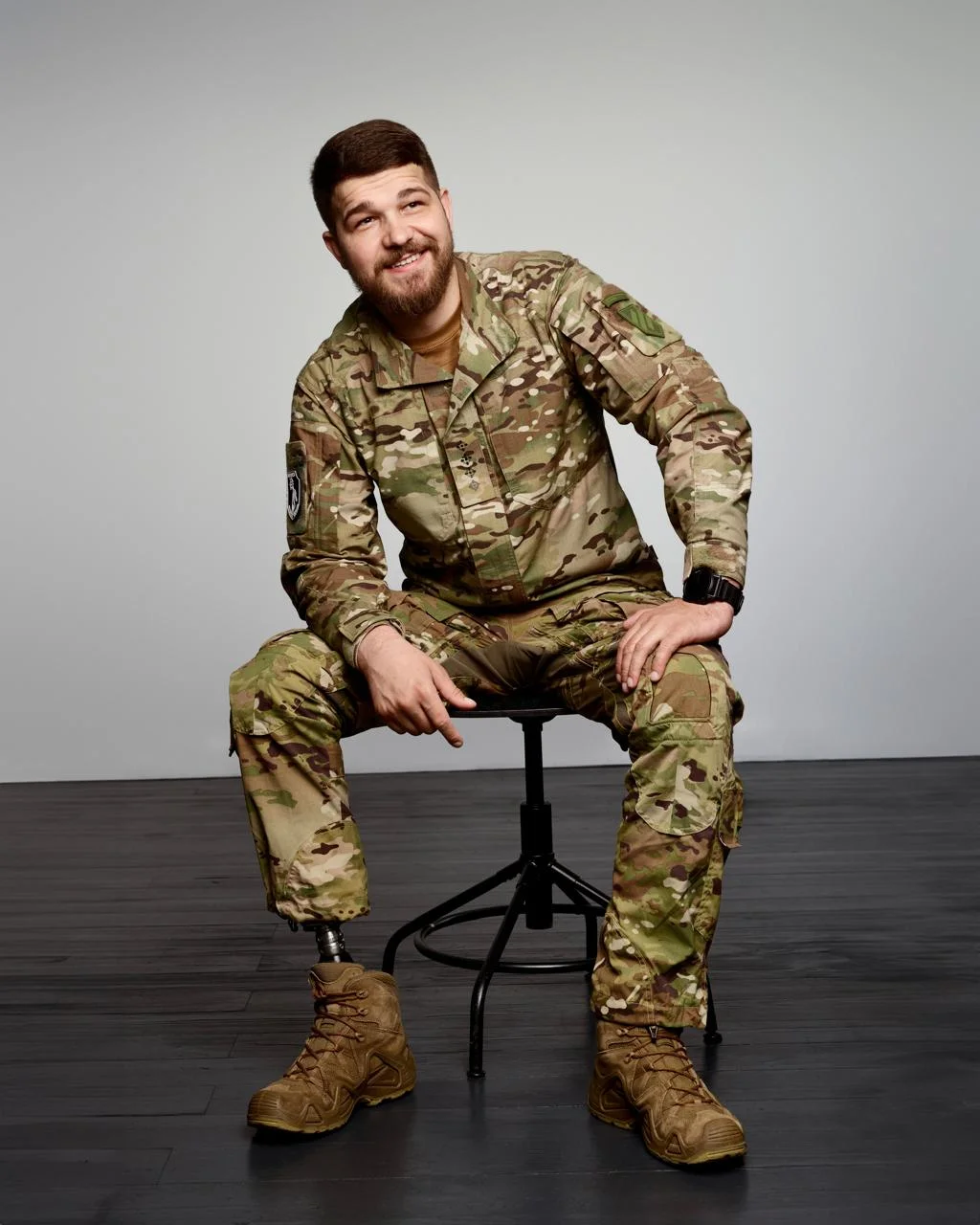
The "Veterans’ Corps" has its own strategy for working with veterans and has been successfully implementing it for half a year. Implementing such a strategy at the state level requires political will, which he does not currently see.
- How did you take the minister’s words: in what ways is he right, and in what ways might he be wrong?
- Conceptually, this is very distressing for veterans. If we want to develop veterans’ policy, then veterans themselves must be directly involved in the process. We have emphasised this on every occasion a new minister has been appointed, but we have yet to see a veteran in this post. And now we are seeing the consequences of this approach. I’m not in a position to assess Mr Kim’s professional skills. He may well be a good manager, but to formulate and implement veterans’ policy, it is vital to have a deep understanding of service personnel and veterans, their experiences, needs and the challenges they face both during their service and upon returning to civilian life. For me, this is the key point. And it is not just about his comments on crime or addiction. These remarks demonstrate just how important it is to have a deep understanding of veterans’ issues. The Minister must take steps to mitigate risks, rather than exacerbating the stigmatisation of veterans.
- He later explained his position by saying that he would not gloss over real problems and concerns.
- The role of the Minister for Veterans’ Affairs is not merely to talk about the problems that veterans and society may face, but first and foremost to propose concrete solutions to overcome them. His words were heard by both veterans and civilians. And some sections of society may have interpreted them as confirmation of their fears regarding the mass return of military personnel. We do not deny that certain problems exist and may become more acute. But the state’s role is to address these challenges, not to deepen the divide between veterans and civilians. The "Veterans’ Corps" consistently emphasises this in its communications with the state and international partners.
The problems listed by the minister do indeed exist. However, his remarks give the impression that he is viewing them rather superficially, more as an outside observer.
- How do you assess the work of the Ministry of Veterans’ Affairs over the years since its establishment? Is the main reason for the problems that there are very few veterans working there themselves?
- This definitely has an impact, and a significant one at that. But overall, this is a problem for the entire executive and legislative branches. At present, there is a lack of coordination in veterans’ policy. Several ministries are responsible for social guarantees and various programmes for veterans, but there is insufficient coordination between them.
It cannot be said that the state is doing nothing in the field of veterans’ policy. There are many social guarantees and programmes for veterans, but they are often fragmented and ad hoc. There is no comprehensive system.
This is all exacerbated by the fact that access to these guarantees is highly unequal. It depends on the community, the local authority and the specialist you have approached. None of this is sufficiently structured; there is no unified approach to implementing the policy.
- What should veterans’ policy look like, if described in broad terms? And how radically should we act now?
- I wouldn’t talk about disbanding the ministry at the moment. It needs to exist because veterans, military personnel, their families and others directly affected by the war make up a significant proportion of Ukrainian society. And this proportion will grow in the future. We need to work with these people, understand their needs, empathise with them and create the conditions to help them realise their potential.
- Does your organisation have any established practices? Are there any guidelines?
- As an organisation, we base our work primarily on partnerships with the business sector, the state and local communities. At the same time, we have a clear understanding of how state policy on veterans should function, which problems need to be addressed and what mechanisms are required to achieve this. We have our own strategy, which we have been actively implementing for the past six months. We have over 10,000 members, an extensive network of local branches and a well-thought-out structure for working with veterans and their families. In practice, we are already carrying out some of the functions that the state should be providing, so we have a good understanding of what works and what needs to be changed.
When a veteran returns from war and comes to us, we try first and foremost to welcome them into our circle. Not every veteran needs to be taken by the hand straight away to find a job, or to be asked: ‘Tell us what it was like for you at war.’ Everyone’s situation is different, and often no one understands a veteran better than another veteran. Until a person has adapted after returning from war, it can be difficult for them to move forward. That is why we focus first and foremost on communication and mutual support, and, where necessary, help them access psychological support or physical rehabilitation. We also have roadmaps and specialists who provide assistance in the relevant areas.
We involve veterans in the organisation, help them meet their basic needs, identify their abilities, interests and hobbies, and build a large community comprising smaller sub-groups focused on different areas.
We are in constant contact with the Ministry of Veterans’ Affairs. We also tried to establish a working relationship with Mr Kim as soon as he took up his post: we presented our work to him. However, cooperation at this level has not progressed any further. We get the impression that, at the highest levels of government, civil society initiatives are sometimes perceived as political competition. On the other hand, we have very good communication with civil servants at the working level. We cooperate with both representatives of the ministry and the relevant departments in Kyiv. However, we have not yet managed to bring our experience to the level of systemic solutions.
- How realistic is it at present to roll out your experience across the whole country so that it forms the basis of veterans’ policy?
- It is possible, but, in my view, there is a lack of political will. Parts of this framework already exist. They need to be systematised, and the errors and shortcomings in the current programmes and structure need to be rectified. We have identified seven key areas that need to be addressed.
Firstly, work with veterans must begin as early as the stage of discharge from military service.
Secondly, when a veteran returns to civilian life, they must receive support from a specialist. Regardless of whether they have returned to a village or a large city, the level of access to services must be equally high.
Thirdly: health and recovery. Because, as I have already said, without proper psychological recovery, it is often difficult for a person to move forward. I have experienced this myself and see it in my comrades. At the same time, everyone’s needs are different, so support must be tailored to the individual.
Fourthly: economic independence. This encompasses employment, education and the overall development of veterans, so that they can take their rightful place in society, work, provide for themselves and their families, and contribute to the country’s development.
Everyone’s interests are different. Often, veterans do not return to the jobs they held before mobilisation. And some of those who do return are soon made redundant. This is a problem that needs to be addressed. It is not simply a matter of providing guidance on specific issues, but of helping people to understand themselves, to realise what they need and what interests them. And then to give them the opportunity to develop in the direction that feels right to them.
Point five. This concerns support for families. What Mr Vitalii spoke about is indeed important. But we currently lack systematic mechanisms for working in this area.
How can we ensure that service personnel are able to maintain their family ties whilst on active duty? There is a lack of a well-thought-out approach to working with families: the wives, husbands, mothers and children of serving personnel and veterans, as well as the families of those killed in action and those missing in action. This is a very sensitive area.
Sixth. It’s about community and a culture of respect within society. In the six months we’ve been working, we’ve seen just how much being among their own helps veterans. Imagine this: after leaving the service, a person barely leaves the house for months, withdraws into themselves, and may develop other problems. And a lot can change when they find themselves among their own. Whilst the weather was still warm, we regularly organised veterans’ picnics in various cities. It’s simply, as they say, a get-together with mates you can have a chat with. People come with their families; families get to know one another and socialise.
If you approach a veteran who is currently struggling psychologically and ask directly how you can help, he might say he doesn’t need anything. He’ll just give you the cold shoulder, and that’s it. But amongst his own people, he feels safer; he can open up and share what’s troubling him.
Seventh. This is about participating in the country’s development. At a national level, there must be a policy focused on the development of veterans, creating opportunities for their participation in government decision-making, public administration, the work of local authorities, and so on.
We at the ‘Veterans’ Corps’ see tremendous potential for development in veterans, and this potential needs to be unlocked. To this end, we create profiles of our members, strive to build a comprehensive picture of each person’s needs, interests and capabilities, and help them develop in the direction that interests them.
Some want to get involved in sport. We will do everything we can to ensure they have the opportunity to develop in sport and achieve results. Some want to go into business. We support them, find mentors amongst successful entrepreneurs, develop veterans’ business clubs and help them fulfil their potential in this field. Want to get involved in local government? No problem. We need to provide opportunities to study public administration, acquire the necessary skills and participate in the work of local government bodies. Anyone who wants to go into politics should also have the chance to prepare for it.
For those who simply want to work in peace and quiet, meeting up with their comrades from time to time, we’ll help them find an employer offering decent conditions and do everything we can to ensure the veteran feels at home.
That is why, in my view, these areas should form the basis of veterans’ policy. They must be taken into account when planning and developing strategy, and systematic work in these areas will help to make veterans’ policy effective.
Olha Skorokhod


