


Torture as Russian state policy: Kremlin hides its prisons
In November, the Russian Federation officially withdrew from the European Convention for the Prevention of Torture. This occurred almost simultaneously with the publication of a new UN report on the systematic abuse of Ukrainians in Russian captivity. The refusal to accept monitoring by the Council of Europe only confirms what human rights activists and investigators have been documenting for years: violence behind bars has become a deliberate state policy of the Russian Federation.
We examine what mechanisms for holding perpetrators to account remain in Ukraine and around the world, and what the International Criminal Court should do.
Death following captivity
For Oleksandr Savov, the war began back in 2015, when he volunteered to join the 36th Separate Marine Brigade. The full-scale Russian invasion of 2022 caught his unit on the outskirts of Mariupol. Together with his comrades, Oleksandr held the defence first at the Illich Steel Works, and later in the underground tunnels of Azovstal.
In May 2022, on the orders of the command, the defenders of Mariupol laid down their arms and surrendered. For Savov, this marked the beginning of almost three years – 1,153 days – of hell in four Russian prisons: the penal colony in Olenivka, Pre-trial Detention Centre No. 2 in Taganrog, the remand centre in Kursk and Penal Colony No. 10 in Mordovia. Whilst in captivity, the soldier was systematically beaten, tortured with electric shocks, held in a dark cell and brutally punished for speaking Ukrainian.
Oleksandr returned home during a prisoner exchange on 19 March 2025 and spoke candidly about everything that had happened whilst in captivity. "The harshest conditions were probably at the penal colony in the Republic of Mordovia. During the medical examination upon arrival, as we were coming out of the X-ray room, the doctor who was examining us shocked us in the backside with a stun gun. And at that moment, you were supposed to shout: ‘Glory to Russian medicine!’" said Oleksandr Savov in an interview with Frontliner on 21 July 2025.

The marine returned from captivity in a serious condition: with tuberculosis, knocked-out teeth, skin infections, lymphoedema in his legs, broken ribs and head injuries. He never fully recovered from his captivity. Eight months after his release, on 16 November 2025, Oleksandr died of heart failure. He was 46 years old.
"After his captivity in Russia, his health deteriorated rapidly. I no longer recognised the strong, athletic, robust man he used to be. Whilst in captivity, he was severely beaten on the head, which caused organic changes in his brain, particularly in the temporal and frontal lobes. He was tormented by severe migraines, anxiety, flashbacks, nightmares and hallucinations. A host of illnesses that required lifelong treatment. And then there was his heart, which simply… stopped," wrote his daughter Anastasia on social media.
The soldier recorded everything he had been through in his diary to document the guards’ crimes. Oleksandr Savov’s testimony regarding the torture and inhumane treatment of Ukrainian prisoners of war was included in an official UN report.
The soldier’s entries document "the use of electric shocks, beatings, setting dogs on detainees, forced undressing, sexualised humiliation, denial of medical care, and the concealment of signs of abuse ahead of official external inspections".
A conveyor belt of violence
The cruel treatment of Ukrainians in Russian captivity is a deliberate and systematic policy. International human rights organisations are documenting increasing evidence that violence is used as a standard tool for controlling prisoners: "torture, including rape and sexual violence against detained Ukrainians, is widespread". This is stated in a UN report published in early November 2026.
At the same time, the Russian Federation’s judicial system effectively legalises these crimes. According to the document, "courts regularly accept confessions obtained under torture as evidence and do not order investigations into these incidents".
The UN report devotes particular attention to the critical situation surrounding the abduction and unlawful detention of civilians. The authors of the document emphasise that "the fate of Ukrainian civilians detained by the Russian Federation continues to be a cause for particular concern". According to human rights defenders, in the occupied territories, people are "arbitrarily detained, subjected to enforced disappearances and held incommunicado, whilst torture and ill-treatment continue with impunity".
The scale of the unlawful detention of Ukrainians remains extremely high. According to the data cited in the report, in June 2026 the Ukrainian authorities identified 1,877 civilians held in Russian custody. Furthermore, the document refers to a February statement by the President of Ukraine, Volodymyr Zelenskyy, stating that around 7,000 Ukrainian prisoners of war also remain in Russian captivity.
At the same time, the process of repatriating civilian hostages is proceeding extremely slowly. The report notes that "since 2022, Ukraine has managed to repatriate 9,446 people from Russian captivity, of whom only 457 were civilians as of June 2026".
The Russian judicial system continues to be used as a tool of repression against Ukrainian citizens, depriving them of basic legal safeguards. As noted in the UN report, "Ukrainian prisoners of war and detained civilians continue to be prosecuted on charges of extremism, terrorism, espionage and treason solely because of their Ukrainian nationality or their support for Ukraine".
The scale of such show trials is measured in the hundreds of convictions. The report notes that "between September 2025 and August 2026 alone, courts in the Russian Federation and the occupied territories convicted at least 585 Ukrainians in politically motivated cases – 226 civilians and 359 military personnel – predominantly under articles relating to terrorism".
Separately, human rights defenders highlight a gross violation of international humanitarian law concerning Ukrainian defenders. The report emphasises that "Ukrainian prisoners of war continue to be tried as civilians, as the Russian Federation does not recognise them as prisoners of war and prosecutes them for actions that constitute lawful conduct by combatants". In particular, as documented by the UN, prisoners of war "are frequently tried under terrorism-related charges due to their service in Ukrainian military regiments, which the Russian Federation has designated as ‘terrorist organisations’ since 2022".
The UN Special Rapporteur on the situation of human rights in the Russian Federation, Mariana Katsarova, concludes that "torture is widespread and systematic and forms part of the authorities’ strategy". In this regard, she calls on Russia "to release unlawfully detained Ukrainian civilians, including children, to provide information on missing persons and to ensure independent international access to all places of detention".
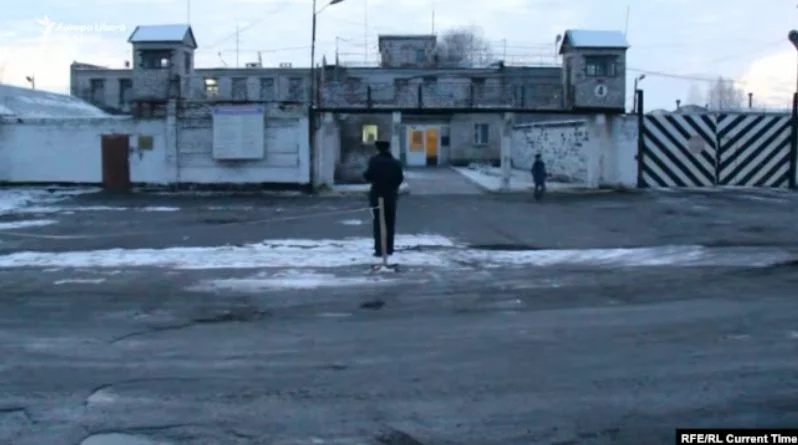
Prisons in the Russian Federation are beyond control
Instead, the Russian Federation has effectively legalised the information blackout surrounding its prison system and places of detention, including those holding Ukrainians, both military personnel and civilians. On 1 November 2026, the Russian Federation officially withdrew from the European Convention for the Prevention of Torture and Inhuman or Degrading Treatment or Punishment.
In practice, cooperation with the European Committee for the Prevention of Torture (CPT) had already reached a complete impasse following the start of the full-scale invasion of Ukraine in February 2022. A statement from the Council of Europe emphasises that the Committee has received "numerous reports of alleged acts of torture and ill-treatment in places of detention by Russian officials, not only in the occupied territories of Ukraine but also within the Russian Federation itself". However, due to sabotage by the Russian authorities, the inspectors were unable to carry out any on-site inspections.
"The withdrawal of the Russian Federation marks the end of the CPT’s monitoring mandate in that country. It also means the cessation of any independent monitoring of places of detention within the Russian Federation. Nevertheless, the Convention’s preventive approach remains as important as ever: independent monitoring of places of detention is a fundamental safeguard against torture and ill-treatment," emphasised CPT President Alan Mitchell.
In Strasbourg, this lack of transparency is contrasted with the actions of Kyiv, noting that the Ukrainian authorities "continue to allow CPT visits to any place of detention on their territory at any time chosen by the Committee". The Committee currently continues its work in 46 member states of the Council of Europe, whilst Russian places of detention remain outside the scope of any European oversight.
At the same time, withdrawal from the Council of Europe’s monitoring mechanisms does not constitute a legal get-out-of-jail-free card for Moscow. Firstly, the Russian Federation remains liable for all violations committed up to the point of the European Convention’s official termination. Secondly, the prohibition of torture under international law is absolute in nature and does not depend on a state’s participation in specific regional treaties, explains Kateryna Busol, head of the Ukrainian Programme at the International Centre for Transitional Justice (ICTJ).
"We need to look at the essence of the prohibition on torture. From the perspective of international law, this is a jus cogens norm – a peremptory norm of the highest order, from which no derogation is permitted. The Russian Federation may withdraw from the Convention, but the prohibition on committing torture, the obligation to investigate such acts effectively, to hold those involved to account, and to provide training for its armed forces, security services and law enforcement agencies on the inadmissibility of torture and the inevitability of punishment – all these obligations remain binding on Russia," the lawyer emphasises.
Moreover, a whole range of other fundamental international treaties and norms continue to apply to the Russian Federation, which explicitly prohibit any form of cruel treatment.
"Under customary international law, case law, the UN Convention against Torture, and the prohibition on torture contained in the Geneva Conventions – to which both Ukraine and Russia are parties – the ban on torture is absolute," emphasises Busol.
According to the lawyer, the real consequences of denouncing the Convention lie primarily in the area of means of exerting pressure and documenting crimes, rather than in a change to the legal status of the actions of the Russian security forces themselves.
"The scope for appealing to the Russian Federation through the mechanisms of this Convention is being reduced. Monitoring visits will no longer be possible, although the Russian Federation has, in principle, not permitted them for a long time anyway. Therefore, symbolically, the Russian Federation has once again emphasised that it is a barbaric country. However, from a legal point of view, the Russian Federation’s obligation not to commit torture and to ensure accountability for such acts remains," says Busol.
Punishment for torture
According to estimates by the Ukrainian Coordination Headquarters for the Treatment of Prisoners of War, 438 detained Ukrainians have died in Russian captivity since the start of the war. Between May 2025 and May 2026, the remains of 169 Ukrainian servicemen and detained civilians were repatriated (a total of 375 bodies have been returned since 2022), and post-mortem examinations revealed that the causes of death were torture and the failure to provide medical care.
Such cases provide grounds for investigating war crimes. In response to an enquiry, the Office of the Prosecutor General reported that, since 24 February 2022, prosecutors from the Department for Combating Crimes Committed in the Context of Armed Conflict have been overseeing proceedings in 23 criminal cases concerning the deaths of Ukrainian prisoners of war. All of these cases have been opened under Part 2 of Article 438 of the Criminal Code of Ukraine (war crimes).
"As part of [these proceedings], the circumstances surrounding the deaths of 241 people whilst in Russian captivity are being investigated; of these, 230 were prisoners of war and 11 were civilians. Following the pre-trial investigation, nine individuals have been notified of suspicion, indictments against three individuals have been sent to court, and one person has been convicted," the agency stated.
In addition to the central office of the Prosecutor General’s Office, regional investigators under the supervision of regional prosecutor’s offices are also investigating the deaths of Ukrainians in captivity on the territory of the Russian Federation and in the temporarily occupied territories.
According to the OPG, in all such cases, law enforcement agencies are examining a wide range of violations: "the causes and circumstances of the deaths in captivity of civilians and Ukrainian defenders, including conditions of detention, instances of torture and ill-treatment, attacks on detention facilities and during the transport of prisoners, as well as instances of failure to provide necessary medical care".
The investigation faces a strategic choice: to focus on the direct perpetrators or to prove the existence of a deliberate state policy of violence, says Kateryna Busol, head of the Ukrainian Programme at the International Centre for Transitional Justice (ICTJ).
"What, in fact, do we want to prove? Are we, as has traditionally been the case in Ukrainian criminal justice, trying to bring charges against a person who specifically tortured or raped someone? Or are we taking it one or several steps further and seeking to demonstrate the political level of responsibility? Reports from the Office of the Prosecutor General show that national and international partners are assisting with the mapping of crimes, and, given the huge number of cases, the investigation is now seeking to target middle and senior-level officials more," explains the expert.
Since most cases are heard in court in absentia, it makes more sense to focus on a leader who had several towns or villages under their jurisdiction and who effectively organised the violence in various torture chambers, rather than on a single specific perpetrator, Busol believes.
"At the same time, it is very important that investigators, prosecutors and psychologists supporting the victims explain to people: even if we are not necessarily targeting a specific individual you have described, your case is by no means being sidelined. On the contrary – it helps to raise the profile of the issue and demonstrate that there was a systematic policy of violence against Ukrainians," emphasises Busol.
The findings of international organisations provide a solid legal basis for moving to a higher level of accountability. In particular, the UN Independent International Commission of Inquiry on violations in Ukraine has already explicitly identified specific Russian agencies that are systematically involved in ill-treatment.
"They named the FSB and units of the Russian prison system that systematically organise torture in captivity and under occupation. This provides a very strong legal basis for stating that even international organisations now recognise the institutional involvement of certain Russian security forces and military personnel in the torture of Ukrainians; therefore, we can take this a step further and discuss the accountability of middle and senior-level commanders," notes the legal expert.
The next critically important step at the international level, according to Kateryna Busol, must be a response from the International Criminal Court (ICC). Although the ICC has already issued arrest warrants for Russian military and political leaders in connection with the deportation of children and attacks on energy infrastructure, none of the publicly issued warrants to date relate to direct physical and psychological violence against individuals.
"In my view, a very important step for the ICC would be to issue arrest warrants specifically relating to torture as a crime against humanity. And it is important that, in this and similar investigations, the ICC looks, in particular, at how sexual violence against men and women constitutes both a separate crime and a component of torture," says Busol.
In addition to bringing those responsible to justice in the courts, an integral part of justice is providing immediate support to survivors and implementing reparations today, emphasises Kateryna Busol. It is important to continue supporting the full launch of the International Register of Damages and the Compensation Commission. But at the same time, at least basic, tangible support must be provided to survivors right now. According to Busol, the experience of the interim reparations programme for victims of sexual violence (SNPK) is telling. Despite the modest sum of 3,000 euros, thanks to sensitive support from psychologists and lawyers, a significant number of victims, including civilian men, applied for the payments.
The legal expert believes that such basic reparations support, recognition and medical guarantees must be extended as soon as possible to everyone who has survived torture, enforced disappearances or medical experiments.
"The explanatory note to the European Union’s 90 billion euro financial support package states that part of these funds may be used for reparations. Despite all the challenges posed by the war budget, I very much hope that we will prioritise, at the very least, providing minimal support to all survivors who have suffered physical and psychological harm as a result of Russian crimes," the expert concludes.
Veniamin Trubachev
This article was produced with the support of IWPR


