



Bradley infantry fighting vehicle is tank killer, they will give Ukraine advantage on battlefield, - Pentagon
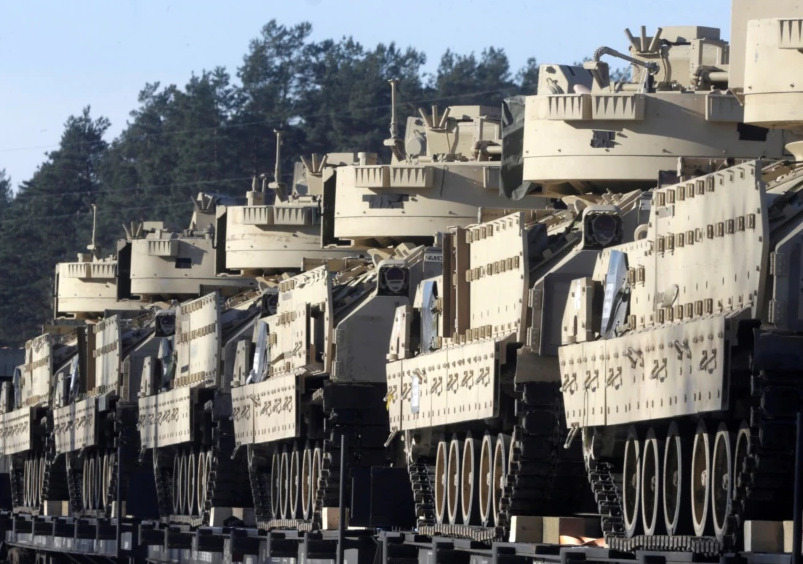
The US-provided M2 Bradley infantry fighting vehicles and Patriot air defense systems will soon give Ukraine an advantage on the battlefield.
This was stated by the spokesman of the Pentagon, Brigadier General Pat Ryder, Censor.NET reports with reference to the Voice of America.
Armored vehicles will transport mechanized infantry into combat in support of both offensive and defensive operations, providing adequate firepower and armor to Ukraine as it continues to defend and reclaim its lands. Ryder also noted that the Bradley infantry fighting vehicle is not a tank, but a "tank killer."
The representative of the Pentagon said that already on Friday, January 6, more information will be made public regarding the next package of aid, training, and terms during which Ukrainians will be able to master the received equipment.
Earlier it was reported that 50 Bradley fighting vehicles will be included in the next package of military aid to Ukraine.
Ryder said that since April of last year, US instructors have taught 3,100 Ukrainians how to use American equipment. Currently, it is planned to train larger groups, in particular in Germany in a couple of weeks - about 500 people every month. In total, about 12,000 Ukrainian military personnel underwent specialized training in various countries of the world.
When asked why it took so long for the United States to decide to provide armored vehicles, the Pentagon spokesman replied: "We continue to work closely with Ukraine based on the situation and urgent needs. We are now at a stage in this battle where we can provide adequate training and enable the Ukrainians to support systems "Bradley" and "Patriot" so that they can focus on the defense of their country and the return of the occupied territories," he said.
According to him, at the beginning of the full-scale invasion, when Russia was on the doorstep of Kyiv, the situation was radically different, and it was much more difficult to conduct long-term support and logistics then.


