



Sennychenko case: journalists tell about UAH 10 billion scam by ex-head of State Property Fund
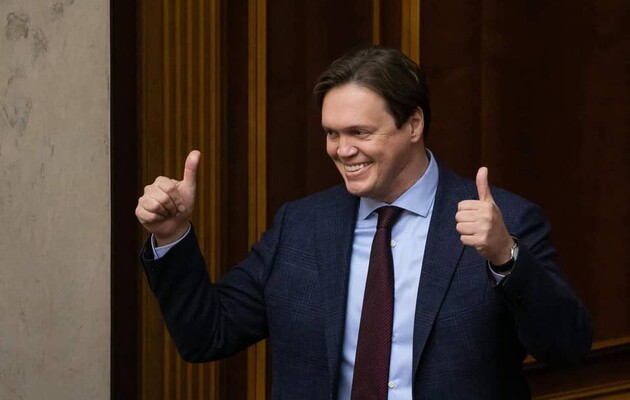
Journalists got acquainted with the published materials of the investigation into the case of the former head of the State Property Fund of Ukraine (SPFU) Dmytro Sennychenko, who, according to the suspicion announced to him and his accomplices by the National Anti-Corruption Bureau (NABU) and the Specialized Anti-Corruption Prosecutor’s Office (SAPO), who pocketed $200,000 a month from the operation of state-owned enterprises Odesa Port Plant (OPP) and United Mining and Chemical Company (UMCC), tried to re-create the story of a UAH 10 billion scam.
"This story is striking in its coherence and precision of actions by all its participants, like a theater performance where Dmytro Sennychenko himself was the main character and director. The supporting characters changed with each new act, but the master's dramaturgy did not. ... Seriously thinking about how it became possible in the first place? Could a top official of Sennychenko's level act independently, without consent from above? And how did it happen that, in fact, all the defendants in the case left the country in advance?" the authors of the ZN.UA article are interested, Censor.NET reports.
"End of September 2020. In Kyiv, on Pylypa Orlyka Street, in the premises of the restaurant "Hirchytsia (Mustard)", where the walls are painted in a calm beige color, and on the windowsills there are pots with flowers, two men meet. They have known each other since their studentship. One of them is the current chairman of the State Property Fund of Ukraine Dmytro Sennychenko. The other is his friend Serhii Bairak. The latter was invited to a meeting to get advice on work.

From left to right: Volodymyr Kolot and Andrii Hmyrin
Dmytro Sennychenko was appointed chairman of the SPFU a year earlier. Prior to this position, he worked in international projects, at Ukrposhta, and was a member of the Supervisory Board of Prozorro. When Sennychenko assumed his duties as chairman, there were just over 60 enterprises under the SPFU's management. At the beginning of 2020, after several months of the new head`s work, their number had increased sixfold. Among these enterprises were the Odesa Port Plant and the United Mining and Chemical Company. Both facilities are wholly owned by the state.
The history of the Odesa Port Plant, which is located in the city of Yuzhne of the Odessa region, is like a linear equation that is easy to solve, but every new government that brings with it new directors and new "supervisors" cannot cope with it.
The company is unprofitable and had different amounts of debt in different years. In 2016, the OPP stopped and subsequently resumed its work under the tolling scheme. A tolling scheme is a form of interaction between the plant and private companies that provide the plant with gas and receive fertilizers in return: ammonia and carbamide. The plant receives money from the processing of gas into fertilizers. And the company can essentially sell ammonia and carbamide further.
And on that day, in the Hirchytsia (Mustard) restaurant, Dmytro Sennychenko, according to the investigation, told Serhii Bairak about a plan under which the OPP would conclude contracts for the processing of ammonia and carbamide with private companies on terms that would be unfavorable to the plant. Namely, the cost of processing gas into fertilizers would be much lower than necessary. In this way, a private firm would save money and then make more profit by selling ammonia and carbamide on the market.
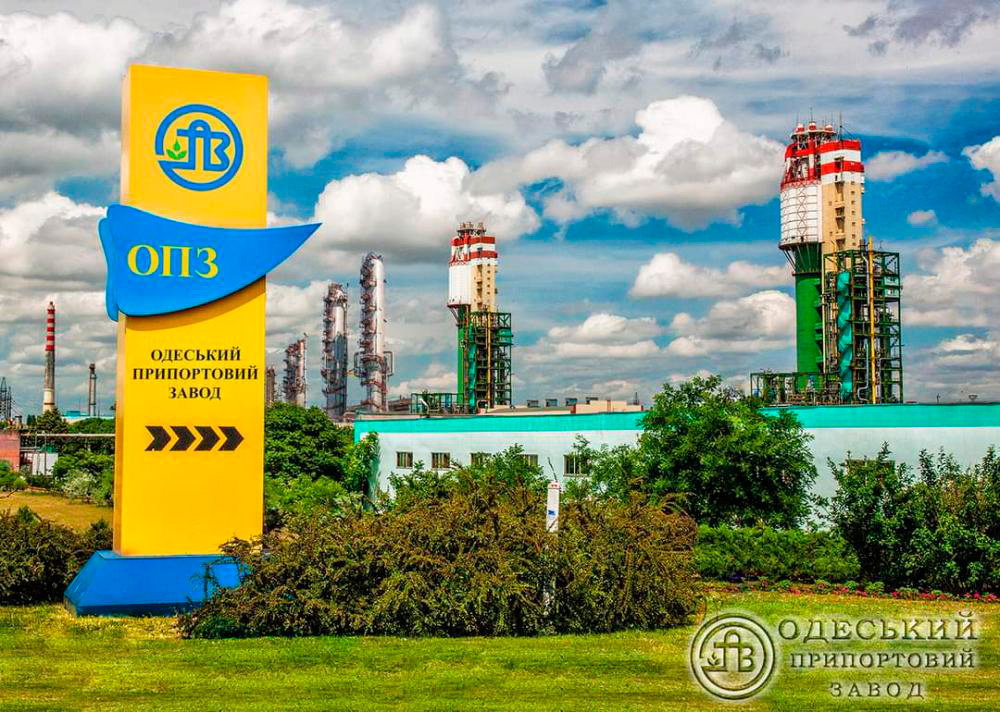
Odesa Port Plant
Bairak agreed to the conditions proposed by the then chairman of the SPFU and began to look for people who would help them in the implementation of this plan. This is how Dmytro Sennychenko met Andrii Hmyrin, a man who, according to the tapes published by NABU, knew a lot, did a lot, and also received a lot. The part of Andrii Hmyryn's biography that is relevant to the State Property Fund case begins with his friendship with Ihor Bilous, when the latter was head of the State Fiscal Service. Thus, in this case, the defendants carried solid state briefcases. When Bilous headed the State Property Fund (from 2015 to 2017), Hmyrin was his assistant. This fact in his biography and 2017 are important for Andrii Hmyrin, we will return to this below. Bairak met with Hmyrin and told him about Sennychenko's idea. Hmyrin allegedly agreed, and the next month the three of them met and began planning their deals at the Odesa Port Plant.
To implement the scheme, Sennychenko and his accomplices, according to the detectives of the Anti-Corruption Bureau, needed a close and manageable company that could accept the offer of cooperation and would not ask unnecessary questions. Such a company was founded by Andrii Hmyrin. It was the company "Agro Gas Trading" (AGT), which was founded by Oleksandr Horbunenko and Volodymyr Kolotylo. Do you remember how we recalled the year 2017? So, it is this year that AGT began its activities with an authorized capital of 1000 UAH. As the saying goes, they knew and built a safety net.
Further, the activity is gaining momentum and capturing more and more people in its nets. Andrii Hmyryn found Mykola Synytsia, and Dmytro Sennychenko appointed him head of the Odesa Port Plant. Later, they were joined by Yurii Lypka, whom Sennychenko appointed as an adviser to the SPFU. Then there was a small quarrel, and Synytsa, who had been appointed in December, was dismissed from his post, and Sennychenko appointed a new head of the plant, Mykola Parsentiev.
And while Hmyrin was looking for people, Serhii Bairak's task was to pass instructions from Sennychenko to Hmyrin, and to take money from Hmyrin and pass it on to Sennychenko. This is what the investigation claims. Not too hard work. For their work, Bairak and Hmyrin received 25% of the deals, Sennychenko took 50%. But that's not all. Although controlled puppets were found, it was still necessary to replace the members of the supervisory board and the board of the OPP. And the organizers of the scheme succeeded! By five orders of both Sennychenko himself and his advisers and deputies, the supervisory board of the plant was changed.
In July 2019, Dmytro Sennychenko realized that the contract between the Odesa Port Plant and Agro Gas Trading, which supplied gas for processing under a tolling scheme, would soon expire. At that time, the tariffs for processing natural gas into ammonia were $36 per ton, and carbamide - $47 per ton. Therefore, it is necessary to prepare for a new competition, and it is desirable that those who are needed win it. But even before the start of this competition, in December 2019, the contract between the OPP and AGT was extended until April 2020. The members of the Supervisory Board agreed to this. They were elected there for this purpose.
The competition for the new "conversion material supplier" began in February 2020. Eight companies submitted their applications, among which the most famous are: Socar Ukraine Trading House, Yug Gas, Agro Gas Trading, and Ukrnaftoburinnia Production Company. The owner of the latter, Ukrainian oligarch Ihor Kolomoiskyi, won the tender because he made the best offer: $39.5 per ton of ammonia and $77 per ton of carbamide. AGT offered $40 and $67.5, accordingly. But the victory of Ihor Valeriiovych did not satisfy Dmytro Volodymyrovych.
On March 6, Mykola Synytsia, who was still acting director of the OPP at the time, sent a letter to the supervisory board, stating the following: Ukrnaftoburinnia needs to provide documents on the economic model of work, which confirms the profit and guarantees the plant uninterrupted production. In turn, Ukrnaftoburinnia writes in a letter in response that the company offered the most favorable price and will not provide any plans for an economic model of work, because it is a trade secret. In the tapes published by NABU, this episode is mentioned as follows: "The grandfather fulfilled his conditions." That is, the accomplices managed to negotiate with Kolomoiskyi.
Synytsia further entered into an agreement with AGT, according to which the cost of ammonia was $39 per ton and carbamide was $51, which was even lower than the prices offered by the company in the tender - $40 and $67.5. Then this contract was extended, and the price for fertilizer processing increased but never reached the level proposed by Ukrnaftoburinnia.
According to the conclusion of the State Audit Service of Ukraine, from May 2020 to October 2021, after the concluded contracts, the Odesa Portside Plant caused losses to the state in the amount of UAH 308,322,727. This conclusion was confirmed by the Kyiv Scientific Research Institute of Forensic Expertise.
When Andrii Hmyrin helped Serhii Bairak and Dmytro Sennychenko look for the right people for the Odesa Portside Plant, he was looking for them not only for the OPP. In addition to him, according to the investigation, people were searched for in Centrenergo, Turboatom, Mykolaivoblenergo, Kharkivoblenergo, Ukrspyrt and the Electrotyazhmash plant. The list goes on. And also to the United Mining and Chemical Company, the sole shareholder of which is the state represented by the State Property Fund of Ukraine. UMCC is in charge of the Irshansk Mining and Processing Plant branch in the Zhytomyr region and the Vilnohirsk Mining and Metallurgical Plant branch in the Dnipropetrovsk region.
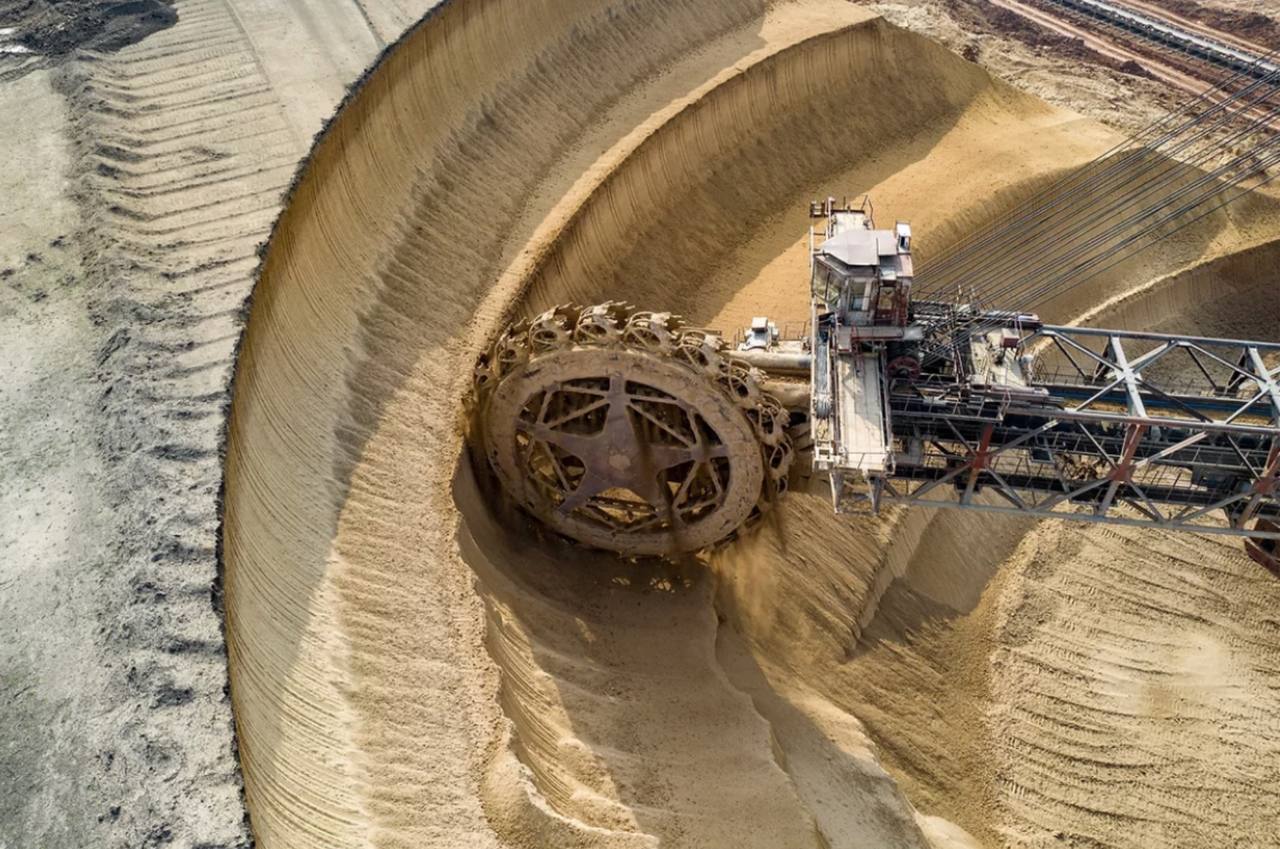
Vilnohirsk Mining and Metallurgical Plant branch of the United Mining and Chemical Company
At the beginning of March 2020, Hmyrin invited Pavlo Prysyazhniuk to work, who was supposed to supervise the work of UMCC. In turn, Prysiazhniuk recommended Artur Somov to Hmyrin and Sennychenko, who was appointed by the then chairman of the State Property Fund as a member of the board of UMCC. It was Somov's resume that was handed over by the acting chairman of the board of the United Mining and Chemical Company, Peter Davis, to appoint him deputy director. The same acting chairman of the board, who was not aware of the schemes and deals, was told that it was necessary to sell UMCC products to a Czech company. To which Davis replied that it was impossible because the Czech company did not pass the appropriate inspection. Without hesitation, the accomplices fired Peter Davis.
After that, Dmytro Sennychenko asked the Cabinet of Ministers to appoint Artur Somov as acting chairman of the United Mining and Chemical Company. The government approved the candidacy, and during 2020-2021, Somov signed four contracts with the Czech company BELANTO trade s.r.o. (which, according to the investigation, was managed by accomplices) for the sale of ilmenite concentrate at reduced prices. As a result of these actions, the state did not receive UAH 118,337,425. Later, the investigation will find out that the Czech company resold the concentrate to Russia and the occupied Crimea. Actually, this concentrate is used in the production of Russian missiles.
On November 24, 2023, NABU and SAPO renewed the suspicion of the former head of the State Property Fund of Ukraine Dmytro Sennychenko. Anti-corruption authorities claim that together with the criminal organization he created, Sennychenko laundered more than UAH 10 billion, which he received illegally. And this is a new episode in his case. It concerns the sale of 137,004.383 tons of ammonia and 1,143,989.573 tons of urea in the amount of UAH 10,603,163,837.19.
Currently, only two participants in this story, Mykola Synytsia and Yurii Lypka, have bail and are in Ukraine. The rest of the accomplices — Dmytro Sennychenko, Andrii Hmyrin, Pavlo Prysiazhniuk, Mykola Parsentiev, Oleksandr Horbunenko, Artur Somov and Volodymyr Kolotylo — left. In April of this year, the investigation put all of them on the wanted list, after being charged. How did they manage to leave Ukrainian territory? Why did they continue to live in Ukraine until 2022? Did the war influence their decision or other circumstances?
Last year, Nashi Hroshi published an article noting that Andrii Hmyrin is a close person in the entourage of the head of the office of the President of Ukraine, Andrii Yermak. Journalists add that Hmyrin is the son-in-law of the owner of the construction company "Altis" Oleksandr Hlimbovskyi. When Altis was not allowed to build the Dnipro airport, the newspaper writes, "It was done by the subordinates of the deputy head of the presidential office, Kyrylo Tymoshenko," and then a scandal occurred, which caused Tymoshenko to get into trouble.
By the way, the president's office once demonstratively broke a lance in defense of one of its unofficial advisers Yurii Holyk in a story related to Dnipro and a one-and-a-half billion-dollar tender for a coach of the former governor of Dnipro region, with whom Holyk has a friendship. However, the fraud in the State Property Fund investigated by NABU and SAPO is literally multiplied by 10. Perhaps Bankova should publicly voice its attitude toward it? Although, wait, the case of the "smuggling king" Vadym Alperin has already been mentioned. Alperin himself was called the "godfather of smuggling." However, the High Anti-Corruption Court (HACC) closed the case because the investigation period after the notice of suspicion had expired, so the court could not make a different decision. By the way, Sennychenko's case may face the same fate. However, the case of Lozovyi's amendments is a separate topic for analyzing how, what, and who influences the results of the anti-corruption block.
If you listen attentively to the NABU tapes in the State Property Fund case when Hmyryn and Bairak discuss former Prime Minister Oleksii Honcharuk, the name of presidential aide Serhii Shefir is mentioned. It is said that Andrii Hmyryn allegedly negotiated with Shefir about Dmytro Sennychenko's position in his chair.
What about extradition, you may ask? Surely all our actors in our play (and not only) can be returned to Ukraine? Of course not! This issue has long been raised in the anti-corruption movement, but the same committee of the Verkhovna Rada blocks all progress. The state has never actively communicated with international partners regarding the extradition of top corrupt officials. And the war has only played in their favor: now European courts cannot violate European conventions and hand over our defendants to a dangerous state that is being shelled by Russian missiles. And even the suspicion of UAH 10 billion does not refute this fact.
But how long can we ignore it? Because the list of those who left/fled (even before the full-scale invasion) is long. Moreover, it is regularly replenished by those released on bail. Perhaps it is time to think about a detention center not in Kyiv, but somewhere in western Ukraine?" the article says.


