



War & Sanctions: DIU has revealed specifications of Russian "Lancet" and "Scalpel" drones
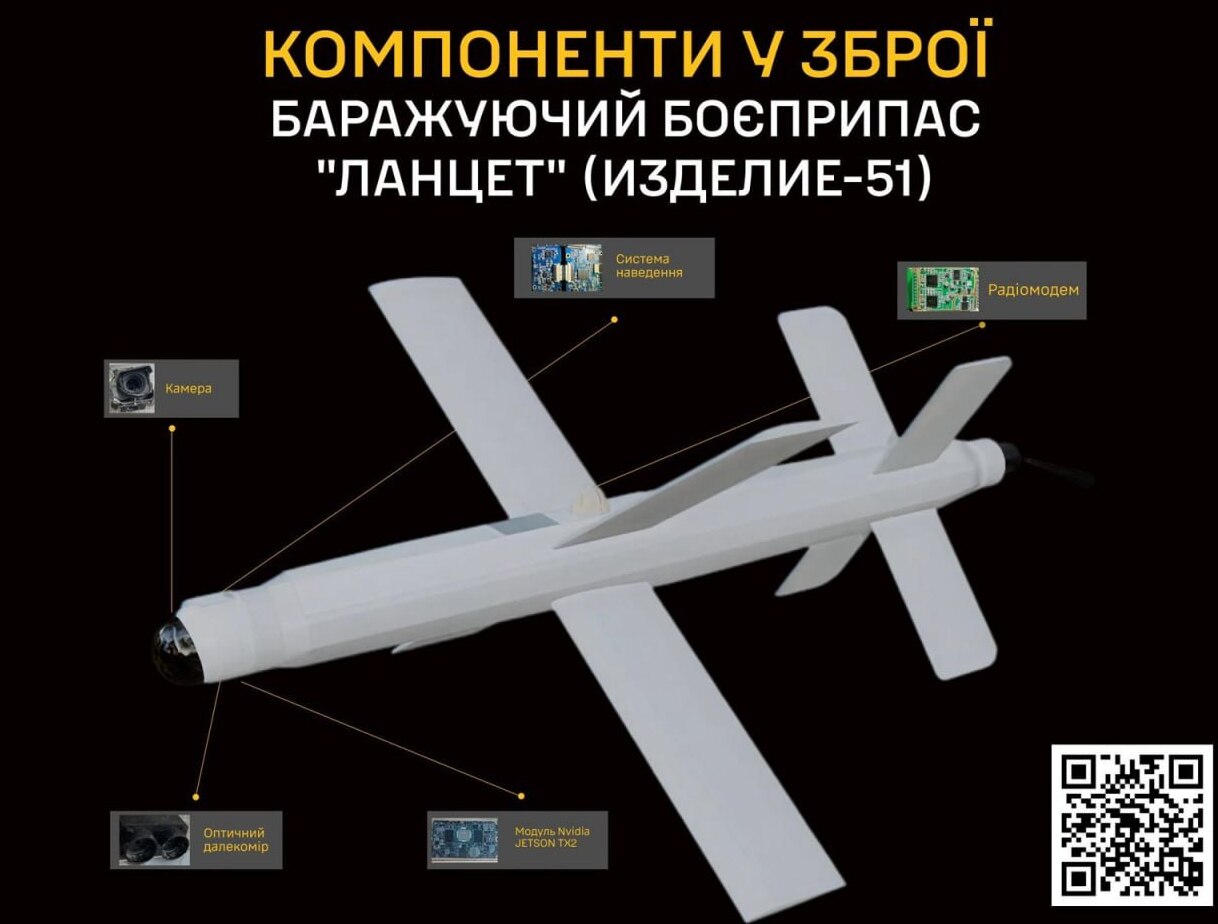
Ukrainian intelligence has published detailed information about Russia’s "Lancet" and "Scalpel" loitering munitions, their components, and the foreign technologies used in their production.
According to Censor.NET, citing the Telegram channel of the DIU of the Ministry of Defense, the relevant data has been published in the "Weapons Components" section of the War&Sanctions portal.
In particular, interactive 3D models, components, and electronic parts of the Russian "Lancet" and "Scalpel" loitering munitions have been revealed, along with information about the companies involved in their production.
"Lancet" and its manufacturer
According to intelligence reports, the "Lancet" drone is manufactured by Zala Aero Group, which is affiliated with the "Kalashnikov" Concern. This UAV is used to strike military equipment, vehicles, and positions at tactical and operational depths.
It is reported that the wreckage of the UAV shot down over Kyiv on March 16 was identified as a "Lancet." This may indicate an expansion of its use or an upgrade of its capabilities.
"Scalpel" – a simplified version
The "Scalpel" UAV is mentioned separately—a lesser-known product of the "Vostok" Design Bureau, which is often referred to as the "Lancet's younger brother" due to the design of its wings.
Both types of drones are controlled by an operator in real time; however, attempts to implement autonomous guidance elements have been observed in the "Lancet."
According to the DIU, Russian drones may utilize modules based on artificial intelligence solutions, specifically Nvidia Jetson platforms. Similar technologies have previously been detected in other Russian drones, notably the V2U.
Foreign components despite sanctions
In total, 62 electronic components have been identified in the designs of the "Lancet" and "Scalpel," most of which are of foreign origin—specifically from the United States, Switzerland, and China.
The intelligence report emphasizes that despite sanctions pressure, Russia continues to gain access to critical technologies and improve its weaponry.
It also notes that similar technological modules were previously detected in Iranian "Geran-2" drones, which, according to the Main Intelligence Directorate, may indicate cooperation between Russia and Iran in the modernization of strike drones.
The intelligence report emphasizes that the technologies used pose a threat not only to Ukraine but also to other regions of the world, and the release of such data is aimed at increasing international sanctions pressure.


