



Kremlin denies students admission to 10th grade en masse to fill factory jobs and army ranks, - FIS
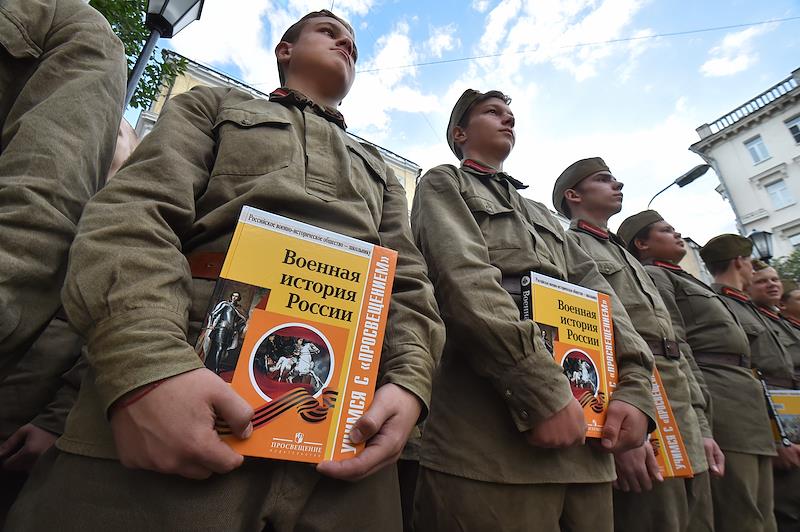
In Russia, an increasing number of ninth-grade graduates are being denied admission to tenth grade. According to the Ukrainian Foreign Intelligence Service, this policy is part of the Kremlin’s strategy aimed at providing the defense industry with a cheap labor force and increasing the mobilization reserve for the war against Ukraine.
According to Censor.NET, citing the Foreign Intelligence Service of Ukraine, this approach was driven by an acute labor shortage in the Russian economy.
The report cited a statement by Russian Labor Minister Anton Kotyakov, who said that over the next six years, the Russian economy will need about three million new workers in blue-collar professions, particularly operators of production facilities and machinery. Due to the labor shortage, the government is increasing enrollment in community colleges and technical schools and actively promoting blue-collar trades.
According to the FIS, to ensure this enrollment, Russia is effectively limiting students’ ability to continue their education in high school. Parents and ninth-grade graduates report widespread refusals to enroll students in tenth grade. Moreover, according to intelligence reports, these refusals are not limited to students with poor academic performance but also include those with excellent and good grades, who are advised to enroll in community colleges instead.
Similar complaints are coming in from Chuvashia, Primorsky and Krasnodar Krais, Irkutsk, Novosibirsk, and Kemerovo Oblasts, Udmurtia, and other regions of Russia. The formal grounds cited for the rejections include the average grade on the high school diploma, the results of the state final exams, or the results of the competitive selection process for specialized classes.
The Foreign Intelligence Service notes that the educational standards introduced by the Russian authorities after the start of the full-scale war against Ukraine have significantly complicated admission to high school. For the third consecutive year, the majority of ninth-graders, upon completing their basic education, have been enrolling not in tenth grade but in colleges and technical schools. In 2025, this figure reached nearly two-thirds of graduates—62%.
The report also highlights economic factors. As the population’s standard of living declines, it is becoming increasingly difficult to obtain a higher education. Competition for state-funded spots in universities has intensified following the adoption of legislative changes that granted participants in the war against Ukraine and their children the right to 10% of all state-funded spots. At the same time, Russian authorities have reduced the number of fee-paying spots in most bachelor’s and specialist degree programs.
According to the FIS, the administrative pressure on schoolchildren serves another purpose as well. Attending college significantly reduces the chances of obtaining a deferment from military service, which increases the number of potential conscripts for the Russian army.
The intelligence report also cited remarks by CIA Director John Ratcliffe, who had previously stated that the average lifespan of a Russian soldier in certain sectors of the front is 20–30 minutes.
The Foreign Intelligence Service of Ukraine believes that, in this way, the Kremlin is using the education system as a tool to meet two strategic needs simultaneously: addressing the labor shortage in industry and replenishing the ranks of the army that is waging war against Ukraine.


