



Defence Forces disable over 45% of Russian oil refining capacity – General Staff
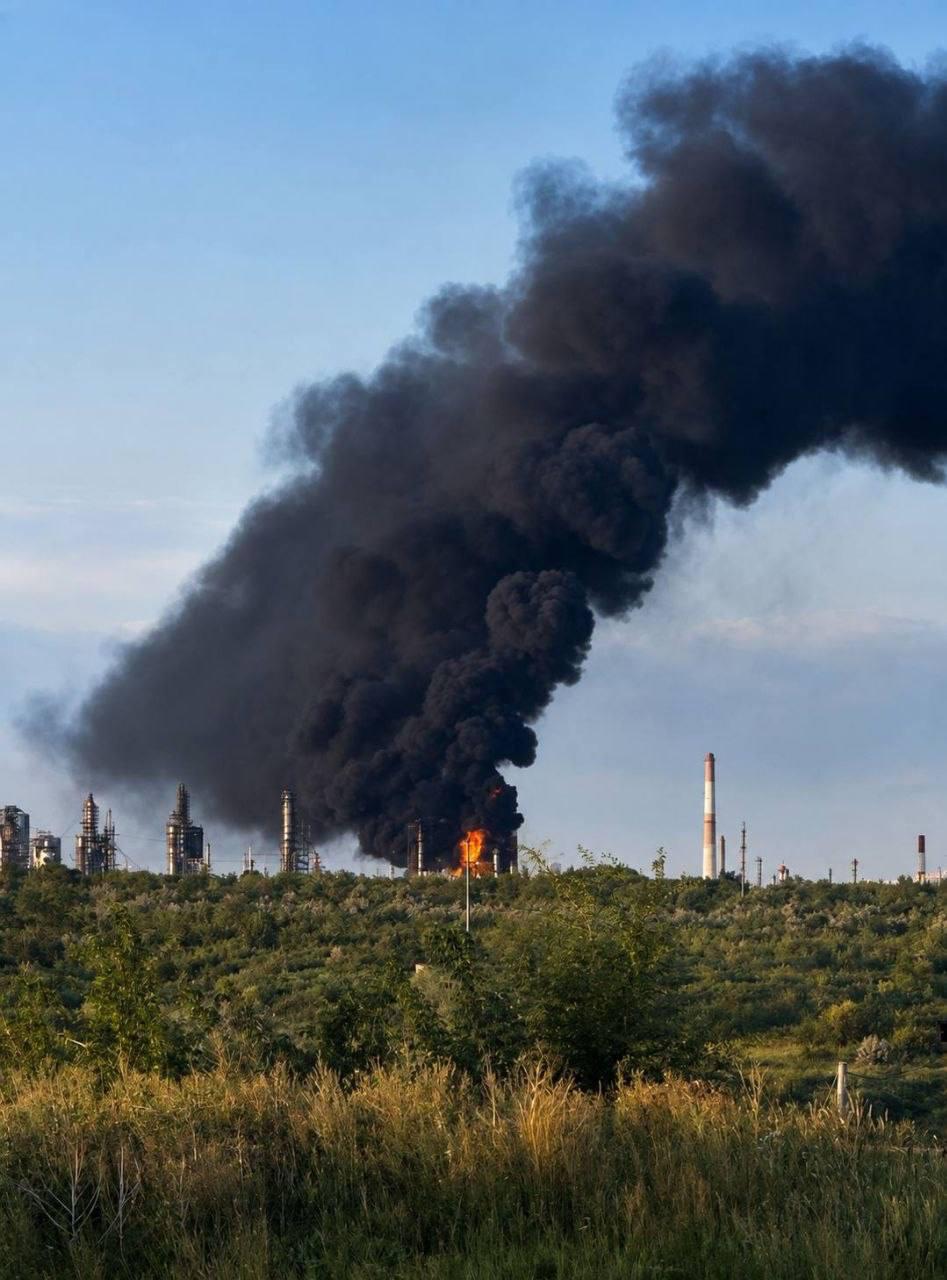
As of September 21, 2026, Ukraine’s Defence Forces have disabled more than 45% of Russia’s oil refining design capacity. This figure was reached following the latest strike on the Moscow oil refinery.
The General Staff of the Armed Forces of Ukraine reported this, Censor.NET reports.
The General Staff said it had summed up strikes on key Russian military facilities in Russia and the temporarily occupied territories of Ukraine between September 14 and 20.
"Units of Ukraine’s Defence Forces struck a number of important enemy facilities in Russia and the temporarily occupied territories of Ukraine. Above all, these were enterprises supporting Russia’s military and economic potential," the General Staff said.
Strikes on Russian oil refineries
On the night of September 15, Ukrainian forces struck the Syzran oil refinery in Russia’s Samara region. An AVT-6 crude oil distillation unit and a tank farm were hit.
During the same period, the Atlant Aero enterprise in Taganrog, Russia’s Rostov region, was struck. The facility manufactures Molniya strike and reconnaissance drones and components for Orion UAVs.
On the night of September 17, the Defence Forces attacked the Slavneft-YANOS oil refinery in Yaroslavl, with an annual refining capacity of about 15 million tonnes of oil. An AVT-3 crude oil distillation unit was hit there.
On September 20, the Gazpromneft-Moscow Refinery in Moscow was struck. According to the General Staff, an AVT-6 unit, an integrated oil refining unit, and an isomerization unit were hit.
"Thus, as of September 21, 2026, following the strike on the Moscow oil refinery, more than 45% of Russia’s oil refining design capacity has been disabled," the General Staff stressed.
The General Staff said one consequence of these strikes was a shortage of high-quality fuel in Russia. In particular, a sharp decline in the production of Euro-5/K5-grade petrol and diesel fuel has been recorded.
Russian air defence, radar and drone facilities hit
A separate area of strikes targeted air defence systems, radar stations, electronic warfare and command-and-control assets.
In Sochi, a 92N6 radar from an S-400 Triumf system was hit; near Vyhonichi in Russia’s Bryansk region, two S-400 launchers were struck; and in the area of Ukrainka in the Zaporizhzhia region, a Buk-M3 surface-to-air missile system was hit. In the Donetsk region, the Defence Forces struck a Nebo-U radar, while electronic warfare stations, radar stations, and relays were hit in the Bryansk region.
Ukrainian forces also attacked Russian attack-drone infrastructure. Storage, preparation, launch and production sites for UAVs were hit in the areas of Donetsk, Kursk and Sievierodonetsk. At the Saky airfield, a ground control station for an Orion drone and numerous UAV command posts were struck.
In addition, two An-26 aircraft, one An-12 aircraft and three helicopters were hit at the Rostov-on-Don (Tsentralnyi) airfield. A Su-24 aircraft was struck at the Saky airfield.
During the week, the Defence Forces also carried out strikes on ammunition, fuel, lubricant, and materiel depots belonging to Russian forces.
The General Staff stressed that such strikes implement Ukraine’s right to self-defence under Article 51 of the UN Charter and are aimed at reducing Russia’s military and economic potential.
- As Censor.NET previously reported, US President Donald Trump said that Russia had lost control of its oil refining industry because of the war against Ukraine and that a significant number of oil refineries had been put out of operation. "This ridiculous and never-ending war with Ukraine must be ended. The whole world suffers, as 25,000 people, mostly soldiers, are being killed each month. What a shame!" he said.


