



Ukrainians living under occupation who do not hold Russian passports may be detained in Russian immigration detention centres
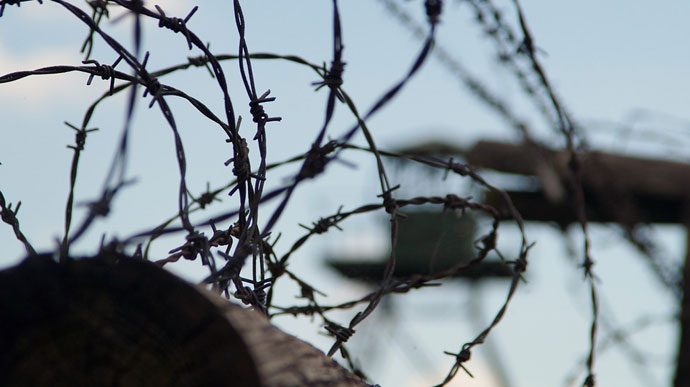
Residents of the temporarily occupied territories of Ukraine who have not obtained Russian passports or completed the paperwork required by the Russian Federation of so-called ‘foreigners’ risk being detained in immigration detention centres. There may be hundreds or even thousands of Ukrainians held in such facilities.
According to Censor.NET, Alona Lunova, advocacy director at the ZMINA Human Rights Centre, told Hromadske Radio about this.
According to her, the deadline set by Russia for the so-called ‘status regularisation’ of residents of the occupied territories expired on 10 September 2025. After that date, failure to produce the documents required under Russian regulations may constitute grounds for a person’s detention and placement in a temporary detention centre for foreign nationals pending deportation.
There are 75 such facilities in Russia – the Central Migration Service’s detention centres – which human rights activists refer to as ‘migration prisons’. In the temporarily occupied territories of the Donetsk, Luhansk, Kherson and Zaporizhzhia regions, temporary detention centres are also used to detain people for breaching the migration rules imposed by the Russian Federation.
Deported Ukrainians were punished for illegally crossing the Russian border
Lunova explained that, following the start of the full-scale invasion, the Russian occupiers had transported some of the prisoners from the occupied territories of the Kherson region to the Russian Federation. Once they had served their sentences, they were not released but were transferred to immigration detention centres.
"They were not released from places of detention on Russian territory, but ended up in immigration detention centres because they were punished for illegally crossing the Russian border whilst being deported," explained the human rights activist.
According to her, these institutions also admit former Ukrainian political prisoners, residents of the occupied territories without Russian documents, and Ukrainian citizens who have lived and worked in the Russian Federation for a long time.
The exact number of Ukrainians in immigration detention centres is unknown.
"It could be hundreds of people, perhaps thousands. We have virtually no statistics on the occupied territories," said Lunova.
People are unable to leave the facilities and are facing difficulties accessing medical care
The human rights activist describes the conditions in Russian migration centres as prison-like – people are not allowed to leave the facility of their own accord. At the same time, some of those detained have access to telephones, which allows them to keep in touch with their relatives and seek help from Ukrainian human rights activists.
Medical care remains a separate issue. According to Lunova, people with diabetes, tuberculosis, hepatitis and other conditions are not receiving the necessary regular treatment. Among the prisoners deported from the Kherson region are people for whom such treatment is vital.
The human rights activist also reported that, according to Russian lawyers, their appeals to the International Committee of the Red Cross regarding the delivery of medicines and hygiene products had gone unanswered.
"It’s a closed facility from which you cannot leave and go wherever you like," emphasised Lunova.
One way to secure release is to challenge the detention in court. However, even after doing so, it is difficult for Ukrainians to return home due to a lack of funds or the absence of a passport. It is not possible to obtain a return permit directly in Russia, as there are no Ukrainian consulates there.


