



Occupiers lure people to sham elections in Henichesk with free lemonade and Soviet songs – CCD. PHOTO
Russian occupiers are trying to boost turnout in illegal elections to the Russian State Duma in the temporarily occupied territories of Ukraine with entertainment and free refreshments. In Henichesk, they decorated a polling station in the style of the 1960s, played Soviet songs and set up a refreshment stand serving "Duchess" lemonade.
The Center for Countering Disinformation (CCD) reported this, Censor.NET reports.
According to the CCD, Russian propaganda launched an information campaign at the start of the main stage of the sham elections to create the impression that residents of the occupied territories are voting in large numbers.
The CCD said propaganda outlets are publishing reports of alleged "queues and excitement" at polling stations. Members of the so-called election commissions appear on camera wearing ribbons in the colours of the Russian flag.
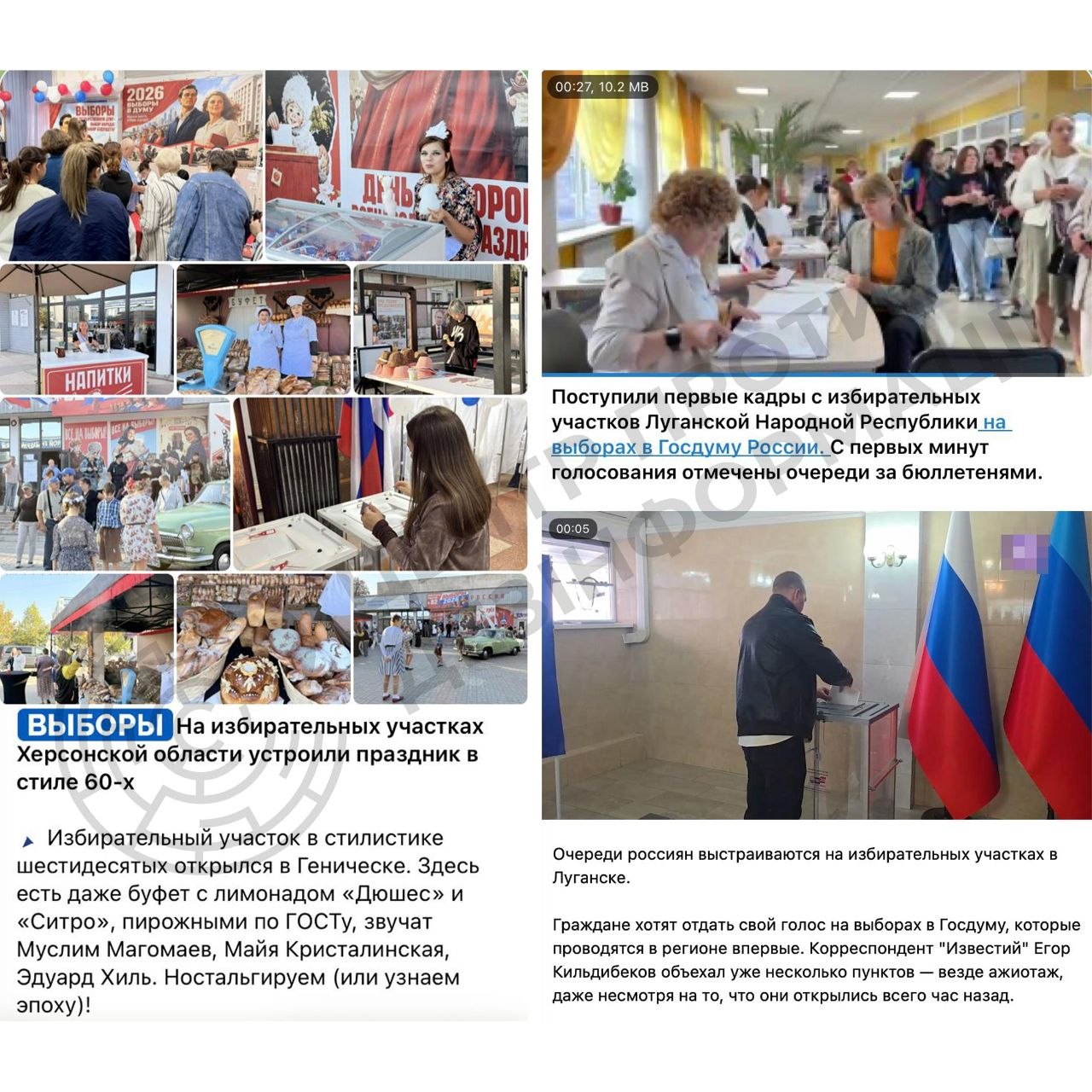
The occupation authorities are also organising entertainment at polling stations to attract people. In occupied Henichesk, they styled one polling station after the 1960s: Soviet songs are playing, and visitors are offered "Duchess" lemonade.
The CCD also noted that the occupiers had opened polling stations even in areas near the front line, putting civilians at risk.
The centre stressed that Russia’s information campaign aims to create a propaganda image of supposedly widespread support for Russia among residents of Ukraine’s temporarily occupied territories and use it to justify the occupation.
In addition, propaganda media report that, to artificially increase the number of voters, the occupiers have allowed people to take part in the Russian "vote" using Ukrainian passports, provided the document contains a registration stamp for Donetsk or Luhansk region. During the early voting stage, the so-called election commissions went door to door accompanied by armed soldiers, while the occupation authorities have already claimed turnout of 75%. These figures cannot be independently verified.


