


438 Ukrainians died in Russian captivity: UN reveals torture involving medics and abuse of military personnel
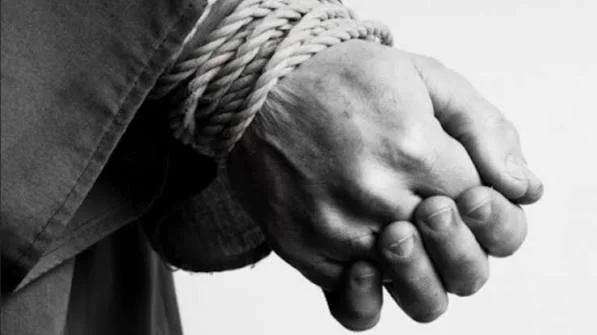
438 Ukrainians have died in Russian captivity, and the torture of prisoners of war and civilians is systematic. A new UN report describes beatings, sexual violence, the use of electric shocks, the involvement of medical personnel in abuse, and the concealment of evidence of torture prior to inspections.
This was reported by Dmytro Lubinets, the Verkhovna Rada’s Human Rights Commissioner, citing a UN report, according to Censor.NET.
According to the document, in August 2026, the Ukrainian Coordination Headquarters for the Treatment of Prisoners of War reported that 438 Ukrainians had died in Russian captivity since the start of the war.
Between May 2025 and May 2026, the remains of 169 deceased prisoners of war and civilians were returned to Ukraine. A total of 375 bodies have been repatriated since 2022. Autopsy results indicated that the causes of death were torture and denial of medical care.
Russian general discussed the severed ears of Ukrainian prisoners of war
The report presents the findings of an investigation by journalists from the "Schemes" project, who gained access to the correspondence of Russian Major General Roman Demurchiev.
In messages he exchanged with military personnel and family members, the general discussed the torture and murder of Ukrainian prisoners of war.
In particular, he sent photos of severed ears and joked about making a garland out of them.
The general also reported that three captured Ukrainian soldiers were beaten to death with entrenching shovels by Russian soldiers who had previously served time in prison.
After that, according to the correspondence cited, the commander proposed that the soldiers involved in the murder be nominated for awards.
A Ukrainian man documented his torture in a diary and died after his release
The document also includes a separate account of the story of Oleksandr Savov, a Ukrainian prisoner of war from the Mykolaiv region.
He spent nearly three years in Russian captivity and was released in March 2025. Eight months later, he died as a result of the torture he had endured and the deterioration of his health while in captivity.
His diary, which was handed over to the UN Special Rapporteur, contains accounts of beatings, electric shock torture, setting dogs on him, forced nudity, sexualized humiliation, and denial of medical care.
The records also describe efforts to conceal evidence of violence ahead of external inspections.
Other Ukrainians with whom Katsarova spoke confirmed the accounts detailed in the diary, particularly regarding the involvement of medical personnel in acts of torture.
Medical personnel took part in the mistreatment of prisoners
The report emphasizes that medical personnel at Russian correctional facilities not only covered up acts of torture but also participated directly in them.
Specifically, in July 2026, Ukrainian law enforcement authorities opened a criminal investigation into Vyacheslav Cherdantsev, a medical worker at the Pakino correctional facility.
Based on the information presented in the report, he is suspected of subjecting Ukrainian prisoners of war to sexualized humiliation, forcing them to simulate sexual acts, and inscribing humiliating messages and drawings on the prisoners' bodies.
There are also reports of denial of medical care and orders given to guards to beat prisoners who sought treatment.
In one incident, according to reports, a healthcare worker brutally beat an inmate who refused to comply with his sexual demands.
Over the course of a year, Russian courts have sentenced at least 585 Ukrainians
According to data cited in the UN report, from September 2025 to August 2026, Russian courts and judicial bodies in the occupied territories handed down sentences to at least 585 Ukrainians in politically motivated cases.
Among those convicted are 226 civilians and 359 military personnel.
Most of the cases involved terrorism charges. Russia, in particular, is prosecuting Ukrainian prisoners of war for serving in units of the Armed Forces of Ukraine that the Russian authorities have designated as terrorist organizations.
In May 2026, one of the captured Azov soldiers was sentenced to 18 years in prison. Another soldier’s previous 25-year sentence was increased to 27 years.
The Special Rapporteur emphasized that Russia is trying Ukrainian prisoners of war as civilians for actions that are lawful for combatants during hostilities.
In addition, Russian courts routinely accept confessions obtained under torture as evidence and do not order investigations into allegations of violence.
The document also raises the issue of the death of Ukrainian journalist Viktoria Roshchina while in Russian captivity.
The UN is calling for an investigation into the crimes
The UN Special Rapporteur stated that torture in Russia is widespread and systematic and forms part of a state strategy of repression.
She called on the Russian authorities to stop torture, to independently investigate cases of death and violence in places of detention, to release unlawfully detained Ukrainian civilians, and to grant international observers unimpeded access to all places of detention.
Ombudsman Dmytro Lubinets emphasized the need to document every crime committed against Ukrainian prisoners of war and civilians.
"Every executioner, every organizer of unlawful persecution, and everyone who knowingly conceals these crimes must be held accountable," he said.


