


Russia imported nearly million tons of fuel over three months – DIU
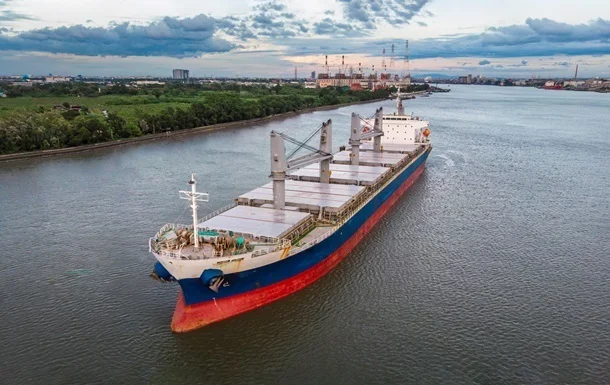
Due to a fuel shortage caused by Ukrainian strikes on its oil infrastructure, Russia imported nearly 989,000 metric tons of petroleum products by sea over a three-month period. The shipments took place from July 18 to October 22.
This was reported by Censor.NET, citing the Main Intelligence Directorate of the Ukrainian Ministry of Defense.
According to intelligence reports, due to a domestic shortage, Russia was forced to purchase fuel abroad. During the specified period, 39 shipments of fuel and gasoline additives were delivered to Russian ports on 30 tankers.
Gasoline accounted for nearly three-quarters of imports
The largest share of shipments was gasoline—724,200 metric tons, or 73.2% of the total volume. Russia also received:
-
128,100 metric tons of diesel fuel — 13%;
-
106,700 metric tons of jet fuel — 10.8%;
-
30,000 metric tons of gasoline additives — 3%.
Ports in northwestern Russia received the largest share of fuel—42.3% of all shipments. Another 32.8% arrived via ports on the Baltic Sea, and 24% via ports in the Far East. The remaining 0.9% was delivered to Astrakhan.
The ports of Vitino and Vysotsk became the most important for imports. Together, they received 15 shipments totaling 573,000 metric tons. This accounts for 58% of all shipments. These ports also handled 79% of the imported gasoline.
Of the 30 tankers that delivered fuel to Russia, 13 are subject to sanctions imposed by the EU, the United Kingdom, the United States, and other countries. Two more vessels—the HANNA and the CAPIBARA—are on Ukraine’s sanctions list. Meanwhile, 15 tankers are not subject to sanctions.
Russia is using fuel transshipment at sea
According to the Main Intelligence Directorate, some of the petroleum products were not shipped directly to Russia. They were transshipped from one vessel to another on the high seas. This method makes it possible to conceal the supply routes.
At least 216,000 metric tons of fuel, or 22% of the total volume, were shipped to Russia after being transshipped in this manner. Five shipments of petroleum products were used for this purpose.
Transshipments took place, in particular, near ports in Egypt and the Spanish city of Ceuta. Russian tankers also turned off their vessel tracking systems and deviated from their declared routes.
The GUR cited the example of a gasoline shipment from India. On July 12, it was loaded onto the tanker PHOTON, and at the end of July, it was transshipped to the vessel TALISMAN near the Egyptian port of Damietta. On August 21, the tanker arrived at the Russian port of Vitino. The entire shipment took 40 days. Both vessels are owned by the Russian company "Sovcomflot," which is subject to sanctions.
The largest volume of shipments, by tanker loading location, was accounted for by:
-
Egypt — 364,700 metric tons, or 37%;
-
Morocco — 219,100 metric tons, or 22%;
-
South Korea — 191,100 metric tons, or 19%;
-
Turkey — 104,500 metric tons, or 11%.
At the same time, intelligence sources emphasized that the country where the tanker loaded its fuel is not necessarily where it was produced. Often, Egypt, Morocco, and Malta served merely as transshipment points.
The exact origin was determined for approximately 264,000 metric tons of fuel—about a quarter of total imports.
Specifically, 189,000 metric tons of gasoline were shipped from the Indian oil refinery Nayara Energy. The company is subject to sanctions imposed by the EU, Switzerland, the United Kingdom, and Ukraine. Nearly half of its shares are owned by the sanctioned Russian company Rosneft.
The Egyptian plant Midor shipped another 58,500 metric tons of jet fuel to Russia. Meanwhile, the Chinese company Shandong Yulong Petrochemical—which is also subject to sanctions from a number of countries—produced 16,100 metric tons of gasoline additives.


