



Protocol problem: why NACP won against Atroshenko and Kniazev but lost to Tymoshenko and Shurma
Last week, a judge of Kyiv’s Pecherskyi District Court closed the proceedings under the NACP administrative protocol against Rostyslav Shurma, deputy head of the Office of the President.
According to the Anti-Corruption Action Center, this decision was made by Judge Svitlana Shaputko, who defended her dissertation under the supervision of Oleh Tatarov in 2018.
What was the NACP's remark about? In 2022, Shurma organized the Electricity Committee under his chairmanship at the OP (Office of the President). "Having a private interest in this area, Shurma did not report the existing conflict of interest in the manner prescribed by law and, acting in conditions of a real conflict of interest, participated in the discussion and adoption of decisions at the committee meetings that concerned his private interest," the agency said.
"Today, the NACP tried to give me an unpleasant surprise. I received a so-called protocol from them, but in fact it is a legally insignificant document. I was surprised how a respected body could stoop to such nonsense," Shurma wrote in response to the protocol.
Since this is not the first protocol of the NACP that has suffered a bitter fate, Censor.NET decided to inquire about the statistics of decisions on administrative protocols and find out what is wrong with these cases.
The public probably became aware of the existence of NACP administrative protocols in December 2022, when, following an NACP order, the mayor of Chernihiv, Vladyslav Atroshenko, was suspended from his post for a year by the Yavoriv Court of Lviv.
The basis for the protocol was that on March 5, Atroshenko's wife left Ukraine through the Shehyni checkpoint, according to the State Border Guard Service, driving a Toyota Camry that was on the right of use of the Chernihiv Municipal Council.
At the same time, in March 2023, the former head of the Department of Public Procurement and Supply of Material Resources of the Ministry of Defense, Bohdan Khmelnytskyi, was found guilty by a court of providing false information to the National Agency for the Prevention of Corruption.
The NACP filed a lawsuit against the official for lying in his response to the audit of the Ministry of Defence.
Another success of the NACP was that in March of this year, following consideration of the NACP's protocol, the court deprived the former Chief Justice of the Supreme Court Vsevolod Kniazev of the right to use the apartment.
Back in 2017, Vsevolod Kniazev received a gift in the form of a 133 m² apartment in the Pecherskyi district (Lypky) of Kyiv for 1 thousand hryvnias.
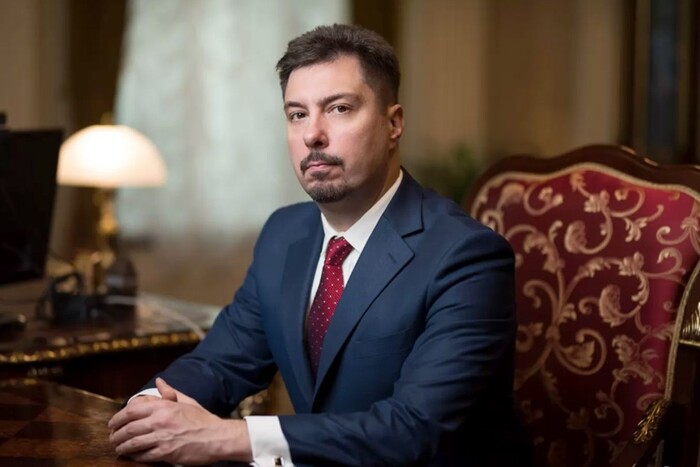
Based on the results of the NAPC's review of the protocol, the court imposed an administrative penalty on Kniazev in the form of a fine of UAH 2,550 and confiscation of the gift in the amount of UAH 906,600. The funds will be collected as government revenue.
But not all protocols end in success. Just recall the case of Kyrylo Tymoshenko.
As you know, Tymoshenko lost his position in the Office of the President after UP journalists published an investigation in late 2022 that Yermak's deputy was seen driving a new 2021 Porsche Taycan. The car was provided to him by businessman Vemir Davitian, who is called the government's informal supervisor of the Zaporizhzhia region.
The journalists' sources also helped them to find out that Tymoshenko settled in a nearly 1,200-square-meter estate with its own access to a pond, owned by businessman Ihor Nikonov. He is one of the largest developers in Kyiv. This was interpreted by the media as a potential conflict of interest, as shortly before that, a message appeared on the page of Nikonov's construction company that two residential neighborhoods of KAN Development had joined the state program "eOselia" - a preferential housing mortgage.
But the biggest publicity was caused by another investigation, where journalists from Bihus. info journalists found out that Tymoshenko was using a Chevrolet Tahoe as her official car. The scandal was that the American company General Motors had donated 50 cars to Ukraine for humanitarian purposes and to transport people out of the war zone this spring, but not for the official's transportation around Kyiv. After the story was published, Tymoshenko refused to accept the cars.
After the stories were published, Tymoshenko was placed under monitoring by the National Agency for the Prevention of Corruption.

The NACP issued a protocol on the following issues:
- Thus, while holding the position of deputy head of the Prosecutor General's Office, he signed a letter to the State Border Guard Service of Ukraine (SBGSU) requesting permission for his subordinate to travel abroad, allegedly for an official business trip. However, the NACP found that the real purpose of the subordinate's travel abroad was a private interest - to obtain visas for Tymoshenko and his son.
Therefore, the former official, using his official position and with the aim of satisfying his personal needs, received permission for his subordinates to cross the state border. Such actions are qualified under Parts 1, 2 of Art. 172-7 of the Code of Administrative Offenses (Violation of requirements for the prevention and settlement of conflicts of interest).
- In addition, in 2022, Tymoshenko stayed at the Emili Resort hotel complex three times for free, twice with his wife and son. In his explanations, he confirmed that he had indeed used the services of the hotel, but could not provide proof of payment for accommodation worth more than UAH 45 thousand.
Another episode is his actions in the context of a real conflict of interest.
- In the summer of 2022, Tymoshenko used a Porsche Taycan car for personal use free of charge. Circumstances have been identified that indicate the artificial creation of payment documents in order to conceal the fact of free use of the vehicle. The total amount of free car rental services received by Tymoshenko amounted to UAH 122 thousand.
But last fall, the Pecherskyi court found Tymoshenko not guilty.
In particular, with regard to Davitian's car, the court found that in June 2022, Tymoshenko's wife, Alyona, entered into a car rental agreement with the specified company. The contract was valid until October 31, 2022. The ex-official's wife paid the agreed amount of UAH 122 thousand for the use of the Porsche in full, Glavkom reported.
The court also found that the accommodation at the Emili Resort hotel, the court emphasized: Tymoshenko and his family members paid for the services themselves at full market value. As noted, Tymoshenko's family rented hotel rooms during August 17-18, 2022, September 21-25, 2022, and October 21-23, 2022.
In addition, the court sided with the former deputy head of the Office of the President when analyzing the foreign business trip of his subordinate. The court ruled that Kyrylo Tymoshenko did not influence the decision to send Oleksii Bondarev, head of the department for cooperation with local executive authorities and local self-government bodies of the Department for Regional Policy of the Office of the President, on a business trip.
There are many more cases like the Tymoshenko case.
In general, if you look at the statistics, it is not in favor of the NACP.
For example, in 2023, according to the NACP, 42 protocols were drawn up against 38 people. However, in only 11 cases did the courts side with the NACP, recognizing the "entered of record" persons guilty in the first instance. Only 8 were found guilty in the second instance.
However, compared to other years, this result is not so bad. For example, in 2020, 239 protocols were drawn up. Of these, 223 were closed by the first-instance court. And only 4 people were found guilty by decisions of trial and appellate courts. In the first instance, 8 people were found guilty.
In 2021, the NACP drew up 937 protocols. Proceedings in 891 of them were closed in the first-instance court. Only 9 people were found guilty in the first instance and on appeal.
At the same time, it should be understood that the court made its decision in the absence of a NACP representative. And this is one of the biggest problems now.
Another problem is that court decisions clearly show political expediency.
"Because in some cases, when it is politically advantageous, a person is fired according to the protocol, and in other cases, they see no violations," said Artem Sytnyk, Deputy Head of the NACP, in a comment to Censor.NET.
Here we can again recall the story of Atroshenko. His actions were seen as corruption, even though they took place in the face of an almost complete blockade of the city by Russian troops.
But in the case of the mayors of Chernihiv and Rivne, the courts sided with the NACP, but in the case of Ternopil Mayor Nadal, they did not see his guilt.
As you know, the mayor of Ternopil in 2021 and throughout 2022 received bonuses in the maximum amount and provided himself with health care assistance, financial assistance for solving social and domestic issues also in the maximum permissible amounts. The amount of bonuses could reach 250% of the official salary.
According to the NACP, this contains signs of violations under parts 1, 2 of Article 172-7 of the Code of Ukraine on Administrative Offenses.
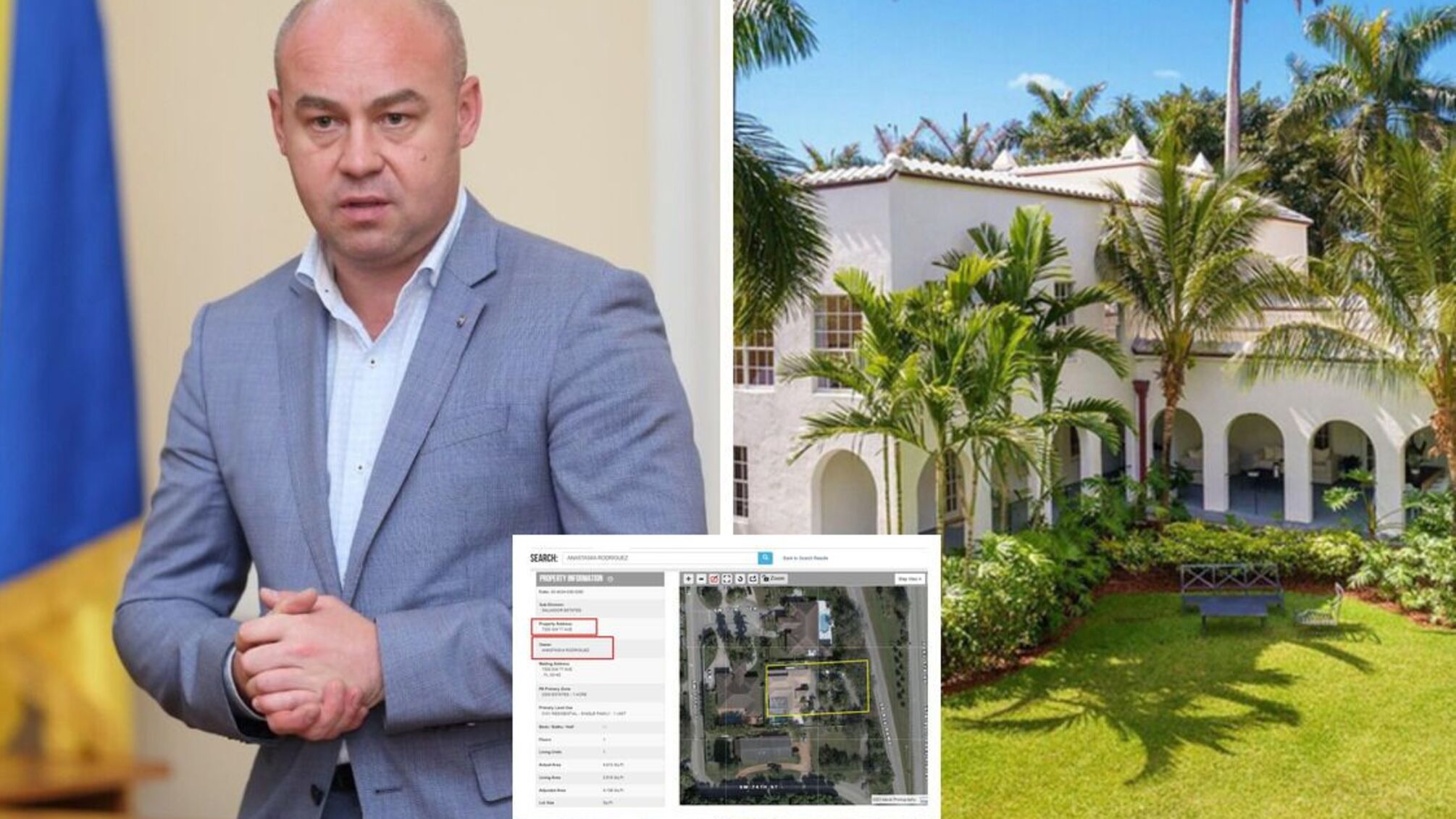
However, the Ternopil City District Court closed the case.
To change the situation, the NACP proposes to do two things (and they are, by the way, included in the State Anti-Corruption Program)
- allow NACP representatives to be present in court. Currently, there is no such option;
- to allow the prosecutor to file an appeal in such cases (now, if Shurma's case is lost in the first instance, the prosecutor cannot file an appeal).
To change the situation, it is necessary to amend the Code of Administrative Offenses.
Another change that is needed is that the High Anti-Corruption Court should consider cases of top officials. Although its decisions are sometimes surprising, it still has a higher percentage of trust compared to ordinary courts.
The relevant amendments are now being considered by the Verkhovna Rada's anti-corruption committee. In an intolerant way, they are "gathering dust".
However, such a large percentage of closed proceedings still raises certain questions about the NACP itself.
For example, the drafting of protocols caused comments from the commission that audited the NACP's work in previous years. It pointed out, in particular, the lack of a clear methodology of work in the early years, as well as the fact that there were comments on the consideration of certain issues and the reception of information.
"Importantly, the employees authorized to record violations and draw up administrative protocols are not clearly indicated, and there does not appear to be a mechanism to assess the scope and accuracy of the documentation procedures," the report says.
"The NACP has replaced the binding regulation on administrative offenses in this area with three separate "methodological recommendations" issued to its staff (for more information, see the table in section 4.9). In 2020-2021, the NACP increasingly used this approach in various areas of activity, a practice that raises serious concerns," the document says.
According to the commission, monitoring and control activities affect the rights of civil servants and can lead to significant sanctions, including fines, confiscation of property and dismissal from office, and therefore should be regulated in accordance with the requirements of the law, and not by the recommendations of "soft law," which by their purpose cannot impose obligations on officials."
Therefore, the story of protocols is much more complicated than a judge's acquaintance with the deputy head of the Office of the President. And it requires systemic solutions.
Tetiana Nikolaienko, Censor. NET


