



How to feed army with basil, or What’s wrong again with food procurement for Armed Forces of Ukraine
The State Logistics Operator was forced to replace two suppliers of food to the Armed Forces over the past two weeks. There were both objective and subjective reasons for this.
Censor.NET looked into what is wrong with the food supply again.
As you know, after the old suppliers twice disrupted the Prozorro tenders, the State Logistics Operator (DOT) was forced to conclude direct contracts.
13 sectors were to be supplied by 5 companies. In particular, Busk Canning Plant, Tvii Khlib LLC, Cherkasy Meat Processing Plant, Food Hrand, and Yuh Prod Trade.
The price per set ranged from UAH 104 to UAH 119, which was on par with the last tenders on Prozorro.
At the same time, prices for a number of products were lower compared to previous contracts. For example, frozen boneless pork shoulder - 17% savings; frozen pork thigh - 31% savings; frozen chicken fillet - 27% savings; peeled buckwheat - 51% savings; frozen boneless pork loin - 25% savings.
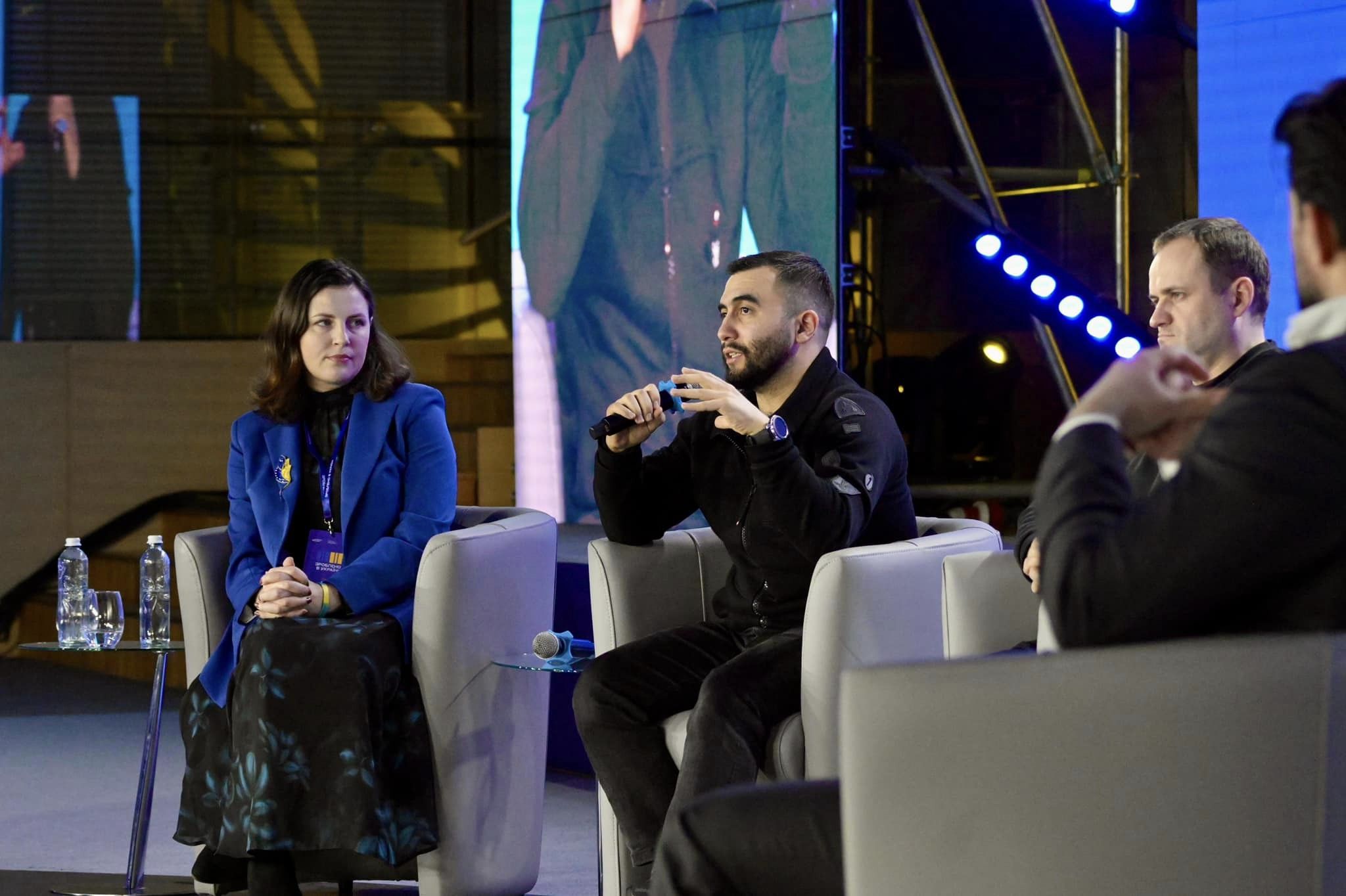
Some of the companies already had experience supplying the Ministry of Defence as contractors. Some of them were openly happy to come out of the shadow of their predecessors.
However, everything turned out to be not so simple.
The new contractors were supposed to start supplies on April 1. But from the very first days, the phones of the DOT employees began to ring off the hook with complaints.
Some suppliers failed to deliver. Complaints began to appear on social media that some units would be left without food. And that you can't feed the army with waffles.
As of 6 April, the situation was as follows:
- Busk Canning Plant - over 90% have been supplied;
- Yuh Prod Trade - over 90% have been supplied;
- Food Hrand - over 90% have been supplied;
- Tvii Khlib - 50% have been supplied;
- Cherkasy Meat Packing House (ChMPH) - 25% have been supplied;
The disruption of supplies was caused by both objective miscalculations by suppliers and unfair actions by some of the chiefs of production.
For example, some suppliers have started to supply food to the military on the principle of delivery to retailers - in 20-ton trucks. As a result, if there was a delay somewhere - and there were stories when it took several hours to issue a pass to a unit or meat was checked in the sun for several hours - supplies to other units were disrupted.
Those suppliers who took smaller vehicles were able to deliver on time.
The second factor was obviously the human factor.
This applies to the already mentioned episodes when cars were not accepted for several hours for far-fetched reasons. In addition to the case of meat being inspected in the sun, there were also stories of cereals not being accepted because the driver did not have a special hat.
There was a story when the food executive officer of the unit refused to accept the goods on 2 April because he had ordered them on the 5th. And at Cherkasy Meat Packing House LLC, they refused to accept the goods in one of the parts because of... the size of the pallet on which it was lying.
As of April 1, 491 military units failed to submit timely applications to the DOT.
As of April 3, 237 applications had not been submitted on time.
In addition, unknown (at least for the time being) persons at the Central Department of Engineering and Infrastructure Supply of the Logistics Forces Command (СDEIS LFC) were instructed to immediately draw up acts of violations regarding "the slightest remarks on the goods and report them to the СDEIS LFC of the Armed Forces of Ukraine on a daily basis".
This order would seem to be quite logical and lawful if it wasn't for one nuance.
According to the audit results of the previous year, the food executive officers of the units did not draw up reports on 45% of violations by suppliers. Why did this happen? Because, according to the internal audit, 98% of violations of the timing and volume of food in 2023 were related to violations of the deadlines for submitting applications by military units.
In other words, the food executive officers of the units made late orders, and then the Ministry of Defense could not appeal against the late supply or supply of something completely different from what was ordered, because the military was to blame.
Thus, there is a suspicion that some food executive officers of the units have now taken a specially organized position to discredit the work of the DOT.
Due to the principle of the DOT-Chain, when applications from a unit must now be received by the DOT and then by suppliers, breaks the corruption chain that existed locally and fed many dishonest people.
Another sign that there was a certain collusion against the DOT is the fact that the orders were made by units.
And they were among those ordered:
-820 kg of chilled catfish (the marginal price is UAH 120 per kg);
-496 kg of granulated sago (the marginal price is UAH 150 per kg);
-140 kg of frozen veal boneless shoulder (the price is 260 UAH);
-348 kg of frozen veal boneless backside (the price is 215 UAH);
-765 kg of sturgeon (the price is 300 UAH per kg);
-10 kg of flax seeds (the price is 240 UAH per kg));
-50 kg of basil (the price is 450 UAH per kg).
For comparison, buckwheat groats are currently priced at UAH 23.50, pearl barley at UAH 10.80, and unpolished rice at UAH 45.

If you've never heard of granulated sago, it's a cereal made from starch extracted from the pith of the sago palm and some other palm trees, as well as synthetic cereal made from potato or corn starch. Its advantage is that it does not contain gluten.
High-grade uncooked smoked sausage is priced in the catalog at a maximum price of 473 UAH. It's easy to calculate how much sausage the military could get instead of basil.
But this is not the most interesting thing. These items were not ordered at all last year.
A year ago, the author attended a meeting at the Ministry of Defence where, at the request of the Ministry of Economy, the catalog was being discussed. As a result, a list of 24 items was drawn up, including granulated sago, flax seeds, and chilled turkey and veal. Mid-level MoD managers had opposed this reduction during previous meetings. It was also revealed that veal was not ordered for one reason: the army had been fed with tonnes of confiscated goods from Belarus for a year.
As we can see, a year later, some food executive officers of the units used the list of what was never ordered to troll the DOT and new suppliers.
For comparison, this is how the standard order list looked like:

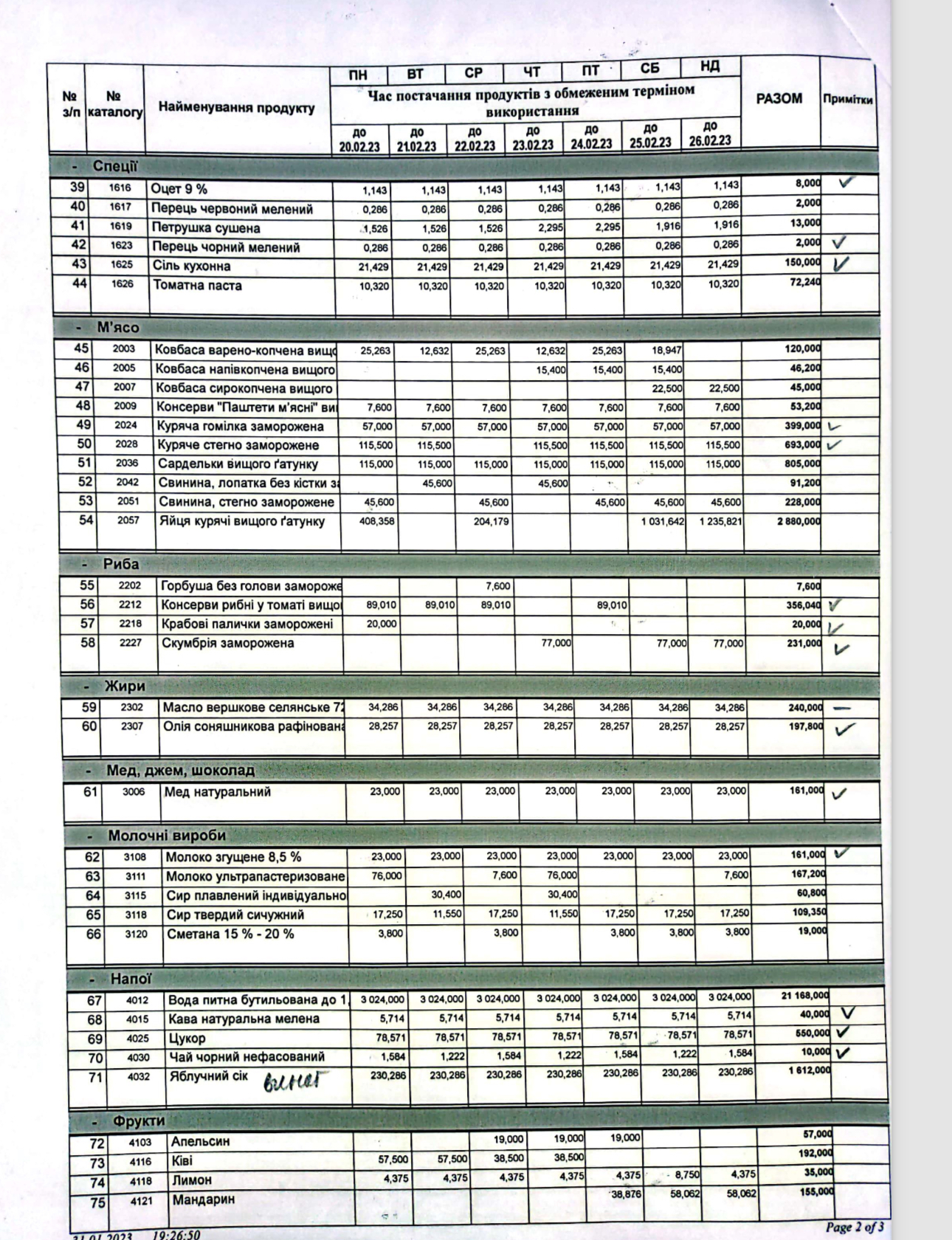
Most of this trolling was directed at Cherkasy Meat Packing House. As already mentioned, despite the fact that the company had full warehouses (which meant they were going to fulfill orders), it failed to cope with the logistics.
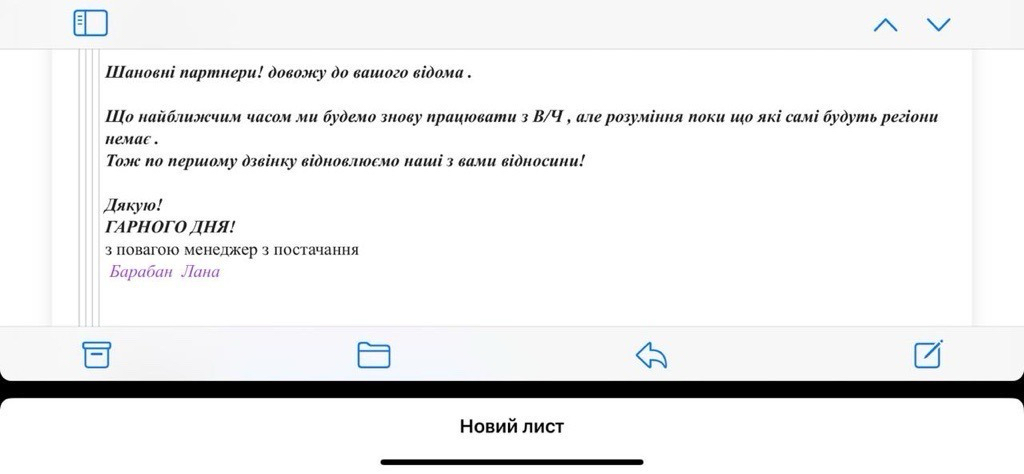
But that's not all. Even before the DOT decided to refuse to cooperate with this supplier, some units received letters from Prodreserv saying that they would soon return to supply.
It is not clear where this optimism came from.
At the same time, according to Censor.NET's sources, after visiting several offices in Kyiv on 3 April, where they allegedly heard something about the SBI's visits, the management of the Cherkasy Meat Packing House was under the radar, and the DOT had no choice but to terminate the contract.
On 4 April, the contract was signed with Contract Prodreserve 5, which got a lot of surprising clauses.
At the end of the week, some of the contracts with Tvii Khlib were also terminated. It will be replaced by the Rivne company Adelin.
The first two weeks of supply under the new rules show that the DOT-Chain is not a comprehensive tool in the fight against unfair salespeople.
To avoid speculation on ordering products from the catalog, the DOT and the Ministry of Defence have no choice but to approve several dozen menu options, so that the food executive officers of the units choose only a certain type of breakfast and lunch, and the DOT calculates the amount of food needed.
This is the only way to wean some people away from ordering granulated sago and basil, which are hardly the most essential things for an army to eat.
Tetiana Nikolaienko, Censor.NET


