



Additional payment of 70 thousand to military. Where will money be taken?
BusinessCensor has been looking into the nuances of the new payment, who will receive it, and where the government will get the money from.
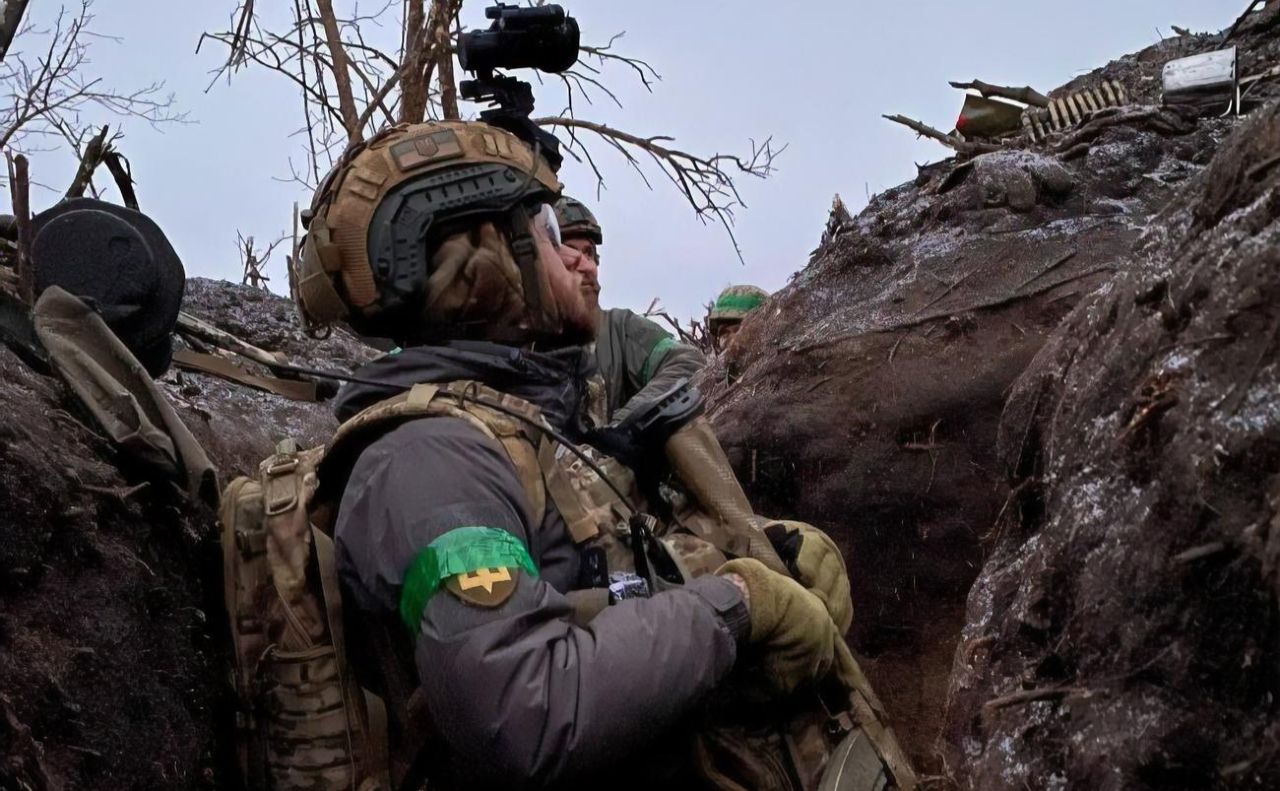
On April 11, the Verkhovna Rada adopted in the second reading a law on strengthening mobilization. At the same time, People's Deputies voted in favor of a resolution that obliged the government to approve a decision on an additional UAH 70,000 payment for soldiers on the front line.
Read also: Law on mobilization: without demobilization and sanctions for evaders
The very next day, Prime Minister Denys Shmyhal reported that the initiative had been implemented. Thus, from April 1, an additional UAH 70 thousand is to be paid for every 30 days of combat missions at the front.
That means the first payments are expected in May. But the fact is that this monetary incentive is not provided for in the state budget for 2024. So, the government not only needs to amend the law on the state budget but also to look for additional sources of funding.
Business Censor has been looking into the nuances of the new payment, who will receive it, and where the government will get the money from. It is a substantial amount of money - according to the Ministry of Finance, about UAH 50 billion will be needed by the end of the year.
What accidental benefits do the military receive?
The money that servicemen receive consists of two parts: salary and accidental benefits for performing combat (special) tasks - this is the money that is popularly called "combat" money.
In turn, the amount of the cash collateral depends on:
- position;
- military rank;
- duration, intensity and conditions of military service;
- qualifications.
It also includes accidental benefits for peculiarities of service (ABPS) and secrecy. Additional payments for military personnel are also provided for academic degrees, academic, honorary or sports ranks. The salaries of military personnel are not subject to the 1.5% military tax.
The amount of "combat" is determined by the Cabinet of Ministers' Resolution No. 168. It was this resolution that was amended to include the new UAH 70 thousand. So now there is such a gradation:
- 30 thousand UAH for those who perform combat (special) tasks during the period of ensuring the defense of Ukraine, protection of the security of the population and the interests of the state in connection with the military aggression of the Russian Federation;
- UAH 50 thousand for military personnel performing combat (special) tasks as part of military command and control bodies, command staff and command that carry out operational control of units;
- UAH 70 thousand will be paid to servicemen and police officers for performing special tasks during combat operations on the line of contact. Unlike other additional payments, the money will be paid not in proportion to the time spent on the task, but for every 30 days in total. That is, to receive this additional payment, a soldier needs to stay at zero line for at least 30 days, but these days do not have to be consecutive. This allowance will be calculated from April 1, 2024;
- UAH 100 thousand for soldiers who are in the area of active hostilities or undergoing treatment or rehabilitation as a result of a concussion, injury, or maiming injury. An additional allowance is also provided for those who have been taken prisoner.
Confirmation of the involvement of servicemen in combat operations or the performance of a combat (special) mission is:
- combat order;
- log / operational situation log book;
- commander's report.
There is also a reward for destroyed or captured enemy equipment:
| Type of equipment | Remuneration, UAH | |
| Ship | 1st rate | 243 600 |
| 2nd rate | 182 700 | |
| 3rd rate | 121 800 | |
| 4th rate | 97 440 | |
| Combat aircraft (fighter and ground attack aircraft), surface-to-air missile system | 121 800 | |
| Multiple Launch Rocket System | 60 900 | |
| Tactical Guided Missile System, military aircraft | 54 810 | |
| Ground artillery (other), military helicopter, anti-armor weapon system | 42 630 | |
| Infantry fighting vehicle (assault-landing force), armored personnel carrier, armored reconnaissance scout vehicle | 42 630 | |
| Other aircraft (object) equipped with means of destruction or surveillance (including unmanned aircraft) | 36 540 | |
| Man-portable air defense system | 30 450 | |
| Military (auxiliary) logistics vessel with a full-load weight of over 5 thousand tons | 30 450 | |
| Military (auxiliary) logistics vessel with a full-load weight of up to 5 thousand tons inclusive | 24 360 | |
| Military motor vehicle (cargo, purpose-built), small-sized combat (ISR) vessel, military tractor, military engineering vehicles: reconnaissance, demining, mine obstacles, bridge layer, obstacle clearing, for track-laying, for excavation works, for water obstacle traverse | 12 180 | |
The remuneration for destroyed/captured equipment is distributed by the commander's decision among the servicemen who were directly involved, depending on their personal contribution.
Where will the money for additional payments to the military be taken from?
As you know, Ukraine cannot spend money from international partners on the army. The state has to maintain it at its own expense. Thus, this year's state budget provides UAH 1.69 trillion for the security and defense sector, which is almost all of the budget's own revenues - UAH 1.76 trillion. So where will the money for additional payments to the military be found?
Danylo Hetmantsev, chairman of the Verkhovna Rada Committee on Finance, Taxation and Customs Policy, mentioned two sources: taxes and domestic debt:
"There is a simple and unambiguous answer to the meaningless discussion of whether we have enough money to increase the military's pay to zero line: we do. At the expense of what? First of all. At the expense of taxes, which we will all pay together with readiness and understanding in the amount necessary for our military. As much as they need. Of course, checking every kopeck that goes to the maintenance of the army, and catching up with the looters who make profits out of war. Second. At the expense of domestic debt, especially since there is room for movement in terms of borrowing, primarily from banks. All large-scale wars have been financed by taxes and public debt."
As for domestic debt, the government does have this option. After all, the rollover, i.e. the ratio of the nominal value of securities sold at auctions to those redeemed in accordance with the terms of their issue, exceeds 100% in the first quarter of 2024. And so far, there are no preconditions for negative changes. At the same time, it should be understood that this is a debt, which means that it needs to be serviced and repaid sooner or later. However, it is quite an effective tool for closing off the urgent budget loopholes and resolving previous debt obligations.
Taxes are another issue. Most likely, they will have to be raised. This prospect was already on the agenda as part of the cooperation with the IMF to find an additional UAH 44 billion for the Ministry of Finance. One of the points of this program is the introduction of a military fee for individual entrepreneurs. However, experts criticize this position.
Read also: How much money did international partners give to Ukraine and why taxes will have to be raised
According to Oleh Ustenko, a former economic advisor to the President of Ukraine, increasing taxes will not help in the war - it is necessary to reduce spending. He says that only direct taxes can be increased, which are guaranteed to increase state budget revenues immediately and forthwith but it will not bring in large numbers.
"If we think about the excise tax, it may bring additional revenue. The rest - individual entrepreneurs, income tax, etc. - are just economic fantasies," he said on Hromadske Radio.
Mykhailo Nepran, First Vice President of the Ukrainian Chamber of Commerce and Industry, is convinced that reserves worth a quarter of a trillion hryvnias are plain to see. This refers to the shadow market for excisable goods, tax evasion, smuggling, and other illegal tax evasion schemes.
"If there is a state budget deficit that the country is not able to finance in full, the only thing that works in public finance in the short term is to reduce spending. There are other options in the long run, but in the short term there will be no other options," emphasizes Ustenko.
The Ministry of Finance is working on cutting non-priority expenditures. The issue of Eurobonds remains open.
Thus, in August 2024, the agreement reached after the outbreak of a full-scale war in 2022 to postpone payments on Eurobonds, the total amount of which is estimated at $20 billion, will expire.
In the middle of this April, a group of Ukrainian Eurobond holders, including Amundi, Amia Capital, and BlackRock, selected advisors to restructure Ukraine's obligations. At the beginning of the month, it was reported that Ukraine's Eurobond holders were negotiating the creation of a creditors' committee ahead of a potential debt restructuring.
At the same time, the reallocation of budget funds is not seen as relevant, as Hetmantsev clearly stated.
"[Regarding] redistribution of money from marathons, reduction of the state apparatus, and other super-ideas of mom's "geniuses" from social media. I will say this: last year, the current maintenance of the army from the general fund of the state budget cost UAH 5 billion a day. You can calculate for yourself how many days of war we can finance by trying to save a few billion hryvnias on ephemeral government spending. Yes, of course, this is money, but it is ludicrous when people point to these funds as a solution. I am not saying this for political reasons, a desire to protect someone's interests or to please them, but simply because of the elementary mathematical incommensurability of the values," he emphasized.
At the same time, the head of the Finance Committee emphasizes that we should definitely avoid filling the budget through the emission. That is, according to him, no one plans to print hryvnia. At least for now.
"Budget emission provokes inflation and devaluation. Yes, it is also a tax, but it is an unfair tax and a tax that hits the most vulnerable citizens and the economy hard. The issue is definitely the last option that will be considered," summarizes Danylo Hetmantsev.
"However, it should be noted that there is currently an agreement with the International Monetary Fund that relates to the issue. According to this agreement, the National Bank cannot just decide to print the required amount of hryvnia. On the other hand, the issue of issuance is in a state of limbo on whether the NBU will turn on the "printing press" even if necessary. The regulator has repeatedly expressed skepticism about the issue.
"The issue is like a tourniquet, it will save your life today, but it will cause significant damage if it is not abandoned in time," said Andrii Pyshnyi, the head of the National Bank, in an interview with ZN.UA last year.
What's the bottom line?
The picture emerges to be quite particolored even without Eurobonds, which, although urgent, have been postponed until September.
First of all, the Ministry of Finance needs to find UAH 44 billion of additional financing within the framework of cooperation with the IMF, as this is one of the structural beacons that has been in place since last year.
Read also: BES reform, tariffs and benefits review: What Ukraine needs to do to get IMF money
Now we need about UAH 50 billion more to pay UAH 70,000 in bonuses to military and police officers who perform combat missions on the contact line for 30 days.
Another issue is the financing of additional mobilization. Thus, Roksolana Pidlasa, chair of the Verkhovna Rada Budget Committee, citing data from the Ministry of Defense and the Ministry of Finance, said that the mobilization of 400 to 500 thousand people liable for military service and additional needs for the purchase and modernization of military equipment may require an increase in state budget expenditures in 2024 by about UAH 700 billion.
According to her, the mobilization of 400 to 500 thousand people this year will cost UAH 322 billion in additional expenses "just to clothe these people, train them, feed them and pay them."
And this is all on our own. After all, international aid cannot go to the army, only domestic resources. They are not endless, like the feathers on geese, so we should expect unpopular decisions. Who will be responsible for them, given the political ratings? Perhaps we will have to look for scapegoats or "mommy's geniuses," as Hetmantsev says.


