



"In Israel, everyone knows what they will do in war. In Ukraine, it is not clear. Whole country has to fight" - People’s Hero of Ukraine, volunteer Oleh Abramychev (Pyrotechnician)
First and foremost, Oleh Abramychev is a volunteer: he has been helping the army since 2014. He is also the head of the Commission on Culture, Education, Youth, Sports and Spirituality and the European Solidarity faction in the Kharkiv City Council. Pyrotechnics is what Oleh used to do before the Russian-Ukrainian war.
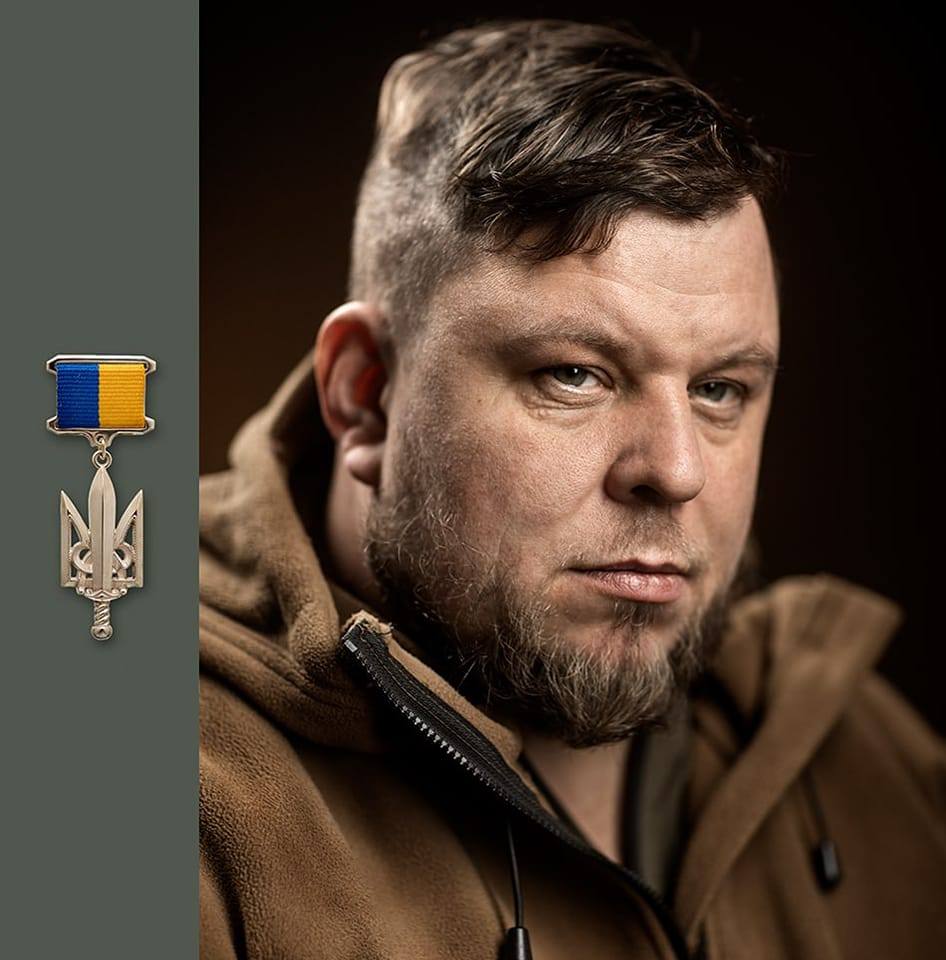
Photo: Roman Nikolaiev
After 2014, he sometimes organized fire shows for various holidays, but the orders were becoming fewer and fewer. And it is clear why. Now, the aggressor country, whose border is very close to the Ukrainian city, regularly organizes deadly fireworks in his native Kharkiv. And the fact that it did not surrender to the Russians either in 2014 or 2022 only irritates the enemy. And Oleh is motivated to work, to search for what is needed, to help the Defense Forces in every way possible and impossible. The help he provides to the army is not only about defense. The Pyrotechnician is also engaged in educational work. Having once struck up a friendship with the poet Serhii Zhadan, Oleh began holding meetings with him and other contemporary writers at the front.
"IT WAS ZHORA TARASENKO WHO COMMANDED THE BATTLE NEAR SCHOOL NO. 137 WHEN THE RUSSIAN SUBVERSIVE RECONNAISSANCE UNIT PENETRATED KHARKIV"
- My brother, who had already been to the front line and seen something, led me to volunteer. One day, when he returned from another trip, he told me about the battles, about our soldiers dying, and the whole story struck a chord inside me. I started to help. At first, I collected aid in Kharkiv, and then I also started visiting the guys - somewhere on the front line, somewhere in the rear. It's like a drug - you feel your own - how to say it correctly? - importance and constantly want to increase your help. At that time, it was primarily meant to save lives, not to help in the military. That's why I took it on - to do as much as I could to save lives.
- What was it in 2014 - shoes, bulletproof vests? Who did you help at first, who did you meet?
- For a very long period, it was the 95th Brigade. We helped it with everything. The first thing I collected for the guys was fire extinguishers. I will not say where I got them. I took a large number of them from a state institution. At that time, street fighting had just started in Sloviansk, near Sloviansk, when APCs were fired upon with RPGs (rocket-propelled grenades), and fire extinguishers were needed. Then we started welding the APCs with screens - it seemed like it would help, and it did.
In general, back then it was a kind of gypsyism: you carry what you have. Everything was needed. The situation changed a lot after Debaltseve. Somehow everyone calmed down, people got used to the war, it became a positional war. There were no more donations, no more meetings. There was much less of everything, less anxiety, and less talk about the war. And it became very difficult to work. We had to negotiate with businesses. But you have to understand that it was positional war, not so active. The military started receiving good salaries, they could afford a lot of things. That's why I switched to volunteer units: "Right Sector", Da Vinci Company and the Kharkiv-based Frykor unit. They were volunteer units, they had no money, they were not legalized. And I focused on them: I would only help them. But problems still arose - something had to be brought to the 503rd Battalion, or to the 72nd Brigade... We helped them whenever we could.
- At some point, many volunteers worked themselves out of this job. It was a peaceful life in Kharkiv. Why didn't you stop?
- I couldn't stop because the war was on, the guys I knew were fighting. The soldiers lacked transport and optical devices. I simply had no moral right to stop. The war was destroying the country anyway. Huge resources were being spent on the war. And it was necessary to end the war somehow, to win, to go to the borders, and then to live a peaceful life.
- Were there any talks or predictions that there would be such an attack, that they would go to Kharkiv?
- It was very difficult in Kharkiv. In the spring of 2014, thousands of people from Russia were brought to the city to organize actions to rock things out of balance. There was a big influx of them, they were brought in by buses, they were catching patriots. These were both some sports people and obviously trained special services who understood what they were doing. Why did nothing happen in Kharkiv then? Special forces arrived and just broke up all this story, and that was it. It was a Jaguar from Vinnytsia, and they just made short work of everyone. I'm sure that this could have been done in Luhansk and Donetsk, but there was no will to do so... Or maybe they just didn't understand it at the time. There was no such experience as, for example, in 2022, when everyone understood what to do, and there were already people who had been through the ATO and the JFO. Back then, no one understood. Back in 2014, we were even afraid to shoot.
Yes, Kharkiv stuck it out and lived its life. There was a very strong volunteer movement in the city. And a lot of people from Kharkiv went to war. Because the city is large - one and a half million people - this percentage was invisible. In the west of Ukraine, smaller cities are more noticeable, and if a thousand people went to war, it would be more noticeable. From Kharkiv, much more left. And it became a kind of volunteer center for Ukraine. It was easier for us because the logistics went through it. Because if someone from Lviv was driving with volunteer help, it would take four days. We would go in the morning and return in the evening because it was a short distance from us to the front. It was very convenient.
To be honest, I had no premonitions that there would be an attack on Kharkiv, and we did not talk about it. I was very surprised when I was told at eight in the morning on 24 February 2022 that Russians were already on the orbital. It was a shock for me. Since the autumn of 2021, it was clear that something would happen, because such a pileup of forces cannot be gathered just to stand and leave. But I thought the battle would be on the border, that we had experience...
But the fight that Kharkiv and the Kharkiv region brought... It is clear that eight years of training were not in vain. When I was in Northern Saltivka on 25 February in the morning, it was already clear that there would be shooting from every window. There were not only troops there but also a bunch of volunteer fighters who were sitting there, waiting for the enemy to fight.
- How did Frykor, which, as I understand it, became your closest unit, come to defend Kharkiv?
- At four in the morning, the unit received weapons. The volunteers went to look for subversive groups that would penetrate the city. Since Frykor is a combat unit that has been constantly in the ATO-JFO zone, they had contacts with the military: what to do, where to do it, how the group would work. They were on the job from the very first minutes.
Kharkiv suffered, indeed, very badly. Because the distance at which the enemy stood allowed them to even hit the city with mines. The same Northern Saltivka, which was destroyed by Grads... I was there. At first, the Grads were operating; while it was reloading or moving away, mortar was firing. That is, the fire did not stop. They also flew aerial bombs there, Uragans - everything you can think of. Now Kharkiv is suffering from S-300 missiles. They are nonprecision. It is clear that the enemy does not need preciseness, but simply to keep the city in terror. Sometimes precision missiles hit. But it's strange that they spend precision missiles on strikes on the city. They hit residential buildings and service stations. When they hit an armour factory, it's clear. But, again, they use S-300s, they don't hit the workshop, they hit the field or the houses that are nearby.
Kharkiv is still suffering. It's not even clear what our victory will be like because Kharkiv will always be under this threat because it is near the border. For Kharkiv, the best option is for the aggressor country to be destroyed, then we will have complete security.
- How did you meet the Frykor commander? When he died, I understand that it was an incredible loss for you.
- Zhora was like a brother to me. We either met or called each other every day. We consulted each other on what to do. He asked me for advice, and I asked him. It is very strange because he is much younger than me, but he is a many-sided man and he is talented. As a commander, he was a real leader, leading not only the guys from his unit but also from other units. He commanded the battle near the 137th school when the subversive reconnaissance unit penetrated. There were different units there, but it was he who corrected what to do, how to do it, how to assault it properly. He went to the higher command to continue the operation. The unit itself is small but very powerful. Frykor constantly had tactical training, exercises, and trips to the war zone. They went to the very places where there were serious battles to participate and help. At that time, there were many mobilized people or people who were on contract and had not yet had time to learn anything, but the guys already knew how to do everything. Plus, their education was at a high level... Everyone is not just a warrior. It's not just a unit - it's a phenomenon, a movement. The guys are constantly reading books on the history of Ukraine, on the confrontation of Ukraine, they studied all this. Before the full-scale war, we started to teach everyone English. Now the unit is also at war, we are not intentionally increasing it, for what it is - a certain number of people, but all of them are professionals. Perhaps in the future, it will extend, but now, when there is a war, it is very difficult to train someone because you have to fulfill tasks.
- How did Zhora die?
- Heorhii Tarasenko, call sign Zhora, died during the liberation of the village of Mala Rohan. There was an assault. It was a very powerful operation, because a lot of units took part, including special forces. He died, like everyone else in war, let's say, by accident. He broke off from the group and went forward like a real leader. He ran behind a building and a grenade was thrown at him. He lost consciousness, and a very heavy shelling started, heavy fire. The guys just couldn't pull him out. And while he was lying there, they were still shooting at him, throwing grenades at him. Later they took him away, unfortunately, already dead.

Posting this photo, Oleh wrote the following words about Zhora: "You found eternal life in battle. This is a great pain. You were not just a friend to me, you were like a twin brother.
In recent years, we have supported each other a lot in any situation. We constantly consulted each other. Most of all, we talked about the future development of the unit. That Frykor should be the best in Ukraine. We have been going to this together. And I promise to continue our common cause.
It feels like a piece of me has been torn off.
Rest in peace, Brother."
- Who told you about this? How did you take it? I understand that you were in Kharkiv at the time.
- No. I was just leaving. This is a difficult story... I had to pick up a car for the unit in Ivano-Frankivsk. Zhora's girlfriend was traveling with me in the car. I got a call and was told that there was a situation, there was information that Zhora was wounded. He is a "300th", but they can't do anything. At that moment, Ania is sitting next to me. I changed the subject of the conversation as much as possible so that she didn't understand. For some time, no one called me, no one said anything. And then our medic Nastia called and said: "Zhora is 200th. Don't tell Ania anything yet." I said: "Yes, but the main thing is that the information does not leak ahead of time, as they like to do here"... Later, Zhora's deputy Makar called me and said: "My friend, you have hard luck. You have to tell Ania everything. Because I can't talk about it on the phone. And you're with her, you can somehow calm her down, even though it's impossible." This was probably one of the most difficult tasks in my life. I did not know how to say it. So I sat there, silent. I said only two words: "Zhora is dead... I don't want to go through this anymore..."
- It was very important for you that he receive the Hero of Ukraine award, that a street in Kharkiv is named after him... What was your reasoning for nominating him for Hero of Ukraine?
- I did not nominate him for the title, another organization did. Zhora died on 25 March, a month after the war started. During this month, Frykor proved to be one of the most successful units, performing very serious tasks, which prevented the enemy from entering Kharkiv. And this is important. We know very well that everything that is currently occupied was captured in the first month, and then we were already taking back what was ours. That is why it is very important that Kharkiv was not occupied in the first month - thanks to Frykor as well.
Let me remind you once again: this is a volunteer unit. Now there is such a thing: "I joined the National Guard or the Armed Forces as a volunteer soldier," which is a little different. You still joined the structure, you have some social protection. A volunteer unit has nothing. It's all either on the shoulders of volunteers or on what the guys themselves were able to get somewhere. These are the volunteer units. I will say that it was very difficult to achieve the Hero status for Zhora, as officially he was a nobody, just a man with a machine gun. But it's good that we have the right laws that can be interpreted correctly. That's why he is a Hero of Ukraine.
In the autumn of 2014, I tried to set myself an attitude: that's it, no friends in the war. You just drop out of life when someone you know or love dies. But it is also impossible to behave like that. You constantly visit the military and help them - it's clear that you are still very close to them. The death of Da Vinci was also very difficult for me because we were also friends, we talked a lot about different topics. It wasn't just a case of arriving, giving it back, and moving on. No, it was a friendship. We talked a lot about the future of the country, how to live in general, what to do... For a week after his death, I couldn't come to my senses because it was very hard. Now in Kharkiv, two streets cross, named after the Heroes of Ukraine, my fallen friends, Zhora Tarasenko and Dmytro Kotsiubailo... When I stand at the crossroads, I feel grateful to them and the pain of loss. And as long as I have the strength, I will honor their memory.

Pyrotechnician with DaVinci at the base of the 1st Assault Company in Avdiivka
Unfortunately, in the first months of the full-scale offensive, a lot of close people I knew and communicated with were killed. We've been living the same life for ten years now, just someone is fighting and someone is helping. I believe that I am also fighting in my own way because I go to bed with war and wake up with war. And every day I want to do something and try to do it. And, in principle, it works out - every day I work systematically.
"SMALL LITHUANIA, WITH A POPULATION OF ONLY 2.5 MILLION, HAS ALREADY BEEN ABLE TO HELP US WITH MORE THAN €100 MILLION"
- It turned out that in February and March 2022, you didn't even have to go anywhere to get help, the war came directly to Kharkiv. How is your volunteering going, what are your needs now? How was that March for you?
- This is also an interesting story... Everyone was confused (I mean society), but we were focused. Because, in principle, nothing has changed for us, except for the routes. We used to go to Donetsk and Luhansk regions, and now we go to Dnipro and Kharkiv. Because there was nothing in Kharkiv. In the early days, the help was such that you just wrote on social media: "People, give us cars! We need cars!" A lot of people said: "I have a car. Come and get it". Or: "We'll bring it, the keys are there, take it." That was the job at first. The volunteer card was full of money, but you couldn't buy anything because there was nothing. In Kharkiv, all the military stores gave everything away on the first day. I worked exclusively for Frykor at the time - not because I was particularly close to them, but because I understood that they were the most active now, ready to fight. "Frykor was well supplied - thanks to the Lithuanian people, too - and help was constantly coming from them.
- You don't have such a thing as a warehouse, you always deliver everything you receive straight away.
- That's why I couldn't help anyone because I had nothing. Later, in mid-March, I went to Dnipro and bought a lot of things there. In a gun shop, everyone was buying weapons, but I was the only one: "I want a box of fleece jackets, some boots". There were a lot of shoes in the warehouse, tourist shoes in boxes. I said: "Oh, I want these". The seller asked me what size. I said: "You don't understand, I want everything, give me all the boxes." I went to a display with weapons cleaning products - various ramrods, chemicals, I said: "I want this." "What exactly?" - "The display!" I left almost a million hryvnias there. But what really struck me at the time was that there was a full-scale war going on, all the people were stressed, and this shop was selling everything for twice the price...
And when people called in the summer and autumn, asking for the cars back, it was clear that activity had reduced, they said they had to live somehow, and asked: "Is it possible to return them?" - We returned them immediately. Because we bought cars in Europe more systematically. It was very important for us to give back to the people so that they could feel that even though we are engaged in military affairs, we are fighting for our people.
- Did all the cars that people gave you survive? Were there any that could not be returned?
- They survived. The condition of the vehicles after the war was such that they needed some repairs. But all the cars were intact. I'm telling you, it was such an indicator for people... It was gratitude. We returned them with gratitude: you helped us a lot at that moment, thank you. Some did not believe it, they called: "Well... maybe..." I ask what kind of car - at least give us a technical passport, a photo so that we understand that it is your car and do not give someone else's because the cars were similar.
- Tell us about how you met Jonas Ohman, a volunteer from Lithuania. How did you start working together? I understand that at one time it allowed you to do more...
- We met Jonas in 2015. He came to help us. Everything was a little different then, there were still planes flying. He arrived with a huge pile of bags. And I was simply asked: a Lithuanian volunteer has arrived and needs to be transported. Since I knew all the routes in the war, it was easier for me. I met him, we loaded up, drove, got to know each other, and distributed to people. Then I realized for myself that he was doing a lot of work, bringing a lot of things. But when I saw that he had a slightly incomplete understanding of the picture, I started to help him with advice. I said: "Let's do this and that. Let's visit these people. And we need to talk to these people." And for the most part, our cooperation (to this day) is that I help him with advice, logistics, connections - in this sense.
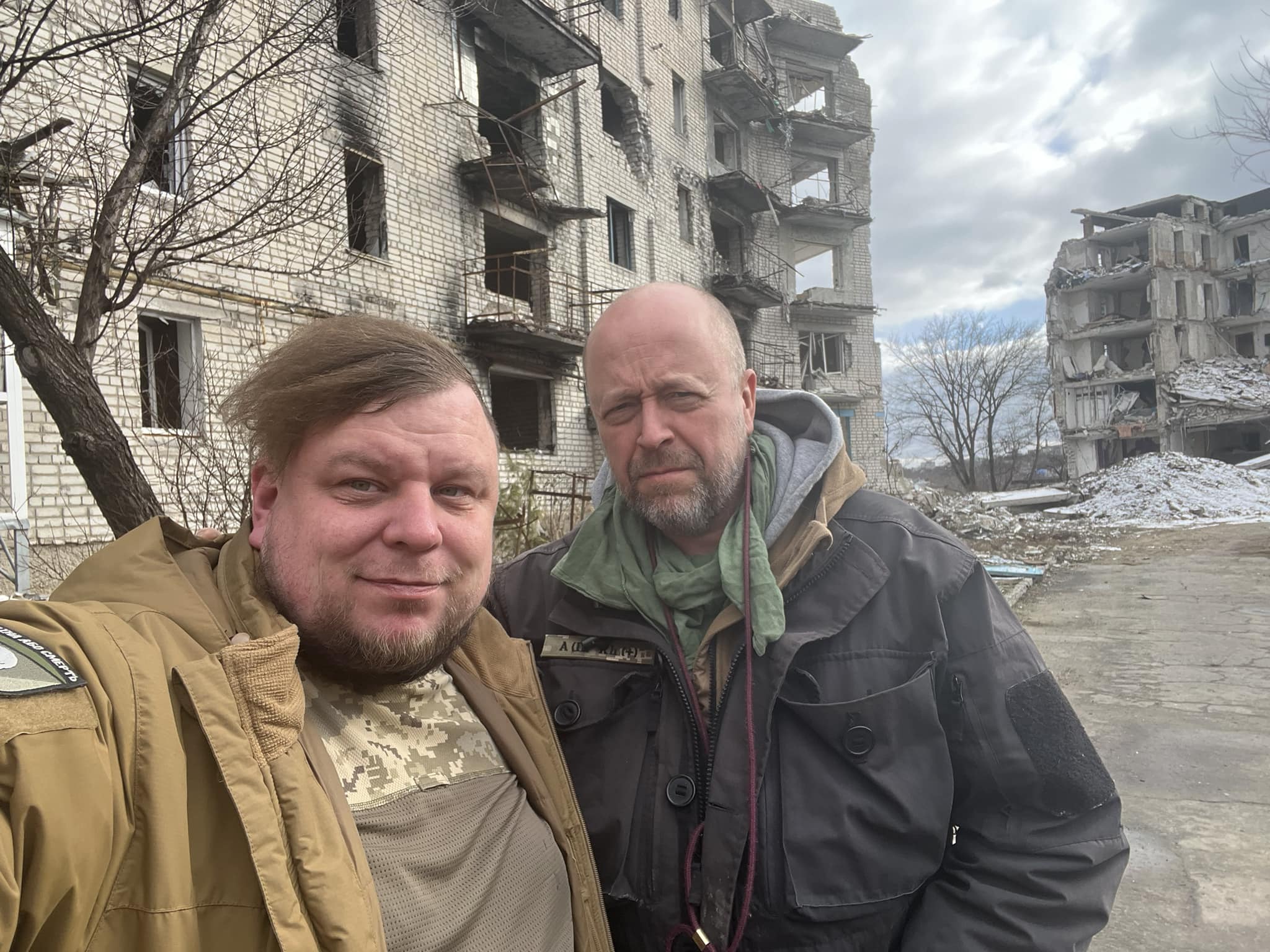
- Thanks to him, did you see something specific for the first time, such as anti-drone guns, video equipment? What did he give to the development of our army that, perhaps, did not exist at that time?
- In principle, everything was standard. The issue is that at that time the volunteer resource in Ukraine was very low. And he just brought things that cost a lot of money, which we could not raise here. There was nothing super-specific. The only thing was anti-drone guns. We brought them for the first time in 2018. Back then, they raised questions: what is it, how does it work? But, again, this gun is quite specific. Now there are analogues that also help a lot. The Lithuanian anti-drone gun has a range of five kilometers. During the Joint Forces Operation, it was a lifesaver. You don't see the drone, but you know that artillery is firing at you, it is clearly being adjusted by the drone. You just take the direction from which they are firing, aim your rifle there, and the shelling stops. It's clear that the drone is down, there is no adjustment. And now drones are flying everywhere. There are not even powerful rifles, they are cheaper and much better. It would help to distribute these to people along the entire line to avoid drops, the same FPVs losing control and not hitting.
The question about Jonas and the Lithuanians in particular is that they could provide volume because they had the resources to do so. During the full-scale war, their resources increased because they understood what was happening here better than anyone else. Because if we can't withstand this invasion here, they will be next. And it will definitely be faster for them because they don't have an army. They understand this, so they are strongly invested financially. Little Lithuania, which has a population of 2.5 million people, has already been able to help us with more than 100 million euros. I think this is a very powerful help.
Jonas himself is a very cool guy, in the sense that he has been helping Ukraine with military issues every day since 2014. Although he could live in Vilnius, do whatever he wants, because he is a famous person - he is a director, a journalist, and an activist. But for the last ten years, he has been helping Ukraine. This inspires enormous respect.
- You go to Lithuania from time to time. When did you first go there during the full-scale offensive? What did they ask you about?
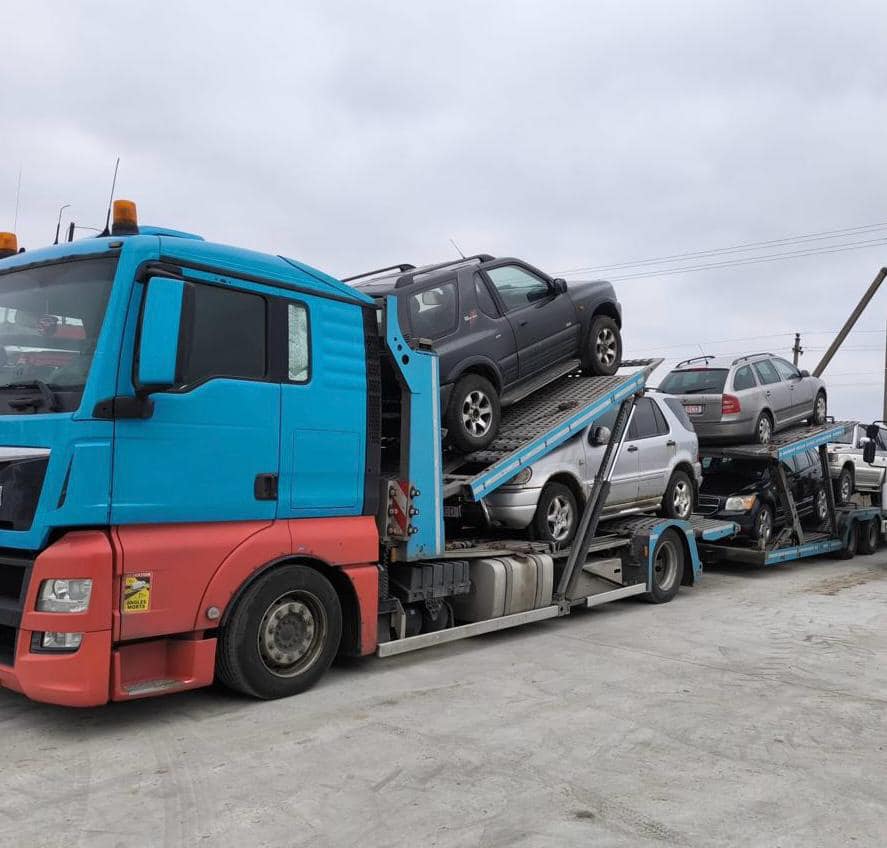
- I left for the first time in June 2022. I arrived at the foundation's office, and there was such a rush, the work was in full swing. There was a lot of money, and we had to send it in the right direction. Constant calls, everyone talking to someone on the phone, writing requests, processing them, striking off something, adding something... I wasn't asked much. They just said: "You survived, that's good". We planned how we would continue to work. This is a story about cooperation. Most people ask for help from Jonas, from the Blue/Yellow for Ukraine Foundation as an organization. And I came with my own resources. In the early days, we had a lot of income, and we couldn't spend it. Besides, we realized that we were under threat, we could die at any moment, and then all the money would be frozen. I transferred some of it to my wife in Lithuania. She retrieved them, and she had cash. It was about 30 thousand euros. When I came to Lithuania, I said: "I need cars." Jonas said: "It's hard now because all the cars have been bought. It is not clear how to buy them. And money is now spent more on specific things." I said: "You don't understand. I have money with me, I will buy cars. Help me with the logistics, because there will be a lot of cars, and I can't drive six cars alone." Then he found a car carrier that started transporting our cars for minimal money. We have to understand that yes, Lithuanians want to help us, but we have to be in partnership with them. They help us, but we have to do something ourselves. It is wrong to just ask Lithuania for help. It is a small country, and they also need to prepare their defense.
"WHO DID MORE FOR THE WAR: ZHADAN, PRYTYLA OR THE OLD LADY WHO KNITS SOCKS? THE MAIN THING IS THAT EVERYONE IS IN THE PROCESS"
- How and when did you meet Serhii Zhadan? And why did you start taking him to war?
- We met in 2015. My fellow volunteers are musicians, and they arranged to play concerts for certain brigades. Serhii was supposed to go as well. My task was to take them there. I picked up Serhii first because he lives in the center - it was convenient for me, and then the others. He just sat next to me, we were driving, talking. And somehow, I don't know... We hit it off very quickly. It was already 2015, autumn. Of course, we help the military, but many people want to help the local population. Books, educational materials, some household items. Because it is hard for people near the front line - nothing works, there is no economy. And people need to get dressed somehow, to dress their children. In Kharkiv, many people sent me things, and I realized that I had ten tonnes of different things in my warehouse. All the military is immediately sent away, and I was packing these things - it's not clear why. And we started helping the civilian population - Stanytsia Luhanska, Marinka, and other areas that were most affected. In this, we somehow became very close friends. We have the same opinions, we work systematically, he on his line, I on mine. It's such a synergy. Because he understands better how to collect resources, and I help him realize it, find something, help somewhere, plus logistics. We are friends because we understand each other very much.

- Until 2022, he was not raising money, but performing - reciting poetry, singing. And you were going on a volunteer mission. You saw what happened to him in 2022. How does a famous person, a singer and a poet, become a volunteer? Can you say that he became a volunteer?
- He was a volunteer. It's just that at the time there was no need for him to live this life all the time. He spent a lot of time abroad - not only with performances but also with the presentation of Ukraine, first of all. He didn't just come to recite poetry - no, he came and told us what was happening in Ukraine. He had a huge diplomatic mission in this regard. Of course, when a full-scale war started, what kind of performances and show business could there be? You have to work on defense, on protection. Initially, we systematically did everything we could, everything that depended on us as civilians... Why did I go to Lithuania? Because I realized that we needed the vehicles now, but we could not arrange it. So I went to Europe, and Serhii stayed in Kharkiv, visiting the military so they could see that he was here. It's very powerful when a famous person comes to the military and they see that everything is great, if Zhadan is here, then everything is fine.
- Did you offer him to leave the city?
- No, why?
- He could have died.
- He's not a driver to drive a car(smiles). Even if I offered him a job, he would have refused. Because he has this attitude: as long as there is a war, you have to stay here and do everything you can. Then we had some trips, but then there was a need to go to raise as much money as possible to help. But I will say that as soon as we crossed the border and left Ukraine for Poland, the first thing we thought was how much we wanted to go to Kharkiv! And the danger in terms of the fact that you can die... We are more fatalistic in this matter. Because you can die any day in any place, it can be a rocket or something else.
- Well, in war, the risks are greater.
- Yes. But let's be honest: in the countries where we have performed, people are also dying.
- On his Facebook page, Zhadan counts the number of vehicles that have been purchased during this period since 2022. However, he does not count the Mavic, night vision devices...
- A lot of things.
- Do you have any statistics?
- I don't have one, but he counts - just for himself. I see that he sometimes writes something down... I don't count, because it's impossible. For example, we have a service station in Kharkiv that repairs only Frykor cars. There are a lot of cars, they break all the time, and it's clear that they need to be repaired. This is a huge resource. And now there is a big problem with donations. Some people think: "That's it, I've already helped," while others simply don't have the money - it's a difficult situation. That's why it's great that we have our own activities, we can take money from there and cover all these needs.
But it's impossible to count. We started counting the same cars at the end of August 2022, and how many there were before that... Lots of cars that we help to buy, relatively speaking. The military or volunteers call and say: "We have two thousand euros, we want to buy a car, but it costs three and a half thousand..." We don't even count this, but this is also our help with cars. And even the money that is counted is not for some kind of PR, that we are so good, but for people to see what work is going on and for them to understand that the war is not over and they still need to get involved. This is exactly what we are doing. By calculating how many cars you bought is like saying who did more for the war: Zhadan, Prytula or some old lady who knits socks. The main thing is that everyone is in the process. This is the most important thing.
I keep saying that we lack military propaganda. I am not a military man, I am a volunteer, but a military volunteer. I always wear some kind of military or tactical clothing - this is my propaganda, my appeal: people, we are at war, we are all at war. Every person who lives in Ukraine now is at war. Because we can see where the missiles are coming from - there is no place that is protected, even Lviv is hit, even in Zakarpattia something fell. We need to understand this. People need to be mobilized. If we take the situation in Israel, everyone there knows who will do what, even women. When an attack happens there, one is already in a tank, the other handles Pantsir. Everything is scheduled in such a way that there are even those who wash the clothes of the military. That is, they have it all figured out. And for us, it is unclear. Someone went to fight right away, while others were running around shouting: "Military enlistment office, what are you doing, how can you!" I'm sorry, it's not going to work like that - the whole country has to fight.
Everyone is afraid... I know an example of an officer who was mobilized and appointed a department commander, but he just had military training alongside a degree. And he didn't go there, he just happened to have it. He came to the Soledar area, to the conditional rear, where the unit was being formed. And at the position, he fainted. He was brought back to consciousness and said: "I'm scared. I'm scared, I can't control myself". He was left to work in the rear. He didn't run away, good for him, but he has a fear that he cannot overcome. If he is brought to the positions, he will be ineffective, he will sit and be afraid... But he can do other useful work in the army.
The same propaganda - we don't have it. All the information about the war is that this guy is wounded, that guy is an amputee, that guy is dead. Why not say that we are winning, that we are storming, that we are the best in this war? That everything is fine, that everyone will be socially protected, even if something happens. The state will not forget you. We do not have this. We don't have normal propaganda that we all have to do something. You can't fight - you have to help. A lot of things are being done by small businesses now - FPVs, drones, a lot of people are good at it. Go there! No: "It's not my war, someone else will do something, and I'm tired, but how much can I give..." We saw what happened at the beginning - people were shot just for being Ukrainian. We need to understand that this war is ethnic, that it is not a war for territory, it is a war because non-humans came to kill the Ukrainian people. And each of us is an enemy to them. And the fact that you do not want to fight does not mean that you will not get involved in this war. No one in Bucha thought that this would happen, especially in Bucha, because it is a slightly elite settlement where everyone is used to doing anything with money. No. You can't repel a missile with money, you can't buy that jerk with money - he will still come and take everything from you, abuse you, rape your wife and family.
Look at the propaganda of our enemy: "Go, go, defend your homeland! You will be a hero! Everything is great!" That's why they have this invasion. They are coming ready to kill us. We defend ourselves, it is our fate to fight back. And they just go, because they like this story. It is put into their heads. But It is not put into our heads. I really like the video of the 3rd Assault Brigade - they show how well they do everything. But let's be objective: out of a huge piece of work, they show a tiny one. They don't show how they evacuate their wounded, how they bury their soldiers. But this is all there, too. We understand what an assault is. But they are campaigning properly: look, we are doing great, we will teach you, you will successfully storm the plantation! That's why campaigning is very important.
"THE VOLUNTEER MOVEMENT IN OUR COUNTRY WILL NOT STOP"
- Did you know about the phenomenon of volunteering before 2014? And will the state ever be able to take over what volunteers do? You know that people abroad are very surprised by our volunteer movement.
- I've already said that it's like a drug: you see that you live for a reason, that there is a result of your life, that you can help, that you can do something. I think this movement is unstoppable. Even after the Victory, we will have a lot of work to do, and all the active people who are now volunteering for the army will find ways to help with reconstruction, some educational projects, The situation with the liberated territories, especially in Luhansk and Donetsk regions, is very difficult, because we understand that society there will be... difficult. They are now taking Russian passports. And what to do with them? The police, the prosecutor's office, and the investigative authorities may not always be able to correctly determine who did it deliberately and who was forced to do it. I think that even then, volunteers will help, asking people who remained under occupation: "What were you doing?" The volunteer movement in our country will not stop. People like to do something useful, something cool. This is a certain meaning of life.
- You and Zhadan traveled a lot to libraries, including those in the Luhansk region. You brought Ukrainian books and authors. You showed that we have contemporary literature, it is good, interesting - these are the people who write it. Now, after the occupation of those territories, there was no thought: "Our work didn't help"? Or, on the contrary, do you reassure yourself? "Our work could have sprouted. Is Ukraine waiting there"?
- I saw the result of our work. When we first came to Stanytsia Luhanska, or rather to the villages nearby, people looked at us: "Who are these? Volunteers? What do you want? Are you some kind of politicians?" - "No, we are just helping. Please, take this." We first arrived there at the end of June. After two months of active work, before Independence Day, they asked us for Ukrainian symbols - small flags to give to the children for the holiday. And on the first of September, they asked for vyshyvanka (embroidered shirts) for first-graders. But the best cultural victory we saw was when people asked for Ukrainian books in October. That is, in just four months of active cultural work, there was a shift... Of course, we also helped financially. Then Serhii received a presidential prize, and we spent it entirely on the logistics of the schools. This was also a positive synergy. It was a small amount of money - 100 thousand hryvnias. But when we started compiling lists of needs and went to buy all this stuff, telling people that we were buying for Stanytsia Luhanska, we got huge discounts and even some gifts. We delivered everything to schools and kindergartens, and people saw it all. They take their children to school and see that some people come and help.
I think many people have left there. Because of the diminutive state, people go to the Baltic states, specifically Latvia, and from there they go further. I don't think there are any pro-Ukrainian people left there. Although, unfortunately, there are cases where people we worked with, people from the education sector, have sided with the Russians. And this is very bad. They do not get in touch with me. I don't think there is a special FSB officer sitting around controlling whether this person communicates with someone from Ukraine or not. This is a principled position.
- Such moments don't affect you in terms of thinking, 'Maybe you shouldn't do that?
- If you treat it as hard work, you can't do it every day - you burn out. I enjoy what I do. Some people like to fish, some people play chess with their neighbours, some people go hunting, but for me, volunteering is a kind of hobby, I get a kick out of it. For me, it's just a great pleasure. Just imagine: you're an ordinary guy, and then - bang - you're delivering two car carriers to guys! How can you burn out from that? On the contrary, you just revive yourself, It's clear that not everything works out - it's not supposed to work out, you can't save everyone. But it's great when you can help. So I don't know what it's like to burn out. And if it's hard work for you, then it's better not to do it, because it will not bring any pleasure to you or the military. And if you do it from the heart, it's very cool.
- You are already trying to help Kharkiv with the reconstruction. How important is it to you that the city, even though it is constantly under fire, should replace windows, repair roofs and put things in order?
- It is very important to help the city, to help civilians. Because they are very confused. Everyone seems to be used to living during the war, but people are still confused. They don't see a future either, because of the constant shelling... Where are you going to get that resource? It helps that I am already quite a well-known person in Lithuania, so sometimes I get the unexpected, like recently finding things that help repair damaged power grids.
The first time we realized that we needed to be there was on the 12th of September, 2022. The Russians hit the city so hard that the power went out. I was in Vilnius, and Jonas was there. I said: "The power has been cut off, and it will continue. And the city has to live. You can still live without light, but we understand that it will be cold, and it is impossible to live without heat. And it is impossible to live without water." He asked, "What do you think is needed?" "If we are talking about heating and water supply, we need very powerful generators, not small ones, but at least 500 kilowatts." Jonas said: "So let's buy them. This is also a war. People live and have to live."
We understand that if the shelling of the city causes people to leave en masse, they have almost won. People say to me: how the city council can spend money on flowers! But we don't spend much, we have municipal enterprises that grow flowers themselves. And the fact that they bloom in our parks is such a spit on Russia! They are mocking our city, terrorizing it, and yet we still have flowers growing in the center and fountains running. If we give in to such things... Why should there be culture, performances, concerts? Because people need to revive themselves in order to continue working. People need to fill cities. I wouldn't bring children back, but we need adults. The only thing is that I am against people just returning because "this is my home". If you come back, you have to do something: work and pay taxes, work for the welfare, help or go to war.
You can support Oleh's work by making donations:
Сard: 5363 5423 2045 1660 Abramychev Oleh
PayPal: [email protected]
Violetta Kirtoka, Censor. NET


