



Call Sign Bingo: "Only way out for Russians now is to just leave. For all other options, they are f#cked"
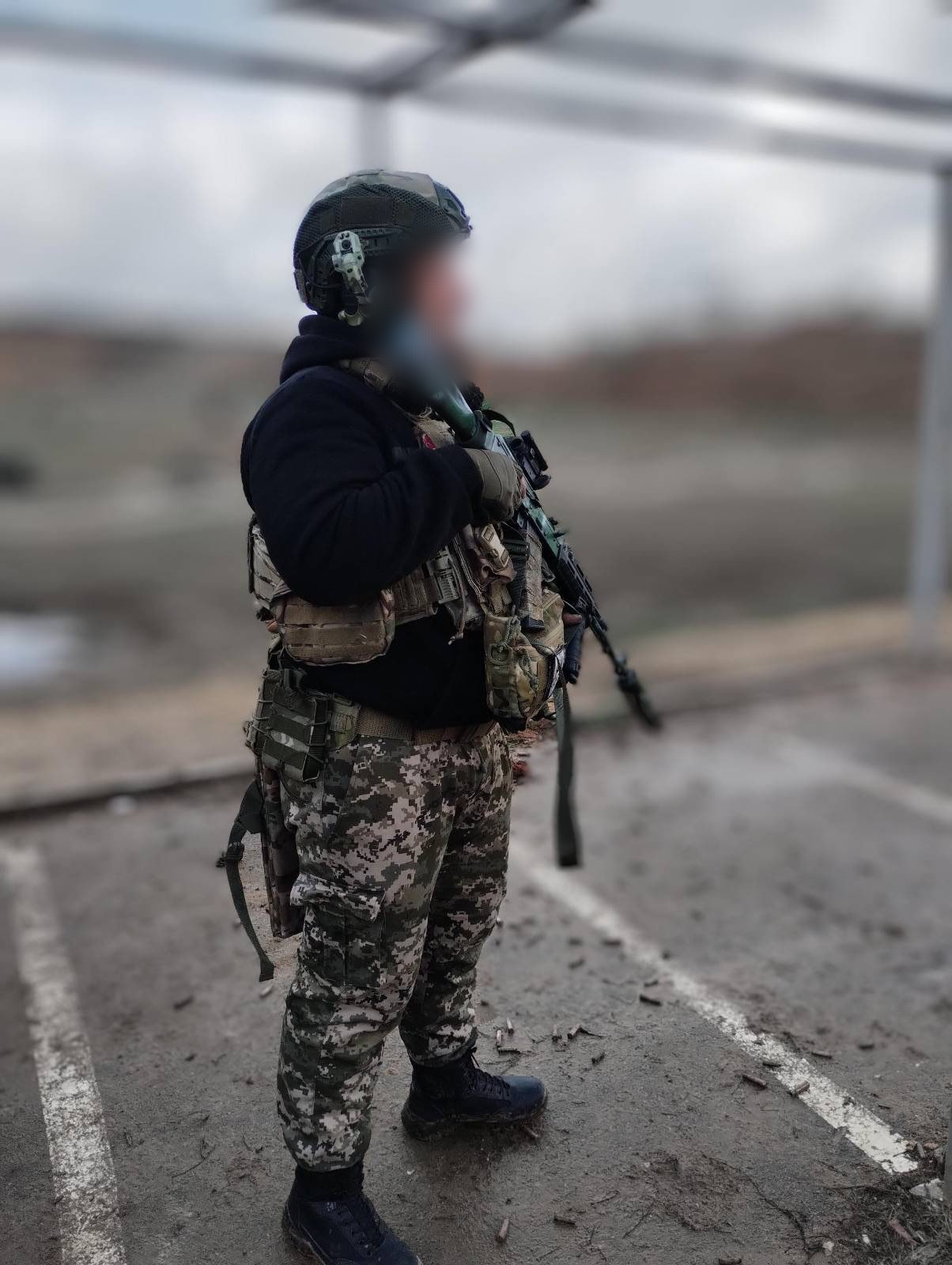
The Chief Sergeant of the "Hrim" (Thunder) unit, call sign Bingo, helped to make anti-tank hedgehogs at the beginning of the full-scale invasion. Then he guarded checkpoints. He was also in the TDF (Territorial Defense Forces). After joining the Armed Forces, he studied in the UK for over a month. He fought in the Donetsk direction. Now he is in Kherson, where he is from.
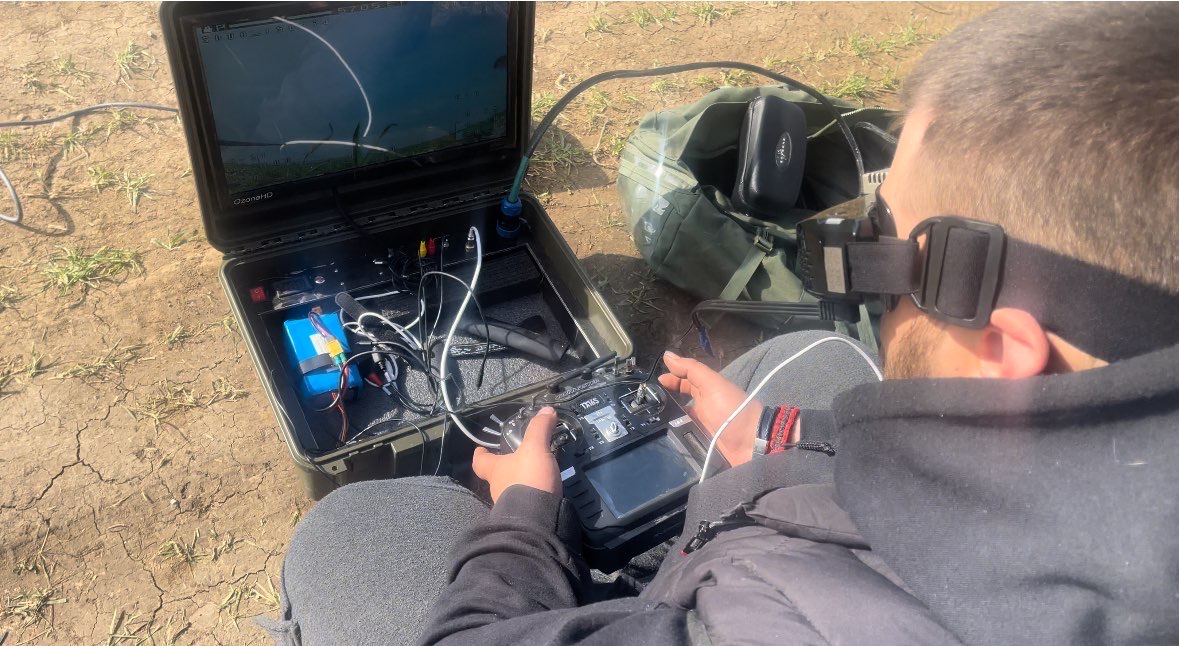
- What is the situation there today?
- The war is as it was. Krynky is our foothold. It is gradually expanding in our favour.
- So is this a dynamic section of the front?
- It is always dynamic. No one focuses on this, because these movements are not very big: today they captured a hundred meters from us, tomorrow we will retake three hundred, and so on. It is the same almost along the entire contact line.
- What does effectiveness depend on? Is it the supply of ammunition loads, the supply of weapons?
- It depends on many factors. In particular, from the actions of the occupiers. They can go with equipment or in small groups. They used to just advance, but now they are learning. They saw how we successfully stormed in small groups and started using the same tactics: they come in, mopped up the position and left.
- They are copying us in this as well.
- They do this with everything. Take the same drones they call "Geranium", but it's the same kamikaze drone. Or the Tigers, which are the same vehicles that were copied from Western weapons. The only thing they have is their own, and it dates back to the distant Soviet era - cannon artillery, Grads, etc. Even the tanks that they pass off as new are in fact converted old vehicles. It's like taking a Zhiguli, providing it with electronics and saying: "Here's a brand new car!"
- What are they doing in your area of the frontline?
- Mainly, cannon artillery and FPV. Today, drones are being used even more than artillery or any multiple-launch rocket systems. Of course, Grads, GABs, and FABs are used for long-range strikes. But local battles are supported by FPV. There is a strong struggle for frequencies: we jam them, they jam us, we move, they move too. Non-standard frequencies are used, something new is invented, the old is improved, and so on.
- Can we say that they bet on drones?
- Look, they have a lot of drones, but not enough pilots. Moreover, they do not protect them. It's a Soviet army. Human resources mean nothing there. But training a pilot takes time. He needs to study for at least a month. And he needs to fly as much as possible so that he doesn't start hitting his own people. My point is that they have a lot of drones, but they cannot use them properly. Yes, they have placed them on a war footing. However, there is a nuance: they make a large batch that remains on standard frequencies. For example, they have produced a thousand drones that the Soviet army needs to use, but our guys from the Electronic Warfare Department simply jam them. But they need to use them, so they keep flying and never reach the target (smiles - O.M.).
- Who is fighting against you now? More mobilized or mercenaries?
- Lately, the Marines, private military companies - it seems to be "Storm Z".
- Are these "stormtroopers" more professional than the army?
- They have better equipment. If you compare a mobilized occupier with a private occupier, you can see a big difference. That is, he has a better plate carrier, plates, weapons. They are better equipped. They are the ones who are chosen for these small groups.
- So they still care about safety?
- Because they are learning. They understand that if you send 500 people who will be killed in a few minutes, it won't work. But four by four gradually is another thing. You can play this game for a long time.
- The commander of the Lincoln tank company, who is now in the Bakhmut direction, told me that the Russians are attacking on buggies and motorcycles, which is extremely dangerous, to put it mildly...
- I don't understand their motivation. Why are they coming here? Is this how psyop works - they say they are defending their land, or are they promising such sums of money that are advancing? I had an incident in Donetsk's direction. I was working in the air on an adjustment. I had to return. I turn the drone around, and three occupiers on bicycles are riding along the plantation (smiles - O.M.). They arrived, dropped them off and ran away.
- Knowing them, I think the bikes are stolen.
- Yes, it is unlikely that their command provides them with bicycles (smiles - O.M.).
- Cast your mind back to something else interesting.
- They have some interesting tricks with EWs. They have these copied Harpy electronic warfare systems for four frequencies, which we called "Siberian Lend-Lease". It jammed the Mavic instantly, and it was actually lost. There were times when it was blown away by the wind for about six or seven kilometers. We found it, pulled it to a familiar place, and then went to pick it up. Sometimes, the system looked fancy and cool: five antennas, everything in a case, but it looked at you for half an hour and nothing happened (smiles. - O.M.). That is, something works well, but not everything. The same Harpy comes in two models: one for four channels, the other for six. The first one jamms Mavic. And the second one only works with Phantom-4, which we no longer work with. It was used before the full-scale invasion in the Donetsk direction. When it came out, everyone was screaming: "Wow!" They flew it in the snow, rain, and wind. However, those drones were not very advanced - they did not have a good zoom lens. They stopped being produced. Today, Mavic is the most commonly used drone. We tried to work with Autel. So far, it hasn't worked out very well. It is qualified as a good drone, it has many frequencies on which it can "jump," but it is very easy to "spoof" it - to change the coordinates: it thinks it is at the airport and starts a forced landing. These are civilian drones - they are not allowed to fly there without a special permit, because it is forbidden.
- Recently, FPVs have been used more and more. They are not replacing Mavics, are they?
- They do not replace us. These are different directions. "With Mavic, you conduct reconnaissance and adjustment. Besides, without it, you won't have any FPV confirmation of a hit. You'll see in your helmet that you've flown somewhere, but it's not clear whether you've hit it or not. That is why you are always accompanied by a Mavic flight.
- What do you like to fly the most?
- I like flying the most. It doesn't matter what you fly. I studied to be a wing pilot - Leleka-100. Then there were Mavic, big drones like Matrice, and FPV. The only thing I don't like about the Leleka is the lack of manual control. In fact, the on-board computer does everything for you, and you only say what you want it to do. "The Mavic is more controlled. It has a stabilization system: if it can't stand still, it stabilizes itself anyway. It can't fly sideways or turn over, like the FPV. And you need good fine motor skills to work with these drones because you have microseconds to decide what to do: put it sideways, fly higher or lower, stop or take off again. But FPV doesn't fly for an hour. It's about 15 minutes, during which you have to fly to the target and hit it.
- Where and when did you start learning to fly?
- When I arrived from the UK last March after basic military training, we were assigned to brigades. I already knew I wanted to go to UAVs. During the training, we were told what they are like, how dangerous they were, that the pilot was the number one target, so they would shoot at you. Then the courses started for me. And in May, I went on combat missions. At first, I worked on a Mavic.
- Tell us about your studies in the UK. What was it like?
- They really teach you there. From the very first day, you start practicing. They explain to you what a weapon is and how to handle it. In order to get the weapon you will use for this basic military training, you first have to pass an exam. If you fail, you return to Ukraine. The training is good. True, five weeks is not enough. But they teach you the basic skills. And with this base, you have to work on your own.
- Where were you before you studied? How did this war start for you?
- At the beginning of the full-scale war, I was in Kyiv. At the time, I was working as a director at a metal depot. We started to give some metal for anti-tank hedgehogs. I was still studying to be a welder, so I helped to make them. At Obolon, I took part in my first battle as part of the TDF. Then, in the twenties of March, I moved to Kaniv. I stood at a checkpoint there until April. People started to return to Kyiv. We earned a little money - we bought metal and so on, so I came back too. I worked until about September. I quit and started the process of restoring my military ID, which I had lost. I restored it in early December and was mobilized. Although I tried to join the Armed Forces back in Kaniv. But I didn't get in because of the lost military ID and the mess with the register of persons liable for military service in the Kherson region, because the occupiers burned all personal files. So I had to restore everything: re-pass the military medical examination, psychological tests, etc. I did it quite quickly - in three days. The only thing that hindered me was a power outage, which prevented me from taking a cardiogram and a photo right away. But this was also resolved. Then the chief doctor got acquainted with my results of the MMC, signed and I was issued a draft notice for Saturday.
- Let's explain to our readers why you mentioned the Kherson region - you are from there.
- Yes. I moved to Kyiv in 2015. But I still have my house and my farmland entitlement there. I really want to return them from the occupation.
- What did you think when you found out that your house was under occupation?
- Hmm...
- You don't have to hunt after words.
- (smiles. - O.M.) F@ckers! But we need to return all the territories.
- Is this an additional motivation for you in this war?
- You could say that. I still have a father there. He is fine. We talk to him sometimes. I explain to him that there is no need to run around the streets with the flag of Ukraine and shout: "Get the fuck out of here, faggots!" (smiles. - O.M.). It is at least dangerous.
- How are the people there in general?
- They just live. They are still waiting for our people and know that they will come. They understand that nobody needs them in Russia. And the faggots will run away on their own. Then explaining to the SSU why you did something wrong is not a good idea (smiles - O.M.).
- Let's get back to the draft notice. Where were you originally sent?
- We went to the base, where we had to go through a psychologist again and write a text, let's say, for adequacy. We spent a week getting to know the army - what a bulletproof vest is, uniforms, morning formations, and so on. Then the sergeants from the presidential brigade arrived. They were great guys! Each of them was given a training unit, and we went to Britain. There we had two days to adapt. We lived in small smart houses with hot showers and WI-FI. When we got settled, we started studying. It lasted about five days. Then we started our ‘exits’ - practice. They were combined: one day we lived in the trenches, the next - in the plantations, and the third - in the city. That is, we trained in different locations. We walked a lot. The instructors packed our things. My duffel bag then weighed 37 kilograms. It had almost everything! An assault pack, dry rations, a change of uniform. You are trained as an infantryman. You know, the British pay a lot of attention to your legs. In other words, in the evening, you must have time to take off your boots, wash your feet, dust, and wear new socks. In the morning, the same thing. This was directly checked: they looked to see if you had done it if you were lazy. They also make sure that you don't throw cigarette butts around - you have to put them in your pocket. This is necessary to minimize your presence on the ground so that you are not found later by these traces. And at some locations, you could not use anything but a small flame from an alcohol pill to heat water. And even then, you had to be in a hole and covered as much as possible. They scolded me for handling weapons carelessly. For example, if you put it away somewhere and go about your business. It should always be at arm's length. If you don't follow the rules, you'll be punished for pushing, running, crawling. I repeat: we were taught well, but not enough - five weeks is not enough. I spoke to the instructors and they said that they complete such a course in five months.
- We don't have that much time.
- No, it's not.
- Look: you can know the theory well, but in practice, you just get confused...
- We had full-time psychologists from the Armed Forces of Ukraine who explained everything very well. For example, in a group of five people, everyone cannot panic at the same time - one person will definitely keep his or her cool. We were told what he or she should do with the other four to help them come to their senses. They explained how to act in case of apathy and so on. What I really liked about Britain was that our sergeants could supplement the information we were given. And these were guys who had been in real combat conditions, so they had the appropriate knowledge and skills.
- When did these real battles begin for you? What were they like?
- My first stationing was in the Donetsk region. On the third day, we were hit by enemy artillery. I received a shrapnel wound to the chest, my comrade in arms - to the leg, and two others had shell shock. We got out, everything is fine. But it was such an interesting first experience (smiles - O.M.)
- What happened next?
- The commander of a neighboring unit told his men to check us out. They found our wounds because we didn't feel them - it was so much adrenaline!
- Have you undergone treatment?
- Yes. We went and took a picture to see how deep the fragment was. It was small - about two millimetres. But the doctors were worried about a pneumothorax, a person started to suffocate. So I was hospitalized.
- Is this your only injury?
- We also had shell shocks. We are being treated well. We had been on an IV drip. They don't let you go until you have completed the entire course of treatment. Of course, you can refuse, but you have to sign a document, so further responsibility is yours alone.
- Where did you get your injuries?
- At one of the stationings, a mortar was firing at me for three hours. On the other, the GAB exploded. I was in the basement, but it landed about 70 metres away from me. It was not very pleasant (smiles - O.M.).
- The Russians are now frequently using GABs.
- I think they are simply running out of shells.
- GABs are not a cheap pleasure: you have to refuel the plane, fly it, drop it off...
- Of course! Moreover, these planes were shot down on some routes. I "met" the GAB in October last year, when I changed my direction to Kherson. Even then, they were firing well. This is not so common in comparison.

- You were in the Donetsk direction and now you are in the Kherson direction. How do they differ significantly?
- There are plantations in Donetsk, but not in Kherson. What you could hide in Donbas, you can't hide in Kherson.
- Equipment in particular?
- Both the equipment and the pilots' positions. You always have a Starlink, a generator and an eight-meter mast with antennas.
- And with all this, we need to be invisible to the enemy.
-In Donbas, our guys were manifesting themselves. In the Kherson region, it's the same. Many planes simply fall short. It's the same with FPV. You feel confident that you'll be driving along the road and it won't hit you, because the guys are working.
- Drones are a consumable, especially FPV...
- Indeed, in FPV, one flight is a minus. In general, the most commonly used drone is a kamikaze. Because FPV uses analogue video transmission. If you don't play with the strength of this signal, they can connect to you and see where the drone is turning. You "burn" your position, and they start to "fire".
- Deputy Prime Minister Mykhailo Fedorov urged people to make drones and send them to the frontline. Have you received any?
- Yes. We received not only from the Prytula Foundation but also from other volunteers. The Wild Hornets help us a lot - they have great drones!
- I often hear you talking to your colleagues about the number of drones you need: "We needed the 'birds' against the clock". How do you get away from this situation?
- We repair the broken ones, sometimes we can borrow them from another subunit. We try not to look for excuses that we don't have a 'bird' and can't work, but to look for a solution to the problem. You realize that you are sitting here, and somewhere on the left bank is our infantry. You may not know those guys, but they are your comrade in arms who need your help. We started to use FPVs a lot as humanitarian aid - to transfer ammunition loads, food and water to the other side. If you supply them by boat, you can lose the person who steers it. And if you lose a drone, you just take another one.
- Have there been any cases when lives were saved thanks to drones?
- They dropped turnstiles and medicines at the guys when they had shrapnel wounds. They asked for bandages, disinfectant, etc. In other words, everything possible was delivered by drones.
- This is for the military. Have civilians ever had to?
- No. Civilians are trying to escape from there. And those who stay, in 90 cases, are those who are waiting for the "Russian world".
- Have you ever talked to such people?
- Everything is immediately clear to them. They look away when you meet them. But be that as it may, they are still Ukrainians who have simply been brainwashed. Something human still remains in them. That's why they understand that what they are doing is not good, and why they cannot look us in the eye.
At the same time, there are those who help us, in particular with food. But you have to understand from whom to take what.
- So as not to be poisoned?
- Exactly. You have to use logic here. If it's some old lady who does nothing, the chance of being poisoned is higher. But a shopkeeper who has something to lose will not do this.
Maria helped us a lot in the Kherson direction. We gave her food, and she cooked us food and delicacies. We trusted her because her husband serves in the Ukrainian Armed Forces and she volunteered.
- Support is important...
- When you spend a lot of time working on the contact line, return to your location and people look at you as if you almost went to kill their sons, it is very demotivating. But when you are treated well and you see that you are not doing your job in vain, it boosts morale.
- Do you keep statistics on hits?
- As such, no. I can tell you that there are days when you don't fly at all. The f@cks are very good at disguise and hiding. I had such a case when I had to guide the infantry. I must have spent eight hours looking at the dens and trenches, and I didn't find any movement or signs that anyone was there. But when the guys started approaching, they made contact, because seven faggots came out. We had to work a little more.
- What is the most important rule you follow in your work?
- Our most important rule is that the job must always get done. Of course, there are some tasks that are difficult to perform, but you need to look for ways to do them. For example, if you are flying straight out and there is a f@cking EW that you need to look behind, you should not panic and say: "I can't fly through!". I explain to my personnel how the EW works, and they start to try to find out where they can fly. They find a place to fly over, watch, and the job is done.
- Do you think about how this war will end when it might end?
- (smiles. - O.M.) No, I don't think so. I generally live by this principle: I have today, and we'll see what happens tomorrow.
- In a recent interview, an Azov soldier with the call sign Spartan said the following: "Sooner or later, the war will end in our victory, but on their (Russians' - O.M.) territory." What do you think?
- I am not interested in their territory at all. It is their swamp. I'm interested in our 1991 borders, where I can safely go to Crimea or Donetsk. I want them to get the f*ck out of us, excuse me.
- The war can last for years.
- I don't see myself in civilian life anymore. Even if the war ends, I will stay in the army. Most likely, I will try to work in some peacekeeping missions.
- We will have to protect ourselves even after the war is over because we are "lucky" to have a neighbor. By the way, how do you feel about the Russians? I often hear from civilians: "I hate them!"
- I have almost the same feelings. As I said today, I don't understand their motivation. If it's for money, then maybe you should think about why you are dying here for such a sum, while somewhere near Zalupinsk your wife lives and gets the minimum - 5,700 rubles, which is not even enough for a public utilities. Most of them live in wooden houses, with toilets in the street, while people from St. Petersburg and Moscow shout about how great everything is, even though they have never been further than their own city. I was in Russia before the war, I worked there, so I saw what it was like. They are so brainwashed that they think they are doing a good deed: "they are doing a good deed". When you ask Russians about this in the same roulette chat, they just get angry. They can't go outside because they're scared. They've been so intimidated by the idea of a cosmonaut with a gun and a stick waiting for them that they're just scared. I don't know what needs to happen for them to stand up to the authorities. A meteorite should fall (smiles. - O.M.).
- At the same time, they go to this war, realizing that they have a high chance of dying here...
- They have this mentality: you have to steal something. They are offered good salaries, prisoners get a closed case and a green light to steal. This guy has Chinese headphones for 50 rubles, and here he has airpods. He was eating raspberries as a dessert, and here he was eating Nutella. For me, they are the strangest people, clearly divided into those who live normally and some kind of tribe. The country has a fuckton of resources, but villages do not have internet and gas. Some villages don't even have electricity. The attitude towards their own people is terrible. The mentality is: my neighbor can't be doing better than me, so I'll go and ruin everything for him. For me, this is as strange as possible. I was not brought up this way, even though people from the USSR did it, but for some reason, I don't do it! I don't care what my neighbor is doing. If everything is good, then it's great! If he has a barbecue area with a grill, it's cool: I can come over for dinner tomorrow. But Russians don't understand this. They are the strangest people to me. They look at their neighbors but don't deal with their own mess.
- But they are unlikely to change...
- The only way out for them now is to just leave. For all other options, they are f#cked. If they win this war, sanctions will be tightened, and no one needs gas. If they lose, the situation will be the same: no one will lift the restrictions until they pay reparations. So it's even cheaper to leave.
- Their political leadership is unlikely to make such a decision because it would be too serious a defeat. They will have to shoot in the bunker.
- That's what it's all about! History has a way of repeating itself.
- Are you referring to Hitler?
- (smiles. - O.M.) Yes! If you look at the biographies of Hitler and Putin, there are almost no differences. Except for the peoples who were enslaved. How did it start with Hitler? Germany said: "We are occupying the original German territories." Europe responded: "Okay, but you won't do anything else?" "No, we won't!" But they did not keep their word. So did Putin: Georgia, Abkhazia, and Chechnya are "native Russian territories." "You won't do anything else?" "No!" And here they are in Ukraine! Everything is just like then. So we have to wait for Putin to shoot himself.
Olha Moskaliuk, Censor.NET
Photo courtesy of Bingo


