



In Spartan conditions, I even managed to cook borshch in bucket. For some, it turned out to be last borshch of their lives – infantryman Vitalii Dzhumyha
The combat path of a soldier from Chornomorsk, Vitalii Dzhumyha (Dzhyma), is a striking example of a serviceman who spent several years trying to transfer from a rear unit to the front line. He eventually took part in the fighting in Russia’s Kursk Oblast, where he lost a leg.
In a difficult interview for Censor.NET, he spoke about several attempts to transfer from a "resort-style" rear unit to a combat unit, his impressions of how the fighting was organised in Russia’s Kursk Oblast, his rehabilitation, and the achievements and challenges he faces as he adapts to civilian life.

MY COMMANDER WAS OFFENDED THAT I WANTED TO TRANSFER FROM HIS "RESORT" REGIMENT TO A COMBAT BRIGADE
- Let’s begin with the traditional opening question: when and how did you join the army?
- I was at work in the port when the full-scale invasion began; I worked as a docker-mechanic. I happened to be on the night shift at 5 a.m. when relatives started calling. My first thought was that I absolutely did not want to see a different flag flying here. I realised that if the enemy came in, I would go underground as a partisan. Together with a friend who later became my children`s godfather, we made Molotov cocktails and cleared out basements… I immediately unfollowed all Russian bloggers. I had already cut that back since 2014 – I didn’t watch Russian films or TV series, and later I deleted all of it.
In April, we went to the military enlistment office. My wife, mother, brother and children tried to dissuade me – they said that the ones who should fight were those who had at least some military experience. Besides, in terms of health, the military medical commission would have found me fit for service with restrictions. But I had made up my mind.
- But you ended up in a rear unit, and that was hard for you to accept…
- Yes, in the 7th Separate Signal Regiment. I served there until 2024 and only completed my Basic Combined Arms Training after a year and a half of serving in that same unit. I was an assistant cook.
I understood that I was doing nothing to help repel the enemy. I just sat there, received my pay, was allowed to go home, on the face of it, you’d think I had "landed on my feet". But it was psychologically hard to be there; the people around me didn’t understand me. There were a few guys with a strong patriotic mindset. I don’t even know how to convey the atmosphere there… I never served in the Soviet army, but I imagine this was pretty much it. Relations between sergeants and rank-and-file soldiers were not always humane.
Two episodes were the last straw for me. In this rear unit, they built a bathhouse for a million hryvnias (I don’t know what funds were used – possibly volunteers’ money). In reality, it was used for drinking sessions by our senior command staff. And once I saw our lieutenant colonel’s sauna hat: it had a large Soviet cockade on it. I don’t understand how that is even possible, not to mention the fact that this is prohibited symbolism. Later, this lieutenant colonel, incidentally, was promoted.
The last straw was an utterly ridiculous episode. The unit commander simply informed me that he had bought two piglets and that I was supposed to look after them, even though my duties were to make salads for the guys and slice bread and cheese. I asked: all right, but who is going to clean up after them, we work in a kitchen?… They told me that I was the one who had to do the cleaning. There is a war on, our guys are being killed, and I am feeding pigs… By the way, our company commander, who had nothing to do with those pigs, was transferred to the front line over this situation, even though he was doing his job in the regiment properly.
- So you decided to transfer to a combat brigade, but it turned into a real saga. Tell us about that path.
- I found a local Territorial Defence unit where almost all the guys were from Chornomorsk. I wanted to do something that mattered, not just peel potatoes. I obtained a letter of request and formally notified them that I wanted to transfer to a mortar unit on the Kherson front, which had already agreed to take me. The document was signed, but right then the top command changed – Zaluzhnyi was replaced by Syrskyi and because of this reshuffle, I was never transferred, supposedly because our documents had been lost. At the same time, they told me that transferring to a different branch of the armed forces was impossible.
The unit commander would tell the formation in public that he was not holding anyone back, that people were free to transfer. But the day before, he told me personally: "You won’t be transferred, and later I’ll send you to a ‘nice’ brigade." In other words, it bothered him that I didn’t want to stay in his regiment, even though the conditions there, compared with the front line, were like a health resort.
There was another case with some other guys who wanted to transfer to the 28th Brigade. They are excellent engineering specialists. The commander obstructed them and humiliated them, although formally he kept repeating that he was "not holding anyone back". In the end, he dumped them in the infantry of another brigade. Now they are finally in the 28th Brigade after all, installing electronic warfare systems.
While my documents were shuttling between offices, I was simply informed that I was being sent to the 56th Brigade. Seven minutes later, they said they couldn’t transfer me because my paperwork was under review in Kyiv.
At the end of 2024, quite a few of us were transferred to various infantry brigades. Before that, my children’s godfather had been transferred to the 54th Brigade. I wanted to go with him and asked the unit commander to transfer us together – we had joined together and wanted to keep going together. But it didn’t work out. A week later, at the end of November, my children’s godfather went to the 54th, and I went near Sumy to the 21st Brigade.
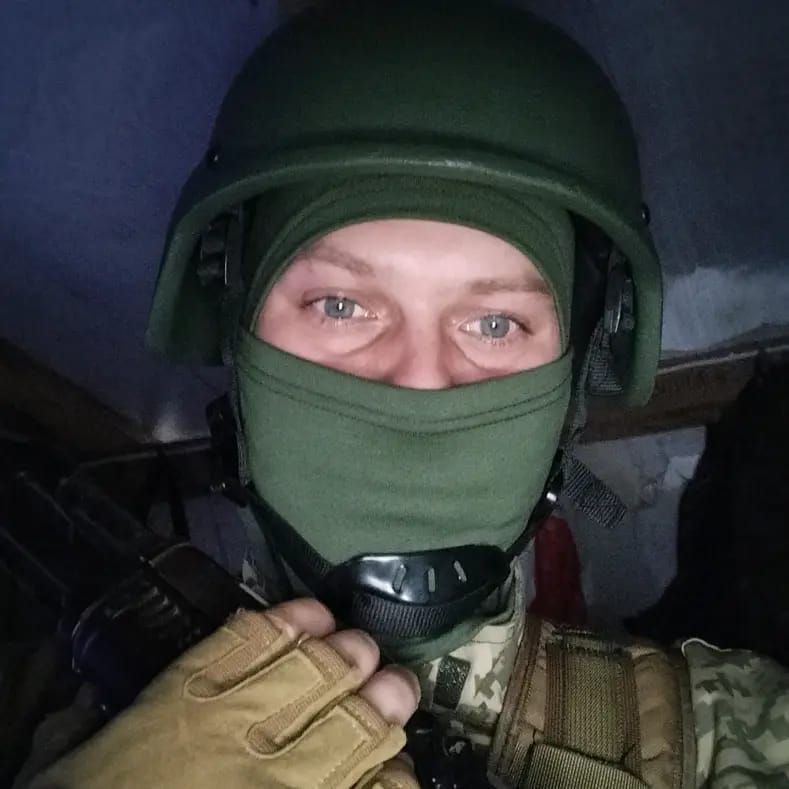
WE ARE SUPPOSED TO GO TO THE POSITIONS TOMORROW, AND TODAY THE ACTING COMPANY COMMANDER SAYS: "WE’RE GOING TO TRAIN"
- I’m trying to steer your story towards the main point, your participation in the fighting, but before that, you also ran into a lot of dysfunctional processes.
- It depends what exactly we’re talking about. If we mean my brigade directly, then yes. I had listened a lot to military journalists and bloggers describing the situation in some brigades that the higher command had basically given up on. Chaos, no effective command, no proper cohesion or communication. I encountered all of that first-hand and I think it’s important to talk about it.
They put us up in a stable, with conditions to match. Then the plans changed and we were sent to a boot camp near Kharkiv for a few days. The senior sergeant told us to leave our gear behind and take only a small rucksack. I had a lot of kit: some items I had bought myself, some had been issued.
At the boot camp, the 151st Training Centre, the instructors and their attitude were excellent. Anyone who wanted to learn was taught everything. All the instructors had combat experience and were able to devote time to each cadet.
And when we came back to our permanent base after the boot camp and...our stuff was gone. Other people were living there and everything had been rearranged. Out of 15 people, six found their things, another six found some of their kit. And five or six of us were left with nothing. I literally lost everything. Someone from our own side had simply taken my kit bag, because they all looked the same.
At the same time, we were told that in two or three days, we would be going on an assault. (After that, a lot of people went AWOL – just disappearing into the darkness through the snow.) In the end, the plans changed and we were not sent on that assault.
Let me remind you: I had no gear – no winter trousers, no sleeping bag, no sleeping mat. The battalion commander told our platoon: "You’ll arrive in a Bradley, they’ll drop you off in a tree line, you’ll fire a bit and then they’ll bring you back." The only thing that could be considered cohesion training was our time at the training centre, nothing more. At the supply depot, we were supposed to get whatever we lacked. But there they looked at my clothing and equipment record, which listed everything I had previously been issued, and told me I had it all, offering me only socks.
I found a lieutenant and explained that I was going to the front the next day and my gear had been stolen. He made some arrangements and they issued me part of the kit they technically weren’t supposed to give me. And the rest I got from some AWOL guys – trousers and a fleece three sizes too big.
We were an attached unit, first to the 17th Brigade and then to the 117th Brigade. We went to Yunakivka at night and handed in our phones. There was no signal there anyway, but I needed an alarm and a watch to wake up for my shifts. We spent some time there. I found some like-minded guys from a pontoon-bridge brigade who had dug up half of Donbas.
- What do you mean when you say you were close in spirit?
- They are patriotic, motivated, and already a tight-knit team. That really stood out compared with others. I lived with them in the same house. I love cooking, and in those Spartan conditions, I even managed to cook borshch in a bucket. For some of them, it turned out to be the last borshch of their lives…
Several times the guys asked the company commander to let me go with them, with those I had been living with under one roof for several days and had become close to, but we were refused. Later, I tried to find out what happened to them – they were either all, or almost all, killed.
On the eve of our deployment to a combat position, there was a briefing: they opened a map with our positions marked and the acting company commander said that we were going to learn. I almost laughed. We were supposed to go to war the next day, and today we were "going to learn"? (Later? I found out that this company commander, just like the senior sergeant, hadn’t wanted to hold those posts; they had been forced into them. They did their jobs badly.)
When we were actually getting ready to go out, there were people I did not want to be on position with. I trusted them, but they were f#cknuts, and I said so outright. But they still sent us out together.
I PUT A TOURNIQUET ON MYSELF RIGHT AWAY, I WAS READY FOR THIS
- Back then, in November 2024, there was a certain sense of euphoria around Ukraine’s offensive in Kursk Oblast. Do you remember what you felt?
- When we were crossing the border, my spirits were high – it felt like I was going to a birthday party. We arrived a bit to the left of Sudzha, disembarked without any problems and in the dark made our way to the positions. The guys we were supposed to relieve were due to pull out in the morning, so we were to spend the night there together.
We lay down to sleep wherever each of us could find a spot. I lay down under a tree in the dark and woke up soaking wet. It was the very end of November. All night, a drone was hovering over us, and what was strange was that it had a green light on. There were no shelters at all, we couldn’t switch on any light, and it was unclear where to run if something happened. Shelling went on nearby all night…
In the morning, the guys went out on rotation, and six of us remained – four newly arrived and two who had already been here for some time. I remember one of them saying: when I get nervous, I can lose consciousness. I asked him not to be nervous.
- So your mission was to hold the positions. Were these trenches in an open field?
- We were sitting in cornfields, near some trees. In principle, there was somewhere to hide, but because of the corn you could see very little. Before we arrived, a single Russian had attacked our position. He burst out of the corn only two metres from our trench, opened up with a burst from his assault rifle and wounded one of our guys. The soldiers launched a drone, but they couldn’t find him in the corn.
Our position was in a little gully, which is hard to hit with mortars. So the main danger was drones. An FPV drone flew right over me personally when I had just finished digging a dugout. The drone caught on a branch about 15 metres away from me, so I was very lucky.
At night, we could hear assaults going on. Our own mortar rounds were flying over us, and I was really glad when I heard them, because it meant the enemy would not be coming close to us at that moment.
As for weapons, we had RGN grenades. These are offensive grenades, while we were sitting in defence. I surrounded myself with them because I had no intention of surrendering, but I understood that in the event of an assault, I wouldn’t be able to throw them – the branches of the trees would get in the way and I could injure myself. We also had two Matador anti-tank launchers. By the way, I am officially listed as a grenadier, even though I have never fired a grenade launcher in my life.
- How were you wounded?
- It was a directional anti-personnel mine; most likely we set off a tripwire. It detonated right under our feet. I was thrown out into open ground. When I saw my bone and flesh torn away, my first thought was: this couldn’t have happened. Then I realised I had to apply a tourniquet. I didn’t rush it, because I didn’t have a massive haemorrhage, the blood had clotted (though that could have changed at any moment). I could have put it on lower, but everything there was shredded, so I was afraid that if I applied pressure there, the bleeding could start. I had to put it as high up as possible. I already understood then that it would mean a low-level amputation. I put the tourniquet on myself quickly, I was ready for this.
One of the guys was wounded very badly; both his legs were torn off. Since my own leg had been torn off, I couldn’t help him. The others just froze, that’s how I see it now. I was shouting at them to put tourniquets on him, cut his trouser leg so the tourniquets would sit properly… but they did nothing. Although I only saw him from behind, so maybe there really was nothing that could be done. But even if things are that bad, you still have to do everything possible to save a life. The medevac arrived fairly quickly, so in theory, he did have a chance.
Then they started shelling us immediately. I lay down in the foetal position so my tongue wouldn’t roll back if I lost consciousness. Our senior pulled me to the side, they dragged my sleeping bag over to me…
- There’s a note of guilt in your voice towards your fallen brother-in-arms.
- A few days earlier, the one who died and I had talked about what we would do if we lost our legs. He said something like: what’s the point of living like that? I was trying to convince him that you can still have a good life without legs, even though it’s hard. And a few days later, he was dead… It feels as if he sensed everything. Sometimes I beat myself up for not crawling over and helping him, because unlike him, I didn’t have a massive haemorrhage.
WHILE WE WERE DRIVING TO OUR POSITIONS NEAR SUDZHA, I DIDN’T SEE ANY FORTIFICATIONS
- You spent about two weeks on a single position. But I assume you’ve talked to many other participants in the Kursk campaign. What impression did those battles leave on you?
- On 11 December, we were wounded, and on the 13th the "Korean" assault began. So I wasn’t there for it, but I did talk to the guys who went through it and made it out alive. In total there were six of them on the position they told me about; two were killed and four survived. Hundreds of Koreans were thrown at them, with every possible weapon being used against them. Everyone saw it on the live drone feeds. Over the radio, their senior took responsibility for pulling back on himself and reported that they would be withdrawing. The battalion commander gave the order: not a step back, engage. It was obvious this would be suicide, because even the SOF guys all pulled back – there were just too many Koreans.
Later, in the hospital in Sumy, I talked with other eyewitnesses to the assault. There were so many Koreans that everyone ran out of ammo, and they just kept coming and coming.
- In light of all this, has your attitude to Ukraine’s push into Kursk Oblast changed?
- The Kursk campaign began when I was still near Odesa. When I found out that our troops had pushed into Kursk, and so fast at that, I was thrilled. Even as an ordinary soldier, I understood what that meant strategically. But in the rear, among the military, a lot of people were asking: "Why do we need this Kursk?" Even during rehabilitation, when I was talking with other veterans, many of them still consider, it a bad operation.
In my view, the start was good, and then something went wrong. What exactly went wrong? The whole time we were driving through Kursk Oblast to our positions near Sudzha, I didn’t see any fortifications. But near Yunakivka in Sumy Oblast, the materials for fortifications were literally lying around unused.
- How did you cope with fear – at the front, on the eve of going out, during training?
- In the past, I had a lot of fears. For example, a dog frightened me when I was a child, and that fear stayed with me. While I was still in the 7th Signal Regiment, I understood that sooner or later I would end up fighting. During breaks from kitchen duty, I started working on my physical condition, because I had really let myself go. And I began to tell myself that if I was afraid, I would not survive at the front. Some say fear helps, but there are different kinds of fear – it has to be adequate, not paralyse you. And I managed that: the adrenaline only kicked in when I was actually hit. When they were treating me, I didn’t panic; I could even joke that I had only worn my new boots for two weeks and now they were cutting them off and throwing them away. I had done a good job on myself and felt okay under shelling; overall, I had prepared myself for being constantly under fire.
One very positive thing I want to mention is the children’s drawings that were sent to us while we were sitting in the trenches. They were a huge source of motivation; you could feel a special warmth from them. Honestly, after those sincere letters from kids, you really wanted to do something, to act.
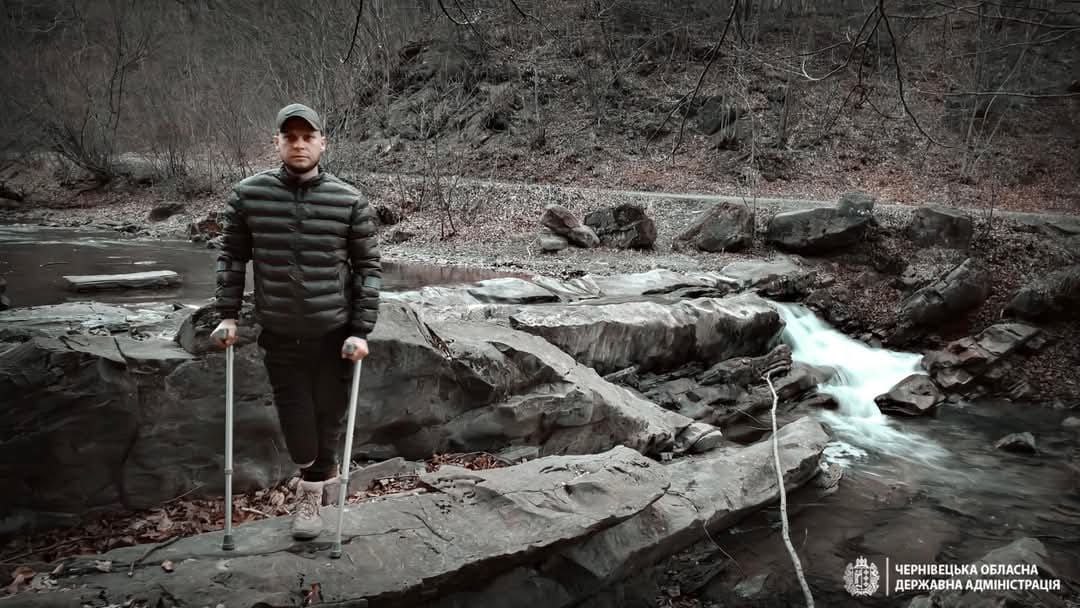
IT FEELS GOOD WHEN PEOPLE THANK ME IN THE STREET, BUT SOMETIMES I WANT TO HIDE MY PROSTHESIS
- How did your rehabilitation go? And how did you choose the specialists who would make your prosthesis?
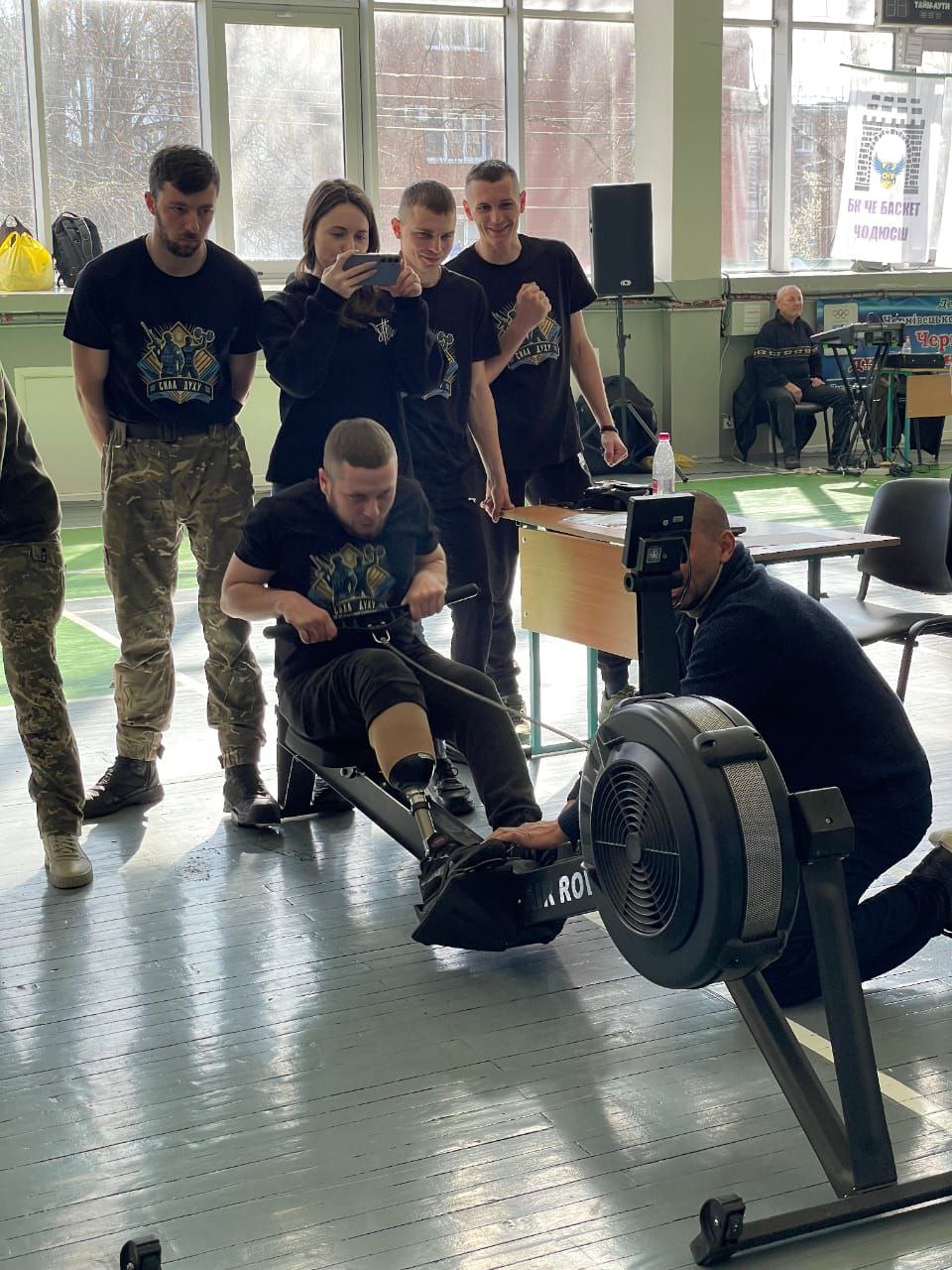
- I chose a rehabilitation centre in Vashkivtsi in Bukovyna. It’s a small town, and they won me over with their humanity and openness. They still have room to grow in terms of rehabilitation methods, but their human attitude makes up for a lot. Every week, we played volleyball with the rehabilitation specialists and doctors. When I was leaving, my doctor was actually in tears.
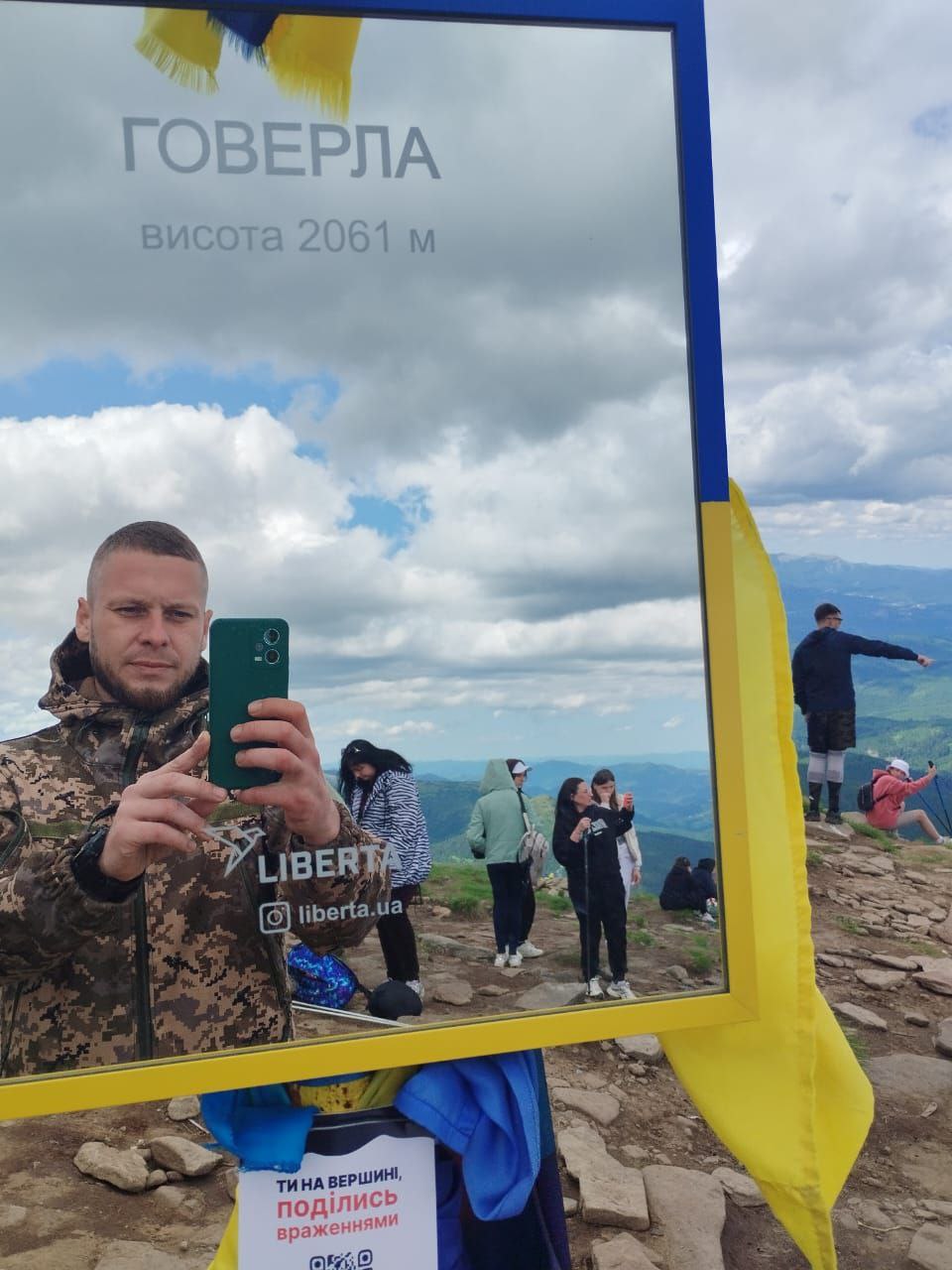
On top of that, in Bukovyna, there is a "travel therapy" programme supported by the regional military administration. I personally climbed Hoverla, and five more people with prostheses made the ascent together with me. That was also where I first rode a horse.
I met wonderful, sincere people who are devoted to what they do – volunteers, professionals, officials. They told me they were proud of me, and I told them in return that I was proud of them.
- How are you getting back to life in the rear now?
- Right now I’m in the process of adapting to civilian life, and it’s not easy. I’ve already started seeing a psychologist, and I happened to get a specialist who shares my views. A support officer from the veterans’ community helped me get to him free of charge.
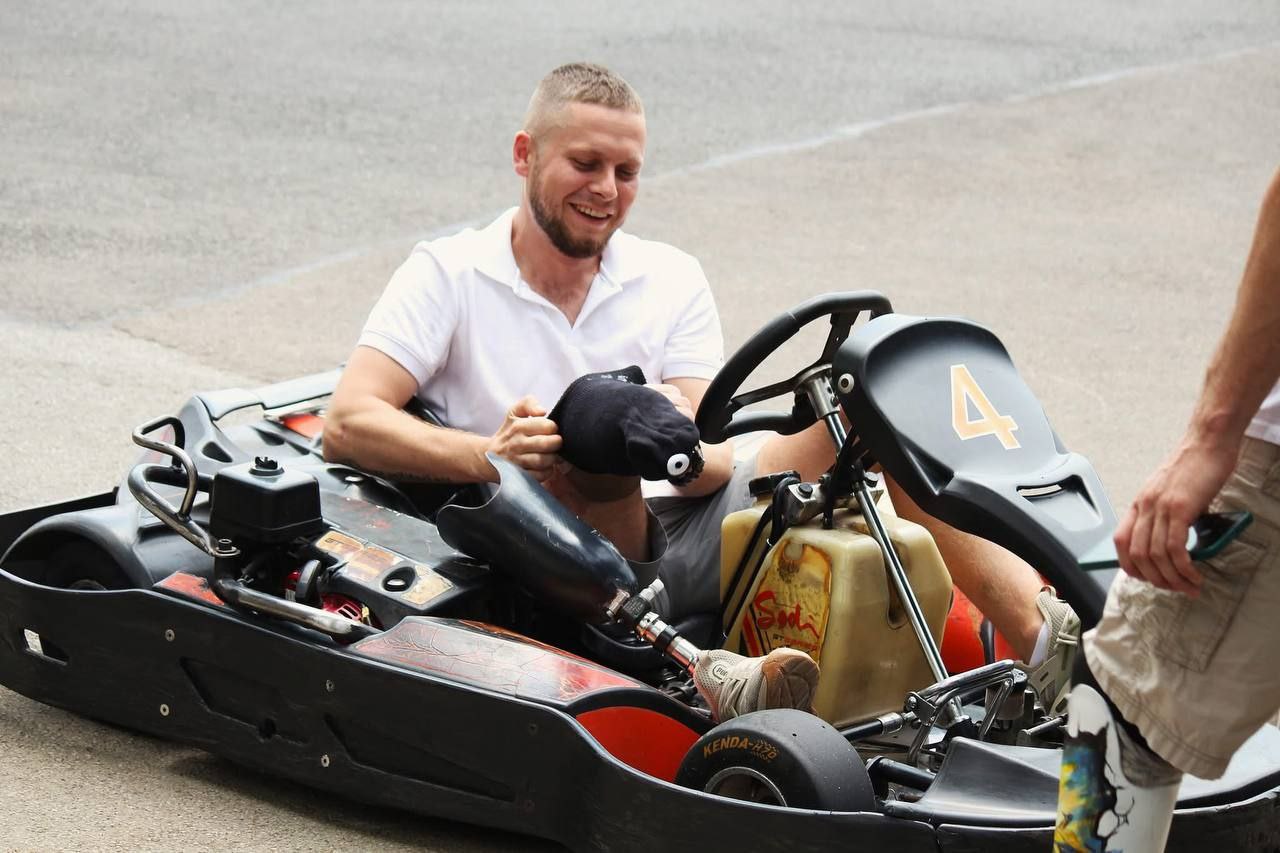
I thought I would come back and finally be with my family, but things turned out differently. Sometimes I argue with close friends and relatives about Russian content and explain why I can’t listen to it. I’ve explained to many of them how Russian content is monetised and how YouTube money ends up in Russia. These days I’m unfortunately speaking Russian again, although in Vashkivtsi I spoke Ukrainian. The environment leaves its mark.
- Do strangers often thank you for your service? When they see a prosthesis on a young, athletic man, it’s obvious why you lost your limb.
- Sometimes people thank me several times a day, just in the street – in Chornomorsk, in Odesa, in Sumy. When I was in Bukovyna, it happened literally at every step. On the one hand, it feels good, but sometimes in summer I just wanted to hide the prosthesis under my trousers.
But there’s the other side as well. When I was travelling home from Sumy Oblast, I spent about 20 minutes at the bus station in Odesa. I was hitchhiking, with big kit bags – it was tough. I was exhausted, just waiting. And in that time one child pointed at me with a finger – well, that’s one thing, a small kid, they don’t understand. But another girl, about 13, saw me coming from a distance and started mocking me: she began to "limp", came closer, looked me in the eye and started laughing. I looked her in the eye too. I didn’t know what to say – I just hadn’t expected anything like that.

- How did they explain the fact that you had to hitchhike from Sumy without any escort? It’s a widespread problem that after an amputation, soldiers have to make their own way with all their belongings to wherever they’re supposed to go.
- The decision of the military medical commission says that I don’t need an escort. A week before finishing rehabilitation, I called my unit and asked for a referral to the Military Medical Commission (MMC). But they don’t issue it remotely, so I had to travel from Chernivtsi to Sumy Oblast just to get a referral. Then I figured out that I could undergo the commission at home through the Territorial Center of Recruitment and Social Support (TCR and SS). I figured that out myself – no one in the unit told me. Otherwise, I would have had to travel across the whole country, undergo the commission there, then come back home and sit and wait to be discharged.
I kept going to the command and saying: guys, I don’t have a leg. I know people who were discharged in five days, and here I was having to travel around and prove something. They forbade me to leave the unit until I was discharged, even though there were no basic conditions there for a person in my state. I turned to lawyers and eventually got permission.
I received my compensation in April, and my combat pay was only paid out very recently. They only discharged me in October as well, because there was still lost equipment formally assigned to me.
- How do you see your future?
- I was offered the chance to return to the army in the postal service, but I have zero motivation for that. I want to be of some use, because I have a feeling I haven’t done what I was supposed to do. I had such a strong fighting drive, and in the end we were thrown into a very bad unit, in a poorly thought-out place, where we basically couldn’t achieve anything.
My previous workplace at the port is waiting for me, but for now, I don’t really want to go back to doing what I did before. Firstly, you have to walk long distances there. Secondly, I have a problem with able-bodied civilian guys who are hiding from military service.
Today’s society and its attitude to war is a painful topic for me. Some people give their last money, donate and say thank you when they see I’m on a prosthesis. But there is also the opposite, when people openly say "this isn’t our war". Right now, I’m afraid of that kind of conflict, because I think I might snap in ways that go beyond words. I used to think of myself simply as an honest person. Now I’ve become more outspoken as well, so I say a lot of things straight out.
Olha Skorokhod, Censor.NET


