



Elections for Trump, plans to merge President’s Office and NSDC, and how Prosecutor General Kravchenko is taking over Yermak’s niche
From the question of who will replace Yermak, Ukrainians, thanks to U.S. President Donald Trump, have been forced to shift to another one: whether we are about to be sent to elections. But in fact, the answers to both the first and the second are equally murky.
However, against this backdrop, other problems are beginning to emerge that could give rise to new scandals in the near future.
As long as it keeps Trump happy
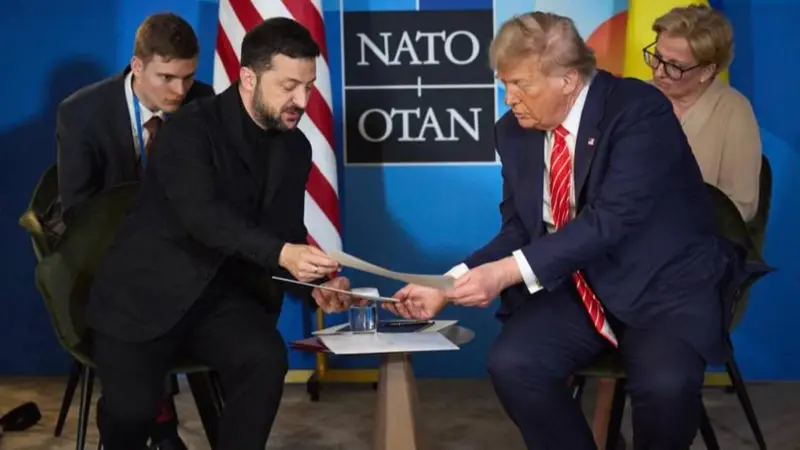
Last week, in an interview with Politico, U.S. President Donald Trump said Ukraine needs to hold elections.
"They haven’t held elections in a long time. You know, they talk about democracy, but it gets to the point where it’s no longer a democracy," Trump said, not ruling out that Zelenskyy could win them.
In response, Ukrainian President Volodymyr Zelenskyy instructed MPs to work out options for holding presidential elections.
"There were signals from the United States of America, personally from the president [U.S. President Donald Trump], regarding elections for the President of Ukraine. Whether these are signals only from the United States or signals from the Russian side, I do not want to comment on that now. My main answer is that I am not clinging to my seat," Zelenskyy stressed in response to journalists
What is more, Deputy Speaker Oleksandr Kornienko, who is set to lead the Servant of the People party again soon, has been appointed to head a working group tasked with drafting election-related bills.
"In fact, this work has been underway since 2023. They are working, but even if parliament passes all these changes, that by no means guarantees we will be able to ensure voters’ safety," a Censor.NET source among MPs from the president’s party says.
"Apart from security, there are plenty of other challenges: how servicemembers are supposed to vote and take part in elections. If you are planning to run for parliament, that does not automatically mean you will be demobilised. Voting abroad remains highly problematic as well. The war has been going on for four years, and to take part in elections, you have to have lived in Ukraine for the last five years. We either need to change the legislation here, or restrict rights," the source adds.
At the same time, he reasonably assumes that if the five-year residency requirement is dropped, mothers with three children are unlikely to come back to Ukraine to run for office, while people like Arestovych and the rest of the Monaco-Vienna district émigrés will rush in straight away.
The question of updating the voter rolls is no less relevant because in the current situation, that number drops from around one million Luhansk residents to zero.
"And one last minor question: where do we get the money for elections?" the source notes.
So the working group will be dusted off and revamped, but MPs believe in elections about as much as they believe in peace arriving.
"We understand that all of this will ultimately run into the fact that Putin will crawl out again and start talking about the ‘goals of the special military operation,’" the outlet’s source says. And yesterday’s quote from Putin’s spokesman Peskov that Ukraine should not be given a chance to catch its breath and rearm is just another confirmation of a steady dynamic in which the only variable is President Trump’s mood.
In search of a new Yermak or a new structure?
The president’s personal involvement in the talks, for which some journalists have already criticised him, saying it lowers his status and narrows the room for manoeuvre, has allowed him to scale back his domestic political activity and avoid making a decision on the head of the President’s Office.
"But on the other hand, Merz is also forced to talk to Kushner and Witkoff. So these are now the realities of negotiation politics. And Zelenskyy no longer depends on other negotiators who turned out not to be so indispensable," one Censor.NET source said with a shrug.
A week after Yermak’s dismissal, one of the outlet’s sources noted that either the decision would be made today or tomorrow, or there would be no new head of the President’s Office for a long time.
After holding two rounds of meetings with the key candidates, the president decided to wait.
On December 8, Zelenskyy confirmed he had considered five candidates for head of the President’s Office: Digital Transformation Minister Mykhailo Fedorov, Defense Minister Denys Shmyhal, Head of the Main Intelligence Directorate Kyrylo Budanov, First Deputy Foreign Minister Serhii Kyslytsia, and Colonel Pavlo Palisa, deputy head of the President’s Office.
"I held several consultations with everyone you know. All of them are ready to lend a shoulder; no one refused. Everyone is ready to head my Office," the president explained two days ago.
It appears that Mykhailo Fedorov was the closest to landing the job, but then Yaroslav Zhelezniak, an MP from Holos, wrote that Fedorov is being linked to plans for a future political project.
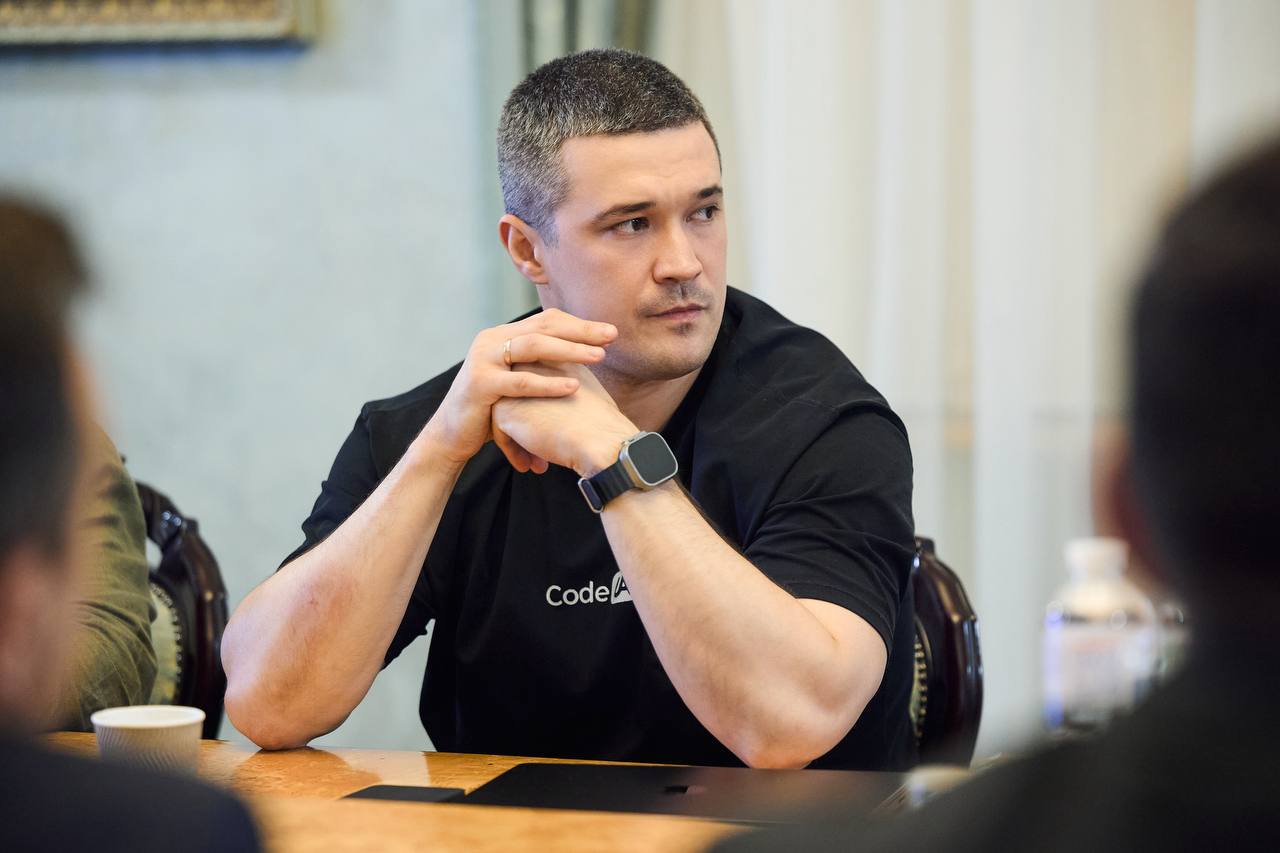
Now, according to Censor.NET's sources, a concept is currently being considered to merge the President’s Office with the NSDC secretariat.
When asked whether this means the Office would then be headed by Umerov, the source replied that "more likely, someone more military will appear there."
Given that the NSDC is a constitutional body whose decisions are enacted by presidential decrees, the combination could turn out to be very interesting and with a strengthening of the presidential vertical. In other words, the same as under Yermak, but legal.
A personnel crisis and the Prosecutor General’s identity crisis
If after Yermak’s dismissal, parliament, in a buoyant mood, voted for the budget (along with raising its own salaries), its work then slid back into political bravado and a lack of votes.
And this is not even about Mariana Bezuhla’s solo protest demanding Oleksandr Syrskyi’s resignation, or telling Mykola Tyshchenko to go to hell. It is about the fact that votes can disappear as quickly as they appear, even because some MPs have already decided to start their Christmas holidays.
This week, the agenda includes Ukraine Facility bills needed to secure European assistance, which Prime Minister Yuliia Svyrydenko has urged parliament to pass quickly.
Personnel matters, including replacing the energy and justice ministers, will be decided after the New Year.
"There are no approved candidates. No one wants to go to the Energy Ministry at all. And, in principle, that is understandable, how can anyone want to become energy minister on the brink of blackouts, when Russia is deliberately knocking out the energy sector in the most vulnerable regions," a Censor.NET source says.
And just as there will be no appointments, there will be no government dismissals for now, either.
However, some of the outlet’s sources are confident that Deputy Prime Minister Oleksii Kuleba’s career is "hanging by a thread", both because he may appear on NABU tapes and because of his ties to Yermak.
"So they have simply put this issue on hold until the tapes are made public," a source in Rada says.
One person whose dismissal was not being discussed is the Prosecutor General. Against this backdrop, Ruslan Kravchenko’s statement came across as highly strange: he said he was not going to resign, that he knows who is behind the attacks on him, and that he will "come for everyone."
"No one was going to fire him. Young. Nervous," one MP from Servant of the People commented on the Prosecutor General’s actions.
Kravchenko’s remarks also triggered complete bewilderment at NABU.
Why is NABU important in this context? As you may recall, on November 4, NABU said that prosecutors from the Office of the Prosecutor General, accompanied by special forces, carried out a search of a NABU employee at 3 a.m., using force.
"They lured the guy out of his home on the pretext that his car had supposedly been involved in an accident, and then pinned him face-down on the asphalt," a NABU source said.
This happened after the Prosecutor General’s Office reported noticing that "on November 3 at 06:10 a.m., an unknown man installed special technical devices on the canopy above the entrance to a residential building opposite the Prosecutor General’s Office building."
The NABU employee did indeed install technical devices, but this is not prohibited.
"Martial law does not impose a ban on documenting within investigations of corruption crimes. Under current legislation, NABU employees are not required to inform prosecutors from the Office of the Prosecutor General about conducting or taking part in operational-search or procedural measures, unless this is related to prosecutors’ procedural supervision," NABU said at the time.
According to Censor.NET sources, the Prosecutor General allegedly took this as surveillance of him personally and "threw a tantrum."
"A somewhat strange position, why did he decide we were tracking him specifically? You would think there aren’t enough ‘worthy’ people for that on Riznytska. Or did he decide to give himself away like that?" the source said.
Relations between NABU and SAPO, and the Prosecutor General, are more than complicated. The thing is that immediately after the adoption of laws that effectively destroyed the independence of the anti-corruption bodies, SAPO began looking for who authored the idea. A version then emerged that the bills had been drafted by a group of lawyers working with attorney Dmytro Borzykh, who previously worked with Kravchenko at the Prosecutor General’s Office, and that it was allegedly the Prosecutor General himself who brought them in.
In April, NABU and SAPO exposed Borzykh’s group for illegal access to the closed register of court decisions, which systematically used this data to track how courts were considering motions filed by law enforcement and prosecutors.
After the notices of suspicion were served, these actions did not stop, and NABU and SAPO continued to see abnormal activity in these cases.
Such leaks significantly complicated detectives’ work in many cases because the suspects turned out to have been tipped off. The movements of individuals involved in the "Midas" case on the day NABU detectives carried out searches also point to this. In particular, this includes Timur Mindich’s hasty departure from the country and the movements of former ministers Svitlana Hrynchuk and Herman Halushchenko.
At the height of the scandal over the release of Mindich’s tapes, NABU and SAPO were convinced that the heads of both agencies would be served with notices of suspicion and that this effort was allegedly being coordinated by the Office of the Prosecutor General.
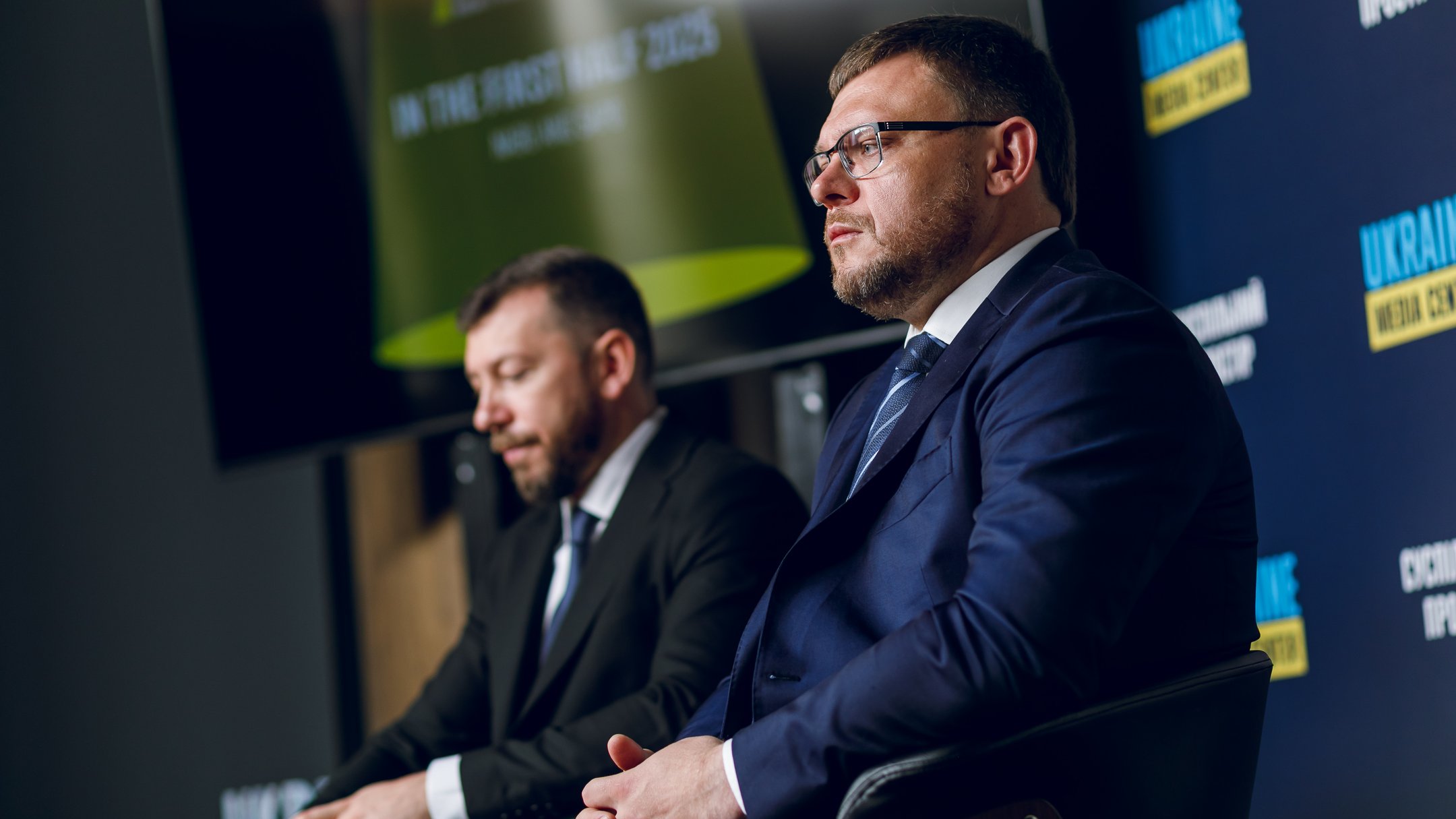
This week, the Anti-Corruption Action Center accused Kravchenko personally, along with SBI head Sukhachov and SBU deputy chief Oleksandr Poklad, of being involved in the "destruction of NABU and SAPO" in connection with the case of detective Mahamedrasulov.
After that, someone leaked intimate photos of Anti-Corruption Action Center head Vitalii Shabunin to Telegram channels. The photos were taken from his phone, which was seized during SBI searches. Shabunin believes the Anti-Corruption Action Center's (AntAC) publication and the leaking of the intimate photos are directly linked and blames law enforcement for it.
This is a very ugly personal story. And it is telling that it was condemned today by Danylo Hetmantsev, head of the parliamentary tax committee.
But beyond the obvious personal confrontation in this story, there is a far more important systemic one. In the European Commission’s annual enlargement report, the work of the Office of the Prosecutor General is listed as one of the systemic problems.
The report notes that the new law restored NABU and SAPO’s powers, but also allowed prosecutors to be transferred and appointed to regional prosecutor’s offices and the Office of the Prosecutor General during martial law without a competitive procedure.
It also gave the Prosecutor General access to any pre-trial investigation materials (except NABU and SAPO materials which the controversial law attempted to change).
"These provisions undermine meritocracy in the prosecution service and increase the risks of undue interference in criminal cases. They should be repealed, and in the meantime, their application should be suspended," the report says.
And that is not all. At meetings, EU representatives are increasingly citing as a problem for Ukraine the fact that the Prosecutor General is not independent and that the post should also be filled through a competitive procedure.
And this directly undermines the verticals built over decades, both the practice of dispatching former subordinates to serve as regional prosecutors and the appointment of a Prosecutor General based on the level of loyalty.
And if the story of interference in NABU and SAPO’s operational work continues, the Prosecutor General's issue will clearly end up on the agenda and not at all in the context of Ruslan Kravchenko’s personal fate.
"Americans play around with personalities; Europeans work with institutions. And over the summer, you managed to ensure that now Ursula, Merz, and Macron know what NABU and SAPO are," one EU diplomat quipped.
But taking all factors into account, the Prosecutor General may quickly assume the role of the main anti-hero and replace Yermak in that role.
Tetiana Nikolaienko, Censor.NET


